
Category: Reviews
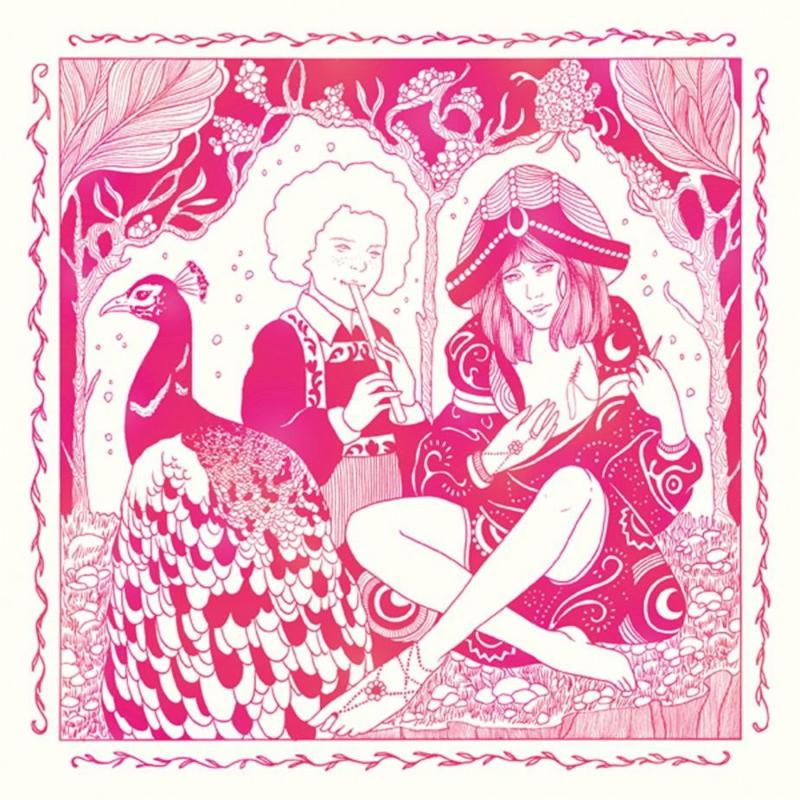
Melody’s Echo Chamber: ‘Bon Voyage’
The time between albums for Melody Prochet has been close to six years, and that span can be categorized by loss and rediscovery. In the initial recording of Melody’s Echo Chamber’s follow up to her acclaimed self-titled debut, Prochet abandoned the first attempt, describing it as a “dead baby”. Choosing to go it alone and end her work with Tame Impala’s Kevin Parker, Prochet dove head first into new, but familiar attempts at self-expression. She returned to her childhood conservatory to learn drums, and upon finishing, picked up several other instruments in attempt to connect with her innermost music psyche. Enlisting the aid of Sweden’s torchbearers of psyche rock, Frederik Swahn (The Amazing) and Reine Fiske (Dungen), Bon Voyage is a short and wild odyssey that explores the anima of Prochet, often with neglect to focus and time.
Bon Voyage‘s opener, “Cross My Heart”, is a quick plunge into psychedelic guitar work, backed by a marching beat, as if some sort of rowing cadence into the Bermuda Triangle. If you were excited at the prospect of a Melody’s Echo Chamber album backed by Dungen and The Amazing, this is the song you were hoping for. The song breaks down one third of the way in to an unexpected blend of scat singing, a hip hop beat, and flutes. The album takes its time in this odd juxtaposition; a theme for this record. While this does come together in a more traditional psych sound, it is abundantly clear that Prochet made this album to experiment with her influences and have fun.
If there is anything on Bon Voyage that resembles a comfort zone, it’s “Breathe In, Breathe Out”, a breathy, arousing track that lives in its looseness. However, even the familiar gives way to a tempo and key change, teeing up to a freefalling power chorus. Playful “oohs” and “ahs” keep the tone light, but the track ends abruptly after creating such a sprawling path.
Timing is an issue throughout much of this record. Prochet’s admiration of Stereolab and Broadcast are on display in the beginning “Desert Horse”, a post-punk track that envelops itself in the avant-garde. It’s an experiment with influences of Can and Neu!, splashing together dialogue breaks with vocoder looping, and while it all seems chaotic, it ends without exploring this influences in the room the track has created for itself. The track has space to move beyond admiration of other artists, and Prochet cuts a tempestuous ride short.
While some songs end before coming to fruition, there are others that take space and remain in it long past its delivery. “Quand Les Larmes D’un Ange Font Danser La Neige” is Prochet at her most lyrically vulnerable: “I found somewhere to hide / someone to held by / a safe place to cry.” The song itself is fairly simple: a blooming melody that restrains itself from some of the calamity of other tracks. While enjoyable, the track unnecessarily loops back around and revisits itself after a brief dialogue break, falling apart in small spirals reminiscent of The Amazing.
The album’s closer, “Shirim”, is also Bon Voyage’s oldest offering, released in 2014. It is Prochet at her most straight-forward, beginning with a heavy-handed drum beat and Radio Dept.-esque chiming of chords. Still playful, the track plays like the end of a long ride. While quite pronounced, “Shirim” is a hazy pop song that is a welcome respite from the disorientation from other parts of the record.
Bon Voyage is not necessarily for the same fans of the self-titled record, but it never tries to be. In telling stories from recording the album, Prochet recalls the friendships developed with Swahn and Fiske. It is music made from an affinity to new ways of expression and a devotion to personal discovery. Regarding “Desert Horse”, Prochet says, “It’s the most sculptural and mad I guess, with no real common format. It embodies my difficult life journey these last few years through my own personal desert of heartaches, thirst, mirages, moving sands, disillusionment and of becoming an adult woman in a mad world. It’s a little punk to me somehow.” This album may not have been made for anyone but her, and that is a statement to her journey of discovering artistry in the wake uncertainty. It may not always make sense. It may stop short where we want to hear more, and we may not follow it to everywhere chooses to go, but it is Prochet creating the path for herself. Finding focus on such a voyage will only bring back a stronger artist.
6.7 / 10.0

Sasquatch! Music Festival 2018: A Triumphant Return to Form

Emerging from hibernation annually each Memorial Day Weekend, Sasquatch! Music Festival opens the gates of The Gorge Amphitheater in George, WA and welcomes festival-goers to a scenic splendor that no possible combination of words could ever do justice. It is indisputable that Sasquatch! has an unfair advantage against competing festivals due to the fact that it is hosted in what I can only assume was a runner-up for Seventh Wonder of the World.
Alas, beauty is only skin deep, and looks can only take you so far. This sentiment rings painfully true for The Squatch as it has experienced the music festival equivalent of a midlife-crisis in recent years, neglecting the folk/rock centric bands that have proliferated the festival’s profile within the independent scene and opting for the flashy bells and whistles that win the affection of a Top 40 demographic. Notable makeover mishaps include 2014’s failed attempt at one-upping Coachella with the addition (and cancelation) of a second weekend featuring an entirely separate lineup, last year’s gag-inducing top billed slot of Twenty One Pilots, as well as a never-ending plague of EDM DJs that all share a common disdain for vowels. With the inevitable infiltration of Chad and his bros and the increasing mediocrity of recent lineups, it’s no wonder that Sasquatch! veterans have opted out of attendance. You can’t sit with us, indeed.
Fortunately, word must have gotten back to Sasquatch! founder Adam Zacks about unfavorable reception in recent years, because the right steps were taken to bring justice to a venue that deserves nothing less than inimitable talent to showcase. Sasquatch! Music Festival came out swinging in the 2018 season boasting one of the most stacked lineups that money can buy, setting itself apart from what has become a diluted market of traveling-band lineups that tend to become indistinguishable from one another. Recruiting counter-culture big dogs the likes of Bon Iver, Modest Mouse, Neko Case, David Byrne, Spoon, and Grizzly Bear was enough to rope in the wandering eye of any unsuspecting inquisitor. Upon further examination of the bill, the lineup yielded no signs of wavering quality, landing up-and-coming marvels such as Julien Baker, Big Thief, Japanese Breakfast, (Sandy) Alex G, Whitney, Phoebe Bridgers and Charly Bliss. The reputable names seemed to go on and on, leaving previously salty Sasquatch! naysayers such as myself at a complete loss for words, only able to exude frantic whimpers of delectation. Once the hysteria subsided and I was able to pick myself up off of the floor, I came to the realization that it was time for me to swallow my pride, rip up my cool-guy card and venture back into The Gorge to a festival that once again emitted a potent magical lure.
Day One
The journey to Sasquatch! is in and of itself a privilege not to be overlooked. The scenery shifts and the landscape evolves more times than the hands of the clock turn during the drive, which checks in at just over two hours from Seattle. Dense, lush walls of green are complemented by snowcapped mountains as you ascend the Snoqualmie Pass, only to find yourself met by endless rolling brown plains and towering white wind turbines, waving you in the direction of The Gorge Amphitheater.
Following the herd of automobiles onto the campground, I ultimately landed at my designated plot of grass for the weekend, conveniently located next to Chad, his buds and their self-proclaimed “Babe Cave” tent (awaiting confirmation). The festival grounds are located about a half-mile from the campsites, presenting festival-goers with the dilemma of packing for an entire day (extreme daytime heat, extreme nighttime cold) or stacking some serious foot mileage in addition to the usual festival runaround. (Has anyone ever utilized a pedometer at this festival? How many calories am I burning? Please tell me I look Channing Tatum toned by this point.)
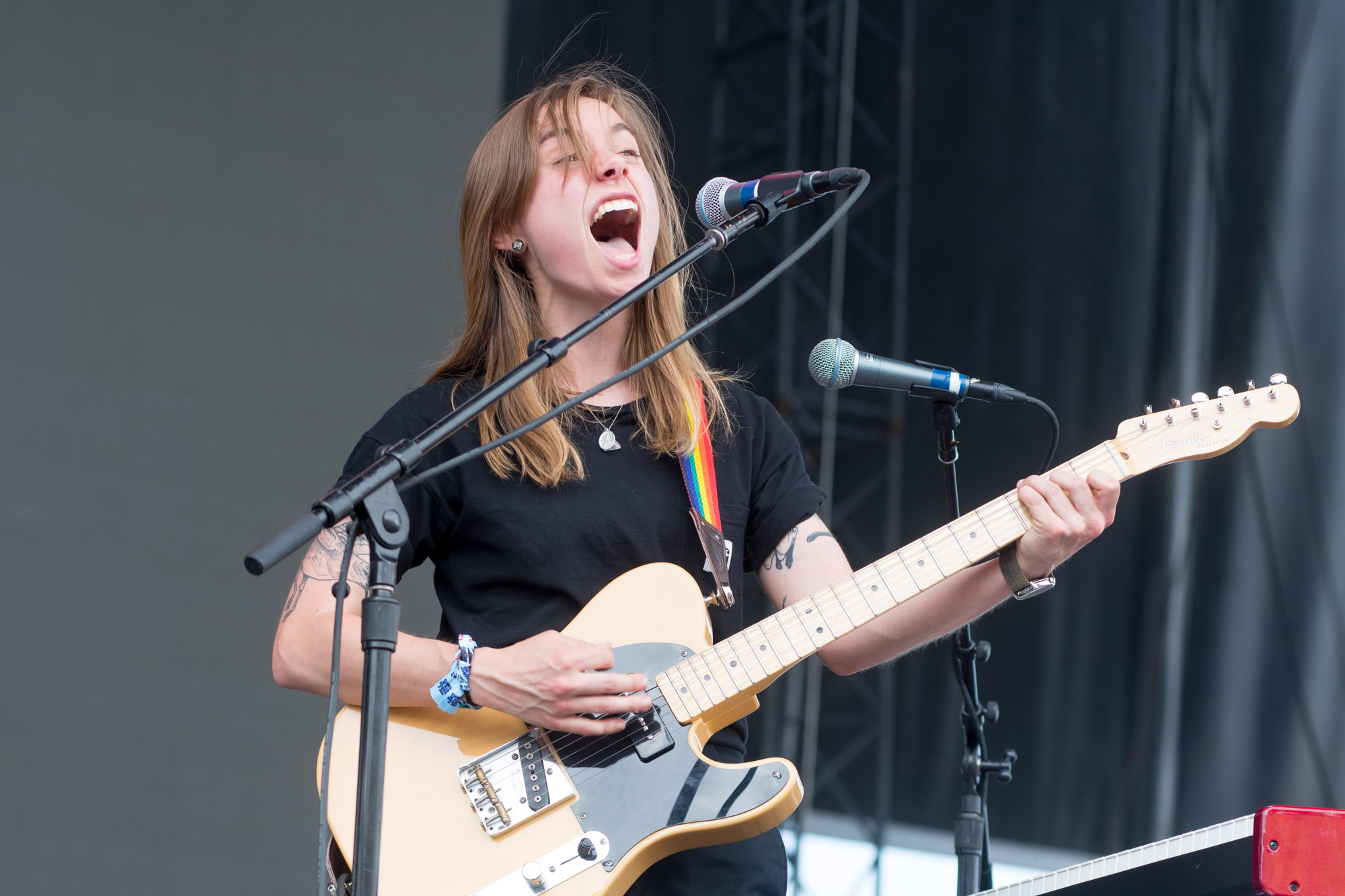
Not a moment was spared as we beelined directly towards the main stage for a healthy serving of midday heartbreak from immensely talented and poignant solo artist, Julien Baker, who gifted the audience with offerings from her fantastic 2017 release Turn Out the Lights. Those unfamiliar with the unparalleled talent of Baker were left speechless as her powerful vocals encompassed the amphitheater, piercing through the souls of unsuspecting bystanders. The soft-spoken singer charmingly utilized moments between songs to lighten the mood by joking with the audience, a routine she’s surely integrated into her sets in order to pull her audience out of complete despair. At one point, the Memphis songwriter turned her back to the crowd, cheekily asking us, “have you guys seen this thing?” as if we had somehow missed the monumental canyon taking on the role of unbeatable backdrop. The audience’s gaze remained fixated on Julien as she careened us through emotional rollercoasters “Appointments” and “Shadowboxing,” finally closing with “Something” off of 2015’s Sprained Ankle.
As soon as eyes were dried, we made the short trek up the hill to the Yeti Stage where Orange County duo and twin brothers Wyatt and Fletcher Shears—better known as The Garden—were slated to perform. This is a band that piqued my interest early on, as they are known for coining their own genre called “Vada Vada,” described by Wyatt as “an idea that represents pure creative expression, that disregards all previously made genres and ideals.” The brothers took to the stage looking like what can only be described as a saucy hybrid of “ATL Twins-meets-Twin Peaks-band.” Utterly perplexing the crowd with what appeared to be some form of interpretive karaoke, the twins donned the personas and attire of Derelicte model, rapper and pirate, respectively. The charade was soon abandoned, and the band effortlessly fired up the crowd by performing experimental thrash ballads “No Destination” and “Stallion” off of Mirror Might Steal Your Charm, which arrived March of this year. The energy this band exuded was infectious, inspiring what was easily one of the more aggressive pits of the weekend, purging victims as mutilated clothing flew violently through the sky.
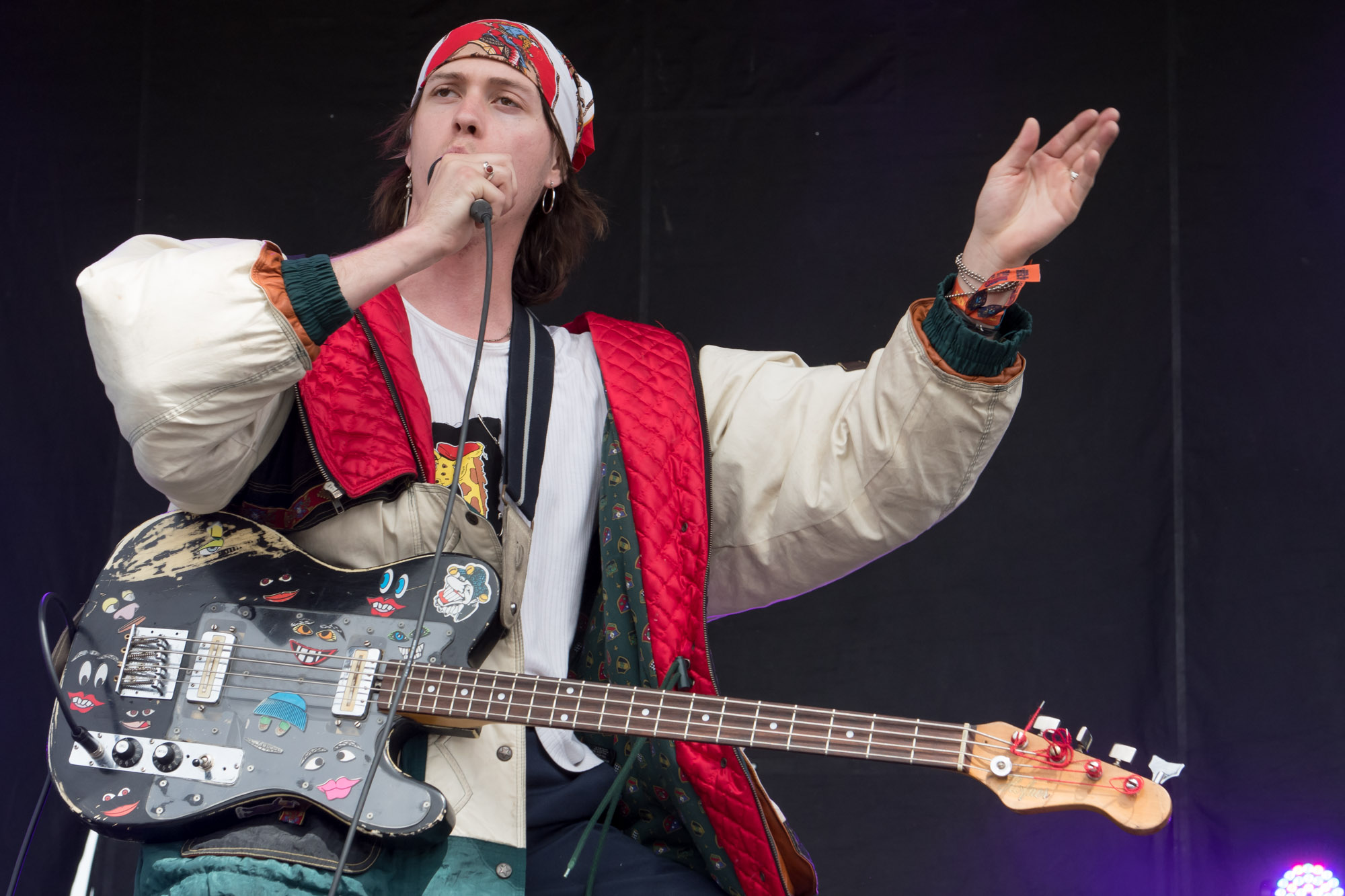
Up next, beloved Canadian indie legends Wolf Parade made a triumphant return to the Sasquatch! main stage, where they performed what tragically became their last public show seven years prior before announcing an indefinite hiatus. This left Wolf Parade superfans (who will remain unnamed) utterly broken. Luckily the stars aligned, and Wolf Parade are back and bolder than ever, promoting their eclectic 2017 album Cry Cry Cry. The set was christened by taking the audience back to the beginning with the opening track off of the seminal debut album, Apologies to the Queen Mary, led by co-frontman Spencer Krug in a beautifully frantic manner. The band continued to treat loyal fans to archival treasures such as “Fancy Claps,” “Soldiers Grin,” “This Heart’s on Fire” and “I’ll Believe in Anything,” while simultaneously showcasing the brilliance of their more recent contributions “Valley Boy,” “Weaponized” and “Baby Blue.” The new songs are structured with strong percussion from Arlen Thompson and expose multi-instrumentalist Dante Decaro as the glue of the entire operation. (Seriously, Dante is a fucking wizard.) The set came to a close with 10-minute epic “Kissing the Beehive,” one of few songs that utilizes alternating vocals from both Boeckner and Krug whose voices uniquely complement each other; a key component that makes Wolf Parade so special. A fully packed midday attendance on the main stage in addition to the band performing at their highest capacity further reinforce the notion that Wolf Parade are here to stay.
A brief and necessary recess between sets allowed us to hydrate and peruse the strip of vendors in search of a meal that tasted something close to edible and didn’t hit the wallet too hard. Mission: Failed. Fourteen dollars for a Fisher Price sized burrito? Piss off, no thank you. *End pity party*
After our completely satisfying and reasonably priced dinners were consumed, we eagerly took flight to the cascading hill at the main stage where David Byrne, iconic weirdo and brilliant centerpiece of the Talking Heads, was preparing to deliver an unforgettable experience to fans, both old and new. The group wowed the audience as they gallivanted about the stage in a choreographed manner resembling that of a marching band, all clad in matching flint grey suits. Touring his most recent solo endeavor, American Utopia, Byrne ultimately and graciously delivered to the fans who deep down showed up anticipating a chance to hear some classic Heads hits. Byrne and co. shifted the mood from nostalgia to relevance by covering Janelle Monae’s “Hell You Talmbout,” a politically charged protest number which shouts the names of African Americans killed by police or other racial altercations.
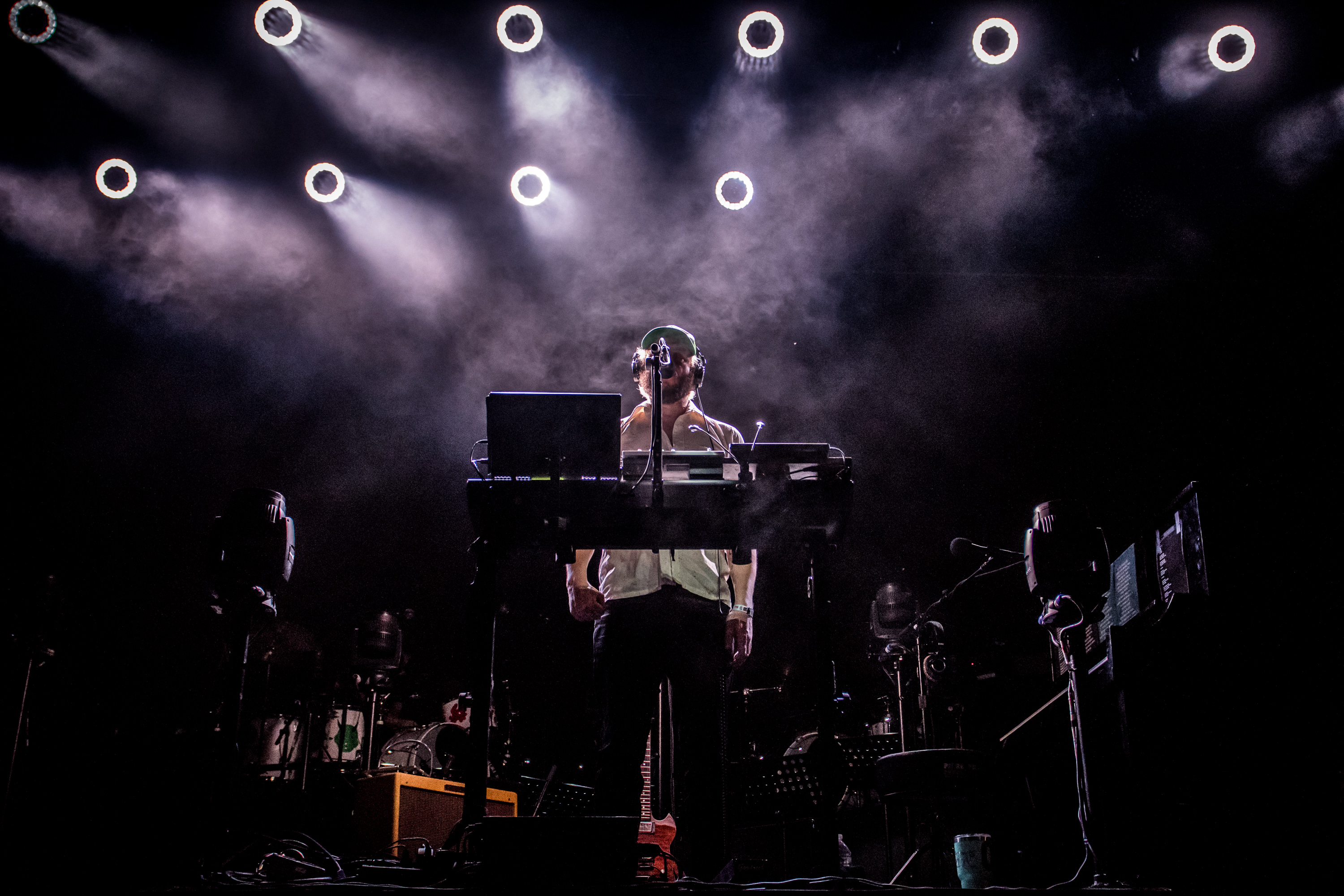
Opening night of Sasquatch! was closed out by fellow music festival founder and ever-evolving electro-folk Renaissance man Justin Vernon (better known by moniker Bon Iver), who probably wishes his Eaux Claires Festival could stake claim to a home as alluring as The Gorge. Vernon interestingly chose to open his set with the track “Woods” off of the 2009 EP Blood Bank which first hinted at increasing experiments with auto-tuning; a technique highly utilized in his most recent album, 22, A Million. The meat of Bon Iver’s packed show featured his newer material full of cryptic song titles I won’t even attempt to type, matched by an equally perplexing journey of tonal obscurity. Love it or hate it, Bon Iver’s bold experimentation and dynamic harmonies provide listeners a truly unique experience. Vernon opted out of playing fan favorite “Skinny Love,” which was a total letdown for Chad who has been attempting to learn it on guitar since its 2008 debut.
Day Two
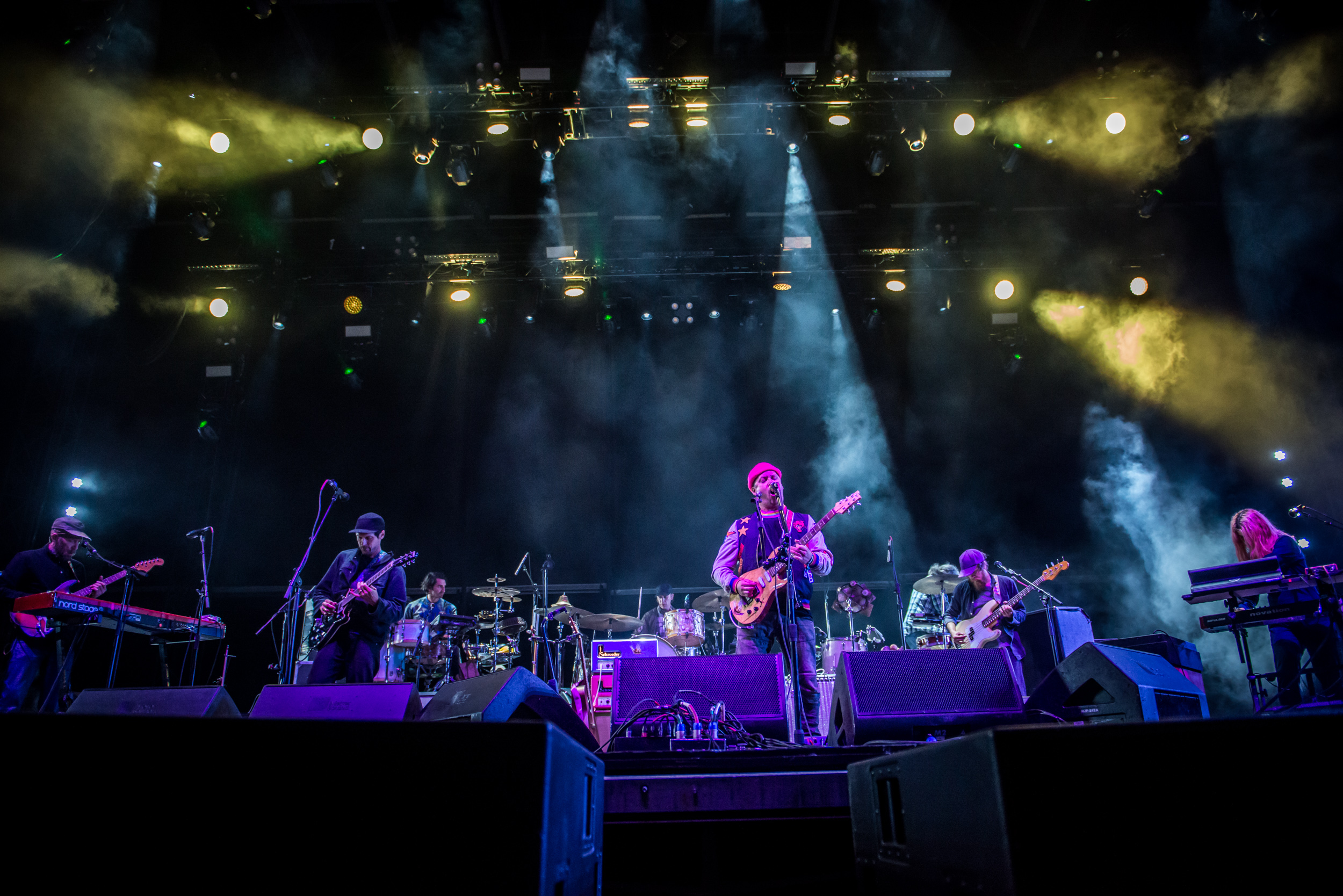
Having gone to sleep shivering, I was surprised to wake up in a pool of sweat, gasping for air and ripping the layers of clothes from my body. As I mentioned before, the weather in The Gorge is always one extreme or another. After escaping my nylon oven, I stepped outside and consumed no less than an entire gallon of water before looking onward to another full day of music.
Pacific Northwest locals Mimicking Birds took to the Yeti Stage at 3:00 p.m., just as the day was reaching peak heat. The band had barely made it through their first few songs before vocalist/lead guitarist Nate Lacy’s effects pedal began to overheat and malfunction due to the scorching temperatures. This resulted in a dramatic fit from Lacy, who ultimately stormed off stage, leaving his bandmates to tend to an eager crowd who were more than willing to wait out a resolution to the technical difficulties. Luckily, the remaining band members came through with quick-witted interactions with the audience and counseling for Lacy, and the band was able to salvage the set, performing tracks from this year’s Layers of Us before ending with the ethereal and reflective “Blood Lines” off of 2014’s Eons.
Taking note from the mechanical victims of the sun’s relentless rays, I noticed that my initial SPF 20 line of defense was lacking in proficiency, so I decided to bust out the big guns and lather myself in SPF 50 (a choice that should have been made hours prior).
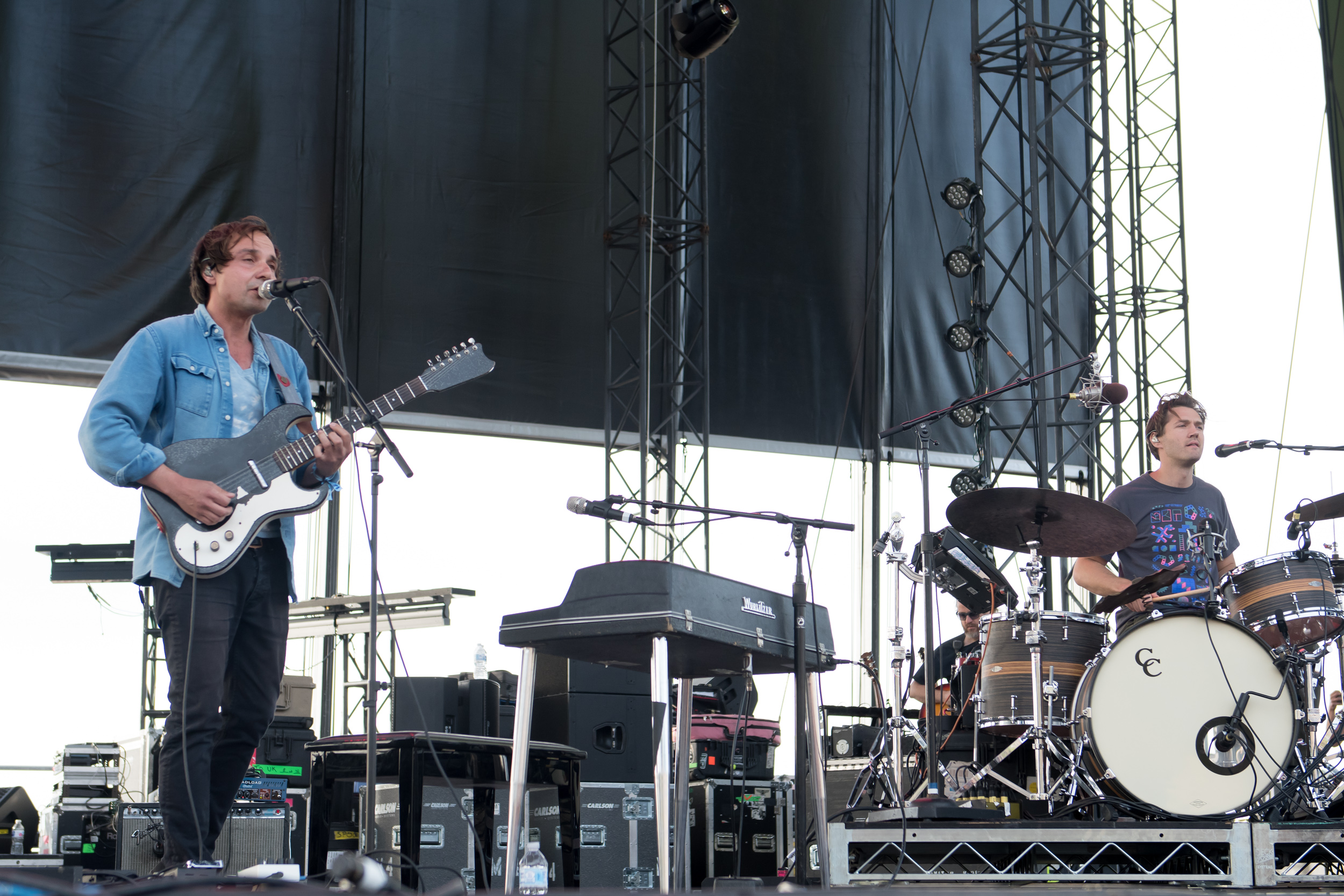
Once completion of thorough sunscreen application had been achieved, I eagerly headed for the pit of the main stage where Grizzly Bear were set to make their first appearance at Sasquatch! in nearly a decade. Having attended a club show earlier this year, I was confident that the band was packing an earth-shattering setlist that toured their expansive catalogue with taste and craft, selecting tracks that best exemplify their diverse and complex songwriting abilities. The band temporarily established a means of time travel for longtime fans as they performed hits such as “Yet Again” and “Sleeping Ute” from 2012’s Shields before digging even further back with gems “While You Wait for the Others” and “Ready, Able” from the 2009 masterpiece Veckatimist. Also included in the set were more recent sounds from their fifth studio album Painted Ruins, which fans and critics alike received positively. Spotting a saxophone on stage early on, I eagerly anticipated the execution of “Sun in Your Eyes,” an indomitable set-ender that I hope any fan of the band will be fortunate enough to experience live. In a truly magical moment, Ed Droste belted the lyrics in the title in a climactic explosion just as the glowing sun descended beneath the horizon, silhouetting the mountainous ridges of the sprawling gorge in the distance. I’m not crying; you’re crying.
Saturday headliner and Washington State natives Modest Mouse walked onto stage to a thunderous applause from fanatic fans crossing all of their fingers and toes for an “on” night for constantly fluctuating star asshole, Isaac Brock. A unified sigh of relief could be felt throughout the crowd as Brock appeared to be playing mostly in tune and accurately landing the lyrics of his own songs. Brock, a known sass-master, surprisingly treated the audience rather kindly as he led the band through a string of crowd-pleasers, including the dreamy “3rd Planet,” the catchy commercial success “Float On” and gentle lullaby “The World at Large;” each from the band’s mainstream breakthrough albums The Moon & Antarctica and Good News for People Who Love Bad News. Additionally, the band performed an exhausting number of tracks from their most recent effort Strangers to Ourselves, which was met with mixed reviews at best. The overcrowded band treated longtime fans to a taste of relief with the title track off of the 1996 EP Interstate 8 as Brock belted lyrics, “I drove around for months and years and never went no place,” which is ultimately the same route this set took. Aside from a dazzling display of fireworks, Modest Mouse performed a yawn-inducing mix of radio hits that anyone surely could have experienced just the same by merely walking into their local department store.
Explosions in The Sky closed out day two with a late-night performance on the Bigfoot stage, for those bold enough to stick around into the twilight hours. Feeling rather defeated by the heat and struggling to muster the energy to persevere the way I once could, I decided to call it quits and begin the long journey back to camp halfway through. To my delight, the band’s wailing guitars remained audible throughout the entirety of my trek, providing just enough distraction to successfully complete the hike without exclaiming any dissatisfaction with the arduousness whatsoever. Maybe. Kind of.
Day Three
I found myself once again cursing developers of the amphitheater for designating the campgrounds so far away from the venue, completely devoid of any toleration achieved the prior evening. For the last time, I impatiently stomped my way into the final day of Sasquatch!, racing to catch the last few minutes of Soccer Mommy’s set on the main stage.
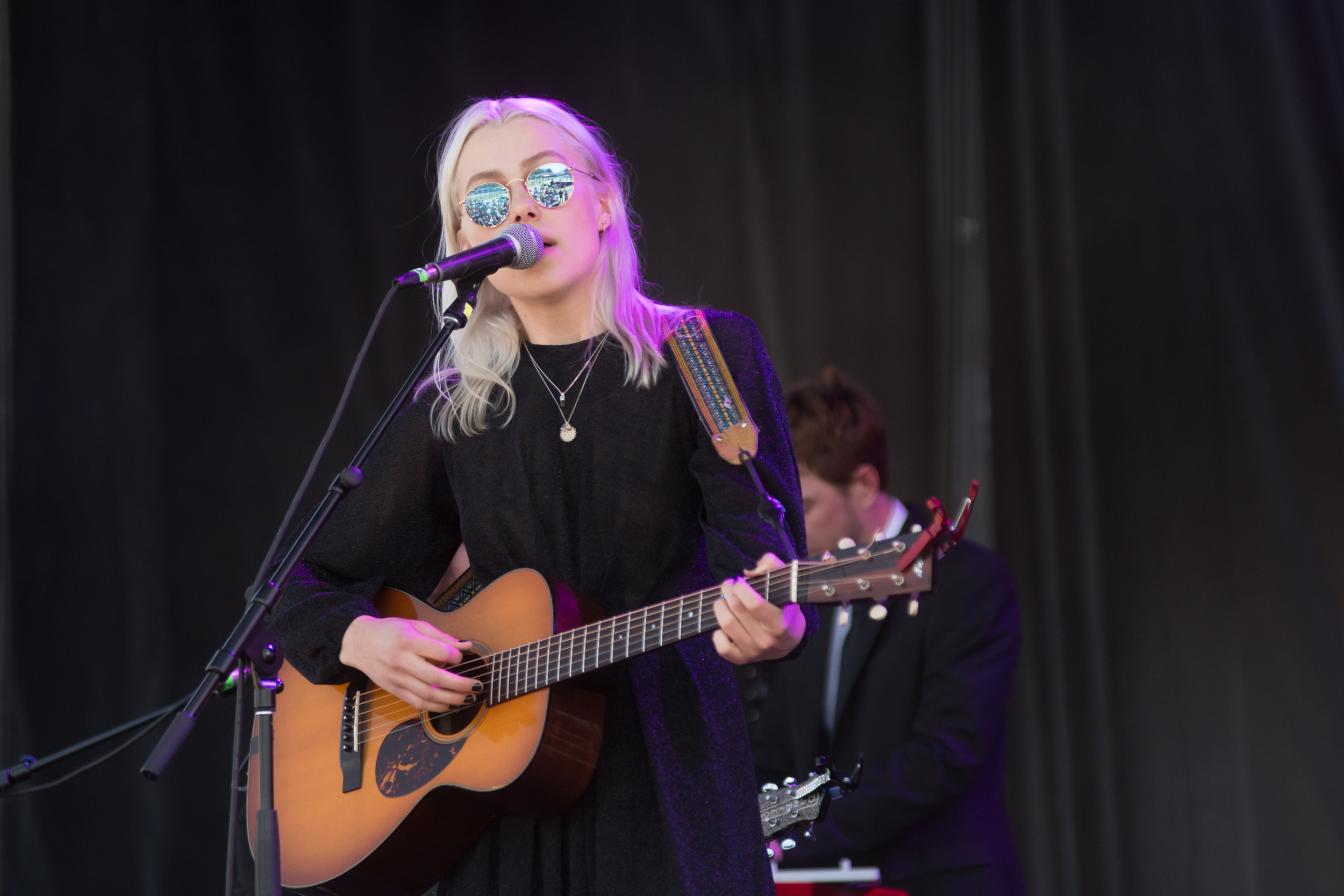
Navigating upward and outward to the Yeti Stage, I eagerly stood shoulder to shoulder awaiting the US festival premiere from unprecedented artist Phoebe Bridgers, whose deeply personal lyrics allow a glimpse into toxic relationships of her past and spotlight the all-too-common mistreatment of women in our society. Promoting her 2017 debut Stranger in the Alps, Bridgers was accompanied by a backing band donned in elegant black attire. Passion-fueled youngsters bounced up and down to folk-pop songs such as “Motion Sickness” with upbeat tempos, enjoying the craft of the music while possibly losing sight of the greater message at hand. Bridgers relieved her band for a handful of songs, offering the audience an organic exposure to the rawness of soul-crushing “Smoke Signals” and “Funeral,” and bringing out Seattle songwriter Noah Gundersen for a duet of “Killer,” which slowed the pace of dance moves into a gentle, contemplative sway.
Lingering around the emerging artist stage, I awaited a widely anticipated performance from experimental pop band Japanese Breakfast, fronted by Eugene, OR native Michelle Zauner. The band erupted onto the stage with “In Heaven,” the opening tune from 2016’s Psychopomp smoothly interluding into the album’s following track and hit song “The Woman That Loves You.” They then turned to newer material from 2017’s Soft Sounds from Another Planet, slicing into the peppy “Machinist” and the melodic fantasies of “Road Head.” Zauner is a natural when it comes to showmanship, proudly dancing her way across every inch of the stage before protruding beyond the stage, smashing her face into the cameras of photographers and fans alike. Zauner’s charm and unquenchable desire to win the devotion of an audience, matched with the bands unique dream-scape sound, ensures that they will remain an important contributor to the scene in the foreseeable future.

After a quick shuffle over to the Big Foot stage, I found myself standing in place smirking at the prospect of finally observing my first show from Philly bedroom songwriter (Sandy) Alex G, a.k.a. Alex G, a.k.a. Alexander Giannascoli; easily the show I most looked forward to out of the entire Sasquatch! bill. Alex’s versatility allows him to cross-pollinate his way through a sonic landscape without subscribing to any specific genre, curating a catalogue so diverse that you wouldn’t believe the differentiating tunes were tailored from the same artist. Although I am a huge fan of his recordings, I was somewhat wary of how certain tracks would translate into a live setting. Fortunately, that doubt was immediately squashed as Alex and his band flawlessly jammed to guitar forward lo-fi ballads such as “Kicker” and “Bug” from album Beach Music. Immediately after knocking out a mellowed rendition of folkish hit “Bobby,” Alex faced the floor while addressing the audience: “Alright, now we’re gonna play some really good songs!” This declaration, along with other humbled exclamations, stripped the band of any perception of “rock star” status and spotlighted Alex’s lack of agenda to meet the usual demands and expectations of the music industry. Furthermore, this warmly invited the crowd to feel as if we were just watching a group of buddies play some music, making the songs that much more approachable.
A short hiatus from music called for an opportunity to grab some beer, which was exclusively and dangerously sold in 24-oz. cans for $15, instigating a #BudLightUpForWhateverChallenge of “which will break first, my bank or my body?”
As I settled into the natural reclining throne of the main stage hill, I got googly-eyed over that spectacular view for one final picturesque sunset, failing to capture its beauty via iPhone photos. My final spectacle of the main stage happened to be none other than PNW indie beacon and all around badass woman Neko Case, who has performed at Sasquatch! more than any other artist. Soothing a sea of weary weekenders, Case’s angelic voice serenaded those of us who were running on fumes, exhausted from a weekend of relentless stimulation. The Tacoma hometown hero kindly dedicated the song “Curse of the I-5 Corridor” off of her forthcoming album to the nearby city. In addition to teasers from Hell On, Case made sure to pull out favorites from her back catalogue such as emphatic soother “This Tornado Loves You” off of 2009’s Middle Cyclone. Still buzzing on feelings, I stumbled back in silence relishing in a pool of utter bliss.
Monday morning was met with the same suffocating heat that had become humorous by this point. Emerging from the tent, my first sight was that of the “Babe Cave” inexplicably thrashed and flipped atop Chad’s dad’s Suburban. I promptly packed up the car and embarked upon the pilgrimage back to the chaos of city-life, sitting in disbelief that the holiday weekend had come to a close so abruptly.
Be it a “limited time offer” or a giant step in the direction of salvation, Sasquatch! Music Festival was able to generate and facilitate a truly celestial experience that most promoters and festival-goers only dream of. An intimidating lineup sequencing a contrast of beloved acts with a liberal offering of emerging talent, combined with one of the most unique and picturesque venues, is absolutely unbeatable.
Here’s to hoping that the return of the beloved Sasquatch! is here to stay.

Courtney Barnett Gets Real on ‘Tell Me How You Really Feel’
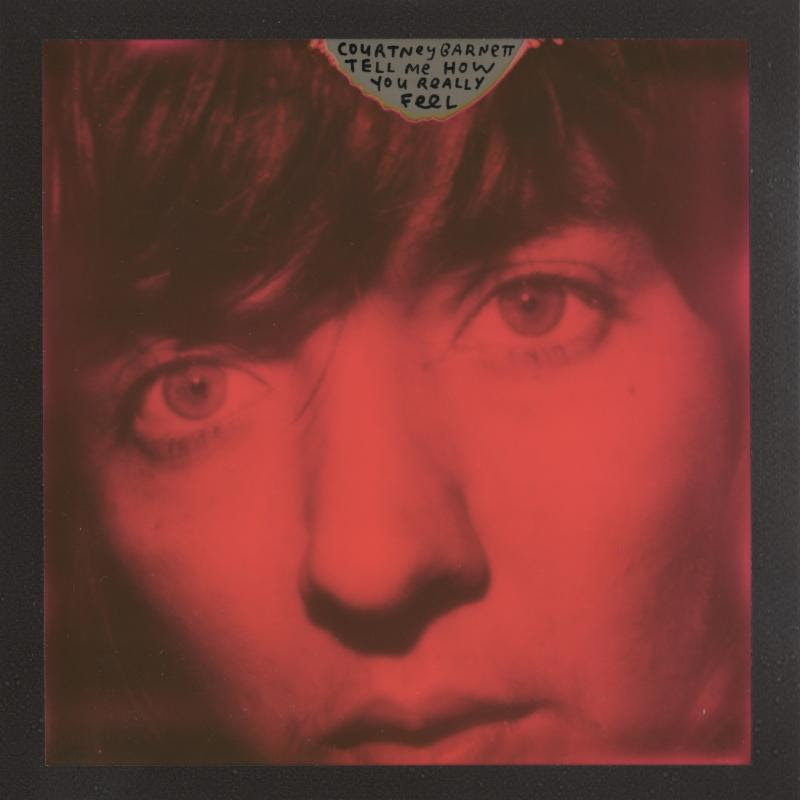
The start of Courtney Barnett’s sophomore album, Tell Me How You Really Feel, sets the scene for the chaotic, emotional turmoil to come with the words, “Take your broken heart / turn it into art.” While this first track, “Hopefulessness,” seems to drone on upon first listen, with its slow rhythm and monotonous vocals, it later becomes evident that each layer of the album serves a unique, intentional purpose. While “Hopefulessness” certainly doesn’t shine as a standalone track, it succeeds in easing the listener into the ups-and-downs that come throughout the collection.
In many ways, Tell Me How You Really Feel shows a maturation of Barnett in all aspects. Although the album is contradictory, uncertain and self-conscious throughout, her unflinching dedication to expressing her fears and vulnerabilities continually sets her apart as a daring, introspective artist. Her anger and frustration get the best of her in “Nameless, Faceless,” with the track serving as a nod to Kurt Cobain and a simultaneous jab at double standards in gender roles with the lyrics, “I wanna walk through the park in the dark, men are scared that women will laugh at them / I wanna walk through the park in the dark, women are scared that men will kill them.” Her anger reaches its peak in the explosive “I’m Not Your Mother, I’m Not Your Bitch,” with impassioned, infuriated screeching vocals. This frenzied, aggression-ridden track is uncharacteristic of Barnett’s typical style, but displays a unique versatility reminiscent of the White Stripes.
But it’s not all anger and aggression; Barnett continuously illustrates herself as both poignant and empathetic. In “Need a Little Time,” she’s apologetic, level-headed and self-reflective. Her exasperation with both herself and those around her is a refreshingly relatable contemplation. She continues peeling back her layers, up until the tender final track, “Sunday Roast.” Ending the chaos of Tell Me How You Really Feel with a softer, more loving piece leaves the listener with a welcome sense of calm after the myriad of emotions expressed.
Overall, the unexpected irrationality, self contradictions, and internal battles found in Tell Me How You Really Feel are what make the album so appealing. While Barnett shows her self-conscious side throughout, her creative arrangements, hard-hitting vocals, and fearlessness in self-expression portray a confident, unapologetic artist. The track “Crippling Self Doubt and a General Lack of Self-Confidence” puts it all out there, displaying an unwavering vulnerability largely uncommon in today’s world ridden with Instagram likes and filtered selfies. And it doesn’t stop there. Like most of the tracks on her newest album, “Crippling Self Doubt and a General Lack of Self-Confidence” switches its tune. Just as you think Barnett is full of self-loathing and despair, she lifts the mirror and quickly points out the faults of whoever hurt her (and by the looks of it, someone hurt her). Lesson to be learned from all of this? Don’t f**k with Courtney Barnett. Nobody’s perfect, even her, but if she’s a woman confident enough to put her insecurities on display for the entire world to see and come across this strong, then there’s no telling what else she’s capable of.

Rainbow Kitten Surprise: ‘How to: Friend, Love, Freefall’

On paper, Rainbow Kitten Surprise should be a complete disaster: A North-Carolina five-piece playing moody folk-rock music with spurts of rapping, paired an ultimately ridiculous name. Yet somehow, the band has beat the odds and gained quite a reputation for incredible shows and a distinct sound. On RKS’ third studio effort How to: Friend, Love, Freefall, the band is at its most confident and consistent in its career, with its best album to date.
The success of Rainbow Kitten Surprise stems from its brilliant frontman Sam Melo. The singer’s gorgeous voice and ability to change from soft to loud in a blink makes his voice a powerful instrument. The singer’s growth is fully evident immediately on lead single “Fever Pitch,” as the song begins with Melo’s beautiful falsetto (which thankfully is all over the album) before moving into a rapid-fire rap-like fury. Melo is not necessarily always rapping, but he certainly isn’t simply singing either, which serves as an ultimate strength to the album as the band refuses to fit under one genre.
The band’s vocal skills are on full display early on the record as harmonies between Melo and guitarist Derrick Keller are truly gorgeous. On an early highlight of the record “It’s Called: Freefall,” melodies and slow-building acoustic guitar help carry the song throughout its two brilliant minute runtime. The band’s softer side comes out on the album’s later half on the gorgous “Painkillers.”
That isn’t to say that every song is a wild success. “When It Lands” for instance is the album’s low point as the song tirelessly goes from slow to fast and features Melo’s most careless lyrics about good vibes and hanging out. That being said, there is much more good than bad on this record, including the aforementioned “Painkillers” which immediately follows and brings the album back into focus.
The record is at its best when it sounds more raw and experimental, especially on the delightfully grooving “Hide” . Melo used the release of this song to openly come out, as he sings to his Mom about a new partner. The song moves at a leisurely pace before a guitar solo that screams homage to Modest Mouse catapults the song into a remarkable uptempo filled with huge energy. That Modest Mouse sound is especially evident on the ripping guitar riff of “Matchbox” which is particularly reminiscent of “Dashboard.”
Friend, Love, Freefall is the first Rainbow Kitten Surprise album that works as a full piece of work, which is a refreshing aspect of this record. The songs work towards a greater tone of the record, not just to stand out on their own. The album sets the tone with a 30 second acapela opener “Pacific Love” and closes with one of the band’s most moving tracks to date in the keyboard led “Polite Company.” The band’s attention to detail and focus on creating a distinct sound shows great growth from the band’s subpar 2015 album “RKS.”
The album’s final highlights come with the remarkable closing sequence which begins with “Possum Queen.” The increased role of keyboards on this record greatly help Rainbow Kitten Surprise grow sonically without sounding overwhelmed with new sounds. Melo experiments with his voice as he wanders throughout the song curiously backed with a pounding drum beat that pushes the song in an exhilarating and unexpected way. The song transitions into “Polite Company,” that ends the record on an introspective note. The attention devotion to perspective rather than thrills greatly benefit the second half of the album as it helps change tone from the largely upbeat first half.
As a whole, How to: Friend, Love, Freefall shows Rainbow Kitten Surprise maturing by leaps and bounds as they not only continue to grow their sound but also grow in scope and focus. Backed by Melo’s compelling vocal performance and the band’s many risks, the album stands out as a truly great listen from start to end and is the band’s best work to date.
7.8/10
HINDS: ‘I Don’t Run’
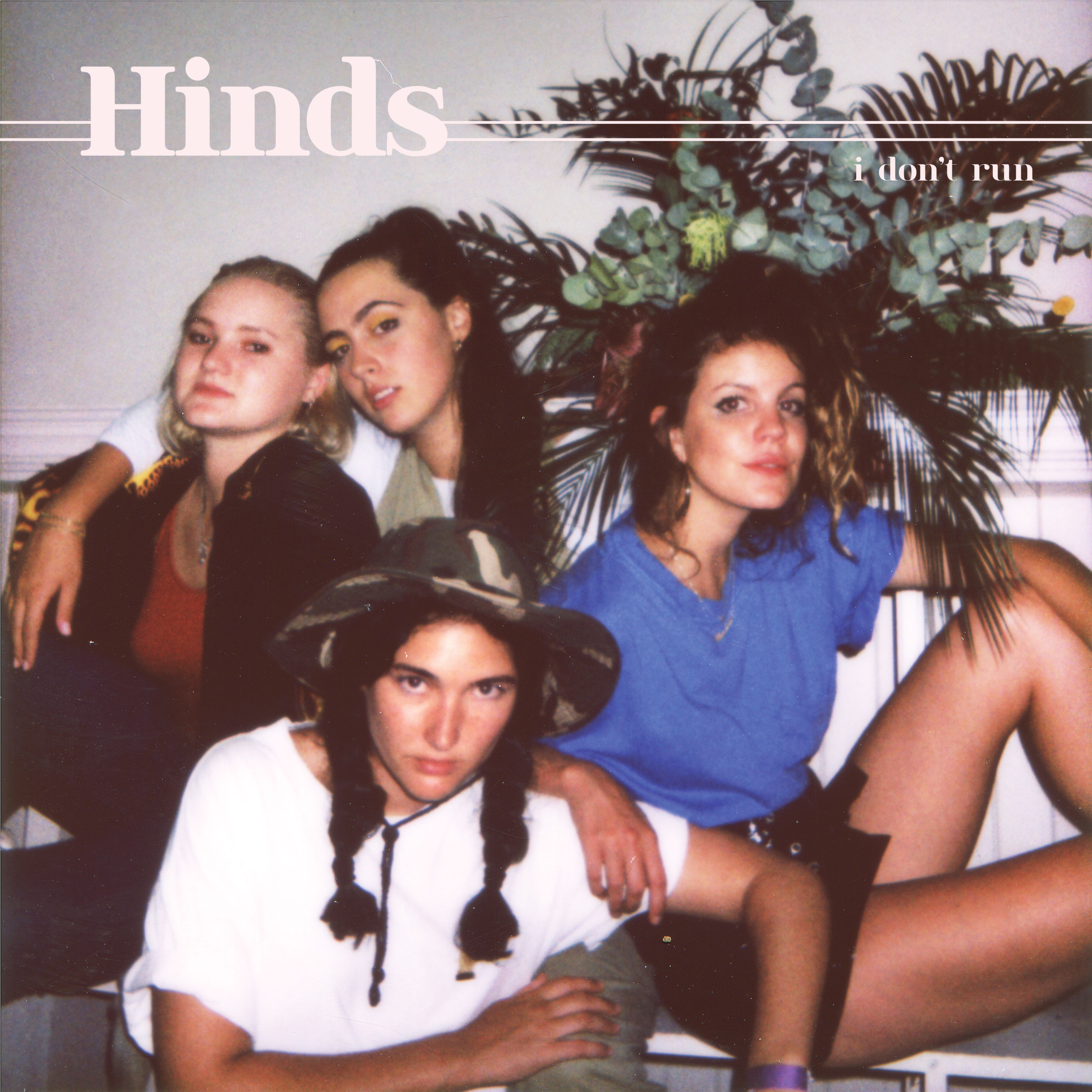
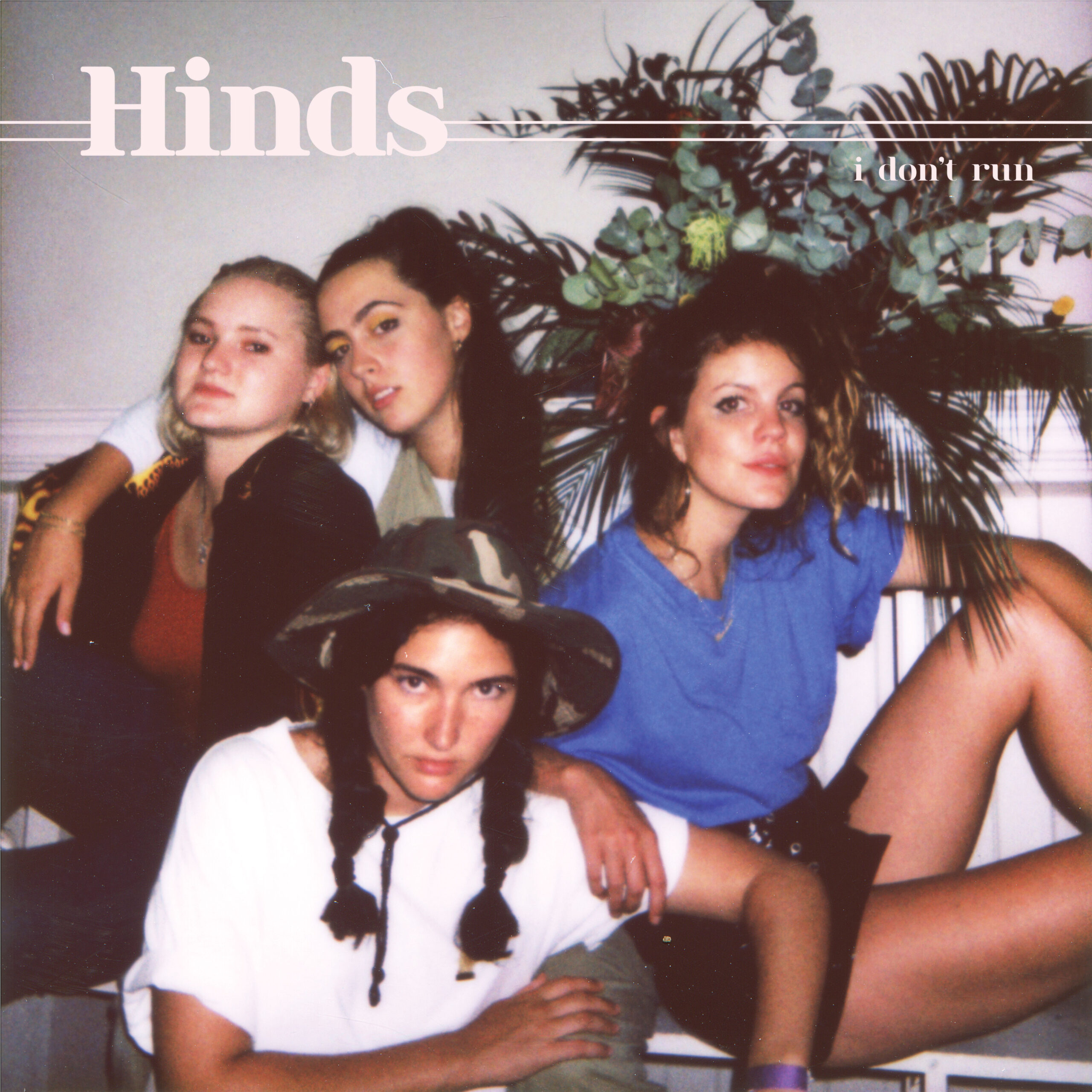
Hinds is back with the release of their much-anticipated sophomore studio album I Don’t Run, and they haven’t strayed from their ultra-cool, garage-tinged rock. Despite Hinds hailing from Madrid, I Don’t Run sounds like it was recorded in an American garage by four dogged women who aren’t putting up with your shit – oh wait, that last part is true. Hinds is Carlotta Cosials, Ana Perotte, Ade Martin, and Amber Grimbergen, a femme-tastic lineup that only ups their mystique amidst international buzz. “Talented” is perhaps the best word to describe the still-nascent band, as Cosials’s vocals effortlessly pierce the air above jangling guitar chords, flaunting the maturity of a band whose second album is even more arresting than the first without needing a soul-searching scramble for identity.
Hinds doesn’t hold back on I Don’t Run; Cosials obstinately sings “dude i get confused i’m not openly yours / and what about the necking when i came / should i’ve known before you were also banging her?” on “Tester,” one of the album’s most brazen songs. Hinds expertly toes a fine line between fun and gritty, between rock and pop – contrast “Tester” with the pop anthem “New For You” or the similarly catchy “Echoing My Name” that follows it and you’ll recognize a band that loves to let loose but is capable of restraint and tight melodies, but never exactly polish. Their lo-fi production is essential to their music, evoking a sense of comfort and relatability; there’s just something about hearing Cosials sing with a hint of weariness “you don’t need a lover but I don’t want – I don’t wanna go” over head-bobbing guitar hook that makes her infinitely human.
Some of the downtempo tracks on the album – in particular, “I Feel Cold But I Feel More” – carry a whiff of The Velvet Underground in their self-assured, minimalist panache. Sometimes this makes their denser tracks pale in comparison, as on tracks like “Rookie,” the layered voices of Cosials and Perrote eventually become grating; the back-and-forth on “Soberland” is a less overwhelming utilization of both member’s pipes, and acts as a testament to the band’s creativity.
I Don’t Run isn’t a far cry from Hinds’ first release Leave Me Alone, but that isn’t a bad thing. A little more vulnerable and a little more ambitious, Hinds continues to capture hearts with their signature easy garage-pop, and although they have claimed their stake in the American music scene, they remind us of their roots with album closer “Ma Nuit” (My Night). Although partially in French and English as well as Spanish, it drifts along on eerie, minor-keyed guitar strums that will transport you to the alleys of Barcelona’s gothic quarter, reminding us that Hinds is gracing our ears from across the ocean.
8/10
Wye Oak: ‘The Louder I Call, The Faster It Runs’
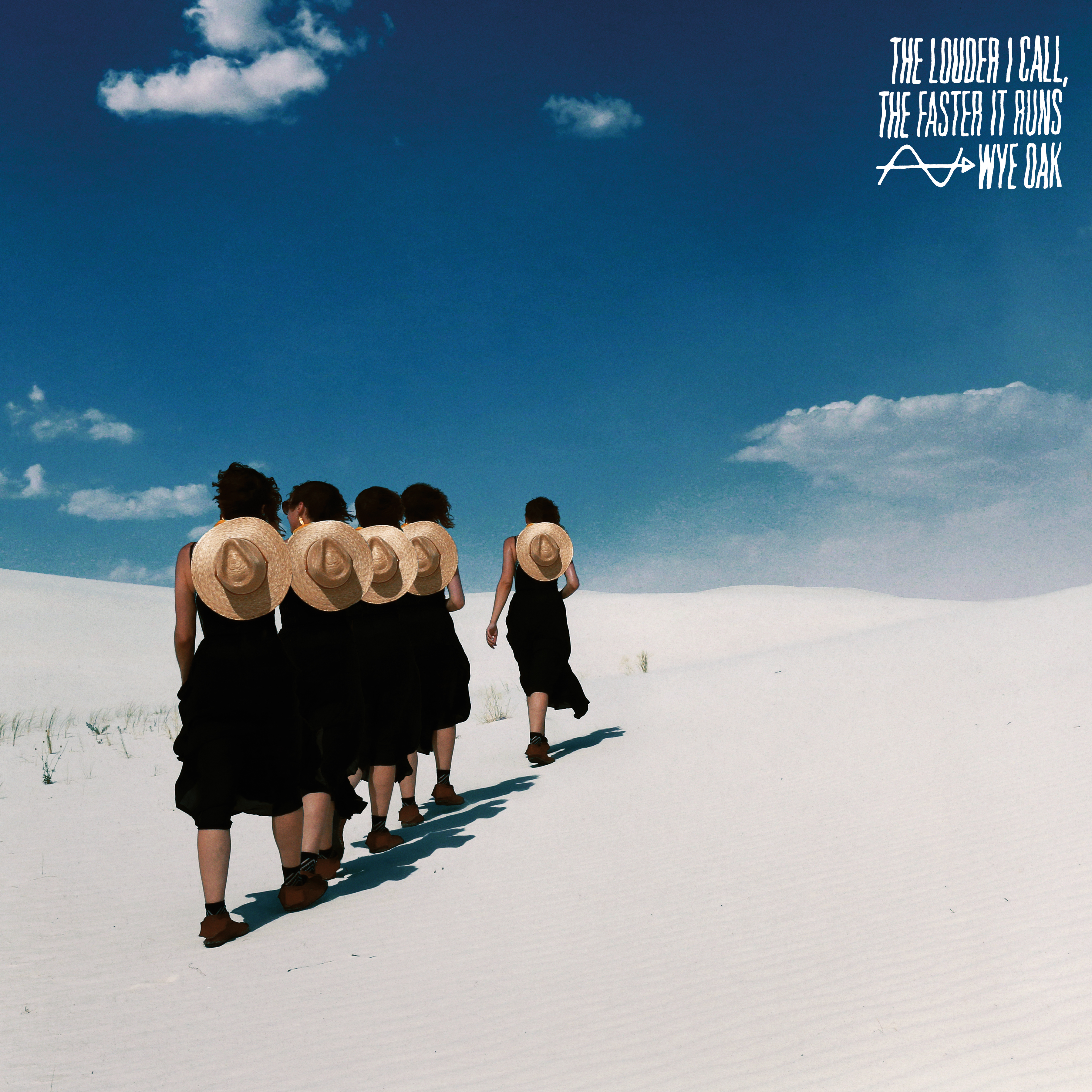
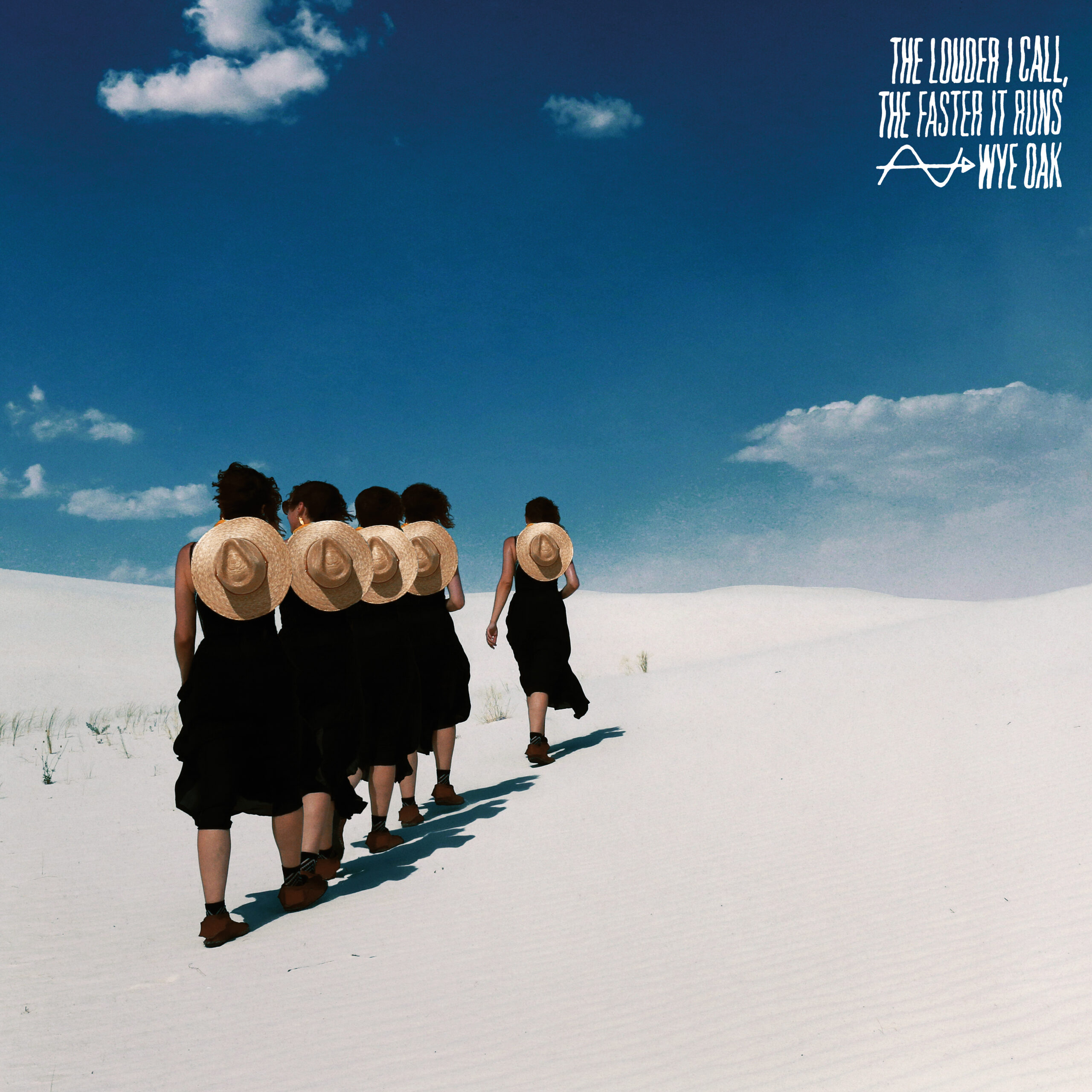
Wye Oak is a band of separation and reconnection. Bandmates Jenn Wasner and Andy Stack are divided by over 1,500 miles (Durham, NC to Marfa, TX, respectively), meeting back to write and record. Forgoing the recording methods of previous albums, the duo approached their latest release with a freer process, allowing them to delve further into the toolbox they’ve built in their decade-long career. The Louder I Call, The Faster It Runs is an exploration of personal reconciliation and the search for power in a life of compromised expectations.
If the sequences and synthesizers of 2014’s Shriek was Wye Oak’s greatest departure, The Louder I Call confidently takes up more space in that change of form. After the introduction of “(Tuning)”, we are met with “Instrument”, equal parts spiraling synth loops and bombastic chords. The end result is effervescent and finds fun between moments of dissonance. The title track is staccato-punched pop flirting with willful ignorance while simultaneously keeping eyes over the shoulder: “Like any other day / we will make the bed / thinking it is dead / It is finally dead.” It’s hard to imagine these songs coming from them were we able to hear them five years ago.
“Lifer” sonically resembles much of what listeners have come to know from the band, but Wasner makes full use of this comfort zone to make some of her largest lyrical declarations in the band’s decade-long career: “The end is kind, the mean is cruel / I have to love the life I make, / make up for all the space I take.” Reconciling success amongst peers can be difficult, and Wasner acknowledges privilege while openly figuring out how to use that for good. Long tonal strokes are the backdrop of these confessions, and the bridge is just as much an avowal to taking advantage of life’s luck as the lyrics. This vulnerability occupies an anxious space between audacity and modesty, fearful of hitting either edge.
There are few bands that exude the confidence that Wye Oak demonstrates with every new release. Their approach may constantly change, but no matter the strategy, it is impressive that they always get their best foot forward. “Symmetry”, the album’s most synth-drenched song top- to-bottom, is a delightfully tenacious spin of bubbly production work, but seems familiar to their past songs. “Say Hello” resembles a lot of the folk-influenced singing of Civilian, built on top of a U2 riff and vocal layering; it is the best example of Wye Oak’s past and current top forms intersecting.
Louder I Call is overall not a departure musically, but thematically, it is an expression of resolution that we have never heard from them. It is not their most cohesive album, nor is it intended to be. Every song together is a testament that sometimes it’s okay to let life happen to you as opposed to approaching every day with attack. Current times are tumultuous, and part of the process of change is acknowledgement, and Wasner’s lyrics make space for that. The album’s closing track, “I Know It’s Real”, croons and builds voice, but ends rather abruptly; to connect, there must be separation.
7.8/10
Show Review: Rainbow Kitten Surprise at the Georgia Theatre
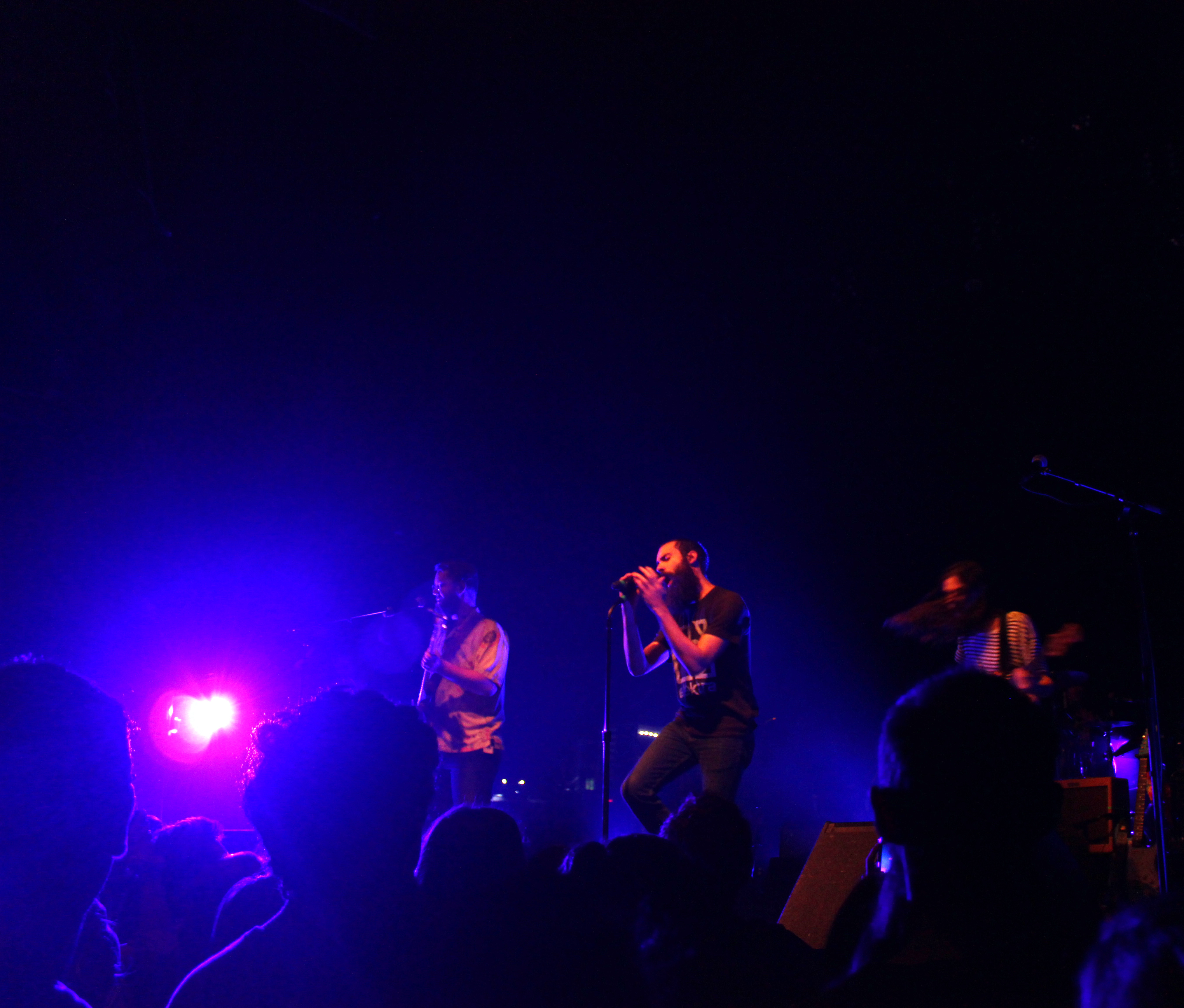
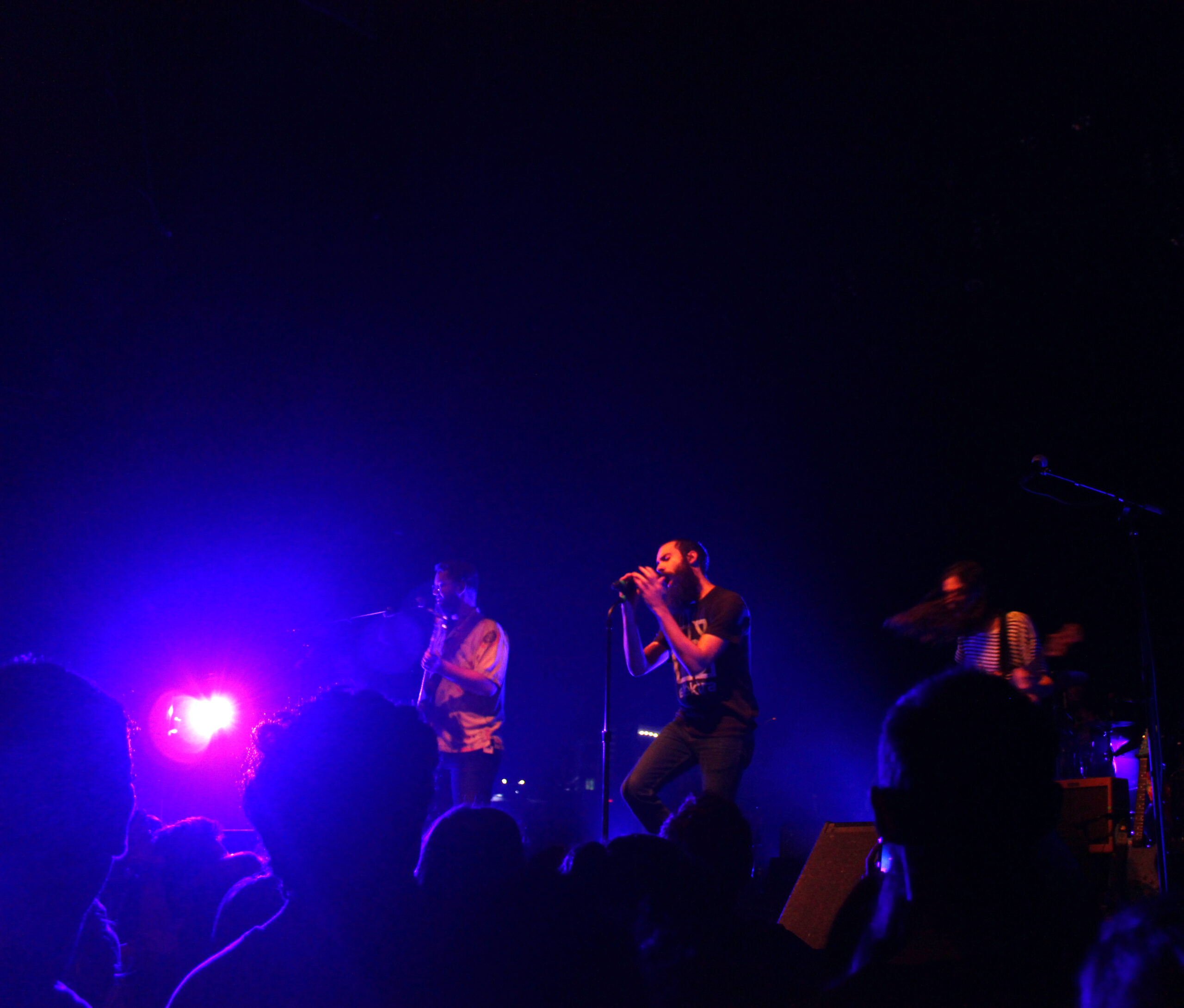
Last time Rainbow Kitten Surprise played in Athens, Georgia, they played a single show at one of Athens’ mid-sized venues: the 40 Watt. Two years later, on Tuesday, April 3, they returned to Athens with Ohio-based folk band CAAMP for a show at one of the largest and most iconic venues in Athens: the Georgia Theatre. This explosion in popularity for the band in the Athens scene shows just how rapidly the band’s fanbase is growing worldwide. Rainbow Kitten Surprise, an alternative/indie group from Boone, North Carolina, fits right into the Athens music scene, and this showed during the concert by the sheer number of times the crowd knew all the lyrics to a song. Despite their rapid growth in popularity, the band hasn’t forgotten their history with Athens. After performing a song, lead singer Sam Melo asked the crowd who attended their previous show at the 40 Watt two years ago. Melo even remembered the name of the bar that he hung out with fans at after the show.
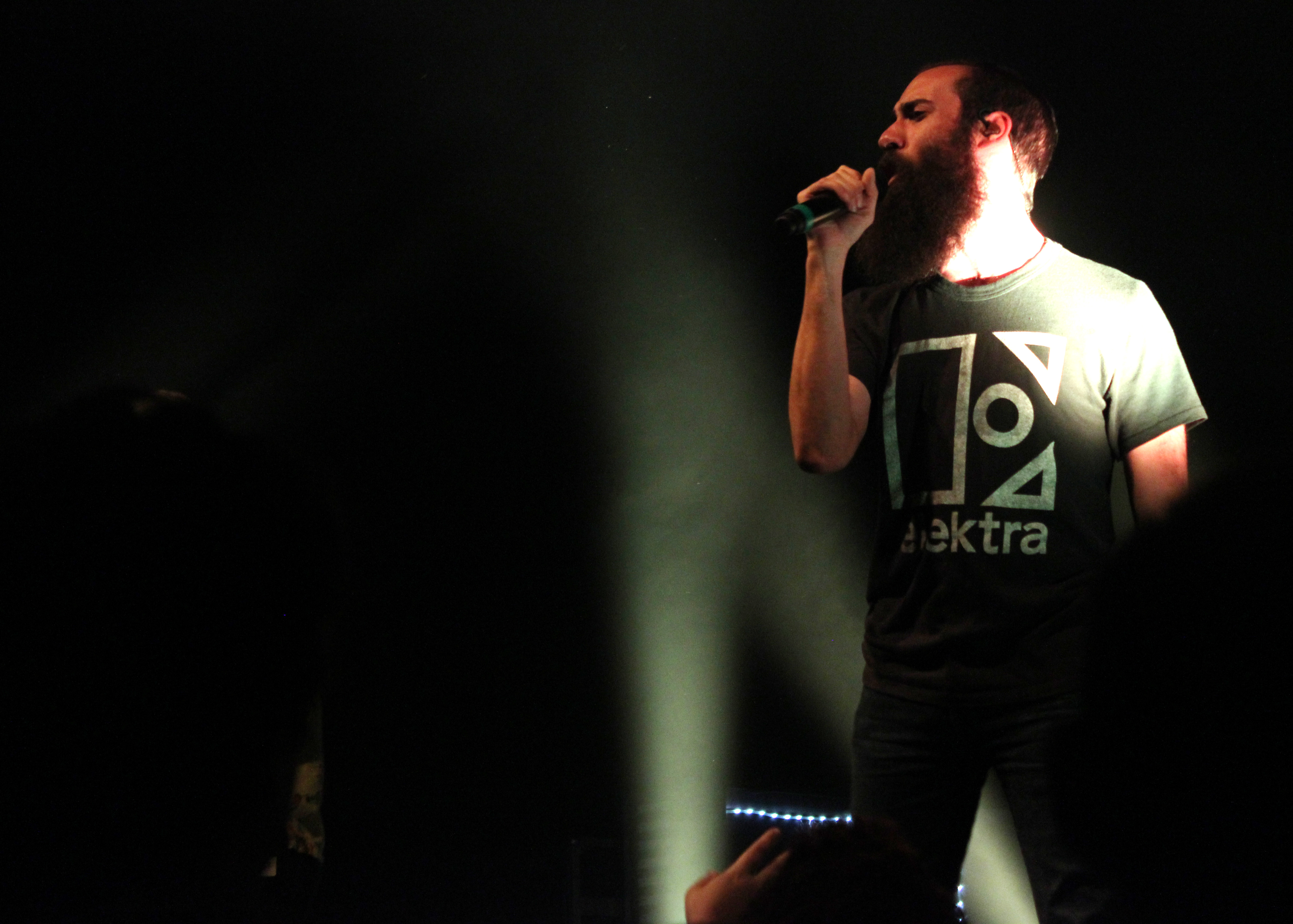
Rainbow Kitten Surprise made their entrance by walking out to a song reminiscent of “I Wanna Be Like You” from the Jungle Book soundtrack. The lighthearted song set the scene for the band’s stage presence throughout the show. The closeness between the band members could be seen in how they all interacted and joked with each other on stage as well as in how they fed off each other’s energy during songs. This made the show feel more relaxed as the audience got a peek at the comradery between the bandmates.
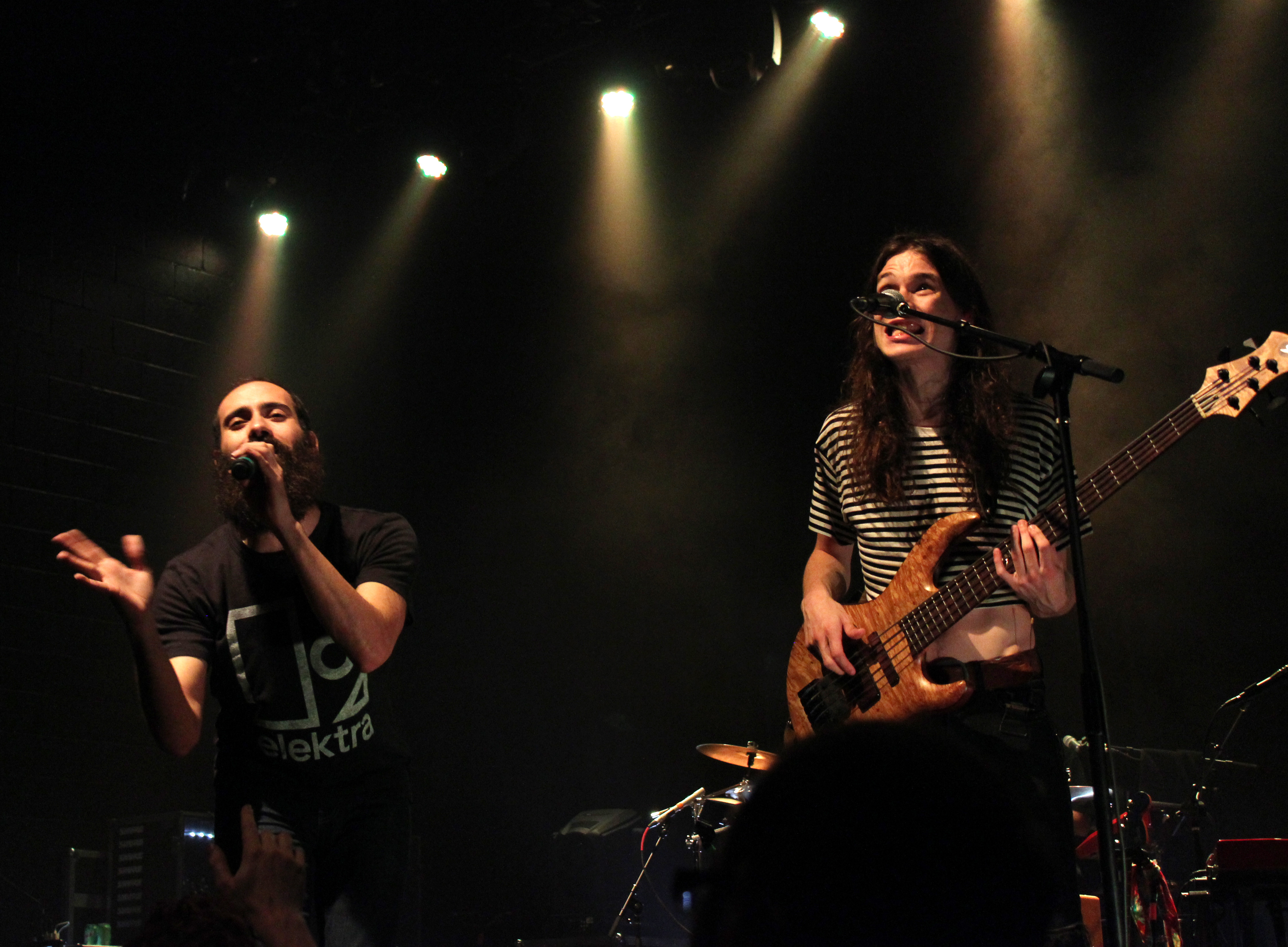
The band’s newest album, How to: Friend, Love, Freefall, is due for release this Friday, April 6, so it should be no surprise that the setlist for the show contained a healthy amount of songs from the new album mixed in with classic hits from older albums. The band started off with a hit from their soon-to-be-released album called “Fever Pitch”. As the show progressed, the band performed classics like “Cocaine Jesus” and “Devil Like Me”, which the audience ate up. The band lit up when the audience would unanimously sing back all the lyrics to these classics. Sprinkled into the set were a few more unreleased songs from their upcoming album. Some of the songs included powerful spoken word verses, similar to parts in older songs like “That’s My Shit”.
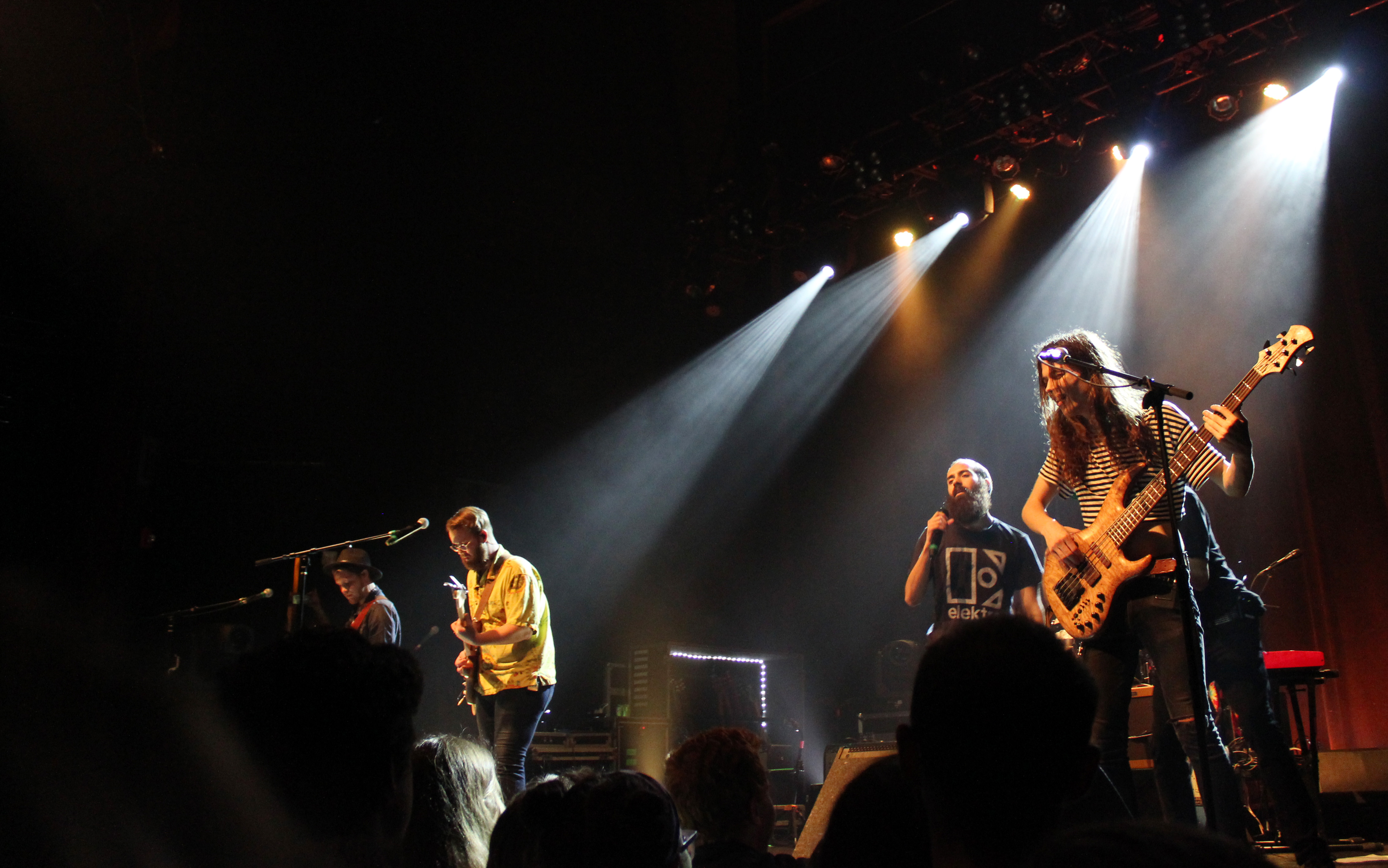
A variety of themes were explored in Rainbow Kitten Surprise’s new songs as well. Before starting one of the new songs, bassist Charlie Holt called out the devastating effects of the opioid epidemic across the United States before the band launched into a song exploring the suicidal and lethal effects that drug addiction can have on someone. One of the opening lyrics of the song stuck with me: “Try not to kill myself today”. The band isn’t afraid to be blunt with lyrics, and this heightens the emotional intensity in their music.
The emotional intensity didn’t come solely from the lyrics though. Lead singer Sam Melo performed the lyrics with a variety of expressions. On more upbeat songs, he would kick and twirl around on the stage in an odd way, but this only added to the energy present on stage. While he sang, Melo’s face would contort in various expressions and he would use animated hand gestures, almost as if he was acting out the lyrics or performing a free expression dance. Melo seemed to be telling tales through the lyrics as well as through his expressions and gestures, and this drew the audience further into the show.
The band exited the stage and promptly returned for not one but two encore performances. At one point during the second encore, Melo took off his shirt during “Run” and even entered the crowd at one point during “That’s My Shit”. The band left the crowd feeling electrified, exuberant, and content with the fact that there was no better way to spend a beautiful Tuesday night in Athens.
All photos by Emma Korstanje
The Voidz: ‘Virtue’
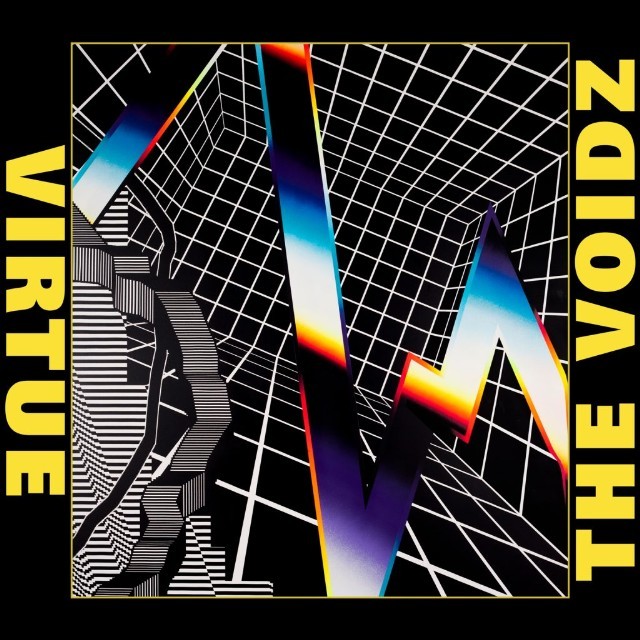
How does Julian Casablancas want to be remembered? It’s been 17 years since the release of The Strokes‘ Is This It, and I think Julian is finally a little tired of being a Stroke. I never thought that I could have typed this sentence, but I also didn’t ever expect to be this taken aback by a new VOIDZ album. I should have realized when they dropped Julian’s name from The Voidz, I suppose. “Oh, I guess they want to be a real band instead of just a side project” is how I thought about it. And after listening to “Leave it In My Dreams” for the first time, I just kept on thinking about how it only sounded like the Strokes for about eight seconds. But then we got to “QYURRYUS”. WHAT AM I LISTENING TO? WHAT MAN IS THIS? How was this the man that gave us “Last Nite”???
Indeed it is. And he does not give a DAMN what you expect. Where the previous Voidz album left me looking for something more melodic in the waves of super compressed noise, Virtue instead reigns in the noise of its predecessor Tyranny and brings us almost an hour of new jamz (sorry, the z is going to come out a few timez here) for us to wrap our heads around. Ostensibly at the forefront of the main creative process of the Voidz as a whole, this could be one of the biggest creative flexes of Julian Casablancas’ career.
It seems pretty hyperbolic once it’s all typed out, but the sheer amount of genres he crams into nearly every song (and successfully, in my humble opinion) is pretty staggering. Be it the schlocky ’80s hair metal guitars in “Pyramid of Bone” or the ’00s pop piano and hip hop influenced drum sounds on “ALieNNatioN,” or the downright Latin sounding percussion on “All Wordz are Made Up”—and how he uses the vocoder to essentially change the key signature on “Wordz” in the second half—Julian feels in control. Does he make it look easy? You bet. I don’t even know if they can play all of these songs live, since theres so impossibly much going on at once.
Right now: Forget about a legacy. Do you feel it? Is that what rock and roll feels like in 2018? Does it even really matter? Julian Casablancas knows what he’s doing. By some strange coincidence he’s decided that no, he’s not done. This timeline is real weird, but at least our boy still has some jamz in him.
8.5/10
Preoccupations: ‘New Material’
Have you ever been to a rave? No, like a real one. I’m talking about the kind that would be in warehouses, bunkers, or maybe even condemned buildings. What if the new generation of post punk kids all decided to throw a new kind of rave together in that fashion? New Material by Preoccupations asks this question. Are they having a good time? I really hope so. With lyrics this bleak and production this icy I really hope that the dancing is keeping them warm.
Jokes aside for now, there is a different sense of groove present here that didn’t exist on earlier Preoccupations albums. While rhythmically repetitive (read: danceable) like most rave and classic post punk, most of the songs on New Material carry with them a dismal, apocalyptic sentiment, but their anxiety is masked (or more likely accentuated) by the very new wavey melodies employed throughout (look to the Duran Duran-esque chorus of “Antidote” for a bold example). Locking into a groove and sticking with it is what most of New Material traffics in and when the band is successful, I couldn’t imagine anyone ditching the dance floor to watch the sun explode.
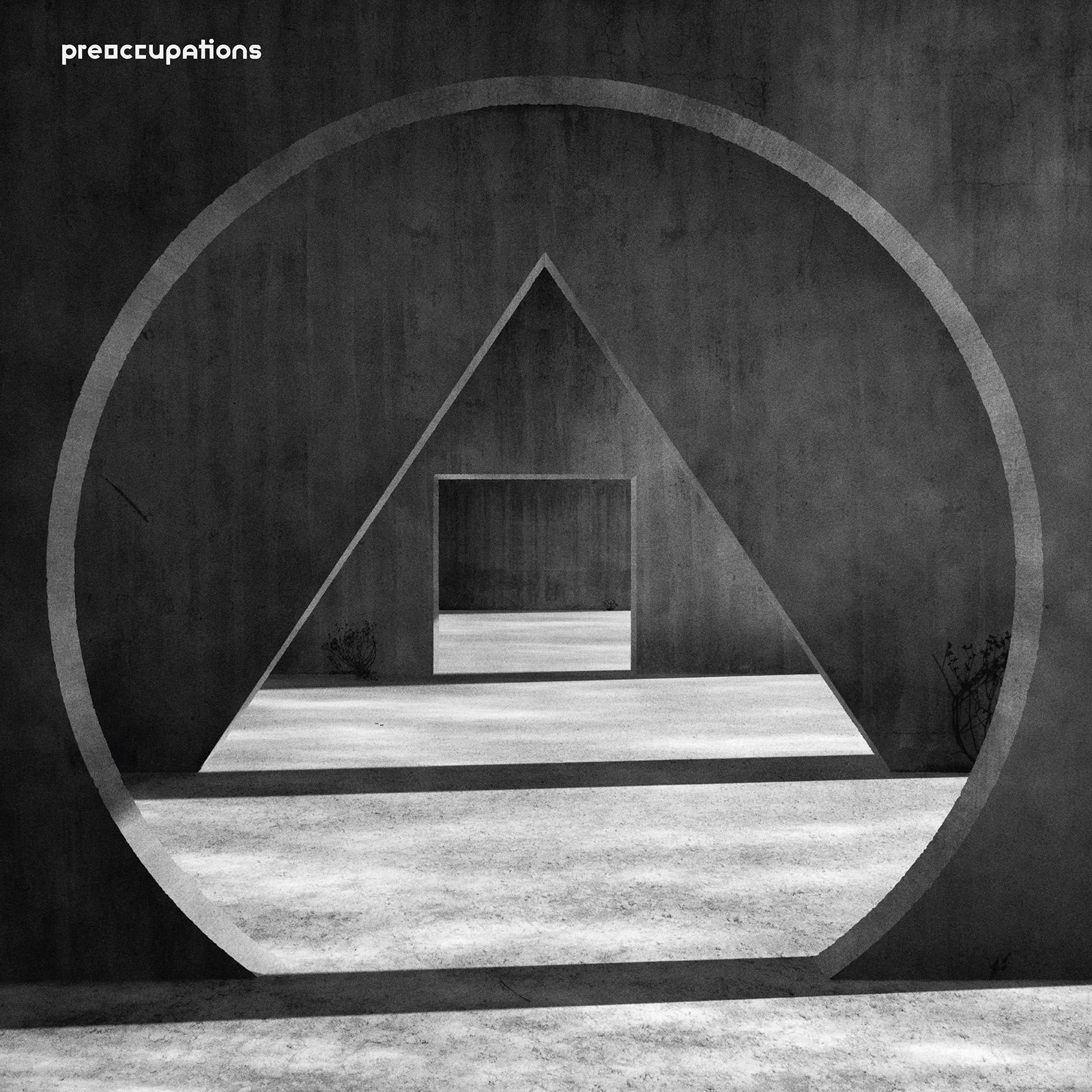
When the groove exits, the ambience that Preoccupations has excelled in creating since their first album as Viet Cong comes to the forefront. Album closer “Compliance” creates a transfixing miasma that really shows off the band’s ambient chops. It really does feel like it was recorded in the concrete room on the album cover. The same can be said about the production aesthetic of entire album. True to their roots, the production feels sufficiently frigid and distant at times which creates a sense of something more immediate than full on detachment, but not close enough to feel like any sort of embrace. Instead it feels more like slowly losing yourself in a dense, choking fog with nothing but an array of strobe lights to guide you deeper in. It might feel disorienting at first but there is a deliberate nature to the strobes; a definite modus operandi that never lets itself get obfuscated by the swathes of reverb on the guitars and synthesizers. To disorient and thrill is the name of the game, and Preoccupations are dead set on doing that better than anyone right now.
I really hope those ravers brought jackets, but then again, I don’t think they even care. The world’s ending anyway.
8/10

Sunflower Bean: ‘Twentytwo in Blue’
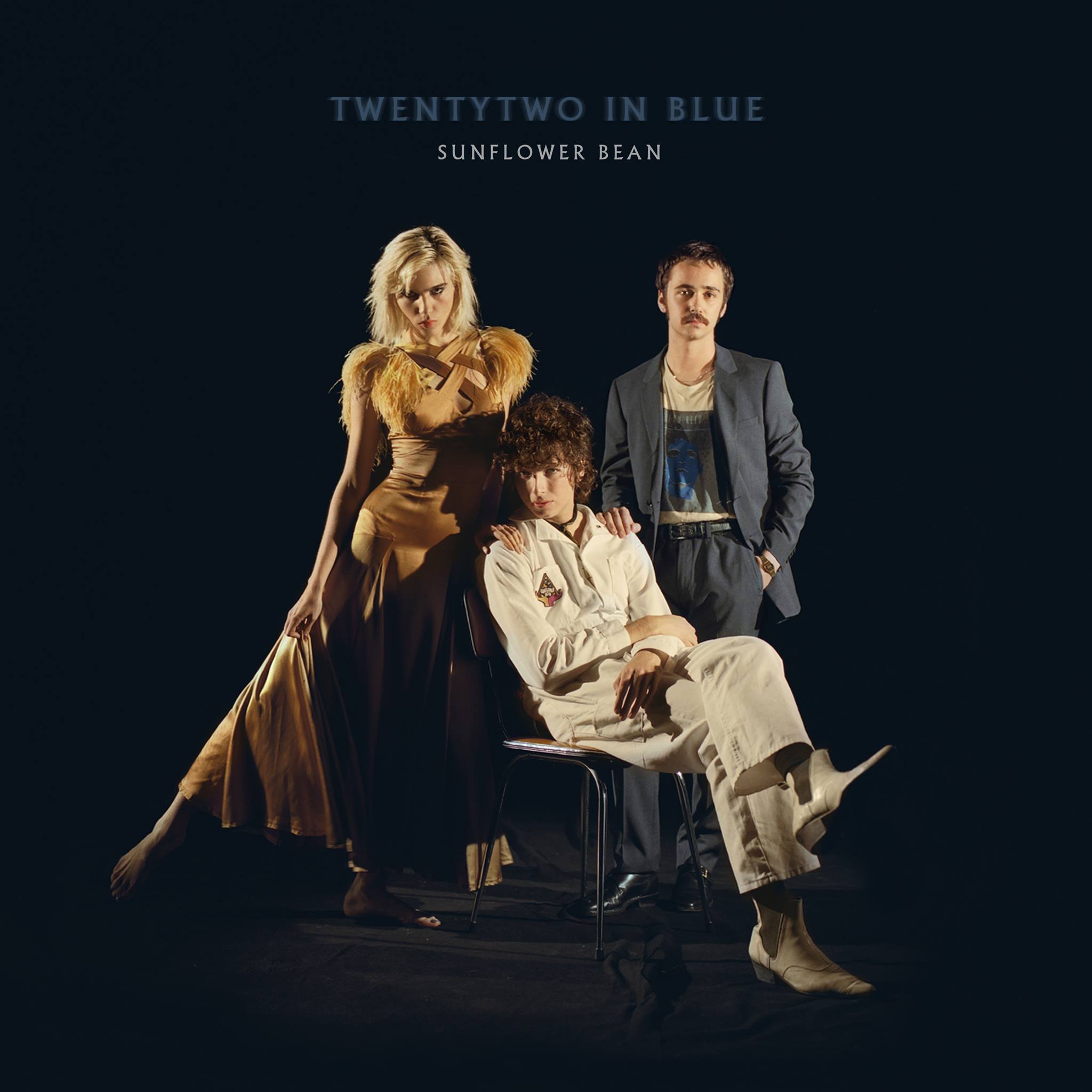
To understand just how much that the Brooklyn trio has grown in the past two years, look no further than the cover of the band’s terrific new album, Twentytwo In Blue. The three members of the band are spotlighted in the middle of the picture; a cover that is more confident and much less cluttered than the band’s 2016 debut Human Ceremony. On this record, the band takes tremendous strides towards a truly memorable and distinct sound.
An immediate highlight of the record is lead singer Julia Cumming’s newfound confidence and enhanced role, which puts her commanding yet soothing vocals to the forefront. The delivery of her voice allows the band’s classic rock sound to come off more sincere as seen on the stomping “Puppet Strings” as Cumming elevates the song’s impact.
Unknown Mortal Orchestra’s Jacob Portrait’s crystal clear production gives the band more clarity and greater punch on each track. From the initial moments of album opener “Burn It,” there is a more grandiose and powerful sound. At times on Human Ceremony, Sunflower Bean seemed lost in their own haze and volume. There is great confidence and poise on this new album that sees the band fully aware and in control of how they want to sound.
The album’s change in tone and breezy 40 minute runtime offers a genuine classic folk-rock offering while still feeling fresh. At times, the band’s youth and search for a sound is still evident as seen on the cringe-worthy backing vocals on “Crisis Fest.” In these moments, the band comes off more as imitators rather than the real deal. However, as a whole the band’s shows tremendous promise and leaps towards a refined sound on this record.
Throughout Twentytwo In Blue, Julia Cummings remains fully in control, sounding much wiser than her meager 22 years of life lets on, especially on the title track “Twentytwo.” Cumming’s strong vocals intertwine perfectly with jangling guitars reminiscent of 70’s folk rock, but with a newfound confidence and assurance. Her gorgeous lyrics are also put on display on the sunny “Memoria” as she sings “You are the mother who turns in her sleep.” This shows great attention to detail.
The album closes on a wonderful note with the gorgeous “Oh No, Bye Bye” as Nick Kivlen’s deadpan singing fuses tremendously with Cumming’s sunny vocals. As is seen in the rest of the album as well, this song shows the band’s grand development sonically as the song is bursting with intriguing layers of melody. Although at times Sunflower Bean’s youth is apparent, on Twentytwo in Blue, the band’s development within just one album is both astonishing and triumphant.
8/10