
Category: Reviews
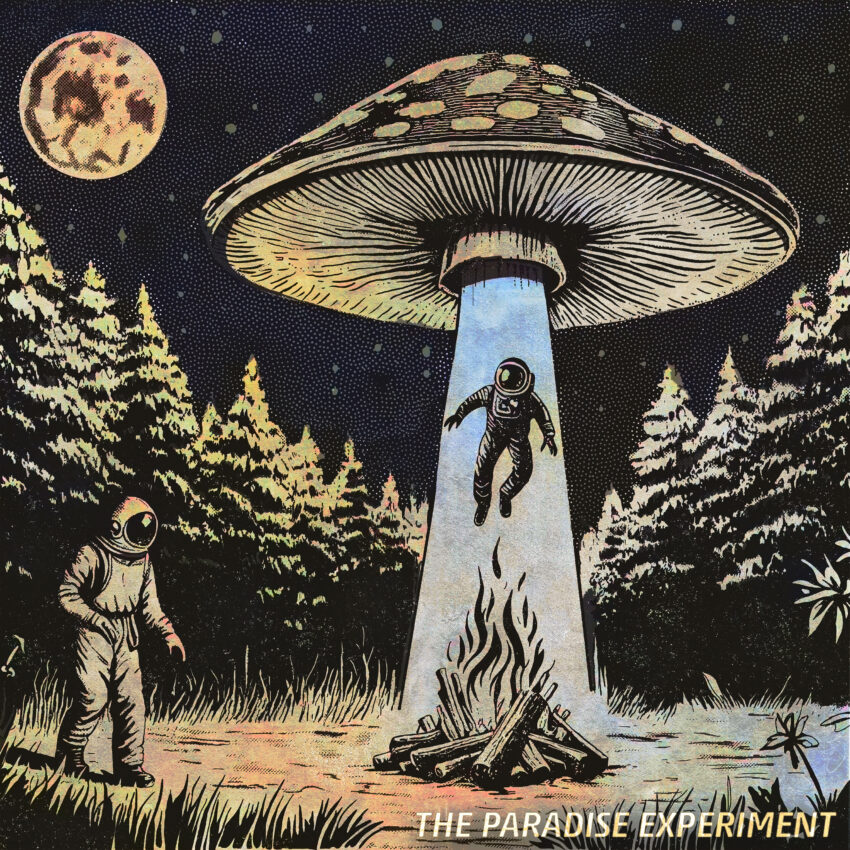
Review: Cam and his Dam Jam Band: ‘The Paradise Experiment’
Athens-based Cam and his Dam Jam Band released their first full-length album, The Paradise Experiment, on January 1st, 2024. On the new record, the group hosts jazzy, groovy coffeehouse tunes that drawl on and on, clocking in at just under 50 minutes with eight songs. The album features the band’s 2023 single “Gypsy Magic Woman”, a psychedelic retro-sounding anthem (with an ill-advised concept), as well as an extended version of “Jet Black Moon”, originally released in 2021.
Cam and his Dam Jam Band make ambient music, not typical for the post-streaming world, but like their name, it calls back to an earlier era of jam bands and music made to be enjoyed live. Exemplified excellently by the opening track “Backpack of Stone”, this gargantuan track is nearly 10 minutes long. Except for two songs, all tracks on the record are beyond the 5-minute marker. The focus of the record is on evoking emotions using melody, tempo, and a fun array of instruments.
The musical elements are infused with sparse lyrics that tend to tell a story with only a few changes in wording. “Rob a Bank”, a western-style song, is an entertaining take on the outcast character on the run from the law. Parleying between “don’t rob a bank” and “let’s rob a bank”, the track leans on American mythology, familiar to almost everyone. The track ends in a call-and-response fashion, with lead singer Cameron Norton sounding conflicted as a chorus of voices try to dissuade him.
The diversity in the band’s repertoire is apparent, particularly in the second half. “My Potion / Three Hours Later” featuring two songs in one wrestles with these subtleties. The song begins with a rather romantic sound, which feels almost yearning. As we fade into “Three Hours Later”, the mood shifts into a more melancholy tune, with a bass that underlines the comparative emptiness of the track. “Jet Black Moon” drives further into the melancholia with an increased moodiness and lyrics alluding to isolation and loneliness, singing “ain’t nobody there to hear me now”.
The record wraps, appropriately, like a live show. “Carry Her Away” takes place on stage, a moment where Cam looks out into the audience and pines for a lady he spots, ultimately unable to get to her. He sings “Now I’m searching but she’s on the run / I was hoping that she would stay”. “Afterparty”, the shortest track by a large margin at one minute and 21 seconds, has all the oomph and joy of a celebratory post-show after-party.
Unfortunately, the familiar story of the gypsy invoked in “Gypsy Magic Woman” does leave an unsavory taste. The term “gypsy” comes from the mistaken belief that the Romani, also known as the Roma, originated from Egypt. It’s been characterized by decades of cultural references from Esmerelda in The Hunchback of Notre Dame to songs by Shakira, Fleetwood Mac, and Lady Gaga. Often it refers to a provocative woman, a wanderer, a wielder of dark magic, or a cunning thief, sometimes a mix. The history of the Roma is fraught with decades of persecution across Europe and beyond, spanning genocide during World War II to forced sterilizations into this century. The term gypsy is an extension of that persecution and is seen by most as a racial slur. Thus, it’s unfavorable and objectionable for Cam and his Dam Jam Band to lean into the gypsy stereotype with a song and visuals to back it up. Though, without a doubt, a reflection of the lack of knowledge on the subject in the US.
In The Paradise Experiment, Cam and his Dam Jam Band harken us back to when music at will was indispensable to most, with the live local band being a staple in everyone’s soundtrack, giving us the ambient music we would feel so plain without. Skipping over the poorly titled “Gypsy Magic Woman”, you’ll find an otherwise impressive selection of music to groove and jive to. If the point was to create an advertisement to go and see the dam jam band live already, well then I’d say it worked.
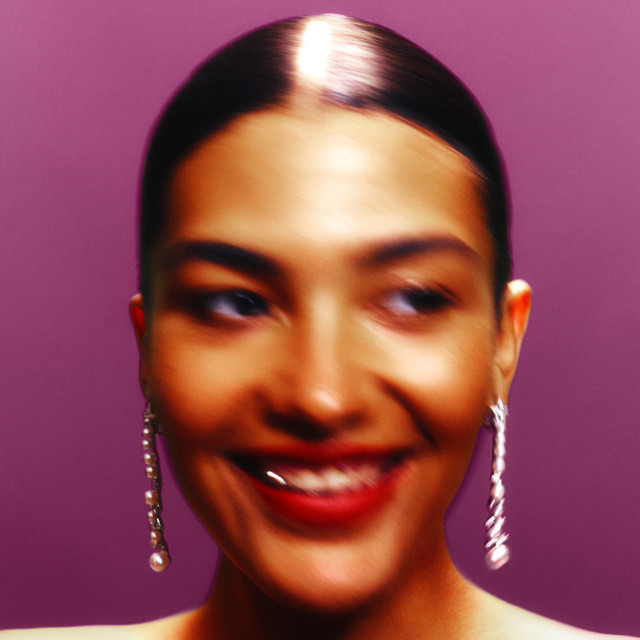
Review: Olivia Dean: ‘Messy’
London-based Olivia Dean, 24, released her debut album Messy (EMI Records) in late June. As featured on my Staff Picks list, Messy is a collection of delicate and soft reflections on young adulthood that I was immediately drawn to. Oscillating between unbridled love and joy and melancholy reflections on life, Dean showcases a vulnerable ethos, making the record an ideal companion for musing on one’s own life and inner world.
Recorded over two weeks in her hometown, Dean led the album with her heart, not her mind. Leaning into her own creativity, Dean’s first priority was pleasing herself by making a record that she loved. Her relaxed attitude shines through with music that simply is, rather than pretending to be something it’s not. Messy boasts simple melodic patterns, tight and straight-to-the-point narratives against a backdrop of whimsy keys, jazzy brass ensembles, smooth rhythms, and even a steel pan. Dean’s musical landscape is reminiscent of the United Kingdom’s previously most iconic neo-soul export, Amy Winehouse. In “Dive”, a vibrant portrayal of recklessly falling in love, one finds traces of Winehouse’s “Valerie” and “You Know I’m No Good”.
Messy’s strongest point is Dean’s instinct for self-reflection. In “Ladies Room”, she meditates on a boy who holds her back and how to let that go, via an ode to the unifying experience of drunken exchanges with strangers in the women’s restroom of a bar. On “The Hardest Part”, an earlier single, she ruminates on growing out of a teenage romance. She’s both vulnerable and self-assured, presenting an antidote for the post-break-up blues in song.
On the album’s title track, Dean relinquishes herself from the urge to present as put-together, singing ‘It goes, you can let it / It’s okay to regret it / I’m on your side’. Singing along feels like therapy through repetitive affirmations. In the penultimate, “Everybody’s Crazy”, Dean observes the universality of anxiety and insecurity. As with earlier tracks, simplicity allows her meaning room to breathe.
Dean dedicates the album’s final track, “Carmen”, to her grandma, who immigrated to the UK from Grenada as a part of the Windrush generation. She honors the quintessential immigrant story: the courageous young immigrant, against all odds, starting anew in a foreign land for future generations of one’s kin. Her gratitude for this unrequitable debt is evident when she sings “You transplanted a family tree / And a part of it grew into me”.
The album chronicles the beginning of a new relationship in “Danger”, a standout single with a groovy rhythm. It encapsulates the anxiety of entering a new relationship, which can be particularly daunting after a recent heartbreak. It’s a reflection of Dean’s happy-go-lucky attitude and persistent optimism, which is the common thread in the entire album. Even her sad songs feel hopeful about the future and relish in her evident confidence. It’s not easy to write a record with depth but it’s even harder to make it expectant and reassuring despite being, well, messy. It feels easy to give in to our personal problems amidst the daunting pressures of today’s stressors and troubles with blunt gloominess, but Dean shines by doing the opposite. This is a happy record, deviating from what we’ve been accustomed to in the current pop landscape—simply put, it’s a breath of fresh air.
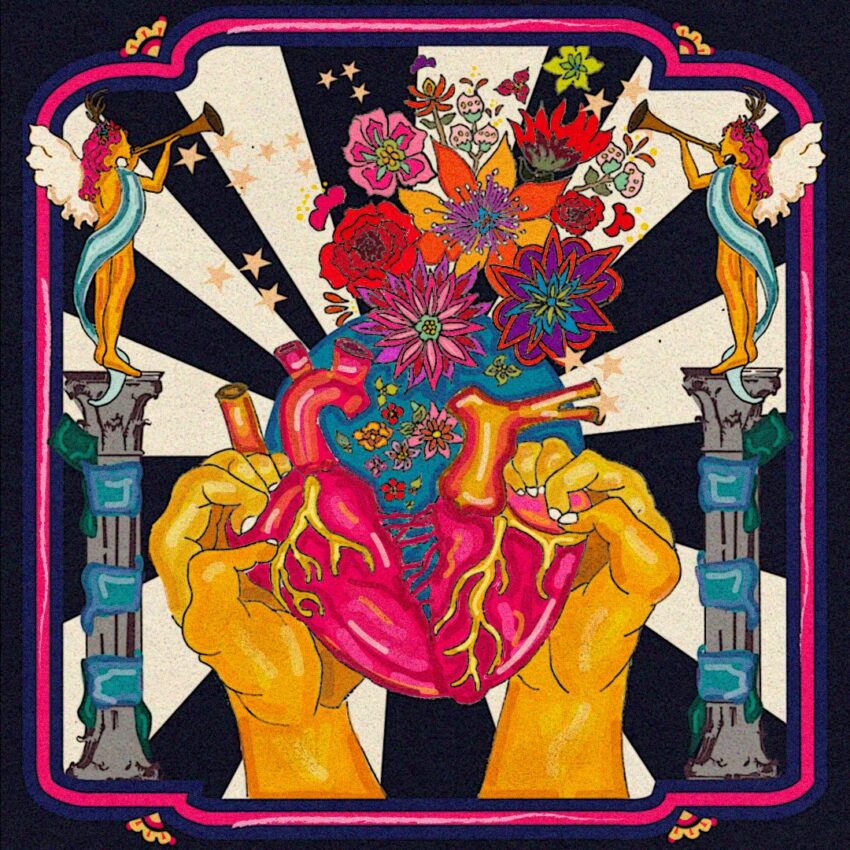
The Asymptomatics Celebrate New Single ‘Two Possibilities’ With A Live Performance at Flicker Theatre and Bar
Athens has been home to critically acclaimed bands throughout the decades, marking the Classic City as not only home to the University of Georgia and its students but also a booming hub for artists and musicians alike. One such band is the funky, weird but strangely groovy The Asymptomatics.
The Asymptomatics, or “the Asymps” as they are often called, is a band of nine members who have made “chaotic” the name of the game. Since its formation in 2019, the band has garnered a name for itself within the music community of Athens. After the release of three singles, they have now added one more to their list of original music. To celebrate the release of their brand new single, “Two Possibilities”, the Asymptomatics recruited a list of prominent local Athens bands to play at Flicker Theatre and Bar for a night of unforgiving energy and sound.
Walking into Flicker is always a surreal experience, particularly on the evening of a gig. From the outside, bypassers can hear the beat of the featured band while they smoke a cigarette and drink a beer. Walking through the red curtains that lead to the venue portion of the establishment, stationed in the room next to the bar, I could see a sea of people bobbing their heads to the band, Neat Freak, which was followed by Late Notice and finally, Bog Bod. The celebrated feature of the night, The Asymps, performed last. Between bands, members handed out flyers with the single’s cover art designed by Hollis Midriff and they discussed their excitement to play their cleanest-sounding single live for the first time.
The band’s set began as most of its sets do, with the lead singer Max Mahieu relentlessly jumping around the stage with the band, maintaining an aura of chaos that has defined the group’s career, particularly in the past year.
The single itself possesses an eccentric guitar-solo build-up in the outro. Though their MO is full-fledged passion, this song was a pleasant departure as it boasted a more meaningful and slower vibe. “Two Possibilities” explores that little gray area in life by rejecting the idea of black-and-white decisions and outcomes. A simple song to describe how intensely unsimple this life can be, especially when young, as the band members are.
“A lot of times it seems like there’s two possibilities but, you know, in reality, things are a lot deeper than that,” says Mahieu. “It’s not just decisions you make, it’s the decisions of the people around you and the ones you love that affect your life and affect their life.” Mahieu’s family is the inspiration behind the song, which was written by Mahieu and his mom, who is a musician herself.
It’s both happy and sad which is reflected by the musicians as they played with electricity and passion, making the audience feel the underlying irony of “Two Possibilities”. Mastered by Jason NeSmith at Chase Park Transduction, “Two Possibilities” incorporates a classic guitar solo from the lead guitar that amplifies the emotional aspect of the song.
“We wanted to have this big rock section at the end that instrumentally captures the emotion and the vibes of the song that the lyrics start at the beginning,” said Mahieu.
From there, the band immediately transitioned to play their classic, most-noteworthy hit “GTFO! (Gerald the Friendly Orangutan)” which was a lighthearted and silly conclusion to a great show.
Though the chaotic transformation of the Asymptomatics onstage is something that some would deem messy and unorganized, those with an ear for passion would comprehend that this gives the band its personality, hence its rising claim to fame within Athens. A funk outfit of shameless chaos and a force to behold.
“Two Possibilities” is out now on all platforms, with the Asymptomatic’s first full album slated for spring.
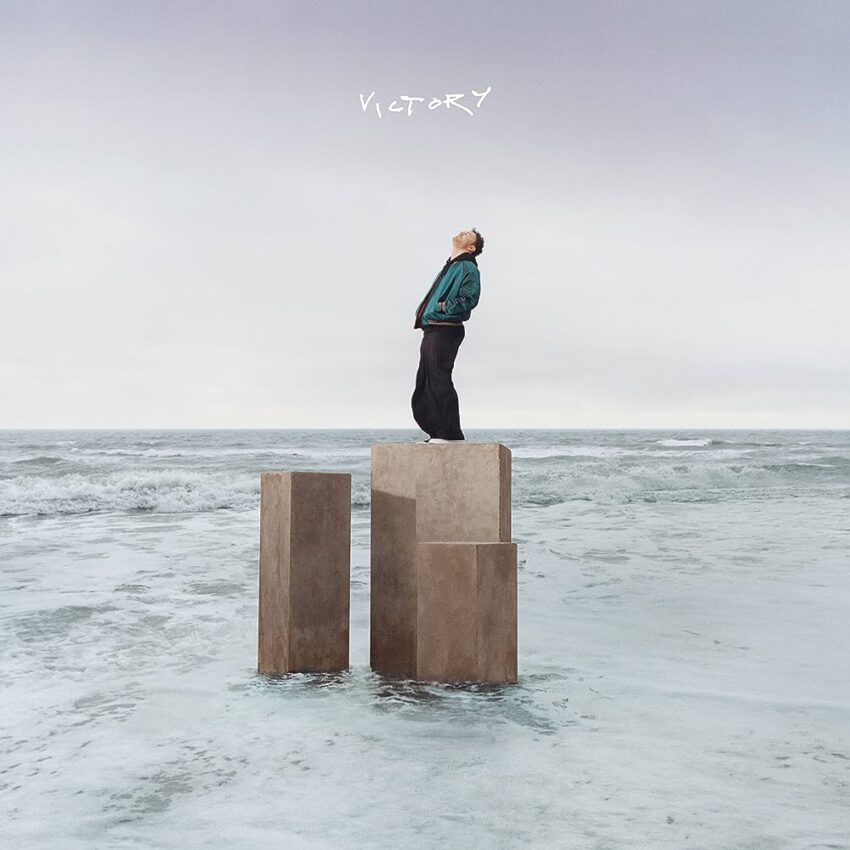
Review: Cian Ducrot: ‘Victory’
Cian Ducrot is a tried-and-true practitioner of the singer-songwriter genre. His lyrical approach is refined and polished against the same undertones as his predecessors, which are quite easy to pinpoint as soon as his debut album Victory comes through your headphones. It’s immediately reminiscent of Lewis Capaldi, Dermont Kennedy, and early Ed Sheeran. Of this, Ducrot is well aware. His perspective on comparisons shifting throughout his career from this good to this is bad to this is unavoidable—lo and behold, it is.
It is as much a triumph (pun intended) as it is a familial anthology. Ducrot’s strength on this album is the way he speaks of not just himself but of his people. It’s an early look at a singer-songwriter who isn’t just introspective but deftly extrospective. The title track is a crash course on his childhood as a child of separated parents with an unloving father. He teeters between a humorously deterministic tone (“got a note from my doctor, he said to not even bother / because when you’re messed up as a kid you’ll pass it on to your daughter”) and promising resignation (”learn to live by the glory of knowing it doesn’t hold me and choke me”).
Ducrot has been through a lot, but he “made it”, which is, of course, a vaguely over-optimistic phrase we use that could mean anything from “survived” to “achieved their dreams” to “became famous” as if progress is linear and one-dimensional. By most standards, Ducrot has achieved all of this (and he lets you know that). Hence, his debut album is called Victory. On the conclusive “Heaven”, Ducrot sings “Are we in heaven heaven heaven? / ‘cause I don’t feel pain / I guess that this is heaven, heaven, heaven”, aptly backed by a church choir. Throughout the record, one hears Ducrot’s pain and his redemption. He pays homage to Sheeran, who chose Ducrot as his opener, bragging ”Well, now you’ve got a kid, I’m with Ed on tour / in cities I’ve never been”, which is where Ducrot’s redemption is briefly tied to his newfound success as an artist.
However, “Hevean”, above all is an ode to his brother and their camaraderie, as “Step Dad” is an ode to his stepfather, “Mama” is an ode to his mother, and “Blame It On You” is a accusatory letter to, presumably, his biological father. Ducrot’s victory never belongs to solely him. He gracefully gives each family member their own moment on the record, emphasizing their togetherness and how it made them tougher (”You tore us apart, but we ended up stronger”). On “Step Dad”, Ducrot hails his stepfather for raising Ducrot and his family out of the pain and grief into a brighter future. Unsurprisingly, as noted in a press conference, Ducrot is most excited to perform “Mama” and “Step Dad” for the first time during his live tour, highlighting that above all else his family stands at the center of his work and his story.
Ducrot’s classical background is one of the strongest points of this record. He leans heavily into orchestral arrangements and choral ensembles, even releasing a new orchestra & choir version of several songs off his album. The sonic landscape is intricately designed where new pieces to explore emerge in each listen. On “Mama” Ducrot’s layered vocals add depth. On “Endless Nights”, a piano ballad intro transforms to an upbeat pop tune with a cello and piano, hints of Ducrot’s Irish heritage peeking through in the music as he reckons with heartbreak. On “Everyone Who Fall In Love”, where Ducrot considers the baggage previous relationships leave behind, the bass and guitar anchor the track and leave a haunting and aching aftertaste.
In Victory, Ducrot is an open book with a clear vision, which gives the album a more focused feel than his earlier mixtape and EP. His sentimentality sometimes borders on cliché, but his delivery and the overall production lead to a stunning final package. Despite not feeling like a good lyricist, Ducrot has a knack for tugging at heartstrings. Ducrot has even caught the attention of SZA, who tagged him to co-write a track for the (unseen) deluxe version of her highly successful SOS. He will spend the remainder of the year touring around the United States and Europe to support his debut album. Ducrot’s musicality leads to a refreshing take on a genre that can sometimes feel over-saturated. Victory is a deeply personal and intimate account of life, which also makes it a versatile and universal record.
You can listen to Victory here and catch Ducrot on tour here.
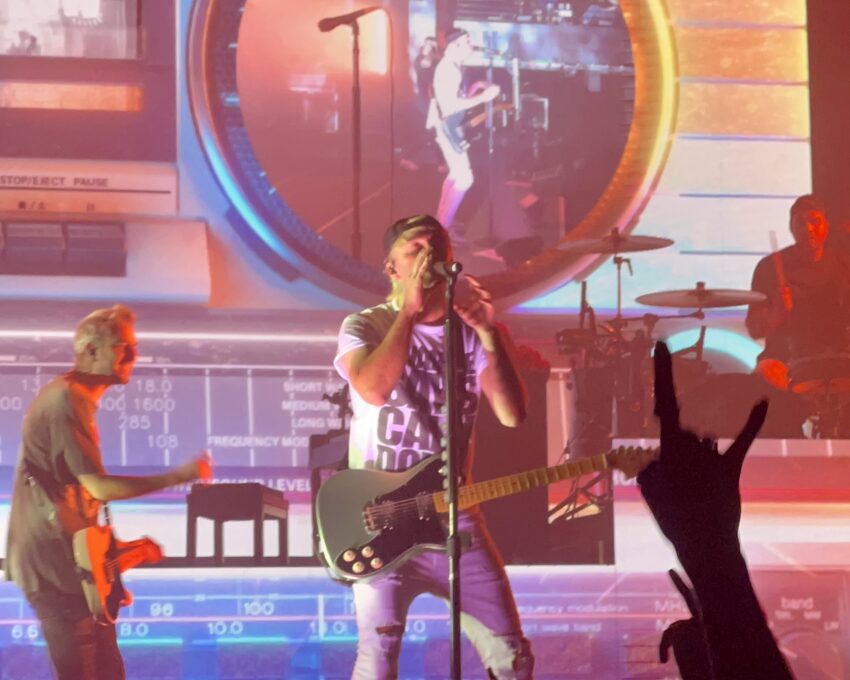
Show Review: All Time Low’s Atlanta Concert Brings Us Back to the 2000s for a Night
My favorite ritual before going to a concert is listening to the artist on the way to the venue. It’s like pregaming for a night of music, with a dose of that same music. So, I drive toward Atlanta’s Coca-Cola Roxy, singing along to All Time Low for the first time in a really long time. I didn’t know I was going to the show until 24 hours ago, but obviously, I could never turn down an invite to see a band that was a staple of my teenage playlists. What better place to be when you’re 23 with absolutely no clue of what to do next with your life? When you’re grieving the end of youthful aloofness that 23 doesn’t allow for? Pop punk is the natural answer, in all its angsty glory against the ails of suburban life and the isolation of late-stage capitalist U.S.A., now fused with the nostalgia of teenhood.
At the Roxy, members of the crowd are shrouded in flannel jackets, most of them donning facial piercings and colorfully dyed hair, a typical crowd for the genre. Later on, during the show, when Alex Gaskarth asks “Who’s been to an All Time Low show before?”, over half of the crowd will roar in affirmation. The remainder will be chastised by Gaskarth—”we’ve been a band for twenty fucking years.”
Gym Class Heroes, the final of the three opening acts, creates a unique buzz leading up to All Time Low’s set. I hear people behind me commenting that they haven’t heard a mention of GCH in 10 years. Even still, with just one full-length album that was released in 2011, GCH has enough hits to further fuel my nostalgia. They take us through a whirlwind consisting of “Stereo Hearts”, “Billionaire”, and “Ass Back Home”. The crowd sings along gleefully, for all intents and purposes, confirming my suspicions that for most of us, this show is a callback to our younger years.
When All Time Low band members finally trickle in, they wordlessly launch into their early hits, beginning with “Lost In Stereo” and “Damned If I Do Ya (Damned If I Don’t)” from 2009’s Nothing Personal, followed by “Six Feet Under The Stars” and “Poppin’ Champagne” from 2007’s So Wrong, It’s Right.
When they turn to some of their newer songs off their latest album, Tell Me I’m Alive, they kick it off with “Modern Love”, followed by the title track. All Time Low formed when its members met in high school in 2003. Now, 35 years old, the band acts as a time capsule for the era they emerged out of, with the same cheeky song lyrics (“I’m messy, I’m reckless / I fuck shit up for breakfast”), a healthy dose of disillusionment (”you’re obsessed with drugs and dating / modern love is too complicated”), and a lot of guitar.
Gaskarth in particular looks remarkably youthful, with a head of bleach blonde locks peaking out of a baseball cap, dressed in a white shirt that reads “SWANKIE SAYS CALM DOWN” from their own merch line. In between songs, mimicking their song “Stella”, he says “Will you take me home, Atlanta? Will you tuck me into bed and kiss my cheeks, Atlanta?”.
At the Sound of Letting Go Tour, pop-punk remains on the safe side of disobedience and defiance, the same way I felt listening to All Time Low as a teenager. The crowd is tame. After “Fake As Hell”, All Time Low’s latest single alongside Avril Lavigne, Gaskarth prods the audience to mosh after noticing what he called a “negotiation to mosh or not” happening in the midst of the crowd. During the next song “PMA”, which stands for ‘post-modern anxiety’, a mosh pit emerges in the center of the floor, but it doesn’t last more than a few minutes. All Time Low isn’t necessarily a show people go to and expect a mosh pit.
After three more songs, Gaskarth’s bandmates exit as he sits behind a piano for an intimate intro to “The Way You Miss Me”, which smoothly turns into a full band ensemble by the second verse. Disappearing and then returning to the stage with an acoustic guitar, Gaskarth plays the beginning notes to “Missing You”, a highlight from 2015’s Future Hearts album. It’s an easily relatable track that both promises hope and delivers a reality check with a scream-along bridge that goes “Grit your teeth, pull your hair / Paint the walls black and scream / ‘Fuck the world cause it’s my life / I’m gonna take it back’”.
Edging closer to the end of their two-hour set, Gaskarth says that we’re at the point in the show where he starts to feel “delirious” and “unhinged”, thanking the audience for “cheering on [his] unraveling”. After bantering back and forth with bandmate Jack Barakat and promising a swift return for another show in Atlanta, Gaskarth explains the meaning behind the name of their tour, which comes from the hope that fans can take whatever bullshit they’ve been hanging onto and let the fuck go. The audience claps and, like churchgoers responding with a chorus of amens, repeat to themselves “wooo yeah, let it go”. Naturally, they play “The Sound of Letting Go” next.
During another strategically placed piano intro, this time for “Calm Down”, a bashful Gaskarth gives a sheepish smile on the very zoomed-in camera pointing at his face. It’s a new track from their last album and (yet another) doomsday anthem that dwells on the infuriating feeling of losing your mind over worldly matters that others find immaterial; the refrain goes “Don’t tell me to calm down, tell me to calm down / It’s freaking me out that you’re not freaking out”. At this point, another mosh pit momentarily emerges and then fades back out.
Next, it’s time for the fan-voted song of the evening, wherein the band asks fans to vote for one of four songs via QR code before the show. With a cutesy egg-race video game animation up on the stage screen, the band discovers the song of the evening along with the fans. Tonight, it’s “Last Young Renegade”. Gaskarth jokingly says that this one’s been a fan-favorite so far on tour, which felt ironic to him considering the album had a mixed reception or in his words “everyone was like ‘what the fuck is this’.
Nearing the end of the main setlist, All Time Low digs deep into their discography with “Weightless”, a song I haven’t listened to in years, but still know exactly where every syllable falls when I hear it. Written by Gaskarth when he was 21, alongside songwriter Matt Squire, the song has grown in significance to me since I first heard it at (most probably) twelve years old. I could feel the words “I’m stuck in this fucking rut” and “I’m over getting older” leading into the hopeful exuberance of “Maybe it’s not my weekend / but it’s gonna be my year” with clarity and determination I haven’t felt in a long time.
With one last song (”Monsters”), All Time Low gives their fake goodbyes until it is time for the encore, which begins shortly after with “Sleepwalking”. Afterward, they bring forward a stool with a big red button in the center, prompting someone to come from backstage and press it, which will then activate the slot machine being projected onto the screen behind them. There are three song options and after a couple of spins, it lands on “Vegas” for the night, but the audience is far from fooled. A few stray voices shout “Dear Maria”, before the band dutifully launches into their most iconic track “Dear Maria, Count Me In”. Anyone attempting to leave at this point is getting dirty looks from the people they kindly ask to move aside. Most fans stay for the euphoric endnote of this delightfully 2000s nostalgia-fueled evening.
Atlanta Setlist:
“Lost In Stereo”
“Damned If I Do Ya(Damned If I Don’t)”
“Six Feet Under The Stars”
“Poppin’ Champagne”
“Modern Love” (with “Stella” snippet)
“Tell Me I’m Alive”
“Sleeping In”
“Heroes”
“Fake As Hell”
“PMA”
“New Religion”
“Favorite Place”
“Dark Side of Your Room”
“The Way You Miss Me”
“Missing You”
“The Sound of Letting Go”
“Calm Down”
“Last Young Renegade” (fan-voted song)
“Weightless”
“Monsters”
Encore:
“Sleepwalking”
“Dear Maria, Count Me In”
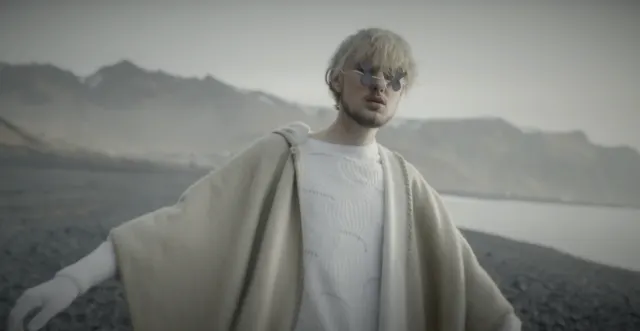
Artist to Watch: Quadeca
Rapper, producer, singer-songwriter, and YouTuber Benjamin Lasky, professionally known as Quadeca, has quickly become one of my favorite artists due to his unique come-up story. Quadeca—or as fans call him, Quad—has crafted an enticing album that places you right in between life and death. His third studio album, I Didn’t Mean to Haunt You, changed the way I think about a concept album. It’s written from the perspective of a ghost in the afterlife, viewing his family living without him; the record is a truly emotional experience. I’d dare to say that I have moshed with Quad in between heaven and hell, as I saw him perform on his Quadeca | Quickly, Quickly tour in Purgatory at the Masquerade in Atlanta, Georgia.
"I never thought I would mosh with one of my favorite artists to a Death Grips-like track from an album about being a ghost in the afterlife."
Quad opened up the night with “knots”, accompanied by a full band. When Quad split the crowd in half preparing for the first mosh of the night, everyone chanting “I’m an open book in a closed casket” and “I don’t fade to black I cut to static”. These lines allude to the final minutes of the album being static, representing the fade into the afterlife.
Taking the show from a near-metal experimental hip-hop track into the entrancing “tell me a joke” is far from an easy feat as the track begins with soft ambient sounds. Yet, the booming moments hit just as hard as they did in “knots”. The live drums on this track were especially astonishing. During his set, Quad reminded us that these songs would never sound like this again, with the accompaniment of his live band and our voices meshing together.
Quad teased unreleased tracks with acoustic sets throughout the show. After performing what he said may be his hardest work yet, “born yesterday”, Quad took us back to his first studio album, Voice Memos. With the introspective “Man on My Left Shoulder” and the soul-sampled “These Days”, day-one fans got what they were hoping for.
Naturally, Quadeca performed his critically acclaimed “Sisyphus” off of his second studio album From Me To You. Quadeca’s high-pitched vocals at the beginning of the track pulled at our heartstrings before he started snappily rapping about the tough, never-ending climb of life.
Quadeca encored with his banger single “BEAMIN”. He fell into the crowd and moshed with his die-hard fans—I helped the man himself up off the ground as the night ended. I can easily say this was my favorite show I have attended to date. I never thought I would mosh with one of my favorite artists to a Death Grips-like track from an album about being a ghost in the afterlife.
When we thought Quadeca couldn’t get any more mysterious, he took to Twitter (now X) to tease his fans again. Changing his profile picture and banner to a wrinkled piece of blank white paper, Quadeca tweeted: “new era approaching”. Will the paper gradually get filled with sketches of his new concept album ideas? Or is this all to throw us off? Only time will tell.
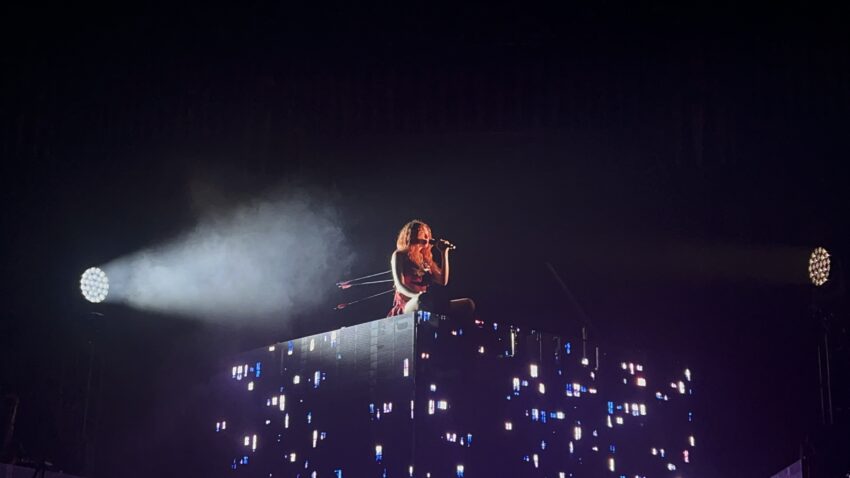
Show Review: MisterWives & Bishop Briggs at the Tabernacle
Last Saturday, MisterWives and Bishop Briggs brought their co-headlining Don’t Look Down Tour to Atlanta’s historic Tabernacle. The Tabernacle, originally founded as a church and later converted to a concert hall, was an appropriate choice for a show that felt like a musical baptism, cleansing us, the audience, of all our worldly problems and pledging ourselves to the religion of live music. Plus, they even brought their own Bishop! (Apologies for the corniness, but it was right there and I had to take it.)
The show started squarely at 7:30 with opener Raffaella, who praised both of the headlining women’s energetic stage presence, commenting on how they make it look easy, but she begs to differ. She was not overstating it.
After Raffaella’s peppy opening performance, MisterWives performed first. On a high-rise platform, about 4ft off the ground, in the middle of the stage, lead vocalist Mandy Lee began the performance with incredible gusto, rocking out to “Out Of Your Mind”. The platform was surrounded by screens that played visuals related to each song, adding an impressive technical touch.
After and energetic run through “Dagger”, and “Where Do We Go From Here?” which seamlessly transitioned into “Rock Bottom”, Lee takes a moment to speak and pledge that MisterWives is going to give their all to this performance, followed with “all that we ask in return is for you to feel whatever it is you need to feel”, promising that we’ll dance, cry, sing and laugh it out until we “leave here better than when [we] got here”.
In the floor section, it felt clear that audience members took her plea to heart and mirrored her energy. Lee recognized this and in a moment of vulnerability, paused to reflect before their next song, confessing that she’s been “battling a[n] anxiety attack” since the show began. At that moment, she looked truly overwhelmed by the audience’s response.
A little over halfway through the set, MisterWives performed “Ultraviolet”, a stripped and emotional confessional about insecurities. In an ode to the song’s music video and the album cover, Lee climbed back on top of the middle platform and sat on the edge with three arrows sticking out of her back. The delicate nature of the song and Lee’s existing anxiety surrounding the show pushed her slightly over the edge and she began to cry towards the end of the performance, which felt like real testament to her earlier statement about needing to feel whatever it is you need to feel.
Leading in to “SUPERBLOOM”, a triumphant, upbeat piece which repeats the refrain “I deserve congratulations ‘Cause I came out the other side” again and again, felt like emotional whiplash. After “Ultraviolet”, this one felt like a cathartic release, which (embarrassingly) left me tearful despite the joyous declaration. Perhaps because sometimes, the hardest part of believing something is to admit it to yourself.
Evidently, Briggs had her work cut out for her, following a performance like that. Mirroring MisterWives, Briggs began her performance atop the middle platform with her single “Art of Survival”, dedicated to her late sister, who passed away in 2021 from ovarian cancer. The screens below her featured the song’s music video.
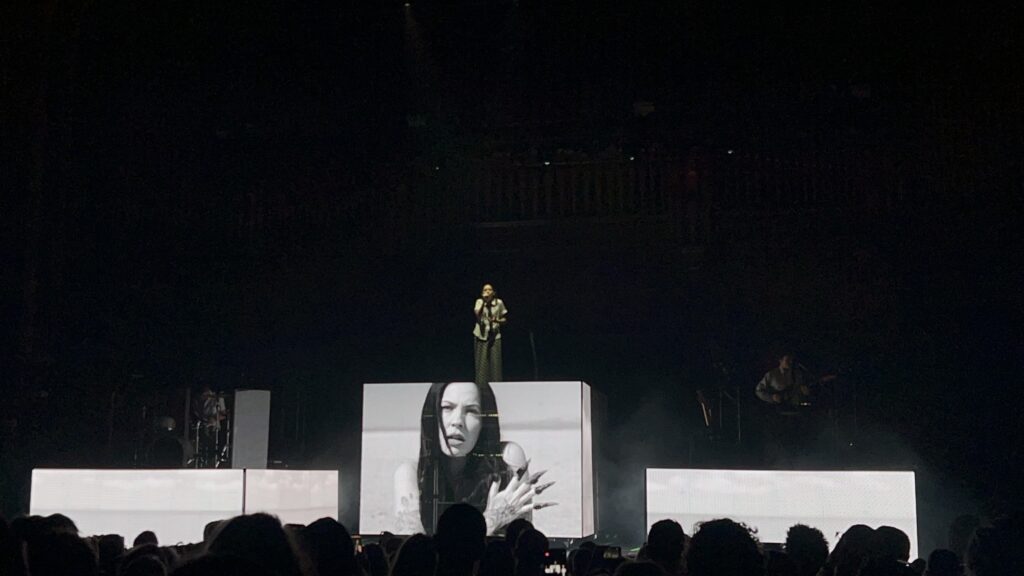
Briggs came down from the platform, breathless and brimming with enthusiasm, repeatedly stating “Oh my gosh, oh my gosh, oh my gosh”. One couldn’t deny her enthusiasm for being on stage and finally kicking off the tour. She segued into “High Horses”, where her electropop sound was in sharp contrast to the full-band pop-rock of MisterWives.
During “Baby”, Briggs led the chorus among an eager audience screaming and dancing to their heart’s content. During “Jekyll & Hyde”, a clever play on a classic literature trope, the screens projected various monsters, which for some reason briefly included Jack Skellington. This also heavily channeled the song’s accompanying music video.
Briggs is still a young artist with a handful of EPs and just two full-length albums. As a developing artist, she doesn’t have a cohesive image that I find myself being able to cling to. She’s raw, honest, and vulnerable, which are traits her fans admire the most, but her visuals feel scattered and disconnected.
Despite my skepticism, the fans absolutely adore her. The power she projects on stage holds a lifeline to audience members, who respect and identify with Briggs’ pains and joys. In the back of the room, I can see a group of friends in a circle, jumping up and down, singing every word.
During an acoustic performance of “Dream”, Briggs strips it back for a concert staple: the phone-light sway-along moment. After a few songs, she throws in a cover of “Take Me To Church”, admitting she’s a big fan of Hozier. It’s a crowdpleaser, the audience sings along loudly.
A few songs later, Briggs wraps up her set with her most successful single, “River”, which naturally, makes the audience ecstatic, putting a neat period at the end of an impressive night of music.
Review: Logic: ‘College Park’
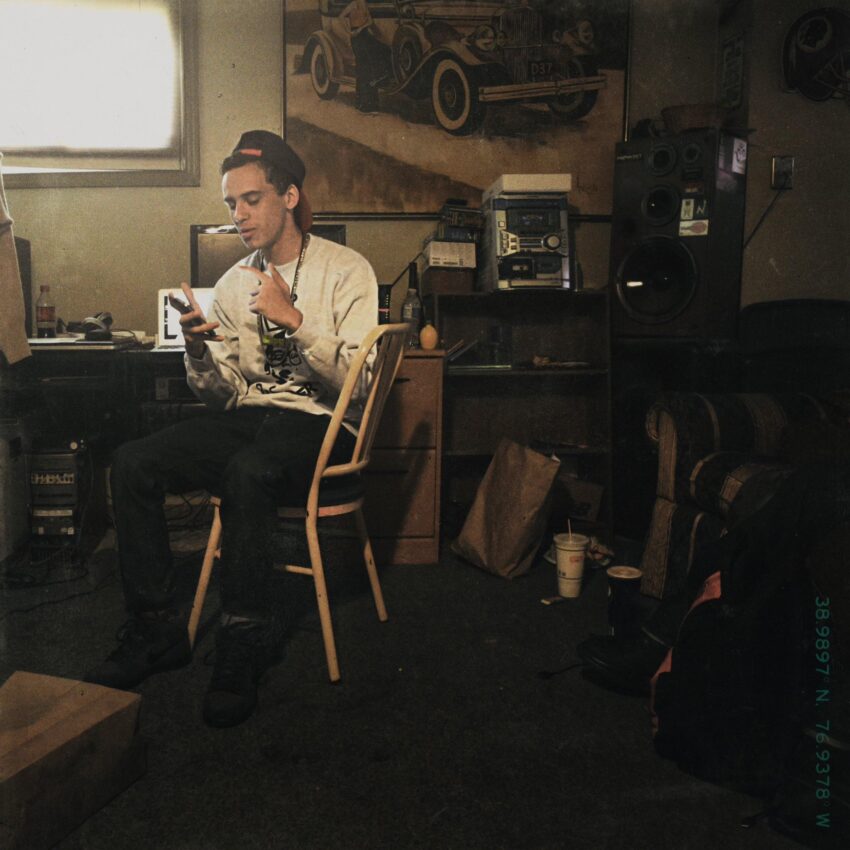
Maryland-based multi-platinum rapper Logic, AKA Bobby Hall, was not lying when he rapped “Egon’s finest, Peanuts after like I was Linus / Followed by that College Park next, that’s the lineup” on the final track of his previous album Vinyl Days. Sprinkled with various skits, College Park tells the story of the original Rattpack’s (Logic’s close squad and later, the name for his fans) trip to Washington D.C. as Logic prepares to perform a show. With features from the entire Rattpack (and more), College Park brings Logic back to his roots.
The album begins with guitar strumming and psychedelic vocals from Logic on the track “Cruisin’ Through the Universe” featuring RZA of the Wu-Tang Clan. Logic’s vocals get both pitched up and down to indicate that this is a dream of Logic’s as he sleeps on longtime friend Big Lenbo’s couch. Logic wakes up and recalls his dream of being on a song with RZA. Lenny states “You know what would be really crazy? / If you got the whole Clan on a song one day” alluding to Logic’s “Wu Tang Forever” off his album YSIV. This track features every member of the Wu-Tang Clan except the late Ol’ Dirty Bastard. Logic’s producer 6ix is, of course, present throughout the entire album, and he does not let us down.
Next is “Wake Up” featuring Lucy Rose, the first single off College Park. While Rose does not have a chorus on the track as she did on the track “Innermission” off Logic’s sophomore album The Incredible True Story, she helps with the social commentary the track was made to create. Repeating lines “every day I wake up” displays Logic’s previous cyclical life of drugs and violence. Logic raps over punchy drums and a pulsing horn-like lead, stating “Dropped out of school then he picked up a spatula / ‘Cause he never had a good role model just a hood role model” displaying the importance of a proper education and environment to lead you through your adolescence.
The next single “Lightsabers” featuring C Dot Castro has the most grandiose production on the entire project. Elevated by the fun Star Wars-referenced title, Logic and Castro come out with a feel-good anthem. I particularly enjoy the several beat switches on the track. We are greeted with iconic “Logic” ad-lib and brassy trumpets as Logic raps simply “Today’s a good day”. After the first verse, the track introduces some light keys over which Logic lyrically highlights his love for producing. The message of this track is to not be creative not for fame or money, but for the love of the game. The third verse introduces more pulsing horns and vibrating synth leads. Recently released from prison, C Dot Castro, previously known as Shy Grey, finishes off the track rapping about his aspirations to make it in the industry one day. Since then, Castro and Logic have created a rap duo known as halfBREED and recently released their first EP, entitled 3P.
Still sprinkled with skits throughout, Logic does what we know him for best on the next three tracks. “Clone Wars III” exemplifies itself as a classic boom-bap beat produced by PoST and Logic himself. Logic reminds us that he is just one of us, a music and pop-culture nerd. The track “Redpill VII” is one of Logic’s most introspective in a while and is one of my personal favorite beats on the record. Beginning with an enchanting yet mysterious soundscape, Logic raps “the drugs all in they system got ‘em adamant they fine / but in they mind they know they not”. Logic is no stranger to struggling with or advocating for mental health, such as on his platinum-certified suicide prevention track “1-800-273-8255”. The track “Playwright” featuring Andy Hull can be summarized by one line “Logic known for tellin’ stories like a playwright”. The track is fun and light-hearted, nothing serious. Yet, the catchy chorus from Hull keeps me coming back. The track ends with a skit of Rattpack in the car, ready to head to Bobby’s show. Castro brings beat CDs, and then we go into “Gaithersburg Freestyle” feat. C Dot Castro, Big Lenbo, Fat Trel, and ADÉ.
Logic’s energy and delivery on the track keep me coming back to this freestyle. Plus, the seamless transition into the next track, “Insipio”, satisfies me every time. Logic released part of this track on his YouTube channel, featuring fun spinning visuals and agile spitting. Next, we get to the TikTok phenomenon “Self Medication” featuring Seth Macfarlane, Redman, and Statik Selektah. MacFarlane’s Sinatra-esque vocals are stellar. Logic and Redman put you in their shoes with their lyrics. I see why this track became a TikTok favorite.
“Shimmy”, featuring Joey Bada$$, is a tribute to Wu Tang’s late Ol’ Dirty Bastard. The track flies by, clocking in at just over two minutes. We get verses from Logic and Joey about overcoming their need for welfare benefits. 6ix and Soundtrakk lay down repetitive keys over simple hats. The production is straightforward, yet catchy, which is what 6ix does best.
“Paradise II” was the third and final single from College Park. Featuring Norah Jones, we get melodic and swelling vocals in between Logic’s raps. Bobby drops some nerd and music references before Norah closes out the track, singing “Take me into paradise / Gotta keep our heads tonight / Even if it makes a fight / Take me into paradise”. This track is of course a sequel to the original “Paradise” off of Logic’s second studio album. Paradise II is a fun track, but I enjoy the first far more. This one ultimately feels like a filler.
Despite being a Logic fanboy, I must admit that things get a bit rough at this point in the album for me. Out of the next three tracks, the only one I really come back to is “Village Slum”, mostly due to the instrumental similar to Madlib’s “Road of the Lonely Ones”. “Come on Down” featuring Jordan Harris sounds a bit like a gym banger without any lyrical depth. We all know what the track “Highlife” is about, so I won’t waste anyone’s time explaining it here.
Here we are, in the concluding few tracks of the album. Said to be the title track by fans, “38.9897 °N, 76.9378 °W” featuring C Dot Castro and Big Lenbo feels like another filler track. Nothing interesting is lyrically presented, but 6ix kills it with the simple yet catchy production once again. In the album’s story, Logic has now arrived at his show in D.C., accompanied by DJ Boss Player. Logic is nervous, but hype for the show. Then, we are introduced to the track “Ayo” featuring Bun B and Lil Keke. This is probably the most absurd turn in the project for me. I believe Logic could have placed another boom-bap-heavy freestyle-type track here, yet he just raps the word “ayo” over and over. I enjoyed the features, but again, nothing innovative here.
Last but not least, “Lightyear” is the track I had been waiting for on this entire record. Produced by 6ix, PoST, Kal Banx, and Logic himself, the track contains several iconic beat switches and insanely enjoyable lyricism. Some of my favorite lyrics on the track are “Why you think I went pop? So my family could eat / But now that the fridge is full, it’s just a pen and this beat” and “I’m God-level, here to locust I’m so pissed like a P.O. / Rollie gold like C3PO, and I’m busting off like R2 / That’s COD-level”. We get introspective bars, alongside Call of Duty and Star Wars references—it’s purely awesome. Logic rapping over Kendrick Lamar’s “Rigamortus” came as a surprise to the entire Rattpack, and I could not wipe the smile off my face when I heard it.
“Lightyear” is interrupted by a skit, where the squad goes their separate ways and the only ones left are Logic and Big Lenbo. Lenbo tells Logic he’s going to make it big in the game someday, but Logic is hesitant. He states he wants to sing and play guitar, not putting himself into one box. Here, Logic shows us who he really is, singing “Now I’m here, Lightyears from where I was before”. Die-hard Rattpack members like me were shedding tears at this moment, proud of who Logic has become and what he will do in the future. While known for his snappy raps and witty punchlines, it only took a “Lightyear” for fans and the industry alike to respect and love Sir Robert Bryson Hall II.
Review: Recess Party: ‘Paid In Full’
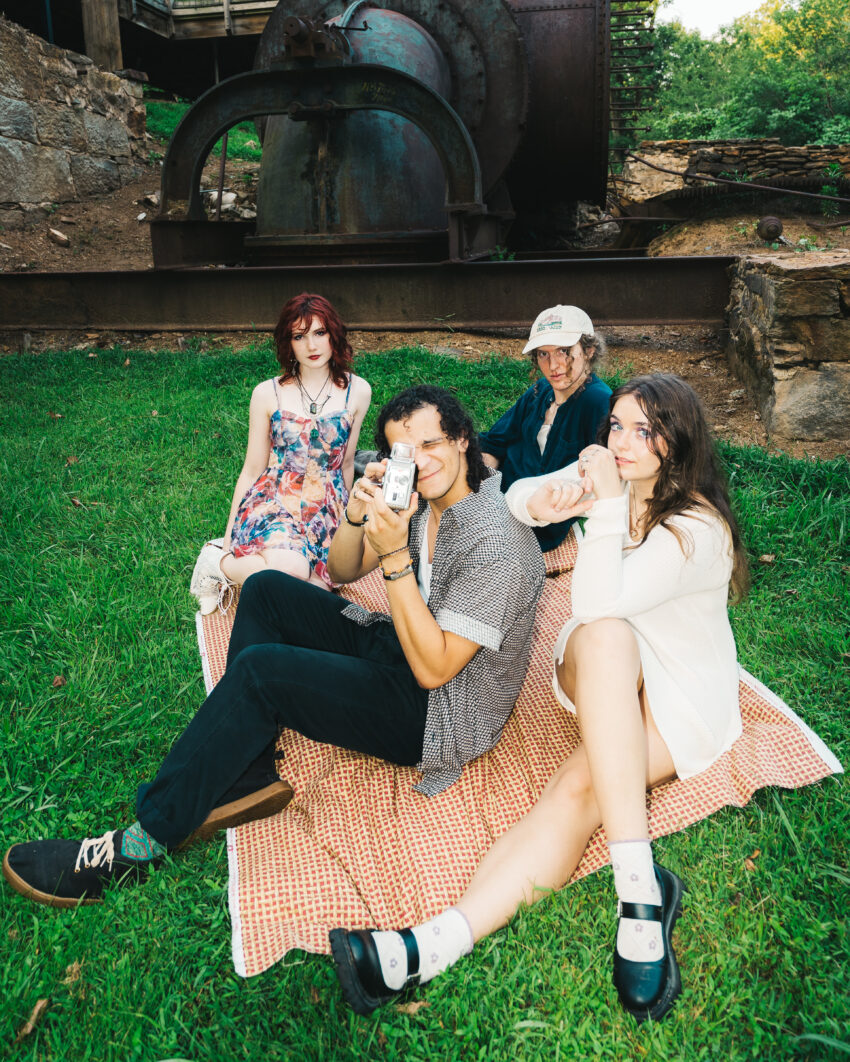
Recess Party is the brainchild of four current and former University of Georgia students. Blending a wide range of indie, rock, and metal influences, the quartet has now released their debut album, Paid In Full, to the world. Keeping the energy always present at their live performances, this moody project is cohesive while still ensuring that every band member is spotlighted. Upon inquiry, bassist Sam Smith disclosed that “the whole album outside of ‘Foot’ is pretty much [frontman] Riley [Stillwagon]’s perspective and experiences.
The first track, “Foot”, begins with some light strumming and the lyrics “Give me all of you; there’s not much to see / Cause I’ll take everything, when everything’s meant for me” before the rest of the band comes in. Riley asserts that openness and vulnerability are nothing of significance and that a future with an unnamed subject of desire could be destiny. This is one of the strongest performances of instrumentation on the record. Drummer Meghan Stewart and lead guitarist Christian Pullen are especially vibrant with the last minute of the song being purely instrumental. Consistently building up to its peak, the song reaches its emotional and lyrical climax in the last verse:
Don’t you speak for yourself if you’re self-diagnosing?
Recess Party, Foot
Well, I promise I’ve got noth.ing worthy of solving
And I finished it once, aren’t my sins worth absolving?
Well, I know you well
Track three, “Different Bodies / Lights”, is brimming with energy. The raspy nature of Riley’s voice lends itself well to conveying a strong sense of distress. Speaking over the drums in the song, Meghan explains, “The constant busyness/motion of the groove is intended to create a feeling of barely restrained chaos within the song.” Lyrically, the relationship we are hearing about is toxic and incompatible. “Why can’t you spit it out; you wonder why I’ve grown so thin? / Can we just sound this out? Won’t you bless me with your wounds again?” These aren’t the words of someone whose relationship is uplifting them but rather someone who’s been left “suffocating” with “bloodshot eyes”.
“Happy Accidents” continues the through line of love hurting, and placing it fourth on the tracklist was a great decision. As we come to understand more about the nature of the relationship in question, Riley starts coming to terms with his own reality. He cries out to this woman in the chorus, “Unstable / Pick and choose again / Until you / You’re bound by emptiness.” The vocals are breathier and the track is more stripped back as the band builds up to the chorus. The almost three-minute instrumental outro is cinematic with excellent dynamics. The whole band, and most notably Christian, is really shredding here, so having heard it performed live several times, I can confidently say this is one of my favorites.
Track five, “Second Time” is the first to make use of an acoustic guitar. Here, Riley expresses ire towards his lover while still recognizing how much he doesn’t want to let go of what they have.
I don’t owe you; you don’t know my name
Recess Party, Second Time
But our breaths are held in compromised exchange
I don’t owe you; you don’t know her name
Can you take a second look and maybe
However, the words of this chorus soon change in both perspective and emotion.
You don’t owe me; please just say my name
Recess Party, Second Time
While I’m gasping at each breach under your waves
You don’t owe me; you don’t feel the same
Just take a second look and maybe
Yearning to be heard and for his feelings to be reciprocated, he begs to just be recognized; just maybe, his subject of desire will reconsider. The band stated that this song was originally named “Emo Song”, which would have been a clearly fitting title. There is a universal message in the song: unreciprocated love can push us to do things we’d be afraid of saying out loud.
The title track, “Paid In Full,” released as the album’s last single, is the best-written song on the album. The lead guitar and drum parts are rife with tension. Sam’s back-and-forth vocals with Riley on this track are essential. The lyrics “Are you sick? Know I tried / Paid in full. Empty tithe / Won’t you write this record ‘bout me now?” give us a firm answer as to what the song and album title means. Pining for love has left Riley with nothing but fatigue. Having given his full effort, or “paid it in full,” as a religious person offering tithes would, one might expect something in return. Sadly, that isn’t the case here.
Track eight, “Hypocrite,” was the first single the band released for this album, and you can read my review of it and their AthFest performance here.
“Range of Motions” closes out the album strongly. Vocally, it’s my favorite performance on the record, and bassist Sam really gets her opportunity to shine here. Understanding why things aren’t meant to be doesn’t usually stop us from pursuing those we desire, and that’s the story here too. With the context of all the previous songs, the lyrics “I swear I blocked your image out / In patterned, cyclic thinking / Now you’ve gone / I’ve gone” stick out the most. A greater understanding of his situation is the cause of great internal strife for Riley, and though he recognizes that fact, he can’t escape it.
The true highlight of this album for me, though, is the drumming. If the meaning of the song was unclear to me, I could focus on the drums and the meaning would become clearer. Likewise, Christian is almost always playing something that captivates me while Sam’s timing and chemistry with her bandmates make me envious. The album structure delivers a complete story, so I have to commend the band on the choices made regarding sequencing. These songs may well be a disconnected string of interactions with women, or they could be a collection of experiences between two people as I understood them to be. Regardless, they’re relatable, layered, and emblematic of the idea that love hurts.
Review: The Roots: “Things Fall Apart”
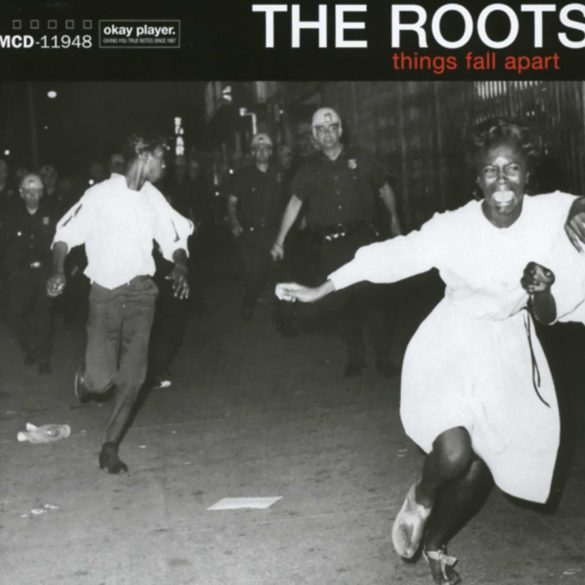
In 1999, Philadelphia based hip-hop group, The Roots, would reach a turning point in their career. They would release their fourth studio album, Things Fall Apart, which would help them achieve mainstream success and solidify them as pioneers in rap culture. Prior to its release the band had amassed quite a following but it never really translated into commercial success that other acts saw. This album showcases their musical abilities with their thought provoking lyricism and genre-spanning beats. The group experimented with hip-hop, jazz and even psychedelic beats. It is considered a classic.
The album starts off on a powerful note with its first track “Act Won (Things Fall Apart)”. On this track, the group samples an audio from the 1990 Spike Lee film Mo’ Better Blues. The audio is a dialogue between two characters (Bleek Gilliam and Shadow Henderson) discussing the state of Jazz music. Gilliam is complaining to Henderson that Black people never come out to support their own at their shows, however Henderson rebuttals that it is not a race thing, instead that they don’t come because they don’t like what is being played. “The people don’t come because you grandiose motherfuckers don’t play shit that they like. If you played the shit that they liked, then the people would come. Simple as that.” The audio ends with a quote from Harry Allen, best known as the “Media Assassin” from rap group Public Enemy, “Inevitably, hip-hop records are treated as though they are disposable. They are not maximized as product, not to mention as art.” This track seems to be a reflection of the group themselves. They often felt underappreciated and tried to separate themselves from other mainstream artists. They considered themselves “real shit” for people who wanted it, and just like Henderson they didn’t want to sacrifice their creative integrity just to appeal to the masses. Those who liked their music would like it, and not support them solely because they are black.
Track three, “The Next Movement”, which features DJ Jazzy and Jazzyfatnastees, reiterates some of the themes The Roots have already established for themselves. They are not the “norm” nor do they strive to be. They represent ‘the next movement’ as their lyricism helps them stand out “once again it’s the Thought / the Dalai Lama of the mic, the prime minister Thought / this directed to whoever in listenin’ range”. The Roots recognize how pop-like Hip-Hop is becoming and strive to keep it authentic for its core-audiences, but creative enough for a casual listener.
The standout song on the album “You Got Me”, which features vocals from Erykah Badu and Eve, won The Roots a Grammy for best rap performance in 2000. They explore the topic of love and how although things fall apart, how they vow to remain there for eachother. “If you were worried ’bout where / I been or who I saw or / what club I went to with my homies / baby, don’t worry, you know that you got me,” Badu croons over the chorus. She is reassuring her love interest that he doesn’t have to worry about what she does because “he’s got her”. They spend the next two verses establishing how ‘things happen’ and people will try to get between them, “I seen people caught in love like whirlwinds / Listenin’ to they squads and listenin’ to girlfriends / That’s exactly the point where they whole world ends / Lies come in, that’s where that drama begins.” The chorus comes back and we here Badu once again reassuring her lover.
Things Fall Apart is an introspective album that captures trials of the world through poetic lyricism. The Roots are able to tackle topics such as love, identity, race and struggle over infectious melodic beats. Production of the album comes from legendary producers like ?uestlove (Questlove), J Dilla and Dj Premier. Through a mix of samples and live music, the band is able to flawlessly create a piece of work that is both creatively experimental and familiar. “Table of Contents (Part 1)” features a messy breakbeat and controlled chaos, showing the group’s dedication to challenging themselves creatively. The Roots were not only able to capture the essence of the 90s but showcase the musical abilities that made them unique. Almost three decades after its release, their messages still remain relevant today. If you appreciate Hip-Hop as an art then this album is a must-listen.