Vinyl Mag
Menu
  • About Us
  • News
  • Reviews
    • Music Reviews
    • Show Reviews
  • Interviews
    • All Interviews
    • Vinyl Video
  • Features
  • Vinyl Recommends
    • Playlists
    • Year-in-review
  • MBUS
Menu

Sam Veal

Fleet Foxes – ‘First Collection 2006-2009’

Posted on November 9, 2018November 2, 2018 by Sam Veal

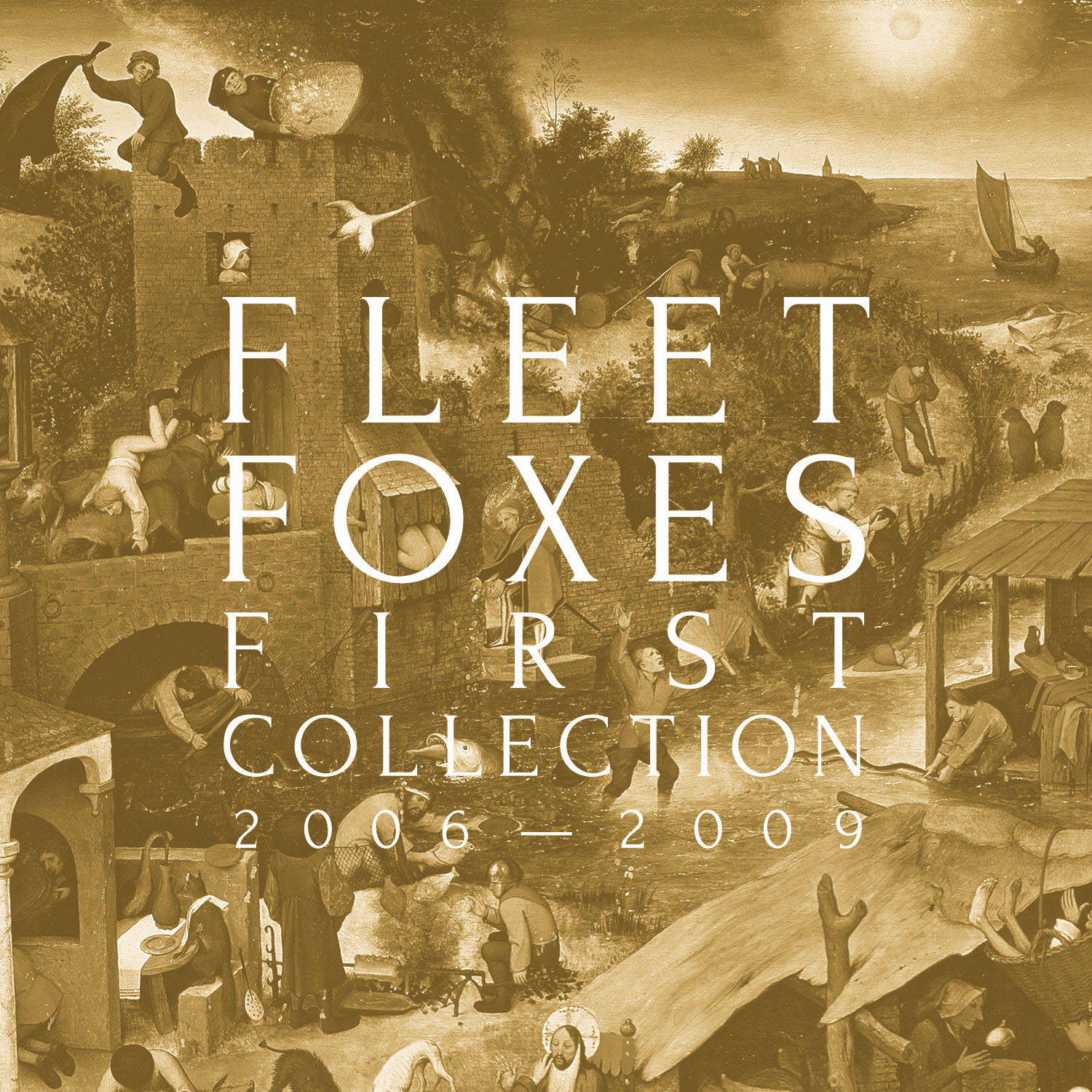
FLEET FOXES First Collection 2006-2009

Nostalgia is a powerful feeling, providing respite from the present day. Music continues to find ways to replicate former fond feelings: a day at the beach, a sunset with friends after a long hike, or a cozy evening in the mountains. If there is a specific minutiae-filled time and place that one longs for, it’s likely able to be reached through music made in the past 10 years.

Fleet Foxes’ First Collection 2006-2009 chronicles a band that grasped that sense of nostalgic aesthetic and interweaved new sounds to push a solid vision forward. Chronologically, every release feels like hitting the bullseye of a high and clearly marked target, every record higher than the last. Nothing ever feels like a rehashing of yesteryear’s folk, but rather a creation of new space comprised of traditional balladry, sun-filled west coast pop, and country crooning.

The collection is comprised of four releases: their self titled debut LP (2008), the critcally-acclaimed Sun Giant EP (2006), the self-released The Fleet Foxes EP (2006), and an unreleased B-Sides and Rarities, all of which are seeing vinyl pressing. Accompanying the albums is a 32-page booklet showcasing artwork, photos, tour posters and the like from the time period. Combined, they are a document of a group spanning the sounds of time with clear direction.

The Fleet Foxes EP is a golden-toned bill of AM country influenced tracks that billow and unfurl like the opening of a brass horn. The reliance on guitar chord work and choral breakdowns is as fast paced as the band has ever been, but it still takes its time. “In the Hot Hot Rays” flirts with early R&B in both vocals and guitar work. To those who haven’t heard this release, this is Robin Pecknold with an outward swagger and strut. The closer, “Icicle Tusk,” is the biggest indicator of where the band would head from this EP: a reserved confidence in filling a room with less.

The band made it clear that the Sun Giant EP was simply something to be sold at the merch table of the shows and to not see it as a true indicator of what the band wanted to achieve. If we take them at their word on that, we can instead view the release as a marker on the map up a high mountain. Suddenly, this grasp on nostalgic tones was being pushed into vast soundscapes that seemed to sprawl over terrain. In particular, “English House,” peppered with vocal harmonies to the instrumentation, rolls like a fast morning fog and settles like dew on the ground. Something so big, yet delicate when hitting the ears.

The self-titled LP met high hopes, showcasing the band’s versatility and awareness in executing several genres well. The songs seem to take up even more space than anything they had previously released, but with such a focused assurance. Tracks such as “Ragged Wood” and “He Doesn’t Know Why” seemed to melodically span generations. Perhaps their most famous track to date, “White Winter Hymnal,” plays with traditional folk song language and circular storytelling, creating a short, timeless masterpiece.

The B-Sides and Rarities album, when listened to after the rest, can be seen as a deconstruction of what built such solid focus. Pecknold’s take on the traditional ballad, “Silver Dagger” whisfully slides in, both assured and filling. The basement demos demonstrate that their song ideas were by long-term design, whether they resemble their recorded versions (“English House”) or bare little semblance at all (“He Doesn’t Know Why”). The photos in the accompanying booklet are nice, but the rarities collection is much more of a time capsule into this band’s history.

In the years following the time span that this collection records, their focus branched out even further, digging deeper into the roots of taking traditional songwriting sounds and pushing them into modern soundscapes, both in grandeur (2011’s Helplessness Blues) and mystery (2017’s Crack-Up), but these initial releases were a swell of prowess and thoughtful tellings of songs that spanned time. Fleet Foxes write songs that you can come back to, and no matter how the world changes around you, there’s always space to take; sometimes, that space can be as big as the horizon.

9.3/10.0

BRONCHO: ‘Bad Behavior’

Posted on October 12, 2018October 8, 2018 by Sam Veal

BRONCHO-Bad_Behavior-hires

When formulating ideas for new music, BRONCHO bandleader Ryan Lindsey could not help but focus on the bad things. While spending a lot of time watching CNN, he says, “…man, there’s a lot of bad behavior out there. Not to mention, there’s a company making money off of people watching their depiction of it all.” Shortly after this, the Tulsa-based five piece examined scandalous topics and how they relate to themselves, and perhaps how they affect the world around them.

Drugs, sex, overindulgence, and other vices: one could argue that this is the perfect framework for BRONCHO’s most broad and murky release to date. Instead, thanks in part to a recording process allowing them to work at their own pace, we are offered a well-constructed, uncomplicated record of pop tracks. Bad Behavior is BRONCHO at all of their bests, combining intelligent and swift songwriting with broad, yet thoughtful musings on a sinful society.

Bad Behavior has a musical center, but what makes the the album so impressive is their ability to loop out into other sounds before returning to ground. “All Choked Up,” the album’s opener, relies entirely on the beat in both its vocal and instrumental cadence. The result is a faded, libidinous march reminiscent of Tobacco. It’s the perfect track to match with the album’s not-subtle artwork of red cherries and extended tongues.

The tracks that follow keep this confrontational theme with pulled back instrumentation, leaving plenty of room to ponder in the space. This doesn’t break until “Keep It in Line,” the most single-worthy song, playing with the delayed, peppy beat iconic through much of the beach pop of the past decade. Lyrically, this is some of their most impressive work to date, where Lindsey addresses “bad behavior” in himself, expressing a disappointment in his own actions.  The lines are the most memorable of the album and serves as a sugary bridge into the album’s second half.

“Keep It in Line” is even more impressive when coupled with its following track, “Sandman.” Scaling it back, BRONCHO returns with the same walking beat as the album’s beginning, but this time with much more of a confident swagger. Fleshing itself out with hard-plucked guitar, this is a track with a mission: a return to pleasure, even if it comes at the cost of a return to the uncouth. “Sandman” leans harder on past classical pop influences than much of the rest of the album, and the less-is-more approach pays off with a real earworm.

Things get more scandalous in the second half, especially the debaucherous confession of “Family Values.” The songwriting of the last tracks take on a power pop strut a la the Cars, while digging deeper into lyrics of embracing material vice and desire. The closer, “Easy Way Out,” reprises a swagger-filled strut and doesn’t stray too far from its rhythm. Lyrically, it serves as a reminder that even if these themes are tough to come to terms with, you can always take the safe route of embracing the coarseness of society.

For an album to address vice with such a broad stroke, Lindsey states that Bad Behavior is meant to be a tabula rasa of degeneracy, merely reporting back to listeners at the current state on the carnal. “We’re assuming that everyone is coming from a certain set of values, but ultimately that’s impossible.” Without assumption of a moral compass, BRONCHO are free to approach subject matter with honesty and blunt language.

What makes Bad Behavior so notable in the context of BRONCHO’s discography is the simplicity of the songwriting while letting go of the leash on the subject matter. Focusing on this theme would be quite an easy tableau to run off the rails. Instead, BRONCHO bring to light the wanton while also setting up a sound framework to start a conversation on the vice that surrounds our day to day.

7.8/10

REVIEW: Lala Lala – ‘The Lamb’

Posted on September 28, 2018September 28, 2018 by Sam Veal

LalaLala_TheLamb-hires

Lillie West has described her recent past as one of “general violence.” In the midst of writing her follow-up to 2016’s delicate Sleepyhead, West’s inner circle faced home invasions, assault, and death, leaving her running inward, dreading the world outside. Through fear and personal deconstruction, West’s latest album as Lala Lala makes big realizations around strong, unpredictable melodies that always return to the center. The Lamb—out today on Hardly Art Records—is a massive leap forward in songwriting from the Chicago-based artist: a multi-genre exploration of looking inward to project outward.

The Lamb opens with the lead-off single, “Destroyer” – a sitrep of distrust. The most garage-friendly offering of the album, we’re met with a walking beat fleshed out by aggressive strums. West offers up a fear of continued self-destruction alongside a realization that her mistakes were ones that she could have saved herself from.

“Destroyer” would be the perfect opener to a bedroom garage record; West decisively forgoes this in favor of focused exploration. “Spy,” a playful, crunchy ridicule of introspection, is a drum-machine skip teetering on the edge of pop-punk. “Water Over Sex,” a reflection over sobriety, is a true gem, combining choral yawns with surf-toned guitar. West examines the guilt that comes with fun and loss of control, and in the process creates one of her best tracks to date.

This pronounced, echoed motif continues near the album’s median with “Dove”, a reverberating song dealing with what West calls “very plainly about the death of someone I loved a lot and the guilt I had, and still have, afterwards.” The melody lies almost solely with the vocals, as if reaching you in a hallway from being bounced off the surface of the bathroom floor. A vulnerable realization, the song needs very little to take up a large amount of room. This space is given up at the track’s abrupt conclusion, as if the thought leaves one too vulnerable to continue entertaining.

West ventures further with her songwriting chops in the jangle-pop swing of “The Flu.” Bright melodies are the spoonful of sugar to a story of focused self-destruction to the point of hurting others. The contrast is a perfect balance of grime and sheen. This proves an exquisite set up to “Copycat,” a telling of West’s hyper-analyzation in her new sobriety: “Everyone talks this way, everyone looks the same / and maybe one day, I’ll be surprised / with my twin fists and my twin eyes.” There’s a frustration that comes along with expression in a crowd where everyone (including yourself) thinks and reacts the same, and West’s delivery is of pure boredom.

Falling into The Lamb’s second half is a series of impeccably-expressed feelings and new sound tableaus. The album’s shortest track, “Moth,” begins as an aggressive, percussion-less track of dissonance that gives way to dream pop melodies; it’s a treat that lasts just long enough. “When You Die” is a post-punk confessional stemming from the death of a number of close ones in a small amount of time. Much of The Lamb deals with futility, but this is one of the only times when it is met with defiance instead of resentment.

The album’s closer, “See You at Home,” builds off of earlier, airy tones and brings an assurance that cements all of the previous tracks by contrast. The lyrics read like a vulnerable letter left on a countertop by someone stepping out for the first time in a while. The combination of these words with a simple, saxophone-backed melody would have this song easily fit on any Dan Bejar record.

The Lamb is a merciless inspection of one’s values and motivations, and it undoubtedly has not come at a price for West, but this has inspired a record filled with adventurous turns in tone that gel into an authentic, confident snapshot of a woman growing in her dimensions. She has left the house she’s locked herself in without bothering to close the door, and The Lamb is a sonic road map of where she could go next; something entirely up to her.

8.4 / 10.0

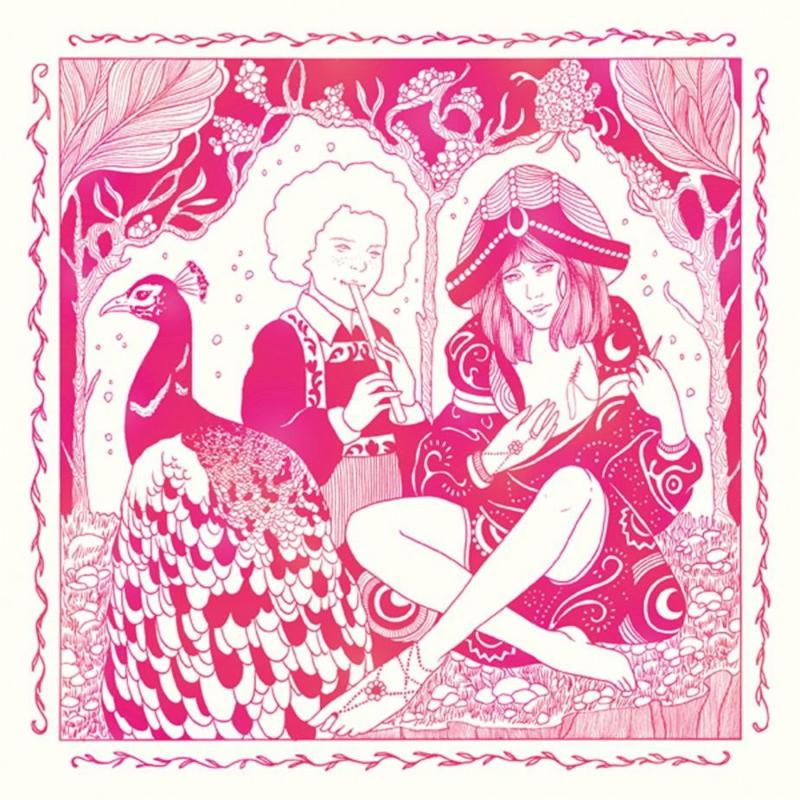
Melody’s Echo Chamber: ‘Bon Voyage’

Posted on June 8, 2018June 5, 2018 by Sam Veal

unnamed

The time between albums for Melody Prochet has been close to six years, and that span can be categorized by loss and rediscovery. In the initial recording of Melody’s Echo Chamber’s follow up to her acclaimed self-titled debut, Prochet abandoned the first attempt, describing it as a “dead baby”. Choosing to go it alone and end her work with Tame Impala’s Kevin Parker, Prochet dove head first into new, but familiar attempts at self-expression. She returned to her childhood conservatory to learn drums, and upon finishing, picked up several other instruments in attempt to connect with her innermost music psyche. Enlisting the aid of Sweden’s torchbearers of psyche rock, Frederik Swahn (The Amazing) and Reine Fiske (Dungen), Bon Voyage is a short and wild odyssey that explores the anima of Prochet, often with neglect to focus and time.

Bon Voyage‘s opener, “Cross My Heart”, is a quick plunge into psychedelic guitar work, backed by a marching beat, as if some sort of rowing cadence into the Bermuda Triangle. If you were excited at the prospect of a Melody’s Echo Chamber album backed by Dungen and The Amazing, this is the song you were hoping for. The song breaks down one third of the way in to an unexpected blend of scat singing, a hip hop beat, and flutes. The album takes its time in this odd juxtaposition; a theme for this record. While this does come together in a more traditional psych sound, it is abundantly clear that Prochet made this album to experiment with her influences and have fun.

If there is anything on Bon Voyage that resembles a comfort zone, it’s “Breathe In, Breathe Out”, a breathy, arousing track that lives in its looseness. However, even the familiar gives way to a tempo and key change, teeing up to a freefalling power chorus. Playful “oohs” and “ahs” keep the tone light, but the track ends abruptly after creating such a sprawling path.

Timing is an issue throughout much of this record.  Prochet’s admiration of Stereolab and Broadcast are on display in the beginning “Desert Horse”, a post-punk track that envelops itself in the avant-garde. It’s an experiment with influences of Can and Neu!, splashing together dialogue breaks with vocoder looping, and while it all seems chaotic, it ends without exploring this influences in the room the track has created for itself. The track has space to move beyond admiration of other artists, and Prochet cuts a tempestuous ride short.

While some songs end before coming to fruition, there are others that take space and remain in it long past its delivery. “Quand Les Larmes D’un Ange Font Danser La Neige” is Prochet at her most lyrically vulnerable: “I found somewhere to hide / someone to held by / a safe place to cry.” The song itself is fairly simple: a blooming melody that restrains itself from some of the calamity of other tracks. While enjoyable, the track unnecessarily loops back around and revisits itself after a brief dialogue break, falling apart in small spirals reminiscent of The Amazing.

The album’s closer, “Shirim”, is also Bon Voyage’s oldest offering, released in 2014. It is Prochet at her most straight-forward, beginning with a heavy-handed drum beat and Radio Dept.-esque chiming of chords. Still playful, the track plays like the end of a long ride. While quite pronounced, “Shirim” is a hazy pop song that is a welcome respite from the disorientation from other parts of the record.

Bon Voyage is not necessarily for the same fans of the self-titled record, but it never tries to be. In telling stories from recording the album, Prochet recalls the friendships developed with Swahn and Fiske. It is music made from an affinity to new ways of expression and a devotion to personal discovery. Regarding “Desert Horse”, Prochet says, “It’s the most sculptural and mad I guess, with no real common format. It embodies my difficult life journey these last few years through my own personal desert of heartaches, thirst, mirages, moving sands, disillusionment and of becoming an adult woman in a mad world. It’s a little punk to me somehow.” This album may not have been made for anyone but her, and that is a statement to her journey of discovering artistry in the wake uncertainty. It may not always make sense. It may stop short where we want to hear more, and we may not follow it to everywhere chooses to go, but it is Prochet creating the path for herself. Finding focus on such a voyage will only bring back a stronger artist.

6.7 / 10.0


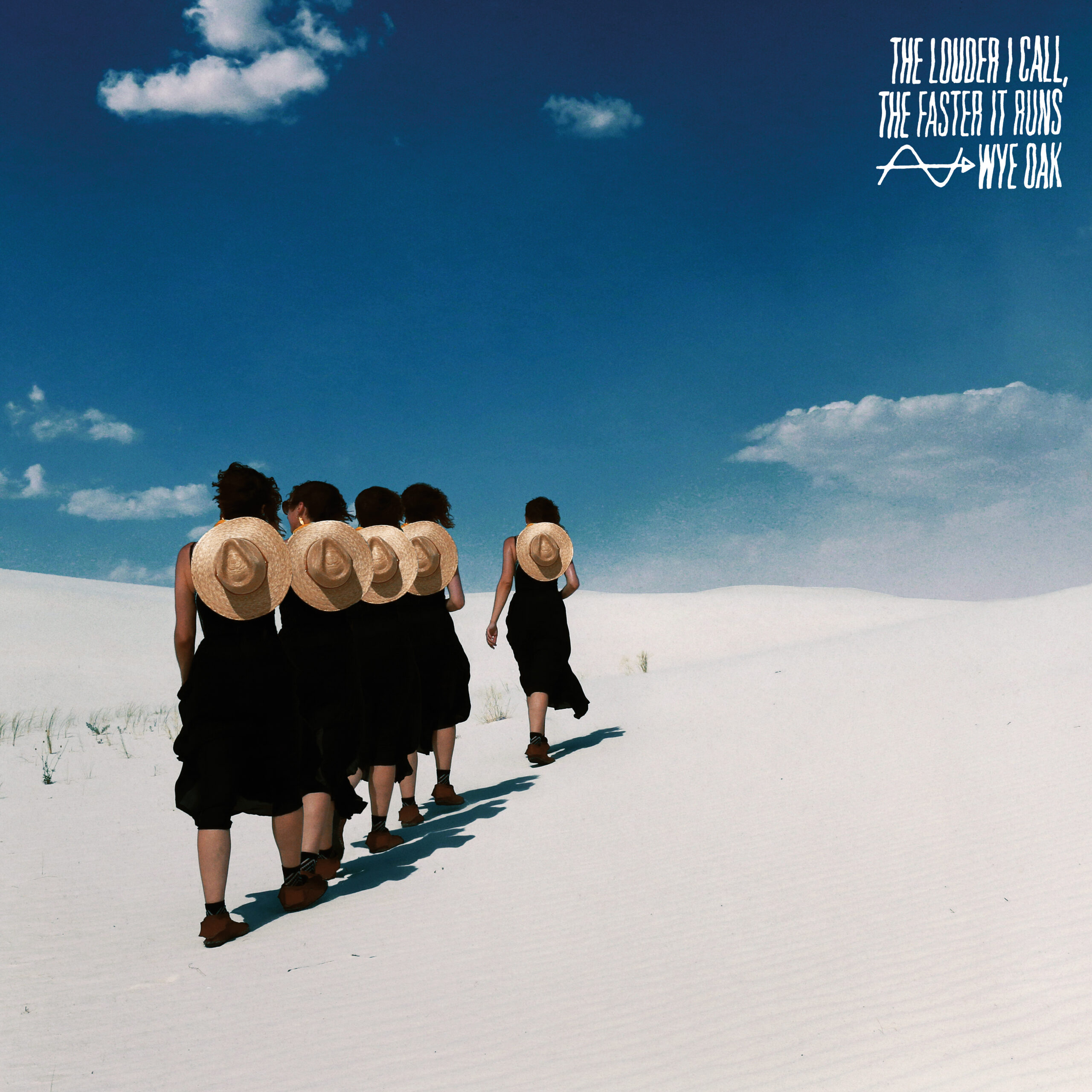
Wye Oak: ‘The Louder I Call, The Faster It Runs’

Posted on April 6, 2018April 6, 2018 by Sam Veal

615_wyeoak_3600

Wye Oak is a band of separation and reconnection. Bandmates Jenn Wasner and Andy Stack are divided by over 1,500 miles (Durham, NC to Marfa, TX, respectively), meeting back to write and record. Forgoing the recording methods of previous albums, the duo approached their latest release with a freer process, allowing them to delve further into the toolbox they’ve built in their decade-long career. The Louder I Call, The Faster It Runs is an exploration of personal reconciliation and the search for power in a life of compromised expectations.

If the sequences and synthesizers of 2014’s Shriek was Wye Oak’s greatest departure, The Louder I Call confidently takes up more space in that change of form. After the introduction of “(Tuning)”, we are met with “Instrument”, equal parts spiraling synth loops and bombastic chords. The end result is effervescent and finds fun between moments of dissonance. The title track is staccato-punched pop flirting with willful ignorance while simultaneously keeping eyes over the shoulder: “Like any other day / we will make the bed / thinking it is dead / It is finally dead.” It’s hard to imagine these songs coming from them were we able to hear them five years ago.

“Lifer” sonically resembles much of what listeners have come to know from the band, but Wasner makes full use of this comfort zone to make some of her largest lyrical declarations in the band’s decade-long career: “The end is kind, the mean is cruel / I have to love the life I make, / make up for all the space I take.” Reconciling success amongst peers can be difficult, and Wasner acknowledges privilege while openly figuring out how to use that for good. Long tonal strokes are the backdrop of these confessions, and the bridge is just as much an avowal to taking advantage of life’s luck as the lyrics. This vulnerability occupies an anxious space between audacity and modesty, fearful of hitting either edge.

There are few bands that exude the confidence that Wye Oak demonstrates with every new release. Their approach may constantly change, but no matter the strategy, it is impressive that they always get their best foot forward. “Symmetry”, the album’s most synth-drenched song top- to-bottom, is a delightfully tenacious spin of bubbly production work, but seems familiar to their past songs. “Say Hello” resembles a lot of the folk-influenced singing of Civilian, built on top of a U2 riff and vocal layering; it is the best example of Wye Oak’s past and current top forms intersecting.

Louder I Call is overall not a departure musically, but thematically, it is an expression of resolution that we have never heard from them. It is not their most cohesive album, nor is it intended to be. Every song together is a testament that sometimes it’s okay to let life happen to you as opposed to approaching every day with attack. Current times are tumultuous, and part of the process of change is acknowledgement, and Wasner’s lyrics make space for that. The album’s closing track, “I Know It’s Real”, croons and builds voice, but ends rather abruptly; to connect, there must be separation.

7.8/10

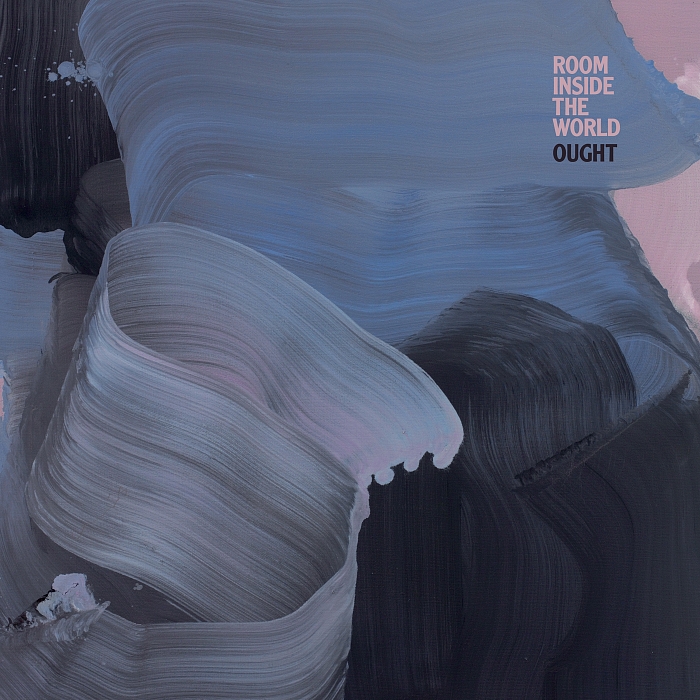
Ought: ‘Room Inside the World’

Posted on February 17, 2018February 19, 2018 by Sam Veal

ought

For a band that has excelled at portraying the several variations of panic, Ought have always kept great focus on being human in the center of an expansive map. The boldest step the band could make after 2015’s Sun Coming Down was perhaps toward the only place bigger than the planet: the subconscious. Room Inside the World is a dialing-down of the volume, but a true flexing of the band’s understanding of internal dynamics. This album is their biggest change in form and will go down as their most accomplished release yet.

Tim Darcy’s first croon into Room Inside the World, “Into the Sea,” is a Roy Orbison-like slide into the introspective: “I can’t be here in my way again.” Darcy’s lyrics have always pertained to a call-to-arms of taking on the mundane; even running errands was a declaration to the world. On this release, the hushed richness of his delivery is just as pronounced as any shout that we’ve heard on “More Than Any Other Day.” The entire band has grown in confidence, from the jangle-pop of “Disaffectation” to the shifts of “Take Everything.”  Their foray into the love song, “Desire,” is a slowed-down, intimate track met with John Mellencamp-like storytelling of fleeting, but vivid romance. The track concludes with a choral response, and even in the falling apart that ensues in the closing minute, we’re met with an aftermath of assurance. Ought’s confidence in their songwriting ability makes these songs seem like their next path as opposed to a grand departure.

The crown jewel of the album, “Disgraced in America” is an exercise in that confidence. In the past, the band’s reliance on repetition has been where they flourish, but a change in style and rhythm show us that saying something out loud doesn’t make for self-reflection. The tightly-wound drums and light vocal work show a reflection that we haven’t heard from this band prior. “Disgraced” is three minutes shorter than a lot of their other punctuated tracks of the past, but it is their most nuanced track to date.

When looking deeply in ourselves, we may not always like what we find. “These 3 Things” is a dealing with material and physical guilt: how can we expect to be of service when we have instincts that will forever tie us to selfishness and gluttony? Can we really be against something that we subconsciously desire? These questions are anxiety-provoking, and Ought have learned to backdrop them with sound textures as opposed to just volume.

It’s easy to call this album more subdued and introspective than previous releases, but this album holds just as much chaos as anything Ought have released. It’s one thing to use nervous energy to proclaim your presence to an unforgiving world, but another to use that same energy in an act of meticulous self-care. What we are left with in the end is an acknowledgement and ablution of self-doubt. Room Inside the World doesn’t play like a how-to as much as a story of survival–a story that we all know and tell as we try to make ourselves better people.

8.1/10

The Latest

  • COACHELLA RECAP: the comeback of Coachella?
    by Sam Veal
  • UGA MBUS Student Ritika Sharma Forges Her Own Pathway
    by Sam Veal
  • Staff Picks to Satisfy Your Inner Choir and Band Nerd
    by Sam Veal
  • Staff Picks for Your Perfect Granola Playlist
    by Sam Veal
  • ‘It’s Only Life After All’: The Legacy of the Queer Folk Women Duo, Indigo Girls
    by Sam Veal
  • Contact
  • Work With Us
© 2026 Vinyl Mag | Powered by Minimalist Blog WordPress Theme