Category: Features
Athens DJ Scene Is on the Climb Post COVID-19
A flow state of pure connection and free movement—this is how Izzy Morrow, a DJ and promoter in Athens, describes the music environment that she hopes to curate. She says this state of being is when she feels the most connected to the universe and, when she’s on stage, to the crowd.
“Movement is such a healing thing—just dancing freely,” said Morrow. “[In our] normal everyday lives, we literally don’t get to do that… I feel like I just shed all my layers and it’s just pure human.”
Before the COVID-19 pandemic, Athens had a thriving DJ scene. According to Morrow, the Georgia Theatre in Athens, Georgia, used to book EDM shows frequently on the weekends. However, she says the number of shows and DJs in Athens has since slowed down in the post-pandemic era.
Still, many of Athens’ DJs—from underground to EDM to old school—predict that the scene is regaining footing, preparing for an anticipatory comeback.
Current trends
The live music industry, like many other aspects of our lives, changed after COVID-19. According to a study by the National Library of Medicine, the total monthly consumer spending on music has decreased by more than 45% compared to the pre-pandemic levels, impacting live music and physical sales the most.
While sales in pop music concerts have recently skyrocketed three years post-pandemic, the New York Times reports that amphitheaters operating below arena levels have seen climbing costs, and other industries, like Broadway audiences, are still down from pre-pandemic numbers.
On the other hand, the pandemic also offered rare free time for many people to try out new things—for musicians to perfect their craft. Another study by the National Library of Medicine reports that some musicians referred to the pandemic aftermath as a “creative period,” despite the disadvantages of lockdowns.
Athens also gained some quality music from the DJ scene during this time, according to Henry Landgraff, known as DJ Henny. He attributes this spike in creativity to the increased time people had to learn how to produce.
However, even beyond the pandemic’s influence, Morrow says most musicians in Athens, not just DJs, are “hungry” to create. It’s that freedom of expression that made Morrow fall in love with the Athens DJ scene in the first place. Even Landgraff, originally from Ohio, attended the University of Georgia because of the attractive music scene and music business program.
“Having like-minded people that are so musically intelligent, even if it’s not about music … it’s a microcosm [where] you can fail and there’s no downside,” said Landgraff.
Mark Weathersby, or DJ Mahogany, started DJing back in 2005. So, he’s seen the evolution of Athens DJs over the last several years. In a Flagpole story from 2016, he said that the scene in Athens was varied, ranging from top 40 hits to obscure jams—he largely agrees today. He says there’s still a crowd that enjoys older music, but there is also a new, youthful movement.
“Here in Athens, I think it’s definitely more of that top 40 scene, I think it’s going towards that … youthful, vibrant, very energetic, fun, dance scene with EDM. And, that definitely is the movement where music is going towards,” said Weathersby.
Ben Bradberry, also known as DJ Reindeer Games, describes in Flagpole a “split scene,” which poses the question: Are people coming to shows because they enjoy the music, no matter who is spinning, or are DJs attracting crowds with the specific vibe they create?
Morrow, being more involved in underground EDM, says her experience has been going to a show because you like their sound. Landgraff, who also works in EDM but for a more fraternity crowd, thinks the answer is a little complicated. He doesn’t necessarily want to be confined to one sound, which makes it a fun challenge to experiment with all kinds.
“You need to set an entire vibe—there’s nothing to watch… it’s just me and my board,” said Landgraff. “My favorite part is being able to set an entire tone of how you want your set to be… I think that the balance of Athens music makes it so people know to not expect anything going in and kind of accept it for what it is.”
Current opportunities
In the post-pandemic music scene, Morrow attributes much success to the Nightshade Family, which she describes as being like a label and events promoter. She worked as one of their resident DJs and says they’ve been instrumental in throwing shows for the underground scene, which struggled after COVID-19.
Morrow also helps host Open Decks at Mai Kai Kava Bar, which she describes as “an open mic night for DJs.” Anybody who wants to play can bring their USB and plug it in, allowing beginners to give it a try and pros to experiment with something new.
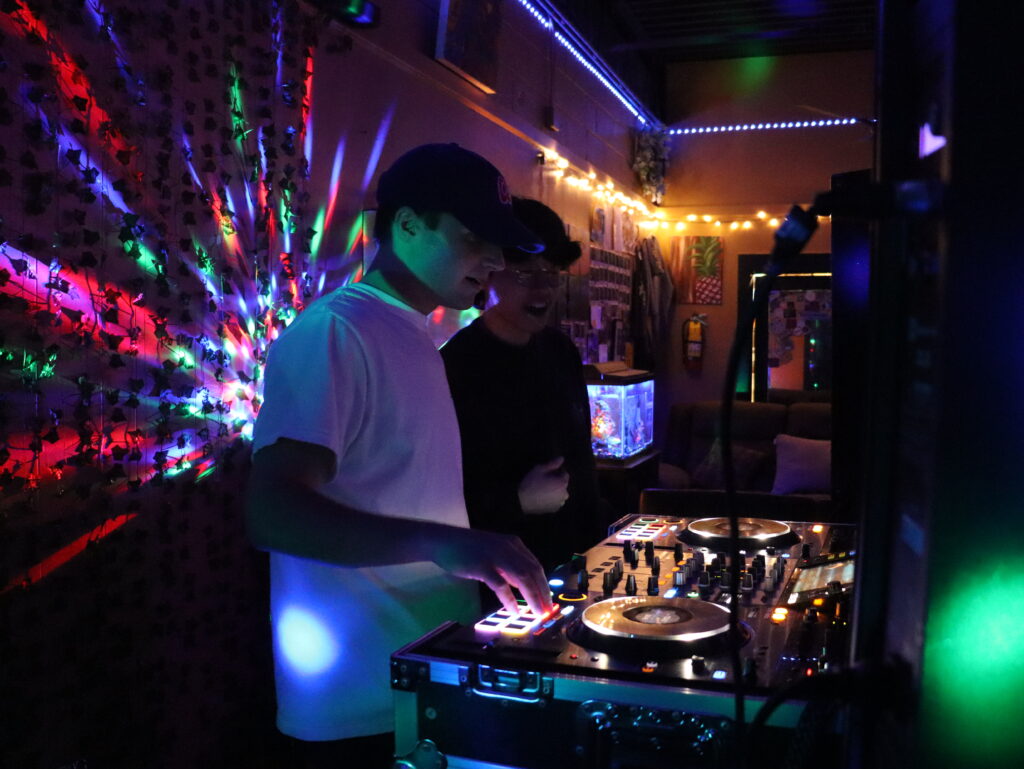
Scottie Stephens, known as Karezza, is one of the other hosts for Open Decks. Morrow says he helped her learn how to DJ and produce. Stephens started DJing and producing about five years ago, saying he also used the lockdown time to work on his music. But, he didn’t start playing shows until two or three years ago, many of which were with Nightshade.
Morrow is the one who invited Stephens to Open Decks, which they soon started hosting together. While it felt like a big step at the time, he says this opportunity helped him make connections. He reflected on how different his and Morrow’s lives would be if she had never asked him to come to Open Decks.
“Honestly, this place has changed my life for the better,” said Stephens. “I’ve met so many people in the community, and it’s given me a place to come to and keep growing my relationships with all these people.”
What’s next
Stephens agrees that the DJ scene is slowly being revived and is on a good path.
“It’s slowly being built back up, but it’s just harder to find,” said Morrow.
Now that anyone can watch a YouTube video, DJing is more accessible, according to Morrow. She emphasized the need for production skills because people can pick it up pretty quickly. Landgraff agrees, saying his biggest regret was not releasing original music fast enough.
Overwhelmingly, the DJs want beginners to approach their craft with an open mind. Landgraff said that even though a vibe cannot be predicted, the DJ must be prepared. Weathersby said he had to be like a sponge that absorbed it all.
“You need to have fails,” said Landgraff. “You have to have those kinds of low-stakes shows in order to make those high-stakes ones good.”
With summer quickly approaching, Morrow already has her eyes on the third annual “Earthday Everyday” event on May 11 at Southern Brewing Company, which is put on by Afterglo. Weathersby also thinks the warmer weather will draw back more shows to their previous hot spots.
“I bet you we’re gonna see DJs on the rooftop [of the Georgia Theatre], and I think they’re gonna be packed and ready,” said Weathersby. “By the end of this year, everybody’s gonna be back out on the dance floor dancing.”

Women Make Strides in Popular Music: Yet, It’s Still Not Enough.
In the alleged ‘Year of the Girl,’ led largely by women in media, it’s encouraging that women have seen gains in the realm of popular music according to the most recent study published by the University of Southern California’s Annenberg Inclusion Initiative.
But before you pop the champagne, you must know that the all-time high record for female producers on the Billboard 100 chart has reached a whopping 6.5%—yes, that’s right, we’re still in single-digit territory. Meanwhile, female songwriters on the charts reached a new peak at 19.5%.
At the 2024 Grammys, which took place in early February, the main categories were dominated by female artists, with Jon Batiste as the sole male artist nominee in the song, record, and album of the year categories.
Behind the scenes, however, women accounted for just 24% of nominees across all six main categories. No woman was nominated for Producer of the Year for the fourth year in a row; only one woman was nominated for Songwriter of the Year; and of the female-led album and record of the year nominees, men accounted for a majority of songwriters, producers, engineers/mixers, and mastering engineers, which isn’t far off from the reality of the music business.
The resurgence of women in pop music is a poor indicator of how women fare overall. Iconic female artists rely largely on male collaborators. Like Jack Antonoff who is a frequent collaborator of Taylor Swift, Lana Del Rey, Lorde, and Clairo. Or Dan Nigro, a driving force behind Olivia Rodrigo’s talent for nostalgic music. And that’s just in pop music, the genre that female songwriters are most likely to work in.
It’s worth noting that both Antonoff and Nigro got nods in the Producer of the Year category, which glaringly overlooked Catherine Marks, producer for boygenius’s the record, an album that was nominated for and won multiple Grammys this year—maybe one good record wasn’t enough to gain a nomination. But then, what about Dernst “D’Mile” Emile II who, according to the official Recording Academy announcements, was nominated based solely on his work on Victoria Monet’s JAGUAR II?
As per the Annenberg Inclusion Initiative study, if there is an increase in the percentage of female producers on the Billboard charts, then why are they not being recognized? Well, let’s start by putting these numbers in context.
Across nine years, 64 credits were assigned to female producers, with the number dropping to 34 when accounting for individual women across the study. After removing the producers who were also the artists, we’re down to just 8 female producers, which doesn’t even average to one a year. And that’s pretty bleak.
Notably, women of color fare even worse accounting for 19, or 29.7%, of the 64 credits. The ratio of male producers to underrepresented female producers was 100.4 to 1 across the nine-year study.
Although all things considered, the scope of the study feels quite narrow. The study’s author, Dr. Stacy L. Smith, notes that the choice to focus on the Billboard Hot 100 Year-End charts stems from “[the] desire to create career sustainability and generational wealth for historically marginalized communities in music.”
But how do we justify championing artists, songwriters, and producers on the charts without addressing the barriers to entry in the first place?
Things can’t change at the top of the charts until change happens on a smaller scale first. There should be better representation of women, particularly women of color, on the charts, but it is also a very limited view of a rapidly evolving industry.
Increasingly, the definition of “making it” in the music business is no longer what it used to be, leaving many music executives scrambling to make sense of the new landscape.
Since 2020, it’s been widely noted that “breaking” a new artist into superstar territory is getting increasingly more difficult, if not impossible. Though this isn’t necessarily bad news. Artists are still building sustainable careers and loyal fanbases without topping the charts. So, why not adjust our expectations accordingly?
In a 2022 survey conducted by the Recording Academy, the top three barriers to career development were identified as low pay, burnout, and gatekeeping culture. This is the specific gap we must look to fill before we consider anything else. It shouldn’t be expected that equal opportunity and equal treatment will trickle down to smaller artists from the Taylor Swifts and Beyoncés of the world.
Representation at the top is valuable for any upcoming songwriter or producer. And we should continue to advocate for it while we prioritize taking care of the girls who want to write, produce, and engineer albums. Girls and women face challenges just to enter into these career fields, let alone to gain notability.
Music executives who function as gatekeepers, poor work-life balance, and poor pay—among a whole host of other problems—within the industry are large mountains to climb, but it’s where we must start.
Welcome the Sunstones to the Stage
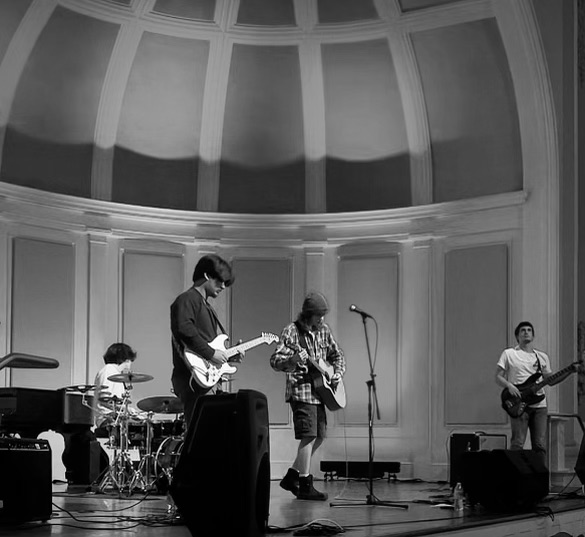
If you have been to any frat party recently, Flicker or even a sorority in Milledgeville, you have probably heard the name Sunstones. This band of four has immersed itself in the competitive music scene of Athens and now, recalls their journey for Vinyl Mag.
The group met while studying at the University of Georgia. Bassist Jackson Burns first met guitarist Christos Kaloudis at Oglethorpe dining hall three days before classes began their freshman year.
Their mutual love for jamming paved the way for the two to join forces with vocalists Cole Maston and Jackson Britt. Soon after, the group began practicing. “We all just feel the energy, even when we’re practicing, not just playing for a show,” said Kaloudis. “It’s almost transcendental.”
Britt found his start as a drummer as early as middle school in Suwanee, Georgia. His mom was his main influence, a 90s musician who found her start on the drumline. Both his parents influenced him towards grunge; however, his personal taste morphed into a mosh-post of hard rock, metal and even a dab of funk.
Maston, born a Michigan native, got his first Squier Stratocaster guitar in 7th grade and the rest is history. Pulling his influences from the passionate depths of grunge vocalists, Maston emits raw emotion in his vocal performances, a discovery he made during his junior year of high school.
In seventh grade, Burns was given his first telecaster by his dad. However, he didn’t start playing until he was in eighth grade when he heard ‘Leila’ by Eric Clapton and knew music was what he wanted to pursue. It was when Burns was in the throws of learning Joshua’s Law in 10th grade that he decided to pick up bass.
Kaloudis’ journey began in a Wal-Mart. He saw a $20 acoustic guitar, bought it and began taking lessons straight away. What started as simply playing the Eagles on this acoustic guitar turned into a full-blown, Zeppelin-inspired electric guitar saga that materialized six months after that compulsive Wal-Mart purchase.
The group debuted in the spring of 2023 at a Sigma Phi party as a cover band melding together their individual influences from The Red Hot Chili Peppers to Pink Floyd to Black Sabbath.
Improvising is the name of the game for the Sunstones. A slight nod or vicious eye contact leads the members to create a sense of organized chaos as they riff off of each other.
“We were playing down in Milledgeville and something went wrong,” said Burns. “But the improv that happened was borderline intentional.”
Since their debut, the Sunstones have played all around and outside of Athens with various bands, finding what playing as a certified Athens local band means to them as a collective.
“A lot of people are really only in bands for the allure of it,” said Maston. “I can confidently say that for all of us, that’s kind of just an added bonus, you know we really enjoy playing music, we enjoy playing with each other and more importantly the whole process.”
Though the group is still a cover band, they have been writing originals since the beginning. With over 30 original songs in their arsenal, they have combined their inspirations and unique rock-grunge sound that vibrates the crowd.
“I think all four of us kind of have our own distinct sound,” said Burns. “When that comes together, sometimes there’s clashing but when we get it right, it sounds really good.”
So what can audiences expect from the Sunstones?
From a small studio, they will be pulling from their large collection of original songs to record demos with Tweed Recording studios here in Athens to deliver a grunge-rock EP that will shake up the Athens music scene. So, keep your eyes open and your ears ready.

Nicholas Britell Redeemed Us All at the Roulette Table
During the production of financial drama The Big Short, Adam McCay made a bewildering discovery. His producers had sent off the movie’s working script to freshly hired composer Nicholas Britell for notes. He didn’t know at the time that Britell had done a stint at Bear Stearns as a currency trader. “Why is the composer giving me notes on my work?” Britell recalls McCay asking in a RogerEbert.com interview about the incident. “Who does this guy think he is?”
The answer, nearly a decade later, is abundantly clear: he’s the Grammy-nominated, Emmy-winning composer of Succession, Star Wars: Andor, Moonlight, and over a dozen other critically acclaimed films and television shows of the last two decades. And though he rarely writes script notes, his work nonetheless embodies, expands, and elevates the shows and films it’s a part of in a way wholly unique in Western prestige media.
Britell’s ability to embody the emotional reality of a given work and distill it into musical form is present throughout his soundtrack for The Big Short. While working on the project, Britell was tasked with trying to use sound to depict the frantic, labyrinthine world of Wall Street, and the very first track he composed for the movie was “Redemption at the Roulette Table.” The track plays at an emotional turning point in the film, where the sheer scale and scope of the coming financial crisis are becoming clear to the main characters. Accordingly, the track feels like a grim portent of the future, driven forward by an anxious ostinato that slowly grows in volume while a frantic piano desperately tries to ignore, downplay, and suppress it. It instantly conjures the feeling of repressed dread and feigned expertise that characterized the doomed foolishness of pre-2008 Wall Street—the very same world that The Big Short centers its story around.
But the ability to embody the feeling of a narrative is one thing—to build upon it is another. It’s in Succession where Britell’s work takes that next step, and it was appropriately the project for which he won his Emmy. It is not an exaggeration to say that a great deal of Succession’s unmatched ability to compel the viewer’s attention, empathy, and horror is owed directly to Britell’s score. Succession, for all the brilliance of its writing and acting, is largely a show about businesspeople in suits talking in various rooms. It could very easily slip into dullness as the viewer’s eyes glaze over while the main characters talk about stock prices, bear hugs, and political maneuvering, but it’s Britell’s score that lends these conversations the Shakespearean grandiosity that the show has become known for. Often, the show will use character leitmotifs and musical stings to provide narrative subtext that would otherwise be impenetrable—and the show uses them just as often to smash the viewer’s heart into pieces.
An example of both cases is on full display in the show’s Season 1 finale. In it, the show’s main character, Kendall Roy, has been implicated in a monstrous crime, and his father fully intends to use said crime to blackmail him into taking his side in a corporate spat. For nearly three whole minutes, the two men play the usual Succession game where both try to get the other to submit, often leaving large pockets of absolute silence between each jab. Finally, realizing the utter hopelessness of his situation, it is Kendall who surrenders—and as soon as he does, a withered, despondent rendition of the show’s main theme plays.
Arrangements of Succession’s main theme often play in the show’s major emotional turning points, but what makes this usage special is what it doesn’t have: namely, the booming 808s and hip-hop drums that are present both in the main theme and in tracks that are meant to represent Kendall and his ascendency. Instead, it is only the wistful, orchestral lament in the main theme’s B section that is represented in this rendition: the section that plays during the part of the intro that contains footage of the Roy family’s childhood upbringing.
In this musical choice, an immeasurable number of things are said without a single word being spoken. In his defeat by his abusive father, Kendall’s self-confident bluster is obliterated, leaving only a desperate little boy and the leitmotifs that represent him behind. Britell’s score quite literally reduces him to a child again, singularly concerned with the approval and affection of his father and uninterested in carving out any space in his life for his own self-actualization. This reduction is echoed by one of the darkest lines in the entire show, uttered by Kendall’s father Logan towards the end of the episode:
“You’re my boy. You’re my number one boy.”
Jeremy Strong’s (Kendall) and Brian Cox’s (Logan) performances are undeniably stellar, but without Britell’s soundtrack, this scene would merely be an isolated great performance by two show-stopping actors. But Britell’s score—with his masterful usage of leitmotifs and his unyielding commitment to arrangement-as-storytelling—elevates this moment to cosmic proportions. With just a few notes, Britell grounds this scene in the larger context of the show’s plot, themes, and character backstories. In ending the season with the very same motif played in the main theme, he depicts a Roy family enslaved to the legacy of their trauma, cyclically repeating the same mistakes, inflicting the same pain, and reopening the same wounds.
Britell may not write script notes in the margins of all the projects he’s a part of, but his immeasurable impact on the works he’s scored more than makes up for it. He’s a testament to what’s possible when scoring is taken seriously as a load-bearing piece of filmmaking—and a testament to what’s possible when musicians unapologetically adopt the role of storyteller.

The Women of Rap
In recent years, women have been climbing their way to the top in an industry that has long been male-dominated. Rap’s newest princess Ice Spice and industry G.O.A.T. Nicki Minaj continue to dominate the charts, outselling the competition with their latest collaboration “Princess Diana”. They outsold the top 25 on the Billboard Hot 100 being downloaded 77,000 times following its April 14 release. This isn’t an anomaly, however, as there are more women succeeding in rap right now than ever before.
Even before getting the recognition they deserve, women have constantly been at the forefront of rap culture as emcees, producers and artists. These pioneering women helped shape the way for those to come after them. Artists like Queen Latifah, Salt-N-Pepa, Lil’ Kim, Da Brat, Eve, Missy Elliot and Trina are all iconic women who changed the game. As rap solidified its place into mainstream culture in the ’80s, these women fought for respect as artists. Today, the landscape for women in rap has changed.
In the early 2000’s women like Remy Ma, found moderate success in the industry but it was not like the early ‘90s that was plentiful in successful female rappers. This changed as Nicki Minaj rose to massive mainstream success after being signed by legendary artist Lil Wayne. Nicki Minaj began gaining national recognition between 2007-2009 as she dropped three mixtapes. In 2010, her debut album “Pink Friday” topped the Billboard charts with her single “Super Bass” reaching number three as well as becoming diamond certified by the RIAA. For years, she broke many records selling over 100 million total records worldwide making her the first female rapper to do so.
In 2018, Cardi B released her critically acclaimed debut album Invasion of Privacy which featured the hit single “Bodak Yellow”. This album was tremendously successful, debuting in the US Billboard 200 and earning 103,000 in pure album sales the first week. It won Best Rap Album at the 61st Grammy Awards, making Cardi the first female rapper to do so as a solo artist.
Two years later, in 2020, during the height of the COVID-19 pandemic, Megan the Stallion captivated a global audience with her song “Savage” which accumulated over 30 million TikTok video creations securing her a remix with Queen Bey. Cardi B and Megan later collaborated on “WAP” which prompted intense controversy due to its explicit lyrics, reminiscent of an early Lil’ Kim and Trina. Despite the backlash they faced, “WAP” reached number one on the Billboard Hot R&B/Hip-Hop chart. Other artists like Coi Leray and Saweetie also capitalized on TikTok using it to strengthen their marketing efforts with curated content generating massive plays on the entertainment app.
The girlies were just heating up though with 2020 proving to be a formative year for women in rap. Latto released her debut album Queen of da Souf allowing her to slowly but surely become a household name. She steadily ascended up the charts over the years, securing Grammys, Billboard awards and BET awards. The same year Alabama’s own Flo Milli stepped into national attention with her debut mixtape Ho, Why is you Here?
New women constantly breakout into the scene like Lola Brooke, New York’s newest heavy hitter, KenTheMan, Omeretta, Lakeyah, Monaleo, GloRilla and so many more. The most important part of all of this is that they are fostering a better community and environment for the next generation of female rappers, just like those before them. Many of them have songs together, appear in each other’s videos or simply promote each other’s music. Thanks to marketing and social norms the recognition of women in these spaces has changed drastically. There is an old saying that “many hands make light work.” We are witnessing in real time as the new generation of women continue to break barriers and achieve the accolades they deserve as artists.
We’ve compiled a playlist of songs featuring our favorite female rappers and you can listen below now! Our playlists include the artists mentioned above as well as popular and rising artists. You can tweet us at @thisisvinyl for any recommendations.
Show Review: Highlight Athens
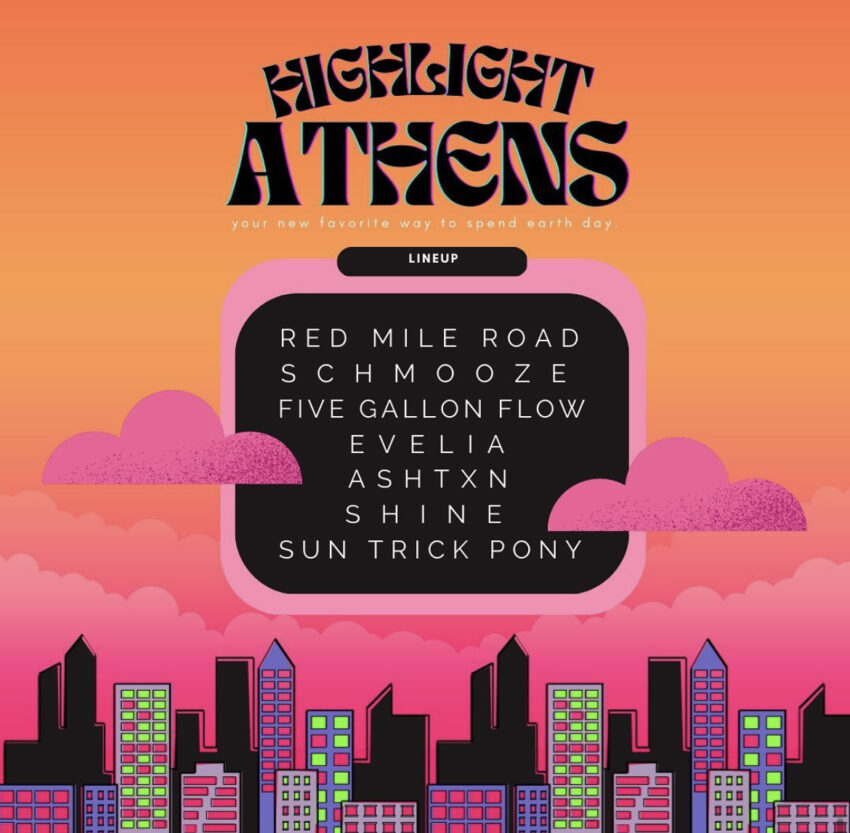
Every spring, students in the Music Business Certificate Program at the University of Georgia complete a Microcosm of the Music Industry Project, which is a semester long project of their own design based on a sector of the music industry that they are interested in. For their project, students Daniel Crowe, Charlie Enter, Marissa Jones, Ansley Nicholson, and William Perdue created Highlight Athens, a one day music festival, as a benefit for beloved Athens institution Nuci’s Space, a nonprofit resource center focused on suicide prevention and providing support for musicians. The event featured seven up-and-coming Athens acts of various genres performing in an intimate venue filled with glowsticks and the aroma of the fairly-priced grilled cheeses they were selling.
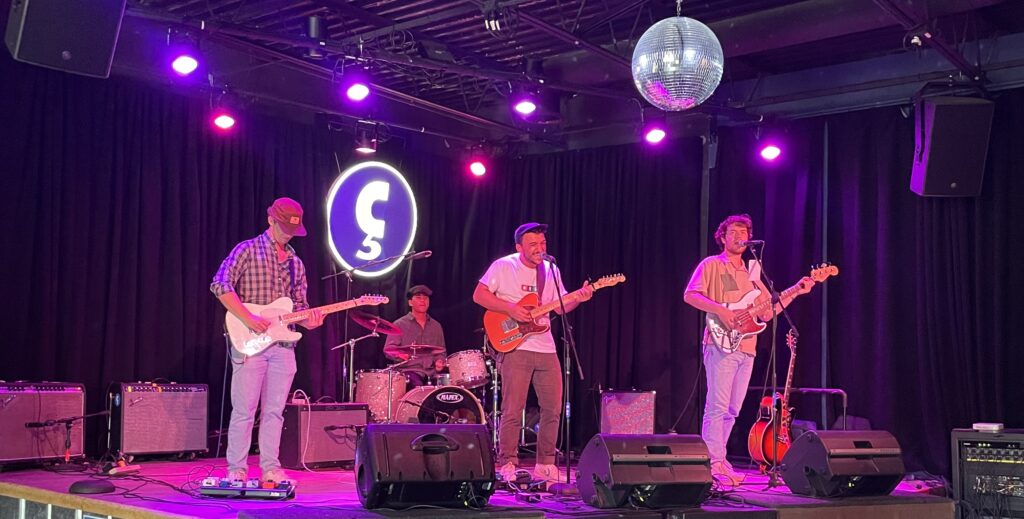
Sun Trick Pony
The day was off to a great start with a performance by Sun Trick Pony, an Athens four-piece with a sound that is difficult to categorize to one genre (think The Backseat Lovers meets Joe Purdy, but also something completely original). The set started out calm with only lead singer and guitar player Drew Henriksen on stage performing a couple of acoustic songs, but the rest of the band soon joined him on stage to add to an already impressive performance. With a set consisting of originals like “Corduroy Jacket” and newly released single “I think I love you,” every song was so different that by the end of the performance I felt like I had seen eight different bands play (and I was a fan of each one of them).
Shine
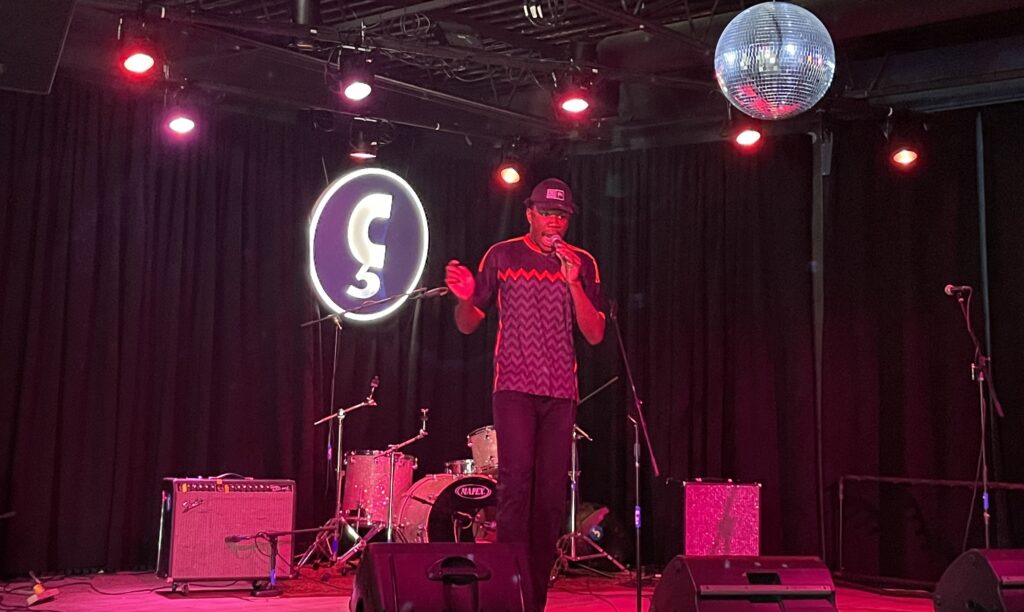
Next up was Shine, a hip hop artist from Gwinnett County who was truly like no other artist I’ve ever seen, with songs featuring themes like religion, love, friendship, support, and transparency. I had the impression that he was truly grateful for every person in that room. He ended his set with his single “Champions”, which has gotten an impressive 277,000 streams on Spotify, and after that performance, it was easy to see why.
Ashtxn
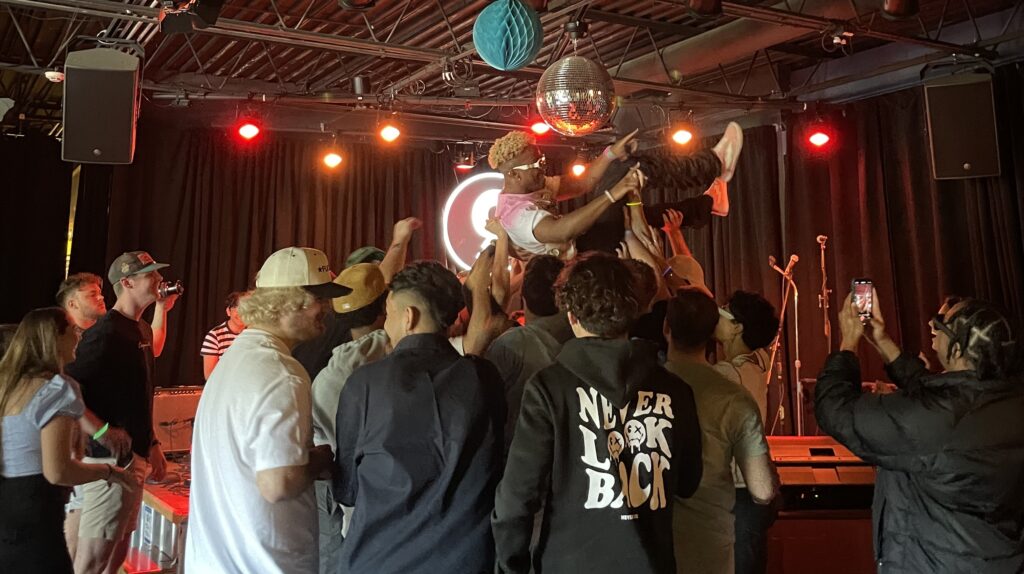
From the moment singer/songwriter Ashtxn started his set by having the audience greet his “favorite milf” on Facetime, one thing became clear to me: I had no idea what to expect from his set but whatever it was, it was going to be extremely entertaining. He had a great stage presence and managed to successfully hype the crowd up numerous times, due both in part to his charismatic personality as well as songs like “Nighttime” that can get a crowd to open a mosh pit in the middle of the afternoon, an impressive feat.
Evelia
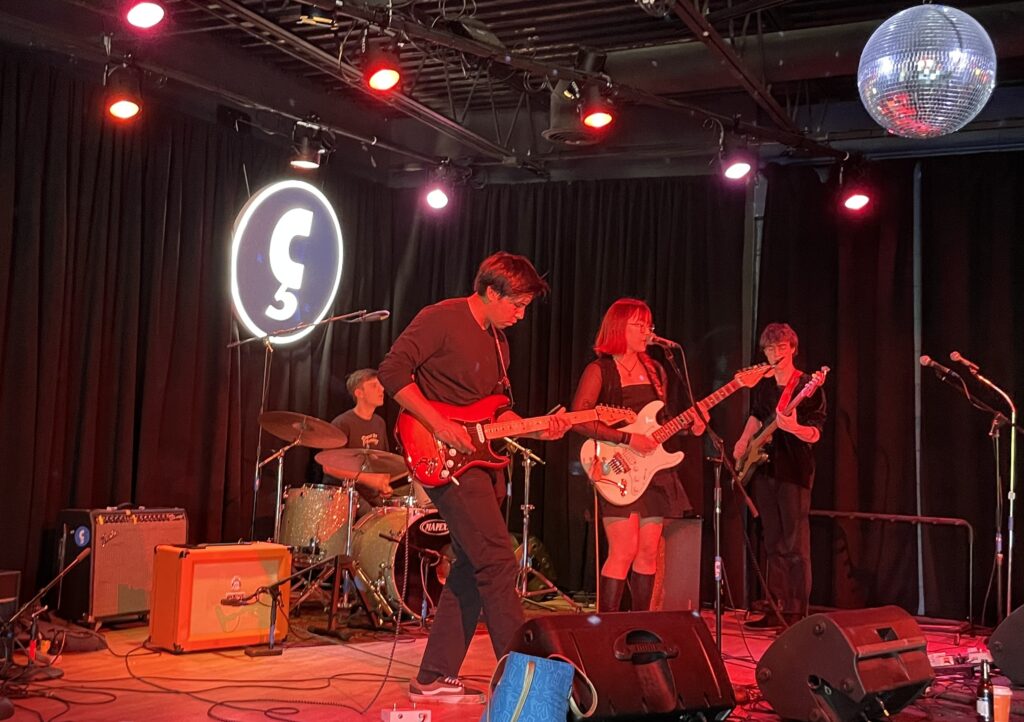
The next act, indie pop/rock band Evelia, was completely different from those that it followed but remained every bit as captivating. Starting off strong with their song “Around”, their talent absolutely demanded (and successfully held) the attention of everyone in the venue for a solid 45 minutes. While I enjoyed every song that they played, their new song “Bed Bugs” was especially entrancing, and I cannot wait to hear more music from them.
Five Gallon Flow
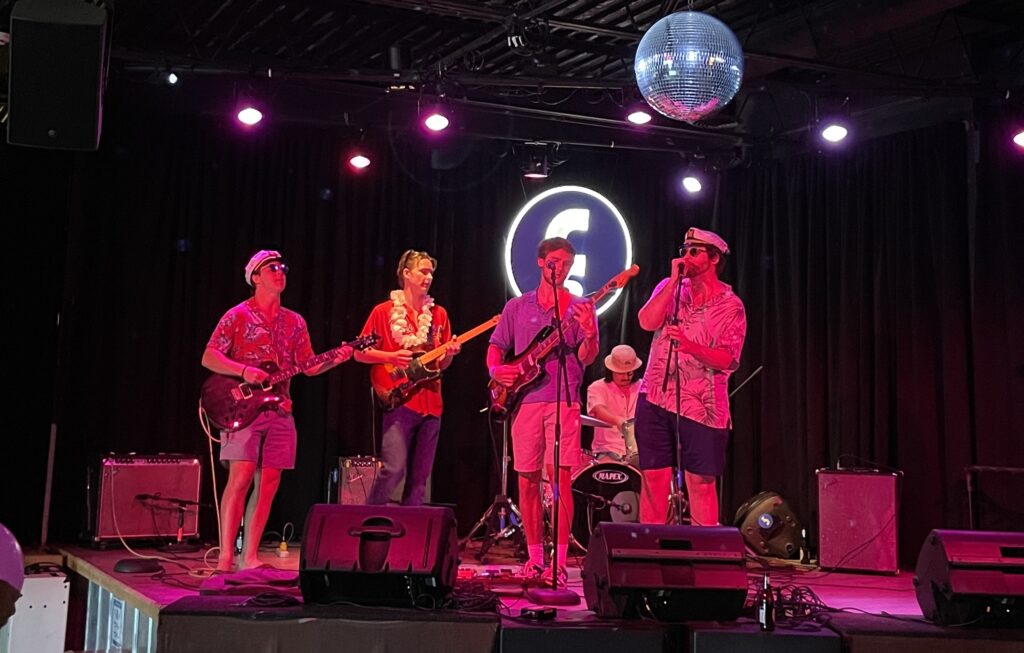
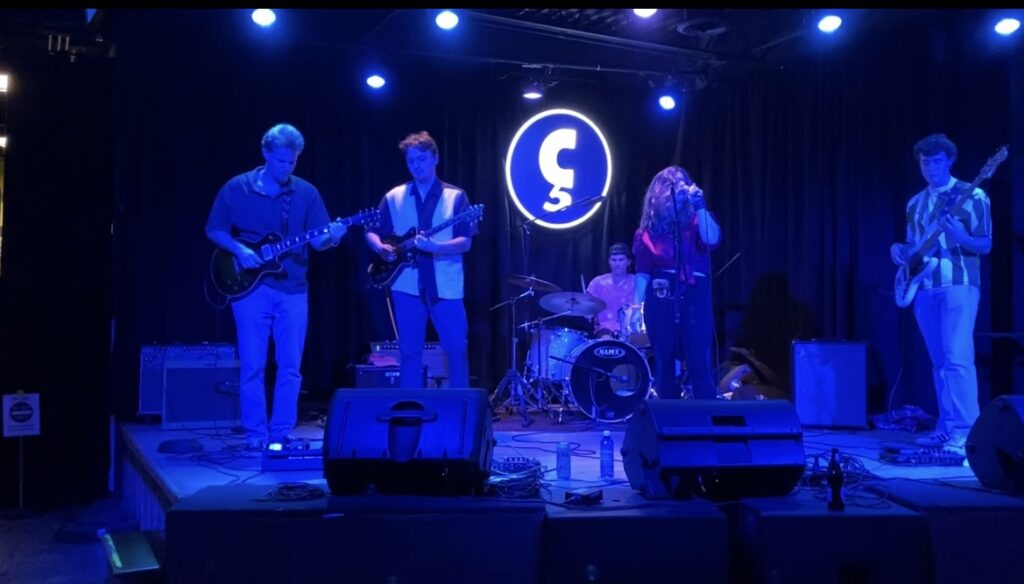
When watching this performance, it was clear that the Athens band was having a great time while they played, and they sounded fantastic doing it. The high-energy set consisted of covers ranging from Frank Ocean to Chris Stapleton, as well as originals like “Easy” that reminded me of a yacht rock song but with extra guitar, which checks out considering the captains’ hats they wore for the duration of their performance.
Schmooze
The Athens funk rock band faithfully guided by lead singer Stewie Brannam gave an electric performance during their time on stage. Their set was filled with strong vocals, great instruments, supportive booing from especially dedicated members of the crowd, and a cover of the Carrie Underwood classic “Before He Cheats” that served as both a powerful showcase of talent and an effective warning against adultery.
Red Mile Road
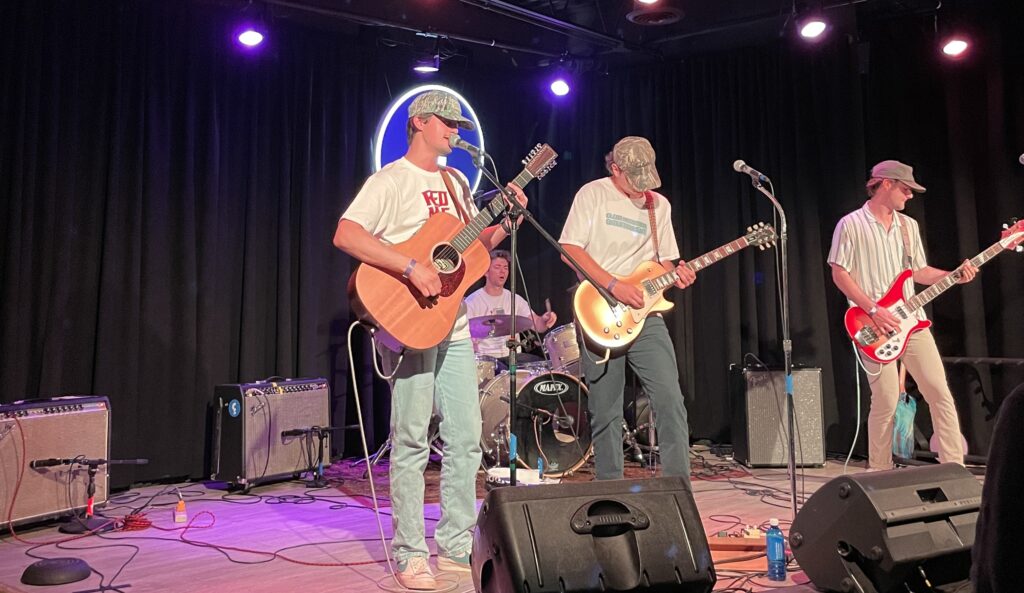
Closing out the evening was headliner Red Mile Road, an Athens based hard rock band with a versatile sound that seems to draw different pieces of inspiration from every decade spanning the last fifty years of music. One of their originals “Getaway” ,a rock number with a very subtle country twang, sounded like it could have easily had a sync placement in any movie released in the early 2000’s, but I am glad that I am able to experience it now. Towards the end of their set, they took a quick screaming-based survey from the audience to choose what song to cover and Green Day’s “Basket Case” seemed to win by a significant amount of decibels (maybe next time, Blink-182). Following this, they also gifted the audience with a cover of Lit’s “My Own Worst Enemy”, a song that I have now heard covered at two of the last five concerts I’ve gone to and would love to see the trend continue. Overall, their performance was a solid display of talent and a fantastic way to end the evening.
Where Are All the Female Producers?
In a recent email to its members, the Recording Academy boasts of nearly 50 percent of Grammy nominations in 2023 being women despite oversights in major categories, where women stood at 15.2 percent. The major categories are Song of the Year, Record of the Year, Album of the Year, Best New Artist, Songwriter of the Year, and Producer of the Year, Non-Classical. In fact, despite 65 years of existence, the Producer of the Year, Non-Classical award has never been won by a female nominee. However, the Grammys are not necessarily overlooking female and non-binary producers; there are just fewer of them in chart-topping records.
This was the third year in a row with all-male nominees since Linda Perry’s nomination in 2019, who was the first woman nominated since 2004. Perry is a rarity in an industry where only 3.4 percent of producers are women. For women of color, the pick is even slimmer, with only 13 out of 1,756 producing credits attributed to them. (Note: the Annenberg Inclusion Initiative only examines mainstream songs when gathering this data.)
Spurred by the Recording Academy’s Women in the Mix study, “hundreds of music professionals and organizations…pledge to consider at least two women in the selection process every time a producer or engineer is hired.” (Emphasis mine.) However, this pledge has minimal impact on the year’s most popular songs. In 2022, only one pledge-taker worked with a woman producer on a Billboard Hot 100 Year-End song and zero worked with women engineers. This is a decrease from last year’s four and five, respectively.
Although less prevalent, female producers do exist and are often pioneers in their own genres. Billboard’s Women in Music Awards recognized this by awarding Rosalía its inaugural producer of the year award. As Rosalía notes, the work of producers (and engineers) is often understated and far less glamorous. She declares “I make my own music and I produce my own songs and I write my own songs,” which is reminiscent of legendary acts like Björk and Missy Elliot, who she also recognizes in her speech.
Missy Elliot has received little recognition despite producing and writing songs for an impressive list of artists; and she knows it. She says “if a man would have done half the records that I’ve done we would know about it.” Björk, a pioneer in the avant-garde genre, feels the same way. Following the recent comeback of Kate Bush’s “Running Up That Hill,” which is entirely self-written and self-produced, Björk notes that both women have been brutally caricatured for their eccentricity. She says “We’re both producers…If we were guys, we would be taken more seriously.”
SOPHIE, who died two years ago at the age of 34, was a visionary producer in electronic and avant-garde pop. SOPHIE’s collaborations with Charli XCX, Madonna, Lady Gaga, Vince Staples, and so many more paved the way for so much of the music we hear today. SOPHIE deserves to be remembered as such.
These are just a few of the female and gender-expansive producers that fly under the radar. Besides Linda Perry, only six other women have been nominated for the Producer of the Year, Non-Classical award and half of them weren’t even nominated on their own. (The Producer of the Year, Classical award has had three female winners: Judith Sherman, Joanna Nickrenz, and Elaine L. Martone.) Although music lovers everywhere lament the death of its cultural relevance, with oversights like this, the Grammys are only compounding its issues.
The Recording Academy has generously pledged a total of $50,000 to companies focused on supporting women and girls in music, which is certainly a right step forward, but clearly more needs to be done. In their latest Women in the Mix study, the Recording Academy suggests increased resources and structural support in the form of mentorships, paid internships, and additional paid time off for better work/life balance to address gender disparities. In the meantime, we should recognize the talents and contributions of these innovative producers.
You can check out some of the organizations supporting women in the recording industry right here: we are moving the needle, girls who listen, Girls Behind the Rock Show, Beats By Girlz, and Girls Make Beats.
We’ve also compiled a playlist of songs featuring our favorite female and non-binary producers. Listen below now! Our playlist features the producers mentioned above as well as PinkPantheress, H.E.R., WondaGurl, and more. Think we missed any? (And we’re sure we did!) Let us on Instagram or Twitter!

What To Do About Streaming
Streaming services have drastically altered the way we consume music. Luminate reports that on-demand audio streams boasted a whopping 83.2% of total shares of album-equivalent consumption by format in 2022. For better or worse, the internet era of music consumption is here to stay.
While streaming services have made the lives of consumers easier, artists are still struggling to be compensated fairly. In an email sent to Universal Music Group’s global staff, Chairman and CEO Sir Lucian Grange addressed the need for streaming service evolution. He says “There is a growing disconnect between, on the one hand, the devotion to those artists whom fans value and seek to support and, on the other, the way subscription fees are paid by the platform. Under the current model, the critical contributions of too many artists, as well as the engagement of too many fans, are undervalued.” He goes on to express the need for an updated model that is inherently artist-centric.
The current pro-rata payment model, in short, prioritizes and rewards the largest artists in the game and is currently used by most streaming platforms, including Spotify and Apple, the two largest ones. It pools all the money garnered by the monthly subscription fees, which hover around $9.99-$10.99, and divides it by the total number of streams on the platform. This, in turn, identifies a ‘per stream rate’ which is then multiplied by each song’s number of streams to determine artist payout. To illustrate, Miley Cyrus’s latest single has accumulated more streams than your favorite shoegaze indie-rock garage band (just a guess); therefore, your subscription dollars will go towards Miley, even if you never listen to her.
Fans want to support the artists that they love; they’re fans for a reason! Many industry voices urge for a change to a user-centric model. This system, as opposed to the pro-rata model, takes a percentage of each subscriber’s fees and pays it out only to the artists that user listens to. (Point for shoegaze garage band!).
Impala, an independent music companies association, has created an infographic hosting a ten-point-plan on ways to reform streaming into a more equitable system. It provides four new-and-improved streaming payment models other than the user-centric model.
First up is the active engagement model, which attaches a premium royalty value to plays where the listener has actively searched for a particular track or artist. The same would happen if the user were to save or pre-order a record. For example, Spotify algorithmically serves listeners lean-back plays that it believes the user will like. The active engagement model would account for this, and in turn, increase rewards to artists the user has specifically gone out in search of.
The second model is called the pro-rata temporis model. There is a difference between listening to the first 30 seconds of a song and listening to the entire 9 minutes and 7 seconds of Lynyrd Skynyrd’s “Free Bird”—this model addresses that value discrepancy. The pro-rata temporis model pays out more money for listens of longer tracks than shorter tracks. At the 30 second mark of any song a royalty rate is rewarded, but this model would give further payments triggered at 5 minute intervals within a single track, up to 15 minutes and 30 seconds. It would reward songs that garner a user’s attention the whole way through, thus giving true fans a sense of pride in supporting their favorite artists by listening to the full tracks.
Then there is the artist growth model, which I find the least likely to catch on. It proposes that the more streams and wealth an artist accumulates, the less incremental value each further stream will generate. Thus, smaller and more niche artists would generate a bit more per stream than top artists in order to accelerate their own growth and popularity. While this would support emerging artists in a significant manner, streaming platforms are likely to refrain from peeving larger artists—as it would essentially be biting the hand that feeds them.
The fourth and final proposed model is called the user choice model (not to be confused with the user-centric model from earlier). The user choice model facilitates areas within streaming platforms for artists to gain revenues through implementing direct relationships with fans. This could come in different forms such as offering access to more tracks, better sound quality, or additional remixes. This model would allow the artist to generate more income, in addition to streaming royalties, as well as nourish a more personal relationship with their fans. I find this to be the most approachable and realistic option.
At the end of the day, streaming platforms are a money-orientated business and not music companies. As opposed to us music fanatics who want to see small artists thrive and for our money go to the artists that we like—a corporation’s bottomline is to make money. Truthfully, I’m not sure if there is an inherent strength in numbers when it comes to this debacle, but I am sure that if key players such as Taylor Swift, who is known to ‘fight the man,’ were to make a fuss about this, we’d see more change. There is not yet a perfect solution, but that doesn’t mean there won’t be one day. As for now, do your due-diligence and support your favorite artists by buying their merch at concerts.
Kenny Mason x Vinyl Mag
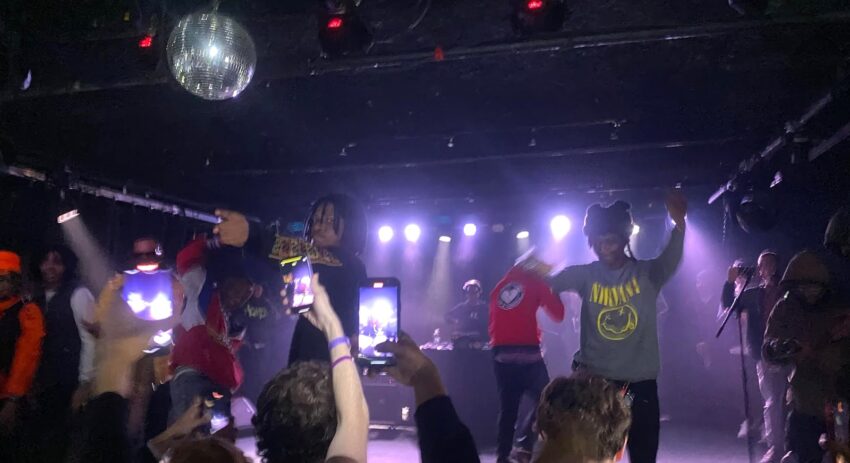
December 17, 2022 was an important day for upcoming Atlanta rapper Kenny Mason (@kennymason). He ended his first solo tour with his first sold-out show in Atlanta on his 28th birthday. These shows happen annually and he has dubbed the occasion “Pup Day,” which I was fortunate enough to witness at Atlanta’s the Loft.
I got in contact with the opener (and brother) of Kenny Mason, Sam Carlito (@carlitosameze), to discover a more meaningful purpose behind Pup Day. Carlito recounted the story of his son, Sameze, who died in a car crash at the age of three on December 17, 2017. Reflecting on the day, Carlito said, “Kenny don’t celebrate his pup day… [but] since that day we celebrate baby Carlito and his life.” On this day, five years ago, Mason lost his nephew, adding to the emotional significance and gravity of the event. Carlito explained to me the importance of familial connections to Mason and their family, stating that “[Mason’s] dad was there… [and] that was cool to see them connect, making [Carlito] wanna go harder.” Carlito attributed the success of his opening act tonight to inspiration from his family, who are always there, supporting him and pushing him to the next level.
Check out Sam Carlito’s new singles “Crazy” and “Hit-A-Rapper” on streaming services and look out for a feature on Kenny Mason’s upcoming ‘Ruffs 2’
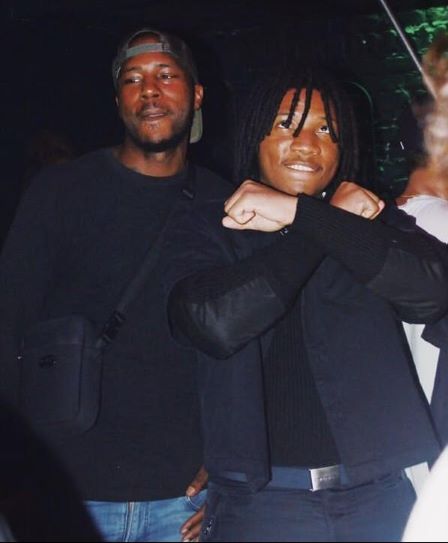
Their passion and cherished relationships were showcased throughout the night culminating in an incredible opening. His openers were an homage to Atlanta’s underground rap scene, almost all of whom had a close background with Mason. It began with an impressive, energetic performance from his brother Carlito, who did not fall short of getting the crowd excited for the special night. He was followed by Mason’s DJ and friend DvDx (@dvdx_) who had a high-spirited performance. He brought out more of Mason’s friends, Vonta Worldwide (@vontarender), the masked MuddyMya (@muddy.mya), and frequent Kenny Mason collaborator, Jelani Imani (@jelaniimani). They were followed by an amazing set from Tony Shhnow (@tonyshhnow), a fairly popular Atlanta rapper, and his manager and DJ, OG Bluetooth (@ogbluetooth). After bringing out associate Northside Mally, he played his hit song “Don’t Look at Numbers” followed by a remix of Steve Lacy’s popular “Bad Habit.” Shhnow had the crowd laughing and dancing with lines like “I wish I knew where to find some weed” and “I got my finger on the trigger it’s a bad habit.”
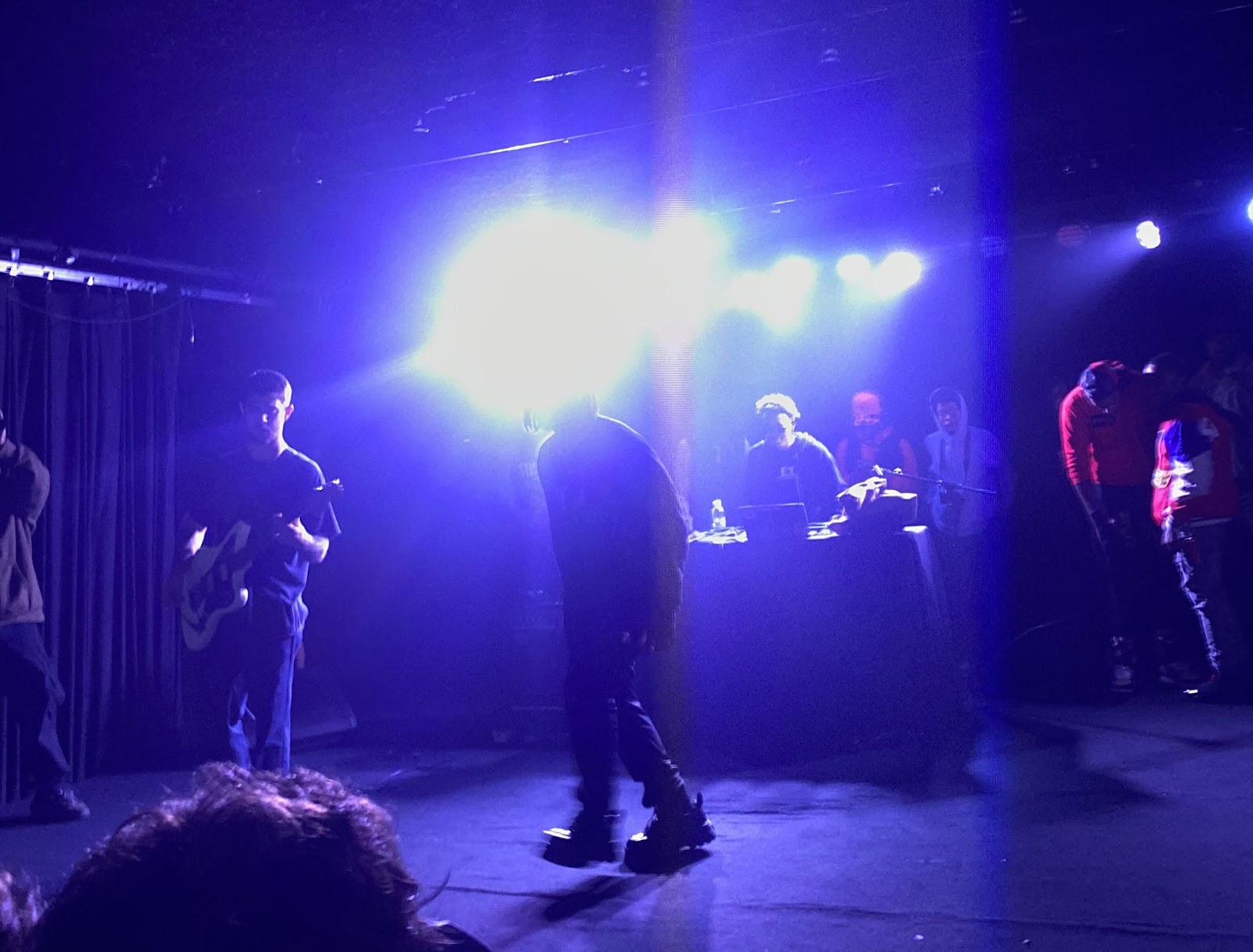
After a fantastic opening, Kenny Mason finally stepped out. He did it all, from rapping complex bars to singing beautifully after, all whilst rocking with the audience with absolute crowd control. Mason takes inspiration from grunge and punk rock music, as can be heard in many of his overdrive guitar laced melodies, which he capitalized on for his tour. Mason included a live guitarist during his tour, adding a more authentic element to the show. I am hopeful that as he continues to grow, Mason will play with a full live band, further emphasizing his rock influences and drawing in a wider audience.

After playing a few throwback hits from his Angelic Hoodrat series, Kenny Mason brought out frequent collaborator and friend DavidTheTragic (@davidthetragic). They performed one of the singles from his PUP PACK EP, the woozy “Dip!”, followed by a solo performance from DavidTheTragic of one of his hit songs, “DRUGZ.” DavidTheTragic and Mason have been working together for years, so seeing them perform together live was a phenomenal experience.
Mason returned after, playing the most popular songs from his newest mixtape, Ruffs, leading to some of the most energetic moments of the show. The rock influence, alongside Mason’s energy, encouraged wild mosh pits. And when a fan fell, needing to get out of the pit, Mason promptly stopped his performance, got them water, and cleared space for their leave before resuming. After the show, I spoke with attendee Mark Toth, who shared “I was blown away by the care Mason has for his fans. Not only did he emphasize everyone’s safety before the show, he actually stopped the show to make sure one fan was alright. Honestly, I don’t know how he isn’t more famous.” With all the outcry for concert safety over the last year, this move had a positive impact on fans, making them feel safe and comfortable.
The show ended with a brief encore, where Mason pledged “Hit”, one of his most popular songs, to the city of Atlanta and its artists. I discussed this with DJ DvDx, who Mason has been working with since high school. He shared “‘Hit,’ in particular, came out during an uprising in the underground Atlanta music scene. Lots of incredible artists, creatives, and tastemakers were starting to unify in a major way and I believe that song, and really everything Kenny did at that time, were key moments in bringing the city together.”
The song and Mason himself have had a major impact on the city, but also are a product of the environment of Atlanta. He has taken inspiration from his surroundings and, in turn, has been able to make an impact with his music.
Check out DvDx’s new singles “Candid” and “Maria” on streaming services as well as his new mixtape with producer Juberlee (@jupiterjube), “Sensory Overload”
Longtime friend, opener, and House 9 cofounder (a music collective they started), Vonta shared, “[Kenny Mason] represents a new wave of artists that Atlanta is birthing. The kinds of artists that look at the same environment Atlanta has always been but with a new perspective. One that looks at the things around him as well as himself as the art. I also think he represents the innovation of Atlanta’s sound musically.”
Check out Vonta’s latest single “Yola” on streaming services and look out for his upcoming EP
This artistic innovation in sound is what sets Mason apart. Industry greats like Denzel Curry, JID, and Freddie Gibbs have recognized this and have given him a platform to further share his art. This popularity allows Mason to uplift Atlanta and his fellow artists, which will eventually serve as a stepping stone for future artists.
It’s apparent, even with his peers, the shift that Mason has brought, pushing artists to think differently about their environment in Atlanta, their inspiration from the city, and their potential for impact on it. I appreciate his emphasis on music as art, which is something I have seen and appreciate a lot from many newer, more underground artists as well. Kenny Mason is truly an incredible artist, a great performer and a perfect encapsulation of the upcoming, talented underground rap scene in Atlanta.
Missed the show? Check the playlist below for all the highlights:

Shaky Knees Diaries: Day 3

It’s time for the final installment of the 2021 Shaky Knees Diaries :’). So let’s dive in, but make sure you’ve caught up on Day 1 and Day 2 first!
12:30 p.m. – 2:30 p.m. – Today, we are off to a late start. After the Run the Jewels performance of the previous night, we slept in. Then, we took our time grabbing lunch at Krog Street Market and strolling through the Beltline and Ponce City Market. (Side note: Krog has some of the best food in Atlanta – like Jai Ho, the Indian restaurant I loved and Soul, which served wings that my boyfriend will literally not stopping talking about.) We were staying close enough that we could walk to the park and today, we decided we would. The gorgeous Georgia weather was on our side as Shaky Knees had fallen neatly within those two blissful weeks of the year when the weather is neither too hot nor too cold and just perfect.
2:30 p.m. – So far, we had avoided the long lines that form later in the day as most ticketholders arrive late. Today was different. As we approached the main entrance (just a few hours earlier than the past two days), there is no clear path forward. Instead, we find a sea of festivalgoers ahead of us. Thankfully, we don’t have to wait long as everyone is rushed through security steadily (for better or for worse).
2:55 p.m. – 3:30 p.m. – The Aubreys
The duo, consisting of Malcolm Craig and Finn Wolfhard, began their performance at 2:45 p.m. We missed the first few minutes due to the crowded gate, but we still manage to catch much of the set. They’re performing on the Criminal Records Stage, which is the perfect place for casual enjoyers to camp out and sit on the grass while still being close enough to see the action. And that’s exactly what we did. The Aubreys are laid back but charismatic, charming the audience with their jests. I could see a dedicated group of fans jumping and swaying near the stage.
3:30 p.m. – The Backseat Lovers
The Ponce de Leon stage had a crowd going way before the Backseat Lovers took their places. The front of the stage is packed and even the little hill behind the gravel lot has little room left for walking. Once the show begins, many in the audience sing scream along with the band.
About halfway through the set, I start to wonder how Delta Spirit must be doing on the other side of the park. Out of curiosity, I’d been making mental notes about the relative streaming numbers of artists and what stage they were placed on. My conclusion is that there is no correlation, but for the most part, the Shaky Knees booking team seems to know their stuff pretty well. In this case, the Backseat Lovers outdo Delta Spirit by quite a large margin in terms of streaming. And yet, it’s the former that’s on the smaller stage. Ultimately, this worked well because the experience of a packed show in a smaller, more intimate venue suited the Backseat Lovers.
4:10 p.m. – My curiosity gets the best of me. So, we head over to see Delta Spirit perform on Zelle on Piedmont. There is a sizable crowd going with many gathering by the stage and others hanging back, enjoying the show from afar. We join the people lounging on the grass. Tired as we are, we decide to lie down on the grass and close our eyes. Delta Spirit is putting on a proper rock concert and I can feel the ground vibrate underneath me. At that point, I understand why they were placed on this very stage.
4:30 p.m.– Orville Peck
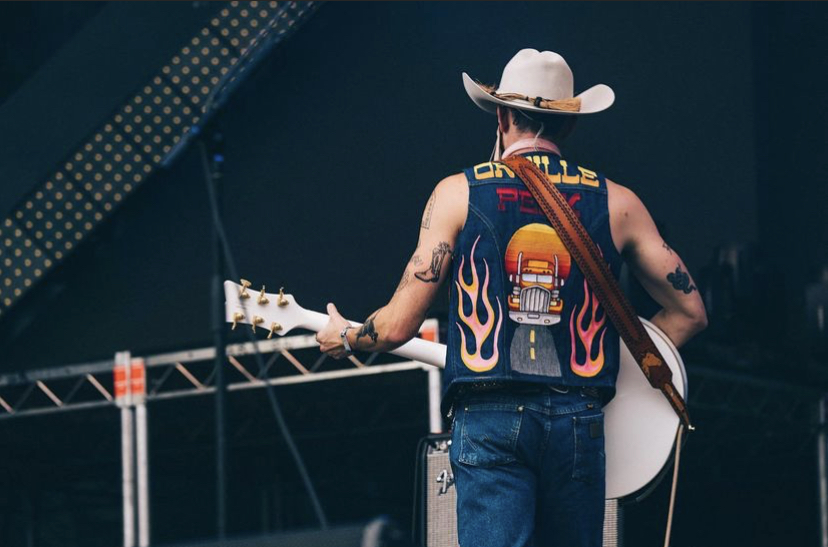
It’s time for the most enigmatic character of the entire lineup to perform. Orville Peck, the cowboy who’s never revealed his face, debuted in 2019. Despite my lack of familiarity with Peck, I could tell that festival goers were buzzing to see him live. So, we took our seats on the hill across from the Peachtree Stage. Peck was on the big screen with a wide white cowboy hat and his signature face mask. When he turned around, you could catch a better glimpse of his flamboyant jacket, which was painted with flames, a sunset, a truck on the highway, and (of course) his name. Before his performance of “Roses are Falling,” Orville sincerely asks the audience, “Have you ever loved someone so much you wanted to kill them?” If you have, he asks that you hold them close for this song.
5:00 p.m. – Ritt Momney
We left Orville’s set early to catch Ritt Momney at Criminal Records. And I will admit, I have some serious regrets about leaving Orville’s set early for a largely unremarkable performance. Oh well, we live, and we learn. Oh, and Ritt didn’t even stay for his whole set; he ended 15 minutes early!
5:15 p.m. – With the extra time on our hands, we move over to the Ponce de Leon stage and get a spot for The Aces’ 5:30 p.m. show. There is already a crowd forming. The Aces begin with their hit single “Daydream” and the audience loves them. Halfway through the show, lead vocalist Cristal Ramirez steps off the stage to sing by the barricade and the audience absolutely loses their minds. I am stunned by how her voice sounds exactly like it does on records. At some point, my boyfriend taps on my shoulder and goes, “The number of guys who were clearly brought here by their girlfriends and have no idea what’s happening is astonishing.” He was right. We were surrounded by a comical number of this exact pairing, and yes, it included us.
6:10 p.m. – We head over to Zelle on Piedmont where O.A.R. is performing. One thing I forgot to mention earlier: about one in 20 people today showed up with skeletons on their shirts à la the iconic Phoebe Bridgers look. And now, they concentrated in this exact spot, all waiting for the O.A.R performance to end to secure their spots for Phoebe.
6:30 p.m. – 7:30 p.m. – O.A.R.’s performance ends and their fans shuffle their way out of the crowd; people here to see Phoebe fill the gaps in immediately. There’s still an hour to go while Modest Mouse performs one stage over, but at least, the crowd knows how to keep themselves entertained and we get to watch the sunset behind us as we wait. Someone holds up their phone a couple feet behind me, it reads, “Anyone lesbian?”

About ten minutes before her set begins, I hear the crowd in front of us begin to chant “mommy, mommy” repeatedly, but it dies down. The crowd tightens slightly as the beginning time gets closer. A girl next to me comments, “Did everyone suddenly get taller? I can’t see anymore.” My boyfriend responds back, “I think that if everyone could just take off their Doc Martens, we’d be able to see better.”
7:30 p.m. – Phoebe Bridgers
Right on time, Phoebe’s ensemble steps out on stage clad in skeletal bodysuits accompanied by Flo Rida’s “Good Feeling” playing in the background. Phoebe herself is wearing all black with a faintly sparkly top and a blazer to top it off. This is her last stop of tour, and she begins with her most popular song “Motion Sickness.” When “Scott Street” plays, the crowd is singing along softly, but clearly; it sounds a like a lovely, haunting lullaby. To the absolute delight of the audience Phoebe plays her song “Georgia,” which has not been on the setlist for any previous shows of the tour. Of the song she says, “Sincerity is fucking humiliating but I’m coming around to it.”
When she notices a fan poster asking her about her favorite movie, she responds, “I re-watched the SpongeBob movie this year, it holds up. Anyway, this next song is about alcoholism.” Before her last song, Phoebe says she has one wish before the end of tour, she really wants a mosh pit (“I’m sorry about the tote bag bitches”). Then, she begins “I Know The End,” which builds and builds and builds until you can’t hear anything but the instrumental and screams. And then, it’s over.
8:30 p.m. – The Strokes
It’s 8:30 p.m. – time for the Strokes to perform, but they are nowhere to be seen. We get no explanation as to what’s going on. This is unusual for Shaky Knees because all the acts so far have operated like clockwork. Nearly 20 minutes pass until the band finally steps out on to stage. We have opted to watch the show from afar, where we can see the effects clearly and dance as we wish. The crowd is clearly excited to be there, but something feels… off. Leader singer, Julian Casablancas, kind of sounds like he’d rather be anywhere else. He is mumbling through the lyrics and his interactions with the crowd are subpar at best. I didn’t stay for the full set, but I did stay long enough to hear him start then immediately stop at the onset of one song (“I don’t know the lyrics to this one”).
Even dedicated fans were divided over the performance when the festival was over. Many were disappointed by Casablancas’ unprofessional demeanor and his overall performance, even ones who’d been waiting to see them for years. This was not the ending they had hoped for after an incredible weekend at Shaky. But there was another camp of fans who had a blast despite these shortcomings – it’s a rock concert after all, what did you expect?! That’s just classic Julian! Either way, when I walked out of that park with “The Adults Are Talking” fading out in the distance, I could almost see the end credits begin to roll.
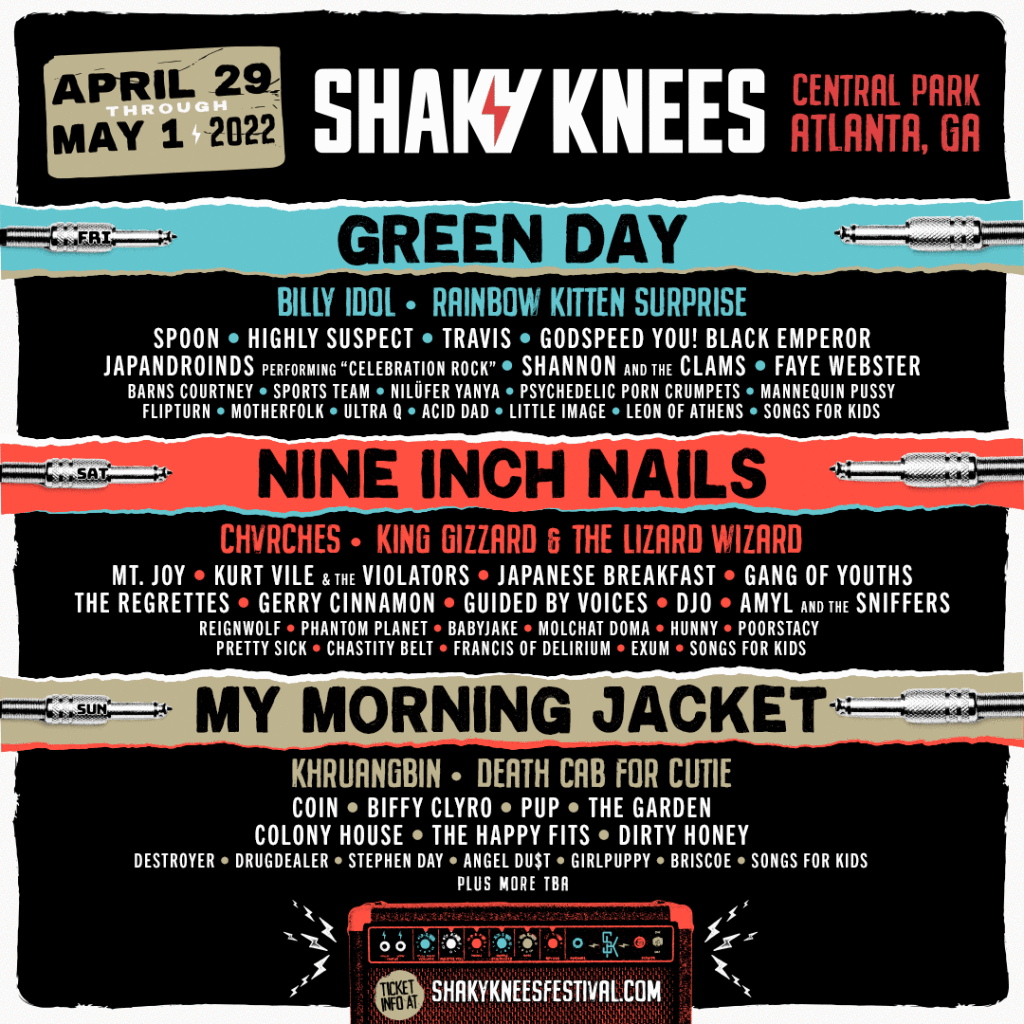
So, that’s what you missed at this year’s Shaky Knees. If you want to experience it for yourself, check out the Shaky Knees 2022 lineup, which just got released! Until next time…