Vinyl Mag
Menu
  • About Us
  • News
  • Reviews
    • Music Reviews
    • Show Reviews
  • Interviews
    • All Interviews
    • Vinyl Video
  • Features
  • Vinyl Recommends
    • Playlists
    • Year-in-review
  • MBUS
Menu

Bryan Toti

20 Years of Pickathon: A Legacy of Diversity

Posted on August 14, 2018August 14, 2018 by Bryan Toti
Photo by Miri Stebivka
Photo by Rob Kerr

It’s good to be home.

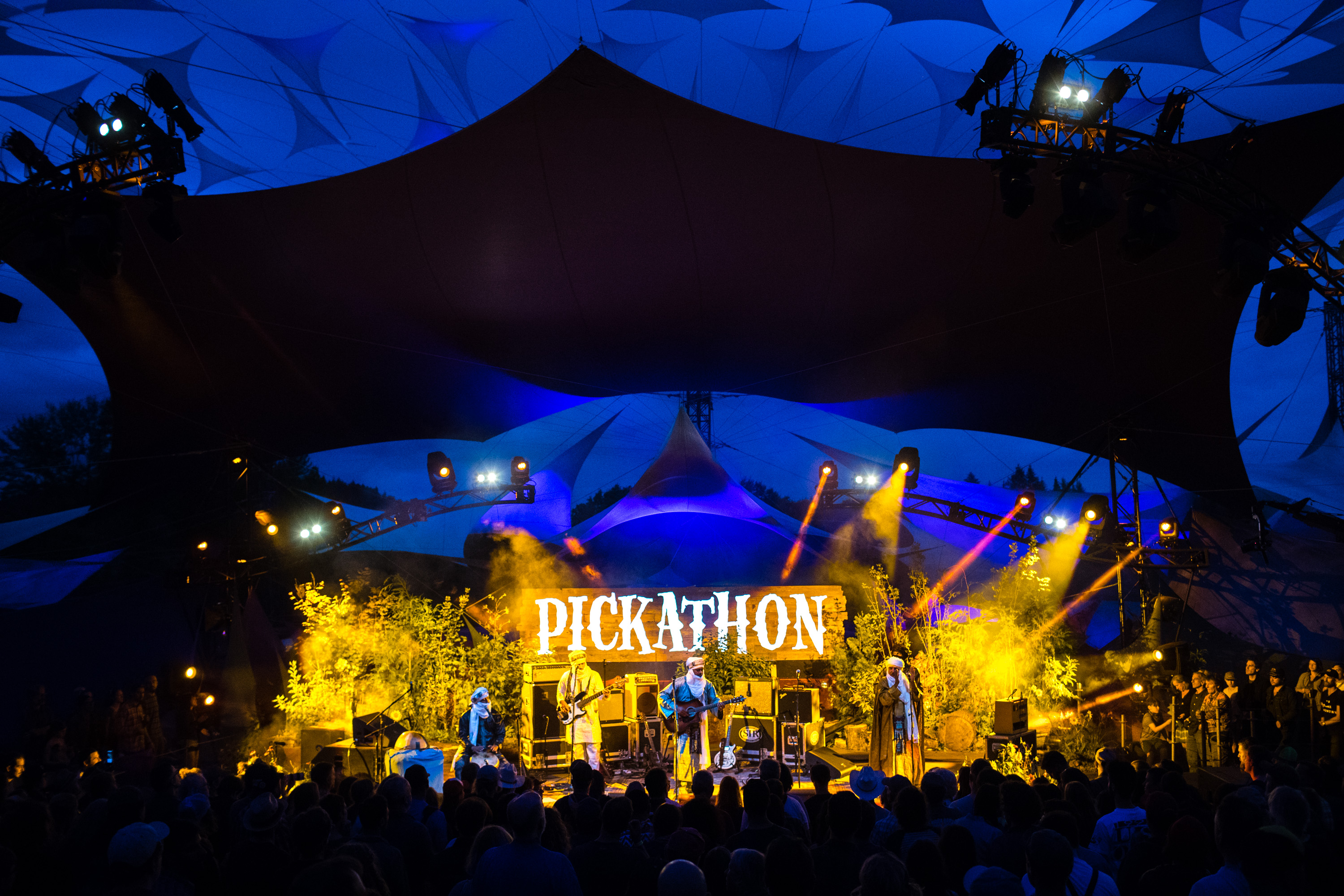
Portland may no longer be the country’s best kept secret, but it is without doubt still in possession of the next best thing: Pickathon; a paragon of a small-scale festival accurately coined “the best American music festival period” by unofficial mascot and veteran, Ty Segall. Nestled in the scenic rural-suburban hills of Happy Valley, OR, Pickathon has planted its roots in the 80-acre Pendarvis Family Farm since 2006, growing in size and popularity with each passing year. Breaching its way into the limelight and sparking a storm of buzz in music communities, Pickathon has managed to rope in some big-name talent in recent years featuring the likes of Beach House in 2016, last year’s appearance from Dinosaur Jr., and the miraculous arrival of Leslie Feist back in 2013. Although Pickathon has proved itself worthy of big fish, the festival team has managed to stay true to their mission, consistently curating a musically and culturally diverse offering of discovery-based lineups.

Celebrating its landmark 20th anniversary, Pickathon avoided any temptation to consummate a crossover into mainstream-festival ranks, bringing core Picky people the same-same-but-different in the best imaginable way. Checking in at the top of the bill this year were long-time indie icons Broken Social Scene and Built to Spill, token folk-rock sing-along ballad bands Shakey Graves and Phosphorescent, as well as overseas marvels Daniel Norgren (Sweden), DakhaBrakha (Ukraine), and Kikagaku Moyo (Japan).

Day One

Upon arrival at the festival, it was more than apparent that word had gotten out about the clandestine gem of the Northwest. Longer-than-usual lines snaked through the grassy parking lot where eager faces awaited admittance to the farm. First and foremost, we responsibly headed to the bar for the last line of defense against our fleeting hangovers, courtesy of a night of campfire revelry the evening prior. Summery cocktails amalgamated with fresh hibiscus, strawberry and booze—as well as local offerings of craft beers—were just what the doctor ordered.

One aspect of Pickathon that is not to be overlooked is the relentless dedication to a completely waste-free festival. Drinks are strictly served in stainless steel cups that are available for purchase at all alcohol stations for a reasonable price. This entirely eliminates the sea of cans and cups that often plague most larger festivals, crunching and cracking with the footsteps of fans dancing to the beat of the music.
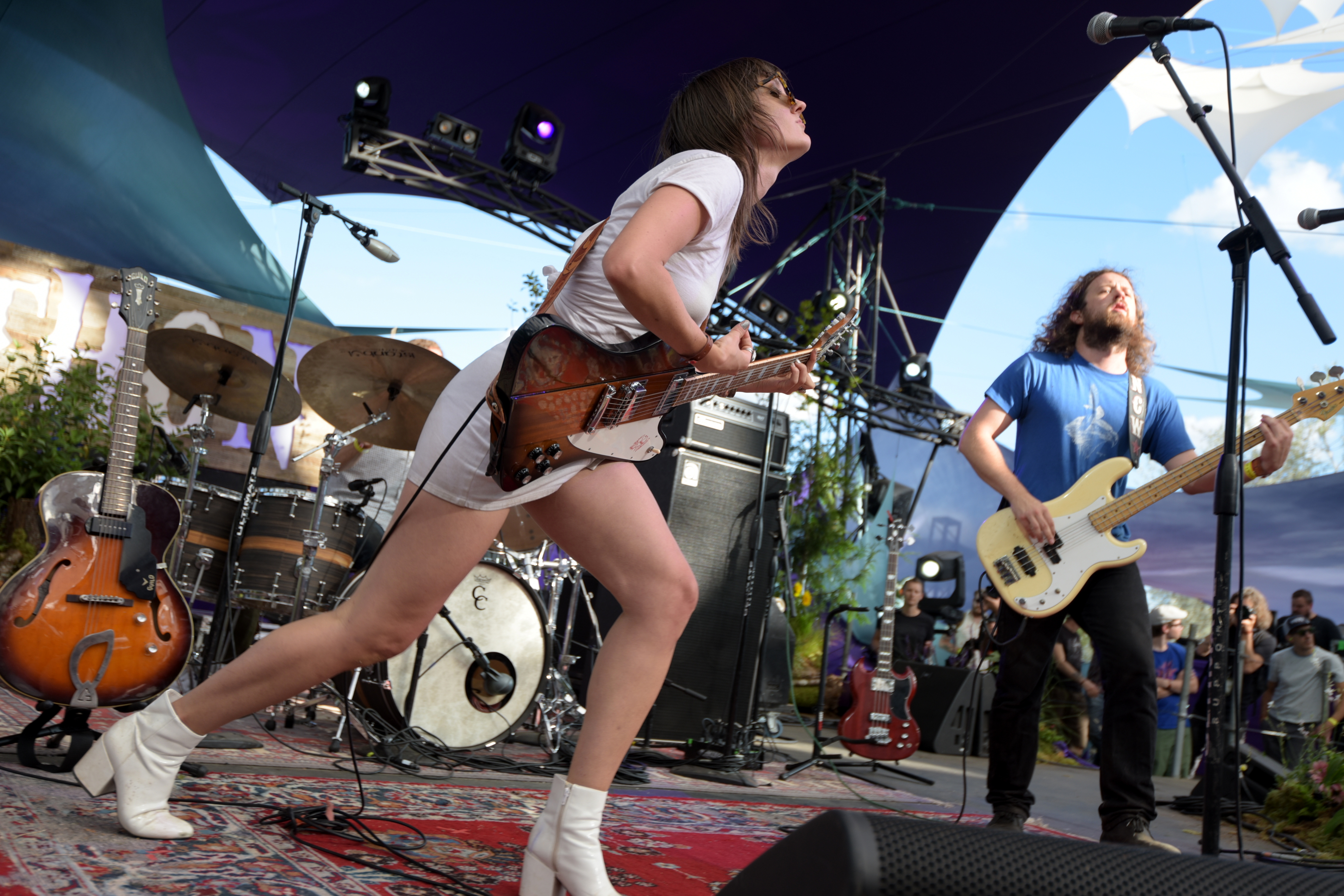
Photo by Miri Stebivka
Valley Queen. Photo by Miri Stebivka

We christened Day One with a fully energized performance from Los Angeles locals, Valley Queen, who excel at finding the balance between distorted guitar and melodic vocals from frontwoman Natalie Carol. Tailored in all white, from sunglasses all the way down to leather cowboy boots, Carol’s ensemble was the perfect representation of the evolution of Pickathon’s strictly-folk roots into a progressive inclusion of multi-genre acts, diversifying the image and crowd of the festival alike. The band had the entirety of the mainstage on their feet, treating them to a handful of goodies from last year’s EP Destroyer, and eagerly diving into tracks off of their debut full-length, Supergiant, which arrived just last month. In an press release regarding the title track of the new album, Carol states that, “it takes all the drama you hear on the record—the aggressive, chaotic moments, and the more beautiful or quieter moments—and puts it all into a more galactic perspective.” This notion was brightly reflected by the fans swaying their way through the sonic cosmos of Valley Queen’s performance.

We exited the grounds of the mainstage through one of the many checkpoints, where volunteers investigate the contents of your cup, supposedly to prevent underage drinking as well as the smuggling-in of outside beverages. We took to viewing these encounters a challenge to “level-up,” faced with the dire dilemma of either dumping or chugging our beverages.

Walking the heavily forested pathway toward the Woods Stage, we were constantly swarmed with children hustling us for donations with an array of elementary art forms, varying from magical “marvels” to spoken freestyle rap read from notebook paper. Kids gotta eat too, I suppose.

Narrowly escaping the money-hungry munchkins, we managed to catch best-bud collective Glorietta. Members of the band include but are not limited to Matthew Vasquez (Delta Spirit, Middle Brother,) Noah Gunderson, Jason Robert Blum, Kelsey Wilson (Wild Child), David Ramirez, and Adrian Quesada (Black Pumas, Brown Out). A band compiled of broken-hearted optimists, Glorietta’s ever-rotating songwriters share similar themes in their words and stories, which latch together as patches of a quilt do, establishing a blanket of warmth and expression under which the band can feel at home with one another. That, and nights shared with a bottle of tequila; which numerous members inform a number of the songs were derived from. The setlist picked and pulled from the band’s collection of singles, as well as covers of tracks from staple projects of the varying band members.

A gap window in the schedule gave us a moment to fuel up and rest our legs in the courtyard of vendors. Pickathon brings in the best of Portland’s renowned food scene, offering a diverse and daunting array of dinner options. Contrary to the food options of some larger festivals, all of the vendors are based just miles away in the city, allowing them to provide the freshest product possible to their patrons, never sacrificing quality. This is important, given the fact that these are all restaurants that most attendees frequent in their normal lives. If you weren’t a fan of Ate-Oh-Ate, Podnah’s Pit, or Pok Pok prior to Pickathon, you certainly were post.

What about all of the plates and silverware, you ask? That’s right: another extension of Pickathon’s zero-waste mission comes in the form of reusable wooden plates and utensils. Ten dollars gets you a wooden token that you exchange with vendors upon ordering your meal. After consumption, you drop your dirty dishes at a wash station in exchange for your token back. The dishes are then cleaned by volunteers so they can be used again, and again, and again. This system keeps the clean-up process more manageable, the Pendarvis Farm looking pristine, and the existence of single-use materials to a minimum. Thank you for using your platform to prove how manageable this is, Pickathon. We salute you.
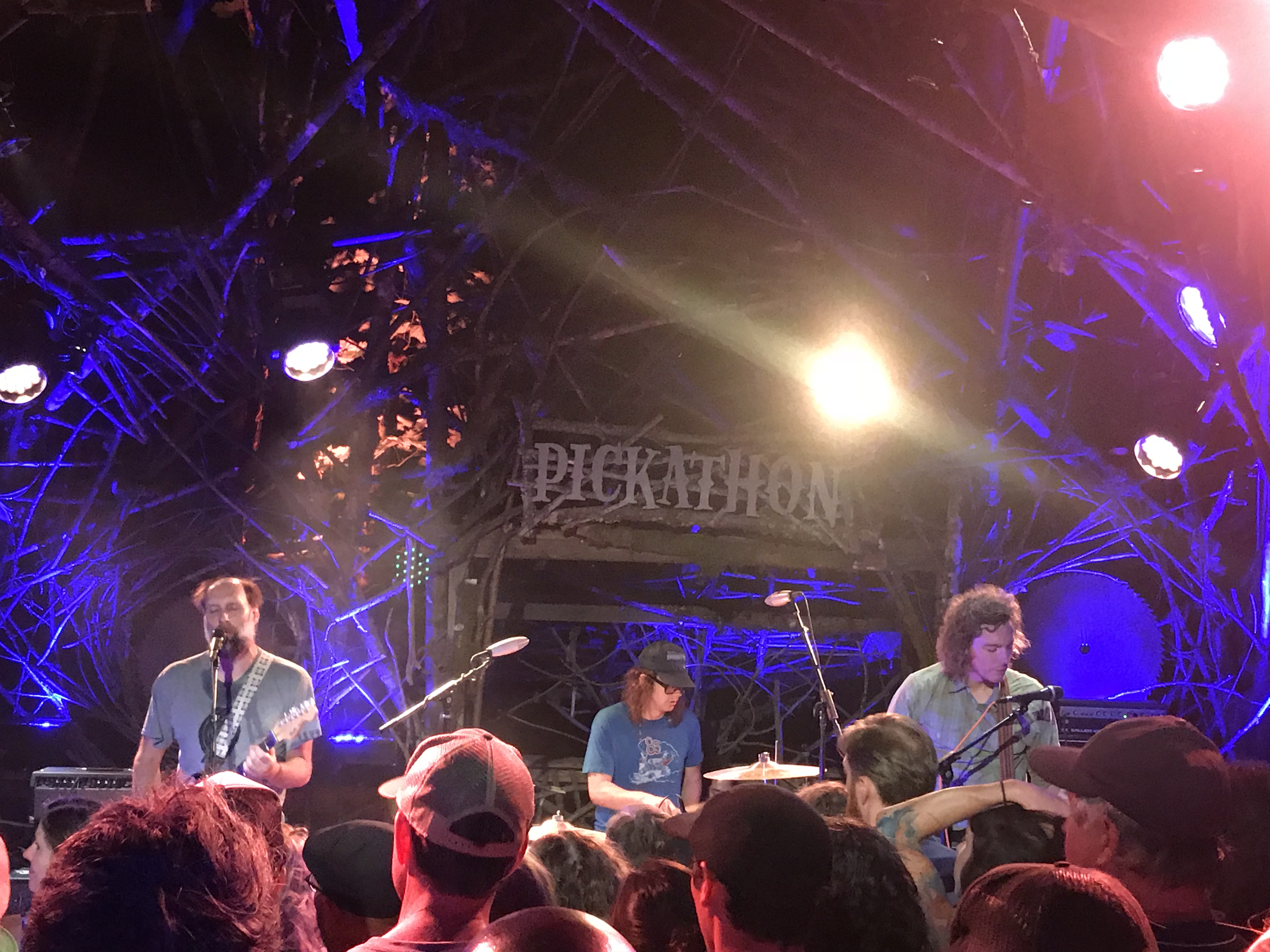
Built to Spill
Built to Spill

Following adequate gorging of faces, we exchanged wooden goods with the token slingers and headed back into the woods where indie rock legends Built to Spill were slated to perform; a band eponymous with the genre. It’s confounding to believe that in the entirety of Pickathon’s 20-year legacy, Built to Spill are just now making their inaugural appearance, having paved the way or influenced several bands fortunate enough to have shared the festival stage in years prior. The band stepped onto the Woods Stage as a trio, a lineup that surely surprised older fans of the band recalling tours with three guitarists in conjunction with bass and drums, a roster that hasn’t been utilized since the release of 2015’s Untethered Moon. The absence of additional guitarists was soon forgotten with the aggressive arrival of “Get A Life,” a track from their first studio album Ultimate Alternative Wavers (1993) which rarely surfaces for much stage time, sending die-hard fans into a frantic loop of nostalgia. Endearingly humbled saint Doug Martsch uttered soft “thank you’s” between staple songs “Time Trap” and “Kicked It in the Sun,” a sentiment completely stifled from the roar of a crowd enamored by the craft of the soft-spoken man. Martsch further treated long-time fans to a cover of “Virginia Reel Around the Fountain” by The Halo Benders, a defunct side project of his in conjunction with Beat Happening’s Calvin Johnson. A slight feeling of empathy could be felt for Martsch, who was visibly working his ass off alternating between playing rhythm, lead guitar, and soloing in songs that demanded the presence of more strings. The band wrapped up their set with an arsenal of deep cuts from 1994’s There’s Nothing Wrong with Love and 1997’s Perfect from Now On, sending the crowd into full cardiac arrest as middle-aged dad-rockers tore straggling hairs from their receding crowns in a frantic fit of passion.

Night one of Pickathon wrapped up at the foot of the dazzlingly intimate Starlight Stage where Japanese psych-rockers Kikagaku Moyo transcended into another dimension, serenading us to sleep with melodic bends of clean guitar and dreamlike solos from an electric sitar. Embellished in a myriad of mix-match patterns and a collection of clashing colors, the band displayed themselves as a banner for the very best and the very worst of ‘60s fashion; owning it nonetheless. The Tokyo bandmates treated a fortunate few who had the stamina to stick around into the twilight hours to offerings from their most recent album House in the Tall Grass, as well as tracks from former mini-albums. Those lucky enough to have experienced an intimate set from Kikagaku Moyo should count their blessings, as the band is embarking on a nearly sold-out tour.

Day Two

Having answered the calls of unturned beds in back in Portland, we opted for leisure in my air-conditioned home for our first night, finding justification in self-care for the long weekend ahead. We found ourselves back on the Pendarvis property midday, arriving at the Lucky Barn where hometown heroine Haley Heynderickx performed dazzling numbers from this year’s debut album I Need to Start a Garden between a Q&A with the audience. Another attribute unique to Pickathon is this rare opportunity for fans to engage musicians one-on-one and ask more personalized inquiries that might be overlooked in your run-of-the-mill interview. Naturally, these events hit capacity quite immediately, and we were unable to squeeze inside. Fear not! Pickathon is kind enough to provide a live-stream to monitors directly outside of the barn in a covered haystack, where fans are encouraged to lounge and listen, protected from the aggression of the summer sun.

Following the Q&A session, we trekked up the hill for a quick look at the Treeline Stage, whose design changes every year. This year’s finished product appeared much more open than stages in prior years, acting as a window to highlight and illuminate the rolling green scenery that surrounds the entirety of the farm. As if Pickathon weren’t already charitable enough or tapped into enough communities, the Treeline Stage is the physical representation of a partnership with Portland State’s Architecture Program. This relationship poses students each year with the task of collaborating a design erected from simplistic wooden resources to craft a unique and interesting stage for the festival, as well as plan of execution to later repurpose the materials into something beneficial to the community. For instance: last year’s design was transformed into a sleeping pod transitional village for houseless veterans.

We ventured toward the Woods Stage at long last, awaiting serenading from backroad Swedish folk extraordinaire, Daniel Norgren. My first exposure to Norgren was at the same stage two years prior, where he performed on US soil for the first time ever. The artist has been on heavy rotation in my everyday listening ever since, and my heart burst when I saw his name on the lineup release announcement back in January. Looking upward to the cascading green of the forest, beams of light burst through openings in the branches as children swung back and forth in a fleet of hammocks stacked in columns and rows. Colonies of people could be spotted from the top of the mountain, growing denser and denser all the way to the base of the dust bowl pit of the stage.

Norgren’s appearance embodies the simplicity of a country man, yet his songs harbor a well of emotion, unveiling the truths of a man who has endured real pain. Simple percussion, an upright bass and immaculate guitar playing established an astonishing sound that was a force to be reckoned with, fighting for a focal point over Norgren’s powerful vocal chords which had been treated to the perfect amount of gravel gargling. Highlights of the set include “Moonshine Got Me,” “Whatever Turns You On,” and a splendidly stripped version of “Black Vultures,” all from 2013’s Buck.

An abrupt departure from Norgren’s wooing on the Woods Stage swept my friends and I to the Mt. Hood Stage where a second offering from Built to Spill was in high demand. Still think Pickathon can’t get any better? Guess again, dummy! Most every band on the bill plays at least two sets throughout the weekend, allowing bands to perform diverse setlists and expose festival-goers to a vast exploration of their often-sprawling catalogues. Case in point: Built to Spill, clocking in at a whopping nine studio albums. That’s a lot of material to jam into your standard one-hour festival slot. For this set, BTS opted for “Goin’ Against Your Mind” off of 2006’s You in Reverse, arguably the best set opener known to mankind. The band stuck with the trend of reaching into the back catalogue, performing cult classic tracks like “Distopian Dream Girl” and “Stab” off of There’s Nothing Wrong with Love. The set was wrapped up with “Carry the Zero” off of the 1999 inimitable masterpiece Keep It Like a Secret, an album synonymous with teen against and adolescence everywhere.

Not even the plumes of dust nor the cover of darkness could mask the grin on my face as we swiftly blew through “level-up” checkpoints to the Woods Stage for an opportunity to witness Canadian supergroup and rock icons Broken Social Scene crowd the wooded enclave with their boundless number of bandmates. Picking and pulling from the best of the Canadian indie scene, BSS have appeared in ensembles as few as six and as expansive as 19 musicians at once. Key players consist of usual suspect frontmen Kevin Drew and Brendan Canning, as well as big time powerhouses Leslie Feist and Emily Haines, who were sorely missed at Pickathon this year. Following an extended hiatus from late 2010 to 2016, with the exception of a handful of festival jaunts, BSS contributed to the resurgence of classic indie bands crawling out of hiding and promoting new material with 2017’s Hug of Thunder which was met with favorable reviews from fans and critics alike. Playing their highest concentration of shows in years, the band is sounding better than ever, coming out swinging with passion behind their new songs while proving that they’re not beyond pouring their hearts into playing the shit out of the hits.  A key highlight of this particular show was the addition of The Weather Station‘s Tamara Lindeman, who hopped on stage for a haunting duet of hit track “Anthems For a Seventeen Year-Old Girl” along with current BSS member Ariel Engle (La Force).

Having decided early on that we should really dive all the way in and try out this “camping” thing, we happened to have lost sight of a few minor details; not only is setting up a tent in the dark a menace of a mission, but locating an empty campsite at the midway mark of the festival is near impossible. Captains Log: need ample planning in future camping endeavors.

Day Three

We awoke, haunted by decisions of the night prior, faces level with our feet and our torsos resting in an arched curve a conservative foot deeper. Somehow, it wasn’t the body contortions that summoned us from the dead, but the scorching temperature of our mesh sweat lodge. Unable to bear another moment, we descended the hill pursuing dreams of acai bowls and cold brew coffee; both of which Pickathon accommodates. Note to future attendees: hungover mutants line up at the Stumptown pop-up like pigs at a trough. Godspeed.

The final day of Pickathon was arranged in a merciful structure, allowing sore legs a grace period of leisure at the mainstage. The first talent of the day was that of Los Angeles-based psychedelic jam band, Wand, who are no strangers to Pickathon. Members Cory Hanson and Evan Burrows have frequented the festival with numerous side projects of resident musician, Ty Segall. The band seemingly picked up on a shared feeling of exhaustion from the midday crowd, gently and kindly rocking them back to life with songs off of 2017’s Plume as well as cuts from EP Perfume, which arrived May of this year.

Having missed out on the first opportunity to fully see Haley Heynderickx, we utilized a small overlap in scheduling to catch a few songs on the Woods Stage. I’ve been following the rise of the songwriter’s career for quite some time now, being fortunate enough to have attended early house shows around PDX the last few years. The powerful vocalist treated the crowd to older tunes this time around, performing “Drinking Song” and title track “Fish Eyes” off of her debut EP. If there’s one thing that is not to be dismissed, it is the way in which Heynderickx dictates influence through tenderness. The young talent presents a window of vulnerability demonstrating that pain can be power, and if tapped into correctly, resilience will triumph.

We returned to our mainstay at the mainstage for a viewing of Ukrainian ensemble DakhaBrakha. The band’s named is derived from verbs of their native language translating into something similar to “give” and “take.” This echoes in their eclectic sound, which picks and pulls from a vast array of diverse genres, weaving together in a sound so unique it is incomparable to anything I’ve ever heard before. I cannot stress how much of a must-see this group is if the opportunity presents itself.
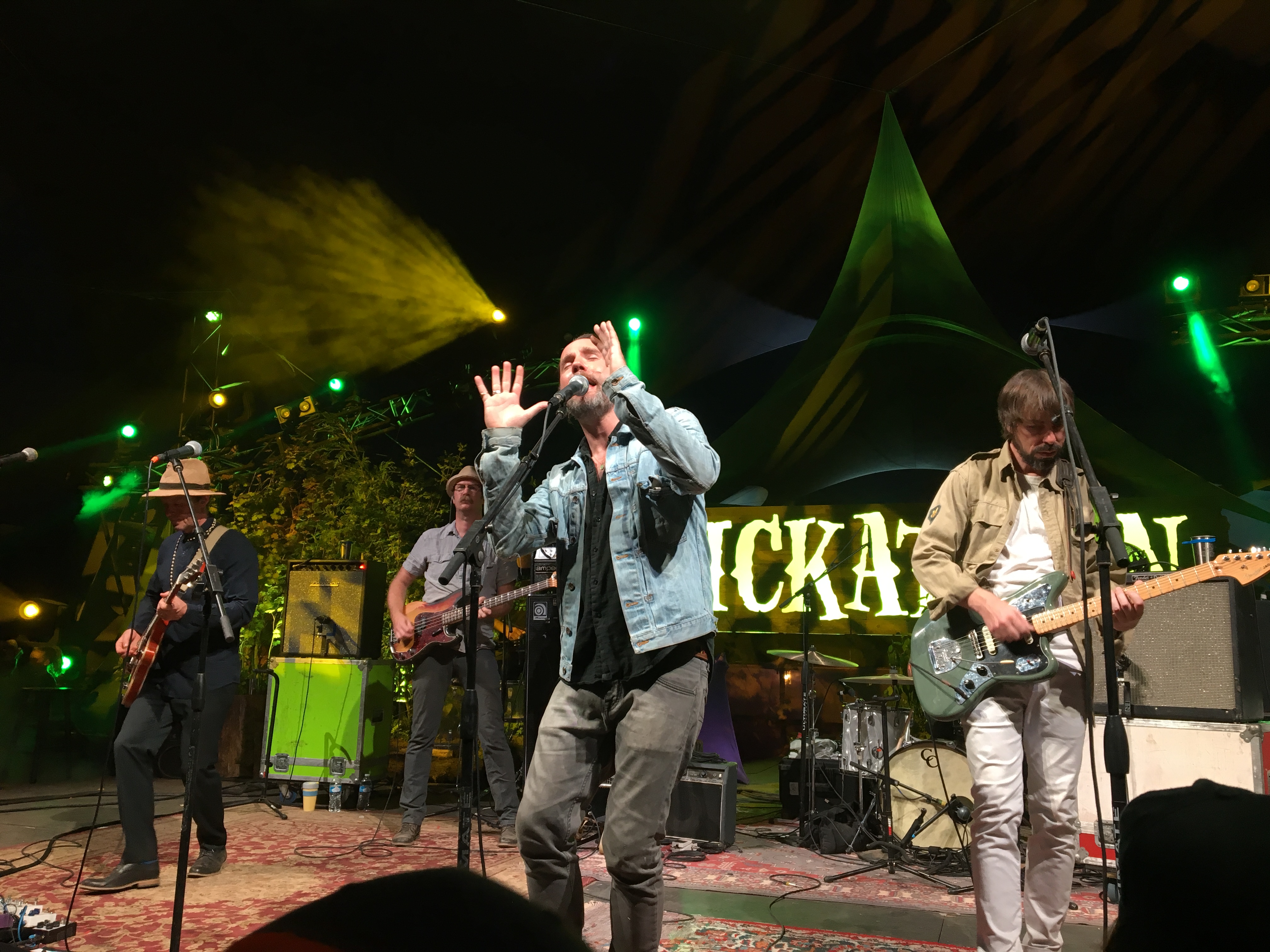
Broken Social Scene
Broken Social Scene

Closing out the Mt. Hood Stage for the 20-year celebration was a final performance from Broken Social Scene, who immediately dove into a bold performance of “KC Accidental” off of their 2003 debut, You Forgot It in People. The performance was accompanied by a trio of brass horns, honoring the bold sound of the recording. Constant tip-toeing of stage grips made it evident that the band was experiencing some minor technical setbacks. Amiable frontman Kevin Drew charmingly dismissed any hint of concern exclaiming, “we’ve been doing this for 18 years, and everything is always broken;” a cute nod to the band’s namesake, be it conscious or not. The band continued to treat loyal fans to beloved classics “Fire Eyed Boy” and “Texico Bitches” before performing lovesick anthem “Lover’s Spit,” fully romancing the audience into nostalgic graves.

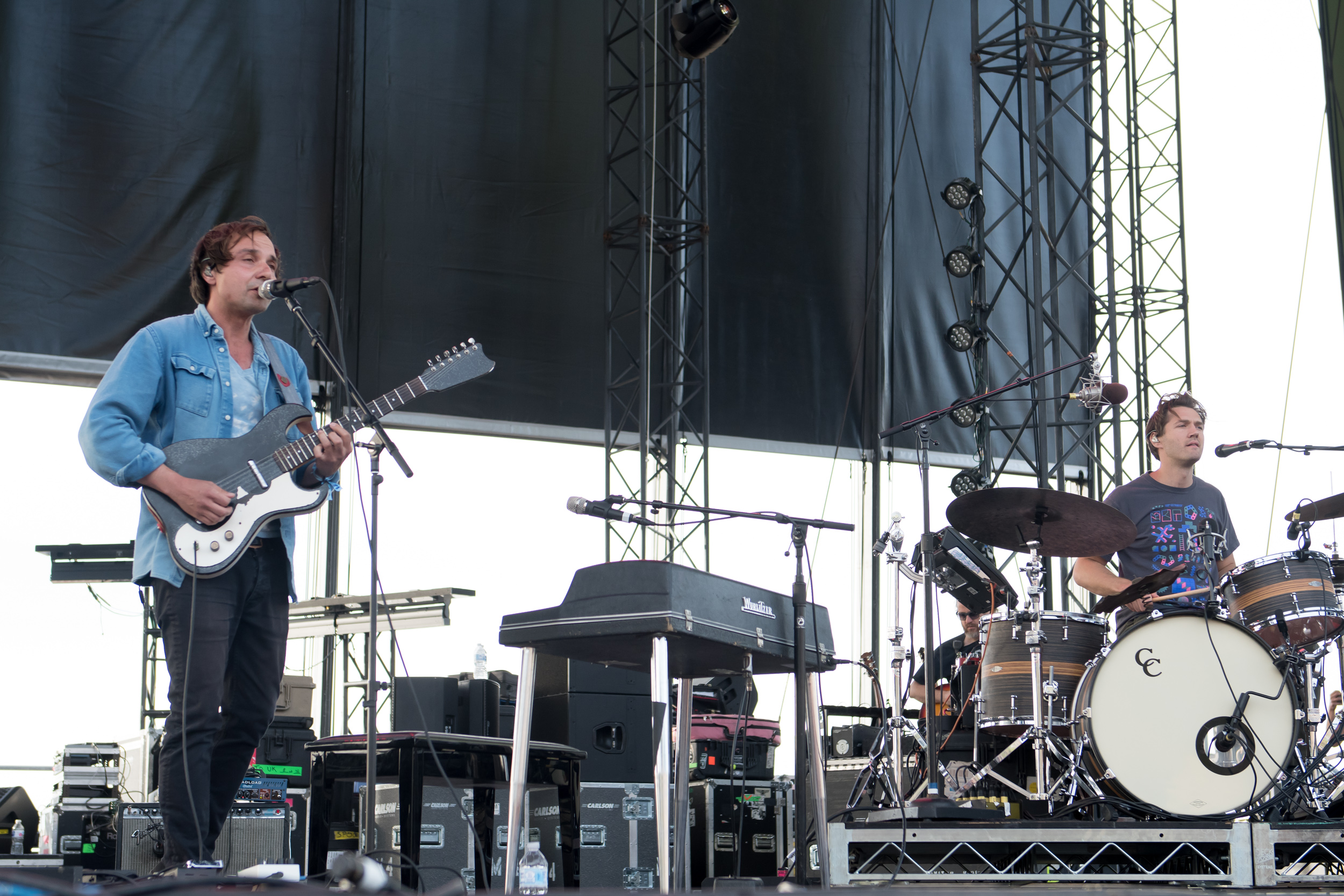
We found ourselves wrapping up the weekend festivities with our first visit to the Galaxy Barn, where we stumbled with the motion of the pit, the crowd bouncing around to the sounds of Sheer Mag with an energy I couldn’t even pretend to exude. The Philly-based power-pop band charged up the crowd, who showed no signs of slowing down, navigated by boisterous femme powerhouse Tina Halladay, whose raspy howl provoked just the right amount of grit. The band tore through tracks off of their 2017 album, Need to Feel Your Love.

Hardly able to stand on two feet after a weekend of standing, dancing, trekking, and cramped camping, we decided to call it quits and take the pilgrimage back to our pitiful excuse for a campsite, nestling into the comfort of a weekend lived to its utmost potential.

We awoke in a scramble of melting body parts once more, acknowledging the clots of dirt collected in the backs of our throats; endearing souvenirs of the Pendarvis Farm and all of its organic purity. Somewhere between the unique sense of community and the relentless dedication to sustainability and discovery, visitors of Pickathon are instilled with an unforgettable sense of worth and belonging that no other festival has the capacity to deliver. These irreplaceable moments are what bring us back to the farm time after time.  Being no stranger to Pickathon, I had known that its unique intimacy and irreplaceable sense of community was enough to pull me back for yet another year—and I’m not just talking amongst festival attendees; it’s more than likely that you’ll stand at sets of your favorite bands right beside members of your other favorite bands. It’s the sentiment in these warm and fuzzy interactions that carries myself and many other Portlanders through the grueling and relentless winters, awaiting the relief beneath the cloudlike canopies each first weekend of August, and this year was no exception. There most certainly is something in the water on the Pendarvis Farm.
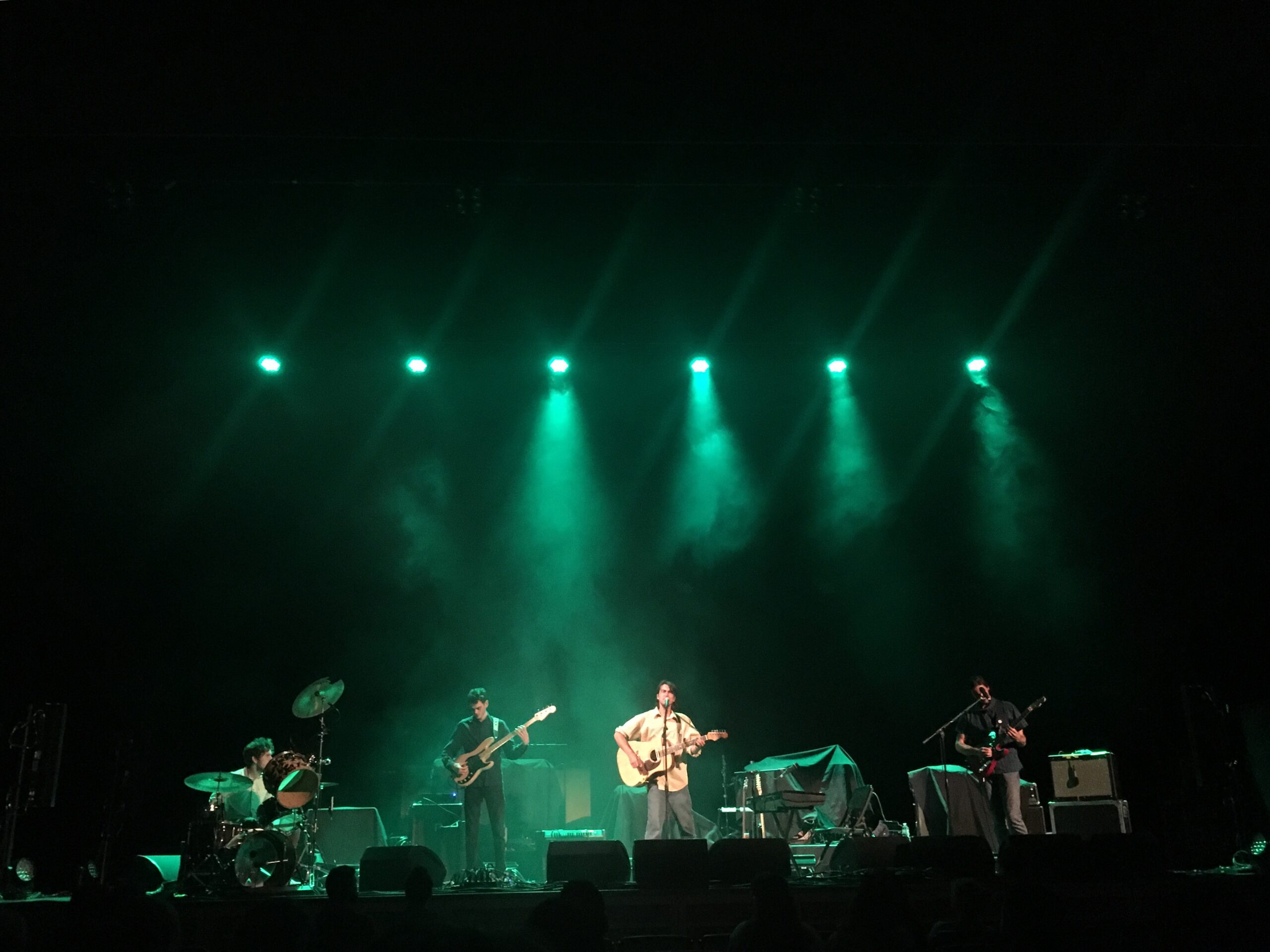
(Sandy) Alex G at Arlene Schnitzer Concert Hall (6/8)

Posted on June 11, 2018June 11, 2018 by Bryan Toti

FullSizeRender

Quiet whispers evaporated into the echoing chambers of the Arlene Schnitzer Concert Hall as a couple hundred early attendees awaited an appearance from Philadelphia bedroom singer-songwriter, Alex Giannascoli (stage name (Sandy) Alex G). Initially gaining a core fan base from a sprawling DIY Bandcamp catalogue, Alex G’s official debut album DSU arrived in 2014 via Orchid Tapes. Following this release, Alex was signed by Domino Recording Company, who produced the fantastic 2015 follow-up Beach Music, as well as last year’s critical success, Rocket. Slated as tour opener for highly revered “touring band” Dr. Dog, Alex and his band were likely read as the underdog by a collective of bros and dads alike who were awaiting the inevitable arrival of Dr. Dog’s iconic Architecture in Helsinki cover.

This was a change of both scenery and scale for Giannascoli and co., whose last PDX appearance was at inner Eastside bar and venue, Holocene (326 Capacity), which is dwarfed in comparison to the Schnitz (2,776 cap.) In a comical and bewildering fashion, the band proudly marched their way onto stage to Tom Cochrane’s heartland rock ballad, “Life is a Highway.” “You guys like that song? I hate that song,” Alex teased while asserting the notion that they were there to pull the rug from underneath any stern or composed undertones of the formal concert hall.

Draped in deflated jeans and an assortment of half-buttoned patterned shirts, Giannascoli and his crew assembled themselves on stage in what resembled a triumphant talent show debut from a high school rock band (an image that doesn’t quite match with the complexity and maturity of his divergent sound). The band initiated the set with tranquil and reflective number “Remember,” the opening track of 2010 online contribution, Race. “Remember” unveils Alex’s longing for isolation, as he sang it live through gritted teeth with a stronger sense of urgency than is heard on the recording’s vocals. Without sparing a second between songs, the band jumped right into bouncy folk tune, “Proud,” followed by charming aural builder, “People.”

Thus far, the set seemed tailored to feature Alex’s more approachable material for show-goers who likely had not been exposed to his craft before this evening. Standing at the foot of the stage, Alex appeared routinely distracted by the traffic of patrons being led by staff to their appropriate section in the seated venue; frequently shifting his gaze to the far-too-bright flashlights illuminating all too frequently. Cruising at the same pace of previous tracks, the band rolled into a stripped rendition of laid-back surprise hit, “Bobby,” which was met with delight from the budding audience that had begun to permeate the concert hall. In a genuine and humbled gesture, Alex thanked the audience for cheering so much, still showing signs of wonder at the following he has accumulated. This tender moment was immediately followed with beautifully sarcastic one-liner: “alright, this next song is an original.” The boy knows balance.

Just as the audience had begun to feel settled by the comfortable folk-jams, the show abruptly pivoted, coming unhinged with distorted guitars and distant melodies; calling back to early inspirations from indie rock pioneers Built to Spill, Elliott Smith and Guided by Voices, respectfully. The band soared through heavy hitters “Serpent Is Lord,” “Bug,” and “Kicker;” each building atop the last in intensity. Dueling guitar bridges and bends were met with equally powerful percussion from a drum kit that appeared as if it had endured this sort of ritualistic beating on more than one occasion. Taking momentary solace, the band offered a taste of Alex’s masterful composition skills, utilizing the neglected keys on stage for Beach Music’s “Thorns,” where moody tonal shifts are met with upbeat scale climbs.

A prolonged absence in sound lingered as the band prepared for the next song. The uncomfortable silence was unexpectedly interrupted as Alex ferociously screamed, “Silence!” at full lung capacity, reminding us yet again to always remain on our toes in his presence.  Offering no further context for the outburst, the band jumped into “Poison Root,” a complex track that had difficulty taking shape in a live setting, overcompensating for absent sounds in the wrong instruments, which ultimately drowned the song entirely. Bright burning stage lights illuminated the Schnitzer, revealing an almost packed house by this point in the show. The multi-instrumentalist then strutted to the keyboard as audible compliments of “sexiness” were shouted from the crowd, acknowledged by the singer who then went on to introduce his “sexy” band.

Latecomers and first-timers unfamiliar with the diverse soundscape of (Sandy) Alex G were subsequently exposed to radically experimental tracks “Brick” and “Horse” off of the 2017 album. The band didn’t hold back in the slightest in the building intensity—especially Alex, who cradled the keyboard and hovered over it, alternating from abrasive screams to menacing whines atop the chaotic swell of sound. In keeping with the tracklist of Rocket, the band smoothly transitioned into melodic pop number “Sportstar,” a successful antidote to the frantic environment they had previously worked so hard to build up. The band wrapped up their set with Rocket’s album closer “Guilty;” a peppy jazz ballad that allowed the band to spontaneously improvise, answering guitar licks with dancing keys, and vice versa.

The group seemingly appeared to have forgotten that the audience was even present as they laughed on stage with one another, while Alex nonsensically slapped at the keyboard, exemplifying that even amidst their rising fame, they’re still just a group of dorky jazz-band buds. Once the extended jam had concluded, Alex chugged the remainder of his drink and issued a simple “thanks” before exiting the stage to a deafening applause, ensuring that (Sandy) Alex G’s momentum is only just beginning.

Sasquatch! Music Festival 2018: A Triumphant Return to Form

Posted on June 1, 2018June 4, 2018 by Bryan Toti
Photo courtesy of Matthew Lamb
Neko Case. Photo by Matthew Lamb.

Emerging from hibernation annually each Memorial Day Weekend, Sasquatch! Music Festival opens the gates of The Gorge Amphitheater in George, WA and welcomes festival-goers to a scenic splendor that no possible combination of words could ever do justice. It is indisputable that Sasquatch! has an unfair advantage against competing festivals due to the fact that it is hosted in what I can only assume was a runner-up for Seventh Wonder of the World.

Alas, beauty is only skin deep, and looks can only take you so far. This sentiment rings painfully true for The Squatch as it has experienced the music festival equivalent of a midlife-crisis in recent years, neglecting the folk/rock centric bands that have proliferated the festival’s profile within the independent scene and opting for the flashy bells and whistles that win the affection of a Top 40 demographic. Notable makeover mishaps include 2014’s failed attempt at one-upping Coachella with the addition (and cancelation) of a second weekend featuring an entirely separate lineup, last year’s gag-inducing top billed slot of Twenty One Pilots, as well as a never-ending plague of EDM DJs that all share a common disdain for vowels. With the inevitable infiltration of Chad and his bros and the increasing mediocrity of recent lineups, it’s no wonder that Sasquatch! veterans have opted out of attendance. You can’t sit with us, indeed.

Fortunately, word must have gotten back to Sasquatch! founder Adam Zacks about unfavorable reception in recent years, because the right steps were taken to bring justice to a venue that deserves nothing less than inimitable talent to showcase. Sasquatch! Music Festival came out swinging in the 2018 season boasting one of the most stacked lineups that money can buy, setting itself apart from what has become a diluted market of traveling-band lineups that tend to become indistinguishable from one another. Recruiting counter-culture big dogs the likes of Bon Iver, Modest Mouse, Neko Case, David Byrne, Spoon, and Grizzly Bear was enough to rope in the wandering eye of any unsuspecting inquisitor. Upon further examination of the bill, the lineup yielded no signs of wavering quality, landing up-and-coming marvels such as Julien Baker, Big Thief, Japanese Breakfast, (Sandy) Alex G, Whitney, Phoebe Bridgers and Charly Bliss. The reputable names seemed to go on and on, leaving previously salty Sasquatch! naysayers such as myself at a complete loss for words, only able to exude frantic whimpers of delectation. Once the hysteria subsided and I was able to pick myself up off of the floor, I came to the realization that it was time for me to swallow my pride, rip up my cool-guy card and venture back into The Gorge to a festival that once again emitted a potent magical lure.

Day One


Photo courtesy of Matthew Lamb
Bon Iver. Photo by Matthew Lamb.

The journey to Sasquatch! is in and of itself a privilege not to be overlooked. The scenery shifts and the landscape evolves more times than the hands of the clock turn during the drive, which checks in at just over two hours from Seattle. Dense, lush walls of green are complemented by snowcapped mountains as you ascend the Snoqualmie Pass, only to find yourself met by endless rolling brown plains and towering white wind turbines, waving you in the direction of The Gorge Amphitheater.

Following the herd of automobiles onto the campground, I ultimately landed at my designated plot of grass for the weekend, conveniently located next to Chad, his buds and their self-proclaimed “Babe Cave” tent (awaiting confirmation). The festival grounds are located about a half-mile from the campsites, presenting festival-goers with the dilemma of packing for an entire day (extreme daytime heat, extreme nighttime cold) or stacking some serious foot mileage in addition to the usual festival runaround. (Has anyone ever utilized a pedometer at this festival? How many calories am I burning? Please tell me I look Channing Tatum toned by this point.)

Photo courtesy of Matthew Lamb
Julien Baker. Photo by Matthew Lamb.

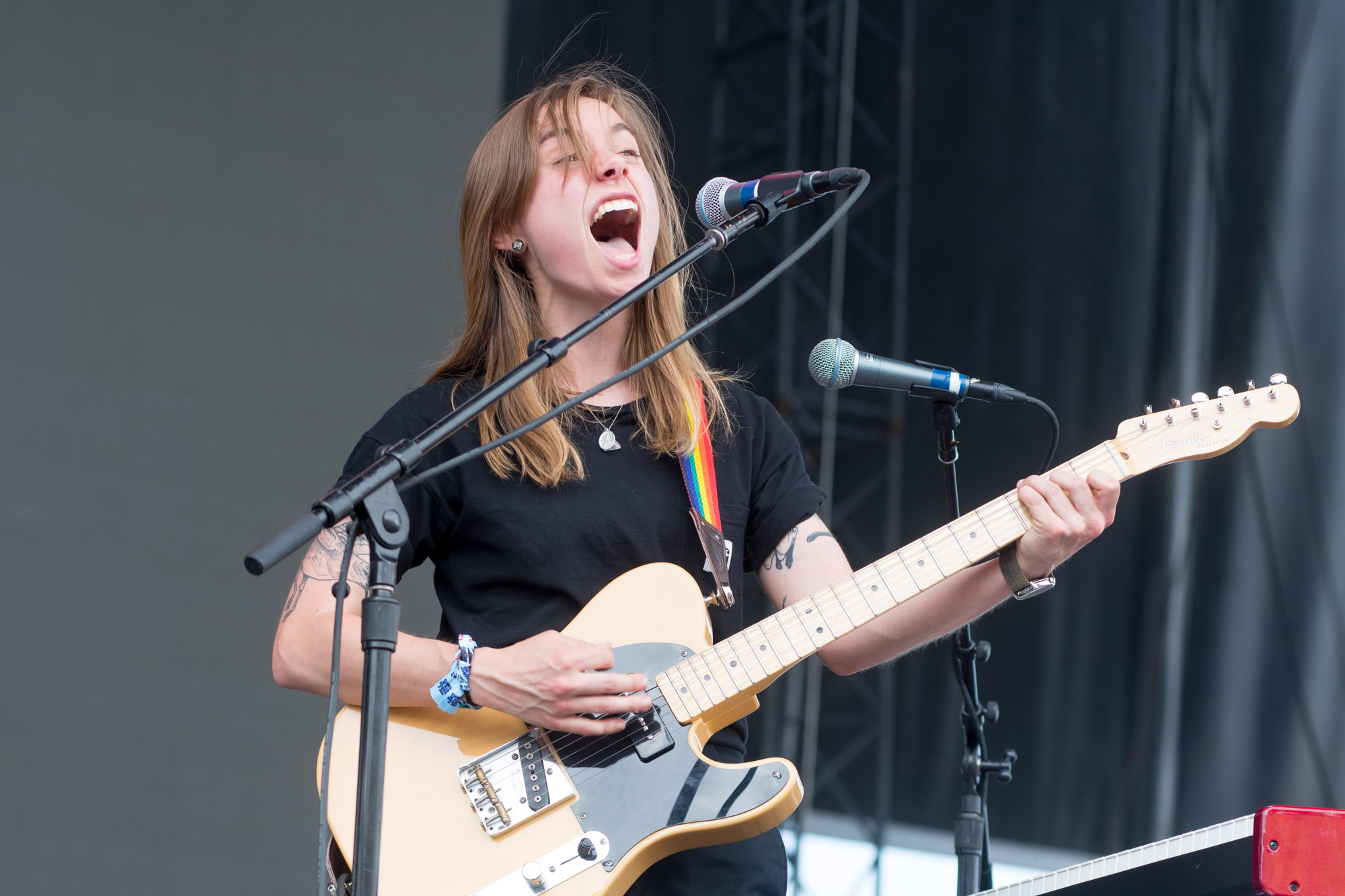
Not a moment was spared as we beelined directly towards the main stage for a healthy serving of midday heartbreak from immensely talented and poignant solo artist, Julien Baker, who gifted the audience with offerings from her fantastic 2017 release Turn Out the Lights. Those unfamiliar with the unparalleled talent of Baker were left speechless as her powerful vocals encompassed the amphitheater, piercing through the souls of unsuspecting bystanders. The soft-spoken singer charmingly utilized moments between songs to lighten the mood by joking with the audience, a routine she’s surely integrated into her sets in order to pull her audience out of complete despair.  At one point, the Memphis songwriter turned her back to the crowd, cheekily asking us, “have you guys seen this thing?” as if we had somehow missed the monumental canyon taking on the role of unbeatable backdrop. The audience’s gaze remained fixated on Julien as she careened us through emotional rollercoasters “Appointments” and “Shadowboxing,” finally closing with “Something” off of 2015’s Sprained Ankle.

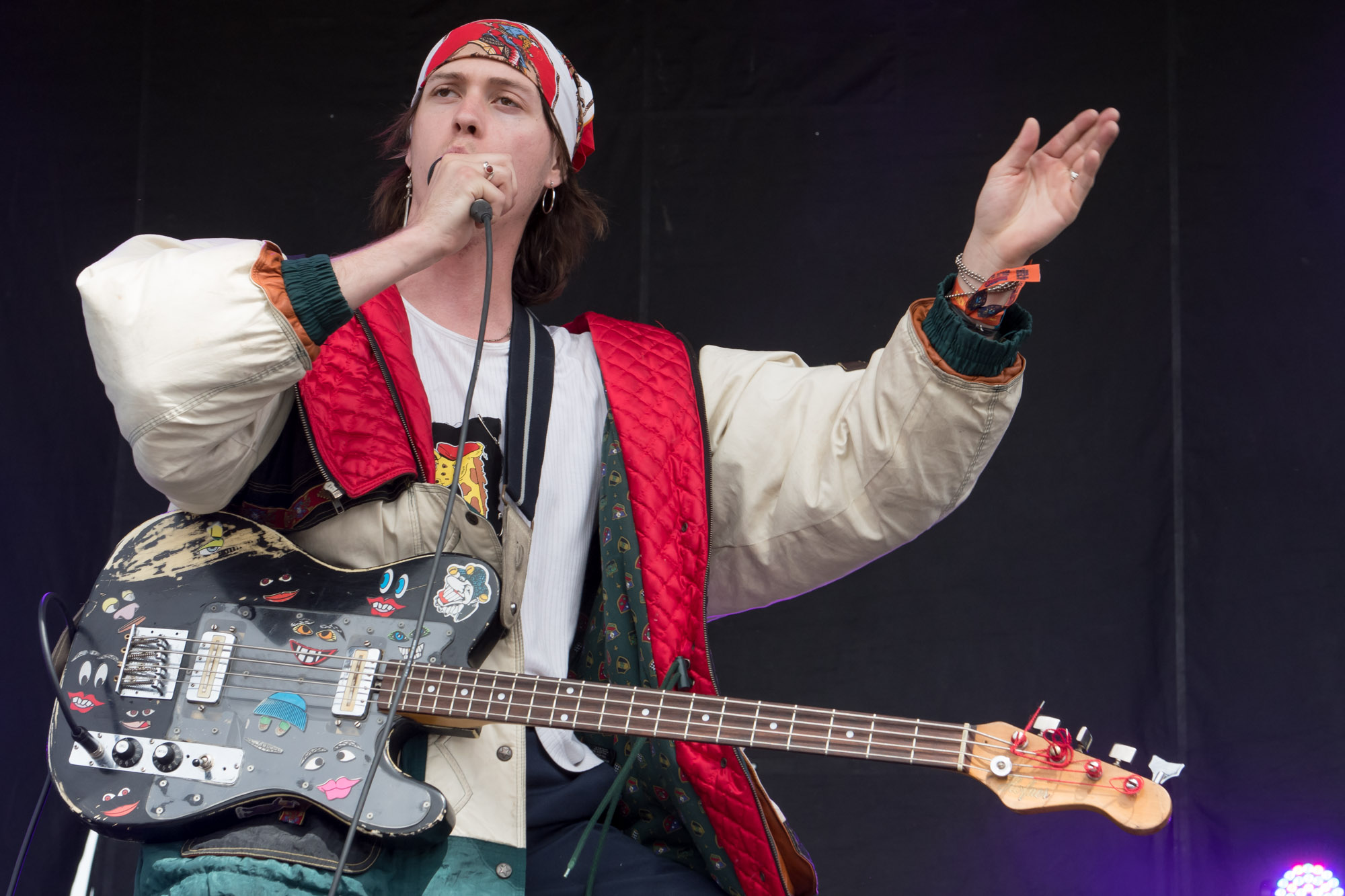
As soon as eyes were dried, we made the short trek up the hill to the Yeti Stage where Orange County duo and twin brothers Wyatt and Fletcher Shears—better known as The Garden—were slated to perform. This is a band that piqued my interest early on, as they are known for coining their own genre called “Vada Vada,” described by Wyatt as “an idea that represents pure creative expression, that disregards all previously made genres and ideals.” The brothers took to the stage looking like what can only be described as a saucy hybrid of “ATL Twins-meets-Twin Peaks-band.” Utterly perplexing the crowd with what appeared to be some form of interpretive karaoke, the twins donned the personas and attire of Derelicte model, rapper and pirate, respectively. The charade was soon abandoned, and the band effortlessly fired up the crowd by performing experimental thrash ballads “No Destination” and “Stallion” off of Mirror Might Steal Your Charm, which arrived March of this year. The energy this band exuded was infectious, inspiring what was easily one of the more aggressive pits of the weekend, purging victims as mutilated clothing flew violently through the sky.

The Garden. Photo courtesy of Matthew Lamb
The Garden. Photo Matthew Lamb.

Up next, beloved Canadian indie legends Wolf Parade made a triumphant return to the Sasquatch! main stage, where they performed what tragically became their last public show seven years prior before announcing an indefinite hiatus. This left Wolf Parade superfans (who will remain unnamed) utterly broken. Luckily the stars aligned, and Wolf Parade are back and bolder than ever, promoting their eclectic 2017 album Cry Cry Cry. The set was christened by taking the audience back to the beginning with the opening track off of the seminal debut album, Apologies to the Queen Mary, led by co-frontman Spencer Krug in a beautifully frantic manner. The band continued to treat loyal fans to archival treasures such as “Fancy Claps,” “Soldiers Grin,” “This Heart’s on Fire” and “I’ll Believe in Anything,” while simultaneously showcasing the brilliance of their more recent contributions “Valley Boy,” “Weaponized” and “Baby Blue.” The new songs are structured with strong percussion from Arlen Thompson and expose multi-instrumentalist Dante Decaro as the glue of the entire operation. (Seriously, Dante is a fucking wizard.) The set came to a close with 10-minute epic “Kissing the Beehive,” one of few songs that utilizes alternating vocals from both Boeckner and Krug whose voices uniquely complement each other; a key component that makes Wolf Parade so special. A fully packed midday attendance on the main stage in addition to the band performing at their highest capacity further reinforce the notion that Wolf Parade are here to stay.

A brief and necessary recess between sets allowed us to hydrate and peruse the strip of vendors in search of a meal that tasted something close to edible and didn’t hit the wallet too hard. Mission: Failed. Fourteen dollars for a Fisher Price sized burrito? Piss off, no thank you. *End pity party*

After our completely satisfying and reasonably priced dinners were consumed, we eagerly took flight to the cascading hill at the main stage where David Byrne, iconic weirdo and brilliant centerpiece of the Talking Heads, was preparing to deliver an unforgettable experience to fans, both old and new. The group wowed the audience as they gallivanted about the stage in a choreographed manner resembling that of a marching band, all clad in matching flint grey suits. Touring his most recent solo endeavor, American Utopia, Byrne ultimately and graciously delivered to the fans who deep down showed up anticipating a chance to hear some classic Heads hits. Byrne and co. shifted the mood from nostalgia to relevance by covering Janelle Monae’s “Hell You Talmbout,” a politically charged protest number which shouts the names of African Americans killed by police or other racial altercations.

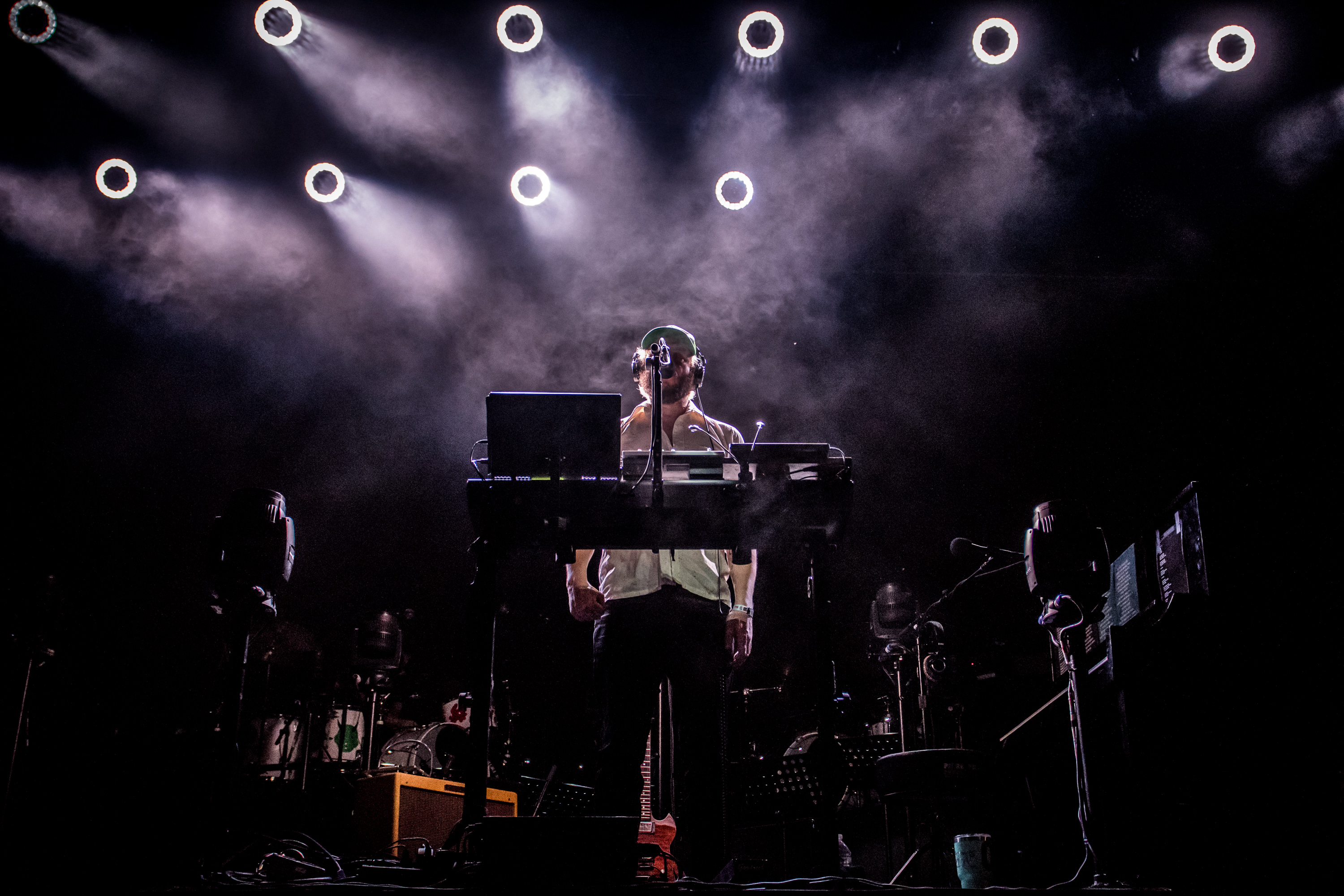
Opening night of Sasquatch! was closed out by fellow music festival founder and ever-evolving electro-folk Renaissance man Justin Vernon (better known by moniker Bon Iver), who probably wishes his Eaux Claires Festival could stake claim to a home as alluring as The Gorge. Vernon interestingly chose to open his set with the track “Woods” off of the 2009 EP Blood Bank which first hinted at increasing experiments with auto-tuning; a technique highly utilized in his most recent album, 22, A Million. The meat of Bon Iver’s packed show featured his newer material full of cryptic song titles I won’t even attempt to type, matched by an equally perplexing journey of tonal obscurity. Love it or hate it, Bon Iver’s bold experimentation and dynamic harmonies provide listeners a truly unique experience. Vernon opted out of playing fan favorite “Skinny Love,” which was a total letdown for Chad who has been attempting to learn it on guitar since its 2008 debut.

Day Two


Modest Mouse. Photo courtesy of Matthew Lamb
Modest Mouse. Photo Matthew Lamb.

Having gone to sleep shivering, I was surprised to wake up in a pool of sweat, gasping for air and ripping the layers of clothes from my body. As I mentioned before, the weather in The Gorge is always one extreme or another. After escaping my nylon oven, I stepped outside and consumed no less than an entire gallon of water before looking onward to another full day of music.

Pacific Northwest locals Mimicking Birds took to the Yeti Stage at 3:00 p.m., just as the day was reaching peak heat. The band had barely made it through their first few songs before vocalist/lead guitarist Nate Lacy’s effects pedal began to overheat and malfunction due to the scorching temperatures. This resulted in a dramatic fit from Lacy, who ultimately stormed off stage, leaving his bandmates to tend to an eager crowd who were more than willing to wait out a resolution to the technical difficulties. Luckily, the remaining band members came through with quick-witted interactions with the audience and counseling for Lacy, and the band was able to salvage the set, performing tracks from this year’s Layers of Us before ending with the ethereal and reflective “Blood Lines” off of 2014’s Eons.

Taking note from the mechanical victims of the sun’s relentless rays, I noticed that my initial SPF 20 line of defense was lacking in proficiency, so I decided to bust out the big guns and lather myself in SPF 50 (a choice that should have been made hours prior).

Grizzly Bear. Photo courtesy of Matthew Lamb
Grizzly Bear. Photo Matthew Lamb.

Once completion of thorough sunscreen application had been achieved, I eagerly headed for the pit of the main stage where Grizzly Bear were set to make their first appearance at Sasquatch! in nearly a decade. Having attended a club show earlier this year, I was confident that the band was packing an earth-shattering setlist that toured their expansive catalogue with taste and craft, selecting tracks that best exemplify their diverse and complex songwriting abilities. The band temporarily established a means of time travel for longtime fans as they performed hits such as “Yet Again” and “Sleeping Ute” from 2012’s Shields before digging even further back with gems “While You Wait for the Others” and “Ready, Able” from the 2009 masterpiece Veckatimist. Also included in the set were more recent sounds from their fifth studio album Painted Ruins, which fans and critics alike received positively. Spotting a saxophone on stage early on, I eagerly anticipated the execution of “Sun in Your Eyes,” an indomitable set-ender that I hope any fan of the band will be fortunate enough to experience live. In a truly magical moment, Ed Droste belted the lyrics in the title in a climactic explosion just as the glowing sun descended beneath the horizon, silhouetting the mountainous ridges of the sprawling gorge in the distance. I’m not crying; you’re crying.

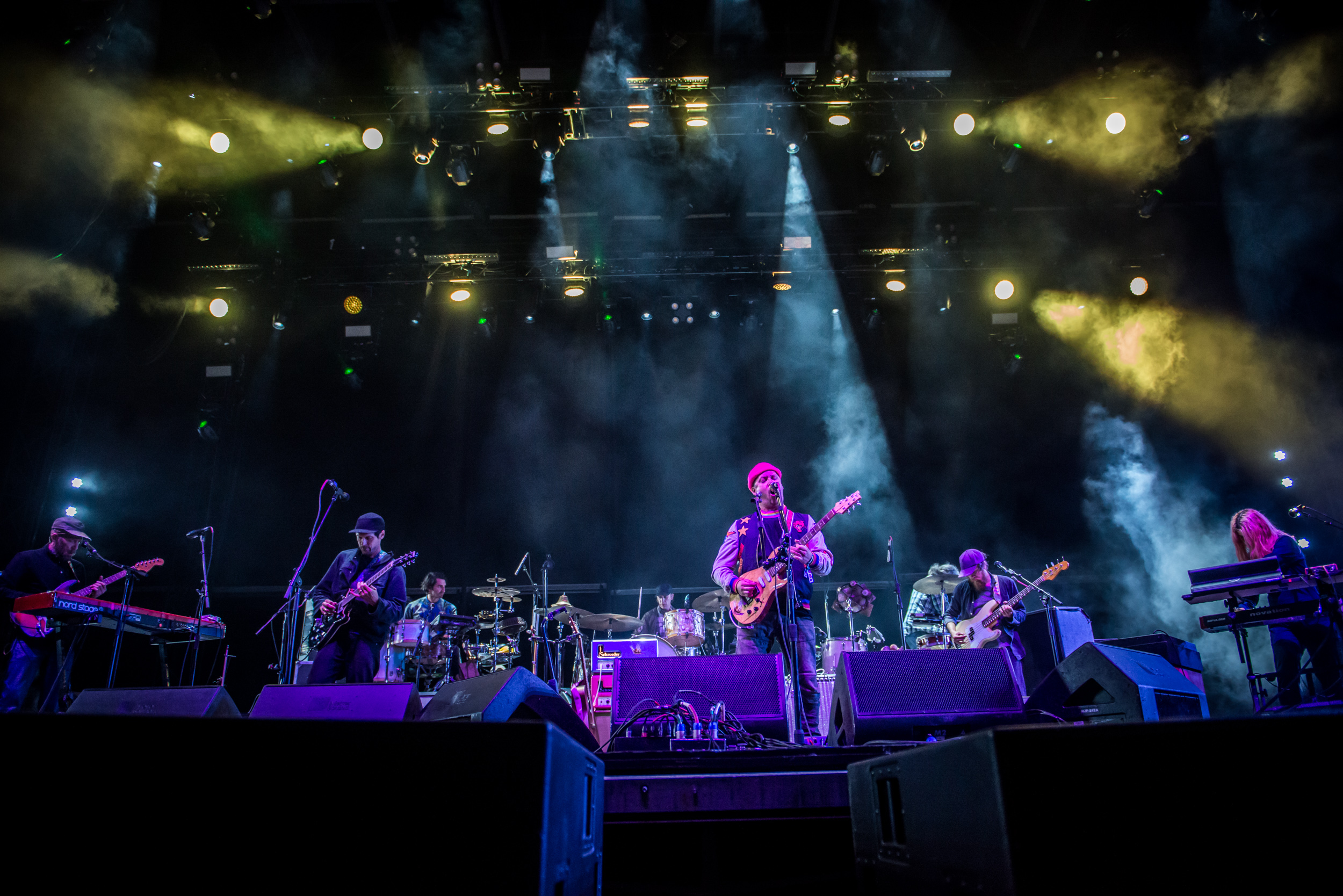
Saturday headliner and Washington State natives Modest Mouse walked onto stage to a thunderous applause from fanatic fans crossing all of their fingers and toes for an “on” night for constantly fluctuating star asshole, Isaac Brock. A unified sigh of relief could be felt throughout the crowd as Brock appeared to be playing mostly in tune and accurately landing the lyrics of his own songs. Brock, a known sass-master, surprisingly treated the audience rather kindly as he led the band through a string of crowd-pleasers, including the dreamy “3rd Planet,” the catchy commercial success “Float On” and gentle lullaby “The World at Large;” each from the band’s mainstream breakthrough albums The Moon & Antarctica and Good News for People Who Love Bad News.  Additionally, the band performed an exhausting number of tracks from their most recent effort Strangers to Ourselves, which was met with mixed reviews at best. The overcrowded band treated longtime fans to a taste of relief with the title track off of the 1996 EP Interstate 8 as Brock belted lyrics, “I drove around for months and years and never went no place,” which is ultimately the same route this set took. Aside from a dazzling display of fireworks, Modest Mouse performed a yawn-inducing mix of radio hits that anyone surely could have experienced just the same by merely walking into their local department store.

Explosions in The Sky closed out day two with a late-night performance on the Bigfoot stage, for those bold enough to stick around into the twilight hours. Feeling rather defeated by the heat and struggling to muster the energy to persevere the way I once could, I decided to call it quits and begin the long journey back to camp halfway through. To my delight, the band’s wailing guitars remained audible throughout the entirety of my trek, providing just enough distraction to successfully complete the hike without exclaiming any dissatisfaction with the arduousness whatsoever. Maybe. Kind of.

Day Three


Phoebe Bridgers. Photo courtesy of Matthew Lamb
Phoebe Bridgers. Photo Matthew Lamb.

I found myself once again cursing developers of the amphitheater for designating the campgrounds so far away from the venue, completely devoid of any toleration achieved the prior evening. For the last time, I impatiently stomped my way into the final day of Sasquatch!, racing to catch the last few minutes of Soccer Mommy’s set on the main stage.

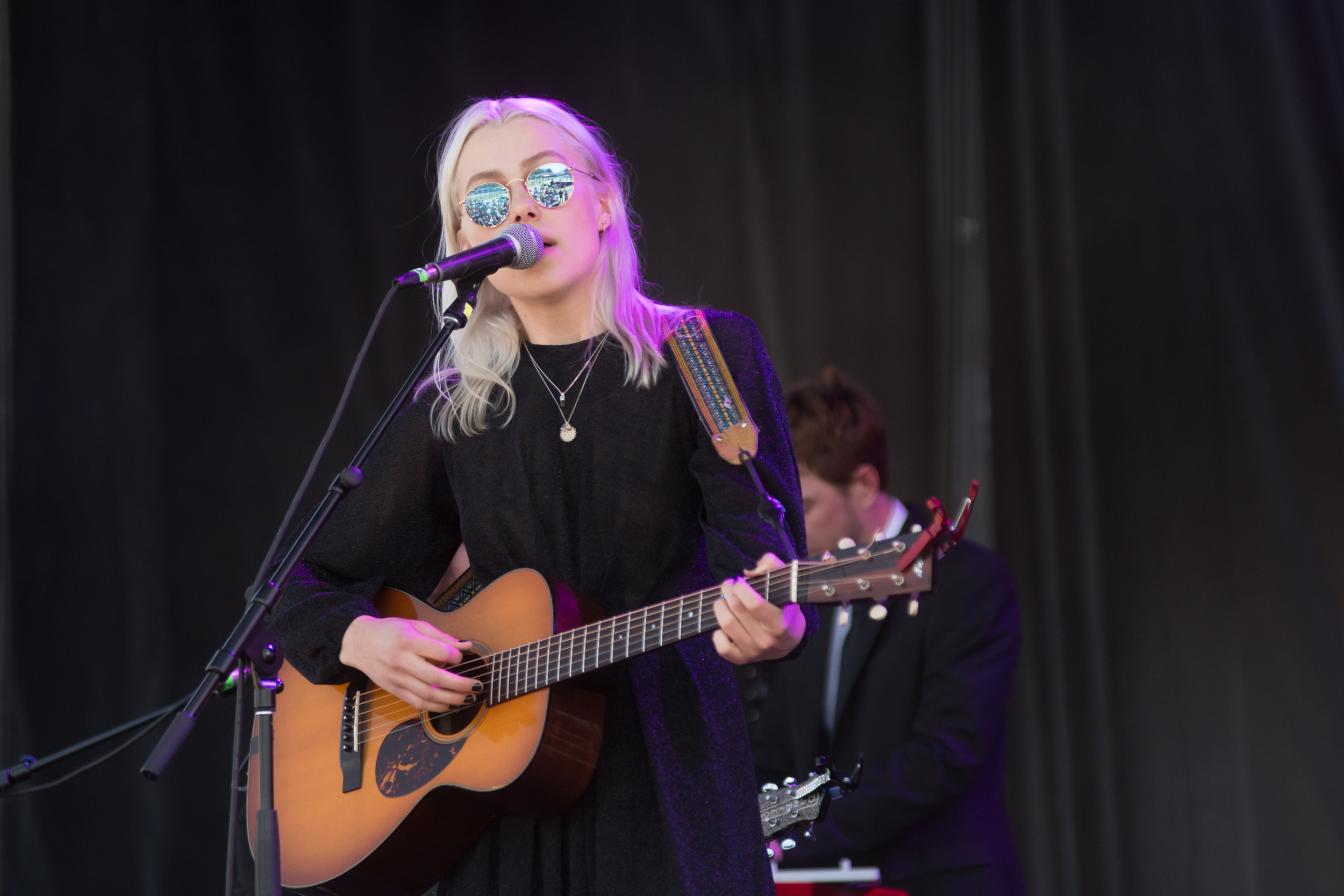
Navigating upward and outward to the Yeti Stage, I eagerly stood shoulder to shoulder awaiting the US festival premiere from unprecedented artist Phoebe Bridgers, whose deeply personal lyrics allow a glimpse into toxic relationships of her past and spotlight the all-too-common mistreatment of women in our society. Promoting her 2017 debut Stranger in the Alps, Bridgers was accompanied by a backing band donned in elegant black attire. Passion-fueled youngsters bounced up and down to folk-pop songs such as “Motion Sickness” with upbeat tempos, enjoying the craft of the music while possibly losing sight of the greater message at hand. Bridgers relieved her band for a handful of songs, offering the audience an organic exposure to the rawness of soul-crushing “Smoke Signals” and “Funeral,” and bringing out Seattle songwriter Noah Gundersen for a duet of “Killer,” which slowed the pace of dance moves into a gentle, contemplative sway.

Lingering around the emerging artist stage, I awaited a widely anticipated performance from experimental pop band Japanese Breakfast, fronted by Eugene, OR native Michelle Zauner. The band erupted onto the stage with “In Heaven,” the opening tune from 2016’s Psychopomp smoothly interluding into the album’s following track and hit song “The Woman That Loves You.” They then turned to newer material from 2017’s Soft Sounds from Another Planet, slicing into the peppy “Machinist” and the melodic fantasies of “Road Head.” Zauner is a natural when it comes to showmanship, proudly dancing her way across every inch of the stage before protruding beyond the stage, smashing her face into the cameras of photographers and fans alike. Zauner’s charm and unquenchable desire to win the devotion of an audience, matched with the bands unique dream-scape sound, ensures that they will remain an important contributor to the scene in the foreseeable future.

(Sandy) Alex G. Photo courtesy of Matthew Lamb
(Sandy) Alex G. Photo Matthew Lamb.

After a quick shuffle over to the Big Foot stage, I found myself standing in place smirking at the prospect of finally observing my first show from Philly bedroom songwriter (Sandy) Alex G, a.k.a. Alex G, a.k.a. Alexander Giannascoli; easily the show I most looked forward to out of the entire Sasquatch! bill. Alex’s versatility allows him to cross-pollinate his way through a sonic landscape without subscribing to any specific genre, curating a catalogue so diverse that you wouldn’t believe the differentiating tunes were tailored from the same artist. Although I am a huge fan of his recordings, I was somewhat wary of how certain tracks would translate into a live setting. Fortunately, that doubt was immediately squashed as Alex and his band flawlessly jammed to guitar forward lo-fi ballads such as “Kicker” and “Bug” from album Beach Music. Immediately after knocking out a mellowed rendition of folkish hit “Bobby,” Alex faced the floor while addressing the audience: “Alright, now we’re gonna play some really good songs!” This declaration, along with other humbled exclamations, stripped the band of any perception of “rock star” status and spotlighted Alex’s lack of agenda to meet the usual demands and expectations of the music industry.  Furthermore, this warmly invited the crowd to feel as if we were just watching a group of buddies play some music, making the songs that much more approachable.

A short hiatus from music called for an opportunity to grab some beer, which was exclusively and dangerously sold in 24-oz. cans for $15, instigating a #BudLightUpForWhateverChallenge of “which will break first, my bank or my body?”

As I settled into the natural reclining throne of the main stage hill, I got googly-eyed over that spectacular view for one final picturesque sunset, failing to capture its beauty via iPhone photos. My final spectacle of the main stage happened to be none other than PNW indie beacon and all around badass woman Neko Case, who has performed at Sasquatch! more than any other artist. Soothing a sea of weary weekenders, Case’s angelic voice serenaded those of us who were running on fumes, exhausted from a weekend of relentless stimulation. The Tacoma hometown hero kindly dedicated the song “Curse of the I-5 Corridor” off of her forthcoming album to the nearby city. In addition to teasers from Hell On, Case made sure to pull out favorites from her back catalogue such as emphatic soother “This Tornado Loves You” off of 2009’s Middle Cyclone. Still buzzing on feelings, I stumbled back in silence relishing in a pool of utter bliss.

Monday morning was met with the same suffocating heat that had become humorous by this point. Emerging from the tent, my first sight was that of the “Babe Cave” inexplicably thrashed and flipped atop Chad’s dad’s Suburban. I promptly packed up the car and embarked upon the pilgrimage back to the chaos of city-life, sitting in disbelief that the holiday weekend had come to a close so abruptly.

Be it a “limited time offer” or a giant step in the direction of salvation, Sasquatch! Music Festival was able to generate and facilitate a truly celestial experience that most promoters and festival-goers only dream of. An intimidating lineup sequencing a contrast of beloved acts with a liberal offering of emerging talent, combined with one of the most unique and picturesque venues, is absolutely unbeatable.

Here’s to hoping that the return of the beloved Sasquatch! is here to stay.

The Latest

  • COACHELLA RECAP: the comeback of Coachella?
    by Bryan Toti
  • UGA MBUS Student Ritika Sharma Forges Her Own Pathway
    by Bryan Toti
  • Staff Picks to Satisfy Your Inner Choir and Band Nerd
    by Bryan Toti
  • Staff Picks for Your Perfect Granola Playlist
    by Bryan Toti
  • ‘It’s Only Life After All’: The Legacy of the Queer Folk Women Duo, Indigo Girls
    by Bryan Toti
  • Contact
  • Work With Us
© 2026 Vinyl Mag | Powered by Minimalist Blog WordPress Theme