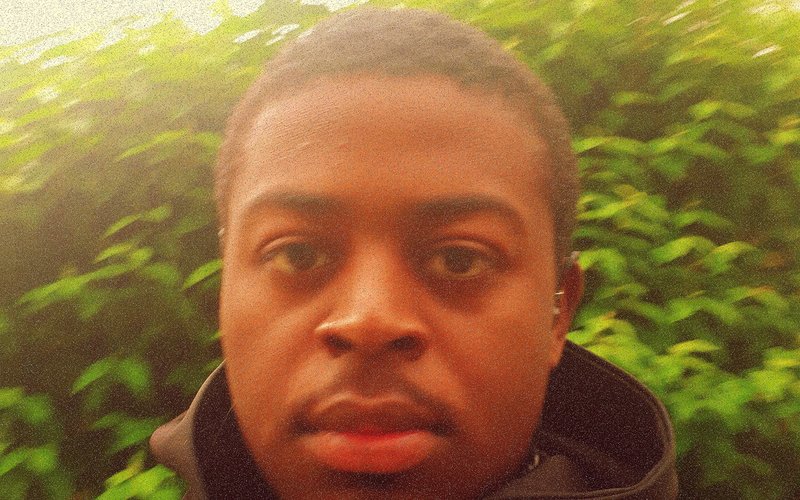
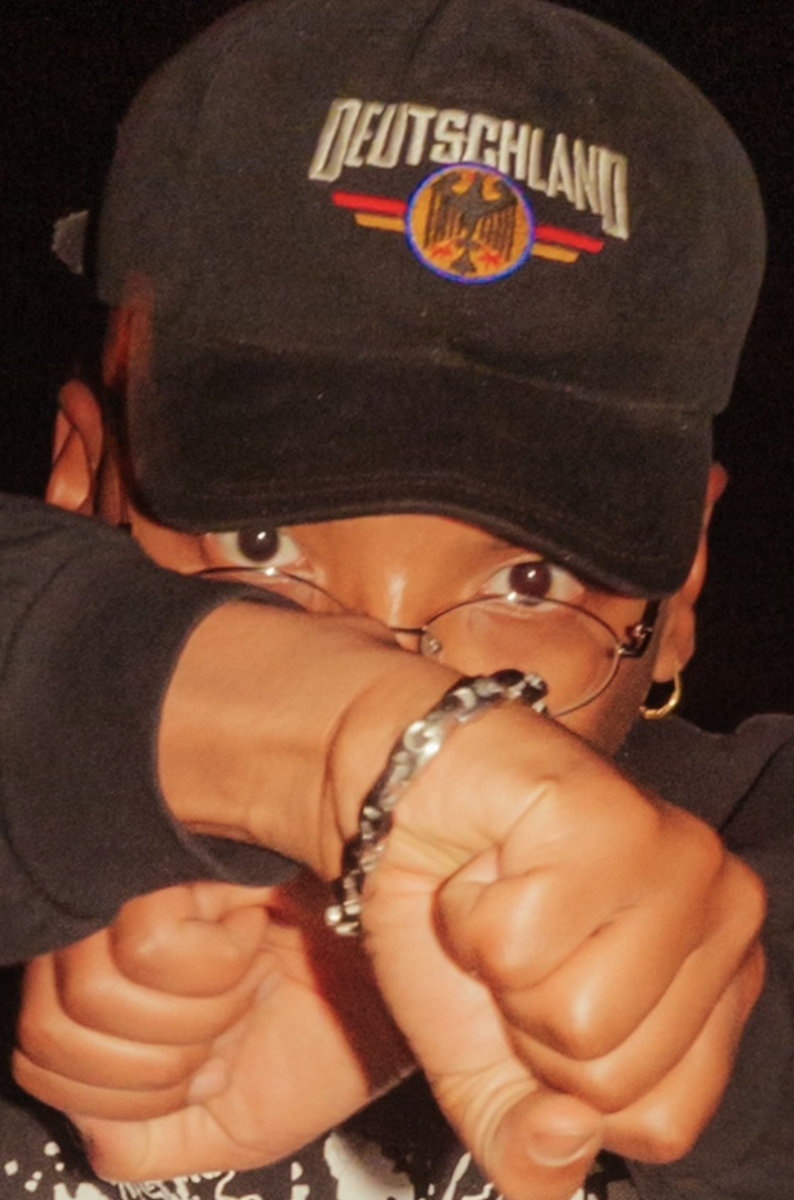
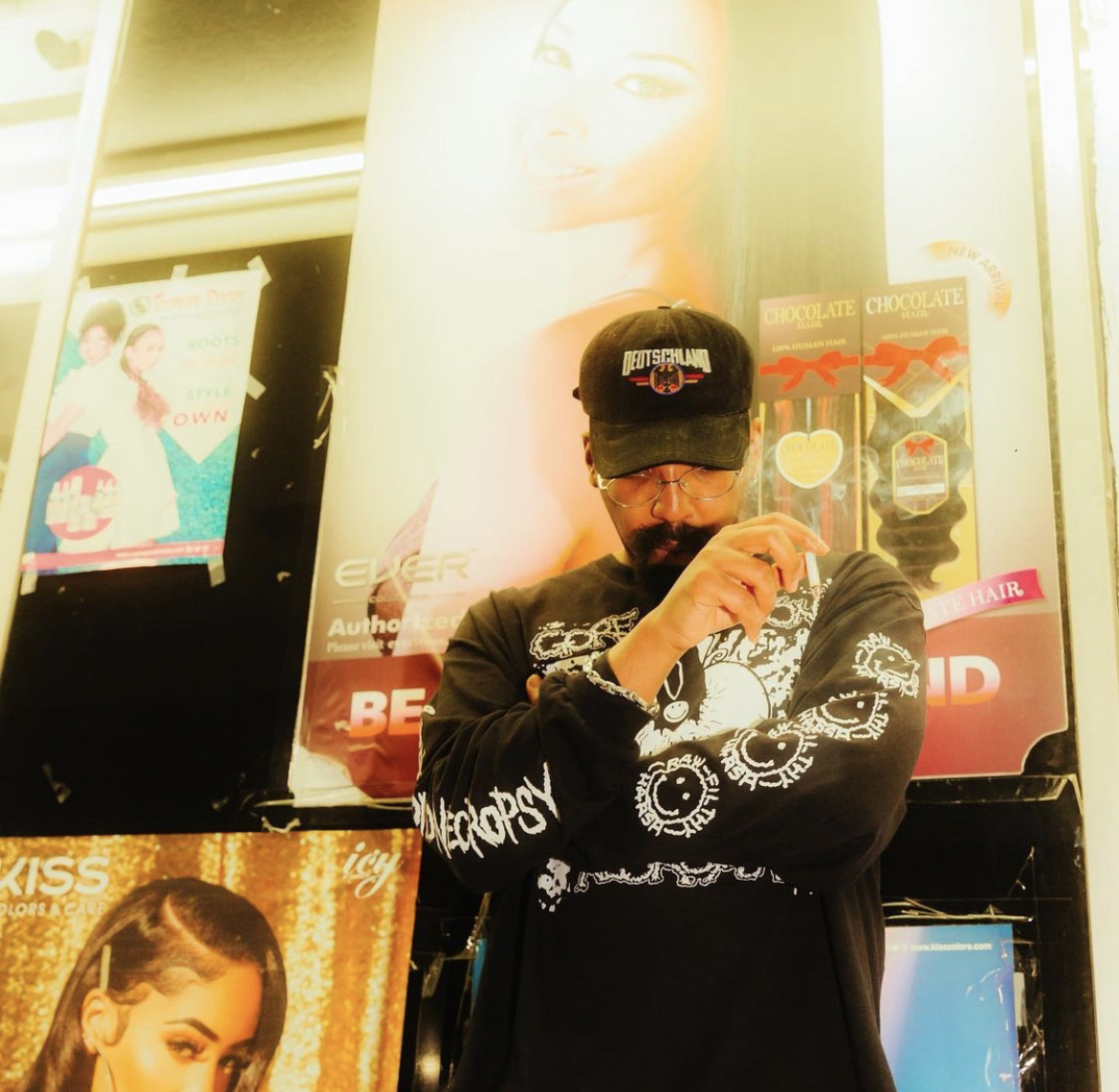
Upon doing research for this review, I noticed that Phoenix-based producer Kareem Ali’s Instagram bio reads “I create music for everything in the universe”. Marry this ethos with Ali’s one-of-a-kind Boiler Room mix, set in the sunset-soaked desert outskirts of Phoenix, and this mission statement tells listeners everything we need to know.
Throughout the past year, Ali has been garnering acclaim from artists and publications across music, with Resident Advisor claiming that Ali “might be the house artist on the pandemic era”. With 100+ tracks under his belt in the past year, this take couldn’t be overstated. After several years of working in the shadows, Ali has collected co-signs from some of the most current voices in the electronic music landscape, landing himself a spot on AceMo and MoMa Ready’s “HOA012” compilation along last year with the likes of Loraine James and the aforementioned NYC-based duo, AceMoMa. What stumps my brain about RA’s claim is the innate connection Ali’s music to the earth itself and the world that surrounds us. How can 2020, a time characterized by the time we spent indoors, be reflected on through somebody who’s vision lies outside?
Ali’s most recent EP, Getting Through, provides us with insight regarding how this could be possible. The project opens with “Como Me Siento Por Ti (Instrumental Version)”: a track primed to join Luomo on any Crying in the Club playlist. Ali starts the track off with repeating synth chords, held down by piano notes that lead these arpeggios, swelling until percussion kicks down the door. A faint vocal loop musters out “I feel so alone” as the track’s calculated pace chugs along. The vocal loop feels confessional; as if the person’s best friend pulled them off the dancefloor to ask, “What’s wrong?”
The next track, “Pushing Through”, puts Ali’s versatility front and center. Ali stews in feelings of isolation; turning 90 degrees away from house towards trip-hop. Muted vocals and drums reminiscent of Geoff Barrow’s work are not intent on pulling us out of the emotional slump quite yet. And before we know it, Illangelo-like percussions patterns kick off “Dreams of You”, building towards the spiritual confrontation of “Feelings Never Go”. Ali’s hypnagogic vocals repeat the phrase “Outside, inside flawed in love/The feelings always stay, they’ll never, ever go” as arpeggios sugarcoat kicks that fight against the rhythm. The result is remarkable as Ali keeps listeners in their bag while constantly bobbing heads.
Getting Through’s closer, “Euphoria”, proves to be the most uplifting track on the project. Ali channels a techier side of house while keeping the instrumentation distinctly fresh. Synths are the punchiest on the project and the speedy BPM treats those ready to be back in the club. Past the upbeat feeling of “Euphoria”, I find the answer to the question posed earlier. Understanding the connection between others, ourselves, and the earth we walk on lies at the heart of house music; Ali just digests this connection through a spiritual identity. After a year of the inside/outside dichotomy remaining forefront of many people’s minds it becomes obvious why such praise has been thrown Ali’s way.
I was stuck in a place/I couldn’t get up/what happens next?
How does one begin to grieve growth from one chapter of life to another? Loved ones lost, a regressive sociopolitical landscape, and the impending fears of aging all come crashing down on one to the point of mortal acceptance. Memphis-based writer/rapper/producer Gavin Mays, professionally known as Cities Aviv, opens The Crashing Sound of How It Goes with an answer to this question: “Let’s make the day intentional… Let’s make the day worth something”. Yet seldom do we find an answer to these plaguing thoughts at any point of our lives, let alone at the beginning. Regardless, this mantra of “Let’s make the day intentional” is a starting point.
For the last decade, Mays has been quietly evolving his voice, as fitting ways to express himself become apparent. Listeners are quick to draw comparisons between his output and whatever movement in rap is dictating the current zeitgeist (see any of Pitchfork’s reviews of Mays work or the RateYourMusic comment box for The Crashing Sound…) but fail to acknowledge what strength lies in the freedom Mays wields over creativity. But in part you can’t blame these critics’ shortsightedness; Mays’ sound is impossible to pin down. He constantly switches up his sound from project to project but keeps hip-hop, electronic production, and collage-like arrangement as grounding forces that allow his voice in rap to remain completely singular. The Crashing Sound… is no exception with Mays allowing soul, jazz, and pop loops to articulate where his head is at.
Mays finds himself asking the world to help him bear personal weight on his shoulders; allowing production to build a foundation for questions he struggles to answer. “Near You” features a sample that cries out “I just want to be near you” while Mays asks, “what’s the status of these barriers between you and me?” Fans of ambient and loop music are invited to join with “Face Pressed Against Glass”, where Mays dives headfirst into electronic soundscapes that radiate piercing hope through the other side of his apartment window. The effect is similar to the brazen confidence of “Imma Stay Here”, with Mays unapologetically shouting self-love proclamations from the rooftop. Now don’t get it twisted, these two tracks are diametrically opposed in energy, but reinforce the notion that Mays is the protagonist of this discombobulated narrative. Both tracks warrant smiles from the listener, with varying levels of teeth showing. The smiles are few and far between throughout the track list but keep listeners from tiring over the Mays’ immobility.
If a single word had to sum up what Mays is looking for throughout The Crashing Sound… it would have to be clarity. Recurring themes of peering through holes (keys, crevices, levees breaking) litter tracks as the quest for answers unfolds. Why don’t we talk anymore? What went wrong? Do you realize what I gave up for this? Why is the worth of my life deemed less? Why was he the one to pass? These questions bounce around Mays’ head for the duration of the project until the levee breaks with the realization on “Series of Goodbyes”. Mays lets out a drunken declaration that he will “sculpt a better way to break the mold and operate” while thanking everyone that stayed with him through the process. He finds the crushing volume that uncertainty rings at in our ears is no longer as loud as it once was.
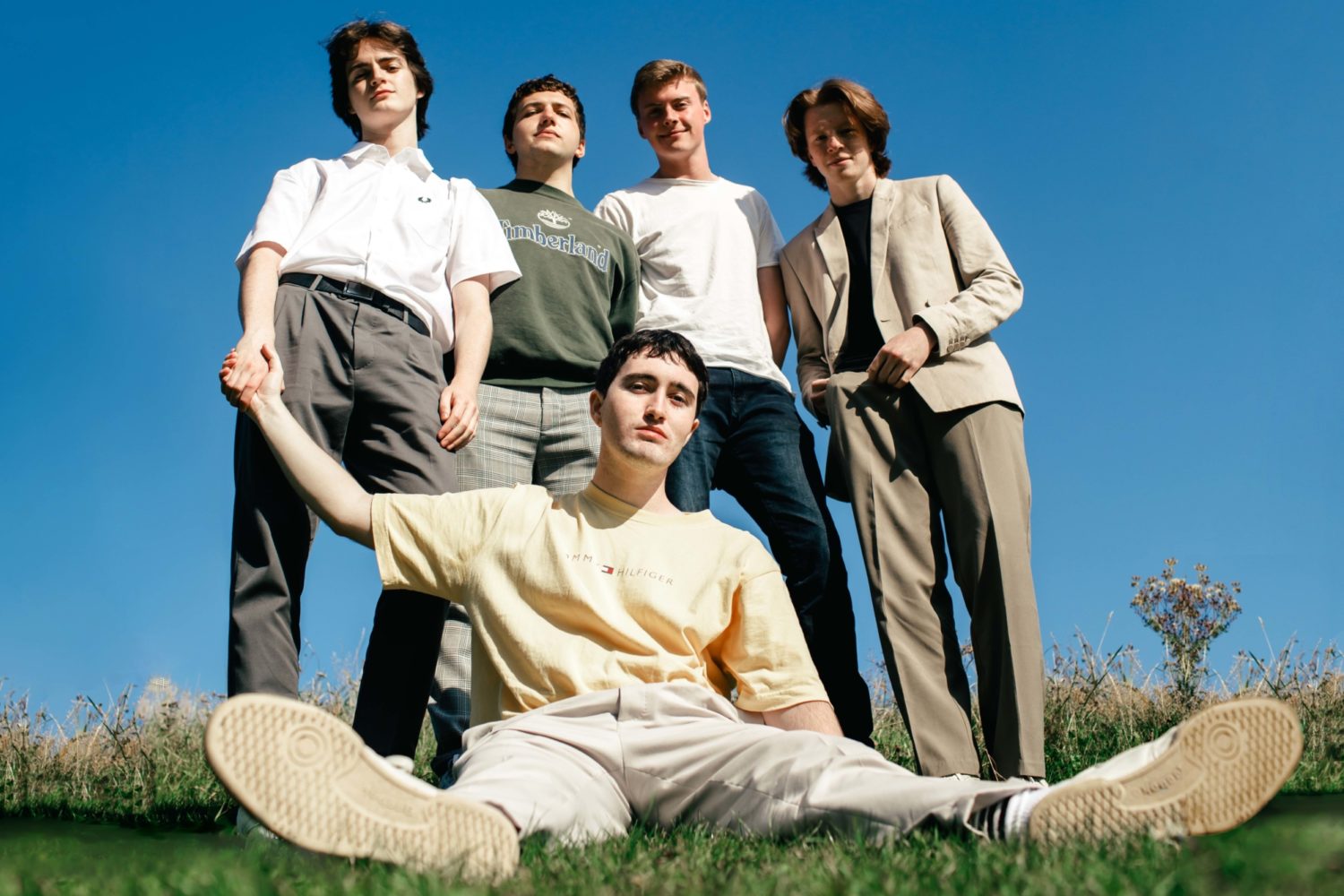
If there’s anyone who hasn’t lost complete touch over the ever-fleeting artistry of social commentary rock, it would undoubtedly have to be the Brits. Championing the genre as what might be a post-post-punk reaction to the spawn of angsty British lyricism, Courting have recently released a 4-track debut EP that delivers a wonderfully refined twist to contemporary British rock in a way we haven’t seen for quite a while. In recent years, fast-paced, talk-singing punk bands like IDLES, Shame, Black Midi, and Black Country, New Road, have come to dominate the British indie and underground rock scene, paving the way for a new-age niche punk genre, lyrically packed with political criticisms and socially charged objections to the systems we’ve found ourselves uncomfortably embedded into. Courting’s mission with their music more than adequately follows suit from this distinct style, however within an arguably more derisive– cheeky, even–lyrical framework.
Rhythmically sound and anticipatory in its build of angst, Grand National covers an impressive scope of socially perceptive topics. At the forefront of the band’s social revelations, however, is blunt in the name: the Grand National is a prominent horse racing event that takes place annually in Liverpool, England (their city of origin). This obvious expression of contempt for events like the British Grand National perfectly matches the overriding theme of the EP’s lyrical sentiment. Singer Sean Murphy O’Neill’s abrasive chants resonate with me as a collective frustration that many young revolutionaries–as well as casual social observers–increasingly share: something about feeling ridiculously unattuned to some of the similarly abuse-ridden practices as horse-racing. Themes that appear throughout Grand National’s musical dialogue are society’s persistent devotion to practices of capitalism, mundane yet obnoxious displays of wealth, along with the generally exploitative nature of pop culture, music, and art. Sarcasm, humour, and wit encompass the EP’s thematic makeup, accompanied by deliveries of very valid criticisms and catchy, gritty guitar riffs. The EP begins with an outright objection of British national norms and values, found abundantly in Grand National, weeds through scattered ideas surrounding casual elitism present in various British social arenas, and resolves on justified jabs at the confusing yet enduring influences of Kanye West and Ed Sheeran. In fact, that’s kind of all that “PopShop!” is about. The song delves into the dire state of popular music and musicians: an unceasing cycle of often problematic pop icons dominating charts, and producing the same disposable yet generically profitable sounds. Furthermore, “Popshop!” chants on about other long-standing issues of the music industry, such as the age-old theme of selling out to corporate ownership and labels’ soul-sucking tactics of artist exploitation.
Between their contemplations over lawn culture being kind of odd and unnecessary, and their more critical takes on social media’s tight grip over our priorities and perception of reality–Courting have devised an astonishingly catchy, and tastefully punk, first EP. With only a few songs out before Grand National, it serves as an exciting introduction to the musical potential of Courting, a group of four nonconformist Brits clearly committed to their authenticity, and more importantly, to never selling out.
Check out the EP on all major streaming platforms and Bandcamp, link below.
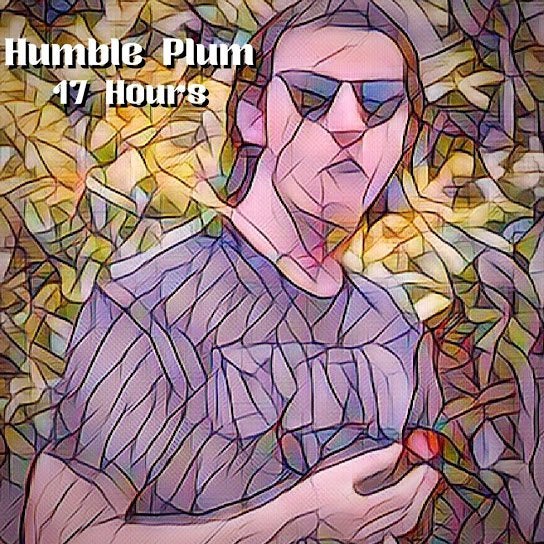
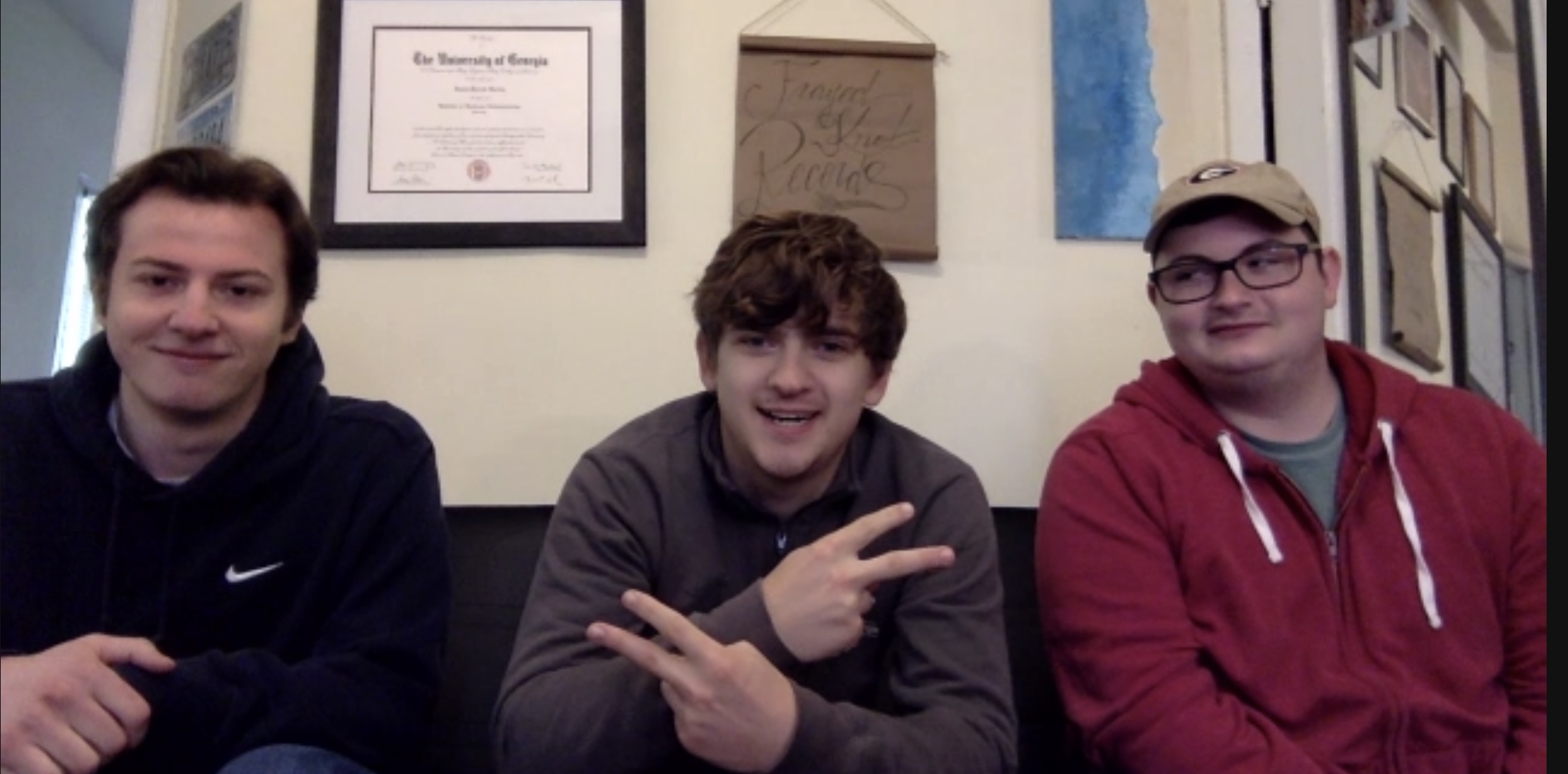
Athens, GA-based Humble Plum’s debut album, Seventeen Hours, out now. Humble Plum is composed of Daniel Hardin John Ilardi and Josh Johnston. Ilardi and Johnston are students in UGA’s music business program, affectionately monikered as MBUS, and Hardin graduated the program in 2020. Childhood friends Hardin and Ilardi reconnected at UGA and brought Johnston into their fold.
The album title, Seventeen hours, refers to the 17 hours in which the group wrote, recorded, mixed, and mastered the album. When Hardin first suggested the idea Johnston kindly told him to get some sleep. The next morning, still adamant, Hardin quickly got Johnston and Ilardi on board. “We just wanted to see if we could do it,” said Johnston.
The rules were simple: The album had to be completed in one day and absolutely no thought or planning could take place prior to the day the group had set aside to make this album. The group “didn’t think anyone would listen” to Seventeen Hours, they just made it for the fun of creating music together. The result is joyful chaos. The album feels raw and personal in a completely new way.
We asked Humble Plum to take us through each track on the album and give us further insight into the making of Seventeen Hours.
Check out their track-by-track rundown below, and be sure to queue up the album stream below.
Johnny
Starting with a guitar riff, Hardin penned some lyrics about his friend and bandmate John who “has a really nice car and is always down to jam.” The first song on the album, “Johnny” was written and recorded between 7 a.m and 9 a.m and then forgotten until putting the final album together.
Hey Jere!
Johnston really wanted to make a Jere Morehead diss track and a punk track. Both wishes were met with “Hey Jere!” The track gave current students Ilardi and Johnston an opportunity to air their grievances with the president of UGA on the university’s handling of COVID-19. Lyrics include gems like “I can’t go to the beach, but I can go to a game? Why don’t you learn to spell your own name?”
Is That A Bee?
In a jarring transition from “Hey Jere!”, “Is That A Bee” is a mellow reggae track that questions Jerry Seinfield on why he ended Seinfield and made the Bee Movie. The track’s composition started with an off-beat guitar and reggae drums inspired by Sting’s “Englishman In New York.” Hardin wrote the lyrics in 10 minutes “on pure instinct.”
Rest in P-Bass
A somber addition to the album, “Rest in P-Bass” was a collaborative effort about a bass guitar Johnston sold and missed dearly. The song utilizes a mandocello, which is a baritone mandolin that adds to the tracks depth. The humor in writing a song about a bass with the same level of sincerity as a break-up ballad is not lost on the trio. “There is definitely an element of funny in the sad,” said Johnston. “It’s overly dramatic for sure.”
Intermissionary Funk
“Intermissionary Funk” forgoes lyrics to let the track’s instrumentals shine. The first of two instrumental tracks on the album, “Intermissionary Funk” harkens back to the funk-rock backings popular in the early ’70s. While Hardin’s drums and Johnston’s bass ground the track, the guitar is what makes the track noteworthy. In a unique approach, Hardin, Johnston, and Ilardi took turns playing guitar adding the slightest variety to the tracks uniting riff.
Mother Russia
Johnston lived in Bulgaria for five years, which has become quite the joke among the friends and was the impetus for Johnston to write “Mother Russia.” The instrumentals for the song are “basically the Tetris song” according to Johnston. Interestingly, the theme to Nintendo’s 1989 video game actually started its life as a 19th century Russian folk song “Korobeiniki.” The song was recorded using a 1969 Soviet Union microphone. “It sounds like you’re yelling in a bread line,” says Hardin. Ilardi describes the mics effect as “aggressive” which is why they also used it on the track “Hey Jere!” The song was recorded in one take with Ilardi holding the mic up to Johnston, turning red with suppressed laughter. Hardin calls the track “a glorious tune.”
2nd Best Friend
“We all have that friend we like, but also find them annoying,” said Ilardi when asked about the concept of “2nd Best Friend.” It’s about your back-up friend. The song was inspired by Flight of The Conchords “Most Beautiful Girl in the Room” taking the song’s concept of calling someone “the most beautiful girl,” but qualifying it with “in the room. Humble Plum does something similar by qualifying “best friend” with “2nd” making the track kind of mean, but very relatable.
Thank You Caledonia
“It’s the sad one on the album,” said Hardin in reference to “Thank You Caledonia” Humble Plum’s ode to the iconic Athens music venue. Ironically enough, when the group decided to write about Caledonia, they thought they were going to make another funny song. It is when the group started actually writing the song and reflecting on what the loss of Caledonia meant to them that the song turned into the heart wrenching goodbye heard on the album.
Siri
The guitar for “Siri” was written at 7 a.m and put aside for about 12 hours when the band started building the rest of the song. Hardin developed the drums taking inspiration from Cloudland drummer Karmen Smith. “We wanted a song people could jump to,” said Ilardi, and “Siri” is just that. The track’s title comes from the lyrics which the group wrote using predictive type making the song completely incomprehensible.
The Mighty Oconee
The second instrumental track and final album track is “The Mighty Oconee” a joke because as Johnston explains “the Oconee is anything but mighty.” The track has an Americana vibe produced by the layering of various string instruments including banjo, mandolin, and mandocello.
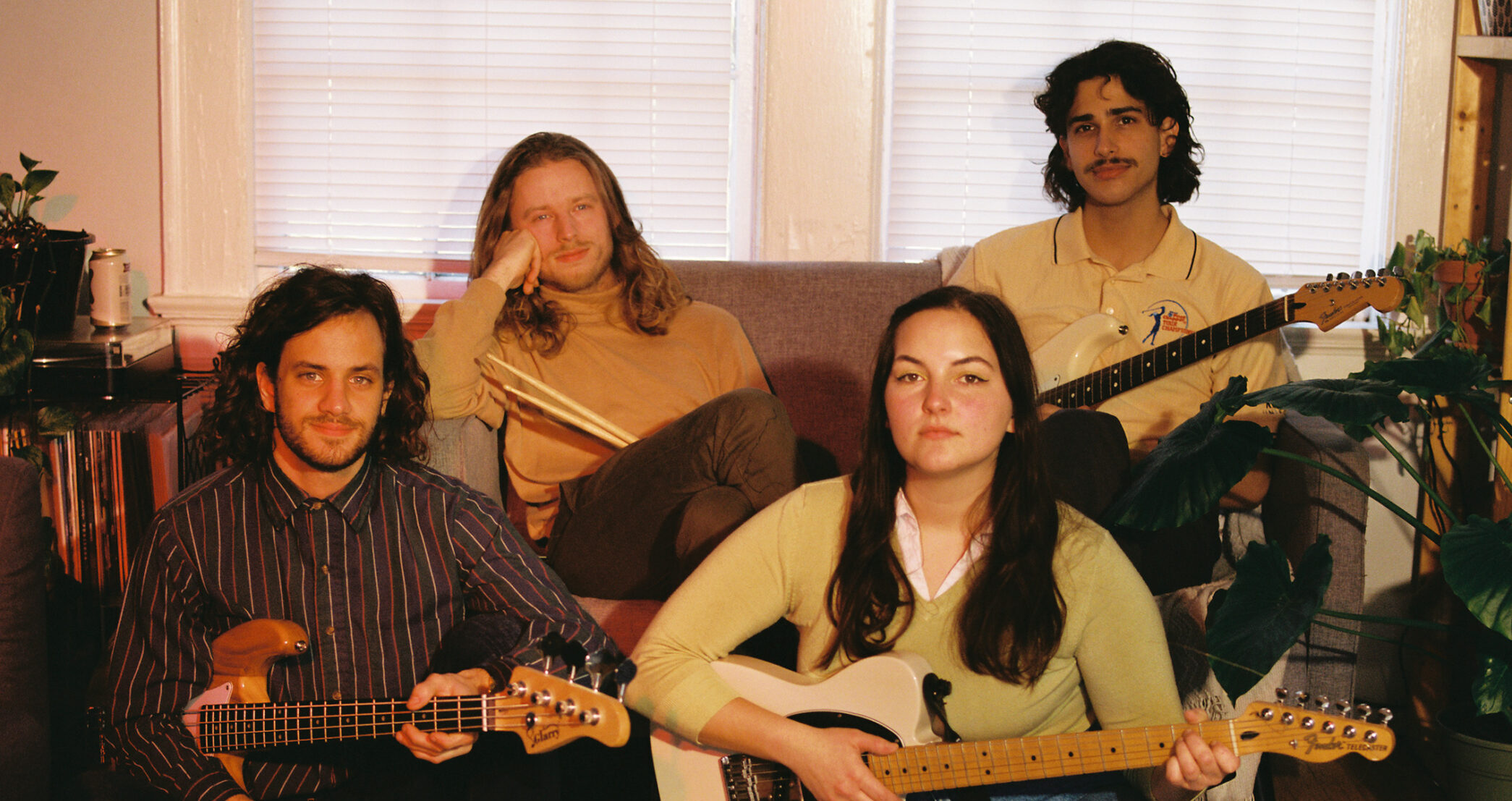
(Starting from the left: Phillip Hess on bass, drummer Brian Lester, singer/songwriter Anna Lester, Taylor Neal, producer and on lead guitar. Photo by Tenny Rudolph.)
Who am I, and who are you? Growth. Fear. Changes. The nostalgia of it all. Who are we if I am no longer who I used to be? We desperately cling on to our past in hopes of using it as a band-aid, a short term justification, to heal what we face now. And most of the time, that just isn’t enough.
Hailing out of sleepy Jacksonville, Florida, Bobby Kid has finally come back to wake up out of our 2020 depression slumber. Bobby Kid officially grouped in 2017, and in 2018, they dropped their debut album, Peach, perfectly encapsulating our feelings of childhood, the longing to reconnect with your roots after you’ve gone too far, and first heartbreak. “Blue/Dissonance,” a two-track EP, was released in late March 2021, now available on streaming platforms and for purchase on Bandcamp.
I don’t want to be funny.
I don’t want to be pretty.
I don’t want to be cool.
I just want to be you.
With a whisper, “Blue” subtly demands your attention. “Eat my words, see how they taste,” singer-songwriter Anna Lester pleads through her lyrics. She questions the perception of ourselves made by others, the impact that their supposed-innocuous presence has on our self worth. We can ask ourselves a thousand times on how to become the person that everyone expects us to be, and to stay, and never know the answer. And that’s okay. With a crash, the whisper breaks into a harmonious strew of instruments. I’m a lot… I’m a lot. To close, Lester backs away from her contemplating lyrics, accompanied with evocative instrumentals, to let out distressed wails, bringing the song to a close. The final calm after the storm.
But my insides are turning out towards the sun,
And I feel like I must be the only one.
And I’m crying, lord, I’m crying.
The next song on the long awaited EP is titled, “Dissonance.” Dissonance is defined as the clash of two unharmonious elements, often coupled with your mental state as “cognitive dissonance,” where your actions and your thoughts fail to align. This track immortalizes the feeling of floating through daily life yet failing to recognize the improvements we make in our lives. Recognizing we are worthy is the biggest accomplishment, and we consistently strive hard to achieve it. There’s a lot to love about this track: the soft harmonious vocals, the twinkly, sway-worthy drum work, and the rhythmic guitars. This is definitely one of those tracks where it makes you float around the solo cup-ridden kitchen one moment but have you crying in the house show’s bathroom the next.
Fans of Julien Baker, Phoebe Bridgers and Lunar Vacation can find comfort in Bobby Kid’s words and melodies as we navigate the confusing phenomena understanding who we truly are, imposter syndrome aside. Breaking your heart and mending it all at once is something Bobby Kid has always done right, and we are excited to see what comes of this quick impression of tasty tunes.
Hey there Vinyl Mag subscribers, long time no talk. To reign in the 2021 VM revival, consider this the first half of 2021’s staff top picks. 2020 and 2021 have definitely been a whirlwind, might I call them… “unprecedented times” (okay, I’m sorry… I won’t say it again). However, that can’t stop the jams from jamming, speakers from blaring. We hope you enjoy our staff playlist!
Acemoma – “A Future”
Bobby Kid – “Blue”
THE BLOSSOM – “CLOVES”
Courting – “Grand National”
Dayglow – “Close to You”
Elori Saxl – “Memory of Blue”
Japanese Breakfast – “Be Sweet”
Matt Ox – “Infinity”
Shungudzo – “There’s only so much a soul can take”
Sorry – “Cigarette Packet”
Sorry – “Don’t Be Scared”
Taylor Swift – Fearless (Taylor’s Version)
(Editor’s Note: Yes, the whole thing. I’m not sorry.)
Nostalgia is a powerful feeling, providing respite from the present day. Music continues to find ways to replicate former fond feelings: a day at the beach, a sunset with friends after a long hike, or a cozy evening in the mountains. If there is a specific minutiae-filled time and place that one longs for, it’s likely able to be reached through music made in the past 10 years.
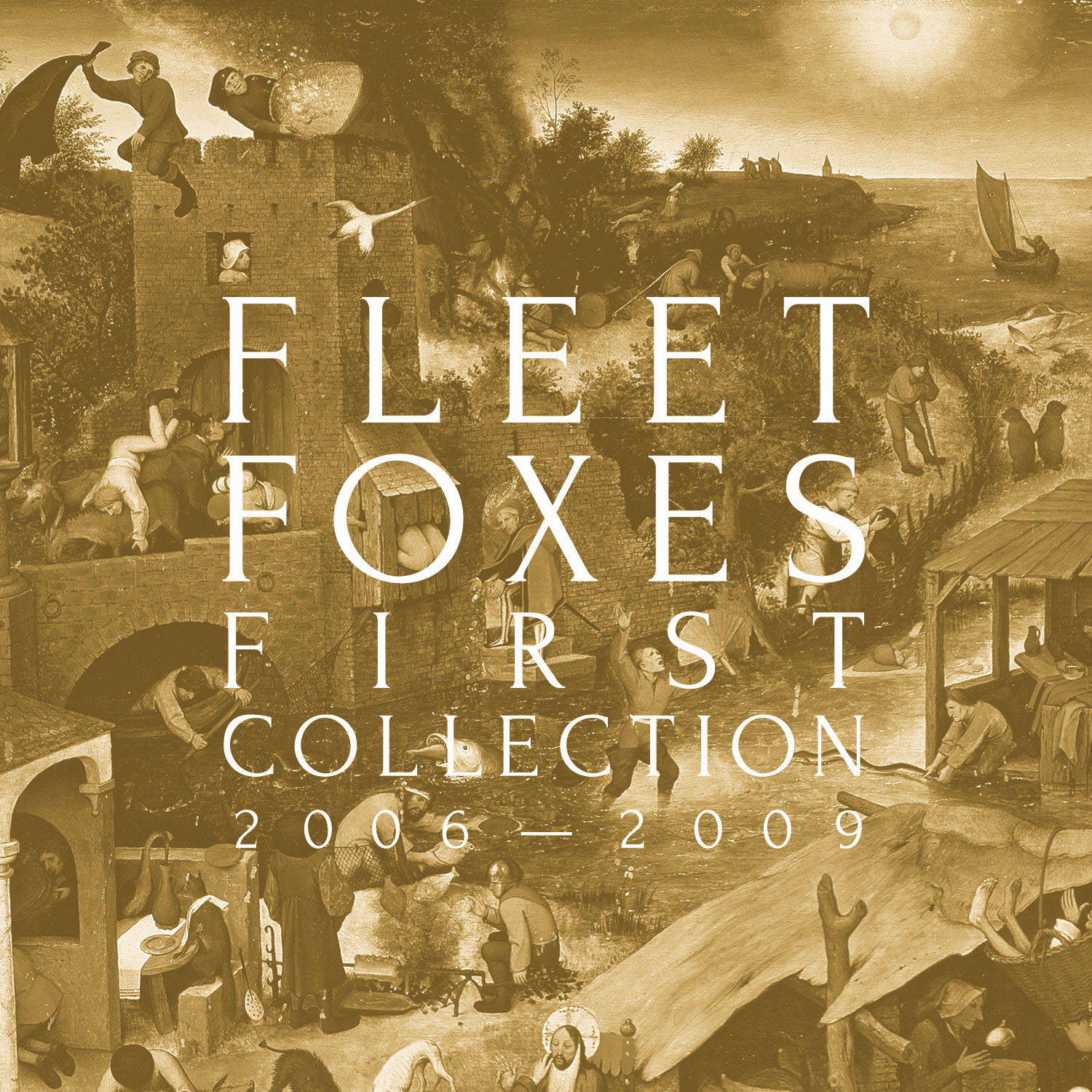
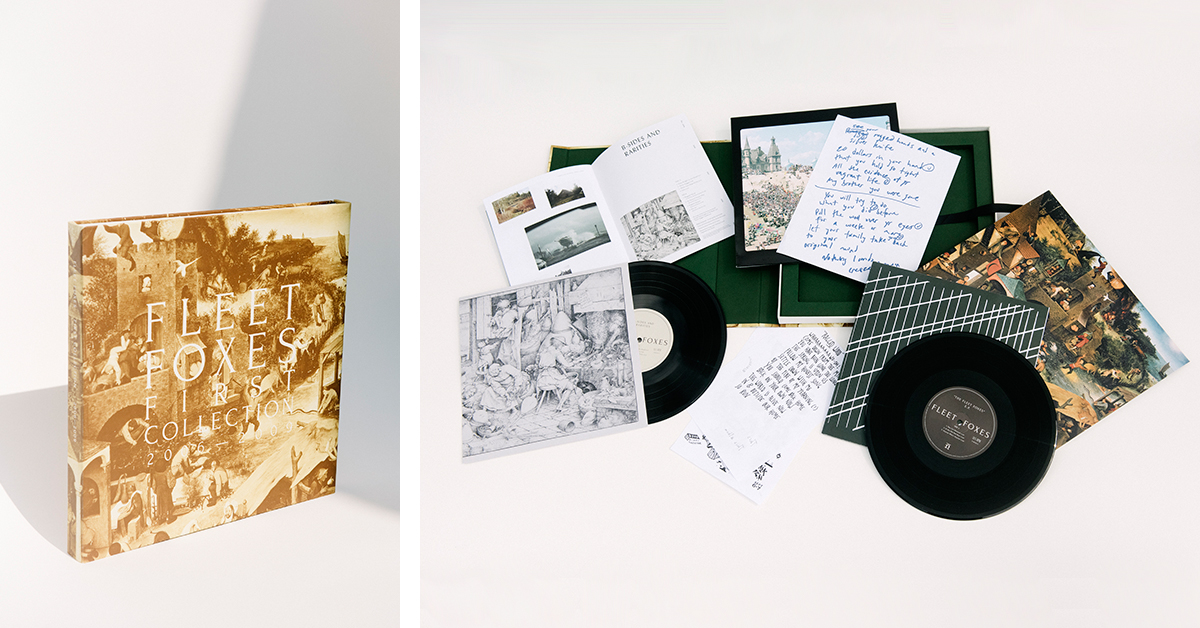
Fleet Foxes’ First Collection 2006-2009 chronicles a band that grasped that sense of nostalgic aesthetic and interweaved new sounds to push a solid vision forward. Chronologically, every release feels like hitting the bullseye of a high and clearly marked target, every record higher than the last. Nothing ever feels like a rehashing of yesteryear’s folk, but rather a creation of new space comprised of traditional balladry, sun-filled west coast pop, and country crooning.
The collection is comprised of four releases: their self titled debut LP (2008), the critcally-acclaimed Sun Giant EP (2006), the self-released The Fleet Foxes EP (2006), and an unreleased B-Sides and Rarities, all of which are seeing vinyl pressing. Accompanying the albums is a 32-page booklet showcasing artwork, photos, tour posters and the like from the time period. Combined, they are a document of a group spanning the sounds of time with clear direction.
The Fleet Foxes EP is a golden-toned bill of AM country influenced tracks that billow and unfurl like the opening of a brass horn. The reliance on guitar chord work and choral breakdowns is as fast paced as the band has ever been, but it still takes its time. “In the Hot Hot Rays” flirts with early R&B in both vocals and guitar work. To those who haven’t heard this release, this is Robin Pecknold with an outward swagger and strut. The closer, “Icicle Tusk,” is the biggest indicator of where the band would head from this EP: a reserved confidence in filling a room with less.
The band made it clear that the Sun Giant EP was simply something to be sold at the merch table of the shows and to not see it as a true indicator of what the band wanted to achieve. If we take them at their word on that, we can instead view the release as a marker on the map up a high mountain. Suddenly, this grasp on nostalgic tones was being pushed into vast soundscapes that seemed to sprawl over terrain. In particular, “English House,” peppered with vocal harmonies to the instrumentation, rolls like a fast morning fog and settles like dew on the ground. Something so big, yet delicate when hitting the ears.
The self-titled LP met high hopes, showcasing the band’s versatility and awareness in executing several genres well. The songs seem to take up even more space than anything they had previously released, but with such a focused assurance. Tracks such as “Ragged Wood” and “He Doesn’t Know Why” seemed to melodically span generations. Perhaps their most famous track to date, “White Winter Hymnal,” plays with traditional folk song language and circular storytelling, creating a short, timeless masterpiece.
The B-Sides and Rarities album, when listened to after the rest, can be seen as a deconstruction of what built such solid focus. Pecknold’s take on the traditional ballad, “Silver Dagger” whisfully slides in, both assured and filling. The basement demos demonstrate that their song ideas were by long-term design, whether they resemble their recorded versions (“English House”) or bare little semblance at all (“He Doesn’t Know Why”). The photos in the accompanying booklet are nice, but the rarities collection is much more of a time capsule into this band’s history.
In the years following the time span that this collection records, their focus branched out even further, digging deeper into the roots of taking traditional songwriting sounds and pushing them into modern soundscapes, both in grandeur (2011’s Helplessness Blues) and mystery (2017’s Crack-Up), but these initial releases were a swell of prowess and thoughtful tellings of songs that spanned time. Fleet Foxes write songs that you can come back to, and no matter how the world changes around you, there’s always space to take; sometimes, that space can be as big as the horizon.
When formulating ideas for new music, BRONCHO bandleader Ryan Lindsey could not help but focus on the bad things. While spending a lot of time watching CNN, he says, “…man, there’s a lot of bad behavior out there. Not to mention, there’s a company making money off of people watching their depiction of it all.” Shortly after this, the Tulsa-based five piece examined scandalous topics and how they relate to themselves, and perhaps how they affect the world around them.
Drugs, sex, overindulgence, and other vices: one could argue that this is the perfect framework for BRONCHO’s most broad and murky release to date. Instead, thanks in part to a recording process allowing them to work at their own pace, we are offered a well-constructed, uncomplicated record of pop tracks. Bad Behavior is BRONCHO at all of their bests, combining intelligent and swift songwriting with broad, yet thoughtful musings on a sinful society.
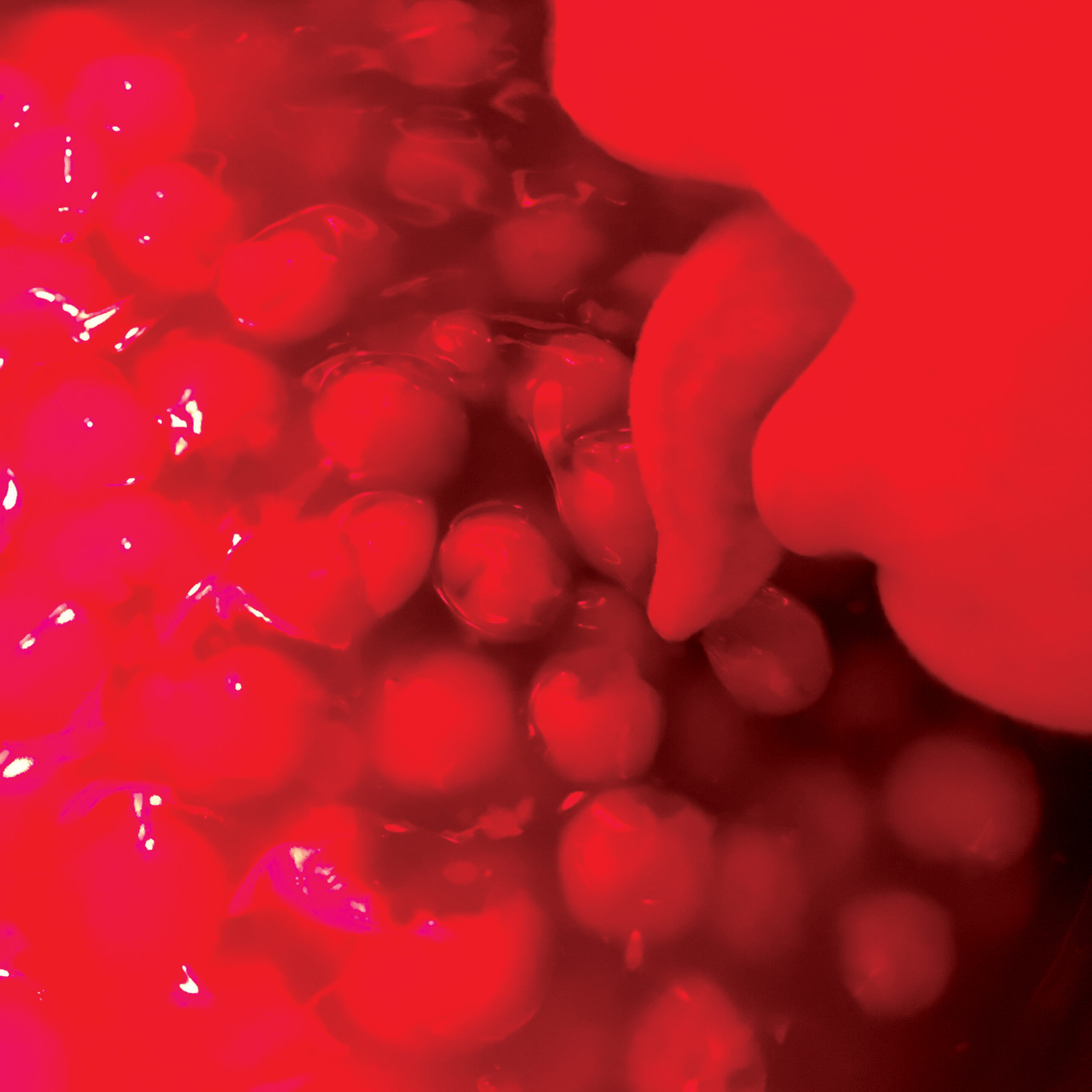
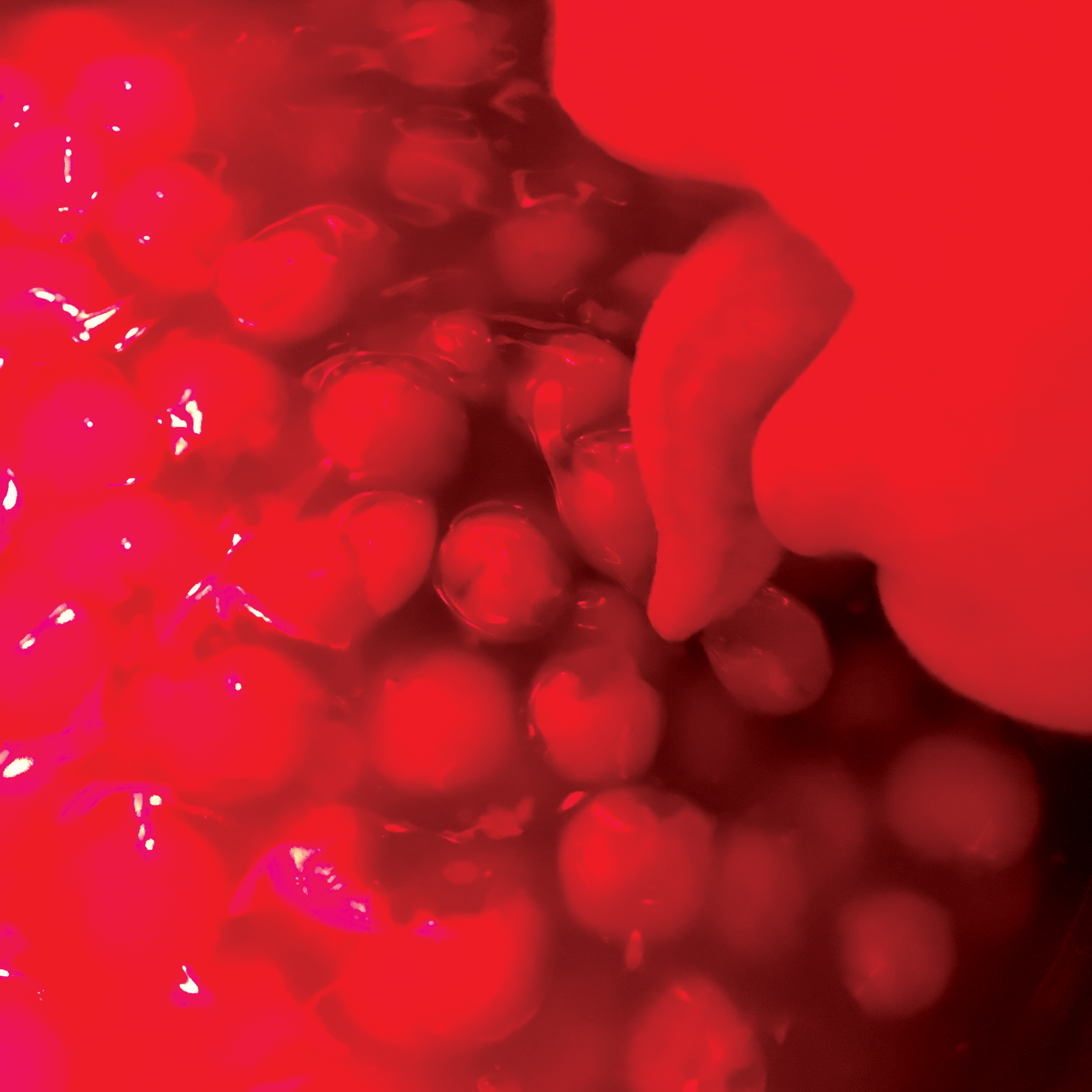
Bad Behavior has a musical center, but what makes the the album so impressive is their ability to loop out into other sounds before returning to ground. “All Choked Up,” the album’s opener, relies entirely on the beat in both its vocal and instrumental cadence. The result is a faded, libidinous march reminiscent of Tobacco. It’s the perfect track to match with the album’s not-subtle artwork of red cherries and extended tongues.
The tracks that follow keep this confrontational theme with pulled back instrumentation, leaving plenty of room to ponder in the space. This doesn’t break until “Keep It in Line,” the most single-worthy song, playing with the delayed, peppy beat iconic through much of the beach pop of the past decade. Lyrically, this is some of their most impressive work to date, where Lindsey addresses “bad behavior” in himself, expressing a disappointment in his own actions. The lines are the most memorable of the album and serves as a sugary bridge into the album’s second half.
“Keep It in Line” is even more impressive when coupled with its following track, “Sandman.” Scaling it back, BRONCHO returns with the same walking beat as the album’s beginning, but this time with much more of a confident swagger. Fleshing itself out with hard-plucked guitar, this is a track with a mission: a return to pleasure, even if it comes at the cost of a return to the uncouth. “Sandman” leans harder on past classical pop influences than much of the rest of the album, and the less-is-more approach pays off with a real earworm.
Things get more scandalous in the second half, especially the debaucherous confession of “Family Values.” The songwriting of the last tracks take on a power pop strut a la the Cars, while digging deeper into lyrics of embracing material vice and desire. The closer, “Easy Way Out,” reprises a swagger-filled strut and doesn’t stray too far from its rhythm. Lyrically, it serves as a reminder that even if these themes are tough to come to terms with, you can always take the safe route of embracing the coarseness of society.
For an album to address vice with such a broad stroke, Lindsey states that Bad Behavior is meant to be a tabula rasa of degeneracy, merely reporting back to listeners at the current state on the carnal. “We’re assuming that everyone is coming from a certain set of values, but ultimately that’s impossible.” Without assumption of a moral compass, BRONCHO are free to approach subject matter with honesty and blunt language.
What makes Bad Behavior so notable in the context of BRONCHO’s discography is the simplicity of the songwriting while letting go of the leash on the subject matter. Focusing on this theme would be quite an easy tableau to run off the rails. Instead, BRONCHO bring to light the wanton while also setting up a sound framework to start a conversation on the vice that surrounds our day to day.
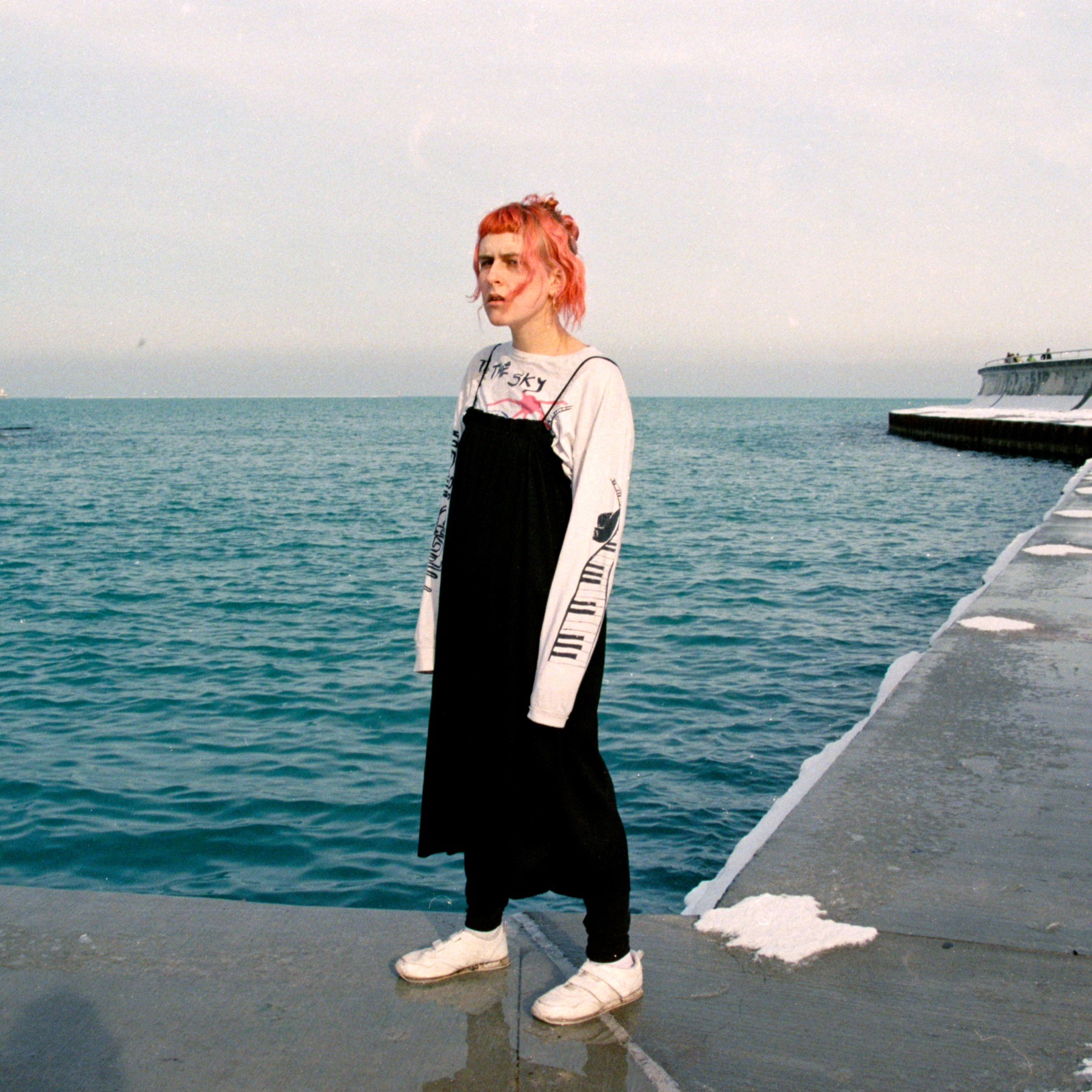
Lillie West has described her recent past as one of “general violence.” In the midst of writing her follow-up to 2016’s delicate Sleepyhead, West’s inner circle faced home invasions, assault, and death, leaving her running inward, dreading the world outside. Through fear and personal deconstruction, West’s latest album as Lala Lala makes big realizations around strong, unpredictable melodies that always return to the center. The Lamb—out today on Hardly Art Records—is a massive leap forward in songwriting from the Chicago-based artist: a multi-genre exploration of looking inward to project outward.
The Lamb opens with the lead-off single, “Destroyer” – a sitrep of distrust. The most garage-friendly offering of the album, we’re met with a walking beat fleshed out by aggressive strums. West offers up a fear of continued self-destruction alongside a realization that her mistakes were ones that she could have saved herself from.
“Destroyer” would be the perfect opener to a bedroom garage record; West decisively forgoes this in favor of focused exploration. “Spy,” a playful, crunchy ridicule of introspection, is a drum-machine skip teetering on the edge of pop-punk. “Water Over Sex,” a reflection over sobriety, is a true gem, combining choral yawns with surf-toned guitar. West examines the guilt that comes with fun and loss of control, and in the process creates one of her best tracks to date.
This pronounced, echoed motif continues near the album’s median with “Dove”, a reverberating song dealing with what West calls “very plainly about the death of someone I loved a lot and the guilt I had, and still have, afterwards.” The melody lies almost solely with the vocals, as if reaching you in a hallway from being bounced off the surface of the bathroom floor. A vulnerable realization, the song needs very little to take up a large amount of room. This space is given up at the track’s abrupt conclusion, as if the thought leaves one too vulnerable to continue entertaining.
West ventures further with her songwriting chops in the jangle-pop swing of “The Flu.” Bright melodies are the spoonful of sugar to a story of focused self-destruction to the point of hurting others. The contrast is a perfect balance of grime and sheen. This proves an exquisite set up to “Copycat,” a telling of West’s hyper-analyzation in her new sobriety: “Everyone talks this way, everyone looks the same / and maybe one day, I’ll be surprised / with my twin fists and my twin eyes.” There’s a frustration that comes along with expression in a crowd where everyone (including yourself) thinks and reacts the same, and West’s delivery is of pure boredom.
Falling into The Lamb’s second half is a series of impeccably-expressed feelings and new sound tableaus. The album’s shortest track, “Moth,” begins as an aggressive, percussion-less track of dissonance that gives way to dream pop melodies; it’s a treat that lasts just long enough. “When You Die” is a post-punk confessional stemming from the death of a number of close ones in a small amount of time. Much of The Lamb deals with futility, but this is one of the only times when it is met with defiance instead of resentment.
The album’s closer, “See You at Home,” builds off of earlier, airy tones and brings an assurance that cements all of the previous tracks by contrast. The lyrics read like a vulnerable letter left on a countertop by someone stepping out for the first time in a while. The combination of these words with a simple, saxophone-backed melody would have this song easily fit on any Dan Bejar record.
The Lamb is a merciless inspection of one’s values and motivations, and it undoubtedly has not come at a price for West, but this has inspired a record filled with adventurous turns in tone that gel into an authentic, confident snapshot of a woman growing in her dimensions. She has left the house she’s locked herself in without bothering to close the door, and The Lamb is a sonic road map of where she could go next; something entirely up to her.
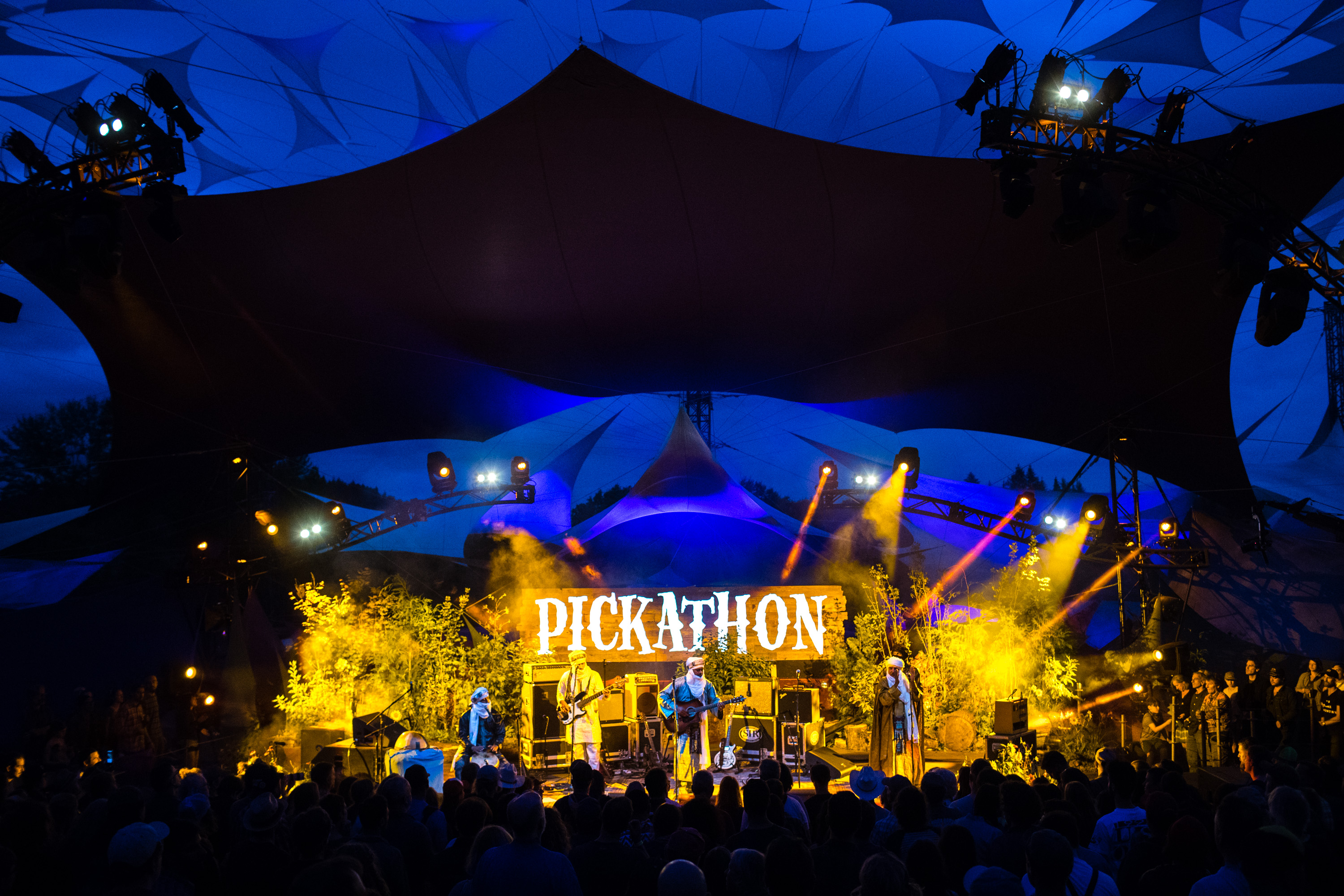
Portland may no longer be the country’s best kept secret, but it is without doubt still in possession of the next best thing: Pickathon; a paragon of a small-scale festival accurately coined “the best American music festival period” by unofficial mascot and veteran, Ty Segall. Nestled in the scenic rural-suburban hills of Happy Valley, OR, Pickathon has planted its roots in the 80-acre Pendarvis Family Farm since 2006, growing in size and popularity with each passing year. Breaching its way into the limelight and sparking a storm of buzz in music communities, Pickathon has managed to rope in some big-name talent in recent years featuring the likes of Beach House in 2016, last year’s appearance from Dinosaur Jr., and the miraculous arrival of Leslie Feist back in 2013. Although Pickathon has proved itself worthy of big fish, the festival team has managed to stay true to their mission, consistently curating a musically and culturally diverse offering of discovery-based lineups.
Celebrating its landmark 20th anniversary, Pickathon avoided any temptation to consummate a crossover into mainstream-festival ranks, bringing core Picky people the same-same-but-different in the best imaginable way. Checking in at the top of the bill this year were long-time indie icons Broken Social Scene and Built to Spill, token folk-rock sing-along ballad bands Shakey Graves and Phosphorescent, as well as overseas marvels Daniel Norgren (Sweden), DakhaBrakha (Ukraine), and Kikagaku Moyo (Japan).
Day One
Upon arrival at the festival, it was more than apparent that word had gotten out about the clandestine gem of the Northwest. Longer-than-usual lines snaked through the grassy parking lot where eager faces awaited admittance to the farm. First and foremost, we responsibly headed to the bar for the last line of defense against our fleeting hangovers, courtesy of a night of campfire revelry the evening prior. Summery cocktails amalgamated with fresh hibiscus, strawberry and booze—as well as local offerings of craft beers—were just what the doctor ordered.
One aspect of Pickathon that is not to be overlooked is the relentless dedication to a completely waste-free festival. Drinks are strictly served in stainless steel cups that are available for purchase at all alcohol stations for a reasonable price. This entirely eliminates the sea of cans and cups that often plague most larger festivals, crunching and cracking with the footsteps of fans dancing to the beat of the music.
Valley Queen. Photo by Miri Stebivka
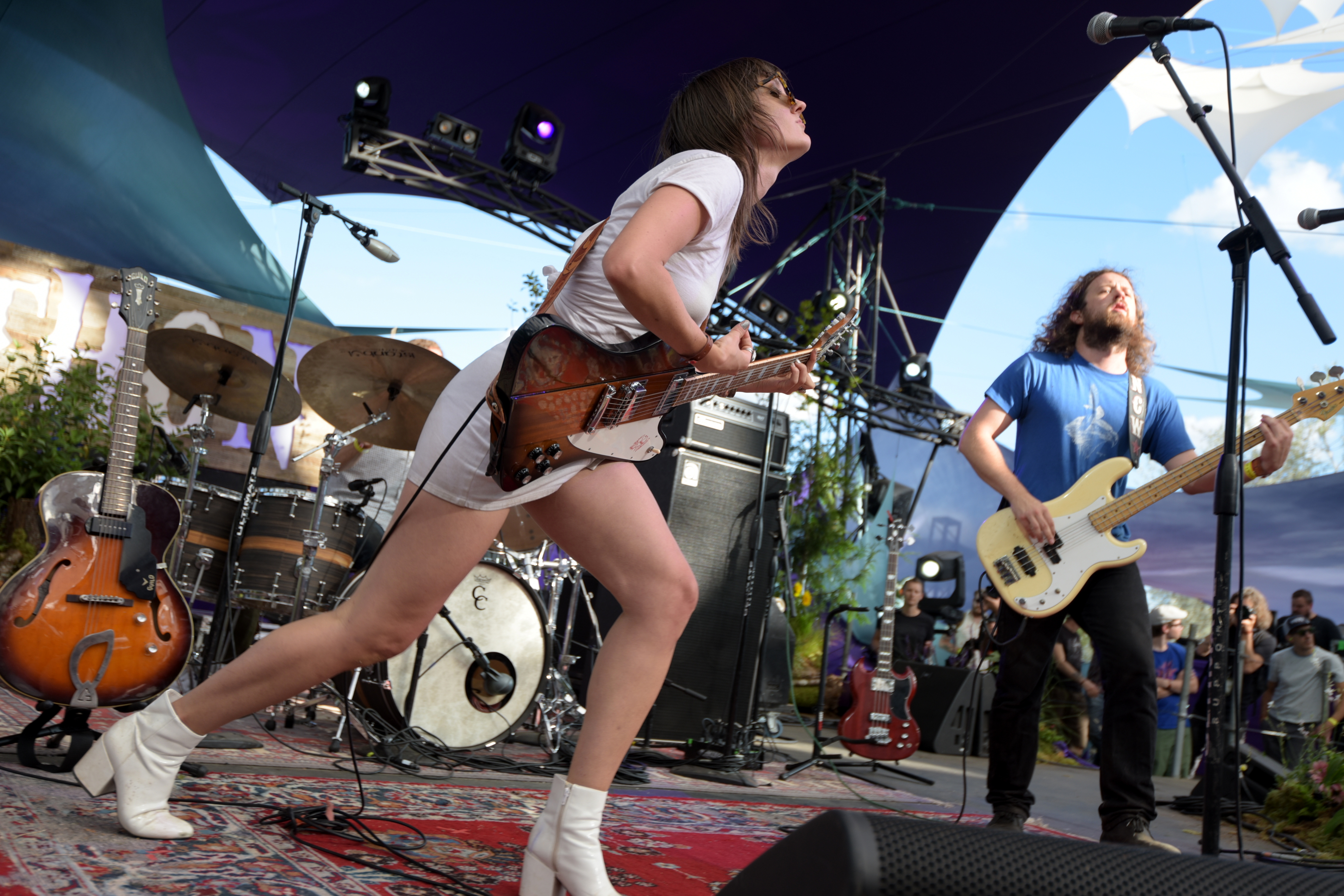
We christened Day One with a fully energized performance from Los Angeles locals, Valley Queen, who excel at finding the balance between distorted guitar and melodic vocals from frontwoman Natalie Carol. Tailored in all white, from sunglasses all the way down to leather cowboy boots, Carol’s ensemble was the perfect representation of the evolution of Pickathon’s strictly-folk roots into a progressive inclusion of multi-genre acts, diversifying the image and crowd of the festival alike. The band had the entirety of the mainstage on their feet, treating them to a handful of goodies from last year’s EP Destroyer, and eagerly diving into tracks off of their debut full-length, Supergiant, which arrived just last month. In an press release regarding the title track of the new album, Carol states that, “it takes all the drama you hear on the record—the aggressive, chaotic moments, and the more beautiful or quieter moments—and puts it all into a more galactic perspective.” This notion was brightly reflected by the fans swaying their way through the sonic cosmos of Valley Queen’s performance.
We exited the grounds of the mainstage through one of the many checkpoints, where volunteers investigate the contents of your cup, supposedly to prevent underage drinking as well as the smuggling-in of outside beverages. We took to viewing these encounters a challenge to “level-up,” faced with the dire dilemma of either dumping or chugging our beverages.
Walking the heavily forested pathway toward the Woods Stage, we were constantly swarmed with children hustling us for donations with an array of elementary art forms, varying from magical “marvels” to spoken freestyle rap read from notebook paper. Kids gotta eat too, I suppose.
Narrowly escaping the money-hungry munchkins, we managed to catch best-bud collective Glorietta. Members of the band include but are not limited to Matthew Vasquez (Delta Spirit, Middle Brother,) Noah Gunderson, Jason Robert Blum, Kelsey Wilson (Wild Child), David Ramirez, and Adrian Quesada (Black Pumas, Brown Out). A band compiled of broken-hearted optimists, Glorietta’s ever-rotating songwriters share similar themes in their words and stories, which latch together as patches of a quilt do, establishing a blanket of warmth and expression under which the band can feel at home with one another. That, and nights shared with a bottle of tequila; which numerous members inform a number of the songs were derived from. The setlist picked and pulled from the band’s collection of singles, as well as covers of tracks from staple projects of the varying band members.
A gap window in the schedule gave us a moment to fuel up and rest our legs in the courtyard of vendors. Pickathon brings in the best of Portland’s renowned food scene, offering a diverse and daunting array of dinner options. Contrary to the food options of some larger festivals, all of the vendors are based just miles away in the city, allowing them to provide the freshest product possible to their patrons, never sacrificing quality. This is important, given the fact that these are all restaurants that most attendees frequent in their normal lives. If you weren’t a fan of Ate-Oh-Ate, Podnah’s Pit, or Pok Pok prior to Pickathon, you certainly were post.
What about all of the plates and silverware, you ask? That’s right: another extension of Pickathon’s zero-waste mission comes in the form of reusable wooden plates and utensils. Ten dollars gets you a wooden token that you exchange with vendors upon ordering your meal. After consumption, you drop your dirty dishes at a wash station in exchange for your token back. The dishes are then cleaned by volunteers so they can be used again, and again, and again. This system keeps the clean-up process more manageable, the Pendarvis Farm looking pristine, and the existence of single-use materials to a minimum. Thank you for using your platform to prove how manageable this is, Pickathon. We salute you.
Built to Spill
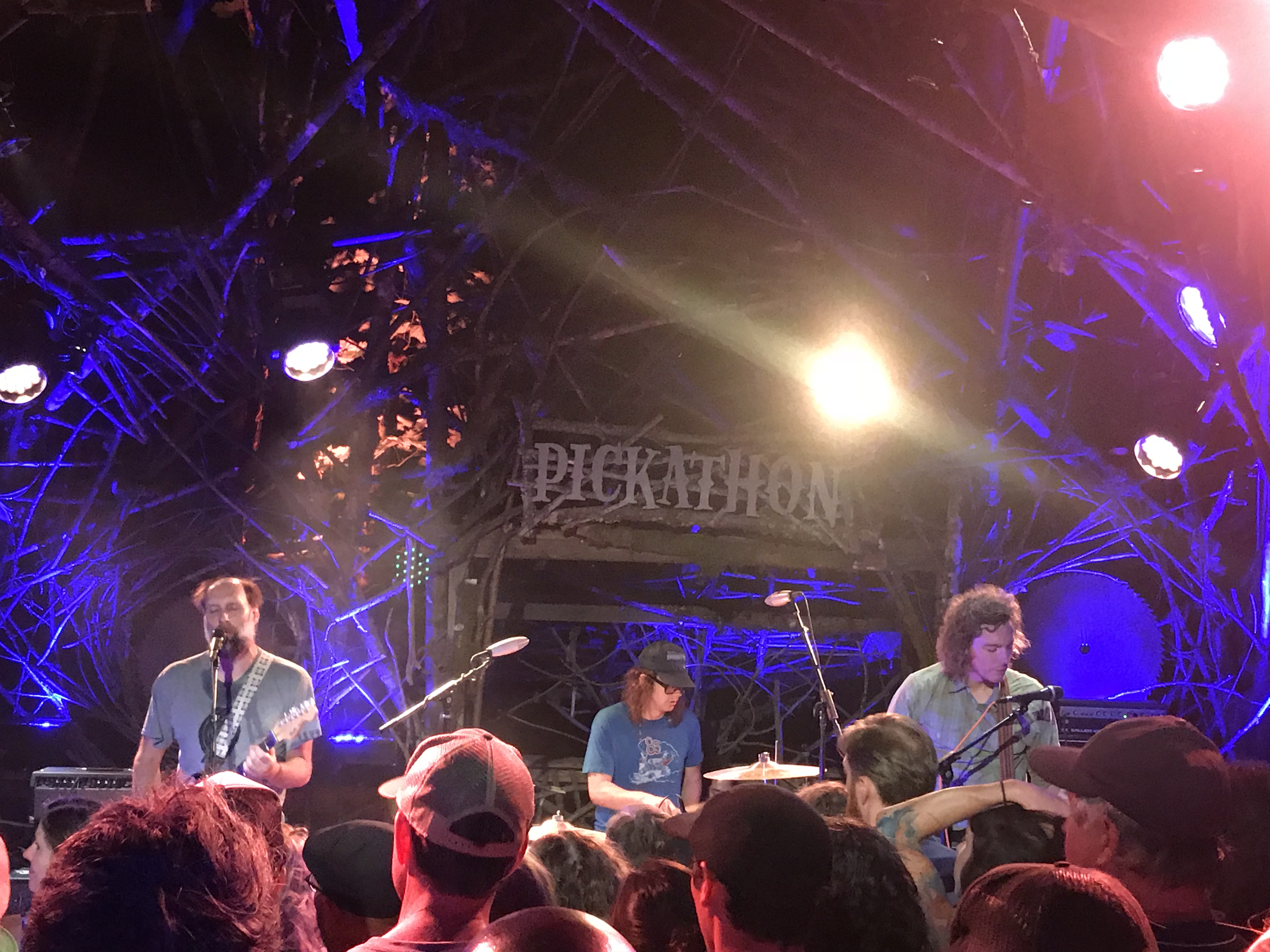
Following adequate gorging of faces, we exchanged wooden goods with the token slingers and headed back into the woods where indie rock legends Built to Spill were slated to perform; a band eponymous with the genre. It’s confounding to believe that in the entirety of Pickathon’s 20-year legacy, Built to Spill are just now making their inaugural appearance, having paved the way or influenced several bands fortunate enough to have shared the festival stage in years prior. The band stepped onto the Woods Stage as a trio, a lineup that surely surprised older fans of the band recalling tours with three guitarists in conjunction with bass and drums, a roster that hasn’t been utilized since the release of 2015’s Untethered Moon. The absence of additional guitarists was soon forgotten with the aggressive arrival of “Get A Life,” a track from their first studio album Ultimate Alternative Wavers (1993) which rarely surfaces for much stage time, sending die-hard fans into a frantic loop of nostalgia. Endearingly humbled saint Doug Martsch uttered soft “thank you’s” between staple songs “Time Trap” and “Kicked It in the Sun,” a sentiment completely stifled from the roar of a crowd enamored by the craft of the soft-spoken man. Martsch further treated long-time fans to a cover of “Virginia Reel Around the Fountain” by The Halo Benders, a defunct side project of his in conjunction with Beat Happening’s Calvin Johnson. A slight feeling of empathy could be felt for Martsch, who was visibly working his ass off alternating between playing rhythm, lead guitar, and soloing in songs that demanded the presence of more strings. The band wrapped up their set with an arsenal of deep cuts from 1994’s There’s Nothing Wrong with Love and 1997’s Perfect from Now On, sending the crowd into full cardiac arrest as middle-aged dad-rockers tore straggling hairs from their receding crowns in a frantic fit of passion.
Night one of Pickathon wrapped up at the foot of the dazzlingly intimate Starlight Stage where Japanese psych-rockers Kikagaku Moyo transcended into another dimension, serenading us to sleep with melodic bends of clean guitar and dreamlike solos from an electric sitar. Embellished in a myriad of mix-match patterns and a collection of clashing colors, the band displayed themselves as a banner for the very best and the very worst of ‘60s fashion; owning it nonetheless. The Tokyo bandmates treated a fortunate few who had the stamina to stick around into the twilight hours to offerings from their most recent album House in the Tall Grass, as well as tracks from former mini-albums. Those lucky enough to have experienced an intimate set from Kikagaku Moyo should count their blessings, as the band is embarking on a nearly sold-out tour.
Day Two
Having answered the calls of unturned beds in back in Portland, we opted for leisure in my air-conditioned home for our first night, finding justification in self-care for the long weekend ahead. We found ourselves back on the Pendarvis property midday, arriving at the Lucky Barn where hometown heroine Haley Heynderickx performed dazzling numbers from this year’s debut album I Need to Start a Garden between a Q&A with the audience. Another attribute unique to Pickathon is this rare opportunity for fans to engage musicians one-on-one and ask more personalized inquiries that might be overlooked in your run-of-the-mill interview. Naturally, these events hit capacity quite immediately, and we were unable to squeeze inside. Fear not! Pickathon is kind enough to provide a live-stream to monitors directly outside of the barn in a covered haystack, where fans are encouraged to lounge and listen, protected from the aggression of the summer sun.
Following the Q&A session, we trekked up the hill for a quick look at the Treeline Stage, whose design changes every year. This year’s finished product appeared much more open than stages in prior years, acting as a window to highlight and illuminate the rolling green scenery that surrounds the entirety of the farm. As if Pickathon weren’t already charitable enough or tapped into enough communities, the Treeline Stage is the physical representation of a partnership with Portland State’s Architecture Program. This relationship poses students each year with the task of collaborating a design erected from simplistic wooden resources to craft a unique and interesting stage for the festival, as well as plan of execution to later repurpose the materials into something beneficial to the community. For instance: last year’s design was transformed into a sleeping pod transitional village for houseless veterans.
We ventured toward the Woods Stage at long last, awaiting serenading from backroad Swedish folk extraordinaire, Daniel Norgren. My first exposure to Norgren was at the same stage two years prior, where he performed on US soil for the first time ever. The artist has been on heavy rotation in my everyday listening ever since, and my heart burst when I saw his name on the lineup release announcement back in January. Looking upward to the cascading green of the forest, beams of light burst through openings in the branches as children swung back and forth in a fleet of hammocks stacked in columns and rows. Colonies of people could be spotted from the top of the mountain, growing denser and denser all the way to the base of the dust bowl pit of the stage.
Norgren’s appearance embodies the simplicity of a country man, yet his songs harbor a well of emotion, unveiling the truths of a man who has endured real pain. Simple percussion, an upright bass and immaculate guitar playing established an astonishing sound that was a force to be reckoned with, fighting for a focal point over Norgren’s powerful vocal chords which had been treated to the perfect amount of gravel gargling. Highlights of the set include “Moonshine Got Me,” “Whatever Turns You On,” and a splendidly stripped version of “Black Vultures,” all from 2013’s Buck.
An abrupt departure from Norgren’s wooing on the Woods Stage swept my friends and I to the Mt. Hood Stage where a second offering from Built to Spill was in high demand. Still think Pickathon can’t get any better? Guess again, dummy! Most every band on the bill plays at least two sets throughout the weekend, allowing bands to perform diverse setlists and expose festival-goers to a vast exploration of their often-sprawling catalogues. Case in point: Built to Spill, clocking in at a whopping nine studio albums. That’s a lot of material to jam into your standard one-hour festival slot. For this set, BTS opted for “Goin’ Against Your Mind” off of 2006’s You in Reverse, arguably the best set opener known to mankind. The band stuck with the trend of reaching into the back catalogue, performing cult classic tracks like “Distopian Dream Girl” and “Stab” off of There’s Nothing Wrong with Love. The set was wrapped up with “Carry the Zero” off of the 1999 inimitable masterpiece Keep It Like a Secret, an album synonymous with teen against and adolescence everywhere.
Not even the plumes of dust nor the cover of darkness could mask the grin on my face as we swiftly blew through “level-up” checkpoints to the Woods Stage for an opportunity to witness Canadian supergroup and rock icons Broken Social Scene crowd the wooded enclave with their boundless number of bandmates. Picking and pulling from the best of the Canadian indie scene, BSS have appeared in ensembles as few as six and as expansive as 19 musicians at once. Key players consist of usual suspect frontmen Kevin Drew and Brendan Canning, as well as big time powerhouses Leslie Feist and Emily Haines, who were sorely missed at Pickathon this year. Following an extended hiatus from late 2010 to 2016, with the exception of a handful of festival jaunts, BSS contributed to the resurgence of classic indie bands crawling out of hiding and promoting new material with 2017’s Hug of Thunder which was met with favorable reviews from fans and critics alike. Playing their highest concentration of shows in years, the band is sounding better than ever, coming out swinging with passion behind their new songs while proving that they’re not beyond pouring their hearts into playing the shit out of the hits. A key highlight of this particular show was the addition of The Weather Station‘s Tamara Lindeman, who hopped on stage for a haunting duet of hit track “Anthems For a Seventeen Year-Old Girl” along with current BSS member Ariel Engle (La Force).
Having decided early on that we should really dive all the way in and try out this “camping” thing, we happened to have lost sight of a few minor details; not only is setting up a tent in the dark a menace of a mission, but locating an empty campsite at the midway mark of the festival is near impossible. Captains Log: need ample planning in future camping endeavors.
Day Three
We awoke, haunted by decisions of the night prior, faces level with our feet and our torsos resting in an arched curve a conservative foot deeper. Somehow, it wasn’t the body contortions that summoned us from the dead, but the scorching temperature of our mesh sweat lodge. Unable to bear another moment, we descended the hill pursuing dreams of acai bowls and cold brew coffee; both of which Pickathon accommodates. Note to future attendees: hungover mutants line up at the Stumptown pop-up like pigs at a trough. Godspeed.
The final day of Pickathon was arranged in a merciful structure, allowing sore legs a grace period of leisure at the mainstage. The first talent of the day was that of Los Angeles-based psychedelic jam band, Wand, who are no strangers to Pickathon. Members Cory Hanson and Evan Burrows have frequented the festival with numerous side projects of resident musician, Ty Segall. The band seemingly picked up on a shared feeling of exhaustion from the midday crowd, gently and kindly rocking them back to life with songs off of 2017’s Plume as well as cuts from EP Perfume, which arrived May of this year.
Having missed out on the first opportunity to fully see Haley Heynderickx, we utilized a small overlap in scheduling to catch a few songs on the Woods Stage. I’ve been following the rise of the songwriter’s career for quite some time now, being fortunate enough to have attended early house shows around PDX the last few years. The powerful vocalist treated the crowd to older tunes this time around, performing “Drinking Song” and title track “Fish Eyes” off of her debut EP. If there’s one thing that is not to be dismissed, it is the way in which Heynderickx dictates influence through tenderness. The young talent presents a window of vulnerability demonstrating that pain can be power, and if tapped into correctly, resilience will triumph.
We returned to our mainstay at the mainstage for a viewing of Ukrainian ensemble DakhaBrakha. The band’s named is derived from verbs of their native language translating into something similar to “give” and “take.” This echoes in their eclectic sound, which picks and pulls from a vast array of diverse genres, weaving together in a sound so unique it is incomparable to anything I’ve ever heard before. I cannot stress how much of a must-see this group is if the opportunity presents itself.
Broken Social Scene
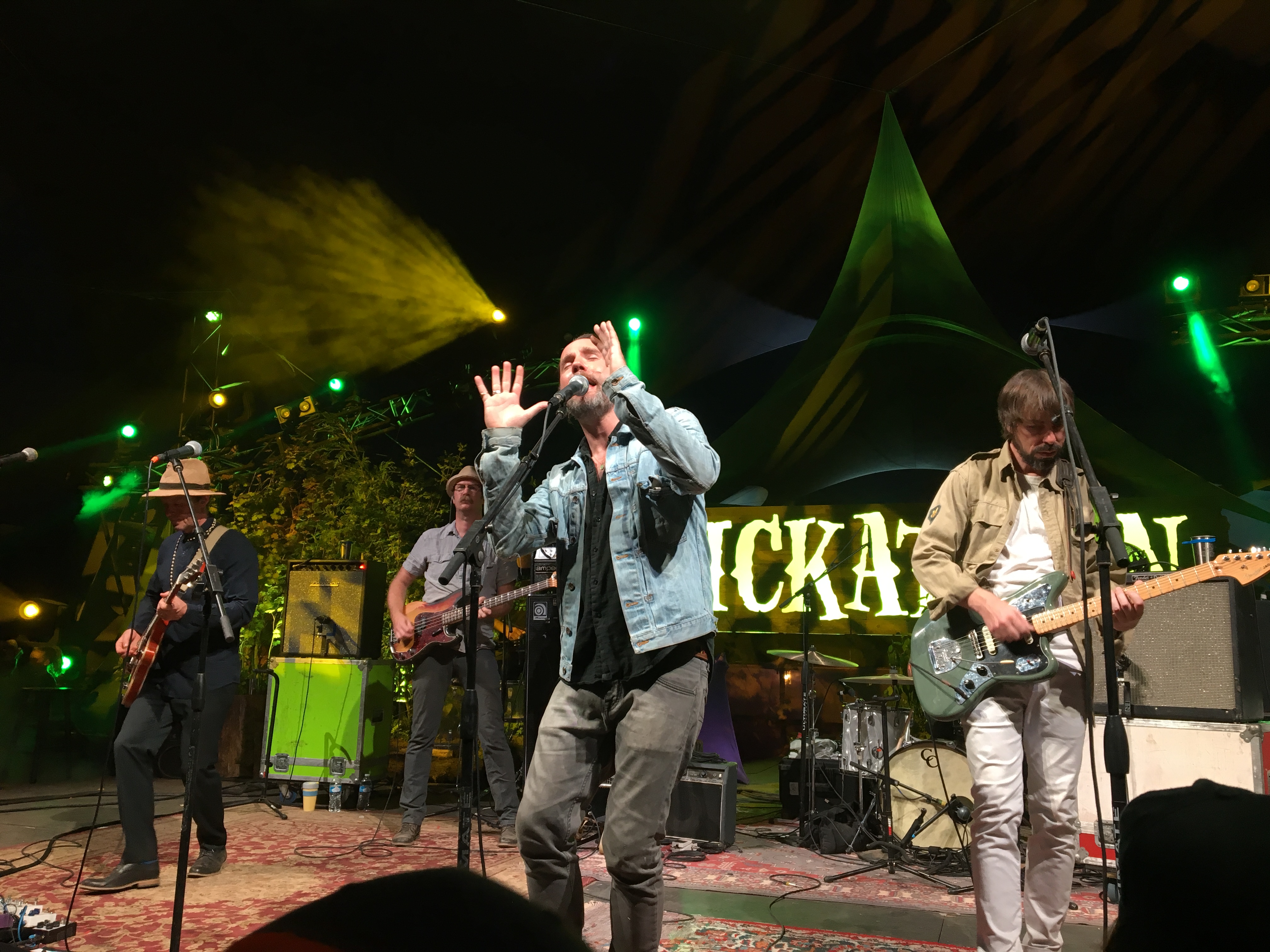
Closing out the Mt. Hood Stage for the 20-year celebration was a final performance from Broken Social Scene, who immediately dove into a bold performance of “KC Accidental” off of their 2003 debut, You Forgot It in People. The performance was accompanied by a trio of brass horns, honoring the bold sound of the recording. Constant tip-toeing of stage grips made it evident that the band was experiencing some minor technical setbacks. Amiable frontman Kevin Drew charmingly dismissed any hint of concern exclaiming, “we’ve been doing this for 18 years, and everything is always broken;” a cute nod to the band’s namesake, be it conscious or not. The band continued to treat loyal fans to beloved classics “Fire Eyed Boy” and “Texico Bitches” before performing lovesick anthem “Lover’s Spit,” fully romancing the audience into nostalgic graves.
We found ourselves wrapping up the weekend festivities with our first visit to the Galaxy Barn, where we stumbled with the motion of the pit, the crowd bouncing around to the sounds of Sheer Mag with an energy I couldn’t even pretend to exude. The Philly-based power-pop band charged up the crowd, who showed no signs of slowing down, navigated by boisterous femme powerhouse Tina Halladay, whose raspy howl provoked just the right amount of grit. The band tore through tracks off of their 2017 album, Need to Feel Your Love.
Hardly able to stand on two feet after a weekend of standing, dancing, trekking, and cramped camping, we decided to call it quits and take the pilgrimage back to our pitiful excuse for a campsite, nestling into the comfort of a weekend lived to its utmost potential.
We awoke in a scramble of melting body parts once more, acknowledging the clots of dirt collected in the backs of our throats; endearing souvenirs of the Pendarvis Farm and all of its organic purity. Somewhere between the unique sense of community and the relentless dedication to sustainability and discovery, visitors of Pickathon are instilled with an unforgettable sense of worth and belonging that no other festival has the capacity to deliver. These irreplaceable moments are what bring us back to the farm time after time. Being no stranger to Pickathon, I had known that its unique intimacy and irreplaceable sense of community was enough to pull me back for yet another year—and I’m not just talking amongst festival attendees; it’s more than likely that you’ll stand at sets of your favorite bands right beside members of your other favorite bands. It’s the sentiment in these warm and fuzzy interactions that carries myself and many other Portlanders through the grueling and relentless winters, awaiting the relief beneath the cloudlike canopies each first weekend of August, and this year was no exception. There most certainly is something in the water on the Pendarvis Farm.