This past Saturday, directly after the Dawgs secured yet another win, Jameson Tank took the stage at Paloma Park. Let me preface this review with a disclaimer: I turned 21 last Sunday, so this was my first game day where I could legally drink. How that influenced my experience of the show is up to you to decide.
With that out of the way, the show was fucking awesome. You knew they were either gonna be amazing or the worst thing you have ever heard from the moment they came on stage. The band’s eponymous frontman Jameson Tank (full name Jameson Tankersley), indistinguishable from the sea of frat boys in his Georgia jersey and athletic shorts, but for his shoulder-length straight hair, reminiscent of Gregg Allman during the Allman Brothers Band’s heyday, was front and center. Next came lead guitarist Bryce Burnette. Before I give you this man’s description, I want to tell you that I had just started drinking when I saw him and am confident my description is fair and accurate. That being said, this man looked like a Guitar Hero avatar come to life: red, cheetah-print motorcycle jacket, a mess of curly hair so long it obscured everything but his mouth, and a cigarette that I’m sure he smoked purely for aesthetic purposes. In contrast to Burnette is the band’s drummer, Conner Ankerich, who I can only describe as looking kind. He seemed like the golden retriever kind of frat boy rather than the rapey kind. Rounding out the foursome was Javier Solozardo on bass. He looked like a man who watched a lot of TikTok during quarantine and took note of what girls liked. Fluffy hair that seemed to float when he moved, painted nails, a patterned, short-sleeve button-up shirt, well-groomed beard, and a single gold earring for good measure.
Before Jameson Tank played a single note, I could tell Tankersley was well versed in how to work a crowd. He looked at the mass of day drunk UGA fans and instantly saw the best way to get them on his side: Call home the dawgs. The familiar chant, with its closing bark, instantly connected the crowd to him and set the basis for an amazing performance.
They kicked off their set with some classic rock with Queen’s “Fat Bottom Girls” and Ozzy Ozborne’s “Crazy Train” before starting their run of early 2000s tunes with a cover of TheRed Hot Chili Pepper’s “Scar Tissue” that has every white male in a golf shirt (which made up well over half the crowd) eating out of their palms. Throughout the night they covered a wide range of songs from SmashMouth’s “Allstar” to Olivia Rodrigo’s “good 4 u.” What all these songs had in common was that almost everyone knew the lyrics and could sing along.
They were also sure to intersperse two or three original songs throughout their set. I’ll be honest that man could have been reciting the Declaration of Independence into the microphone, and I would not have known. The combination of guitar, drums, bass, and Georgia fans ranging from tipsy to blackout effectively ended any chance I had at making out a word he was singing. However, I am optimistic it was catchy as hell because the music was amazing. It evoked a sense of the vinyl-era classic rock they’d been covering all night with a dash of early 00’s pop-punk that helped the song pack the extra punch needed to get the crowd jumping up and down to a song they’ve never heard, and if they’re anything like me, don’t know the name of.
I think the show was so enjoyable because every one of those boys knew what live music is about more than just the music. It is about how an artist can engage, excite, and energize the audience, and Jameson Tank was able to do just that. I started the show sitting at a table with a good view of the stage; four hours later (and yes, they played for four hours straight), my calves were sore from jumping up and down for the past 3 ½ hours with my voice strained and raspy from singing along. The group, particularly Tankersley, lacked the awkwardness I’ve found inherent in a lot of newer artists’ live performances. He was able to transition the band and the crowd from one song to the next without awkward pauses and, in doing so, kept the audience growing until I was being pushed by those trying to get closer (and to be honest doing a bit of light shoving myself). Overall, I had an absolute blast, which is exactly what I wanted from the show.
Listen to Jameson Tanks’ original music on Spotify or Apple Music, and be sure to catch them playing Warehouse on November 12.
Side note: Towards the end of their set Solozardo, who had only sung a song or two, provided lead vocals to the band’s cover of AC/DC’s “Thunderstruck” that literally caused my jaw to drop. I swear to god, the ghost, the very essence of Brian Johnson (who is very much alive) entered Solozardo while the rest of us chanted “thunder.” It was unreal. I feel we may have been bamboozled, and Solozardo was doing some very convincing lip-synching while Tankersley worked a boombox. That is the most logical explanation for what I heard. Well, that and that I had my first long island iced tea about thirty minutes prior.
Athens, GA-based CLOUDLAND has released their debut album Where We Meet, a multi-faceted exploration of the commonalities of the human experience. Written over the past year and a half, Where We Meet reassures listeners they are not alone.
The four-piece rock outfit composed of Zach King, Karmen Smith, Aidan Hill, and Hogan Heim has been releasing music steadily since 2017, but this album breaks the group’s typical record and release pattern. Where We Meet is the consequence of a year and a half of careful cultivation.
We asked CLOUDLAND to take us through each track on the album and give us further insight into the inspiration and writing process behind them.
Check out their track-by-track rundown below, and be sure to queue up the album to listen along.
Sunday Afternoon
As the album’s first track, “Sunday Afternoon” immediately offers longtime CLOUDLAND fans something different according to Heim. This track is truly autobiographical, telling the story of an actual Sunday afternoon call. “There was a two-week period in which my grandfather was diagnosed with cancer and my uncle sold both our family’s condominiums in Florida where my family had been going for 22 years. We spent most holidays here” says King. He recounts the difficulty the group had matching lyrics to the existing melody that would become “Sunday Afternoon”.
“I ended up just writing down everything that had happened: the line about the painting references an actual painting my uncle sent me that had hung in the condo for fifteen years. The phone call is the actual phone call in which I was told my grandfather was in pretty severe shape with colon cancer. It was this moment of balancing living in the present, but also acknowledging the importance of the past. You want to have those precious memories, but you can’t hold on to the past forever without losing the present. I don’t think the song has any resolution, I think it is more just a statement on life.” says King.
Overthinking
“We had the idea to write a song about overthinking a relationship for a while. The general concept was there and we all took a stab at it, yet the lyrics weren’t coming to us. Eventually, Zach was able to take the pieces that we had and performed some skilled mad libs to put it together,” says Heim. King remembers that “as a band, we were able to write the bones of the track. I went back and fiddled with the lyrics until we liked where it was at.”
“It’s a really straightforward song,” according to King. “There is no real personal experience behind it, rather it speaks to the universal experience of overthinking the complex nature of relationships.”
Where We Meet
The album’s eponymous track was written before the band had even decided to make an album according to Smith. “We wrote that at a church late at night and that was like the first official single. It was kind of a desperate night in terms of writing because we were just very frustrated with the ideas that had fallen flat. At the end of the night, we just decided to leave it to Zach’s vocals and Hogan’s guitar. In the past, all of our singles have just been really energetic and loud which is cool, but we wanted to do something different” says Smith.
“I struggle to open up unless it’s through my writing or I’m at rock-bottom. So this song was an opportunity for me to do that,” says King. “It was also about collectively realizing ‘okay you gotta fight for something.’ Just looking at love from a deeper standpoint than ‘oh I love this person’ or ‘you make me feel good.’ Because it’s not always like that, there’s some pain and some hardship involved. Commitment is worth fighting for and promising things even in the midst of hardship. The song was my way of telling my wife that I am committed to her and that I’ll fight for her.”
St. Elmo
“St. Elmo” is about bass player Aidan’s relationship with his significant other and him really opening up about what she means to him in this song,” says King on behalf of his missing band member. “They had just been on a trip to Chattanooga, and it is a really special place to them. We titled the track St. Elmo, a town just outside of Chattanooga, to honor the significance of that place in their relationship.”
“The funny thing is when we were trying to write one our first draft was just way too heavy. Karmen, Aiden, and I were just sitting there looking at it and we concluded that it was just way too much. We didn’t feel a listener could digest it despite the simplicity of the song. So we ended up scrapping it and wrote another song that night with completely different lyrics. Aiden just opened up about how he felt that she is the person who can hold him together. It is desperately saying that there are times when you are the only person in the world that can make me feel like I’m sane or loved and cared for.”
Lights
King recalls ‘Lights’ being a much lighter song than the latter. “When we finished that one we wanted it to be the kind of song people could just kind of sing along to. You don’t have to think about it nearly as much as say, digesting a personal struggle. In my mind, the song is meant to capture the feeling of driving with somebody by your side looking to have some fun.”
King also credits Heim for elevating the song musically: “I had this chord progression and then I brought it over to Hogan. He recommended doing the verses in 7/4 and the chorus in 4/4 to add this layer of complexity to it. Singing it is still hard. To this day I have a hard time singing the verses, which I like.”
King summarizes the song as one he “never gets tired of playing live. It’s an opportunity for anyone to sing along and embrace spending time with the people you love.”
Sunday Evening (Interlude)
Smith says “We went to our friend Tommy’s house and stayed up until 2 a.m. working on the interlude. We always go into a writing session with an idea, but somehow it always crumbles. The initial track was too much, and we simplified the whole thing because we didn’t want it to be too busy. Hogan and Tommy experimented with some weird guitar stuff and I played on their baby grand piano It ended up meshing together.”
Heim elaborates on the purpose of Sunday Evening believing it “set the tone for the rest of the album — particularly the following track, “Walking Away”. We wanted to use “Sunday Evening” to frame and seamlessly transition into “Walking Away”. We wrote it after the last four tracks were written, so we were able to compose with intention rather than trying to fit it back in.”
Walking Away
Heim had just gotten his second amp and a flanger pedal when he started writing “Walking Away”. With additional inspiration from The Police‘s records, Heim composed the beginning of the track before eagerly texting King to hear what he had.
King remembers Heim sending him a voice message with the chord progression and “just like that it was my favoritebeginning to any song we’ve ever made. Just tonally, in the way it sounds.”
King clearly had fond memories of recording the track; recalling how things “just kind of fell into place. We really didn’t have to work for that one. The funny thing is we worked with artist Alec Stanley here in Athens. From a recording standpoint, it was the first time I’ve felt that experimentation pushed outside our comfort zone. The track has some tighter guitar and drum tones that really elevated what was possible… we really owe that to him.”
“The music thankfully steps in and says more than we could,” says Smith. We didn’t write a bridge because we felt we had said everything already.”
Coming Back
“We didn’t even have lyrics to the song when we started discussing track placement. We just felt the progression sounded similar to “Walking Away”, but not in a bad way. Because of this, we decided to call it “Coming Back” in answer to “Walking Away”. The lyrics don’t contain the words “coming back” and I never fully understood the track until it was put into the context of the album. With “Walking Away” preceding it, the track fit thematically within the rest of the album,” says Heim.
King remembers the Nashville recording sessions. “I would procrastinate writing until the day of recording but found that working under pressure breathed some freshness into the writing. Particularly because a lot of these song meanings change for me when I’m in the studio versus when we are rehearsing together. It’s funny because I wrote the song about my relationship with God. I was at a point where I was genuinely wondering what I was doing, who I am, why I even believe in a creator, and that he is supposed to love me. Like these really heavy things. Only a week prior I had been sitting on my couch at 3 am and felt like I knew all those answers. I had known that I was loved and valued, yet completely shrugged it off. For me, that’s what “Coming Back” is about. It’s a recommitment to who I am and what I believe. But for a lot of people, it is a song about relationships — whether with a significant other, a relative, or even a friend.”
“A lot of people thought it was about my wife and me when I realized I do that with her too. I shrug something off or I won’t open up. Listeners drawing their own meaning from the track makes it something truly special.”
Restless
“We actually wrote “Restless” around two years ago and came back to it last Summer. Hogan essentially wrote the whole song and then we added the bridge. Essentially, the song had no lyrics for almost two years.”
Heim agrees adding that “A cool thing about “Restless” to me is that musically it was only the second song we had tried to write shortly after Aidan had joined the band. At that time, the band was firing on all cylinders, with Aidan rounding the rest of the band out. He really refined track into a state where the point gets across to listeners.”
King speaks to the lyrics saying “we were stuck until Hogan mentioned how cool it would be to swap perspectives between the verses and the chorus. So I just kind of ran with that. The perspective of the verse is young me and the chorus is me now telling my younger self what to do. But for anyone, it can be a reminder to slow down when you’re in the midst of existential concern.”
“The restlessness in the song speaks to this overarching idea of not being content with where you are,” King surmises.
Perfect Timing
Smith recalls the recording of “Perfect Timing” as “one of the most fun times recording and writing we’ve ever had.” He says the band “went up to Nashville to record as a snowstorm was approaching. So there was this looming feeling that we might get stuck there, which added excitement to the air. We were working with these two guys Ethan Standard and Blake Tallent; Blake’s an old friend of ours but we had never recorded with him. The lyrics were pretty cool because Zach wrote them sitting on the couch while we were busy doing drum and guitar takes… it just felt very natural.”
Heim agrees, “It was a super fun one because it was the first time I got to really flesh out all my ideas on the guitar with Blake, and Karmen did a similar thing on the drums. We all decided to give it what we got individually and see how it goes together without as much hands-on editing.”
“This song really helped us recognize how much trust we had in one another and how comfortable we became with trying out new things. This was a really fun song because our parts were separate but able to come together in a really cool way,” added King.
There have been times over the past year that I’ve felt like a parked car in the middle of the interstate. The world keeps moving forward, just as fast as before, but I’m stagnant. It’s a feeling I think is common among young adults during the pandemic. Their metamorphosis from child to adult was interrupted to return to childhood bedrooms, yet we are expected to come out of this time unaffected. Mary Margaret Cozart’s debut EP, Emerald City intimately explores this arrested development.
An Atlanta native, Cozart came to Athens, Georgia to study classical guitar and music business at the University of Georgia. Like the rest of us, when UGA’s campus shut down due to the COVID-19 pandemic Cozart retreated home. It was here, in the confines of her childhood bedroom that Cozart came full circle, writing songs in the same place she had begun years earlier. Emerald City, Cozart’s debut five-track EP was released today, now available for purchase on Bandcamp and streaming platforms. The EP is intended to “address facets of the pandemic crisis and draw parallels to the Wizard of Oz.”
To be frank, the parallels to the Wizard of Oz are vague at best. Listening to the tracks searching for parallels to the film left me with a headache and questioning my position as a Judy Garland stan. However, once I dropped the search for deeper meaning I found it almost immediately.
Wake up, silly boy, you can’t hide away forever
You know what you’ve got to do
I know you’ve struck out maybe more than the next
But that’s no reason not to pick up where you left.
If I’m a parked car on the interstate, “Like You Should” speaks to the cacophony of honking horns demanding I move. Cozart’s melodic voice seems to address the listener directly, offering both understanding and encouragement to find the strength to reclaim our lives after this forced hiatus.
Fans of Madison Cunningham, Sara Watkins and Faye Webster can find understanding in Cozart’s silvery voice and skilled guitar as we come to terms with who we are and how we’ve changed over the course of the last year. As someone who relies on artists to convey the feelings I am incapable to name, I look forward to seeing what deeply personal, yet universal message Cozart captures next.
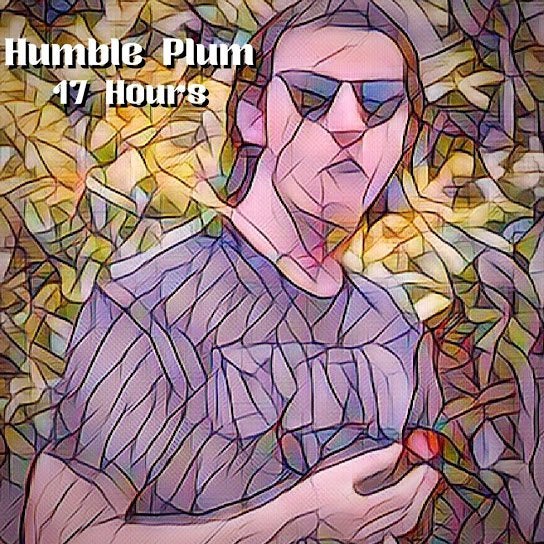
Athens, GA-based Humble Plum’s debut album, Seventeen Hours, out now. Humble Plum is composed of Daniel Hardin John Ilardi and Josh Johnston. Ilardi and Johnston are students in UGA’s music business program, affectionately monikered as MBUS, and Hardin graduated the program in 2020. Childhood friends Hardin and Ilardi reconnected at UGA and brought Johnston into their fold.
The album title, Seventeen hours, refers to the 17 hours in which the group wrote, recorded, mixed, and mastered the album. When Hardin first suggested the idea Johnston kindly told him to get some sleep. The next morning, still adamant, Hardin quickly got Johnston and Ilardi on board. “We just wanted to see if we could do it,” said Johnston.
The rules were simple: The album had to be completed in one day and absolutely no thought or planning could take place prior to the day the group had set aside to make this album. The group “didn’t think anyone would listen” to Seventeen Hours, they just made it for the fun of creating music together. The result is joyful chaos. The album feels raw and personal in a completely new way.
We asked Humble Plum to take us through each track on the album and give us further insight into the making of Seventeen Hours.
Check out their track-by-track rundown below, and be sure to queue up the album stream below.
Johnny
Starting with a guitar riff, Hardin penned some lyrics about his friend and bandmate John who “has a really nice car and is always down to jam.” The first song on the album, “Johnny” was written and recorded between 7 a.m and 9 a.m and then forgotten until putting the final album together.
Hey Jere!
Johnston really wanted to make a Jere Morehead diss track and a punk track. Both wishes were met with “Hey Jere!” The track gave current students Ilardi and Johnston an opportunity to air their grievances with the president of UGA on the university’s handling of COVID-19. Lyrics include gems like “I can’t go to the beach, but I can go to a game? Why don’t you learn to spell your own name?”
Is That A Bee?
In a jarring transition from “Hey Jere!”, “Is That A Bee” is a mellow reggae track that questions Jerry Seinfield on why he ended Seinfield and made the Bee Movie. The track’s composition started with an off-beat guitar and reggae drums inspired by Sting’s “Englishman In New York.” Hardin wrote the lyrics in 10 minutes “on pure instinct.”
Rest in P-Bass
A somber addition to the album, “Rest in P-Bass” was a collaborative effort about a bass guitar Johnston sold and missed dearly. The song utilizes a mandocello, which is a baritone mandolin that adds to the tracks depth. The humor in writing a song about a bass with the same level of sincerity as a break-up ballad is not lost on the trio. “There is definitely an element of funny in the sad,” said Johnston. “It’s overly dramatic for sure.”
Intermissionary Funk
“Intermissionary Funk” forgoes lyrics to let the track’s instrumentals shine. The first of two instrumental tracks on the album, “Intermissionary Funk” harkens back to the funk-rock backings popular in the early ’70s. While Hardin’s drums and Johnston’s bass ground the track, the guitar is what makes the track noteworthy. In a unique approach, Hardin, Johnston, and Ilardi took turns playing guitar adding the slightest variety to the tracks uniting riff.
Mother Russia
Johnston lived in Bulgaria for five years, which has become quite the joke among the friends and was the impetus for Johnston to write “Mother Russia.” The instrumentals for the song are “basically the Tetris song” according to Johnston. Interestingly, the theme to Nintendo’s 1989 video game actually started its life as a 19th century Russian folk song “Korobeiniki.” The song was recorded using a 1969 Soviet Union microphone. “It sounds like you’re yelling in a bread line,” says Hardin. Ilardi describes the mics effect as “aggressive” which is why they also used it on the track “Hey Jere!” The song was recorded in one take with Ilardi holding the mic up to Johnston, turning red with suppressed laughter. Hardin calls the track “a glorious tune.”
2nd Best Friend
“We all have that friend we like, but also find them annoying,” said Ilardi when asked about the concept of “2nd Best Friend.” It’s about your back-up friend. The song was inspired by Flight of The Conchords “Most Beautiful Girl in the Room” taking the song’s concept of calling someone “the most beautiful girl,” but qualifying it with “in the room. Humble Plum does something similar by qualifying “best friend” with “2nd” making the track kind of mean, but very relatable.
Thank You Caledonia
“It’s the sad one on the album,” said Hardin in reference to “Thank You Caledonia” Humble Plum’s ode to the iconic Athens music venue. Ironically enough, when the group decided to write about Caledonia, they thought they were going to make another funny song. It is when the group started actually writing the song and reflecting on what the loss of Caledonia meant to them that the song turned into the heart wrenching goodbye heard on the album.
Siri
The guitar for “Siri” was written at 7 a.m and put aside for about 12 hours when the band started building the rest of the song. Hardin developed the drums taking inspiration from Cloudland drummer Karmen Smith. “We wanted a song people could jump to,” said Ilardi, and “Siri” is just that. The track’s title comes from the lyrics which the group wrote using predictive type making the song completely incomprehensible.
The Mighty Oconee
The second instrumental track and final album track is “The Mighty Oconee” a joke because as Johnston explains “the Oconee is anything but mighty.” The track has an Americana vibe produced by the layering of various string instruments including banjo, mandolin, and mandocello.