
Category: Music Reviews
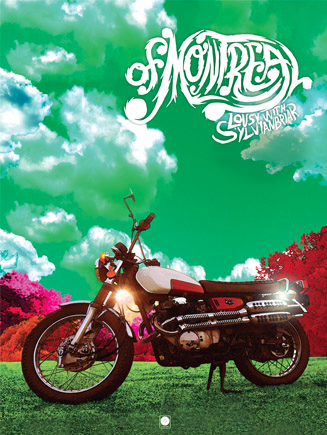
REVIEW: of Montreal premiere first single off new album
of Montreal is the kind of band that wanders in and out of its time. At the height of fame for Kevin Barnes and crew, around the Hissing Fauna era, their sound was modern and fresh. By Paralytic Stalks, the band propelled into the future, prompting the loss of a few unprepared fans.
With the release of the single “fugitive air”, we expect that lousy with sylvianbriar – to be released October 8 – will force the listener into a time machine set to the 1960s. It’s even apparent in the album art, a psychedelic swirl of intense colors and type.
As much as we hate to make this cliché reference, it’s impossible not to hear the Beatles in this tune. The opening guitar riff screams Harrison, while the sweet ooh-ahhs at the chorus harken back to McCartney. And, much like a Lennon signature, the track feels entirely lyric-driven. This retro sound is no surprise though, considering of Montreal ditched digital embellishments in favor of a 24-track tape machine.
That’s not to say that today’s listener won’t adore this single, and, ultimately, lousy with sylvianbriar in its entirety. In fact, the track fits comfortably into 2013, considering the rise of surf-punk bands like Wavves, FIDLAR, and Bass Drum of Death. Finally, it seems, the past, present, and future have collided for of Montreal.
P.S. Pre-orders available NOW HERE!

REVIEW: Look Alive’s ‘Mistakes and Milestones’
Look Alive, an up-and-coming band straight out of Atlanta, Georgia, is kind of like a manifestation of all of your favorite pop-punk bands from 2004. Intrigued? Well, rightfully so. These guys have been at it in some form or fashion for over 10 years now, and now the time has come for them to release their latest EP, Mistakes and Milestones, via Autumn + Color Records. Luckily, we got a little preview of the album; indulge in our thoughts:
The album’s intro, “Transitions”, essentially sets the theme for the EP in just 50 seconds. The album then jumps into the second track, “Anchored”, which is an ode to the bad break-up that we all have been through at least once in our lives. Singer Jacob Causey’s aggressive vocals pair nicely with the direct lyrics and definitely strike a nostalgia chord for earlier pop-punk enthusiasts.
“Sink or Swim” is the third track on the album, and by this point, a clear pattern in song placement has been formed. The album takes you through all of the emotions you inevitably go through in the throes of failed relationships, with “Sink or Swim” expressing the stage of self-loathing and reflection, heard loud in clear with the focal point of the song, “Don’t let me hear your say I’m just some castaway sailing out towards the nothing I became”.
Track 4, “The Way I see It”, continues to follow suit with the reflective process- you know, that moment when you realize it’s time to live your life yourself without reservation? That what this one’s about- that glorious realization that no ones opinion is going to deflect you from your dreams.
By Track 5, you’ve reached the song “Farewell” (may be my personal favorite). There’s a bitter tone to Causey’s lyrics, and the energy is slowed down just enough to give it the dramatic edge over the rest of the album. “You are reckless, and I’ve accepted this”- Hold tight listeners, because at this point we have reached acceptance, and what a glorious feeling that is.
Look Alive closes the EP with the track “Over Under”- the end of an era of sorts, moving forward is the name of the game with this track.
Bravo, Look Alive – you have taken us through a realistic depiction of the emotional rollercoaster ride relationships and life will throw your way. Furthermore, bravo for making a fan out of all of us at Vinyl Mag. Be sure to check out Mistakes and Milestones when it drops July 2nd .
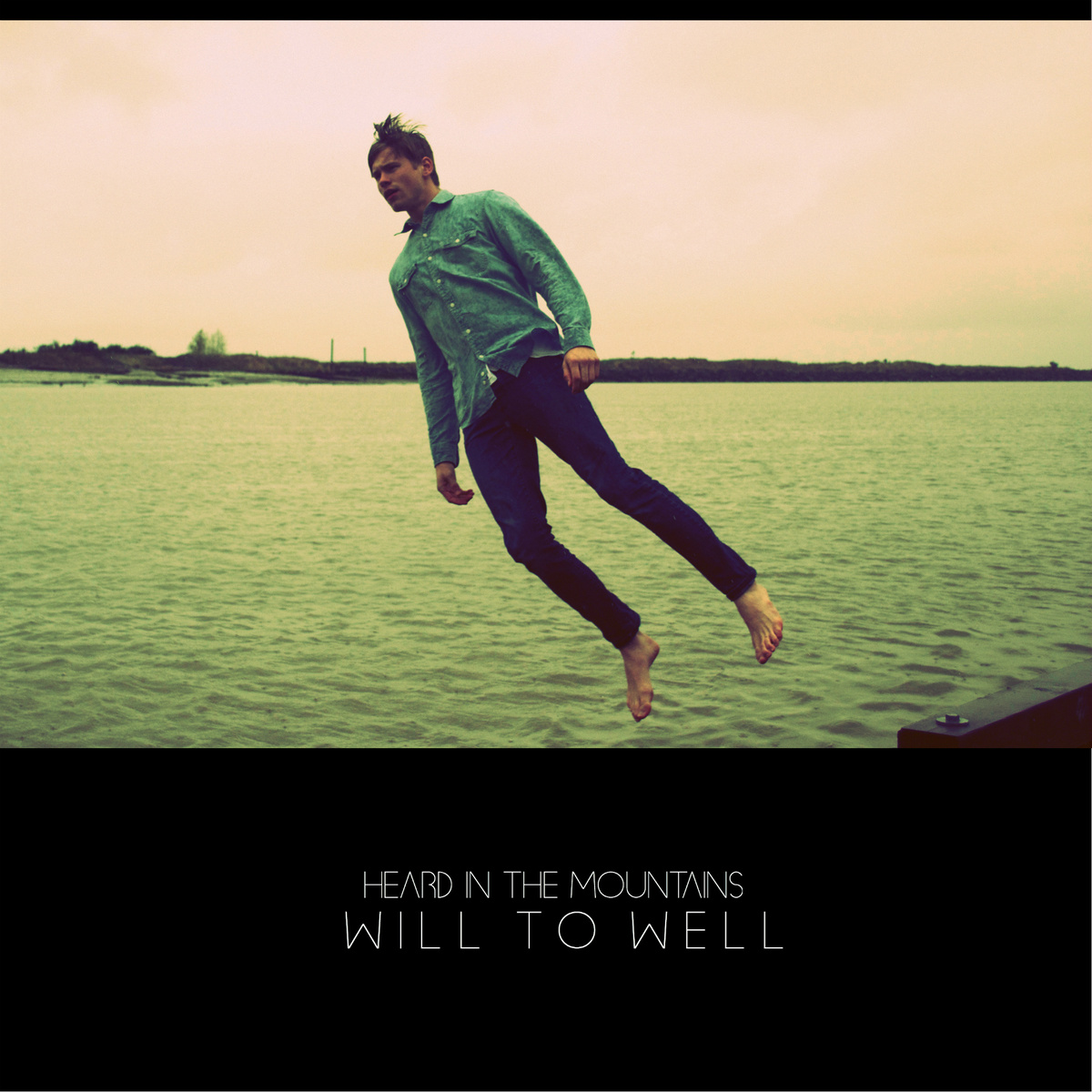
REVIEW: Heard In The Mountains’ Will To Well
In 2011, Vancouver-based band Heard In The Mountains got together and began shattering the windows of a local church – metaphorically speaking, that is. As their casual jam sessions began to morph into the beginnings of an actual band, their sound transformed into a rock-meets-pop-meets-indie powerhouse, and frankly, we’re surprised they didn’t blow that church’s roof clear into the night. Take a listen to their debut EP, Will To Well, and you’ll see what we mean.
The EP’s first track, “Sills”, is undeniably reminiscent of Fleet Foxes, but only for a moment. Mitchell Walford’s delicate, beautiful piano opens up the track, but quickly ushers the listener into an intense, slightly electronic moment. This provocative pattern continues for the entirety of the song, and through it all, we are swept up by Walford’s irrefutably sweet voice, feeling every high and low he hits. “Raccoon Hands” shows another dimension of the band’s sound. Walford’s vocals are paired with those of guitarist Daniel Baxter, and the effect is irresistible. What really perfects this song, though, are its lyrics. For example: “Memories, like bricks, to my feet, become tied, down into oceans you like to call eyes.” Convinced yet?
“Major Change” truly allows the fivesome’s synth-pop influences to shine through. But while other acts allow such genres to overpower their sound, Heard In The Mountains layers the track with whimsical, simple indie-rock instrumentals and a theme we can all relate to: the onset of massive changes in our lives. All of these elements are perfectly crafted to inspire and enlighten the listener. Will To Well’s final track, “In The Meadow”, concludes the album in the most natural of ways, both literally and figuratively. We are reminded once again of the group’s knack for alternating between slow and fast, soft and loud, exclusively indie to powerfully pop-y. And herein is where this band’s potential lies. An uncanny ability to appeal to every set of ears time and again could take them from the pews of a tiny church to the world’s largest stages.

REVIEW: “Palm Reader” by Sonny and the Sunsets
Sonny and the Sunsets’ follow-up to Longtime Companion is entitled Antenna to the Afterworld, and like many indie artists to go before them, Sonny Smith and his band are ripe to tackle death and its aftermath. The band suffered the loss of a close friend, and that tragic experience has led them produce songs like “Palm Reader,” a light ditty about reading palms and impending death. The production on this song is top-notch with its sharp, analog synths and country-western electric guitars. The song kicks off with the low-register twang of the main guitar riff, and that riff continues for the majority of the song. Smith’s vocal track is the only component that really misses the mark in the song, with such bland lines as “Every year, they say the end is near/ But we’re still here.” His voice is too jarring amidst the warmth of the instrumental tracks, and his lyrics rest awkwardly between the quirk of Syd Barret and the heart of Phosphorescent. The song is whimsical and is not meant to erupt at any point, but it never seems to find its way.
7/10

REVIEW: Lemuria’s “Oahu, Hawaii”
Buffalo, New York’s own Lemuria is dropping their newest album The Distance Is So Big on June 18th, but prefacing that date, they have decided to release a few sneak-peaks from the album- the most recent being “Oahu, Hawaii”. Upon pressing play, I noticed Lemuria had strayed from the norm in certain aspects, but in other respects you still find the deadline Lemuria traits, such as the dramatic 15-second build to really get you amped on what your ears are in for. Alex Kerns takes on the lyrical lead for the song but is quickly met with Sheena’s bubblegum melodies.
In a recent interview [Vinyl Mag] conducted with Lemuria, Sheena spoke of Alex as a “man of many words”- this song being no different. That concept alone, paired with strategic lyrical repetition, make for the basis of almost the entire song. If you were already a fan though, the magnitude of their simplicity is probably something you’ve already come to love. As far as the intensity goes, “Oahu, Hawaii” tends to ricochet back in forth between about a 3 and 5- but don’t be fooled, these guys definitely have it in them (and will probably release that energy elsewhere in the album). It’s clear, though, that this song in particular holds a lot of meaning to the members, having named the album from a direct lyric in this song. Have a listen for yourself here, and be sure to check out the new album when it drops.
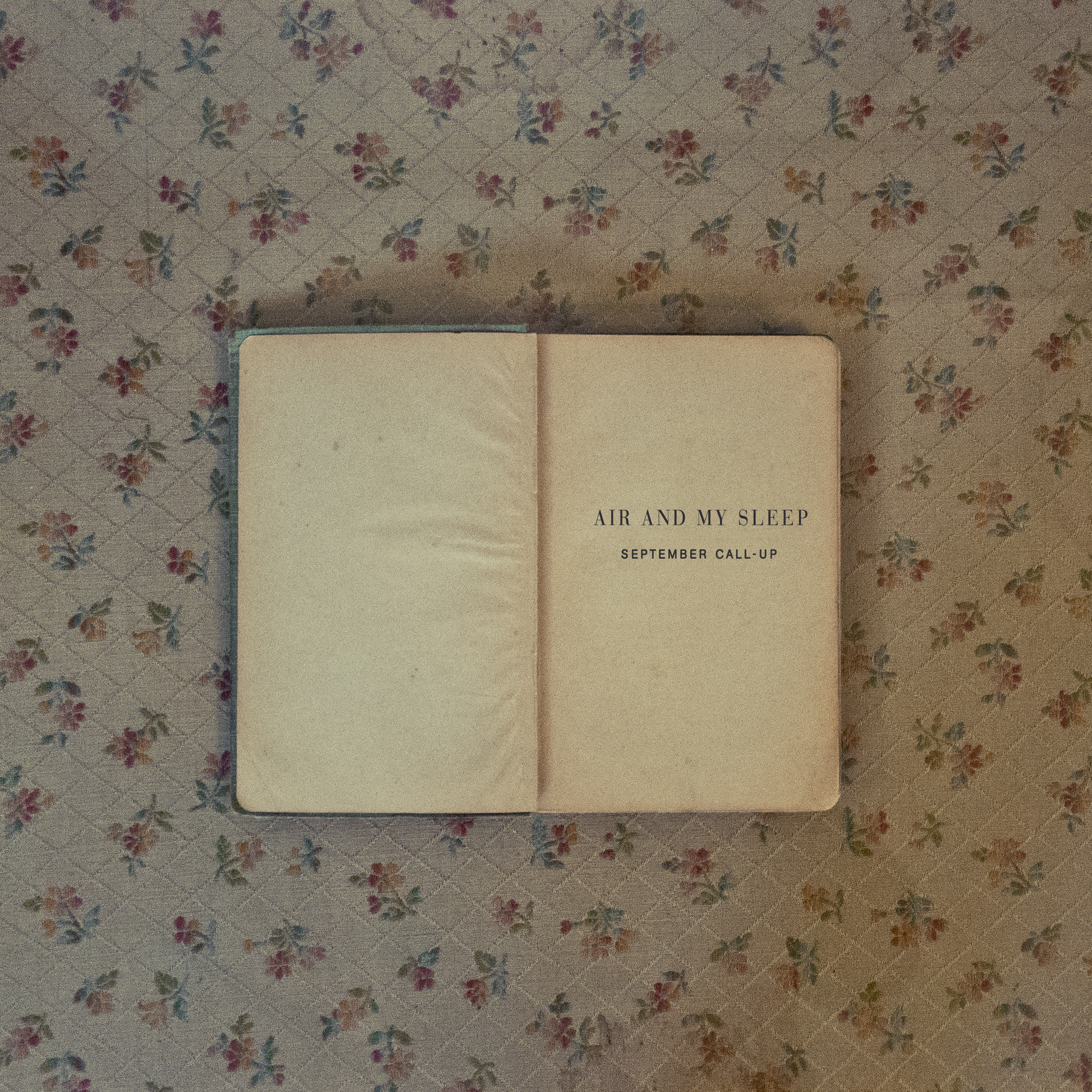
REVIEW: September Call-Up’s Air And My Sleep
Christian Bitto, singer of the September Call-Up, is a lot like Leonardo da Vinci. How, you might ask? Quite simply, Bitto is a Renaissance Man of vocals, a jack-of-all-moods, you might say. From first track to last on his album with drummer Jesse Gimbel, Air And My Sleep, Bitto switches constantly and effortlessly from a soft, near whisper to a powerful shout, before retreating back into a passionate warble. Such a truly textural range is the focal point of this otherwise very calm, smooth indie record.
Its first track, “Negative Film”, is exemplary of the EP’s depth. As Bitto utters, “Gave you my word, it wasn’t worth a spit. Gave you a kiss, it tasted like shit,” the song has a very Ryan Adams, alt-country feel to it. Before you can even process that comparison, though, Bitto becomes a 2013 version of Michael Stipe, his voice loud and all-consuming through the chorus.
“Our First Fall” is a song everyone needs at some point in his or her life, for a lonely, heartbroken kind of night. Bitto’s cloud-soft voice paired with very angry, tearful lyrics sweeps you into a storm of emotions you can relate to. “Song No. 3” is probably our favorite on the EP, and is equally heart wrenching. Comparing Bitto’s vocals to that of Conor Oberst is inevitable, and only makes the track tug at your chest more.
Toward the end of the album, a sense of nostalgia begins to emerge, especially on “Burnt Orange”, a very pretty track about love come and gone. “Ghost” is a surprisingly upbeat tune instrumentally, raising the tempo of the album before a pleasant crash into Air’s final track, “9”. The September Call-Up couldn’t have chosen a more perfect track to conclude their album – it’s sensitive, dreamy, and thought provoking. And after listening to the record, you see that the duo’s intention, all along, was to get listeners thinking. Job well done.
Air And My Sleep is due out June 25 through Wissahickon Records.
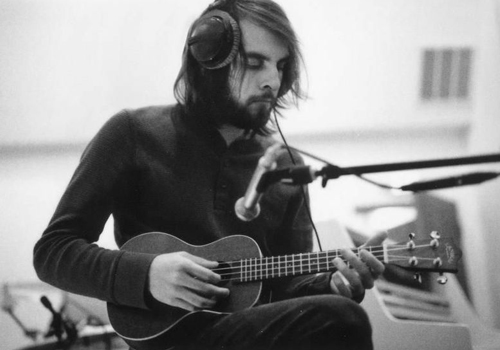
REVIEW: Valaska’s Natural Habitat
With the warm, lazy summer months ahead, what could be better than a pensive indie album with fantastic acoustic instrumentals? Enter Valaska’s new album, Natural Habitat. The brain-child of Chicago native Dave Valdez, this record will uplift you with its often cheery acoustic guitar, then force you into a state of reflection with its unabashedly meaningful lyrics.
Produced by Copeland frontman Aaron Marsh, the album is clearly the result of much introspection and a complete turnaround in musical style – Natural Habitat is far more raw and thought-provoking than Valdez’s 2010 EP. Also notable is how influenced Valdez obviously is by acts as diverse as Elliott Smith, Bright Eyes, Iron & Wine, and Of Monsters and Men. This mash-up, whether Valdez is conscious of it or not, gives the listener a positively chilling indie experience.
The Elliott influence is apparent – and incredibly poignant – from the first track, “On the Surface”. Vocal layering and an emotional acoustic guitar pave the way for the song’s insightful take on man’s tendency to only scratch the surface of things. The record ironically picks up a bit with “Spanish Needles”, a tune entirely about the inevitability of death. Another favorite is “Golden Age”, a track that reveals Valdez’s experience touring with pop rock bands for a large chunk of his life – it’s undeniably catchy, even sweet, whisking us away to a different time and place.
By “Wildfire”, we’re hooked. The song presents a situation that everyone is familiar with: the promising nature of a fresh relationship, but also the care involved in seeing someone new. The title track, toward the end of the album, provides a comprehensive summary of Natural Habitat and Valdez’s new musical direction. It’s all about being alone, thinking everything through, and the array of emotions that coincide with that experience. Raw and whimsical, the track helps to wrap up the album in a beautiful little bow.

REVIEW: Deadstring Brothers’ Cannery Row
Close your eyes and envision this: members from Ryan Adams’ The Cardinals, Willie Nelson’s band, Whitey Morgan and the 78s, and Poco get together to make an album. You’re probably drooling by now, right? Now, open your eyes, grab your keys, and go out and buy Deadstring Brothers’ newest album, Cannery Row. You’re welcome.
From the very first track, “Like A California Wildfire”, frontman Kurt Marschke’s voice paired with some very alt-country instrumentals draw undeniable comparisons to the Rolling Stones circa Exile On Main Street. Yeah, heavy compliment, but this is one group that’s earned it – by the time you get to the album’s title track, you’re hooked. “Cannery Row” is a slow, mournful tune that reveals Ryan Adams backbone whilst keeping a very “Wild Horses”, Rolling Stones sound. The female vocals really make this track pop, though – they’re a much-needed calm before the fun, danceable, country storm that is “Lucille’s Honky Tonk”. Trust us, you’ll suddenly feel like you’re in a saloon in the old west as you move and step to “I can hear her when she sings, and the beauty that it brings. Yeah, we’re swinging down at Lucille’s Honky Tonk.”
As you approach the end of Cannery Row, you’ll be struck by how White Stripes-esque “Talkin’ To A Man In Montana” sounds instrumentally. It’s the perfect hit of country rock as the female vocals return once again to add dimension to the song. The record ends with “Song For Bobbie Jo”, a measured yet complex ballad in which Marschke croons, “I’m comin’ home for good, I’m comin’ down like no one ever should,” before escalating to nearly yelling, “You know, there’s times when I might need a friend.”
Cannery Row shares its title with a 1945 John Steinbeck novel set in California. Why is this even relevant? Well, yes, the album and the novel are both reminiscent of a very country-influenced era and region. More notable, though, is that, like Steinbeck’s novel, this Deadstring Brothers masterpiece will be put down in the books as irrefutably timeless.

Review: Luke Winslow-King’s ‘The Coming Tide’

Thank God for Luke Winslow-King. In a musical era in which simple beats and perverse lyrics reign supreme, and enjoying quality music puts you in the minority, Winslow-King brings back a feeling long forgotten: the way your hips can’t help but sway in an almost instinctive way when early 20th century jazz blares from your speakers.
This pretty-boy moved to New Orleans by chance in 2001, a fact that is quite tangible when you listen to his newest release, The Coming Tide. Jazz, Delta blues, Southern gospel, and folk collide in this 11-track masterpiece, which combines both earth-shaking LWK originals and creatively reworked covers.
The first track on the album, “The Coming Tide”, ardently displays Winslow-King’s talent in working with an undeniably gospel slide guitar. In addition, fellow singer Esther Rose’s harmonies add the final, perfecting touch to the track and the rest of the album – it’s as if you don’t even realize the music is missing something until her Lucinda Williams-esque voice leaks into the mix. “Let ‘em Talk” is another of our favorites. The sweet, melodious trumpets are the ideal contrast to LWK’s defiant words: “Let ‘em talk, I don’t mind. Don’t make a difference to me.”
You can almost taste Winslow-King’s and Rose’s affection for New Orleans in the Ida Cox cover, “I’ve Got the Blues for Rampart Street” – it’s an homage to their beloved town in both lyrics and musical style, from start to finish. Just a few tracks later, we hear the duo’s soft, breezy take on love with “I Know She’ll Do Right By Me”. Listeners are immediately transported to a more classically romantic era as Winslow-King croons about his favorite girl, who is “so fair, treats me right, she gets home by the end of the night.”
The Coming Tide concludes valiantly with a cover of the 1960s track made famous by George Harrison, “I’ve Got My Mind Set On You”. It’s classic yet entirely reworked and inspired, much like Luke Winslow-King as a musical force.
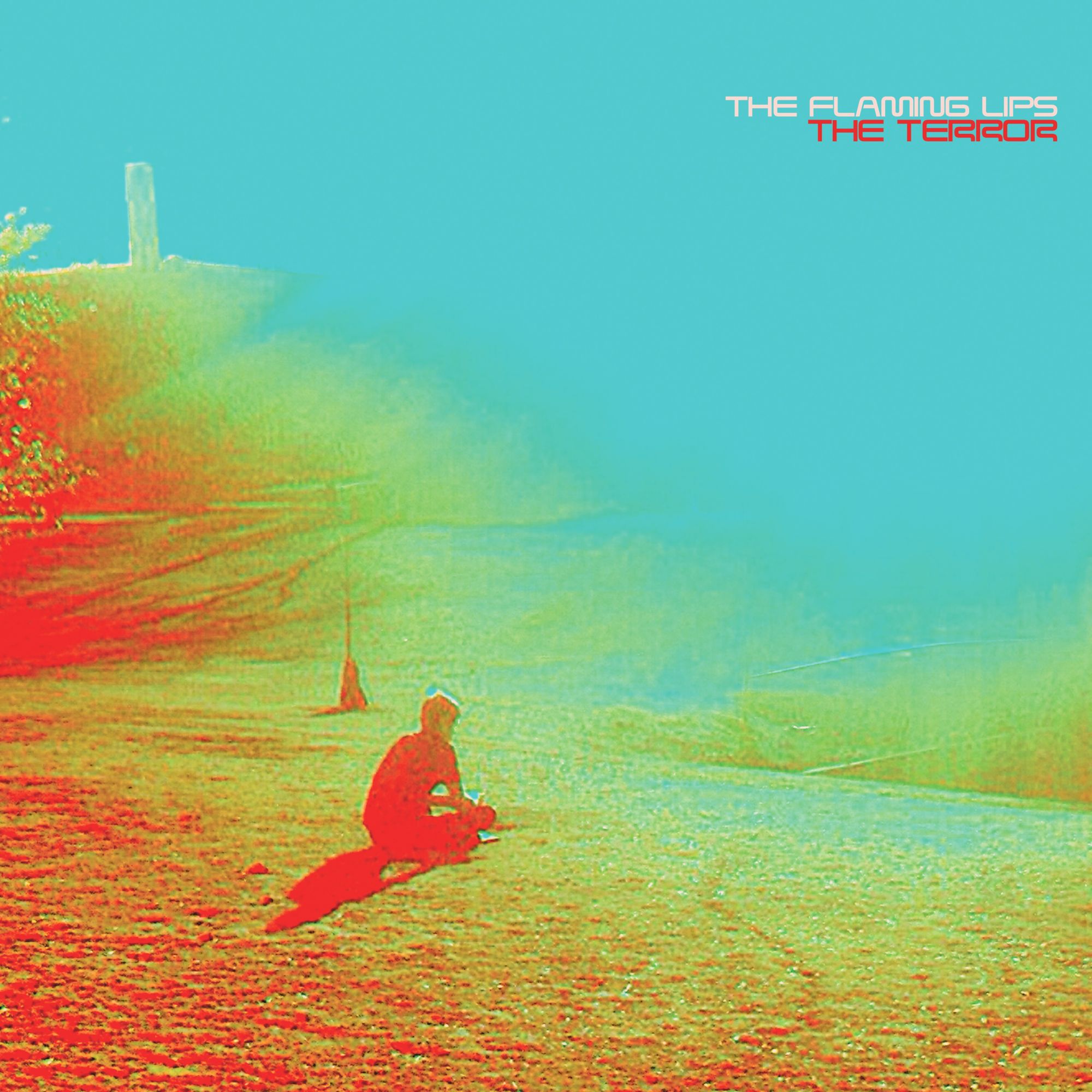
REVIEW: The Flaming Lips’ The Terror
When the Flaming Lips released In a Priest Driven Ambulance, I was a trembling fetus nestled in my mother’s womb. When I was nine, the band was radiating mainstream attention, but I didn’t know because no exceptionally cool third-grader brought The Soft Bulletin to show-and-tell. And when I was 12, Yoshimi was battling the pink robots while I was battling… well, puberty.
It’s been thirty years since the band’s inception, and it never occurred to me that the Flaming Lips are getting old.
And how could it? Last year the Flaming Lips’ collaborative album, Heady Fwends was one of my 2012 favorites. In 2009, both Embryonic and the covers of The Dark Side of the Moon completely changed my perception of the Flaming Lips by rocketing out of pop and floating into an experimentally psychedelic galaxy of psychosis. Seeing them live at Piedmont Park in 2012 was an even more electrifying experience than seeing them live at Bonnaroo in 2007. Chronologically, everything they’ve done has been an acclaimed next step in a new direction— so when Wayne Coyne described the upcoming album as heroin new wave at a funeral for aliens, I was ready for abduction.
But during the slow wait for their upcoming album, The Terror, the Flaming Lips were featured in a Hyundai Super Bowl commercial, and hit me. “They’ve passed their peak,” I thought to myself. “The Flaming Lips are on the downward slope of their musical career.” They were selling something to us on a commercial, and it wasn’t even theirs— and it wasn’t even art. The self-proclaimed freaks were trying to sell us a car? I couldn’t fathom it, and betrayal is a bitter drug.
But it wasn’t just the fact that they were selling Hyundai. The irritatingly peachy song they used for it was a perfect fit for a car commercial— it’s the equivalent to Robin Sparkles’ “Let’s Go to the Mall” covered by indie-headaches, Passion Pit or Vampire Weekend. “Sun Blows Up Today” is definitely the most uncharacteristic Flaming Lips song ever recorded. My face contorted with grief as I saw a sneak peek of the commercial online, and with disgust as I saw it like millions of others on the television screen. As a follower who once went full freak-out during a fleeting interaction with Wayne Coyne, I was writing off the Flaming Lips.
But as any true fan, I couldn’t stay away. I couldn’t actually write off an album I was so recently certain would blow my mind into cosmic explosion. No, of course I jumped to listen to The Terror as soon as I could. It’s Flaming Lips!
And I’ve gotta say it. Even though I don’t agree with the commercial, I also can’t say it directly affects the quality of their music. Sure, “Sun Blows Up Today” might be as excruciating to endure as the sun actually blowing up, but guess what— it’s a digital-only bonus track that sounds nothing like the rest of the album. We can handle this, we can disregard it, we can delete. The commercial-ridden track, as well as any low expectation you have for The Terror, can and should be dissolved.
That being said, The Terror isn’t the best Flaming Lips album, or the second or the third. What The Terror is, however, is a total eclipse of Flaming Lips ideology.
It’s almost like NASA told the Flaming Lips that they could finally live in outer space, but that each member must travel in their own separate spaceship. And after each member is launched into the cold, dark blanket of stars and mystery, the Flaming Lips simultaneously realize in a sudden state of agoraphobia that space-travel isn’t what they had expected. Instead, while hyperventilating into their spacesuits, the Flaming Lips become painfully aware that that life in space is like an eerie post-death experience of existence in an abyss.
The Terror takes fans in a totally different direction than previous Flaming Lips albums. With its seamless structure, it both absorbs and isolates in an atmospheric experience that somehow soothes yet scares, and makes the listener completely aware of silence.
In other words, The Terror is pretty close to a parallel of Radiohead’s Kid A.
Kid A begins with the sorrowful “Everything In It’s Right Place,” balancing chaotic alien-like background noises against a slow rhythm. The Terror begins with “Look… The Sun Is Rising”’s high frequencies, glitches, and smooth, echoing human vocals.
Where “Everything In It’s Right Place” feeds into “Kid A,”’s robotic lullaby of mechanical vocals, “Look… The Sun Is Rising” also leads into the hollow-sounding “Be Free, A Way” filled with cherub lingering vocals against short repetitive chops like a helicopter propeller.
Kid A peaks as “Kid A” becomes the sonic-storm of “The National Anthem,” while “Be Free, A Way” extends its likeness into “Try To Explain,” which then becomes the thirteen-minute peaking “You Lust,” spaciously spitting vocals repeating “Lust to succeed” between creepy, paranormal ringing-sounds.
“The National Anthem” then recovers into the most isolated and serene tracks, “How To Disappear Completely” and “Treefingers,” while “You Lust” spills into the most remote-sounding track, “The Terror” and then the schizophrenic “You Are Alone.”
Kid A picks back up after “Treefingers” with the The Bends-reminiscent “Optimistic,” and on The Terror with the higher-energy “Butterfly (How Long It Takes To Die),” similar to the tracks off Embryonic.
“Optimistic” then becomes “In Limbo,” which drowns the listener with waves of haunting harmony and vocals repeating “you’re living in a fantasy,” and then into the more electronic kick of “Idioteque.” On The Terror, “Butterfly (How Long It Takes To Die)” becomes “Turning Violent,” which hypnotizes the listener with distant vocals and close shaky, industrial sounds.
Closing in on the album, “Idioteque” transitions into “Morning Bell,” which repeats “cut the kids in half,” and into the melancholy dream-like, “Motion Picture Soundtrack.” Meanwhile, “Turning Violent” becomes the almost chanting, nightmare-like “Always There… In Our Hearts.”
Kid A ends in minutes of silence, while The Terror ends with a moment of echoing feedback.
Wayne Coyne may have said that The Terror is like a funeral for aliens, but I disagree. Kid A is more like a funeral for aliens, but taking place on Earth. The Terror is more like a funeral for humans, but taking place in space— mourning their own lives lost in a vacuum.
Outside of that vacuum and despite the commercial, The Terror echoes that the Flaming Lips haven’t begun the downward slope. Instead, they’ve embarked on a haunting and sorrowful journey that I can only imagine depressed astronaut Elton John would completely empathize with. It’s lonely out in space, man.