
Tag: artist to watch
Warning: Attempt to read property "post_id" on null in /dom375187/wp-content/plugins/enhanced-category-pages/classes/ecp/Enhanced_Category.php on line 143
Warning: Undefined array key 0 in /dom375187/wp-content/plugins/enhanced-category-pages/classes/ecp/Enhanced_Category.php on line 232
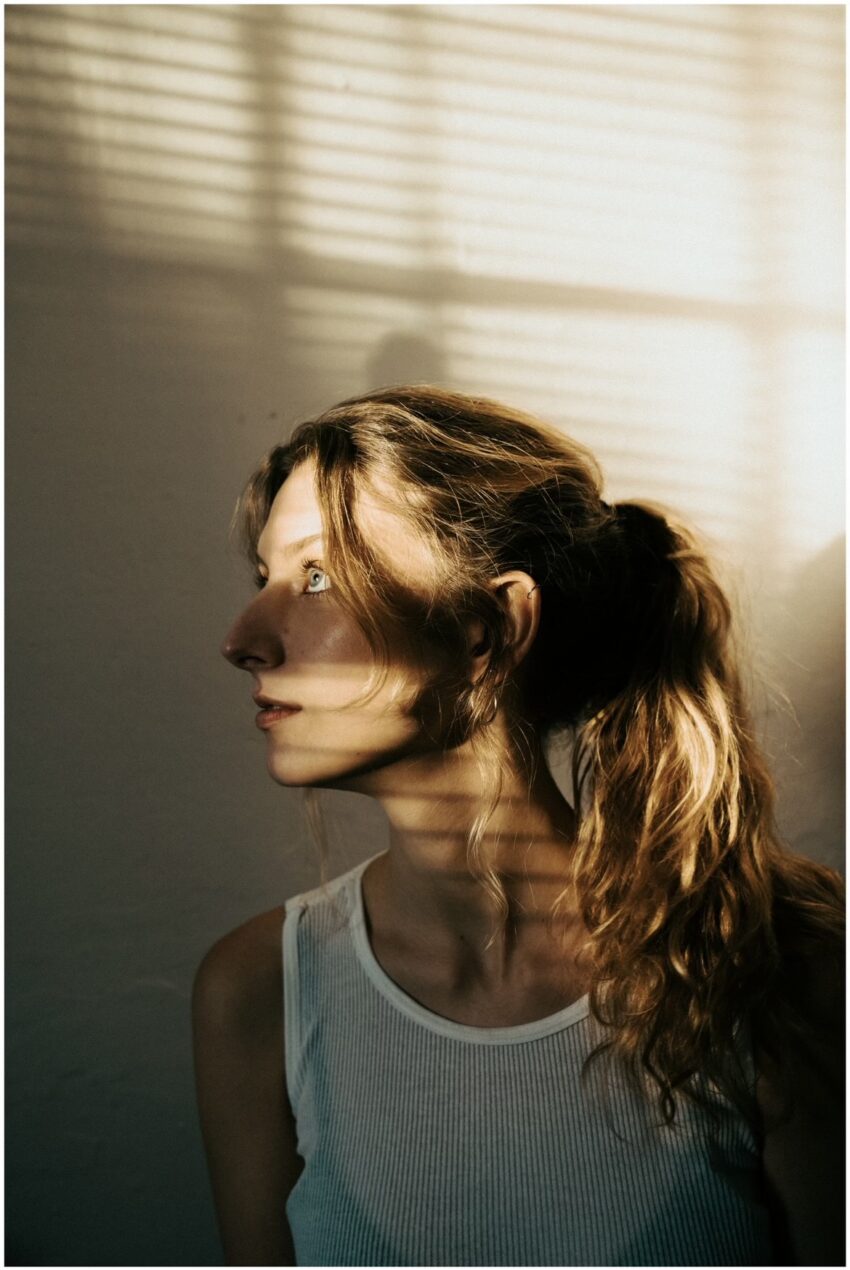
Meet Bea Porges: Athens’ Jazzy Indie-Pop It-Girl
Indie-pop music has been an Athens staple among its many local bands, but one artist in particular has created her own twist on the genre. Bea Porges has been slowly building a reputation around the city since her transfer from Belmont to the University of Georgia.
As women who dedicate themselves to a good tequila drink, we walked into a nearly empty Normal Bar and each ordered Chupacabra while chatting it up.
Porges exudes an effortless cool girl energy with resilience and passion. Not only is she a Capricorn with an affinity for crying to sad songs in her car, but she also has had quite the journey writing and playing her own songs.
“I’ve always just been really connected to music even when I was little,” said Porges. “Sad songs would play in the car on the radio and I would start crying.”
Her path in music can be traced all the way back to age seven or eight when she went to a friend’s house. This friend pulled out a guitar and proceeded to teach her four chords. It was these four chords that jump-started her career. As soon as she went home, she asked her mom if she could play that old guitar that had been collecting dust in the basement.
From that moment on, Porges dedicated herself to music, teaching herself everything she currently knows from YouTube videos and raw experimentation.
“I’ve been songwriting for over a decade now,” said Porges. “Little angsty love songs about my little sixth-grade boyfriend.”
After playing guitar, she tried her hand at drums when she joined the band in elementary school. This evolved into a love of musical theater in high school, a perfect mixture of all of her creative talents.
Porges decided to attend Belmont in Nashville, where she hoped to really make something out of her accumulated abilities. Here, she realized the Nashville scene was over-saturated with cliquey musicians who all pursued the same sound. This realization was paired with an end to a nasty relationship. The result took much of the joy out of writing and creating music.
Much like Uma Thurman in Kill Bill 2, Porges fled to the mysterious land of Montana during the grips of the COVID-19 pandemic to reflect and write. Getting back to her roots, she wrote her now first song on the EP, “Bliss”.
“I can’t remember anything I was particularly thinking at the time and then a few months down the line I looked back at my life and was like ‘Oh this really fits this situation in my life,’” said Porges.
The song explores the nature of her breakup and centering herself after what all creatives experience: an existential crisis. This was the beginning of her debut EP, Space & Time. One day, right as the vaccines for COVID-19 were being rolled out in May of 2021, an Atlanta-based band, Calico, asked Porges to open for them in her first public debut at one of their Atlanta shows. This was her push to really delve into her music career and find her sound.
Porges transferred to UGA where she began performing live shows. Before she knew it, Porges was in the studio recording her original songs with Calico at Racket Records. Her song, “All Day Long” came out as a single in March 2023 and the full EP came out later this year.
“It’s like songs kind of come to me wherever, whenever and however,” said Porges. “I never write a song the same way twice.”
What makes her songs so personable is the life experiences she has been through. Every experience is a lesson, whether it be negative or positive and that is what gives her music its soul. The resulting soft indie-pop and jazz-fueled sound have been inspired by Faye Webster, Madison Cunningham, and Phoebe Bridgers.
“I write songs that maybe aren’t as jazzy that lean more indie pop but I think my voice lends itself to being a more low-fi, jazzy feel,” said Porges. “Even if I’m not making this jazzy indie music, I don’t think that that quality will ever escape my music; I think it will always stick with me.”
Since she has cemented herself into the Athens music scene, Porges has surrounded herself with some of the few women who also have made names for themselves such as Hotel Fiction and Sam Smith of Recess Party. In a city filled with mostly male musicians, the talent of these women in music cannot be overstated or overlooked. Porges emphasized how important it has been for women to support each other in this realm, far from the cliques of Belmont.
As far as her up-and-coming career, Athens can only expect her unique, witty, and dare I say, charming sound to spread in the coming years and even months. One thing is for sure, there is no end in sight for Bea Porges.
“I haven’t gotten everything I could get out of [Athens],” said Porges. “There’s still more here for me I think.”
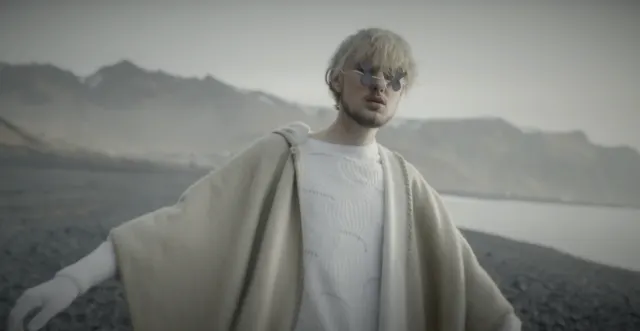
Artist to Watch: Quadeca
Rapper, producer, singer-songwriter, and YouTuber Benjamin Lasky, professionally known as Quadeca, has quickly become one of my favorite artists due to his unique come-up story. Quadeca—or as fans call him, Quad—has crafted an enticing album that places you right in between life and death. His third studio album, I Didn’t Mean to Haunt You, changed the way I think about a concept album. It’s written from the perspective of a ghost in the afterlife, viewing his family living without him; the record is a truly emotional experience. I’d dare to say that I have moshed with Quad in between heaven and hell, as I saw him perform on his Quadeca | Quickly, Quickly tour in Purgatory at the Masquerade in Atlanta, Georgia.
"I never thought I would mosh with one of my favorite artists to a Death Grips-like track from an album about being a ghost in the afterlife."
Quad opened up the night with “knots”, accompanied by a full band. When Quad split the crowd in half preparing for the first mosh of the night, everyone chanting “I’m an open book in a closed casket” and “I don’t fade to black I cut to static”. These lines allude to the final minutes of the album being static, representing the fade into the afterlife.
Taking the show from a near-metal experimental hip-hop track into the entrancing “tell me a joke” is far from an easy feat as the track begins with soft ambient sounds. Yet, the booming moments hit just as hard as they did in “knots”. The live drums on this track were especially astonishing. During his set, Quad reminded us that these songs would never sound like this again, with the accompaniment of his live band and our voices meshing together.
Quad teased unreleased tracks with acoustic sets throughout the show. After performing what he said may be his hardest work yet, “born yesterday”, Quad took us back to his first studio album, Voice Memos. With the introspective “Man on My Left Shoulder” and the soul-sampled “These Days”, day-one fans got what they were hoping for.
Naturally, Quadeca performed his critically acclaimed “Sisyphus” off of his second studio album From Me To You. Quadeca’s high-pitched vocals at the beginning of the track pulled at our heartstrings before he started snappily rapping about the tough, never-ending climb of life.
Quadeca encored with his banger single “BEAMIN”. He fell into the crowd and moshed with his die-hard fans—I helped the man himself up off the ground as the night ended. I can easily say this was my favorite show I have attended to date. I never thought I would mosh with one of my favorite artists to a Death Grips-like track from an album about being a ghost in the afterlife.
When we thought Quadeca couldn’t get any more mysterious, he took to Twitter (now X) to tease his fans again. Changing his profile picture and banner to a wrinkled piece of blank white paper, Quadeca tweeted: “new era approaching”. Will the paper gradually get filled with sketches of his new concept album ideas? Or is this all to throw us off? Only time will tell.
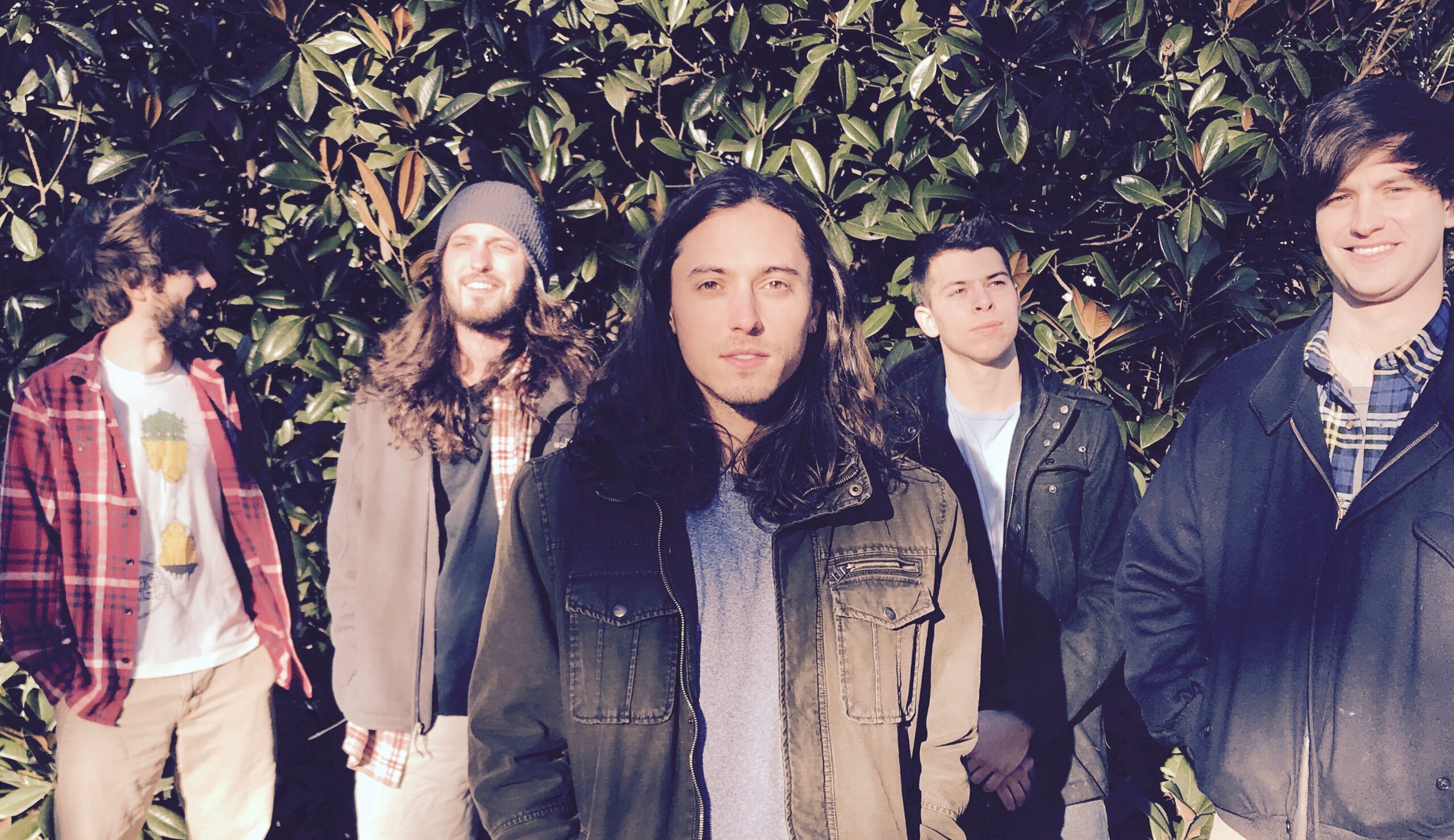
Artist to Watch: The Orange Constant
The Orange Constant has become somewhat of a hidden gem in Georgia since their start in Statesboro, GA in 2012. Now residing in Athens, GA, the Southern-rock-meets-jam-meets-funk quintet has worked hard to garner the attention of local fans. From headlining a packed show at the Georgia Theatre to playing at Atlanta’s Sweetwater 420 Fest, the Orange Constant is picking up speed and making a serious name for themselves. I had the chance to chat founding member and vocalist/guitarist, Andrew Brantley, and drummer Sam Groveman before their show at the 40 Watt Club in Athens to talk about their growth as a band and their approach to van life on the road.
VM: What initially caused you guys to move your band from Statesboro to Athens?
Andrew Brantley: Me and Nickalous [Benson]…he’s the other founder of the band…we just kind of wanted to leave Statesboro. We were kind of feeling like, you know, we had graduated. We were kind of done with that circuit and whatever. We wanted to be in Athens to be closer to Atlanta and closer to our families, and being in a bigger city. In a better music city. So, really three factors.
VM: Do you feel like The Orange Constant’s music is influenced by being in Georgia, and being in Statesboro and Athens?
AB: Georgia absolutely has influenced our styles. You know, my style is pretty influenced by like, Widespread Panic and Zac Brown. Nickalous…he grew up around the guys in Drivin’ n Cryin’. We definitely have a southern rock aspect to our music that’s just because, you know, we’re from the South.
Sam Groveman: It’s constantly changing too ‘cause we have five guys in the band now that all come from different musical tastes, and they bring new songs, and we’re always kind of adapting to their musical styles. Which also helps us as musicians, you know, to learn those new styles, and kind of developing that new sound with this new generation of musicians.
AB: Yeah, for sure. We’ve got that Southern influence, but we don’t adhere to it always.
VM: Do you guys feel like you’re going to be sticking around in Athens for awhile, or do you have any moves on the horizon?
AB: Well, I think for now we’re going to be an Athens band. You know, we like it here; we’ve had success here. We’ve grown in this city. We’ve thrown around the idea of going out west and trying to establish out there as well, but I think for the next, you know, three to five year plan we’re going to be here. And even so, I think we’ll always be a Georgia band. All of us are from Georgia so, you know, no matter how many times or places we might move, this or there, we’re a Georgia band.
VM: Your last album, Point of Reference, came out in 2017, so I know it’s been a little bit, but with five guys in your band, what’s the songwriting process like? Do you guys all collaborate?
AB: So that album was written predominantly by The Orange Constant, like the previous lineup. Which was a different drummer and a different bass player. But we did have our new bass player, Tyler [Walker], record on that album. And Chris [Freiberg], our keyboard player, he recorded on it too. But the material wasn’t necessarily written much by them. A lot of it was written by myself and Nickalous and Lee [Guentert] who was the other drummer, and Will who was the other drummer. Me and Nickalous are the predominant lyrical writers of what you can listen to on Spotify, but it’s still a mixed bag…everyone has their influence.
VM: Do you guys have any new albums coming up, or are you working on any new music? Has the songwriting process changed as the band lineup has changed?
AB: The songwriting process is still pretty similar in the sense that we don’t stick to any kind of formula, or formulated plan, it’s like, “we got a song, you wanna throw something in? You got an idea?” We really try to make it pretty democratic, like, everybody’s got some input. But yeah, we’re hoping to get in the studio October, November, December and release another album next year. But yeah, we have plenty of material.
SG: We’re trying to get with John Keane, who worked with Widespread Panic. We recorded our first album with him as the producer.
AB: Yeah, so hopefully we can get in the studio at the end of this year.
VM: And in the meantime, y’all have been touring a lot. Sam was telling me earlier that it’s been every weekend in a different place. You’ve been mostly in the southeast though, so do you have any plans to expand outward, or are you just kind of waiting to grow your fanbase here and then expand from there?
AB: We’re trying to expand the tour to the greater southeast, you know, trying to get more into Virginia, Kentucky, Texas, Louisiana, Mississippi, all those. Still, it’s a nice trek. It’s not necessarily South Carolina and Georgia.
SG: It’s nice actually honing in on the southeast, because a lot of bands that we know, they always go to Colorado, and if you only go back there once a year it’s really hard to build a fanbase. And you wear on your van, and you don’t make as much money to live off of, so really working on this market down here is really helping us.
AB: ‘Cause there’s so many big cities, you know? Like, you can sell 200 tickets in Atlanta and Athens, but if you just start going to these places that are really far away, you haven’t capitalized on Charleston, Columbia, Tallahassee and Birmingham. You know, that’s kind of what we’re focusing on now is to really make sure that our southeast market is as good as it can be. Because we’re just a few hours away from markets that don’t know who we are as well as Athens or Atlanta does.
VM: It makes sense. I feel like you guys have done a really solid job of developing a fanbase here. But when you’re touring and constantly in a van with five guys, does it get old? Are you guys sick of it, or are you planning on touring even more often now?
AB: I mean it’s gonna increase.
SG: That’s the goal.
VM: That’s a good thing, right?
AB: I mean, it’s work. It’s definitely hard. It takes a lot of work, but so does everything.
SG: Waking up next to Andrew and then going to sleep next to him for a couple of days in a row gets a little old, but you know, you realize when to let the man be by himself. You figure each other out after awhile.
AB: Yeah, you do. You kind of learn each other’s personalities. I mean, it’s just the way the game is played, I guess. It’s an adventure, you know. It’s fun if you can kind of take yourself out of it and be like, “man, this is a cool story,” no matter how crappy of a situation it might be. And luckily, we do have a nice, reliable van. It’s not like we’re in a little, tiny Volkswagen or something.
SB: A lot of times when you have a bad weekend, you just look back and laugh.
The future is bright for the guys of the Orange Constant. While working towards recording new music, they plan on amping up their already intense touring schedule, with a summer tour from June to July. They never repeat a set and always try to keep their shows interesting, feeding off of each others’ jams and improvising new sounds as they go. Athens fans can catch them at local grassroots festival, Sigh in July, on July 20.

Big Thief’s Buck Meek Talks Solo Debut

Having spent the last four years as the lead guitarist of indie rock quartet Big Thief, co-founder Buck Meek’s solo aspirations were put on hold while he devoted most of his time to hitting the ground hard, building the band’s momentum. Now that Big Thief has taken off, Meek stands ready to bestow his own finely-crafted song cache upon the world.
A front porch troubadour, the Texas-born songwriter weaves a tapestry of simple and intimate folk tales on his self-titled debut. The record feels like a winding country road and introduces listeners to the myriad of charmingly real characters they might meet wandering down it, from honorable mechanics to runaways to gamblers. Many of these characters are admittedly fairytale versions inspired by the people in Meek’s life. “I’m most inspired by my friends, I’d say,” he explains. “As a creative person, it gives me more seed for exaggeration in my own mind and for developing archetypes and characters that can go far beyond the reality of their personality.”
While the people around him help personify Meek’s thematic ideals, there is a common thread in what he finds most exciting about the stage of players. “One of the most inspiring things for me in humanity is the heroism in the smallest of details in people’s character,” says Meek. “Like in the persistence and the subtle elegance that I find in everyone really, and just trying to find that gives me hope.”
Buck Meek is out now on Keeled Scales. I sat down with Meek at Willie Nelson’s Luck Reunion this year to talk about the record. Check out our conversation below.
Vinyl Mag: [The first single “Cannonball!” premiered on NPR.] Can you tell me a little bit about the concept and what that’s about?
Buck Meek: It’s a feeling of when what we perceive as linear time of our life seems to fold over itself. And for me, like in this song…like the moment of experiencing the bittersweetness of the feeling of relationship as a living thing, but as a memory—feeling the relationship and the power of it, the weight of it in memory—while also experiencing the pain of whatever loss. Like how that can just become this web of feeling. That’s what I was trying to get at with the song.
VM: So this is about a relationship. I feel like when I look back at past relationships, it’s like I’m watching a movie. It almost feels like it happened to someone else, in a very emotionally disconnected way. But this song is also partly mourning. Can you talk a little bit more about the actual emotions that you’re expressing?
BM: Yeah, I guess it’s that dichotomy of celebrating the eternal quality of that relationship while also mourning its loss. Facing the loss of it almost intensifies the power of it at the same time, which is probably why loss is so hard for us. Suddenly we’re faced with how meaningful something was to us when we don’t have it anymore, I suppose. I wrote it almost as a medicine and a mourning process, celebrating and letting go…it’s probably healthy to callous and move forward, and I guess for me, writing songs like this helps me celebrate what was while also externalizing it to the point where I can let go.
VM: Do you reopen it every time you hear it or play it, or does the writing of it give you complete catharsis?
BM: I do re-experience it, but because it’s in a form outside of myself—even if I’m singing it—something about it being in song form helps me not fall prey to the emotions as much.
VM: What was the timeline of writing these songs between Big Thief and touring; when did that line up?
BM: This collection has been falling together over the last four years. “Cannonball!” I probably wrote three or four years ago. My writing process is generally pretty slow and arduous. I’ll often write the first verse of a song as a response to something that happens to me, or a connection that I would make, or a character that I would observe in passing. I’ll often come up with the initial idea there, and I feel like maybe the first verse and chorus will come to me in 30 seconds, and then it’ll take me six months to finish the song, almost as if I’m reflecting upon that initial experience.
VM: Once you get the first nugget, how does the process unfold? Are you waiting for the rest to come to you, or do you set time to sit down and work it out?
BM: I think that initial burst comes at me randomly. That first source comes unplanned. Like, it’ll come to me sometimes while I’m playing a show with Big Thief, or while I’m on a bicycle or in mid-conversation with someone, and I’ll just scramble to write it down and play it as soon as I can. But the finalizing process of really hammering out the song is more deliberate and often very private. Like when I find a moment of peace, which is rare on tour. I’ll often wait until I get home to finish a handful of ideas that have come to me on tour.
Although on this record, there are maybe three or four songs that came as part of this song-a-week project that I did with a really inspiring group of artists in New York. With Adrianne from Big Thief and Mat Davidson from Twain and Mikey Buishas from Really Big Pinecone…and a couple of other people. I’ll leave it somewhat anonymous. We had a song-a-week project for two months, and it was really hard to have that. We each had to write one song individually per week, and it was really difficult to be limited like that, but also I feel like it really pushed me to rely more on my instincts and less on my intellect. Because often I would wait until the last minute, like Sunday night.
VM: Like songwriting bootcamp. Do you feel like that’s still affecting the way that you write now?
BM: It’s taught me a lot about relying on my instincts, which I feel has been really helpful for me, because I often will get in these cycles in my head where I start taking it too seriously or overthinking it, and that forced me to just rely on…basically not judge myself and to rely on my initial impulses in the creative process, and at least not judge myself in the process. A lot of these songs came from that project initially, and then later on I would go back and edit them maybe after some time had passed and I had some space to reflect on them. But it’s been really helpful for me to dig into that impulse from a more confident place.
VM: Why do you think now is the time to be bringing these songs forward?
BM: I spent the last four years devoting almost all of my time on the road to Big Thief, because we started touring maybe three and a half year ago…playing 250 shows a year or something, and that really didn’t leave much space for my solo project…I’ve been aching to bring these songs to people for the last four years, really. It’s been more of a decision to devote myself to Big Thief, because it needed that intention to come to the place where it is now. I’m really excited to finally have the opportunity to have a more balanced schedule with that.
VM: You said you’ve been aching to get them out. So you’ve been sitting on them for awhile. Because you’ve had them for so long, were they constantly changing from start to now, or do you know when you’re done?
BM: Some of them have changed completely. One thing that’s kept it fresh was that I’ve had some of these songs for four years, but the band that I’ve put together for this record was in flux until like the last year really it really came together. I’m so happy with these players, and we really made this record in the last year together pretty quickly, really. We recorded it really fast, so that breathed a lot of new life into these songs.
VM: Where do you go from here?
BM: Hopefully going to Europe with my band probably in the fall, realistically. Trying to play as much as possible. I really want to hit the road with this band and get to that point of instinctual mesh with them.
Buck Meek is out now on Keeled Scales. Grab a copy of the record here, and be sure to catch Meek on his upcoming tour (dates below).
Buck Meek Tour:
May 30 | Kerrville, TX at Kerrville Folk Festival
June 07 | Allston, MA at Great Scott
June 08 | Brooklyn, NY at Rough Trade
June 09 | Washington, DC at Songbyrd
June 10 | Durham, NC at The Pinhook
June 12 | Nashville, TN at The High Watt
June 13 | Bloomington, IN at The Bishop
June 14 | Chicago, IL at Schuba’s
June 15 | Millvale, PA at The Funhouse
June 16 | Philadelphia, PA at Johnny Brenda’s
June 7-16 with Sam Evian
June 7 & 8 also with Katie Von Schleicher

Meet The Next Generation of Athens, GA Music Scene
Boasting R.E.M., the B-52’s, and the Drive-By Truckers, it’s no secret that the Athens, GA music scene has a rich history. The Music Business Program housed within the University of Georgia—just steps from downtown Athens—is continuing this tradition, now raising much of the next generation of this local scene.
“We try to take people from a standpoint from ‘Who am I?’ to ‘Who I am,'” said David Barbe, director of the program and successful musician in his own right. Much of this development culminates in the final project of the program, a music business microcosm in which each student assumes a role in music business such as artist manager or publicist.
Many students choose to take on the role of artist, and thus are required to release music—with cover art—and promote the release. This year’s projects paint a hopeful picture for the already well-established Athens scene, with 17 new releases from local bands and artists.
“So far, I would think that it’s arguably the best ones we’ve ever had. There are more of them, they are more varied in style, and the quality of the real standouts is really a level up. It’s been the most musically diverse,” said Barbe. “We expect rock bands and we expect rappers, but we’ve got Annie Leeth‘s tripped out electric violin project, we have Eric Dowler‘s album of World War I era songs, and there’s satirical rap… It’s been all over the map, which is great.”
Some of these artists, just weeks after release, are already clocking over a thousand streams and seeing revenue from downloads—an impressive feat for what started as a class project. Check out the following up-and-coming artists from the Athens scene:
Conner Brooke Dryden has the vocal chops to fit in the current country music scene without having to succumb to the over-produced country pop plague that seems to be overtaking the genre. Her single “Something Beautiful” is straightforward in instrumentation and honestly doesn’t need much else—Dryden’s clean vocals are the star of the show, as they should be. Check out the single on all major streaming platforms.
Logan Brammer’s “November Night” is a nice, nostalgic track. It’s kind of calming and seems to have some Beatles influence thrown in there. I will say, this is the only track that totally got stuck in my head for like, hours after that first listen—the chorus is that catchy. Definitely didn’t mind. You can find “November Night” on bandcamp.
If you’re not the electronic-instrumental-meditation-music type, Annie Leeth’s new EP “Heard” might just convert you. It’s super ambient and vibe-y, but what really shines is that Leeth seems to seriously know what she’s doing with a violin—both technically skilled and able to get the instrument to make sounds that I’d guess many haven’t heard it make before. This isn’t run of the mill, classical studying music… it’s a whole new beast. You can find “Heard” on the major streaming platforms.
Property of Bolton have taken the classic rock band setup and done it well, with a darker sound that’s simultaneously groovy and gritty. The group’s EP, “Epicycles,” is so well done that it’s hard to believe this was done for a school project. The separate pieces of each track flow so cohesively that everything feels intentional—like the group has a solid grasp on what they’re going for and are not afraid to go for it. Check out “No Faith,” not just for the ripping lead guitar but also the line “I ain’t got no faith in the government” because, relatable. Check out the EP on bandcamp.
Josie Smith’s “June” is short and sweet. Her vocals are sweet, the premise is sweet—and it shines in this simplicity. The track is a good example of how music doesn’t have to be so heart-wrenching, so complicated to still be great. The release seems to be just a taste of what’s to come from Josie, and you can check it out on bandcamp.
Eric Dowler’s “When The Boys Come Home” is cool in that it’s hard to find anyone else, let alone a 20-something student, doing this right now. It’s clear that Dowler is dedicated to his craft as well as doing his historical subject justice. The album definitely gives an interesting insight into World War I, giving a musical perspective that one might not get from a casual education in the subject. You can find “When The Boys Come Home” on bandcamp.
Darsana’s latest indie-pop EP “Heartless,” is pretty chill, to put it simply. Definitely recommend checking out the opening track “Callouseer” and the title track “Heartless,” both of which seem like great easy-listening, on say, a lazy weekend afternoon or something along those lines. You can find “Heartless” on bandcamp.
Guest House’s latest release, “Sleep,” is intriguing. It’s not quite something to study to, because it definitely draws you in and makes you want to listen, but it would fit in well in a coffee shop setting. For some reason this felt super visual—like, listening to it actually triggered my brain to put together a full indie-movie montage. Some music just does that, I guess. Guest house makes you think, in a good way. Check it out on bandcamp.
There is a line between experimental in a cool, enjoyable-to-the-ear way and experimental just for the sake of being weird, and Sephine has found the balance. “Computerforest,” Sephine’s latest release, sounds like the kind of music your cool (but not snooty) indie acquaintance would casually throw on, spurring you to spend weeks trying to figure out how to ask who the band is without sounding lame and uncultured. The release is almost ethereal at times, until that funky sax kicks in or Anderson starts chanting. A personal favorite would be “Discothèque,” because the track is just kind of funky and definitely unexpected. You can find Sephine on bandcamp.
Rebekah Martin’s piano track “Tightrope” makes for great study music in that it has a nice melody that’s not too overpowering. There’s this near-constant buzzing, which seems intentional but regardless of if not, the juxtaposition between that and the piano totally works—the roughness of the buzzing keeps the piano from being too buttoned-up. Again, being just one single, this seems to be just a taste of what’s to come from Martin. You can find the track on her bandcamp.
Whether you’re a fan of “Xanax Culture” or seriously annoyed by it, you need Xanny P in your listening lineup. For satirical rap, it’s surprisingly well produced and the character that is “Xanny P” is hilarious (and cultured, apparently. Check out his ‘gram if you don’t believe me.) The guy is already packing out the Georgia Theatre rooftop and spreading like crazy via word of mouth. Plus, it’s #Dartyszn, ya’ll—never a better time to check him out on all major streaming platforms.
Punk rock fans, PNK is for you. I’d say he falls in more of an early Green Day vein than say, Blink, in a rip-roaring, high speed—and never slowing down—kind of way. His latest single, “Sitting on the Bathroom Floor” is gritty, high-energy, loud and a fun listen from the first note. (Also a fun fact—PNK’s Tyler Peters played a part in the production of quite a few of these releases. Three cheers for having multiple skills!) You can find PNK on all major streaming platforms.
Elrod’s self-titled EP has definite outlaw themes throughout, with an interesting mix of generally acoustic instrumentation and her almost-bluesy vocals. It’s cool in an imperfect, rock ‘n’ roll kind of way. All of the separate pieces are great, but there are definite shining points in her harmonies and the lead guitar. For some reason, I immediately thought of Cheyanne Kimball’s solo album while listening to this, but haven’t quite figured out why yet. Anyway, check Elrod’s self-titled, currently out on Soundcloud.
Friday Highway’s latest release “I Told You/Rearview” gives major early 2000s singer-songwriter throwback vibes… but at the same time, it’s also the teeny-tiniest bit reminiscent of popular Red Hot Chili Peppers hits. Anyway, it’s interesting, and definitely in a good way. I’d recommend checking out “Rearview,” as it’s well done and the bridge takes an unexpected twist that keeps you on your toes. You can find Friday Highway on most major streaming platforms.
Kaitlin Kimsey, Jake Mappes and Jesse Inglima
This trio released a killer studio series covering Elton John and Guns N’ Roses. Each of the three musicians involved are seriously talented, so it makes sense that putting them together would yield a couple of great tracks. Kimsey’s rocker belt pairs perfectly with Mappes’ keys, making me wish the group had a couple of originals to check out. You can find the studio series on Kimsey’s Youtube and Soundcloud, or check out all three musicians in local Athens band Fake Mister.
Alright, so Garet Skipper’s latest release “Lies!” does not sound like it was made by some college student for a school project. This is well done. The track almost falls in a dream-pop vein, but not in an over-hazy bad way. It’s upbeat, fun, and so perfect for summer nights. For fans of, say, LANY, this is a definite recommend—actually, this sounds on par with some of the music the aforementioned group was putting out when it first started successfully touring the country, so there’s that. It’s so… marketable. Check him out on all major streaming platforms.
Lapetz’s latest single, “Time Lines,” is super simple and straightforward in composition, but it works. The narrative he’s rapping is interesting, it flows well and the refrain is catchy—Lapetz doesn’t really need a bunch of bells and whistles to make the track interesting. In a landscape where over-produced, dolled-up tracks seem to reign supreme, this release is refreshing. To listen to the single, or his EP “Early Works,” find Lapetz on bandcamp.

Artist to Watch: Molly Burch
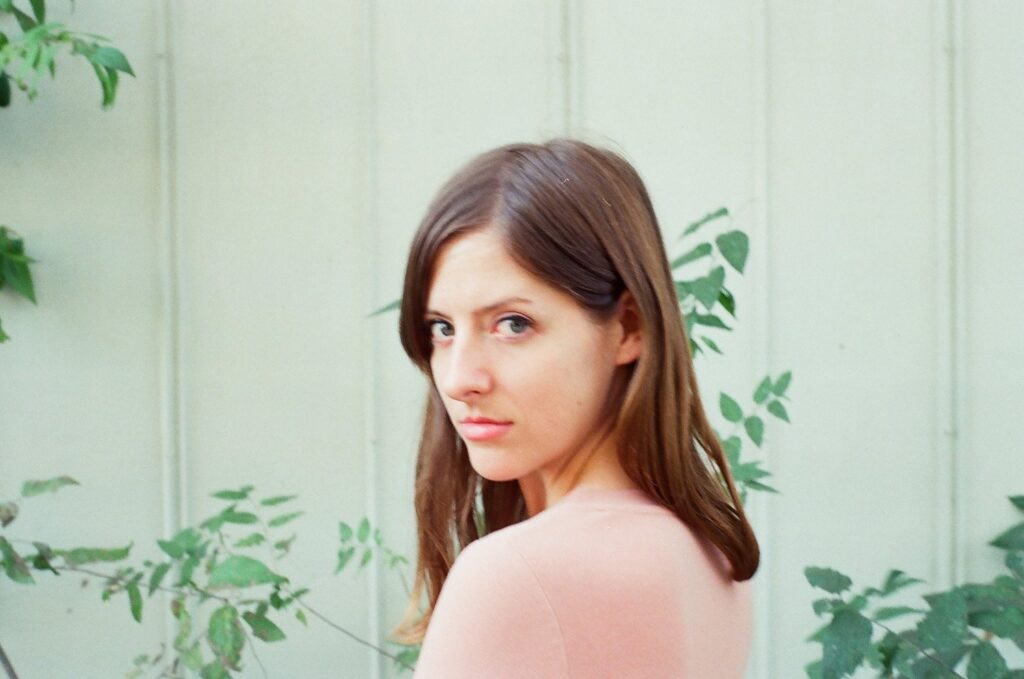
Like a well-maintained and beautifully hand carved wooden sculpture, Molly Burch’s music has a sort of softly natural, matte glow to it. Influenced by the music of her childhood spent growing up in LA, her early country influenced songwriting and equally paisley patterned arrangements have caught the ear of record labels, including Captured Tracks (who released her debut album Please Be Mine) and many publications, ourselves included.
Her voice, which some would compare to Angel Olsen, has a well-trained crushed velvety texture that sets it apart from many other vocalists in her field. Having gone to school for jazz singing, her emotive vocalizations lend itself to the cinematic or melodramatic nature of her band’s music. That being said, there’s a gentle sentiment of something that isn’t quite like full on naivety there, but more like a gentle innocence behind her croons.
Currently on the road supporting Alex Cameron on the tour for his new album, I got on the phone with Molly to have a quiet conversation to get to know her better both as a songwriter and as a person.
VM: After reading your bio, I saw that you did your growing up in LA, but then went to school in Asheville and then moved to Austin, correct?
MB: Yeah. I graduated High School in LA, was born and raised there, and then I spend one year in New York at Sarah Lawrence College and then decided to transfer to UNC Asheville, because my mom had moved to North Carolina, so that made the most sense at the time. I graduated there then spent a year out of college in Asheville feeling pretty lost, so I just moved to Austin on a whim.
VM: I can definitely relate to that. Would you ever move back to Asheville or NYC?
MB: Uh, I don’t know. No. I wouldn’t want to live in New York. I’ve actually just recently moved to an even smaller place in Austin. We live right outside of Austin. So I’m sure as I get older and also with playing music and touring I’ve been more attracted to like smaller cities, smaller towns. I guess I don’t know. We recently just went to Asheville on tour, and it was really lovely. I really do miss a lot of it, but I don’t know; I don’t think I would want to move back anytime soon.
VM: Austin is really cool. There are a lot of really cool weird places to go. Do you have any specific places you like to go to when you just want to chill out or have an escape within the city limits?
MB: Sure. Right now we live a little outside of Austin, so I feel like that, plus being on tour for more of this year makes me feel a little disconnected from Austin but let me try to think of where I’d go; I’m very much a homebody. A really nice bar to go get a drink is this place called Kinda Tropical. And there ‘s a little coffee shop on the east side called Bliss Coffee that one of my good friends runs, and the thing is a little Air Stream with a really nice outdoor patio. It’s really gorgeous.
So after taking a few listens to Please Be Mine, I immediately thought Nashville. There’s a very old school country vibe to it. Were there any artists from Nashville that you were listening to while you were writing those songs, or that you grew up listening to?
MB: Not really. These songs are like a collection of the first songs I’ve ever written, because that sort of just came later for me. I wasn’t comfortable writing before these songs. That style is just what comes natural to me. I went to school for jazz, and I would listen to older country music, but I don’t feel up to date on current country or Nashville music. Classic sounds for sure. And I wasn’t really listening to anything at the time, since I wrote the songs over a period of a couple of years.
VM: So it’s much more holistic. So, when you write songs, do you prefer to write alone, or do you have a favorite houseplant that you sit next to, or do you have a pet? Or do you like to write with your friends?
MB: I do have a cat, and I do have a lot of houseplants, but I feel like it’s different every time when I’ve been in different homes over the past couple of years. I definitely need to be fully alone. I don’t like to write anything if there are people at the house, or if my boyfriend is there. What I usually do is, I’ll write the song and get it fully done, and I’ll show it to Dailey—who’s my boyfriend and lead guitarist—and we try it together, and we figure out at that point if we like it or if I need to work on it more. Then we bring it to a band.
VM: So you’re signed to Captured Tracks records. What’s your experience being signed to a label like for your first record? Is it really laissez faire, or have they been very involved in the album process for you?
MB: They’ve been sort of involved, but in that sense they’re really supportive. They really support and believe in the artists they have. Going into signing with them and not knowing anything about labels, I sent them a cold demo submission. I have definitely learned a lot pretty quickly signing with them and not being used to it. It’s been a lot of new things signing with them and releasing my first album. They’re wonderful, and I feel extremely lucky. They’re really open, supportive, and they make me feel like I have tons of freedom. They’re just really cool people in general.
VM: So, have you been listening to any other artists right now? Has anyone excited you or just drawn your attention?
MB: I’ve been listening to a lot of Alex Cameron every day.
VM: Since you’ve been on tour with them?
MB: And my friend and ex-band mate Katie Schaffer and her boyfriend Shane just released a new album. Their band is called Olden Yoke. Also some friends of mine just released an album. They’re called Loma, and I’m excited for that. And my friend Jeff Williamson also has an album coming out.
VM: Well, thanks so much for talking with us! Do you have any other miscellaneous shout-outs that you before we wrap up here?
MB: I have one more friend, I just remembered [laughs]. This girl who lives in New York named Nadia but who records under the name Nadine just released her first album.
Check out Molly’s album Please Be Mine here and on all streaming platforms and follow her on Facebook.
Artist to Watch: Loma
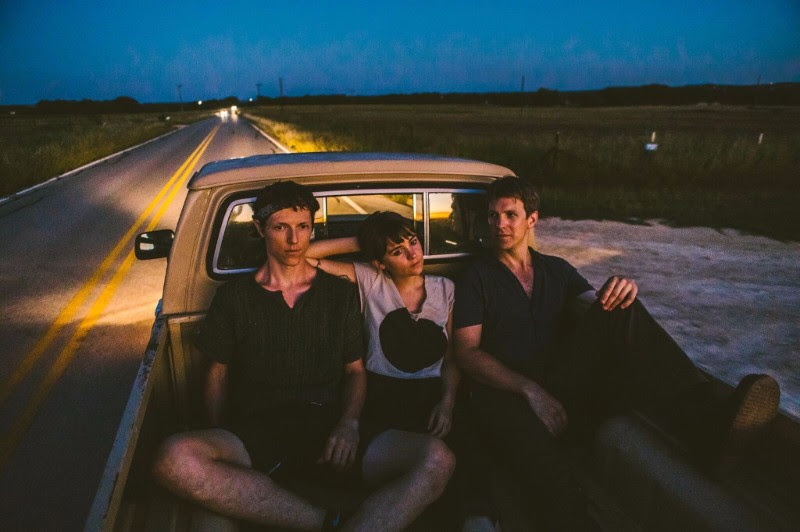
I had the distinct pleasure of interviewing Emily Cross, a member of the relatively new band Loma. Loma consists of Emily Cross, Jonathan Meiburg and Dan Duszynski. Loma’s origins and shaping have come in a whirlwind of events over the past few years. The band is a recent joint venture to explore new musical territory, seeing as Meiburg is originally from the band Shearwater and Cross and Duszynski are originally from the band Cross Record. They met through Ben Goldberg of Badabing! records, who sent Meiburg Cross Record’s 2015 album Wabi-Sabi, which led to the two bands traveling together across America and Europe throughout Shearwater’s 2016 tour for Jet Plane and Oxbow. The band reconvened in a house outside Austin for two weeks at a time over the course of a few months to piece together their debut album. Then the band’s next milestone came in the form of a record deal with Sub Pop Records.
As for Loma’s sound, they don’t really fit into any particular musical genre. This could be due to the varied backgrounds and career paths of the band’s members, but this rejection of single-genre conformity could arguably be one of the band’s greatest assets. Their music is experimental, with this album in particular being influenced by the sounds of nature. Loma is searching, it’s evocative, and it takes the listener to another place entirely. To unravel the enigmatic mystery that is Loma, I sought to get to know Emily and to ask her about the band’s upcoming debut album, Loma.
What are your personal musical influences? What inspires you besides music?
Personally, I don’t listen to much music. I like older music like from the ’60s and ’70s. I’m a big fan of colorful women singers like Gloria Estefan. I like newer experimental stuff. As far as the band goes, we’re kind of all over the map. We’re into ambient stuff. Field recordings, nature, and natural sounds are muses for the band. Mortality and death inspire me because I work in the field of death and dying. I’ve been interested in it since I was a little kid. The fleeting nature of life itself brings poignancy to the ordinary things of life. On this album, there’s a longing to it [the fleeting nature of life itself.] There’s a reflection of what life is or what it could be. Any time we have themes around time passage or looking back on life it has to do with mortality and the human experience.
How did your deal with Sub Pop Records come about?
Jonathan, one of our band members, was already signed with them through his band Shearwater, and so we got the hookup through him.
What’s the inspiration behind the album’s cover art?
That’s my friend Lisa Cline’s work. I own the original piece and it was also hanging in the studio while we were recording so we thought it would look good on the cover. I like the piece because the two figures are beautiful and mysterious. All of her work has a serious, meaningful, spiritual quality to it that I like.
I see that the song “Joy” was the first song you all wrote and recorded together. How did it come together?
I can’t really remember. We worked in kind of a frenzy. It was hard and challenging for me to sing because it was different than how I was used to singing. It was more dramatic, showy, and theatrical.
Let’s talk about the house that your band describes as its muse for the album. What was so special about it and how did it influence the ideation process behind the album?
The house is on 18 acres. It’s a nice, free, open place to be. Natural sounds made their way into the record without much effort. We didn’t take precautions to prevent them from making their way in as you would with a normal recording. We sometimes even highlighted those occurrences and went out of our way to bring them to the forefront at times. Nature is the inspiration for, I would argue, most art because it’s the original inspiration source. It’s just so beautiful, abundant, amazing, and it’s a go-to pleasure source. Focusing on that was an escape from some interpersonal problems and tribulations that we were all going through at the time.
Your band talks about how you all captured sounds inside and outside the house on the album, from “the cicadas and frogs of ‘Relay Runner’ to the whooshes of wind and leaves on ‘White Glass.’” How did you capture the sounds of cicadas, frogs, and other nature sounds in the recording process?
We sometimes tried to specifically record certain sounds and sometimes we would just go sit outside and record and see what happens.
Going off of that, why did you choose to put nature sounds on the album and how do you think that adding nature sounds into the album influenced its tone?
It puts people into the space more directly by not just talking about nature but inserting sounds. It’s easy to be transported to a more natural, outdoor space. It sets a tone, especially when you have more loaded sounds like thunderstorms or the wind.
When you were recording, were you trying to take people specifically to the house where you recorded, a specific destination, or were you trying to bring the listener inside their own mind to a favorite place of theirs to visit?
We were trying to bring them into our space where we recorded but we didn’t consciously try to make them feel like they were here. It wasn’t a labored decision.
While recording the album, I read about how your vocals were accidentally recorded at the wrong speed but this was a happy accident and the voice ended up staying for the rest of the album. Were there any other happy accidents like this while recording this album or in any songwriting brainstorming sessions that you guys have had?
There were a couple times when we would record a random piano or guitar part and we would track vocals over it and it would seem perfect. The biggest happy accident was when we recorded my voice at the wrong speed on this record though.
What’s your guys’ process for jamming and brainstorming song lyrics? Do you have any un-traditional methods?
We don’t really do anything out of the ordinary. I think that as long as there’s chemistry in the space then brainstorming is easy.We all work really well together. We don’t have any tricks or anything like that for brainstorming. It all happens organically, like we’ll work out a guitar part, or sometimes we’ll let the tapes roll and just see what happens when we start playing.
What’s a lyric or song on the album that you particularly resonate with and why?
I wrote the first song on the record called “Who is Speaking.” I wouldn’t say it’s my favorite song on the record by any means, but I wrote it myself. I worked on it in Germany while I was doing an artist residency there. I had nothing to do one day and I had my guitar and recording stuff with me so I thought I should work on some music. I wrote the entire song myself but we all added other stuff to the song later.
What’s in store for the future for you guys? Do you guys have any plans for where you want to tour next or any goals for the future?
We’re just rolling with it. We don’t know what’s gonna happen in the future and we don’t even know how the tour is gonna go but we hope people like it. We have a full tour for April, May, June, and maybe August that’s in the US and Europe.
Where’s somewhere that you haven’t toured yet but would like to?
I would go to Australia or Japan. They’re both so far away. I want to go to Japan because I’ve never been to Asia and it seems fun and different. Australia is so beautiful and the people seem nice.
Let’s wrap this up with a fun question: If you could get the chance to perform with any musician who would it be and why?
Rihanna. I love her even though she wears fur. Fur is fucked up but she’s cool and I love her music.
Check out the band’s debut album Loma on all streaming platforms, or buy the album here.
Artist to Watch: Madeline Kenney
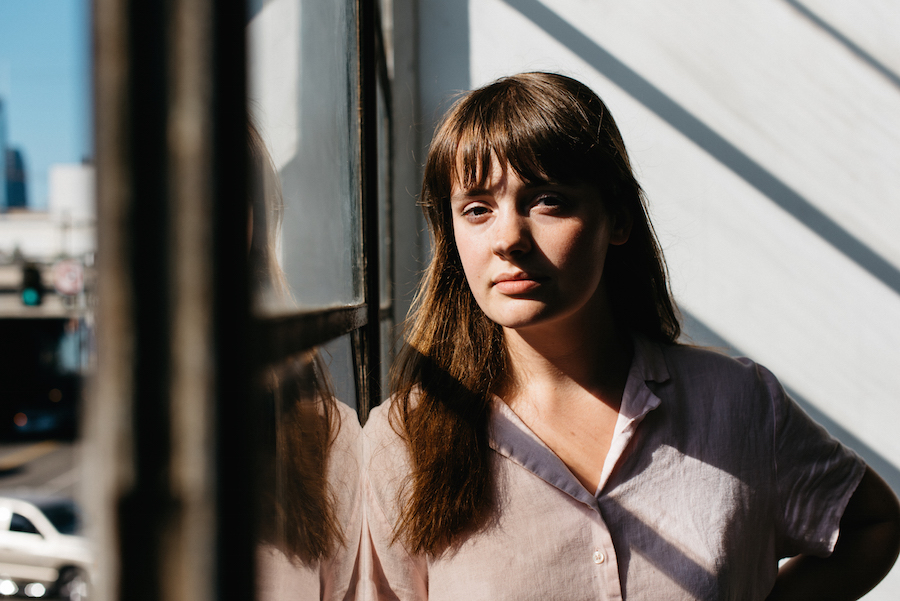
Oakland-based singer-songwriter/guitarist Madeline Kenney is a master of several trades. The accomplished musician is impossible to confine to one modifier. In addition to her budding music career, she is also a baker and a visual artist, holds a degree in neuroscience, and is currently furthering her education in sound engineering. To top it off, Kenney has just dropped her debut full-length album, Night Night At the First Landing.
I hopped on the phone with Kenney to discuss her debut, the joy of learning, and sexism in the music industry. We also dove pretty deep into a discussion of a shared love for obscure British comedy shows, most of which I’ve spared you from, dear reader. Check out our interview below, and be sure to grab a listen to . Night Night while you’re at it.
VM: You were born in Seattle…I’m wondering how that shaped you? [This is paraphrased, because this question was asked in a very rambling, roundabout way that would not be interesting or efficient to read]
MK: I’m from east of Seattle. I always locate it with—if you’ve seen Twin Peaks, then you know the falls in Twin Peaks—my house is a 10-15 minute drive from the falls. So very woodsy, beautiful, quiet, dark and rainy area…Seattle is famous for having amazing but depressing music come out of it, because it’s really sad inside, and it’s grey all year round…when it’s grey outside it’s easier for me to write, because I grew up in the grey. And living in Oakland—it’s not that often—but when it is kinda cooler and darker and greyer I’m like, “Ooo yay!” I feel cozy, and I feel good. and I want to be inside and writing music. And yeah, when I go back to visit home there’s, an odd bittersweetness to all of it, because it’s this place you grew up in and loved so much, but it’s so different, and it’s really conflicting feeling. I’m sure that has also seeped into my songs, but somehow it’s hard for me to look back and be like, “yeah, this inspired this lyric.” To me, it feels like a little bit stream-of-consciousness-y, and then I go back and I’m like, “oh, maybe that is about where I grew up.”
VM: So Oakland—you moved there for baking, right?
MK: Yeah, I moved to the Bay Area to work at a specific bakery in San Francisco.
VM: How did you go from thinking you were going to be in neuroscience to then baking to then music?
MK: I was baking since I was 16. It was my first job, and I just kind of moved around to different bakeries. All through college I worked at bakeries, and I was really obsessed with it, and I thought I was going to open a bakery, but I continued to study neuroscience, not because I thought I was going to be a neuroscientist. It was just very interesting to me. It was the most interesting thing I’d ever learned, so I just kept wanting to learn more about it. I graduated and continued to bake, and as far as when music came in, I’ve played music since I was in kindergarten. It’s always been a part of my life. It just started to be when I started to get better shows—and more shows, at least—that it was really incompatible with a baking shift. To stay up really late and then get up a couple hours later and bake was not ideal. Although on paper the timeline looks very, “oh I did this, then I decided to do this,” it all kind of flowed together. I’ve always been interested in multiple things.
VM: I do think that’s kind of cool though, because–I mean obviously in this industry, but even in life–everybody sort of projects a brand onto you, you know? So you’re a musician or a writer or whatever, and it’s cool that you’re able to pursue multiple interests and keep them active at the same time…I completely assumed that, because you studied neuroscience, that you had these goals to be a neuroscientist. But of course, sometimes people just want to learn for the sake of learning.
MK: Yeah, I mean, I’m really glad I found that. I think it’s definitely shaped the way that I look at the world and humans and everything, but I don’t know. I feel like people don’t really tell you when you’re younger like in high school that you can study something just for the joy of learning and then work in a trade. That’s kind of seen as a lesser-than thing to do or whatever, and I was very anti that idea…at the same time, I kind of wish that someone would’ve told me that it was okay to study art in school. My parents definitely support me now, but I feel like nobody told me I could do that, and now my whole band–my live band–have degrees in jazz, and part of me is really jealous. I wish I got to study jazz! I didn’t know or take the time to know.
VM: I don’t think there’s ever a cap to learning everything you want to learn. What about neuroscience though? What attracted you to it? And you’ve said it’s formed the way you see people?
MK: I remember my neuroscience teacher on the first day saying, “you are your brain, and your brain is you.” You can be—although you are a complex, beautiful wonderful human being—you can also be reduced to these very physical things, these cells…to me that was mind-blowing and comforting at the same time. Some people were like, “oh, I’m more than the sum of my parts. My essence, my being comes from somewhere else.” But I was like, HELL YEAH. You mean my whole personality could be explained by the way my brain is uniquely wired? I’m not crazy.” I would like to think that it made me a little more understanding and sympathetic towards people…Obviously I’m not the most patient—I’m not a saint—but to me it really resonated. The fact that other people had a problem with that made me more excited. Like this was the “bad kids” science.
VM: That’s pretty awesome. Because you do so much stuff, you bake you paint you knit and obviously music, so I’m just wondering when you want to completely turn off and do nothing, what do you do? Or maybe you don’t ever have those times?
MK: You know, I’ve been trying to do that more although I will say that when I’m watching a movie or watching TV it’s usually…I just got a frame loom, so I’ve been weaving, it’s repetitive and it makes me feel like I’m accomplishing something but while I’m relaxing–I just have problems I guess. But when I do want to chill out I watch a lot of British comedy. A lot. It’s my favorite form of television. British comedy or British crime-drama. Those are my two favorite go-to’s…I just got this old tape recorder, and it’s a tape player and recorder and vinyl player–except the record player doesn’t work. I’ve figured out a way to hook my computer up to it so I can make mixtapes straight to tape, and so I’ve been doing sound collage mixtapes, and that, to me, is relaxing.
VM: That’s super awesome.
MK: What were you going to ask about? I would love to talk to you about British TV.
VM: Oh no, I was just wondering what comedies you like!
MK: I’d say my favorite–well maybe I can’t say my favorite–but I’ll give you a list. I love That Mitchell and Webb Look, they’re the guys that did Peep Show, which is great sketch comedy. I love this show called Snuff Box which has the American guy from The Mighty Boosh and another guy that’s in a bunch of weird British comedy stuff. The show Snuff Box is probably the strangest.
VM: Wait, that has Matt Berry in it, right?
MK: Yes! You know it? I love it! But it’s so dark and weird, and you have no idea what’s going on, and I love it so much. I also love a bit of Fry and Laurie, the late ’80s show with Hugh Laurie and Stephen Fry. Stephen Fry is like my idol. Somebody recently in an interview asked if I could have anybody remix one of my songs, and I said Stephen Fry. Wouldn’t it be great? I also–okay, this is one of my nerdy guilty pleasures right now—a show called Father Brown. It’s a British crime-drama, but it’s about a priest who solves murders. It’s great. And so silly. It’s serious, but it’s also a pretty silly murder, so it’s silly.
VM: I tend to go Poirot for crime drama…do you watch The IT Crowd?
MK: I love that show! I was just watching it the other day! I love Matt Berry.
[This went on for too long to transcribe. Thank you, Madeline, for all of the great recommendations that I’ve since blown through.]
VM: Yeah, I could just go on all day…to talk about your album, how did the Chaz Bear [Toro y Moi] collaboration happen?
MK: It happened really randomly. Anthony Ferraro is the keys player in Toro’s live band. And his project is called Astronauts, Etc. My boyfriend plays guitar in Astronauts, so that’s how I met Anthony. And then, when I started playing with a backing band, I asked Anthony to play keys for me and sing backup stuff. And he did that for a little while…while we were still playing live performances together, Chaz came to one of our shows, because he is Anthony’s friend. I didn’t really know Chaz’s music before I met him, because I’m square, but he came up to me after a show and said he really liked it and wanted to record an EP…later I figured out that he had a big following. I think we work really well together, because that relationship was so organic and random. I mean I love the guy, and I was not like a super fan before I met him, which helps me to say no to ideas, which I think is important in a producer-artist relationship. You have to take their advice, and I want to be able to use his expertise to form my sound, but I also want it to sound like me. You have to set boundaries.
VM: So you recorded and arranged—how do you step back when you’re that deeply involved? How do you see the forest for the trees?
MK: I found myself asking advice from a lot of friends, like the drummer, Aaron [Gold], who played on the record when I was starting to mix the tracks. I brought them over to listen so he could do all the drum sounds and tell me what he thought. Same with the bassist…I’m not the kind of person who can do everything from start to finish on my own. I mean, I can’t play drums for shit. I like to have that balance. I know I can do most everything in my music room, but there are some things that I just can’t do alone. I think it’s really important to know when to reach out to people. Some of my favorite musicians are also really good at collaborating and choosing the right people to work with that augment and amplify their art.
VM: Tell me about your production/engineering education
MK: I taught myself a lot of it while I was making this record and learning to use Ableton, and it’s almost kind of…I can mark off the things that I bought that made my art better. When I got a loop pedal, I could write better. When I got Ableton, I could record better. When I got my monitors, I could mix better. It takes a lot of time to have enough money to buy those expensive things. After the record was recorded, I started interning at Women’s Audio Mission, which is the only women built and run studio in the world…so I’ve been learning to do engineering in a studio on a console and everything…that has really helped me understand things.
VM: You told NPR that the song “Always” was sort of a temper tantrum about frustrations with music and certain people in art. Can you expand? What specifically are you seeing that is frustrating?
MK: I think that there are a lot of different frustrations. A lot of it was coming from experiencing so much sexism…why am I dealing with this again? Every single show, a dude telling me how to use my own gear, a dude telling me I’m too weak to carry my own amp, a dude telling me how to sing into my microphone…I’ve gotten this far. I don’t need your help. So that’s part of it. I feel like so much of the “Industry” is dependent on approval from people that haven’t necessarily earned my respect. Like what has such-and-such big name indie publication done to make me respect them? But I just hope and pray that they like what I make. That shouldn’t matter. I should be able to make what I make. If people like it, great, but if they don’t, it’s not going to stop me from making my art…I think it’s just crazy to me…it really affects me…or if you get billed with somebody just because they’re another girl with bangs that plays guitar…I have a lot of things that grind my gears, but it’s not going to stop me from playing music. I still love getting up on stage and playing music in front of people. It’s my favorite thing in the world.
VM: What’s next after the album drop?
MK: Keep doing stuff. I have a lot of songs ready. I just almost finished an EP and have a bunch of demos for a full length. I just want to tour and play as many shows as I can, and if making more records helps me play more shows, that’s what I’ll do. Hopefully people want to continue to help me do that. I love playing in front of people, so any opportunity that I have to do that brings me a lot of joy so I’m just seeking that out right now.
Madeline Kenney on Tour:
OCT 10 TUE — Rickshaw Stop — San Francisco, CA
MAY 16 WED — The Haunt — Brighton, United Kingdom
MAY 18 FRI — Tivoli — Dublin, Ireland
MAY 20 SUN — Empire — Belfast, United Kingdom
MAY 21 MON — The Plug — Sheffield, United Kingdom
MAY 22 TUE — The Caves — Edinburgh, United Kingdom
MAY 23 WED — Hare & Hounds — Birmingham, United Kingdom
MAY 25 FRI — Koko — London, United Kingdom

Artist to Watch: Kilroy Kobra

10-piece retro-rock band Kilroy Kobra has been busy gaining a following in the Atlanta music scene, having just released their debut LP Man of the World back in September. The 10-piece band includes: Michael J. Barnard on drums, Michael Denness on percussion, Zachary Harrison on trombone, Andrew Rowland on trumpet, Edward Gloria on bass, Matt Petino on guitar, Tommy Uribe on guitar, keys and lead vocals, Joshua Seckman on synths, and vocalists Carly Jones and Asiel “ZaZu” Langely.
Frontman/producer/multi-instrumentalist Tommy Uribe met the majority of his bandmates within the past year—Harrison and Rowland through Barnard—but he says that he wrote all of the material on their debut album long before actually forming the group.
To form the band, Uribe claims that he first sought out musicians online. “Eventually, I started hitting people up over the Internet,” he says, laughing. “I found our bassist via Craigslist. He had friends in another band that was breaking up, so they ended up being our brass players. So we’re all still kind of getting to know each other, but it’s been awesome.”
While the band may seem like a hodgepodge of different personalities, their sound is cohesive, tailored, and, yes, diverse.
Uribe says that to draw inspiration, the band used Spotify to create a playlist where each band member added five songs that they liked monthly. This helped the members get a feel for everyones’ tastes and visions.
The bandmates come from a variety of musical and cultural backgrounds, bringing a unique edge to their sound.
It’s hard to know where each of us come from, since we are 10 people,” Uribe states. “We come from a lot of musical backgrounds. I come from a Latin American background, but I’m really into psych rock, so it’s kind of a mixture. But everyone kind of brings their own flavor. It’s exciting to bring all of our genres together. Honestly, I kind of want to live in a more compassionate world, and I find the best way to do that is through music.”
The diversity definitely comes through in the band’s unique sound. Uribe grew up simultaneously listening to Latin American music and classic rock (The Beatles, Led Zeppelin, Jimi Hendrix, all that good stuff). Now, he says he can’t seem to find many genres that he doesn’t feel inspired by. These unique combinations of sound drive the tone of the band.
The cultural melting pot of Atlanta also serves as inspiration for the group. The singer says that having an audience open to combinations of sounds allows the band to experiment. “The audience of music listeners here are very open to a lot of different genres, and that’s what I want to do: I wanna challenge listeners to listen to many genres,” Uribe says. “Find the similarity in music instead of the difference. It’s more rewarding that way, I think. There are so many different cultures (musically and literally) here in Atlanta that we should celebrate that, in an inclusive way. Why can’t hip hop and psych rock bands share the stage? Why can’t a funk band play a Latin song? Those questions seem ridiculous for obvious reasons, but why aren’t there more artists locally doing this? So, why not us?”
Uribe tells me that the new group is still figuring out how to write together. Since the lead singer had originally written alone, there has been a bit of a learning process for the musician. He felt that writing alone was too much of his “own flavor,” and that adding new musicians with individual sounds added a lot to the texture of the overall result.
He reveals that the band has already started writing new material together. “After we recorded the whole album as a band, it just all came together. Now, two or three people are mostly getting into the songwriting, and everyone else is kind of adding their ideas on as we go. It’s a collaborative effort for sure.”
This unorthodox group recently released a new project in the form of a visual album entitled Man of the World.
When asked about the process for the album, Uribe says, “a few of the songs in Man of the World were songs written while I was in another band, Otium, that just didn’t work out but that I wanted to hold on to. As that band started to slowly break up, I started going to the Atlanta Institute of Music and Media and was introduced to the creative world of recording. That led to an infinite source of inspiration due to me not having to rely on other people to come up with musical parts, changes in the song, other creative ideas—it was just all me, and I was learning to become inspired in other instruments I wasn’t skilled at thus eventually learning how to play those instruments, including it in my recordings, etc. I started having so much fun with it that I thought I’d purposely plan out an album with all the musical choices I’d love to make in a perfectly tuned album for my taste. So I did precisely that.”
The young musician goes on to reflect that he listened to his favorite albums in detail before recording, paying attention to song order, music theory, and the overall execution of the albums.
“I applied certain things I learned from all my favorite records, wrote a bunch of new songs and added some old song ideas that I re-worked to make sense in Man of the World.”
But, Uribe says, there was still something missing; he needed input from artists with different perspectives to give his album texture.
“Once I got to the end of making and recording the album, I couldn’t help to notice that eventually everything sounded like it was just me—duh, no shit! It didn’t sound alive and collaborative. The reason I say that is because, being from South America, the musical culture that I grew up in was a collaborate party. Everyone is involved, no matter what the topic of the music or the feeling, everyone is just trying to have a good time and letting the music come from within everyone.”
Kilroy Kobra also puts significant effort and thought into the band’s live shows. The frontman assures that improv and audience involvement are to be expected from the band’s unique performances. Ever inspired, they also try to mesh other types of art into their production, as well as having themed shows and special guests from time to time.
Kilroy Kobra is currently collaborating and writing with different hip-hop performers in Atlanta, so be on the lookout for new material.

Five Artists Who Could be Huge Pop Stars by the End of 2017
Every spring, we see the release of new pop music as the genre awakens from its winter lull. Upcoming and already established artists vie for a coveted spot on Top 40 radio’s regular rotation, hoping to earn themselves a hit that gets airplay well into the summer and potentially leads to a lasting career. Of course, one single on the Hot 100 won’t thrust someone into superstardom, but it’s definitely the first step. Pop is a hostile genre; there are plenty of one-hit-wonders and artists whose careers fizzle out after a couple of singles. While there is no set formula or instruction manual for becoming a pop star, there are certain characteristics all of them share. Each are effortlessly unique and individualistic while simultaneously being marketable to a huge demographic. This dichotomy is a difficult balancing act, but it’s not impossible. We’ve made a list of five artists who we think could pull it off in the very near future.
1) Noah Cyrus
Noah makes following in the footsteps of an older sibling who just happens to be an ex-Disney superstar look exceptionally easy. After the release of her debut single – the vocally impressive Labrinth collab “Make Me (Cry)” – late last year, she’s proving she has what it takes to carve her own path. She’s also lent her voice to an EDM track produced by Marshmello and Ookay, giving us a taste of her own personal style. With her debut album NC-17 set to release sometime this year, we’re excited to see what the youngest Cyrus has in store.
2) Kehlani
Kehlani is the ultimate comeback kid. After some personal issues took the spotlight at the beginning of last year, the 21-year-old singer-songwriter has since reinvented herself, reemerging onto the scene with an air of unstoppable fierceness. Fresh off of the release of her debut album SweetSexySavage, Kehlani has both the momentum and the image to make it in the pop scene. Her single “Distraction” has been on heavy rotation on hip-hop and R&B stations, and it’s only a matter of time before Top 40 takes notice.
3) SZA
While her discography includes a long list of high-profile collaborations with artists like Rihanna, Chance the Rapper and Jill Scott, it’s SZA’s unique vocal and personal style that make her a good candidate for solo mainstream success. Her debut album CTRL, which will be released sometime this year, is one of the most anticipated of 2017. If the rest of the album is as promising as its first single, Top 40 could be welcoming her soon.
https://www.youtube.com/watch?v=meka6L6qXzw
4) Tinashe
Multitalented R&B songstress Tinashe has been patiently waiting her turn to take over the Top 40 since 2011. A rare gem of the pop world, she’s been writing and producing her own songs, as well as creating high-energy visuals for her performances, for six years. It seems as if she’s been flirting with megastardom for the duration of her career. Her recent collab with Britney Spears was certainly memorable, but it wasn’t enough to push her over the threshold. We believe that Joyride – the 2017 release that will serve as part two of her 2016 release Nightride – will be the album that brings Tinashe mainstream success.
5) Marian Hill
This funky electronic duo is a force to be reckoned with. Comprised of producer Jeremy Lloyd and vocalist Samantha Gongol, Marian Hill writes music from the perspective a woman who is in control of her sexuality, a theme that couldn’t be more relevant to the zeitgeist. Thanks to the single’s placement in an Apple AirPods commercial that aired during the Super Bowl, they’re current single “Down” is gaining traction on mainstream pop radio. The duo’s collab with Fifth Harmony’s Lauren Jauregui was another smart move, drawing in a new demographic of fans outside of their already established fanbase. “Down” shouldn’t be last we see of Marian Hill on the pop charts.