Emily is an over-enthusiastic lover of music, books, movies, fashion, and culture in general. Her love of music spans across all genres (what is a genre anymore? she waxes poetic to herself), though she was nursed on true punk and will never understand “redneck country” music – tractors are not and cannot be sexy. Emily currently lives in Brooklyn, NY and considers herself to be a great wit, though she is still waiting on validation from a credible source.
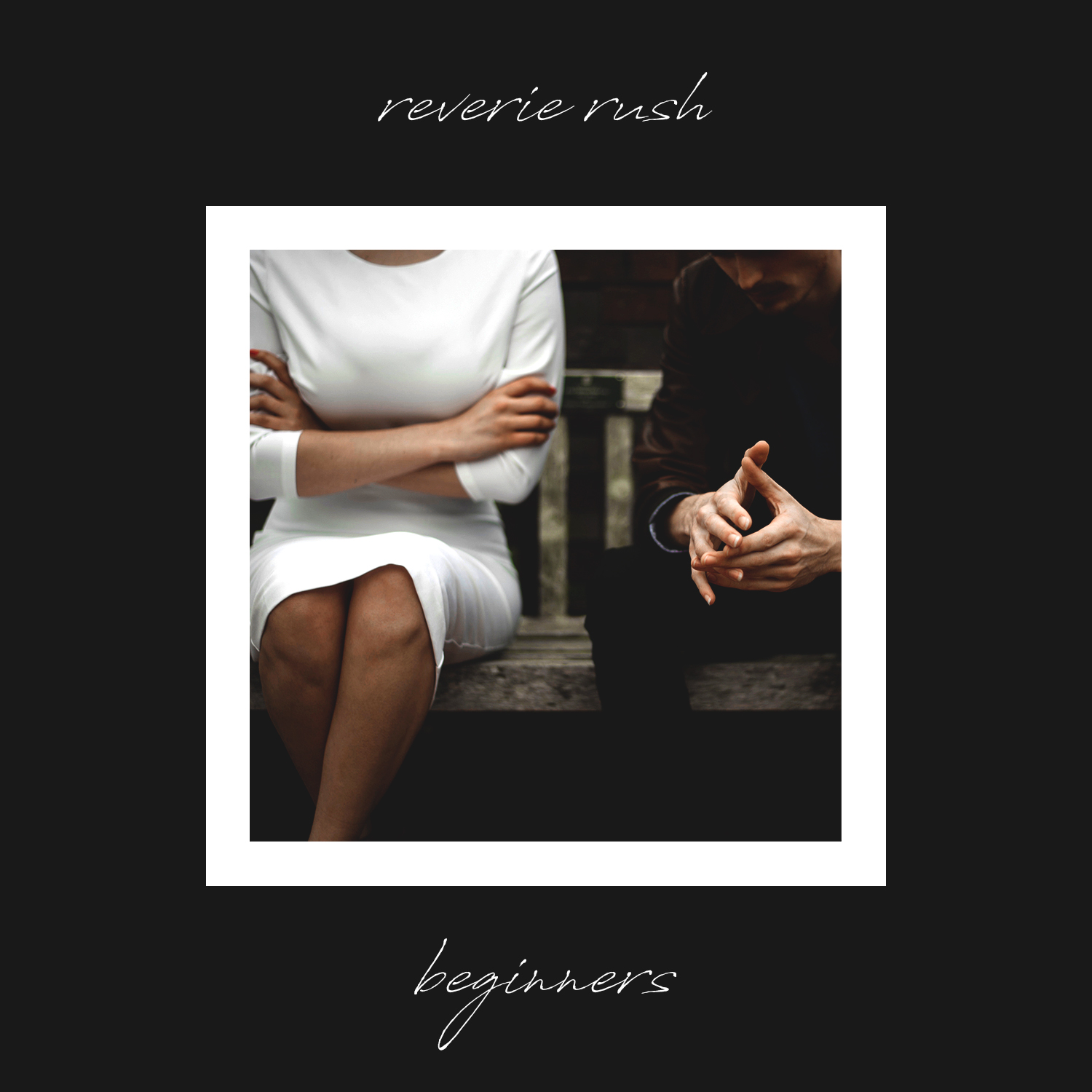
Reverie Rush is the heart-wrenching bedroom pop solo project of Athens, GA-based multi-instrumentalist, Andy Barton. Written after moving from Athens to Atlanta and back again in the span of a year, Barton’s debut release, the Beginners EP, drops today (as in, right here, right now).
“I lived in the city for about a year or so to try and give Fake Flowers, the band I was playing in at the time, a shot,” said Barton of the EP. “It was a pretty rough period, with a break-up, a dead end job and the eventual (first) dissolution of Fake Flowers…at first, coming up with these songs was just a means to help process a lot of the sudden life changes I’d experienced, but it became clear pretty quickly that I had to put together a cohesive document of that period of my life, like my very being required it.”
The five-track EP was written by Barton and recorded with former Fake Flowers bandmates, Jake Chisenhall (Delorean Gray) and Freeman Leverett. Check out the premiere below, and scroll down for Barton’s track-by-track breakdown below!
“Taking On Water”
“Taking On Water” was actually the last track composed for the EP. The chord progression had been floating around since the early days of the project, but it wasn’t until we went to record that it received a full arrangement and really came together. From the get-go I knew the EP needed an instrumental intro, though. I had envisioned this sad, shoegaze-y score playing over an image of someone lost at sea, their little ship taking on water. Jake and Freeman really helped execute that with their additions to the arrangement, which we just kind of jammed out in just a few takes.
“Coming up for Air”
“Coming up for Air” channels, by far, the darkest themes and elements of the EP. It’s all about grief and guilt and letting your loved ones down. I felt like I’d reached an all-time low, and getting all these feelings out in song served as a much-needed moment of catharsis. Writing this song presented a moment of clarity, where I was able to completely acknowledge that I’d made some pretty big mistakes that put me in a dark place, but I could also just as easily work towards bettering myself, and by extension, bettering others — that I could come up for air.
“What Have We Become?”
“What Have We Become?” kind of came about after playing around with a lot of dreamy, jazzy major 7th chords that reminded me of Fake Flowers songs. I wanted a guitar-driven song on the EP, something really urgent to express how I felt after moving back to Athens and trying to start anew. I was really pleased with how we were able to incorporate all the different guitar tones I really like: there’s jangle, there’s fuzz, there’s some post-punk influence, there are some shoegaze elements.
“Out of Sight”
“Out of Sight” was probably the second to last song I wrote for the EP, and as such it definitely reflects a more serene, level-headed perspective, bordering bittersweet. The ballad of the record, I wanted to give it a kind of loungey/crooner vibe, especially in the chorus. Jake and Freeman were listening to a good bit of bossa nova at the time, so I think that rubbed off on me, here. Freeman’s Thundercat bass line in the outro is easily one of my favorite recordings on the EP; it was completely improvised and pulled off in just a few takes. He finished tracking it, and I just started busting out laughing; it was so good.
“Run Its Course”
“Run Its Course” is the song that’s the most special to me, as it was the first one I wrote for the project, and the first song that I really ever wrote to completion. Once I’d gotten the verses finished, I was acutely aware of how much of a caricatured sad guy I probably sounded like, so I wanted the chorus to acknowledge that and poke fun at my own mope in a tongue-in-cheek way. I didn’t really know how to end the song initially, but Jake was really instrumental in solidifying the arrangement for the outro. Writing and recording that vocal section with him was one of the most personally gratifying musical experiences I think I’ve ever had.
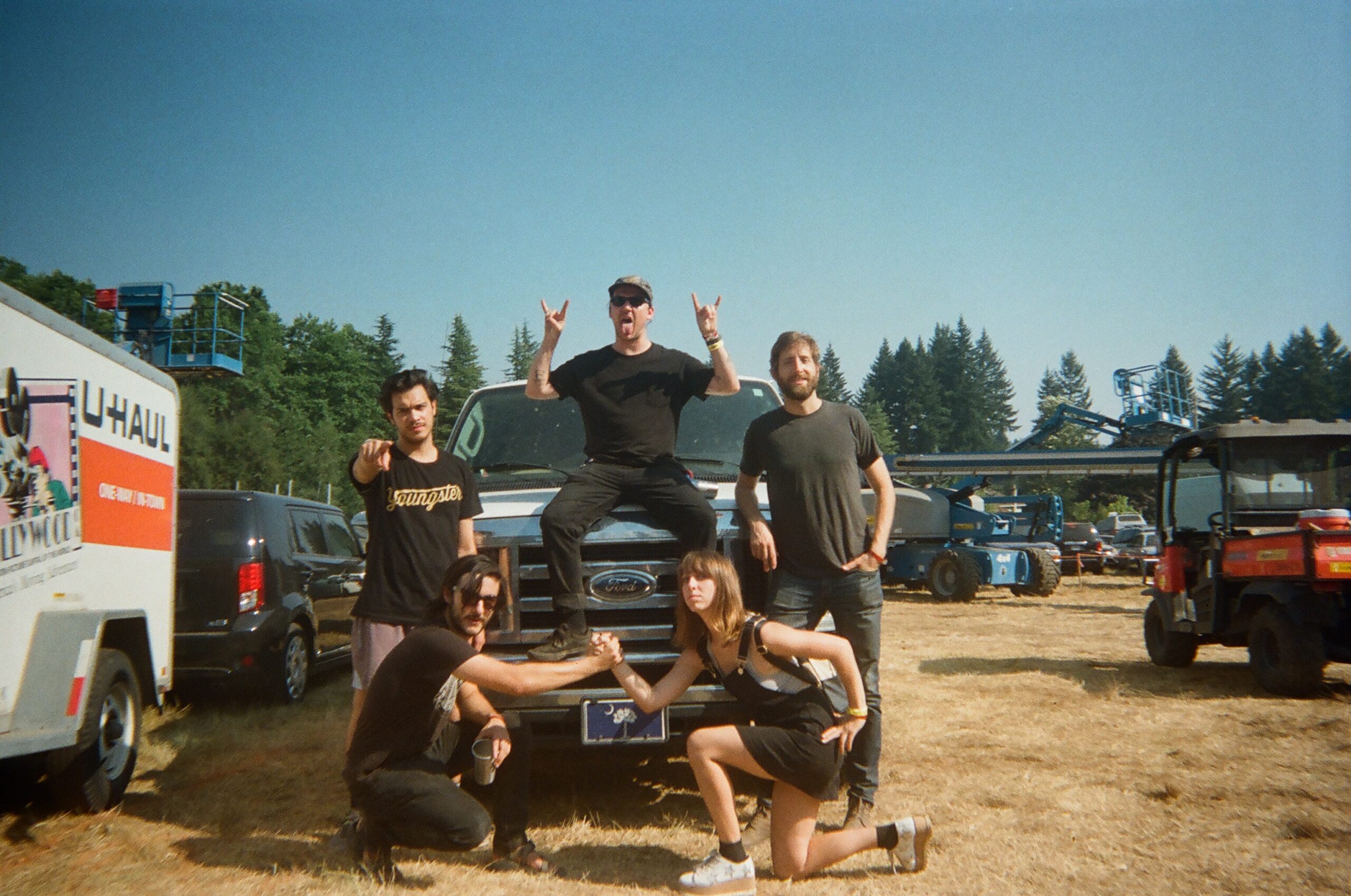
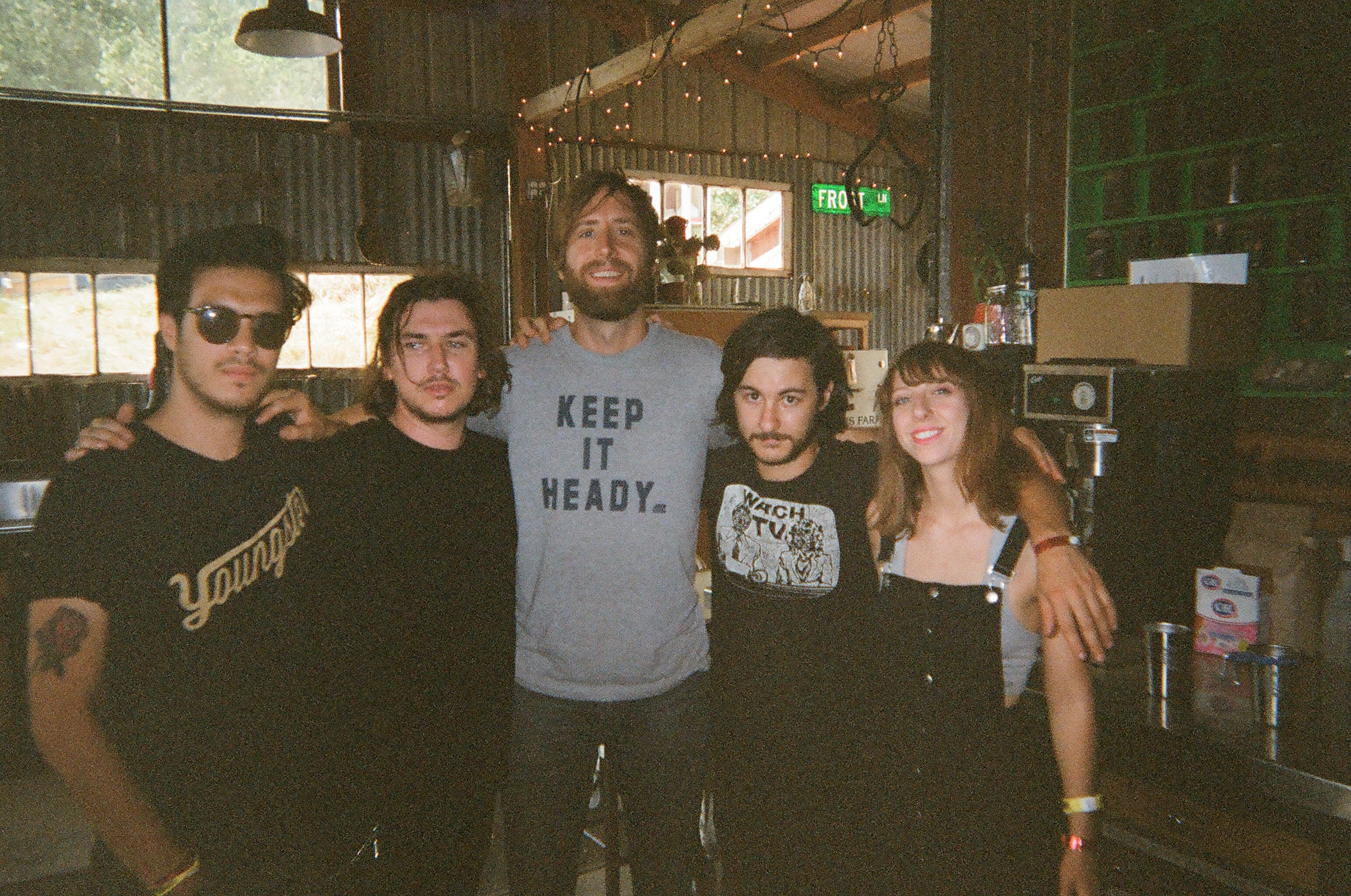
Self-proclaimed World’s Best American BandWhite Reaper took Sasquatch Music Festival by storm this year with their arena-worthy sound and stage presence. The Louisville, KY garage punk quartet—made up of Tony Esposito, Ryan Hater, Nick Wilkerson, Hunter Thompson, and Sam Wilkerson—borrowed a disposable camera from us to document their weekend at the George, WA-based fest. Check out their photo gallery below for lots of pics of incomparable views, random people they don’t know, and flying peanut butter pretzel bites.
[/tps_header]
I think these are the people that gave us the camera. [Editor’s Note: Yes, yes they are.]
Having spent the last four years as the lead guitarist of indie rock quartet Big Thief, co-founder Buck Meek’s solo aspirations were put on hold while he devoted most of his time to hitting the ground hard, building the band’s momentum. Now that Big Thief has taken off, Meek stands ready to bestow his own finely-crafted song cache upon the world.
A front porch troubadour, the Texas-born songwriter weaves a tapestry of simple and intimate folk tales on his self-titled debut. The record feels like a winding country road and introduces listeners to the myriad of charmingly real characters they might meet wandering down it, from honorable mechanics to runaways to gamblers. Many of these characters are admittedly fairytale versions inspired by the people in Meek’s life. “I’m most inspired by my friends, I’d say,” he explains. “As a creative person, it gives me more seed for exaggeration in my own mind and for developing archetypes and characters that can go far beyond the reality of their personality.”
While the people around him help personify Meek’s thematic ideals, there is a common thread in what he finds most exciting about the stage of players. “One of the most inspiring things for me in humanity is the heroism in the smallest of details in people’s character,” says Meek. “Like in the persistence and the subtle elegance that I find in everyone really, and just trying to find that gives me hope.”
Buck Meek is out now on Keeled Scales. I sat down with Meek at Willie Nelson’s Luck Reunion this year to talk about the record. Check out our conversation below.
Vinyl Mag: [The first single “Cannonball!” premiered on NPR.] Can you tell me a little bit about the concept and what that’s about?
Buck Meek: It’s a feeling of when what we perceive as linear time of our life seems to fold over itself. And for me, like in this song…like the moment of experiencing the bittersweetness of the feeling of relationship as a living thing, but as a memory—feeling the relationship and the power of it, the weight of it in memory—while also experiencing the pain of whatever loss. Like how that can just become this web of feeling. That’s what I was trying to get at with the song.
VM: So this is about a relationship. I feel like when I look back at past relationships, it’s like I’m watching a movie. It almost feels like it happened to someone else, in a very emotionally disconnected way. But this song is also partly mourning. Can you talk a little bit more about the actual emotions that you’re expressing?
BM: Yeah, I guess it’s that dichotomy of celebrating the eternal quality of that relationship while also mourning its loss. Facing the loss of it almost intensifies the power of it at the same time, which is probably why loss is so hard for us. Suddenly we’re faced with how meaningful something was to us when we don’t have it anymore, I suppose. I wrote it almost as a medicine and a mourning process, celebrating and letting go…it’s probably healthy to callous and move forward, and I guess for me, writing songs like this helps me celebrate what was while also externalizing it to the point where I can let go.
VM: Do you reopen it every time you hear it or play it, or does the writing of it give you complete catharsis?
BM: I do re-experience it, but because it’s in a form outside of myself—even if I’m singing it—something about it being in song form helps me not fall prey to the emotions as much.
VM: What was the timeline of writing these songs between Big Thief and touring; when did that line up?
BM: This collection has been falling together over the last four years. “Cannonball!” I probably wrote three or four years ago. My writing process is generally pretty slow and arduous. I’ll often write the first verse of a song as a response to something that happens to me, or a connection that I would make, or a character that I would observe in passing. I’ll often come up with the initial idea there, and I feel like maybe the first verse and chorus will come to me in 30 seconds, and then it’ll take me six months to finish the song, almost as if I’m reflecting upon that initial experience.
VM: Once you get the first nugget, how does the process unfold? Are you waiting for the rest to come to you, or do you set time to sit down and work it out?
BM: I think that initial burst comes at me randomly. That first source comes unplanned. Like, it’ll come to me sometimes while I’m playing a show with Big Thief, or while I’m on a bicycle or in mid-conversation with someone, and I’ll just scramble to write it down and play it as soon as I can. But the finalizing process of really hammering out the song is more deliberate and often very private. Like when I find a moment of peace, which is rare on tour. I’ll often wait until I get home to finish a handful of ideas that have come to me on tour.
Although on this record, there are maybe three or four songs that came as part of this song-a-week project that I did with a really inspiring group of artists in New York. With Adrianne from Big Thief and Mat Davidson from Twain and Mikey Buishas from Really Big Pinecone…and a couple of other people. I’ll leave it somewhat anonymous. We had a song-a-week project for two months, and it was really hard to have that. We each had to write one song individually per week, and it was really difficult to be limited like that, but also I feel like it really pushed me to rely more on my instincts and less on my intellect. Because often I would wait until the last minute, like Sunday night.
VM: Like songwriting bootcamp. Do you feel like that’s still affecting the way that you write now?
BM: It’s taught me a lot about relying on my instincts, which I feel has been really helpful for me, because I often will get in these cycles in my head where I start taking it too seriously or overthinking it, and that forced me to just rely on…basically not judge myself and to rely on my initial impulses in the creative process, and at least not judge myself in the process. A lot of these songs came from that project initially, and then later on I would go back and edit them maybe after some time had passed and I had some space to reflect on them. But it’s been really helpful for me to dig into that impulse from a more confident place.
VM: Why do you think now is the time to be bringing these songs forward?
BM: I spent the last four years devoting almost all of my time on the road to Big Thief, because we started touring maybe three and a half year ago…playing 250 shows a year or something, and that really didn’t leave much space for my solo project…I’ve been aching to bring these songs to people for the last four years, really. It’s been more of a decision to devote myself to Big Thief, because it needed that intention to come to the place where it is now. I’m really excited to finally have the opportunity to have a more balanced schedule with that.
VM: You said you’ve been aching to get them out. So you’ve been sitting on them for awhile. Because you’ve had them for so long, were they constantly changing from start to now, or do you know when you’re done?
BM: Some of them have changed completely. One thing that’s kept it fresh was that I’ve had some of these songs for four years, but the band that I’ve put together for this record was in flux until like the last year really it really came together. I’m so happy with these players, and we really made this record in the last year together pretty quickly, really. We recorded it really fast, so that breathed a lot of new life into these songs.
VM: Where do you go from here?
BM: Hopefully going to Europe with my band probably in the fall, realistically. Trying to play as much as possible. I really want to hit the road with this band and get to that point of instinctual mesh with them.
Buck Meek is out now on Keeled Scales. Grab a copy of the record here, and be sure to catch Meek on his upcoming tour (dates below).
Buck Meek Tour:
May 30 | Kerrville, TX at Kerrville Folk Festival
June 07 | Allston, MA at Great Scott
June 08 | Brooklyn, NY at Rough Trade
June 09 | Washington, DC at Songbyrd
June 10 | Durham, NC at The Pinhook
June 12 | Nashville, TN at The High Watt
June 13 | Bloomington, IN at The Bishop
June 14 | Chicago, IL at Schuba’s
June 15 | Millvale, PA at The Funhouse
June 16 | Philadelphia, PA at Johnny Brenda’s
June 7-16 with Sam Evian
June 7 & 8 also with Katie Von Schleicher
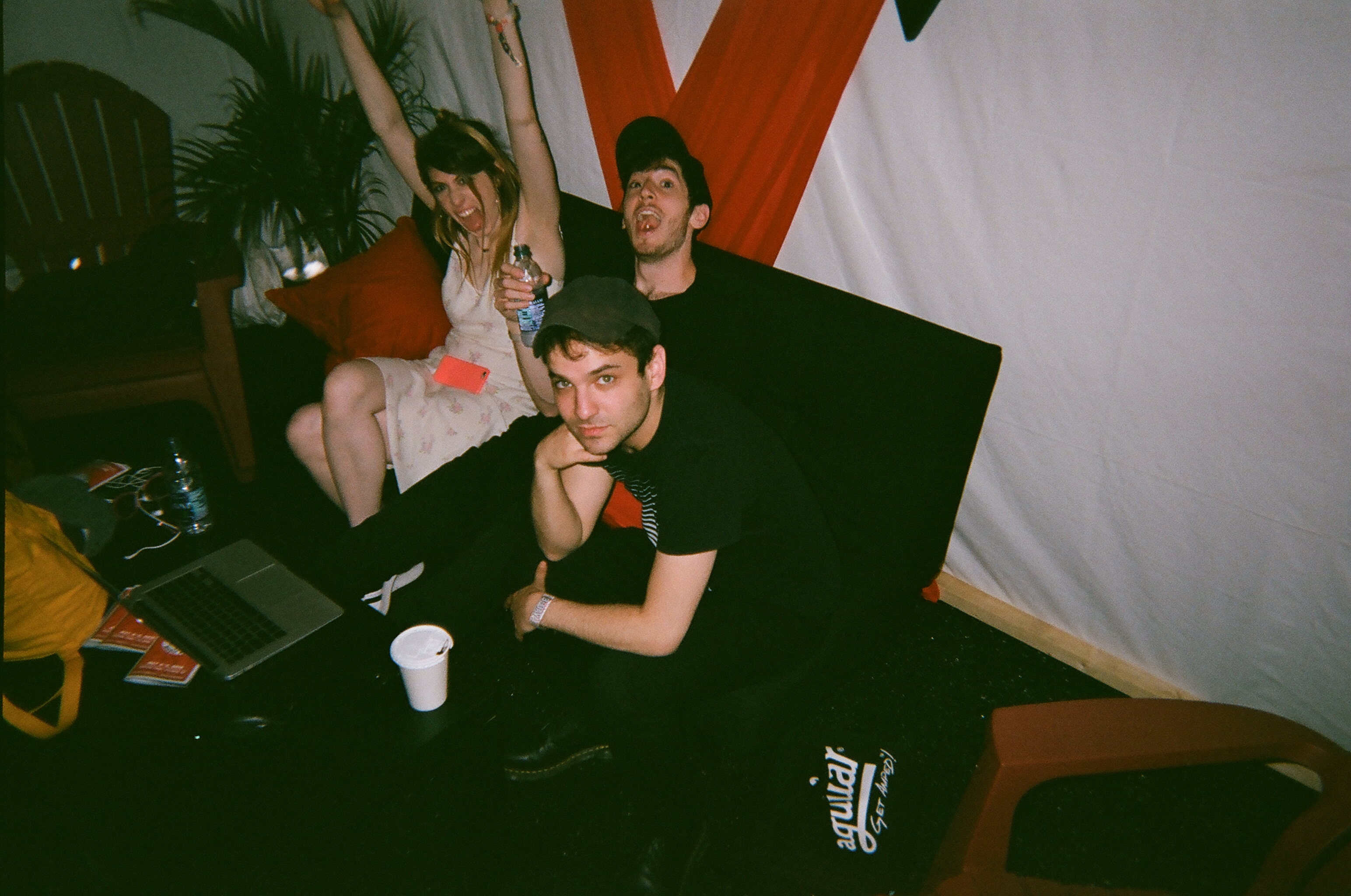
Last weekend, we handed off a disposable camera to Charly Bliss in order for them to document their full day at Atlanta’s beloved Shaky Knees Music Festival. The power pop quartet played Saturday afternoon at the Criminal Records Stage to a packed and mega-enthusiastic crowd. The setlist was comprised of mainly tracks from their 2017 debut triumph Guppy, though we were treated to a couple of new gems and one throwback from their 2014 Soft Serve EP. Takeaway: this band is a genuine joy to witness live, and we’re eager to hear and see more from them ASAP.
Check out the CB’s tour diary below, and be sure to catch them on tour. You won’t regret it.
[/tps_header]
In our most natural state….watching Vanderpump Rules in the green room.
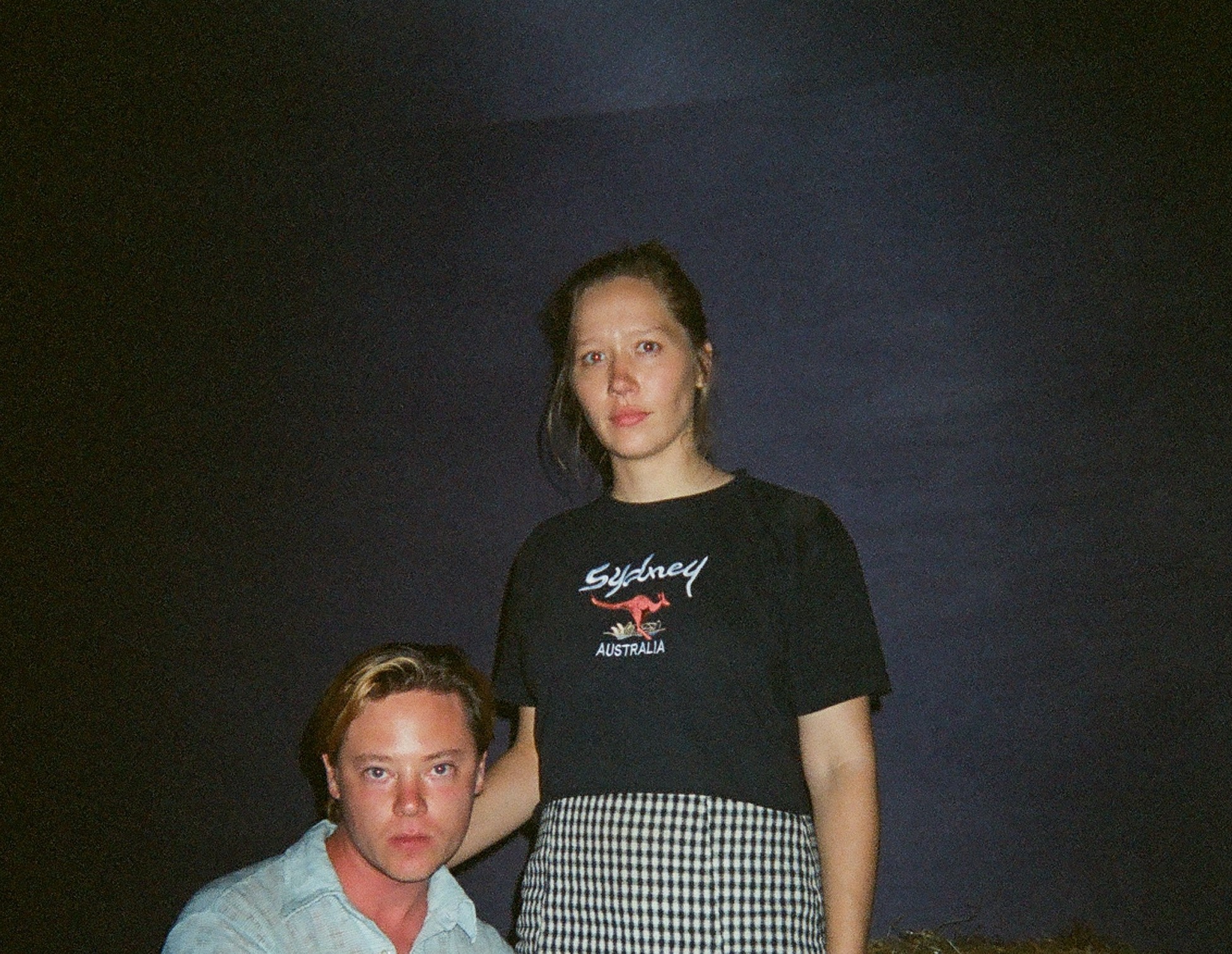
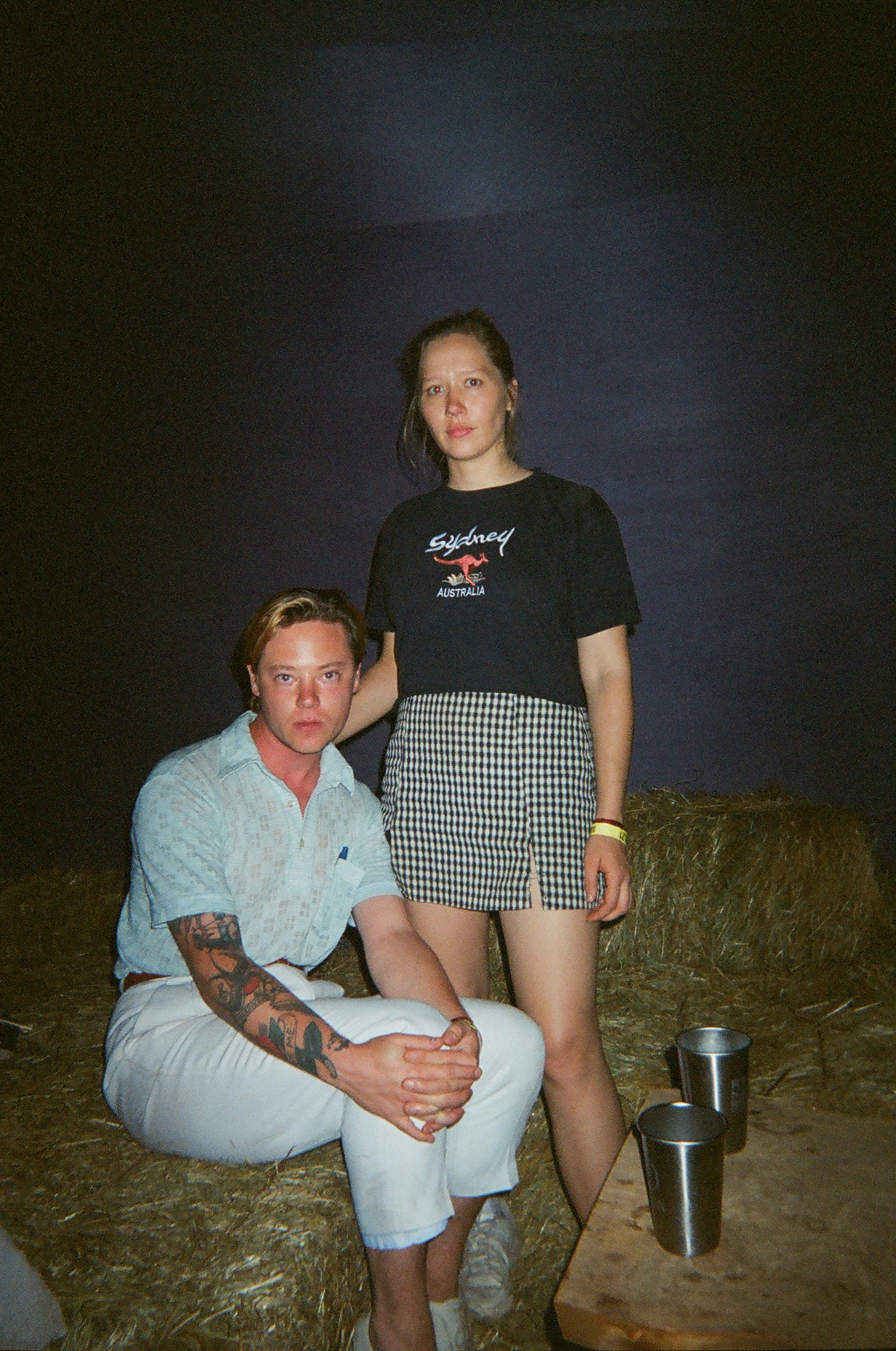
I tracked down some shade at Pickathon with Australian singer-songwriter Julia Jacklin and dove into a discussion about quarter life crises, trying to stay in the present, exploitation, and also less stressful things like her amazing music and the bliss that comes with turning off your cell phone.
Check out our interview with Julia below, and be sure to grab a listen to her brand new 7″ out now on Polyvinyl.
VM: First of all, so “Don’t Let the Kids Win” you said was about being 24 and sort of a quarter-life crisis sort of thing—not feeling happy about where you were. I super relate to that…I had a panic attack about being 24, and I was like, “I thought I’d be so much further along than I am now!” Twenty-four seems really old in that time.
JJ: Oh, totally. I feel like it’s that time between leaving school and being 18, and you’re like, “oh, I’m 18, give me like four years, and I’ll fucking be made.” Then you hit 22, and you’re like, “wait, what? I am not here yet.” So I think 24 is the time when everyone is like “no no no no, what’s happening?”
VM: I’m always either looking behind or looking into the future…I’m never really in the moment, you know? How do you keep in the present?
JJ: I think it’s become a lot easier since I’ve made a record and released it, because that kind of felt like finally…I felt like making albums was the first time I felt really proud of myself and had actually done these things, like working really hard at this shitty job to pay to make this record, you know? Kind of lined it up all myself, and I had this piece of work, and then ever since, it’s done well. I feel a lot more relaxed in a way.
I definitely went through a stage where I was like, “fuuuck…what if I never write anything else again?” Now after this record, especially, I don’t know…just kind of seeing as well the more I’m in the music industry and realizing how hard it is to actually get to where I am…a lot of my friends are still slogging it away at home in Sydney, which is a really tough music scene. We just don’t have any venues and artist support. It’s hard to get out of Australia, because it’s so expensive, so I think that having a lot of my friends who are still working really hard grounds me and makes me think, “don’t ever take this for granted for one second.” I definitely worked hard to get here, but I’m also extremely lucky, you know? And when people are like, “no, don’t say you’re lucky, you worked hard” I’m like, “yeah, but I had an advantage over other people for various reasons.” So yeah, I just feel very lucky.
VM: You said you thought this was originally going to be a heartbreak record…
JJ: I just came out of a pretty big relationship with an American man. It’s tough when you live in America and Australia as well. So yeah, I kind of thought as I was writing the songs like, okay, this is going to be a classic, “every song is dealing with this one romance whatever,” but once I had written my body of work I was like, no, I think a lot of it is just me reflecting on this time in my life, which I was glad about. I didn’t want to have—I mean heartbreak records are great—but I didn’t want to have my first record to be all, “he left me. Why?”
VM: “Eastwick”—you said you were inspired by Dancing With the Stars?
JJ: To be honest, I don’t want to say the episode, because I don’t want to insult anyone. But it’s more that the idea of…you know, when those reality TV shows use people’s pain and suffering and past lives and pretend that it’s because we’re letting these people express themselves creatively through pain and grief. It’s fucking bullshit. You’re exploiting 100 percent. Everyone knows…that’s not the most obvious point…I mean, it’s a pretty obvious point but…
There was this one episode where someone was just really…I felt like exploiting the death of this person’s father, and I just remember thinking, “ugh.” It just made me reflect on a lot of things as well as being in the music industry with how much you want to say in interviews and how much you want to give out there, because everyone really wants a juicy story. You can’t just be a good musician. You need to make good music, because you’ve overcome something. There has to be an angle. That can sometimes feel a little like scary, because you think, “what if I don’t have an angle,” you know? What if I’m just doing my thing? Is that going to be enough?
VM: You directed the music video, can you tell me about that concept a little bit?
JJ: I just have this really great friend Sam Brumby who I make my music videos with who’s super patient with me. Basically all I had in my head was I just imagined me drinking a blue cocktail in the suburbs. That’s all I had. I got my mom to make me this outfit, this blue outfit which we got the material from a kid’s material shop. All the stuff I’ve done I’ve wanted to stay in the Blue Mountains where I’m from, so that’s kind of in. I filmed it in my sister’s garage and her house in the Blue Mountains. I guess it’s a pretty classic, just trying to show what it can feel like growing up in the suburbs as someone who wanted to have a creative life. I felt a bit stifled there, so that’s what I was trying to show.
VM: Are you in Barcelona now?
JJ: Kind of. But we haven’t been there for months.
VM: What inspired that move?
JJ: I had this really naive idea that I would go and stay in Barcelona and learn Spanish, because I learned quite a bit when I was younger…but learning a language is really tough. It’s a lot harder than you initially think…I’m using books and stuff, but so much of it is about confidence, and it’s so much about getting out there and being willing to humiliate myself in front of these people. I think that’s something I need to get better at. I think that being on tour, it’s hard to have enough mental energy to learn something like that…but still, it’s a beautiful city and I love it.
VM: Who are you excited to see this weekend?
JJ: I have already seen Andy Shauf who I am always excited to see. I’ve seen him play more times than anyone ever except like my best friend back home, because we toured with him, but I think he’s a musical genius. So I’m going to see him again tonight. I haven’t really looked…I really want to see Steve Gunn, playing right now, so hopefully we can catch a couple of his songs. Tank and the Bangas…I want to see them today.
VM: What’s next for you? Besides everything we’ve already talked about.
JJ: Then the day after I get off and finish the last show, I’m flying to this tiny island in Croatia where I’m going to just spend like two weeks with my phone turned off, by myself, by the ocean. I think I’m in the moment—I’m really enjoying this—but I’m looking forward to two months off where I’m gonna go to Croatia and then travel up through Bosnia, and then we do like another little tour [dates here], and then I’m home in November.
Click through to see Julia’s disposable camera tour diary below!
[/tps_header]
The shade cloth situation over the main stage area has to be the kindest thing I’ve ever seen a summer festival do for their audience.
We recently spent some time on a hay bale at Pickathon with Justin Osborne, founding member of Charleston, SC five-piece SUSTO. We chatted about things like coming to grips with how hard life is, realizing life can still be okay once your illusions about it have been shattered, giving up, un-giving up, whether or not there is a higher power, and of course the masterpiece that was the Pickathon lineup this year. Enjoy, and keep it heady, friends.
Vinyl Mag: So first of all—SUSTO translates to “panic attack”?
SUSTO: Well, it can be translated in a lot of different ways, but it’s like a folk-illness where you go through something traumatic. It can be a panic attack. It can last just like an hour, or it can be something you go through like a long state of depression, something like that. It’s kind of when you aren’t really yourself; you’re beside yourself and you’re overwhelmed…you feel like your soul is left, or anxious, or whatever.
VM: That meaning and the album & I’m Fine Today…it’s so relatable. That [one day at a time] living.
S: Well our first record was self-titled, because really the band name came from what I was calling the project, like the songs…I felt like the word “susto” really fit the first set of songs, and that kind of dealing with shit in your life feels very much present in all of our music, but it’s like, “okay, if the first record is called SUSTO, then the second record could maybe have a little more hope in the title and even in the songs.
VM: Even like you said, talking about things coming in waves, like “I’m fine today” holds a lot of meaning.
S: Well, I think it’s kind of the whole take-away from the record. Life is both, you know? It’s good and bad, and as you get older you have to learn that, and you learn to be prepared for that. To be prepared for highs and lows in life and just ride it out.
VM: It seems like in the record, it’s coming from a place of being at peace with that more.
S: Yeah, not being so thrown off by being blind-sided by life. I mean, the first record I was like, “oh shit, life isn’t what I thought it was going to be,” and the second record is kinda like, “okay, but it still isn’t that bad.”
VM: You—for a minute—thought you might be done with music before you started this?
S: Yeah, I tried to quit.
VM: How do you keep from getting burned out now?
S: You know, when I went to Cuba whenever I quit music, and I got to be around a completely different music environment—I’ve been working in the American music industry and spinning my wheels; I’ve even been touring since I was like 18…I was 25 or 26 whenever I decided I wasn’t getting anywhere, and so by then I inadvertently ended up getting around this music scene that wasn’t about getting big or anything like that—which don’t get me wrong, I still want to grow our band as much as we can—but I just fell in love with the music again and songwriting.
I learned how to do more open and less censored than what I was writing, too. I think I’ve kind of been reset ever since then. And because of that getting back into it, it’s been a lot easier this time through, because I’ve had the experience of last time, so I knew a lot of what not to do, and I’ve started to embrace too that this is what I do. I think for a while, when you’re in a band and you’re trying to tour but you haven’t really made it, you go home and everyone’s like, “still doing the music thing?” and you’re like “yeah…” and they’re like, “well, we haven’t seen you on late night or anything yet,” and it’s hard to reconcile with yourself. You always ride the fence. It’s hard to commit. At least, it was hard for me to commit. But I’ve committed fully this time, and it’s been really rewarding to just put myself into it, and I enjoy it a lot more now, and also we’ve had some reasonable success, so it’s been cool.
VM: So, in terms of what I’ve read and how you talk about your writing process, it seems like it kind of comes to you a lot…
S: I feel like it’s something I channel more than anything…it’s not like it just randomly hits me or something, but I can set the vibe to where it’s conducive for me. I like to write alone, and I like to do it in the morning time when I have the house to myself. I’ll get stoned, walk around the little parlor, guitar on my stomach, and just sing to myself. There’s no inhibitions when there’s nobody around, so I just kind of free-flow and, you know, a lot of it is garbage. But I do it a lot, whenever I get the chance. So some of it isn’t garbage, and there’s something either almost completely there, and sometimes it’s a piece of a thing that’s there, but even when there’s a piece of a thing, you’ll go into the studio with what I’ve got, and I like to just freestyle the lyrics and just sing it as I’m going.
I just don’t like thinking too much and forcing it. I used to try to do that whenever I was a kid, and I’ve just kind of turned away from that. I would sit in class and write lyrics. But I just like to let it come out of my body. I’ve been writing songs enough that if I just listen to myself, I’ll say what I wanna say.
VM: Do you have other creative outlets besides music writing?
S: Instagram. I have like four Instagram accounts. Really. They’re really stupid though. We have like all the SUSTO band stuff, then I have a personal one that’s just funny—I like to take pictures whenever…you know when you’re at a diner or a hotel, and they always have a picture of Marilyn Monroe and Elvis in it? I’ve got this running thing where I’ll get a picture with the picture of them and be like, “I can’t believe I ate at the same Applebee’s as Elvis and Madonna!” or whatever. I have another one where I just take stoner photos on the road, of like awkward stuff. I don’t put it out there, I just do it for myself, because I’m really bored in the van and take a bunch of photos. So no, I guess I don’t really have any other creative outlets [laughs].
You just premiered the video for “Jah Werx,” and first of all I wanted to talk about the concept for the video, but I also want to know what your take on the universe is because you’ve said you don’t believe in hell but also “Jah Werx” [is a reference to some sort of higher power].
S: Starting with the video, we worked with a director out of Nashville, called Matt DeLisi. He kind of had a vision for the video, of kind of like juxtaposing a child with a graveyard, because the song is kind of about dealing with death in a cyclical nature of things. It talks about lifetimes on Earth or in a carbon place which is Earth, and then you know, how it’s always back in the ground. So we wanted to juxtapose those two things, and also we kind of wanted to capture the environment—not the city environment, or the beach, but the kind of natural swamp environment around Charleston.
As far as how I see the universe? Personally, I try not to think about it too much anymore. I thought about it a lot for a long time, and I think this record and the last two records are gonna help me get a lot of that out of my system. I feel one way about it one day and then a different way about it another…I don’t really believe in God, or in like “Jah” is God. For me, “Jah Werx” means “it’s all good,” you know? I mean, I am a big stoner, and I smoke a lot of herb, and I’m kind of in to Rasta culture, a really big fan of Bob Marley—he’s probably one of my favorite artists…we have the song “Jah Werx” where it’s a triumphant mantra, you know? Like “Jah Werx! I’m fine today.” I don’t know how to explain it; there’s no concrete. We get caught up trying to have firm ideas about the universe and about life, and I think it’s kind of more important to understand that everything is fluid. When things are good, say “Jah Werx.” But when things are bad, say “Jah Werx,” too.
VM: So you opened for The Lumineers, and now you’re doing the headlining thing. How do these experiences compare? What did you learn?
S: Absolutely different. They’re both really fun. Getting to open for The Lumineers was really cool because we were playing in arenas and getting to do that—as someone who’s been trying to play music as much as I can since I was 15, it was an incredible experience. I just like getting to jam and soundcheck and then getting into the arena; there’s no sound like an arena sound. But at the same time, you’re playing first out of three, because Kaleo was on that tour, too, and Kaleo is pretty fucking big—and they’re awesome, too. We were surprised: it was usually pretty full—it wasn’t packed—but also the same time it was people who had mostly never heard of us before, so we were winning people over, and we have a shorter set. Picking which kind of set you think is going to work for their audience, at the same time not compromising who you are…but we also learned to be more showman. Our rooms are big; we have to make bigger gestures and really try to entertain. Watching bigger bands, you learn, “oh, this is how you entertain.
VM: So who are you most excited to see this weekend? You’re not here very long.
S: I have to leave like, right now. But I’ll tell you who I’m really bummed I’m not gonna see: Julia Jacklin. I want to see Julia Jacklin so fucking bad, and I haven’t yet. I want to see Aldous Harding…and Andy Shauf. I’ve been trying to see all of them for probably over a year now.
Check out SUSTO’s disposable camera tour diary below.
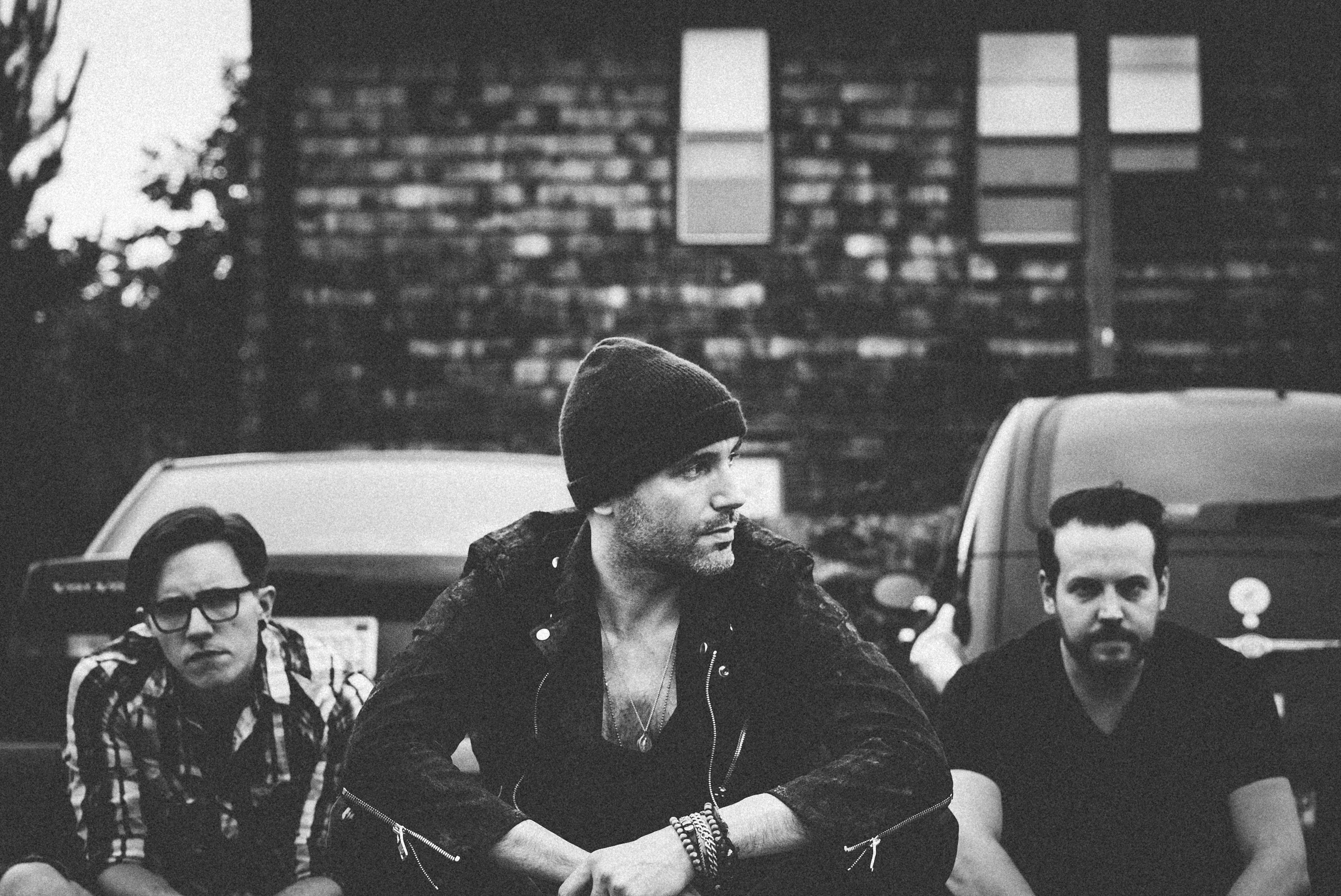
Chicago pop rock trio Hidden Hospitals are dropping the newest single from their second full-length, LIARS, out later this year. “Smile And Wave” hits you where you live, with a climactic-scene-of-a-movie, hope-for-the-future, montage-of-the-past impact.
Or, as the band describes it, “Christmas meets summer crush and the facade of playing house.” So there you go.
Check out the premiere of “Smile And Wave” right here, and let it wash right over you.
We caught up with Frank Keith IV of Nashville’s Great Peacock at Shaky Knees Music Festival and asked him to document their weekend on a disposable camera. We learned that they are in love with Ryan Adams and free swag, and they have a helluva lot of friends.
Check out the gallery below, and be sure to head out to see them on their tour with The High Divers, kicking off tomorrow in Athens, GA.
5/31 – Athens, GA, Georgia Theater Rooftop
6/1 – Chattanooga, TN, Revelry Room
6/2 – Charlotte, NC, Visulite Theater
6/3 – Asheville, NC, New Mountain
6/4 – Birmingham, AL, Syndicate Lounge
6/6 – Tupelo, MS, Blue Canoe
6/7 – New Orleans, LA, Gasa Gasa
6/8 – San Antonio, TX, Sams Burger Joint
6/9 – Austin, TX, Swan Dive
6/10 – Dallas, TX, Gas Monkey(Matinee)
6/10 – Fort Worth, Main @ Southside
6/11 – Houston, TX, House of Blues*
6/16 – High Watt, Nashville, TN*
*w/Little Hurricane
[/tps_header]
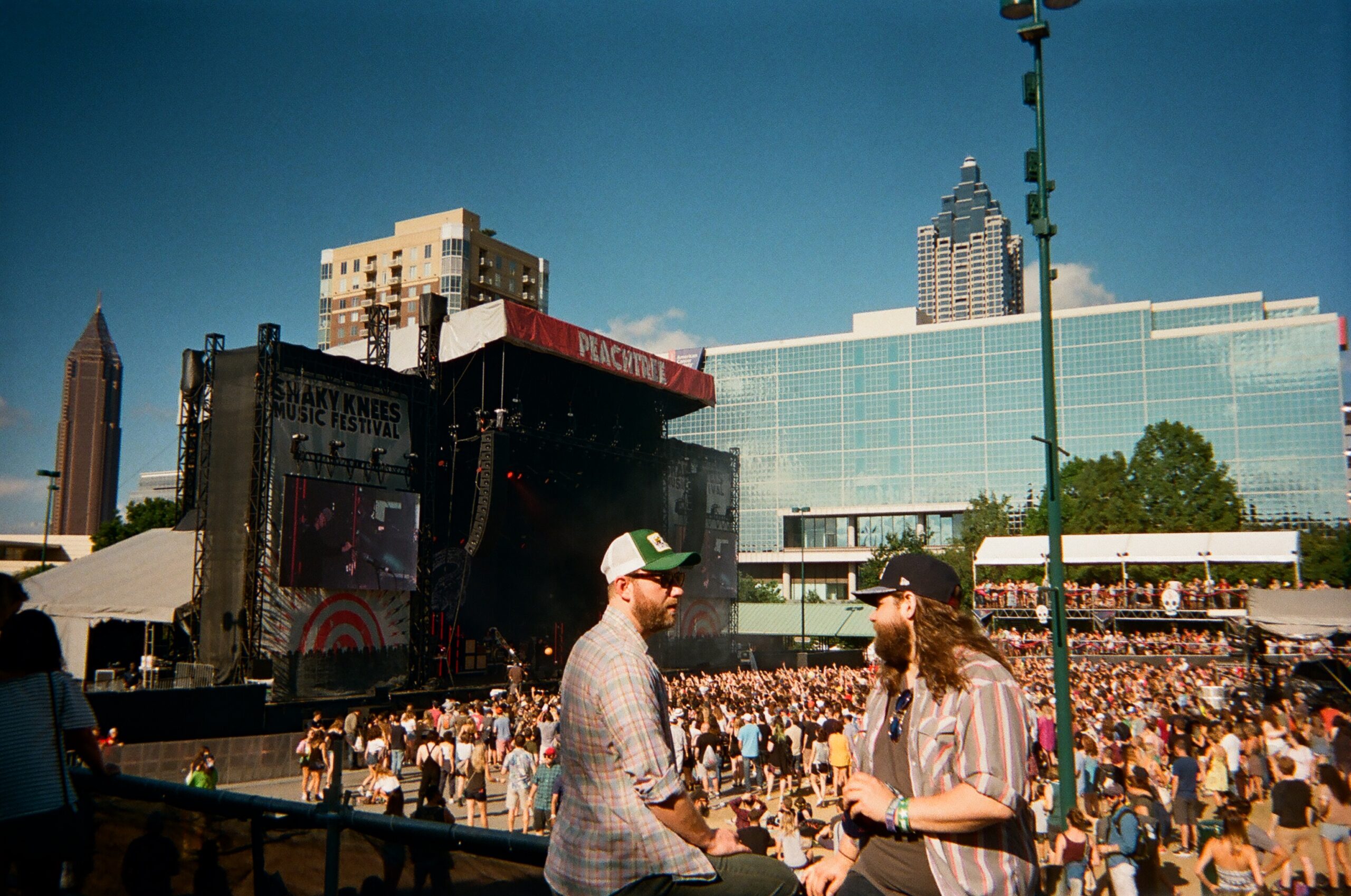
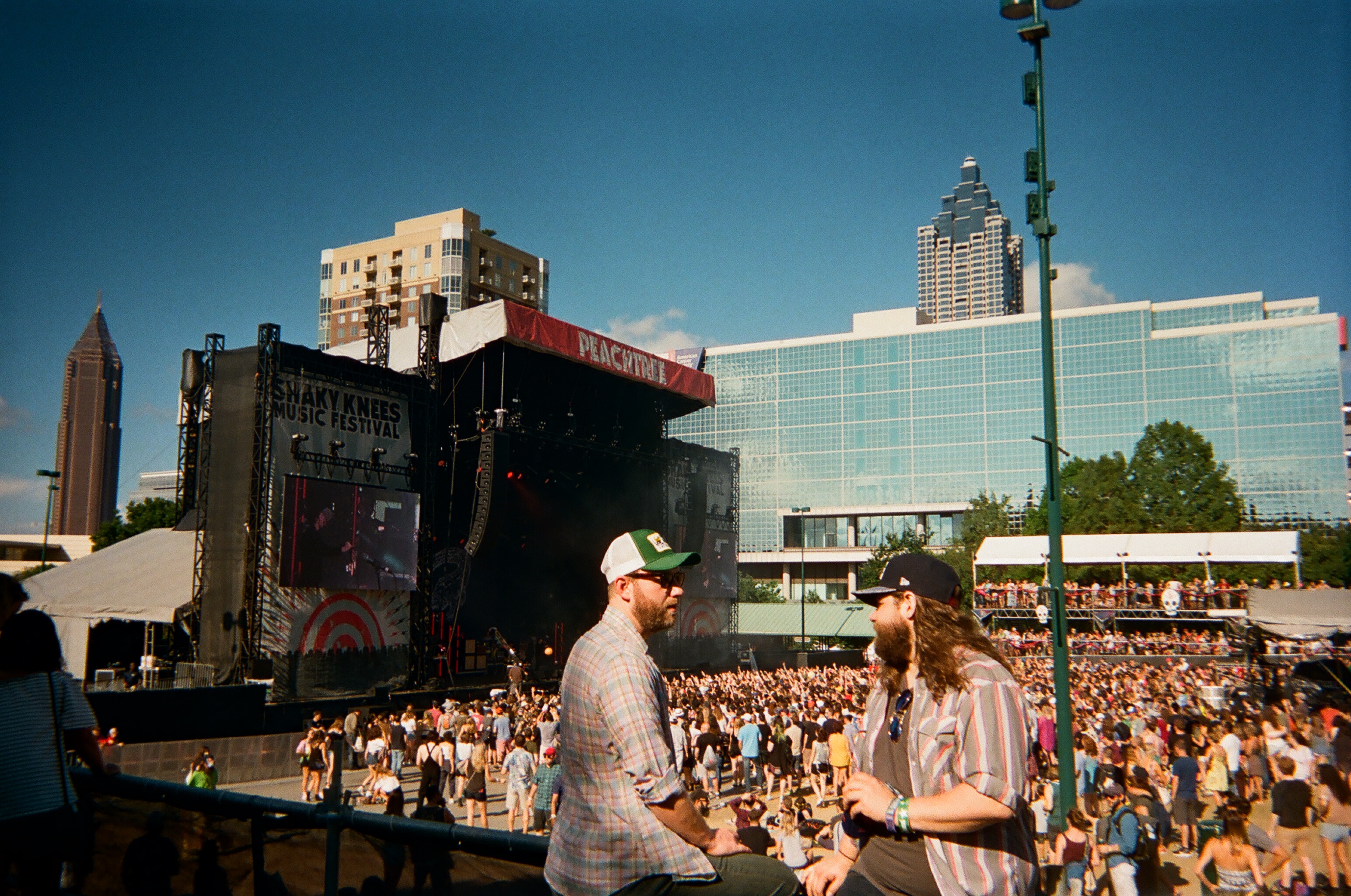
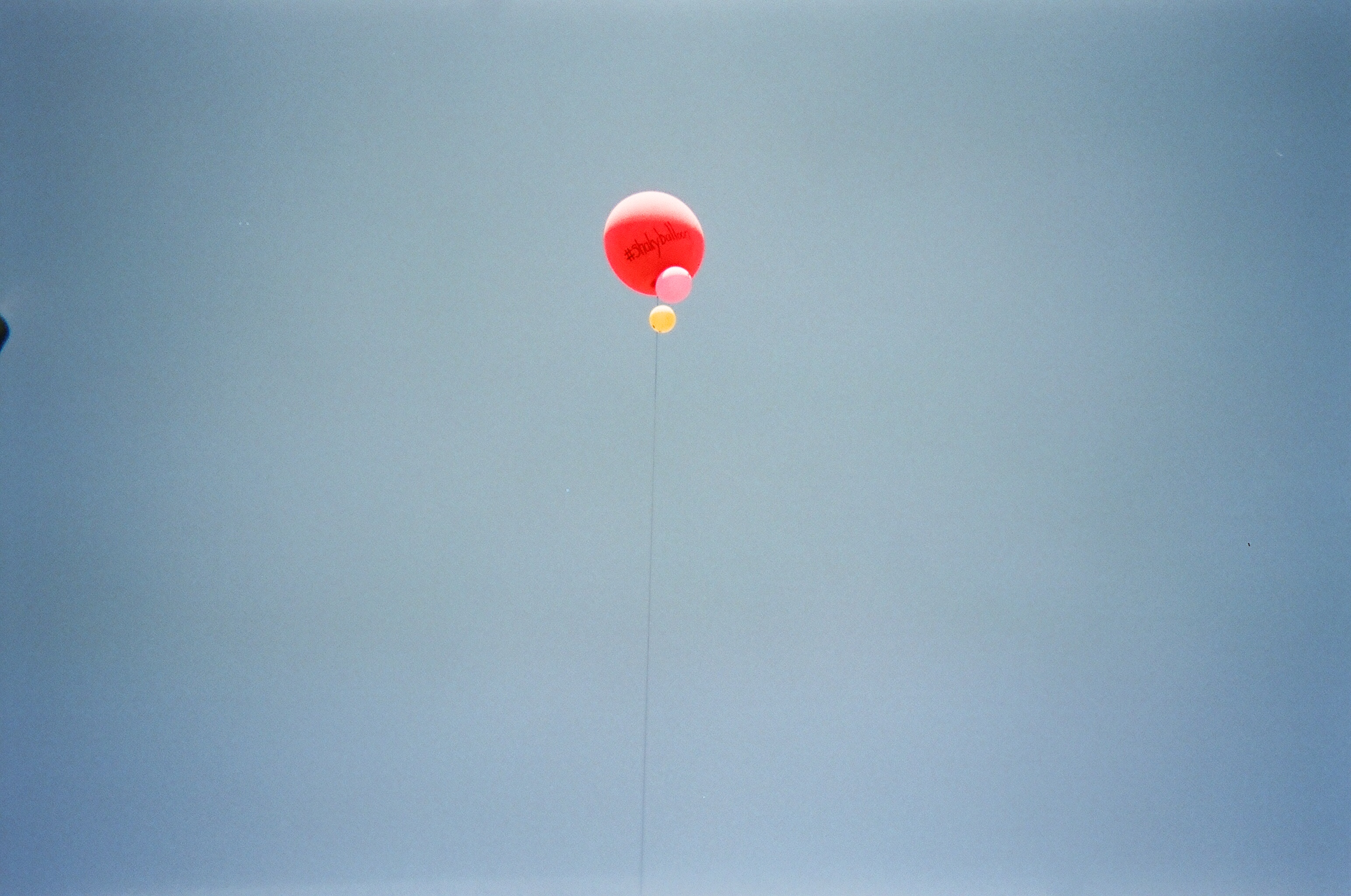
“Shaky Balloon” one of the many landmarks that made it EASY AF to find your friends.
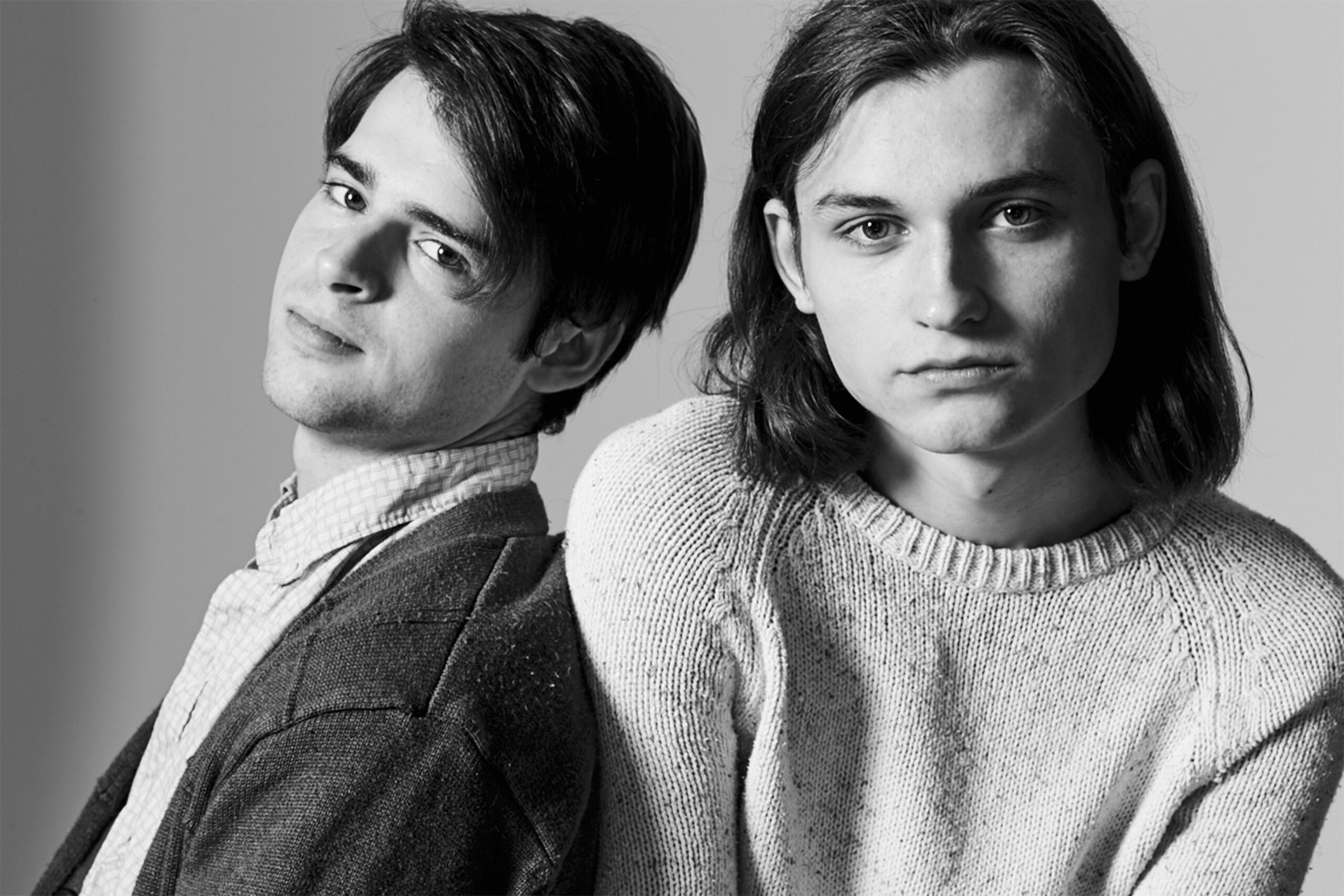
Brooklyn based indie pop duo Pueblo is made up of Jonah P. Smith and Julian P. Smith, childhood friends since grade school days in their hometown of Dallas, Texas. The Smiths, who dropped their debut EP, Boring the Camera, earlier this year, are currently on tour in the US.
The two friends may be somewhat new to the five boroughs, having just relocated here in August of last year, but they’ve quickly established their local haunts.
We asked Jonah to put together a guide of his typical weekend spots, partly to get some insight into the artist himself, but also partly because we selfishly want the scoop on where to find a good jukebox bar.
The “Super Heebster” might be the best food I’ve had in the city. Never tasted anything like it—Whitefish and baked salmon salad with cream cheese and Wasabi roe on a Bagel. It’s an expensive sandwich, so you can’t get it very often, but when you do, it’s worth every penny. There’s nowhere to sit at Russ and Daughters, so order your sandwich and then walk to the park cafe with picnic tables across the street where they play sweet tunes.
For the nasty meat eaters in the band, Bonchon has become a pre-gig ritual. I hear it’s the world’s best Korean Fried chicken, outside of the real deal.
We’re actually most likely to be at Rockwood on a Monday night for Jim Campilongo’s ongoing residency, but it’s one of our favorite spots to see shows any night of the week.
Punjabi Grocery and Deli
After the show at Rockwood, walk a couple blocks to Punjabi for a six dollar, full plate of amazing Indian food.
This place is probably the closest to our hearts of any other place on this list. It’s been one of the only constants throughout a full year of trying to navigate this massive, complicated, scary city for the first time. Lots of memories. We love you, Greg.
This is a great spot for getting in the headspace to do homework for hours on end. It’s also one of the only places I’ve found that has good coffee AND food. There’s a bunch of vegan and vegetarian sandwich options.
Prospect Park
For anyone who misses nature in the city, this is the place to be on a Sunday morning. In addition to all of the greenery, it’s just nice to see some open, unobstructed space.
456 Shanghai
Sunday nights in Chinatown are a much different experience than going on a Saturday afternoon. The streets look abandoned in comparison. Stop at 456 Shanghai for a nice and quiet, romantic dinner.
Every sound has been explored. So the thing it comes back to is, what can you contribute to the world? What can you actually give to people that is beneficial to them or can better their lives or make them think or make them feel?
Ron Gallo is calling us out.
The ex-Toy Soldiers frontman recently released his first solo album Heavy Meta, an aggressive departure from his roots Americana past. The album’s heavy, energetic garage rock vibes may make it impossible for you to sit still in your seat, but they’ll knock you right back down again if you pay any attention to the lyrics. The Nashville by way of Philadelphia artist’s debut is a raw and poetic expression of frustration, holding a glaring mirror up to societal issues, sometimes ironically, and oftentimes more harshly.
I sat down with Gallo at Atlanta’s Shaky Knees Music Festival to discuss Heavy Meta and where he goes from here.
Vinyl Mag: Who are you most excited to see this weekend?
Ron Gallo: J. Roddy [& The Business]. On Thursday, we did the kickoff party with FIDLAR and Twin Peaks. And they were both amazing, and then they were the two bands I was most excited to see again. We caught FIDLAR again, and we missed Twin Peaks, because we were parking. Third Eye Blind for sure. I would say Ryan Adams, but he’ll probably cancel an hour before his set. I actually want to see Hamilton Leithauser, because I was a big Walkmen fan.
VM:Can we talk a little bit about the concept for “All The Punks Are Domesticated”?
RG: Before I moved to Nashville from Philly, I had a job cleaning houses for the last six months that I was there saving up for the move. Basically, the job was getting up early, and you would team up with one other person, and you’d hit four or five houses in one day. And all of the people I worked with were all these punk rock kids. Just punks, through and through. We were cleaning houses, and the girl would be wearing this shredded punk rock tee and have all these tattoos and play in her punk band, but she would talk about her student loans, or like, “me and my boyfriend just got this apartment, we’re financing this new car, I’m trying to go to med school.” And it was just this really funny thing, like the aesthetic of the lifestyle in comparison with just listening to her talk about all of these…I shouldn’t say her, because it was multiple people, but it was kind of the same experience…and then the title came to me. Then at the same time, I was in Philly, and I didn’t know what I was doing in my life at all, and I had this sort of underlying misery just trying to figure it all out and making music and having my frustrations with that as well. So the title came from that, and then I kind of put it all together with my feelings about the current state of music and the world.
VM: In your bio, you said that Heavy Meta was “the first few findings from my guerrilla treasure hunt for bullshit.” What kind of bullshit did you uncover?
RG: A lot. So like, externally in the outside world, “Why Do You Have Kids?” and “Kill The Medicine Man” are comments on outside things. And also, “Kill The Medicine Man” is an internal confrontation. But also, “Poor Traits Of The Artist” is tongue-in-cheek me bitching about how hard it is to be an artist in the modern day, in a whiny but a self-aware way. So “Why Do You Have Kids?” was just seeing things in the street, like bad parenting. “Put The Kids To Bed” [is about] sort of being in stagnant, complacent, dead relationships, and we’ve all been there, and I’ve been there. It’s all pretty reflective of just starting to dig in and look at the world around you and look at yourself and be like, “it doesn’t need to be this way. Let’s get to the bottom of what’s bothering you. Let’s get to the root of the suffering.” And then look at it, and confront it, and that’s how you can start to overcome it. So that’s really what the record is.
VM: Tell me more about the creative process of the record as a whole.
RG: I kind of just like to live it in a way. Just kind of living with it and looking for things. For example, “Why Do You Have Kids?” was a very clear creative process, because it was just seeing something, asking a question in my head, walking a couple of blocks, and then the song comes out—words first and then music. Not always words first, but for the most part usually that’s how it goes. I don’t like to limit it to one thing. Certain songs on the record—”Poor Traits” and “Put The Kids To Bed”—started as I took a Casio keyboard, and I pressed play…I found a fake drum beat, and I let it loop for three minutes, and I went and played bass and created this musical bed. It’s always different. I think lyrics are the most important part to me, and that’s something that you can always be thinking about. Notes in your phone and voice memos and stuff, and then kind of see how it comes together.
VM: You’ve said that you believe the universe is in all of us. What does that mean?
RG: Well, it is. I do believe there is a sense of oneness. There is no difference between you and I or anyone else or any other living thing. Even when you kind of look at the way that our bodies work versus the way the universe works, they’re almost mirror images of each other. We are all composed of atoms that work together for a greater good, and that’s the same as the universe…also just the idea of perspective: that the universe only exists because [we are] here to experience it. Without us, it’s not there—and not in a self-centered way, but in a unifying way. It’s about realizing the limitless potential people have, the capability to become a part of that and surpass this distraction, material world bullshit that we reside in.
VM: Back to “Poor Traits [Of The Artist]”—it does call out the artist. It’s intentionally meta. There is a line “is luck a pursuit worth pursuing.” Do you think this is all luck?
RG: No, actually. Not anymore. I think for awhile, especially at the time, it seemed—even what we’re doing today, being here at Shaky Knees sitting in this room on a beautiful day—seemed like an impossibility. Like, how do you get there? How do you put records out? How do you reach people? Like, it just seemed like an impossible task, for doing it for eight years with not much quote-unquote reward. So I guess when I wrote the song, and I was frustrated about it, it seemed like it came down to luck, just being at the right place and the right time. But I think the realization, too, was that it just comes back to what you’re making, and it’s music. Nobody needs it. Nobody ever needs to hear what any person ever needs to say. It’s been done a million times. There’s millions of bands that all have something to say. Every sound has been explored. So the thing it comes back to is, what can you contribute to the world? What can you actually give to people that is beneficial to them or can better their lives or make them think or make them feel? So it just comes back to doing that. It’s not really luck. Make something that is meaningful to you or that really hits with somebody, and it will work the way that you want it to. And I think that the God’s honest truth is that, if it’s not working, it comes down to what’s being made. I don’t think anybody that’s ever done anything earnest and good that had even a bit of a work ethic just completely went unheard forever. Sometimes it’s a longer road. But that would be a really sad story. I just don’t think that it happens like that. I think it’s just making good shit and being down to put the work together and not giving up. Luck can expedite the process, but it’s not the be-all end-all.
VM: Do you write on the road?
RG: Always. We started recording this random concept EP that came out of nowhere. Our friend Chris had this idea, and he called me and told me about it. It’s like an extension of Heavy Meta. It’s kind of based around using puns, and it’s all about the music industry. It’s gonna just be fun and this lighthearted concept, extension of Heavy Meta,and then we have a lot of the next album pretty much written and worked out. We play some of the songs now, and we’ll probably start recording that soon.
Ron Gallo is currently on tour in Europe and gearing up for upcoming US shows with Twin Peaks followed by a west coast tour with White Reaper. Dates below.
Ron Gallo On Tour:
May 25 – Stroomhuis – Eindhoven, Netherlands
May 26 – London Calling Festival – Amsterdam, Netherlands
May 27 – Sniester Festival – The Hague, Netherlands
May 28 – LA MECANIQUE ONDULATOIRE – Paris, France
May 29 – Shacklewell Arms – London, United Kingdom
Jun 01 – Nelsonville Music Festival – Nelsonville, OH
Jun 02 – Nelsonville Music Festival – Nelsonville, OH
Jun 04 – Governors Ball – New York, NY
Jun 06 – Chameleon Club – Lancaster, PA
Jun 07 – The Stone Pony – Asbury Park, NJ
Jun 09 – Fete Lounge – Providence, RI
Jun 10 – The Ballroom at The Outer Space – Hamden, CT
Jun 11 – Baby’s All Right – Brooklyn, NY
Jun 17 – Kilby Court – Salt Lake City, UT
Jun 18 – Neurolux Lounge – Boise, ID
Jun 21 – Doug Fir Lounge – Portland, OR
Jun 23 – Shoreline Amphitheatre – Mountain View, CA
Jun 24 – Shoreline Amphitheater – Mountain View, CA
Jun 25 – Constellation Room at The Observatory – Santa Ana, CA
Jun 26 – Soda Bar – San Diego, CA
Jun 27 – Troubadour – West Hollywood, CA
Jun 28 – Valley Bar – Phoenix, AZ
Jun 30 – Larimer Lounge – Denver, CO
Jul 01 – recordBar – Kansas City, MO
Aug 02 – Turf Club – Saint Paul, MN
Aug 05 – Grant Park – Chicago, IL