
Tag: album review
Warning: Attempt to read property "post_id" on null in /dom375187/wp-content/plugins/enhanced-category-pages/classes/ecp/Enhanced_Category.php on line 143
Warning: Undefined array key 0 in /dom375187/wp-content/plugins/enhanced-category-pages/classes/ecp/Enhanced_Category.php on line 232
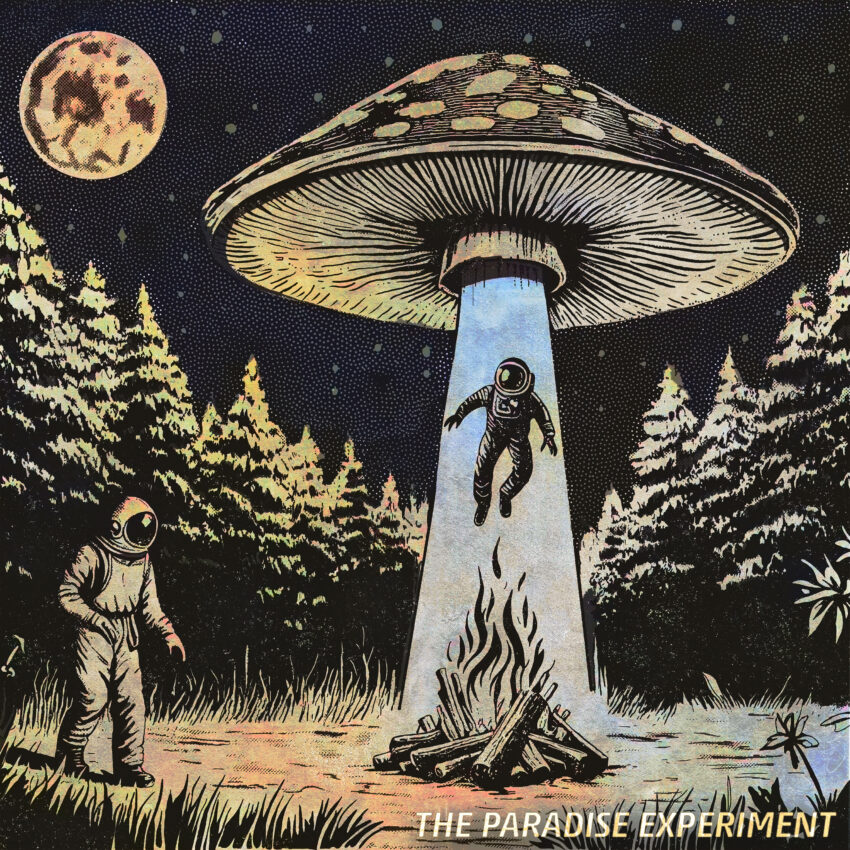
Review: Cam and his Dam Jam Band: ‘The Paradise Experiment’
Athens-based Cam and his Dam Jam Band released their first full-length album, The Paradise Experiment, on January 1st, 2024. On the new record, the group hosts jazzy, groovy coffeehouse tunes that drawl on and on, clocking in at just under 50 minutes with eight songs. The album features the band’s 2023 single “Gypsy Magic Woman”, a psychedelic retro-sounding anthem (with an ill-advised concept), as well as an extended version of “Jet Black Moon”, originally released in 2021.
Cam and his Dam Jam Band make ambient music, not typical for the post-streaming world, but like their name, it calls back to an earlier era of jam bands and music made to be enjoyed live. Exemplified excellently by the opening track “Backpack of Stone”, this gargantuan track is nearly 10 minutes long. Except for two songs, all tracks on the record are beyond the 5-minute marker. The focus of the record is on evoking emotions using melody, tempo, and a fun array of instruments.
The musical elements are infused with sparse lyrics that tend to tell a story with only a few changes in wording. “Rob a Bank”, a western-style song, is an entertaining take on the outcast character on the run from the law. Parleying between “don’t rob a bank” and “let’s rob a bank”, the track leans on American mythology, familiar to almost everyone. The track ends in a call-and-response fashion, with lead singer Cameron Norton sounding conflicted as a chorus of voices try to dissuade him.
The diversity in the band’s repertoire is apparent, particularly in the second half. “My Potion / Three Hours Later” featuring two songs in one wrestles with these subtleties. The song begins with a rather romantic sound, which feels almost yearning. As we fade into “Three Hours Later”, the mood shifts into a more melancholy tune, with a bass that underlines the comparative emptiness of the track. “Jet Black Moon” drives further into the melancholia with an increased moodiness and lyrics alluding to isolation and loneliness, singing “ain’t nobody there to hear me now”.
The record wraps, appropriately, like a live show. “Carry Her Away” takes place on stage, a moment where Cam looks out into the audience and pines for a lady he spots, ultimately unable to get to her. He sings “Now I’m searching but she’s on the run / I was hoping that she would stay”. “Afterparty”, the shortest track by a large margin at one minute and 21 seconds, has all the oomph and joy of a celebratory post-show after-party.
Unfortunately, the familiar story of the gypsy invoked in “Gypsy Magic Woman” does leave an unsavory taste. The term “gypsy” comes from the mistaken belief that the Romani, also known as the Roma, originated from Egypt. It’s been characterized by decades of cultural references from Esmerelda in The Hunchback of Notre Dame to songs by Shakira, Fleetwood Mac, and Lady Gaga. Often it refers to a provocative woman, a wanderer, a wielder of dark magic, or a cunning thief, sometimes a mix. The history of the Roma is fraught with decades of persecution across Europe and beyond, spanning genocide during World War II to forced sterilizations into this century. The term gypsy is an extension of that persecution and is seen by most as a racial slur. Thus, it’s unfavorable and objectionable for Cam and his Dam Jam Band to lean into the gypsy stereotype with a song and visuals to back it up. Though, without a doubt, a reflection of the lack of knowledge on the subject in the US.
In The Paradise Experiment, Cam and his Dam Jam Band harken us back to when music at will was indispensable to most, with the live local band being a staple in everyone’s soundtrack, giving us the ambient music we would feel so plain without. Skipping over the poorly titled “Gypsy Magic Woman”, you’ll find an otherwise impressive selection of music to groove and jive to. If the point was to create an advertisement to go and see the dam jam band live already, well then I’d say it worked.
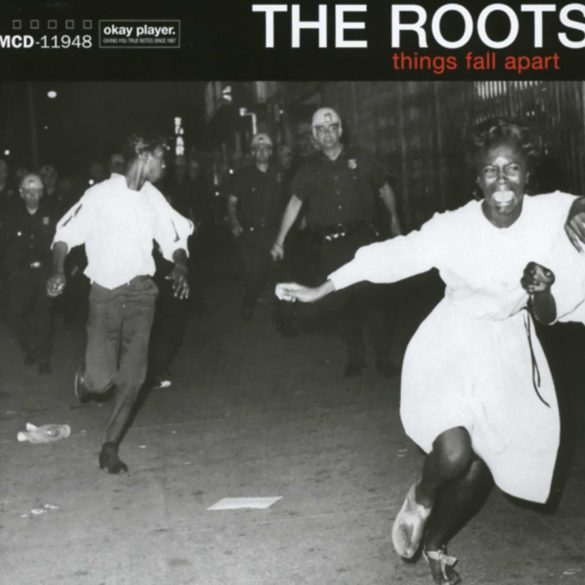
Review: The Roots: “Things Fall Apart”
In 1999, Philadelphia based hip-hop group, The Roots, would reach a turning point in their career. They would release their fourth studio album, Things Fall Apart, which would help them achieve mainstream success and solidify them as pioneers in rap culture. Prior to its release the band had amassed quite a following but it never really translated into commercial success that other acts saw. This album showcases their musical abilities with their thought provoking lyricism and genre-spanning beats. The group experimented with hip-hop, jazz and even psychedelic beats. It is considered a classic.
The album starts off on a powerful note with its first track “Act Won (Things Fall Apart)”. On this track, the group samples an audio from the 1990 Spike Lee film Mo’ Better Blues. The audio is a dialogue between two characters (Bleek Gilliam and Shadow Henderson) discussing the state of Jazz music. Gilliam is complaining to Henderson that Black people never come out to support their own at their shows, however Henderson rebuttals that it is not a race thing, instead that they don’t come because they don’t like what is being played. “The people don’t come because you grandiose motherfuckers don’t play shit that they like. If you played the shit that they liked, then the people would come. Simple as that.” The audio ends with a quote from Harry Allen, best known as the “Media Assassin” from rap group Public Enemy, “Inevitably, hip-hop records are treated as though they are disposable. They are not maximized as product, not to mention as art.” This track seems to be a reflection of the group themselves. They often felt underappreciated and tried to separate themselves from other mainstream artists. They considered themselves “real shit” for people who wanted it, and just like Henderson they didn’t want to sacrifice their creative integrity just to appeal to the masses. Those who liked their music would like it, and not support them solely because they are black.
Track three, “The Next Movement”, which features DJ Jazzy and Jazzyfatnastees, reiterates some of the themes The Roots have already established for themselves. They are not the “norm” nor do they strive to be. They represent ‘the next movement’ as their lyricism helps them stand out “once again it’s the Thought / the Dalai Lama of the mic, the prime minister Thought / this directed to whoever in listenin’ range”. The Roots recognize how pop-like Hip-Hop is becoming and strive to keep it authentic for its core-audiences, but creative enough for a casual listener.
The standout song on the album “You Got Me”, which features vocals from Erykah Badu and Eve, won The Roots a Grammy for best rap performance in 2000. They explore the topic of love and how although things fall apart, how they vow to remain there for eachother. “If you were worried ’bout where / I been or who I saw or / what club I went to with my homies / baby, don’t worry, you know that you got me,” Badu croons over the chorus. She is reassuring her love interest that he doesn’t have to worry about what she does because “he’s got her”. They spend the next two verses establishing how ‘things happen’ and people will try to get between them, “I seen people caught in love like whirlwinds / Listenin’ to they squads and listenin’ to girlfriends / That’s exactly the point where they whole world ends / Lies come in, that’s where that drama begins.” The chorus comes back and we here Badu once again reassuring her lover.
Things Fall Apart is an introspective album that captures trials of the world through poetic lyricism. The Roots are able to tackle topics such as love, identity, race and struggle over infectious melodic beats. Production of the album comes from legendary producers like ?uestlove (Questlove), J Dilla and Dj Premier. Through a mix of samples and live music, the band is able to flawlessly create a piece of work that is both creatively experimental and familiar. “Table of Contents (Part 1)” features a messy breakbeat and controlled chaos, showing the group’s dedication to challenging themselves creatively. The Roots were not only able to capture the essence of the 90s but showcase the musical abilities that made them unique. Almost three decades after its release, their messages still remain relevant today. If you appreciate Hip-Hop as an art then this album is a must-listen.

Review: Samia: ‘Honey’
Samia’s introspective new album, Honey, opens with a delusional, searing confession delivered amidst a somber funeral organ. She parallels SZA’s recent hit, “Kill Bill,” and daydreams about killing an ex’s new lover. In recent interviews, she consistently describes her second LP as ‘pathologically confessional.’ True to her word, the album’s lead single and opening track, “Kill Her Freak Out,” feels like the emotional equivalent of a whimper from a wounded animal and it’s not even the most sorrowful track on the record.
In her next song, Samia flips the narrative on its head. In “Charm You,” she no longer cares to bend the truth for her partner. Instead, she’s cloaked in nonchalance, an evolution from her previous LP’s “Limbo Bitch.” In an interview with Atwood Magazine, she stated that each song builds on the next one, which is by no means a new or novel idea for songwriters, but the ability to reference older works and to build cohesive storylines (and to do it well) is an understated talent. Samia’s take on it is refreshing and revealing. Take for example, the three-song run “Pink Ballon,” “Mad At Me” and “Sea Lions,” which tells the story of a friendship gone awry.
“Breathing Song” is the clear standout from the bunch. It lacks the pop appeal of earlier singles like “Honey” and “Mad At Me” and will likely lag behind in streaming numbers. The unsubtle and brutal lyricism makes it hard to hear more than once in a row. It’s a moving and deeply painful account of what can only be interpreted as sexual assault. Perhaps the hardest part to bear is the song’s circular movement. She teeters between accepting her own reality and clinging to her abuser’s version of the story, denying what she knows to be true. There’s no resolution or solace to be found here.
“Breathing Song” was released as a companion to the title track (“Honey”), which tells the same story from a different perspective. The connection is faint and impalpable; it would be missed easily if we hadn’t been explicitly told so. Despite the dulcet tune of the song (pun intended), she describes this as ‘the saddest song [she’s] ever written.‘ Go figure.
But fear not, this story gets a happy ending. The final songs show Samia finding love and romanticizing the mundane (”Nanana”), serve as an ode to her friends (”Amelia”) and beckon forward an age of hope (“Dream Song”). With such a strong and charming second LP, Samia is set to become an indie darling.
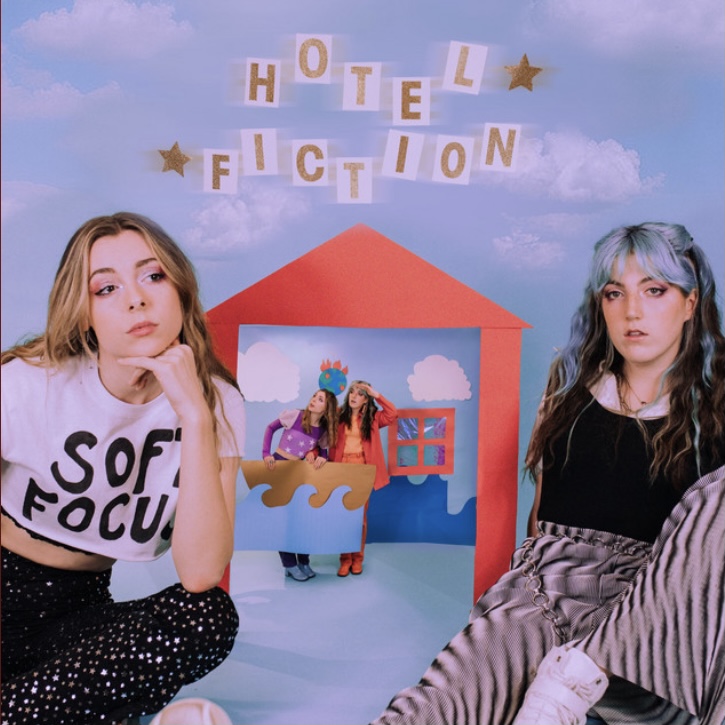
Review: Hotel Fiction: ‘Soft Focus’
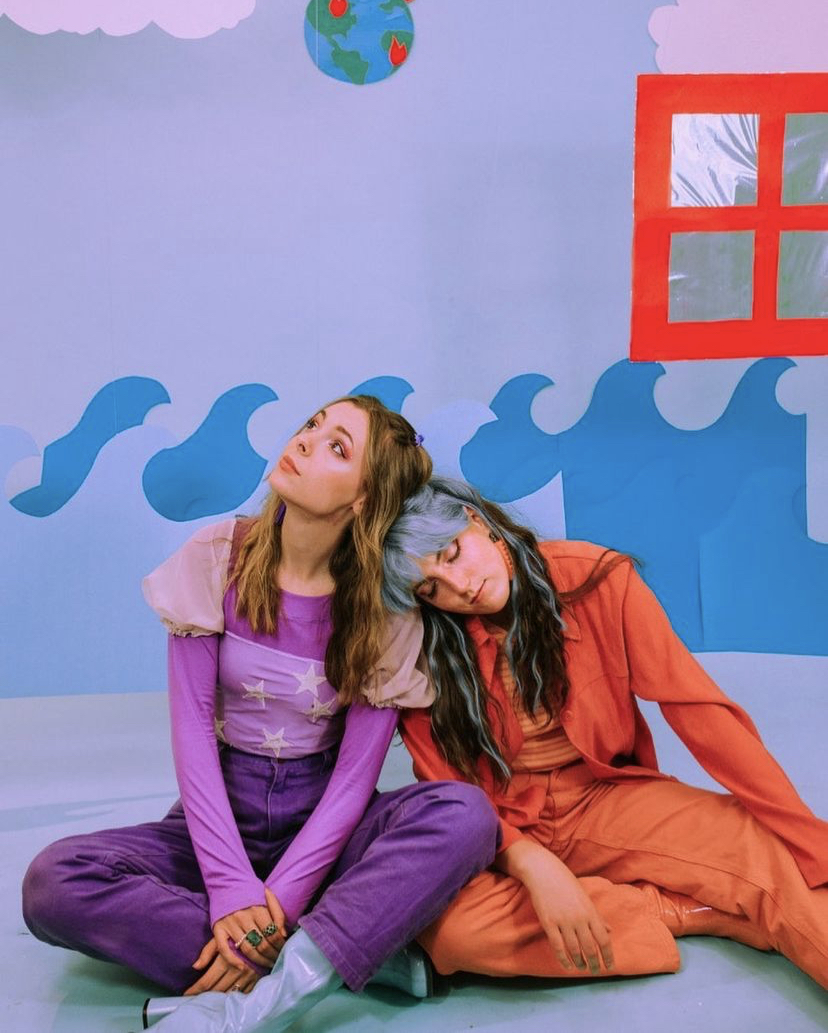
Hotel Fiction’s debut album Soft Focus is finally out today. Written and recorded over the past two years, Soft Focus is a complete introduction to the potential Hotel Fiction brings to the table as musicians, writers, and creatives. It’s rare that a musical act steps forward with such a complete vision and polished presence, but Hotel Fiction has done just that and more – it’s no wonder they keep climbing.
Since the release of “Astronaut Kids,” the duo has been hard at work gaining a following within and outside of Athens with five follow-up singles and multiple supporting tours. (Their first song has now garnered over a million plays on Spotify; they’ve also landed on two playlists curated by Spotify with their last single “Daydrifter.”) Now, in addition to their full-length album, they have an impressive line-up of show dates for the fall, including some dates opening for Adam Melchor.
If you’ve seen the band perform live, it quickly becomes apparent that Jade, Jessica, and their band ensemble (which continues to expand) possess unique chemistry on stage and have the skills and experience to deliver their vision to its full artistic capacity. These same qualities that make them so fun to watch live translate extremely well throughout this record. With a clear understanding of what makes a good record and what makes a great record, they create their own multiverse throughout each song with hidden musical elements, overarching themes, and small little details that tie everything together. The rhymes and the melodies throughout are so well-crafted and the production so refined, you’ll keep hitting repeat.
Soft Focus is a collection of coming-of-age songs set in the current zeitgeist. Hotel Fiction knows what it feels like to grow into adulthood in a time of ecological collapse, political unrest, social isolation, and the shattered illusions of “you can be whatever you want to be.” “Soft Focus” — the title track — is an incredible tribute to each of these and is surely the thesis of the whole album. It both understands that sometimes life is a shitshow and “the world is on fire,” but reassures you that as long as you keep things in perspective (or… soft focus, rather), you’ll be just fine. Both lyrically and sonically, the song transforms from longing for simpler times into the vibrant, messy present.
The album’s closer, “17,” is an emotional ode to missing the times you’ll never get back. It’s about leaving behind childhood. But also, about that moment when the floor gave out from under all of us and the things we loved so much (like dancing in our favorite clothes) were no longer an option. The bittersweet nostalgia of it all is ever so present here. By being themselves and telling their own stories, Hotel Fiction does what every band hopes to do which is connect with their listeners and make them feel less alone.
Soft Focus is available for streaming now on all platforms.
If you want to experience the magic in person, head to the 40 Watt tonight to catch Hotel Fiction, CLOUDLAND, and Daddy’s Beemer perform.
Not in Athens? Catch them on tour!
- 08/28 — Gainesville, FL
- 08/29 — Lee, SC (Hypefest)
- 09/09 — Asheville, NC
- 09/10 — Atlanta, GA
- 09/11 — Nashville, TN
- 09/16 — Richmond, VA
- 09/17 — Abingdon, VA
- 09/24 — Athens, GA (Athfest)
- 09/25 — Sevierville, TN
- 10/12 — Cleveland, OH
- 10/13 — Cincinnati, OH
- 10/14 — Indianapolis, IN
- 10/15 — Chicago, IL
- 10/16 — Appleton, WI

Review: Lucy Dacus: ‘Home Video’
Home Video is a stunning collection of delicate coming-of-age moments packed with emotional vulnerability and scenic poetry. Lucy Dacus, 26, brings to life nostalgic tales of her Christian youth camp days, friends dating subpar boys, awkward firsts and confused teens replacing pop culture references for a personality. Presumably, the effectiveness comes from the way she read through her teenage diaries on the road towards the finished product. In reflecting on the past, she has masterfully (and perhaps unintentionally) created a looking glass for listeners to project their own teenage emotions and formative experiences onto.
The charm of these songs comes from Lucy’s conversational tone, wit and self-awareness. “First Time” finds Lucy confessing, “I am just the fool you took me for.” She professes via Apple Music that the song explores discovering “your body and your emotional capacity” for the first time and the fear that you’ll never feel that way again. Then she admits, “I haven’t–but I have felt other wonderful things.” “Partner in Crime” reminisces on her early relationship with an older someone; Dacus makes her first experimental step into autotune, describing her desire to pretend and act older. In a casual voice, she sings, “You drop a hint that you got a girlfriend / I tried my best not to take it” over distorted guitars.
Home Video is a glimpse at art that is so personal, intimate and vivid that the stories it tells become approachable, cozy and universal. As you zoom into the picture, you find that there’s details that you can latch onto and make yours. Its diverse palette and keen observations enables one to shapeshift. Sometimes, you feel like the songs are about you, and sometimes, you feel like you’re Lucy and you’re seeing your friends through her interpretation. In “Please Stay,” the first verse describes the unkempt house of an individual struggling to find a reason to stay alive. The outro, assisted by her boygenius bandmates, sings pleadingly and desperately for the subject of the song to do anything but leave. In another song (“Christine”), Lucy describes the way her friend justifies staying with a boy who doesn’t treat her right. With unadulterated honesty, Lucy confesses that she would risk losing her friends respect to stop them getting married if it came down to it. Throughout each song, both the observer and the subject are continuously done justice in this way.
In the end, I can’t help but wonder how it must feel for the people in Lucy’s life to hear the songs that tell their stories, to hear their worlds come alive in a picture book painted by someone else entirely. In some ways, as a listener, it feels invasive to realize that these songs implicate real people. The consequences of putting these songs out into the world are genuine and to some degree, change how one consumes them. In a recent interview with Rolling Stone Music Now, Lucy describes the anxiety of anticipating to hear from the subjects of her songs. She confesses that the subject of “Brando” contacted her after the song was released and expressed hurt. On the other hand, “Thumbs” and “Christine” are two songs that she asked for permission to record from the people it’s about. Songs like “Triple Dog Dare,” “Cartwheel,” and “VBS” could still be conversations waiting to happen between Lucy and the people she is singing to, which is the price paid for hyper-specificity. She acknowledges that some of these conversations she welcomes and others she would dread but leaves you guessing as to which category they fall under.
When the world shut down in March 2020, we were forced to spend time thinking about the past because there was literally nothing else to do. There was nothing happening in the now and nothing to look towards or anticipate. Although recorded before quarantine, Home Video somehow captures this feeling, at least for me. This album is unique in that it reflects on pivotal moments in one’s life from the end of the road, yet the distance isn’t so far that the details have become hazy, and the aftereffects have been lost during interpretation.
Home Video is available for listening on all streaming platforms.

REVIEW: Cities Aviv – ‘The Crashing Sound of How It Goes’
I was stuck in a place/I couldn’t get up/what happens next?
How does one begin to grieve growth from one chapter of life to another? Loved ones lost, a regressive sociopolitical landscape, and the impending fears of aging all come crashing down on one to the point of mortal acceptance. Memphis-based writer/rapper/producer Gavin Mays, professionally known as Cities Aviv, opens The Crashing Sound of How It Goes with an answer to this question: “Let’s make the day intentional… Let’s make the day worth something”. Yet seldom do we find an answer to these plaguing thoughts at any point of our lives, let alone at the beginning. Regardless, this mantra of “Let’s make the day intentional” is a starting point.
For the last decade, Mays has been quietly evolving his voice, as fitting ways to express himself become apparent. Listeners are quick to draw comparisons between his output and whatever movement in rap is dictating the current zeitgeist (see any of Pitchfork’s reviews of Mays work or the RateYourMusic comment box for The Crashing Sound…) but fail to acknowledge what strength lies in the freedom Mays wields over creativity. But in part you can’t blame these critics’ shortsightedness; Mays’ sound is impossible to pin down. He constantly switches up his sound from project to project but keeps hip-hop, electronic production, and collage-like arrangement as grounding forces that allow his voice in rap to remain completely singular. The Crashing Sound… is no exception with Mays allowing soul, jazz, and pop loops to articulate where his head is at.
Mays finds himself asking the world to help him bear personal weight on his shoulders; allowing production to build a foundation for questions he struggles to answer. “Near You” features a sample that cries out “I just want to be near you” while Mays asks, “what’s the status of these barriers between you and me?” Fans of ambient and loop music are invited to join with “Face Pressed Against Glass”, where Mays dives headfirst into electronic soundscapes that radiate piercing hope through the other side of his apartment window. The effect is similar to the brazen confidence of “Imma Stay Here”, with Mays unapologetically shouting self-love proclamations from the rooftop. Now don’t get it twisted, these two tracks are diametrically opposed in energy, but reinforce the notion that Mays is the protagonist of this discombobulated narrative. Both tracks warrant smiles from the listener, with varying levels of teeth showing. The smiles are few and far between throughout the track list but keep listeners from tiring over the Mays’ immobility.
If a single word had to sum up what Mays is looking for throughout The Crashing Sound… it would have to be clarity. Recurring themes of peering through holes (keys, crevices, levees breaking) litter tracks as the quest for answers unfolds. Why don’t we talk anymore? What went wrong? Do you realize what I gave up for this? Why is the worth of my life deemed less? Why was he the one to pass? These questions bounce around Mays’ head for the duration of the project until the levee breaks with the realization on “Series of Goodbyes”. Mays lets out a drunken declaration that he will “sculpt a better way to break the mold and operate” while thanking everyone that stayed with him through the process. He finds the crushing volume that uncertainty rings at in our ears is no longer as loud as it once was.
The Crashing Sound of How It Goes is now streaming on Bandcamp and Spotify
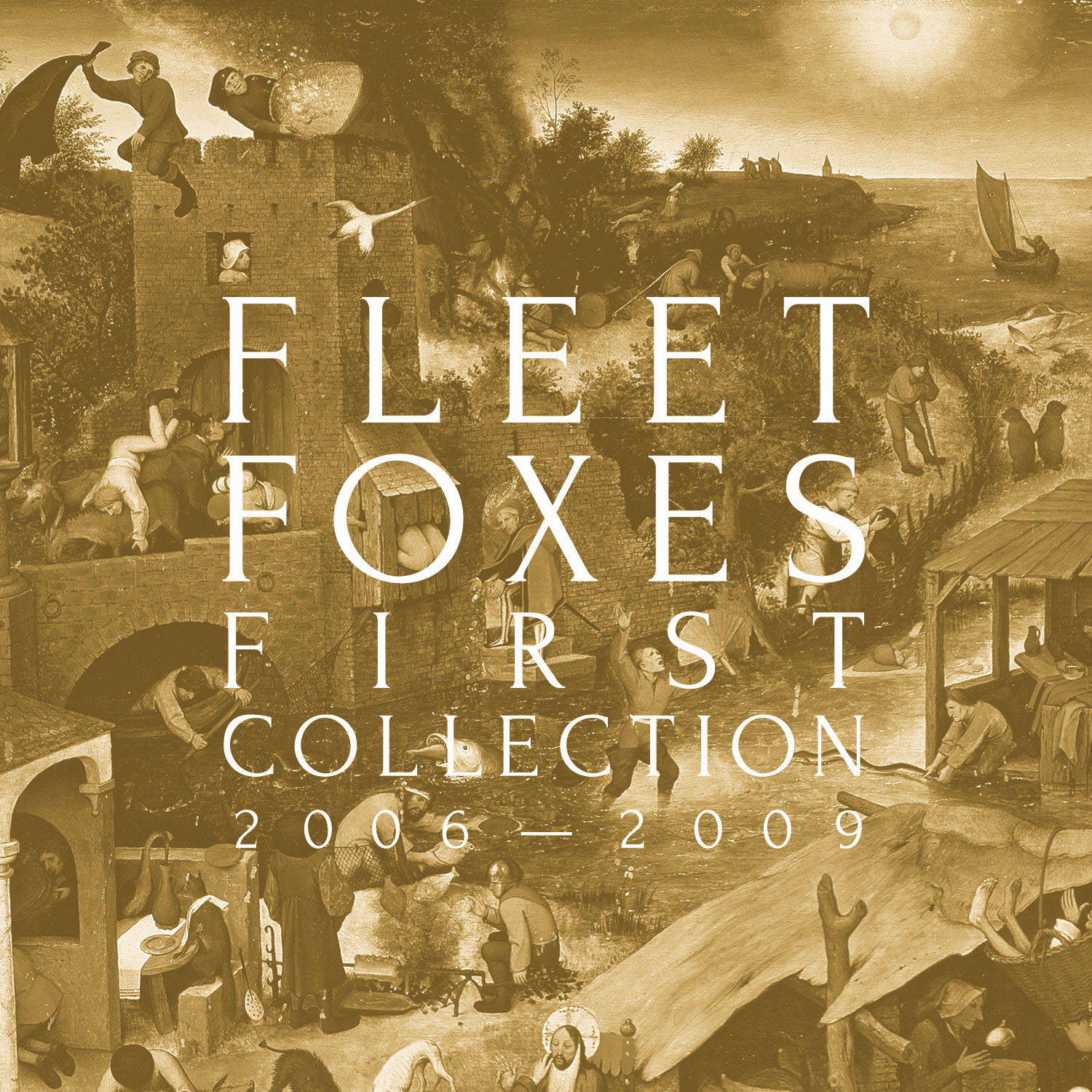
Fleet Foxes – ‘First Collection 2006-2009’
Nostalgia is a powerful feeling, providing respite from the present day. Music continues to find ways to replicate former fond feelings: a day at the beach, a sunset with friends after a long hike, or a cozy evening in the mountains. If there is a specific minutiae-filled time and place that one longs for, it’s likely able to be reached through music made in the past 10 years.
Fleet Foxes’ First Collection 2006-2009 chronicles a band that grasped that sense of nostalgic aesthetic and interweaved new sounds to push a solid vision forward. Chronologically, every release feels like hitting the bullseye of a high and clearly marked target, every record higher than the last. Nothing ever feels like a rehashing of yesteryear’s folk, but rather a creation of new space comprised of traditional balladry, sun-filled west coast pop, and country crooning.
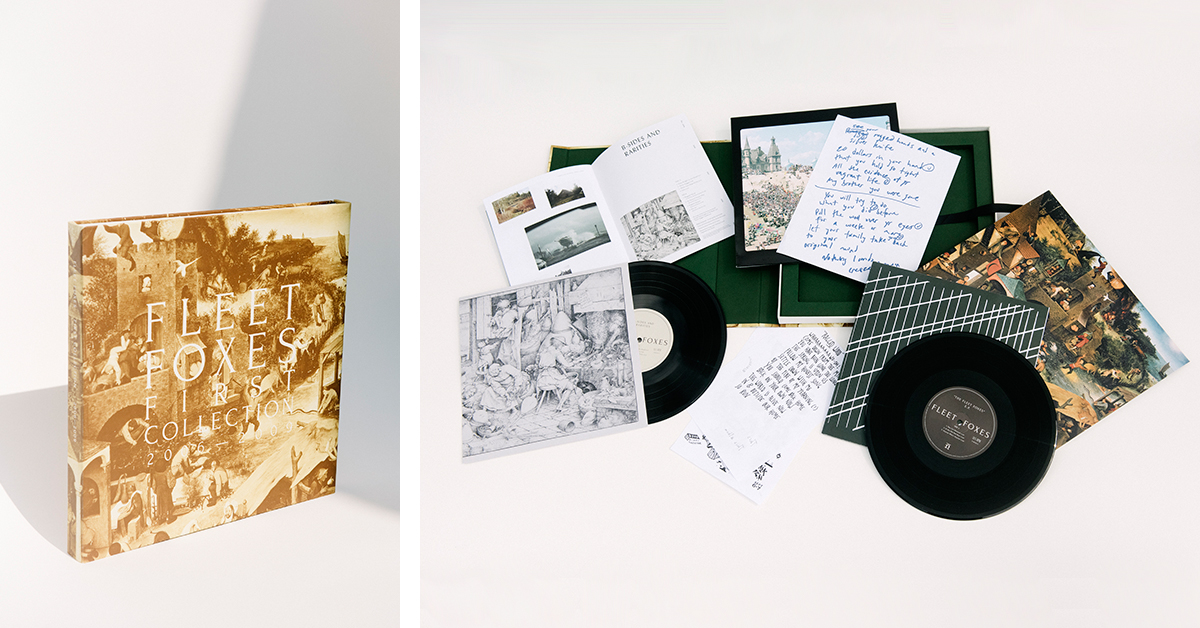
The collection is comprised of four releases: their self titled debut LP (2008), the critcally-acclaimed Sun Giant EP (2006), the self-released The Fleet Foxes EP (2006), and an unreleased B-Sides and Rarities, all of which are seeing vinyl pressing. Accompanying the albums is a 32-page booklet showcasing artwork, photos, tour posters and the like from the time period. Combined, they are a document of a group spanning the sounds of time with clear direction.
The Fleet Foxes EP is a golden-toned bill of AM country influenced tracks that billow and unfurl like the opening of a brass horn. The reliance on guitar chord work and choral breakdowns is as fast paced as the band has ever been, but it still takes its time. “In the Hot Hot Rays” flirts with early R&B in both vocals and guitar work. To those who haven’t heard this release, this is Robin Pecknold with an outward swagger and strut. The closer, “Icicle Tusk,” is the biggest indicator of where the band would head from this EP: a reserved confidence in filling a room with less.
The band made it clear that the Sun Giant EP was simply something to be sold at the merch table of the shows and to not see it as a true indicator of what the band wanted to achieve. If we take them at their word on that, we can instead view the release as a marker on the map up a high mountain. Suddenly, this grasp on nostalgic tones was being pushed into vast soundscapes that seemed to sprawl over terrain. In particular, “English House,” peppered with vocal harmonies to the instrumentation, rolls like a fast morning fog and settles like dew on the ground. Something so big, yet delicate when hitting the ears.
The self-titled LP met high hopes, showcasing the band’s versatility and awareness in executing several genres well. The songs seem to take up even more space than anything they had previously released, but with such a focused assurance. Tracks such as “Ragged Wood” and “He Doesn’t Know Why” seemed to melodically span generations. Perhaps their most famous track to date, “White Winter Hymnal,” plays with traditional folk song language and circular storytelling, creating a short, timeless masterpiece.
The B-Sides and Rarities album, when listened to after the rest, can be seen as a deconstruction of what built such solid focus. Pecknold’s take on the traditional ballad, “Silver Dagger” whisfully slides in, both assured and filling. The basement demos demonstrate that their song ideas were by long-term design, whether they resemble their recorded versions (“English House”) or bare little semblance at all (“He Doesn’t Know Why”). The photos in the accompanying booklet are nice, but the rarities collection is much more of a time capsule into this band’s history.
In the years following the time span that this collection records, their focus branched out even further, digging deeper into the roots of taking traditional songwriting sounds and pushing them into modern soundscapes, both in grandeur (2011’s Helplessness Blues) and mystery (2017’s Crack-Up), but these initial releases were a swell of prowess and thoughtful tellings of songs that spanned time. Fleet Foxes write songs that you can come back to, and no matter how the world changes around you, there’s always space to take; sometimes, that space can be as big as the horizon.
9.3/10.0
BRONCHO: ‘Bad Behavior’

When formulating ideas for new music, BRONCHO bandleader Ryan Lindsey could not help but focus on the bad things. While spending a lot of time watching CNN, he says, “…man, there’s a lot of bad behavior out there. Not to mention, there’s a company making money off of people watching their depiction of it all.” Shortly after this, the Tulsa-based five piece examined scandalous topics and how they relate to themselves, and perhaps how they affect the world around them.
Drugs, sex, overindulgence, and other vices: one could argue that this is the perfect framework for BRONCHO’s most broad and murky release to date. Instead, thanks in part to a recording process allowing them to work at their own pace, we are offered a well-constructed, uncomplicated record of pop tracks. Bad Behavior is BRONCHO at all of their bests, combining intelligent and swift songwriting with broad, yet thoughtful musings on a sinful society.
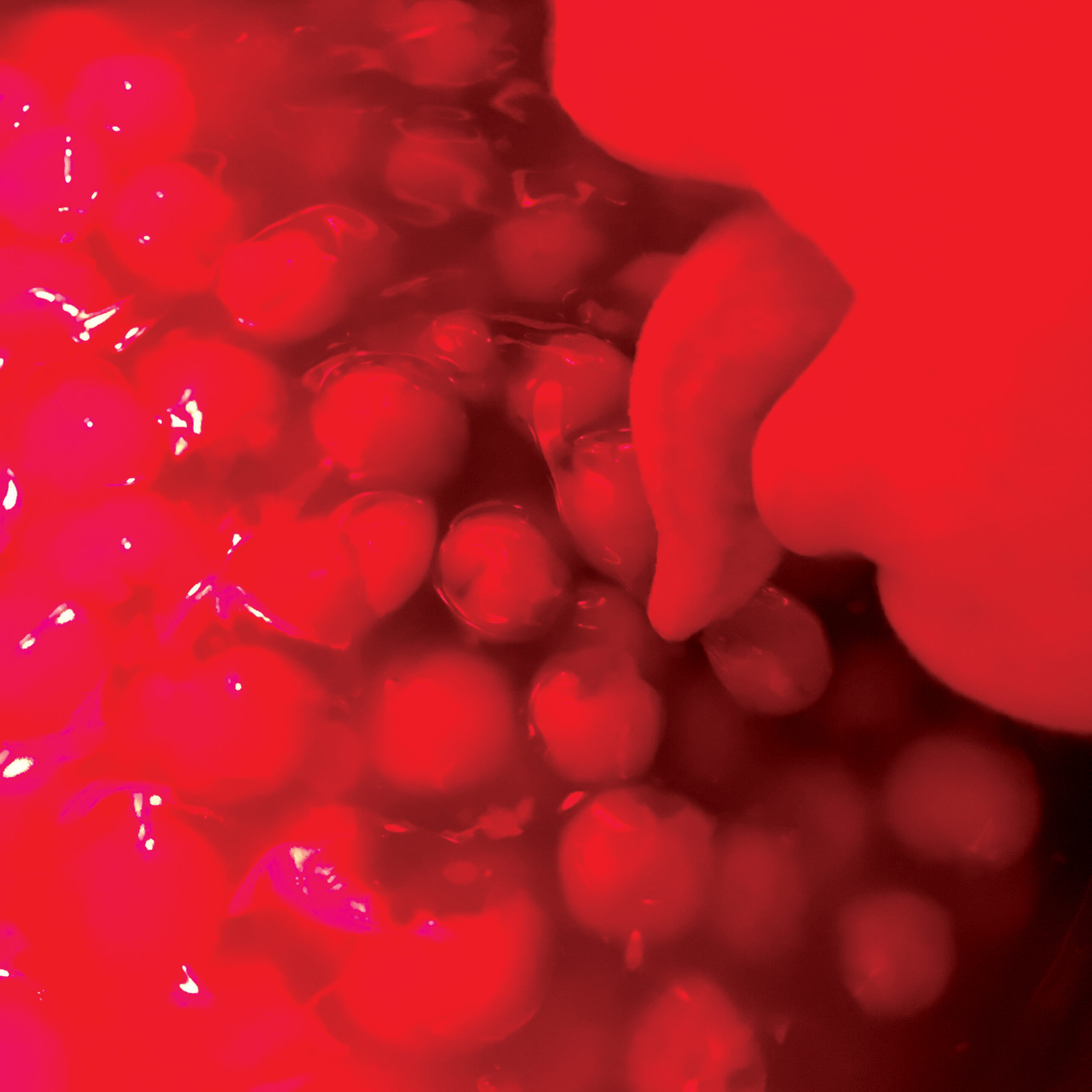
Bad Behavior has a musical center, but what makes the the album so impressive is their ability to loop out into other sounds before returning to ground. “All Choked Up,” the album’s opener, relies entirely on the beat in both its vocal and instrumental cadence. The result is a faded, libidinous march reminiscent of Tobacco. It’s the perfect track to match with the album’s not-subtle artwork of red cherries and extended tongues.
The tracks that follow keep this confrontational theme with pulled back instrumentation, leaving plenty of room to ponder in the space. This doesn’t break until “Keep It in Line,” the most single-worthy song, playing with the delayed, peppy beat iconic through much of the beach pop of the past decade. Lyrically, this is some of their most impressive work to date, where Lindsey addresses “bad behavior” in himself, expressing a disappointment in his own actions. The lines are the most memorable of the album and serves as a sugary bridge into the album’s second half.
“Keep It in Line” is even more impressive when coupled with its following track, “Sandman.” Scaling it back, BRONCHO returns with the same walking beat as the album’s beginning, but this time with much more of a confident swagger. Fleshing itself out with hard-plucked guitar, this is a track with a mission: a return to pleasure, even if it comes at the cost of a return to the uncouth. “Sandman” leans harder on past classical pop influences than much of the rest of the album, and the less-is-more approach pays off with a real earworm.
Things get more scandalous in the second half, especially the debaucherous confession of “Family Values.” The songwriting of the last tracks take on a power pop strut a la the Cars, while digging deeper into lyrics of embracing material vice and desire. The closer, “Easy Way Out,” reprises a swagger-filled strut and doesn’t stray too far from its rhythm. Lyrically, it serves as a reminder that even if these themes are tough to come to terms with, you can always take the safe route of embracing the coarseness of society.
For an album to address vice with such a broad stroke, Lindsey states that Bad Behavior is meant to be a tabula rasa of degeneracy, merely reporting back to listeners at the current state on the carnal. “We’re assuming that everyone is coming from a certain set of values, but ultimately that’s impossible.” Without assumption of a moral compass, BRONCHO are free to approach subject matter with honesty and blunt language.
What makes Bad Behavior so notable in the context of BRONCHO’s discography is the simplicity of the songwriting while letting go of the leash on the subject matter. Focusing on this theme would be quite an easy tableau to run off the rails. Instead, BRONCHO bring to light the wanton while also setting up a sound framework to start a conversation on the vice that surrounds our day to day.
7.8/10

REVIEW: Lala Lala – ‘The Lamb’

Lillie West has described her recent past as one of “general violence.” In the midst of writing her follow-up to 2016’s delicate Sleepyhead, West’s inner circle faced home invasions, assault, and death, leaving her running inward, dreading the world outside. Through fear and personal deconstruction, West’s latest album as Lala Lala makes big realizations around strong, unpredictable melodies that always return to the center. The Lamb—out today on Hardly Art Records—is a massive leap forward in songwriting from the Chicago-based artist: a multi-genre exploration of looking inward to project outward.
The Lamb opens with the lead-off single, “Destroyer” – a sitrep of distrust. The most garage-friendly offering of the album, we’re met with a walking beat fleshed out by aggressive strums. West offers up a fear of continued self-destruction alongside a realization that her mistakes were ones that she could have saved herself from.
“Destroyer” would be the perfect opener to a bedroom garage record; West decisively forgoes this in favor of focused exploration. “Spy,” a playful, crunchy ridicule of introspection, is a drum-machine skip teetering on the edge of pop-punk. “Water Over Sex,” a reflection over sobriety, is a true gem, combining choral yawns with surf-toned guitar. West examines the guilt that comes with fun and loss of control, and in the process creates one of her best tracks to date.
This pronounced, echoed motif continues near the album’s median with “Dove”, a reverberating song dealing with what West calls “very plainly about the death of someone I loved a lot and the guilt I had, and still have, afterwards.” The melody lies almost solely with the vocals, as if reaching you in a hallway from being bounced off the surface of the bathroom floor. A vulnerable realization, the song needs very little to take up a large amount of room. This space is given up at the track’s abrupt conclusion, as if the thought leaves one too vulnerable to continue entertaining.
West ventures further with her songwriting chops in the jangle-pop swing of “The Flu.” Bright melodies are the spoonful of sugar to a story of focused self-destruction to the point of hurting others. The contrast is a perfect balance of grime and sheen. This proves an exquisite set up to “Copycat,” a telling of West’s hyper-analyzation in her new sobriety: “Everyone talks this way, everyone looks the same / and maybe one day, I’ll be surprised / with my twin fists and my twin eyes.” There’s a frustration that comes along with expression in a crowd where everyone (including yourself) thinks and reacts the same, and West’s delivery is of pure boredom.
Falling into The Lamb’s second half is a series of impeccably-expressed feelings and new sound tableaus. The album’s shortest track, “Moth,” begins as an aggressive, percussion-less track of dissonance that gives way to dream pop melodies; it’s a treat that lasts just long enough. “When You Die” is a post-punk confessional stemming from the death of a number of close ones in a small amount of time. Much of The Lamb deals with futility, but this is one of the only times when it is met with defiance instead of resentment.
The album’s closer, “See You at Home,” builds off of earlier, airy tones and brings an assurance that cements all of the previous tracks by contrast. The lyrics read like a vulnerable letter left on a countertop by someone stepping out for the first time in a while. The combination of these words with a simple, saxophone-backed melody would have this song easily fit on any Dan Bejar record.
The Lamb is a merciless inspection of one’s values and motivations, and it undoubtedly has not come at a price for West, but this has inspired a record filled with adventurous turns in tone that gel into an authentic, confident snapshot of a woman growing in her dimensions. She has left the house she’s locked herself in without bothering to close the door, and The Lamb is a sonic road map of where she could go next; something entirely up to her.
8.4 / 10.0

Middle Kids are a Force to be Reckoned with on Debut Album “Lost Friends”
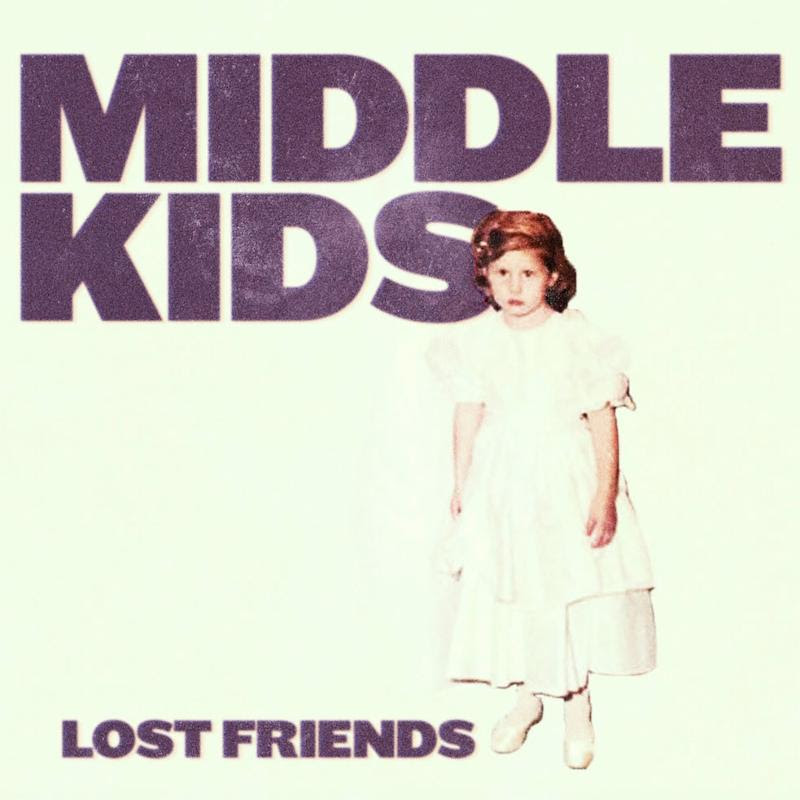
An eclectic combination of confidence, self-doubt, love, and lust ooze from “Lost Friends,” the debut album from Australian trio, Middle Kids. The vocals of singer/guitarist Hannah Joy radiate self-assurance, but the lyrics tell a story of uncertainty and woe. Combined with the powerful instrumentals of Tim Fitz and Harry Day, the fresh-faced band navigates rocky waters throughout 12 tracks, ultimately finding their footing and showing promise as a compelling force in indie rock.
The first two tracks radiate angst and frustration, with the opening track “Bought It” expressing immense, hopeless frustration. The words, “My friend, I need a little help / To fend the darkness at the end” serve as an introspective, foreshadowing nod to the tracks that follow. It marches on with an uptempo, catchy chorus reminiscent of an early aughts alt-pop sound. “Mistake” continues with a similar angst, exploding with sounds that somehow feel pleasantly nostalgic and strangely outdated all at the same time.The lyrics and composition seem like something that would have been written 10 years ago, yet Joy’s vocals thrust it into the contemporary. Despite the too-new-to-be-retro, too-old-to-be-cool feel it gives off upon first listen, it all still lands. The emboldened lyrics are refreshingly relatable, while the powerful, larger-than-life instrumentals are more than impressive coming from a band of three.
The fourth track, “Maryland,” serves as a refreshing break from the chaotic opening three tracks, and the band seems to be settling into their skin at this point in the album. As the tracks build, the album begins to find a new, more mature path that feels more self-assured than the upbeat, mystified jolts of energy found in the opening tracks. Lost Friends continues to build from here, with “On My Knees” expressing lost bewilderment that’s vague enough to be relatable, telling a heartfelt, compelling story of the ever-winding frictions of life and love.
Pieces of the album show great promise for the future of the band, although there are points where the trio’s maturity as a band falters. At parts, the lack of complex emotions exposes weaknesses in the lyrics. “Don’t Be Hiding” feels shallow and uniform in comparison to the labyrinth of emotions and sounds the band is so clearly capable of. But, while the listener is left wanting more off and on throughout the tracks, the complex scope of arrangements shows promise for the future of Middle Kids’ development.
The scatterbrained, diverse organization of the tracks in the album actually become a redeeming quality, conveying vulnerability, empathy, and accessibility. The title track is tear-jerking and exposing, showing a naked fearlessness that so many artists fall short of finding. Overall, the unwavering fortitude in the band’s musical tone, combined with the confessions of hopelessness and confusion found within the lyrics, establish Middle Kids as a force to be reckoned with for many albums to come.