Vinyl Mag
Menu
  • About Us
  • News
  • Reviews
    • Music Reviews
    • Show Reviews
  • Interviews
    • All Interviews
    • Vinyl Video
  • Features
  • Vinyl Recommends
    • Playlists
    • Year-in-review
  • MBUS
Menu

Taijahnai Scott

Taijahnai Scott is a student at the University of Georgia studying Marketing and Music Business with hopes of finding a job in music marketing post grad. Growing up she always had a deep love and cultural connection to music, especially Hip-Hop/Rap, Pop, R&B and NeoSoul. She is fascinated with all things music including the business aspect of it. She hopes to bring her opinions to the Athens music scene and expanding her tastes.

Review: The Roots: “Things Fall Apart”

Posted on July 11, 2023July 11, 2023 by Taijahnai Scott

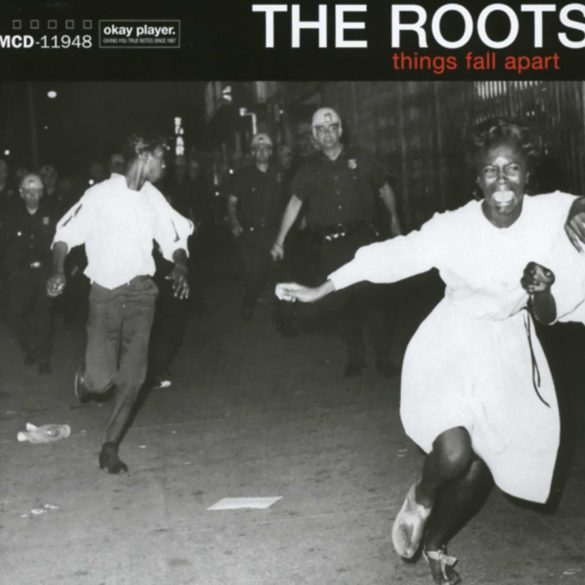
In 1999, Philadelphia based hip-hop group, The Roots, would reach a turning point in their career. They would release their fourth studio album, Things Fall Apart, which would help them achieve mainstream success and solidify them as pioneers in rap culture. Prior to its release the band had amassed quite a following but it never really translated into commercial success that other acts saw. This album showcases their musical abilities with their thought provoking lyricism and genre-spanning beats. The group experimented with hip-hop, jazz and even psychedelic beats. It is considered a classic. 

The album starts off on a powerful note with its first track “Act Won (Things Fall Apart)”. On this track, the group samples an audio from the 1990 Spike Lee film Mo’ Better Blues. The audio is a dialogue between two characters (Bleek Gilliam and Shadow Henderson) discussing the state of Jazz music. Gilliam is complaining to Henderson that Black people never come out to support their own at their shows, however Henderson rebuttals that it is not a race thing, instead that they don’t come because they don’t like what is being played. “The people don’t come because you grandiose motherfuckers don’t play shit that they like. If you played the shit that they liked, then the people would come. Simple as that.” The audio ends with a quote from Harry Allen, best known as the “Media Assassin” from rap group Public Enemy, “Inevitably, hip-hop records are treated as though they are disposable. They are not maximized as product, not to mention as art.” This track seems to be a reflection of the group themselves. They often felt underappreciated and tried to separate themselves from other mainstream artists. They considered themselves “real shit” for people who wanted it, and just like Henderson they didn’t want to sacrifice their creative integrity just to appeal to the masses. Those who liked their music would like it, and not support them solely because they are black.

Track three, “The Next Movement”, which features DJ Jazzy and Jazzyfatnastees, reiterates some of the themes The Roots have already established for themselves. They are not the “norm” nor do they strive to be. They represent ‘the next movement’ as their lyricism helps them stand out “once again it’s the Thought / the Dalai Lama of the mic, the prime minister Thought / this directed to whoever in listenin’ range”. The Roots recognize how pop-like Hip-Hop is becoming and strive to keep it authentic for its core-audiences, but creative enough for a casual listener. 

The standout song on the album “You Got Me”, which features vocals from Erykah Badu and Eve, won The Roots a Grammy for best rap performance in 2000. They explore the topic of love and how although things fall apart, how they vow to remain there for eachother. “If you were worried ’bout where / I been or who I saw or / what club I went to with my homies / baby, don’t worry, you know that you got me,” Badu croons over the chorus. She is reassuring her love interest that he doesn’t have to worry about what she does because “he’s got her”. They spend the next two verses establishing how ‘things happen’ and people will try to get between them, “I seen people caught in love like whirlwinds / Listenin’ to they squads and listenin’ to girlfriends / That’s exactly the point where they whole world ends / Lies come in, that’s where that drama begins.” The chorus comes back and we here Badu once again reassuring her lover. 

Things Fall Apart is an introspective album that captures trials of the world through poetic lyricism. The Roots are able to tackle topics such as love, identity, race and struggle over infectious melodic beats. Production of the album comes from legendary producers like ?uestlove (Questlove), J Dilla and Dj Premier. Through a mix of samples and live music, the band is able to flawlessly create a piece of work that is both creatively experimental and familiar. “Table of Contents (Part 1)” features a messy breakbeat and controlled chaos, showing the group’s dedication to challenging themselves creatively. The Roots were not only able to capture the essence of the 90s but showcase the musical abilities that made them unique. Almost three  decades after its release, their messages still remain relevant today. If you appreciate Hip-Hop as an art then this album is a must-listen. 
Review: CLEAR 2: SOFT LIFE EP

Posted on June 12, 2023June 8, 2023 by Taijahnai Scott

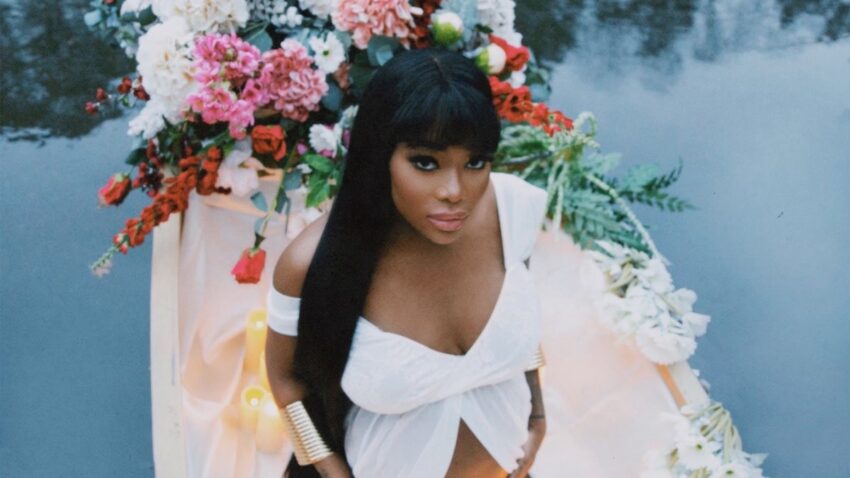
Fans and R&B aficionados can finally rejoice: Grammy-nominated artist Summer Walker has finally released her long-awaited CLEAR 2: SOFT LIFE EP. This nine-track project is a follow up to her CLEAR EP which was released before her debut album Over It. It features verses from J.Cole and Childish Gambino and includes production from Solange and Steve Lacy.

This sultry EP explores the topic of a “soft life”, a term popularized through social media trends, although originally coined by Nigerian women. A “soft life”, at its core, refers to a way of life that focuses on prioritizing oneself and “being audacious enough to believe you deserve better”. Walker’s natural vocals and acoustics provided the perfect harmony and helped set the vibe of the EP. Per usual, she displays raw emotions speaking from deeply personal experiences following previous highly publicized relationships. Her lyricism is a true testament to her artistry. 

The R&B songstress starts the EP strong with a Cole feature in “To Summer, From Cole – Audio Hug”. Summer’s vocals are in the back singing “call me if you need some love”. J.Cole uses this track as an opportunity to sing her praises and give her the flowers she deserves for all she’s accomplished. He reassures her that, despite all obstacles, she has prevailed and should take time to bask in the moment, soaking everything up. He congratulates her on her babies (she recently welcomed twins into the world) and praises her for being able to juggle her ever-growing career, touring, and expanding family. Cole gives her this verse as a digital reminder to keep pushing and to reach out if she ever needs anything. You can sense his appreciation for her craft. It is a very intimate and beautiful track.

In the second song, “Hardlife”, she expresses how her life is actually the opposite of what she desires. The men in her life have caused her much pain and strife, although they claim they want her to have a soft life, “what have you asked of me, you say you want me soft but give me a hard life”, Walker exclaims. As stated earlier, Summer has been very open about her relationships and being a single mother. She longs for a relationship with no pain and a man to lead like she observes in other cultures. At the end you hear her stating “me and my women who like me… me and all my Black queens when will we get what we need?” 

The second track is followed up nicely with “How Does It Feel.” She uses this track to question her previous romantic partners about the decisions they made regarding her love. Walker often feels like an option in their lives instead of a priority. She asks them how it will feel in the end, when they have finally and truly lost her. 

The next three songs (“Mind Yo Mouth”, “Pull Up” and “New Type”) examine the kind of men she attracts, mostly of the type who lack ambition and emotional intelligence. (“Wanna be with me then you gon’ get up off your bottom / Wanna lay with me then you gon’ be a real man.”) She closes the thought out with “New Type” proclaiming, as the title states, that she has a new type. She will no longer succumb to the antics of men she feels are not worthy of her time. There are men blowing up her phone but she’s not answering anymore. Here, she reflects on some of the stuff she had to deal with, “Swear ‘fore God I never wanna see another / Arguing on the phone with your ugly baby mother / Sleeping on the couch of the house of your mother / You can’t live with me so won’t you try and find another?” 

The EP closes out with “Agayu’s Revelation”. Walker spends about four minutes speaking and reflecting on her relationships. She talks about her spiritual journey and how her experiences have helped shape her. She believed she was making the men around her crumble, until she got great advice from a spiritual guide, “stop working with people who are made of glass, if you feel you are made of steel”. The revelation is made that maybe she is not as bad as she thought but that she spent too much time engaged with men who were not ready to be in a relationship and give her what she needs.

Truthfully, this EP exceeded my expectations and I’m looking forward to her next album.

The Women of Rap

Posted on May 2, 2023May 11, 2023 by Taijahnai Scott

In recent years, women have been climbing their way to the top in an industry that has long been male-dominated. Rap’s newest princess Ice Spice and industry G.O.A.T. Nicki Minaj continue to dominate the charts, outselling the competition with their latest collaboration “Princess Diana”. They outsold the top 25 on the Billboard Hot 100 being downloaded 77,000 times following its April 14 release. This isn’t an anomaly, however, as there are more women succeeding in rap right now than ever before.

Even before getting the recognition they deserve, women have constantly been at the forefront of rap culture as emcees, producers and artists. These pioneering women helped shape the way for those to come after them. Artists like Queen Latifah, Salt-N-Pepa, Lil’ Kim, Da Brat, Eve, Missy Elliot and Trina are all iconic women who changed the game. As rap solidified its place into mainstream culture in the ’80s, these women fought for respect as artists. Today, the landscape for women in rap has changed.

In the early 2000’s women like Remy Ma, found moderate success in the industry but it was not like the early ‘90s that was plentiful in successful female rappers. This changed as Nicki Minaj rose to massive mainstream success after being signed by legendary artist Lil Wayne. Nicki Minaj began gaining national recognition between 2007-2009 as she dropped three mixtapes. In 2010, her debut album “Pink Friday” topped the Billboard charts with her single “Super Bass” reaching number three as well as becoming diamond certified by the RIAA. For years, she broke many records selling over 100 million total records worldwide making her the first female rapper to do so.

In 2018, Cardi B released her critically acclaimed debut album Invasion of Privacy which featured the hit single “Bodak Yellow”. This album was tremendously successful, debuting in the US Billboard 200 and earning 103,000 in pure album sales the first week. It won Best Rap Album at the 61st Grammy Awards, making Cardi the first female rapper to do so as a solo artist.

Two years later, in 2020, during the height of the COVID-19 pandemic, Megan the Stallion captivated a global audience with her song “Savage” which accumulated over 30 million TikTok video creations securing her a remix with Queen Bey. Cardi B and Megan later collaborated on “WAP” which prompted intense controversy due to its explicit lyrics, reminiscent of an early Lil’ Kim and Trina. Despite the backlash they faced, “WAP” reached number one on the Billboard Hot R&B/Hip-Hop chart. Other artists like Coi Leray and Saweetie also capitalized on TikTok using it to strengthen their marketing efforts with curated content generating massive plays on the entertainment app. 

The girlies were just heating up though with 2020 proving to be a formative year for women in rap. Latto released her debut album Queen of da Souf allowing her to slowly but surely become a household name. She steadily ascended up the charts over the years, securing Grammys, Billboard awards and BET awards. The same year Alabama’s own Flo Milli stepped into national attention with her debut mixtape Ho, Why is you Here? 

New women constantly breakout into the scene like Lola Brooke, New York’s newest heavy hitter, KenTheMan, Omeretta, Lakeyah, Monaleo, GloRilla and so many more. The most important part of all of this is that they are fostering a better community and environment for the next generation of female rappers, just like those before them. Many of them have songs together, appear in each other’s videos or simply promote each other’s music. Thanks to marketing and social norms the recognition of women in these spaces has changed drastically. There is an old saying that “many hands make light work.” We are witnessing in real time as the new generation of women continue to break barriers and achieve the accolades they deserve as artists. 

We’ve compiled a playlist of songs featuring our favorite female rappers and you can listen below now! Our playlists include the artists mentioned above as well as popular and rising artists. You can tweet us at @thisisvinyl for any recommendations.

Why Are Artists Selling Musical Catalogs?

Posted on April 25, 2023April 25, 2023 by Taijahnai Scott

In recent years, there has been a rise in artists cashing in on their musical catalogs. So, what exactly is the driving force behind this? Some speculate that COVID-19 acted as a catalyst for this sudden increase. In 2020, when everyone was stuck at home, musicians, like many, found themselves losing a key stream of income—touring, which ceased overnight. As a result, there was a boom in companies acquiring musical catalogs of superstar songwriters, artists, and producers. However, there are other factors at play as well, such as a current tax loop-hole artists are taking advantage of and the headache that comes with administering a catalog.

To review, traditionally, publishers (or songwriters) keep the publishing rights, and labels (or performers) keep the recording rights. Publishing refers to a song’s content and recording refers to the specific recording of a song. When an artist sells their catalog, they are giving up their percentage on that song and relinquishing future earnings. That ownership then goes to the buyers.

Most recently, on April 11, Multimedia Music acquired the catalog of Hollywood composer Trevor Morris in an eight figure deal. Multimedia scored both film and TV music rights. In just 15 months, the company spent 120 million on acquisitions alone. 

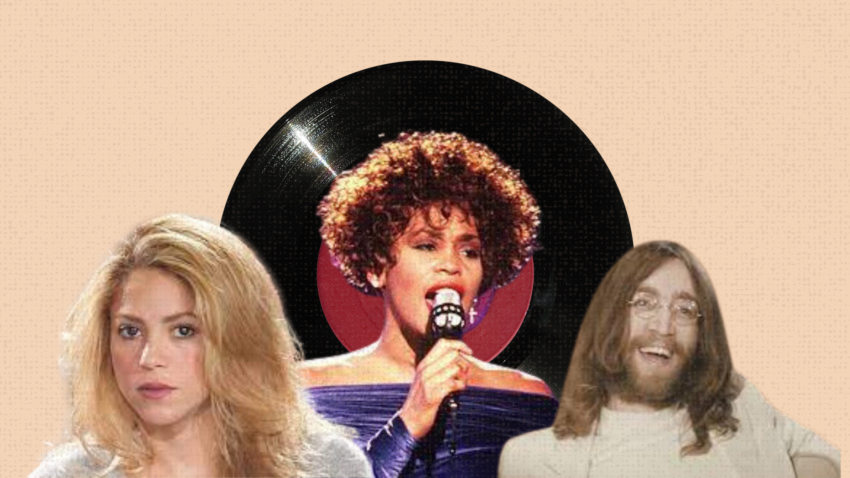
Other companies, like Hipgnosis Songs Fund and Primary Wave, are also rushing to acquire music rights. These companies have already acquired the catalogs of artists such as Fleetwood Mac, Neil Young, Shakira, and John Lennon.

But why? Well for one, the companies now gain the streams of income that would have otherwise gone to the artist. According to Rolling Stone, this could be money from “ royalties, licensing, brand deals, and other revenue streams that would have gone to the artist.” But this still leaves one question unanswered: why do artists want to sell their catalogs in the first place?

One of the driving reasons is taxes. Joe Biden has implemented tax plans that would significantly alter U.S. capital gains tax to align more with income tax for asset sales valued over one million. Under this new proposition, the tax rate would increase on the sale of assets from 20 percent to 37 percent for big earners, which is a substantial difference. If artists chose to just collect royalties they would be subject to a 37 percent rate annually versus a one-time payout with one-time taxation. Since this new tax rate has been implemented many artists have used this limited time to cash out at the current 20 percent while they can and avoided higher taxation. In short, they are attempting to keep more money in their pockets by selling their rights all at once. This route, so far, appears to be more lucrative for them.

Some artists are cashing in due to more personal reasons, especially older artists. It is often harder for legacy acts to tour and perform, which as an artist is a considerable portion of one’s income. And, when an artist passes, it can provide some ease for their families as they don’t have to deal with administering these catalogs. Late David Crosby, for example, chose to go this route and sold his catalog to Irving Azoff’s Iconic Artists Group which he explained via Twitter.

I am selling mine also …I can’t work …and streaming stole my record money …I have a family and a mortgage and I have to take care of them so it’s my only option ..I’m sure the others feel the same https://t.co/EXWHR2v6iq

— David Crosby (@thedavidcrosby) December 7, 2020

By taking advantage of the current tax rate, he not only saved his family from dealing with his expansive catalog but also secured them more money. Many others are also taking advantage; country star Travis Tritt sold his catalog to Reservoir Media and stated:

“The biggest reason for me selling was not to leave a huge headache for my family that would have to try to administrate a catalog. I’d rather leave them cash.”

-Travis Tritt

In 2018, Hipgnosis bought the rights to Justin Bieber’s “What Do You Mean?” and the English version of “Despacito” from The D-ream and songwriter Poo Bear. That same year, talent management company Primary Wave bought the publishing rights of Bob Marley for 50 million. In 2019, Hipgnosis acquired rights from Producer Timbaland for his catalog including six albums by Missy Elliot and five albums by Justin Timberlake. 

In 2021, Neil Young sold half of the copyright of his catalog to Hipgnosis. Hipgnosis also acquired the publishing rights of Shakira and the producer rights of Jimmy Iovine. Bob Dylan sold 100 percent of his publishing catalog for an estimated 300-400 million to Universal Music Publishing. Whitney Houston’s estate sold her entire catalog to Primary West for 100 million. 

The list goes on and on. The idea of getting a guaranteed amount of money and owing less in taxes has obviously appealed to a large number of artists. For now, while the tax law remains intact, selling one’s catalog seems like a stellar option. However, things will eventually change once higher taxes go into effect and as larger companies try to acquire rights for larger amounts than the little guys can afford.

Artists have been reaping the benefits at extremely high price tags. In an article by The Los Angeles Times, they state that prices are almost triple what they’ve been in the past. “During the last 25 years, songwriting catalogs generally sold for about eight to 12 times the “net publisher’s share,” . . . Today, valuations are hitting 25 to 30 times the publisher’s share.” Many think that these extraordinarily high prices are unsustainable and that buyers will have a hard time making that money back, especially smaller companies.

It is hard to tell if the market prices have already peaked, but these investors are certainly assuming magnificent risk. They are assuming that streaming will continue to grow at its current pace and that these artists will remain relevant enough to produce the massive number of streams needed to recoup their investments. On-demand streaming is predicted to grow in revenue and subscribers, but for now, it is too early to determine if these companies will make a desirable return on their investments.

Review: 6LACK: “Since I Have a Lover”

Posted on April 4, 2023April 8, 2023 by Taijahnai Scott

Hailing from East Atlanta, 6LACK (pronounced ‘Black’) has finally returned to music with the release of his third studio album Since I Have a Lover following a six year hiatus. The album boasts three features, including a surprising Wale feature. Previously, 6LACK has established common themes in his music like break-ups and being a rolling stone who does not want to settle down. Since I Have a Lover expands his palette to new themes such as growth and healthy relationships, hence the name. He hasn’t topped East Atlanta Love Letter with this latest release, but the lyricism and emotion on this album are standouts.

This album feels incredibly personal and it’s evident that he spent a lot of time working it. While listening, I can practically feel the emotions he conveys. 6LACK has been very open with fans about his personal growth and how he has been coping with change as he enters new eras in his life, like fatherhood. This album explores the possibility of settling down, which was not a common theme in his previous music. He also reflects on experiences from youth and childhood that make him reluctant to do so. In an interview with Zane Lowe, 6LACK speaks on the album and what it means to him. He goes into detail about the choices he made and what helped him recognize there was a need for change. “(I) was putting (myself) in the position to have to make Free 6LACK 2,” 6LACK says, reflecting on self-sabotaging and pushing away people who cared about him. 


The album opens with the song “cold feet”, which is a term often used to describe apprehension or doubt, showing his reluctance to change. The song features an intro with a woman asking him to return to music. He addresses his absence by saying while his old projects were hot and made him feel alive he’s been waiting on something to set him on fire fulfilling those old passions.

In the second song, “Inwood Hill Park”, he starts to doubt his past life, but nevertheless appears hopeful. He contemplates marriage saying “I been thinkin’ about gettin’ on one knee, turn a solo to a feat”. He appears to have changed, realizing he loves the girl who has been there since the beginning. He echos this sentiment during the Apple Music interview, stating that if it had not been for his lover’s patience there may not be an album. He acknowledges his growth with a reference to his old album Free 6LACK:  “remember when it was all black and white, colors startin’ to feel real vibrant”. 

The next two songs (“Since I Have A Lover” and “playin house”) reference marriage again. This time, he dives deeper and discusses some things that could be holding him back and what it would take to sustain a marriage. On “playin house”, he uses great imagery to portray his unstable relationship with his lover, “spent all that time building a strong foundation, it’s like we need a renovation”. This demonstrates his growth as he acknowledges there is a need for change.

The first third of the album was lively and lyrically the strongest but after “chasing feeling” it’s harder to engage with the tracks. The mood shifts and it is not as captivating as earlier songs. The lyrics make it seem as if he is regressing back to old ways “You mine every day, don’t try to file no restraint”, he exclaims on “Decatur”. This is a huge emotional shift from someone who was just contemplating marriage and traumas a few songs ago.

But then, the last three songs come in and save the day, starting with “Stories In Motion”, which features eloquently written bars from Wale. Then, it’s fan-favorite “Testify”, which is accompanied by calming acoustic guitars and 6LACK’s beloved ultra melodic voice. The album wraps up nicely with “NRH” (which stands for night ride home). 6LACK reflects on past lovers, who cross his mind especially at night.

While it was not the heavy-hitting album I expected, lyrically it is one of my favorite albums of the year so far. He poured his emotions into it and shows a deep commitment to growth. I commend any artist that can expose that kind of vulnerability to the world.

Spotify’s Latest Feature: A DJ Powered by Artificial Intelligence

Posted on March 12, 2023March 12, 2023 by Taijahnai Scott

The phrase “artificial intelligence,” also known as AI, has become ubiquitous in 2023, but exactly what it does or what it means for industries can be elusive for most. According to a quick google search, Artificial intelligence is “a field of science concerned with building computers and machines that can reason, learn, and act in such a way that would normally require human intelligence or that involves data whose scale exceeds what humans can analyze.” In simpler terms, AI is a computer or machine that can act with human capabilities.

It has become widely used in the past few years in various industries ranging from finance to transportation. Recently we’ve also witnessed the rise in popularity of programs like ChatGPT, which is an AI-generated chat box. Users can give it a prompt to which it will create a unique response. For example the prompt “write a four paragraph essay explaining how WW2 happened” will produce a detailed and completely original response. In the artistic sphere, people now have the ability to create completely ‘original’ pieces with the help of AI. Although some people agree with this type of use, others argue that it takes away from real artists and many people do not support it. So, how does this impact the music business?

Right now, AI is a consequential talking point in the music business world—from AI-generated lyrics to voice-mimicking capabilities, it has created quite the buzz. Spotify is joining the hype with its brand new personalization tech powered by AI. This new “AI DJ in your pocket” is a guide that knows you and your tastes, and can curate brand new playlists based on that information. Moreover, Spotify will deliver AI commentary with “stunningly realistic voices.” They claim that this AI will empower its music experts to better do their jobs and better help users.

At this point, it’s too early to tell what exactly the future holds, but AI appears to be here to stay. Spotify’s AI DJ was released on February 23 and is currently a Beta Software for premium users in the U.S. and Canada. So, of course, I tested it out for you.

On my first listen, the AI introduced itself and explained to me the process—and I must say it sounded very human-like! Then, it curated a playlist from my past and current listening history, and songs it believed I would like. And if you don’t like what’s playing, you can just press the small blue button in the bottom right and it’ll change the vibe.

The DJ also explains everything as it’s happening. Depending on the function it might say something like “here are some rap songs based on your recent listening history” or “these are some R&B songs our editors think you might like”. It will even introduce the artist and say the name of the song. If you like what’s playing it will keep that genre in rotation for a few songs. If you skip multiple songs back-to-back it’ll come back and let you know it’s changing the vibe. While the feature is cool it obviously doesn’t emulate a DJ, it’s more so just a playlist with artificial intelligence.

This new feature is definitely innovative on Spotify’s part, maybe after a few additional features it’ll be even more impressive. As the rollout continues and expands to more people, it will be interesting to see what kind of feedback they get and how others will feel about it. For now, I can’t say I will be using it every day. So what are your feelings about Spotify’s AI DJ?

The Latest

  • COACHELLA RECAP: the comeback of Coachella?
    by Taijahnai Scott
  • UGA MBUS Student Ritika Sharma Forges Her Own Pathway
    by Taijahnai Scott
  • Staff Picks to Satisfy Your Inner Choir and Band Nerd
    by Taijahnai Scott
  • Staff Picks for Your Perfect Granola Playlist
    by Taijahnai Scott
  • ‘It’s Only Life After All’: The Legacy of the Queer Folk Women Duo, Indigo Girls
    by Taijahnai Scott
  • Contact
  • Work With Us
© 2026 Vinyl Mag | Powered by Minimalist Blog WordPress Theme