
Category: Music Reviews
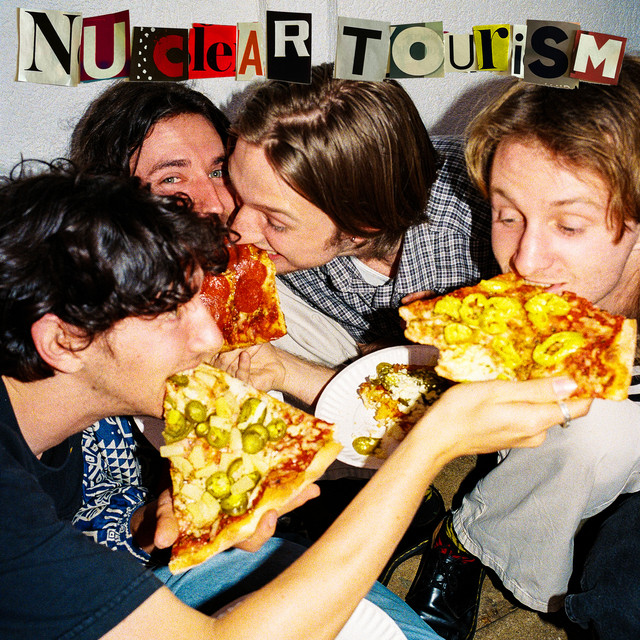
Review: Nuclear Tourism: ‘Nuclear Tourism’
Athens, Georgia band Nuclear Tourism’s self-titled sophomore album serves as a reminder of how much fun music can be in its rawest form, especially if that form involves a couple surf-rock anthems.
The album opener, “Feels Alright,” perfectly sets the tone with a song that highlights the strengths of each member without taking itself too seriously. The spirit and skill of the band is on full display in substance inspired songs like cannabis carol “Mary”, a loving tribute to marijuana, and “Half Drunk”, both of which feature rapid changes in tempo that redefine the songs halfway through.
Below the beer soaked surface level, the songs offer a different kind of substance. Beginning with a sample from 1967 film The Graduate, “Dad Brains” perfectly describes the feeling of rejecting the things you don’t want to do while still figuring out what it is you do want; the song is about doing the things that bring you pleasure, even if that means doing nothing at all, and doing your damnedest not to turn into the authority figures around you. Rather than denying the confusion about the future that many experience in their youth, this song embraces and capitalizes off of it. With “No Never!”, a song about refusing to compromise your identity, Nuclear Tourism delivers with a combination of deep-fried sounding instrumentals and growly sing-shouting that results in something even more fun to listen to than its counterparts on the album, which is not an easy task. With these songs, the band is able to offer criticisms in a way that is easy for listeners to digest without coming across as pretentious.
Standout “Cut Your Hair” captures the feeling of being enamored with someone and the comforting fact that despite not knowing what you want to do, you know who you want to do it with. Between the screams scattered throughout the song and the spoken lyrics and heavy guitar at the end, “Sick of it” is the kind of song that needs to be experienced live, bonus points if it’s in the pit cradling a beer.
With Nuclear Tourism, the band experiments with different genres, concepts and sounds and the result is something filled with the good old fashion dye-your-hair, smoke-your-weed, question-your-authority-figures garage-rock sound thatNuclear Tourism does so well.
Check the album out on the platform of your choice and go see Nuclear Tourism live this summer to get the full experience (which may or may not include someone having their head shaved on stage).
Nuclear Tourism’s upcoming shows:
6/17 Masquerade (ATL)
6/23 AthFest
7/7 Georgia Theatre (unplugged set)
7/27 Slopfest (unplugged set)
8/11 Royal American (CHAS) (unplugged)

Review: Khamari: ‘A Brief Nirvana’
Up-and-coming R&B singer Khamari released his debut album, A Brief Nirvana, on May 26, 2023. The album is littered with recognizable samples, interpolations, and strikingly personal lyrics. His voice and strong songwriting are reminiscent of a Channel Orange-era Frank Ocean. He has writing credits on every track and production credits on all but the last, making this a distinctly personal album. Prominent (soul) samples, bittersweet lyrics, and heavy personal experiences are common threads that bring everything together but above all this is a journey into Khamari’s experience with growth and isolation.
Built on top of a sample of Bill Withers‘ classic track, “Use Me”, the opening track “Wax Poetic” is oxymoronic. The title phrase is often used to describe writing that is excessively verbose and flowery. Khamari, however, flips this notion on its head. He sings, “Wish that I could wax poetic / Paint a Picasso with these words like Kendrick.” He also interpolates the chorus from “Sixteen” by Rick Ross and André 3000 where André sings “Sixteen ain’t enough”. 16 bars is the standard length of a rap verse. By invoking André and Kendrick in this way, two of Hip Hop’s greatest and most wordy lyricists, he is telling the listener that he has a lot to say on this record and we need to be ready to hear him.
The third track, “Drifting”, uses a sample that rap fans may recognize from “New Day” by Kanye West and Jay-Z. That sample is “Feeling Good” by the legendary Nina Simone. On that song, she joyfully sings about finding freedom while on Khamari’s track, he sings about escapism, substance, and addiction. The album title is actually mentioned in the chorus: “Visions of a brief nirvana / Smoking way more than I should / Couple sips had more than I would.” Inspired by the monotony of peak COVID times, “Visions of a brief nirvana” describes Khamari finding happiness and letting go of his self-destructive behaviors. The sample, a poignant but soft string section, a simple drum beat, and a prominent piano come together to create a beautiful instrumental. This song evokes feelings of longing and fragility, but most importantly it is hopeful.
“A Sacred Place”, is the fifth and saddest track on the album. Speaking on a failing relationship, Khamari starts the song with, “What if I can’t make a believer out of you / What if it’s easier to change my point of view?” His worries have turned into resignation and bargaining. He asks himself if letting go of this love is worth letting go of his own opinions and way of being. The lyrics “How fickle a mental state / Set fire to a sacred place” encapsulate the song as a whole. This relationship wasn’t built on solid ground, but it was still special and sacred, and coming to terms with this just isn’t an easy process. Concerning both structure and instrumentation, this is a simple song, making use of two distinct short verses, strings, and a piano. The simplicity concerning the instrumentation and structure of the song is juxtaposed by the layered nature of its lyrics. All things considered, this track reminds me of Faye Webster songs like “Hurts Me Too” and “I Know You”.
The seventh track, “Changing Yourself (Gil’s Interlude)” is a ten-second sample of poet, spoken word performer, and Hip Hop progenitor Gil-Scott Heron.
Of course you want to change yourself for the better
Gil Scott-Heron, Changing Yourself (Gil’s Interlude)
You want to make yourself
A better father
A better son
A better brother
You need the help of those that you’re trying to improve for
This short segment helps tie together the album narratively. As he subtly discusses in the third track, Khamari is in pursuit of bettering himself. This sample asserts that Khamari needs to seek the help of more than just himself to improve.
Continuing with his streak of prominent sample usage, the eighth and tenth tracks each sample songs that have been sampled more than 50 times. “Right My Wrongs” samples “Didn’t I” by Darondo and “On My Way” samples Al Green‘s “Love and Happiness.”
“These Four Walls”, track nine, is a song expressly about isolation. Khamari also recorded A COLORS SHOW version that was released just over a week after the album. In Khamari’s own words, “It kind of has undertones of ‘Diamonds From Sierra Leone’ by Kanye West, where I’m making peace with what I have, and I’m happy because at least I know this is guaranteed.” The song’s chorus ends with “I’ve got these four walls / Even when you don’t call.” Despite struggling after having moved to Los Angeles, he is able to find solace in the things that he does have, like the four walls that he calls home. Sonically, Khamari goes higher up his register and softly stacks vocal harmonies, creating one of my favorite refrains on the whole project.
The album finishes out with “Requiem.” A requiem is a piece of music written in remembrance of someone or something. Over the course of the album, Khamari has learned about himself and grown accordingly. “Not guaranteed a second chance / Thank God I’m waking up / Please don’t play my requiem.” Still struggling to “escape ephemeral darkness,” he hasn’t finished growing yet. His pain is fading and he feels himself coming back to life, so he exclaims that he isn’t ready to die, to have his story finished, to fade away. He doesn’t want to “play his requiem” because there is more for him to do and more for him to be remembered by. Again, he uses his upper register, in what I feel is the most beautiful song on this record. It feels cinematic. He has awoken and come to terms with his isolation. And with this renewed spirit, he feels free in the fact that he has the rest of his story to write.

Review: CLEAR 2: SOFT LIFE EP
Fans and R&B aficionados can finally rejoice: Grammy-nominated artist Summer Walker has finally released her long-awaited CLEAR 2: SOFT LIFE EP. This nine-track project is a follow up to her CLEAR EP which was released before her debut album Over It. It features verses from J.Cole and Childish Gambino and includes production from Solange and Steve Lacy.
This sultry EP explores the topic of a “soft life”, a term popularized through social media trends, although originally coined by Nigerian women. A “soft life”, at its core, refers to a way of life that focuses on prioritizing oneself and “being audacious enough to believe you deserve better”. Walker’s natural vocals and acoustics provided the perfect harmony and helped set the vibe of the EP. Per usual, she displays raw emotions speaking from deeply personal experiences following previous highly publicized relationships. Her lyricism is a true testament to her artistry.
The R&B songstress starts the EP strong with a Cole feature in “To Summer, From Cole – Audio Hug”. Summer’s vocals are in the back singing “call me if you need some love”. J.Cole uses this track as an opportunity to sing her praises and give her the flowers she deserves for all she’s accomplished. He reassures her that, despite all obstacles, she has prevailed and should take time to bask in the moment, soaking everything up. He congratulates her on her babies (she recently welcomed twins into the world) and praises her for being able to juggle her ever-growing career, touring, and expanding family. Cole gives her this verse as a digital reminder to keep pushing and to reach out if she ever needs anything. You can sense his appreciation for her craft. It is a very intimate and beautiful track.
In the second song, “Hardlife”, she expresses how her life is actually the opposite of what she desires. The men in her life have caused her much pain and strife, although they claim they want her to have a soft life, “what have you asked of me, you say you want me soft but give me a hard life”, Walker exclaims. As stated earlier, Summer has been very open about her relationships and being a single mother. She longs for a relationship with no pain and a man to lead like she observes in other cultures. At the end you hear her stating “me and my women who like me… me and all my Black queens when will we get what we need?”
The second track is followed up nicely with “How Does It Feel.” She uses this track to question her previous romantic partners about the decisions they made regarding her love. Walker often feels like an option in their lives instead of a priority. She asks them how it will feel in the end, when they have finally and truly lost her.
The next three songs (“Mind Yo Mouth”, “Pull Up” and “New Type”) examine the kind of men she attracts, mostly of the type who lack ambition and emotional intelligence. (“Wanna be with me then you gon’ get up off your bottom / Wanna lay with me then you gon’ be a real man.”) She closes the thought out with “New Type” proclaiming, as the title states, that she has a new type. She will no longer succumb to the antics of men she feels are not worthy of her time. There are men blowing up her phone but she’s not answering anymore. Here, she reflects on some of the stuff she had to deal with, “Swear ‘fore God I never wanna see another / Arguing on the phone with your ugly baby mother / Sleeping on the couch of the house of your mother / You can’t live with me so won’t you try and find another?”
The EP closes out with “Agayu’s Revelation”. Walker spends about four minutes speaking and reflecting on her relationships. She talks about her spiritual journey and how her experiences have helped shape her. She believed she was making the men around her crumble, until she got great advice from a spiritual guide, “stop working with people who are made of glass, if you feel you are made of steel”. The revelation is made that maybe she is not as bad as she thought but that she spent too much time engaged with men who were not ready to be in a relationship and give her what she needs.
Truthfully, this EP exceeded my expectations and I’m looking forward to her next album.
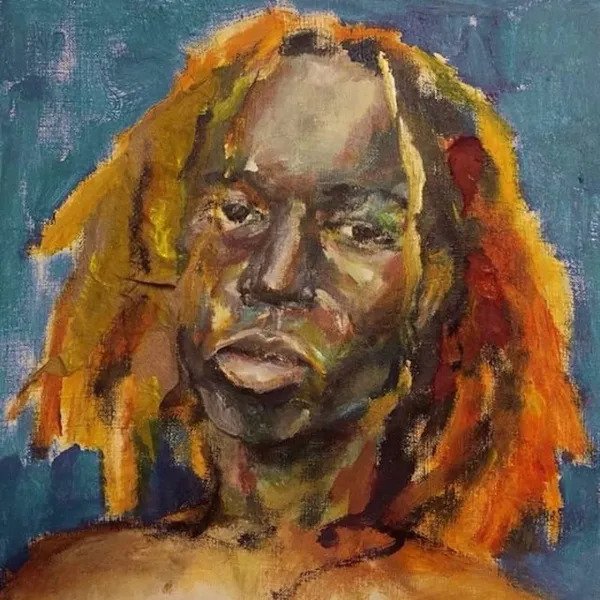
Review: MAVI: ‘Let the Sun Talk’
An undergraduate student at Howard University at the time, Charlotte-born rapper MAVI released his 2019 album Let the Sun Talk just a week after his twentieth birthday. He is considered by many to make abstract hip-hop. It’s a hard-to-define sub-genre but some shared qualities amongst its artists, songs, and projects are pushing sonic boundaries, emphasizing the use of symbolism and metaphors rather than straightforward lyrics, and on some level being “weird” and/or experimental.
He explained in a 2019 tweet that “Let the sun talk is 3 movements 4 songs each. like a clock. or sundial.” Some hold that MAVI himself is the sun, telling those close to him that they need to pay attention to his words, and others hold that the sun is his own mental state, and this album is him addressing his problems. In his own words, he explains the album as being “about writing your own laws, creating your own cosmology, adapting the laws of physics to your reality, and being the center of your universe.”
A skillful mix of poem and prose, the influence of Earl Sweatshirt is evident but by no means is it derivative. In fact, many fans were introduced to MAVI on Earl’s 2019 FEET OF CLAY EP, a project that came out just two weeks after MAVI’s own album. He cites other artists like Noname, MF Doom, Stevie Wonder, Project Pat, and Thelonious Monk as influences along with rocksteady, salsa, gospel, soul, and reggae music.
The opening track, “Terms & Conditions,” begins with a speech explaining what it is “to be pro-black.” There are three tenants: the relentless pursuit of tangible assets to build and maintain black communities, the “cultivation of a culture that reinforces a unified vision of black well-being and continuous advancement”, and the use of one’s own voice to share with their community ideals such as understanding, freedom, equality, love, and happiness. A jazzy instrumental is soon introduced and the song switches to a narrative on the origin of the sun and the moon in the sky that draws largely from an Efik folktale.
Track four, “Self Love” is a fan favorite. When I attended MAVI’s “Laughing So Hard, It Hurts” Tour in April of 2023, the entire crowd sang this song together at the end of the show. A sample from Sonia Ross‘ 1969 track “Don’t Go Breaking My Heart” is used in the chorus and bridge with the repetition of “just because I love you.” So many of the messages core to this album are illustrated in this one song. “The moral of my story is I’m impure / The horror in my story is I’ve been through it and I still do it / And my pencil is in earnest.” It’s a deeply emotional song, seeing MAVI detail his relationship with marijuana and his internal struggles. He recounts how his mom has noticed how often he’s “gone” while at home and her love won’t allow him to keep poisoning himself like this any longer. His list of sins is so long that feels unworthy of even talking to God. The song climaxes in the third verse, sounding much more distressed than the rest of the song. Referencing the album title, he raps “I self-aggrandized in the past / But now the sun talking.” I think he means that in the process of making this album, he has begun to shed his arrogance.
We sprouting, now we plant seeds
MAVI, Self Love
You plant love, love will grow
You plant fear, fear will grow
If you planted me, then me would grow
But I was branded negro
He metaphorically explains that external labels hinder the fulfillment of his potential as a black man. He looks beyond just his own reality though, rapping “And I offer free smoke to any nigga behind a #MeToo / ‘Cause to my niggas, we ain’t free until she free, too.” He is deeply angered by the culture of rampant sexual abuse and harassment of women and recognizes that the black community won’t truly be free until its women are free from this as well.
“Sense”, the eighth track, is my personal favorite and was actually produced by Earl Sweatshirt. Just barely over a minute long, this was the album’s lone single. He describes himself as “Breathing out of love for respiration” rather than just living because he enjoys it. The majority of lines on this song begin with “I”, with MAVI using this track as an opportunity to tell listeners what he thinks about himself. Alluding to his words on the #MeToo Movement in “Self Love” he raps, “I give a lot of thought to what my daughters look like free, chainless.” In a line that is both boastful and truthful he poses and answers the question, “What kinds of songs you make? I make the kind you gotta read, baby.” MAVI, like his influences, makes lyrically dense music, whose full value can be better attained by reading the lyrics.
This album is so special to me on a personal level. This level of candid vulnerability from a fellow black man, especially one who is about the same age as I am, is something that I value deeply. Mavi is inspired by a mix of ideals and people: experimental jazz composer and poet Sun-Ra, legendary Black author Toni Morrison, cartoons, the Five-Percent Nation (whose Supreme Alphabet you may be familiar with by virtue of rappers RZA and GZA and singer SZA), and so much more. Searching for meaning and purpose in his own life, he is someone that draws from things all around him. He accepts his faults and recognizes his pain, but he still seeks to grow as a plant does toward the sun.

Review: UGA MBUS Students: 2023 Spring Releases
As a part of the University of Georgia’s Music Business Certificate Program, I am lucky enough to be classmates with a host of musicians and performers. So here, I want to highlight a few recent releases from my talented classmates.
Bea Porges is a singer-songwriter with a penchant for layered, relatable lyrics. Backed by fellow classmate Cannon Rogers on a warm but striking steel guitar, she released her new single “all day long” on March 24. A nice subtle bassline and simple drum pattern give the song a soft, jazzy feel. The true highlight of the track is Bea’s voice. Her vocal performance brings so much character and passion into a song that is otherwise muted. At 0:46 and 2:18 and specifically, her vocal slides pleasantly catch my ears and provide a necessary structural deviation. It’s a flowery track that delves into the all-too-common feeling of longing. The mellow ache of missing someone you love and wanting to share time with them. “Space and time and feeling fine and our shared sentiments,” are the words Bea herself uses to describe this situation. In her refrain she sings, “All day long, all day long I think about loving / And all day long all day long he thinks about nothing.” Love holds so much power over us all. But unfortunately she is a cruel mistress, and so often we have love for those who may not recognize and reciprocate its presence.

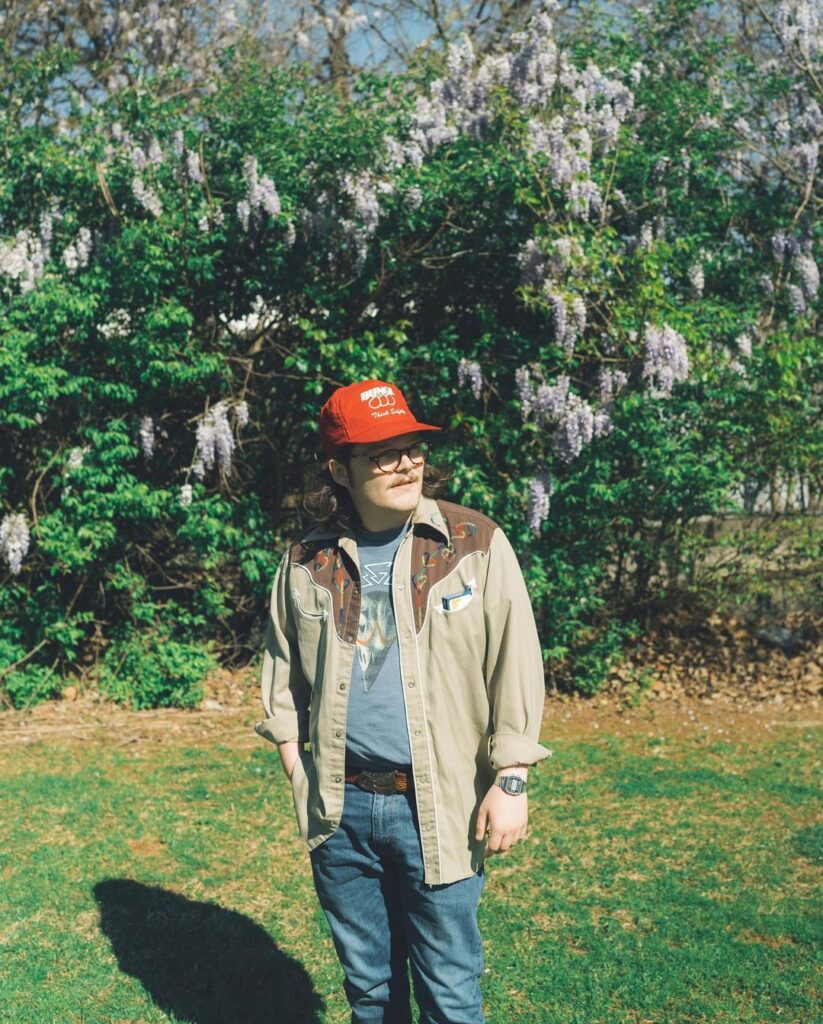
Ethan Faulkner, under artist name Balistix, and fellow beatboxer DEN, released collaboration “Love Love Love” on March 31. On this EDM track, both artists display a high level of vocal control and beatbox mastery. Kicks, claps, and a range of high and low synth-like sounds are reproduced to form the beat, as the pair take turns singing. In Balistix’s own words, “everything in the song was made only with the human mouth.” It feels so effortless, but it’s clear that both of these men have acquired their skills by spending their days and nights toiling over and honing their craft. Opening with “You were so hard to find / It wasn’t easy / But now that I found you / My life’s completed” is how this “somebody to love” is presented to us listeners. At 2:19, a bouncy breakdown provides an added element of variation, and this track would feel hollow without it. This fun, danceable track would do very well at energizing the crowd at an EDM show or club. Self-proclaimed “haters” of the genre could find significant value in this as well.

Tattoo Logic, a newly-formed five-member funk-punk band, released “Ghost of a Chance” on March 31. The track opens with some cymbal taps and a simple guitar riff and then it booms! Think “Misery Business” by Paramore, “Boys Don’t Cry” by The Cure, or “Helena” by My Chemical Romance. “As soon as I kicked the bucket / It was easier to forget than a Classic City obituary” starts the song off on a strong note. Silence and rests are as much a part of this song as the instruments and vocals are. The instrumental oscillates between choppy, staccato notes played in unison by the guitarists and a much wackier beat that feels almost like a cartoon chase scene. The chorus goes:
It’s not a ghost of a chance, or a whisper of faith
Tattoo Logic, Ghost of a Chance
You thought you were close but you were locked in a race
It’s a haunted dance, how it drifted away
And how we say… It’s not a ghost of a chance
Unexpectedly, the first chorus is followed by the entrance of metallic synths. It fits perfectly, giving an eerie, off-putting edge to the song. The bridge, while still teeming with nervous excitement, is more orchestral in nature. An especially strong part of the song is the head voice and slides employed by the lead female vocalist. This song reminds me of a scene in a movie; The somewhat outcast but loveably goofy and confident main character asserting themself as the looming conflict is just ready to boil over.

Whether it is passive or active, casual or impassioned, live music forms a basis of culture and community across the globe. If you can, go support these local young artists who help form this basis in Athens, Georgia. Who knows, maybe you’ll even be inspired to check out a show!
Review: Common: “Be”
Be. It’s a simple message, a direct command. And, it also happens to be the title of Chicago rapper Common‘s 2005 album: Be.
Common explained the title of his album in a 2005 interview, stating:
The album is entitled BE because the hardest thing to do is to be yourself, although many think it’s the easiest it’s really not. Being is just to exist, you don’t have to try hard to do anything because God gave us each an individual and unique characteristic that is the core of who we are. So BE is just about that, being whoever you are, where ever you are.
AllHipHop, 2005
Track six, “Love Is…”, and the closing track, “It’s Your World (Part 1 & 2)”, are produced by the legendary J. Dilla while the other nine tracks are produced by fellow Chicagoan Kanye West. Today, both men are considered masters of the art of sampling and two of the best producers of all time. At the time of its release, Common was a member of West’s label GOOD Music, and the pair were already close friends after having met nearly a decade earlier in Chicago. Dilla and Common also shared a close relationship as they were both at one point members of the Soulquarians, an informal and experimental Black music collective active around the turn of the 21st century. This highly-influential group counted now-illustrious creatives like Questlove, Erykah Badu, Mos Def, and D’Angelo among its ranks.
Samples of classic soul records coalesce with a myriad of layered rhyme schemes as Common and guests skillfully navigate a wide variety of topics and narratives to make this album a whole that is much greater than the sum of its parts.
The host of features includes then-labelmates John Legend and Kanye West; Hip Hop progenitors The Last Poets; comedian Dave Chapelle; fellow Soulquarian Bilal; singer-songwriter-guitarist John Mayer; and several others who went uncredited.
For so many, myself included, this album inspires you to listen to and think about the world around you. Common is simply talking about his own experiences: the troubles faced in the hoods of Chicago, the waning of youthful glee, the bittersweet dichotomy of love, the unrivaled confidence he has in his rapping ability, the discrimination of African Americans in American society, the battle between monetary success and being a voice for his community. He makes his personal perspectives seem relatable and general, a quality of the most capable rappers and songwriters.
Over the course of these 11 tracks, he verbosely navigates many themes and ideas in a way that only a master of his craft could do. Each of these songs deserves a review in its own right. It almost feels like an injustice to condense the words and teachings of a seasoned veteran like Common into just a few paragraphs. So instead, I’ve highlighted some of my favorite bars and moments throughout the album, and I hope that these inspire you to listen as Common has inspired me to do the same.
The beat of “Be (Intro)” is one of my favorite musical moments ever. It slowly builds over the first minute of the song and comes together beautifully. At first, it’s just a bass slowly being plucked, then the plucking gets faster, a synth begins playing, and then the keys come in. More strings and drums make the beat finally feel whole as Common begins rapping shortly thereafter. In a strikingly political line, he asserts: “Bush pushing lies, killers immortalized / We got arms but won’t reach for the skies.”
Common has a lot to discuss on women and that’s evident on “Faithful”. He opens the track with a series of questions.
I was rolling around, in my mind it occurred
Common, Faithful
What if God was a her?
Would I treat her the same? Would I still be running game on her?
In what type of ways would I want her?
Would I want her for her mind or her heavenly body?
A vocal sample from Marvin Gaye‘s “God Is Love” backs “Love Is…”. It’s a raw track, something I listen to on a dark day when I need to get in better spirits. Common raps “Everybody loves sun, why do I attract shade / Heard of love of money, but compassion it pays.” These lines remind me of Nas‘ legendary track “The World Is Yours”, where he declares, “I need a new nigga for this black cloud to follow / Cause while it’s over me it’s too dark to see tomorrow.”
Chi-City is a braggadocio track that serves as both an homage to Chicago and a larger discussion of the role of rap in the Black community. Common’s opening line, “I rap with the passion of Christ, nigga cross me” is a perfectly blunt way to begin before Common starts going after “whack” rappers. On the other hand, Common holds his fellow Chicago MCs in high esteem, rapping, “They ask me where hip hop is going, it’s Chicagoan / Poetry’s in motion like a picture now showing.”
On “Real People”, Common speaks on the racism and discrimination that Black Americans face. He invokes key Black Rastari figures, asking “I wonder if the spirits of Bob Marley and Haile Selassie / Watch me as the cops be tryna pop and lock me?”
The second part of the last track, “It’s Your World (Part 1 & 2)”, is the culmination of the album. Common’s father Lonnie Lynn, or “Pops” delivers a spoken word outro in which he lists qualities, people, careers, emotions, and states of being that we can “be”. It’s an understated end to Common’s magnum opus. It’s cyclical in a way. Be, we do it always, unfailingly, and yet there isn’t really a start or end in the truest sense of those words. And on that note, I’ll close this off in the same way that Pops does, with a two-word instruction that I think we all can live by: “Be… eternal.”

Review: 6LACK: “Since I Have a Lover”
Hailing from East Atlanta, 6LACK (pronounced ‘Black’) has finally returned to music with the release of his third studio album Since I Have a Lover following a six year hiatus. The album boasts three features, including a surprising Wale feature. Previously, 6LACK has established common themes in his music like break-ups and being a rolling stone who does not want to settle down. Since I Have a Lover expands his palette to new themes such as growth and healthy relationships, hence the name. He hasn’t topped East Atlanta Love Letter with this latest release, but the lyricism and emotion on this album are standouts.
This album feels incredibly personal and it’s evident that he spent a lot of time working it. While listening, I can practically feel the emotions he conveys. 6LACK has been very open with fans about his personal growth and how he has been coping with change as he enters new eras in his life, like fatherhood. This album explores the possibility of settling down, which was not a common theme in his previous music. He also reflects on experiences from youth and childhood that make him reluctant to do so. In an interview with Zane Lowe, 6LACK speaks on the album and what it means to him. He goes into detail about the choices he made and what helped him recognize there was a need for change. “(I) was putting (myself) in the position to have to make Free 6LACK 2,” 6LACK says, reflecting on self-sabotaging and pushing away people who cared about him.
The album opens with the song “cold feet”, which is a term often used to describe apprehension or doubt, showing his reluctance to change. The song features an intro with a woman asking him to return to music. He addresses his absence by saying while his old projects were hot and made him feel alive he’s been waiting on something to set him on fire fulfilling those old passions.
In the second song, “Inwood Hill Park”, he starts to doubt his past life, but nevertheless appears hopeful. He contemplates marriage saying “I been thinkin’ about gettin’ on one knee, turn a solo to a feat”. He appears to have changed, realizing he loves the girl who has been there since the beginning. He echos this sentiment during the Apple Music interview, stating that if it had not been for his lover’s patience there may not be an album. He acknowledges his growth with a reference to his old album Free 6LACK: “remember when it was all black and white, colors startin’ to feel real vibrant”.
The next two songs (“Since I Have A Lover” and “playin house”) reference marriage again. This time, he dives deeper and discusses some things that could be holding him back and what it would take to sustain a marriage. On “playin house”, he uses great imagery to portray his unstable relationship with his lover, “spent all that time building a strong foundation, it’s like we need a renovation”. This demonstrates his growth as he acknowledges there is a need for change.
The first third of the album was lively and lyrically the strongest but after “chasing feeling” it’s harder to engage with the tracks. The mood shifts and it is not as captivating as earlier songs. The lyrics make it seem as if he is regressing back to old ways “You mine every day, don’t try to file no restraint”, he exclaims on “Decatur”. This is a huge emotional shift from someone who was just contemplating marriage and traumas a few songs ago.
But then, the last three songs come in and save the day, starting with “Stories In Motion”, which features eloquently written bars from Wale. Then, it’s fan-favorite “Testify”, which is accompanied by calming acoustic guitars and 6LACK’s beloved ultra melodic voice. The album wraps up nicely with “NRH” (which stands for night ride home). 6LACK reflects on past lovers, who cross his mind especially at night.
While it was not the heavy-hitting album I expected, lyrically it is one of my favorite albums of the year so far. He poured his emotions into it and shows a deep commitment to growth. I commend any artist that can expose that kind of vulnerability to the world.
Review: JPEGMAFIA and Danny Brown: “Scaring The Hoes”
On the music side of Twitter, you’ll find one revolving joke: “Don’t put on ‘so-and-so’ or ‘whats-his-name’ at the function, or you’ll scare away the hoes,” and JPEGMAFIA, also known as Peggy, and Danny Brown are often at the butt of the joke. They embodied this with their new project, a collab album titled Scaring the Hoes. Two experimental and ambitious artists came together to make some of the strangest, yet most interesting music I have ever heard, and while I may enjoy it, I would not recommend playing it in front of the “hoes.”
Peggy’s seemingly ever-changing production style keeps you on your toes, with recognizable samples thrown in at every unexpected turn. While his high-profile sample clearances may be a mystery, his sampling itself isn’t; the artist revealed in a recent tweet that he “Made every beat on the album with one machine, The SP 404.” The use of this popular analog sampler, which is significant in hip-hop production, explains the muddiness of the mixes as well as the album’s old-school feel. Danny Brown’s vocals tie the sound together well, offering some of his best lyrical performances in years and hammering down on his unique delivery.
The pair took to the Danny Brown Show podcast to release the opening song and lead single, “Lean Beef Patty,” in late February, before releasing the track a few weeks later on streaming platforms. It introduces listeners to the slightly abrasive yet artistic sound of this album with a hyper-pop flip of P. Diddy’s “I Need a Girl (Part 2),” layered with cinematic synths and punchy lyricism. They revealed in the podcast that the song’s title is a reference to popular fitness influencer leanbeefpatty. As always with Peggy’s and Brown’s work, they don’t stray from touchier topics, and that is clear in this song with lines mentioning the recent social media antics of both Ye and Elon Musk among other things.
The second track, “Steppa Pig,” offers the most unique production on the record. The song sparkles, bringing the melody in and out with a crunchy bass-line and hypnotic chimes. Brown starts with an impressive verse, but JPEGMAFIA takes over in the second half, using his off-putting delivery to boast about his artistic originality and overall weirdness.
Next is “SCARING THE HOES” with its first full minute of clapping and horn chops that seem perfectly out of tune, but somehow cohesive. When the drums finally come in, they have an obvious rock influence; it’s something I would love to see more of in Peggy’s production. As the title suggests, this song is abrasive but a nice mission statement for the album as a whole.
The next three songs have the coolest moments of the album production-wise. “Garbage Pale Kids” samples Japanese commercials, including a meat packing commercial from the mid-80s. Paired with complex drums and a sick bass-line, it creates a cool soundscape that lays the road for a great Danny Brown verse. In “Fentanyl Tester”, Peggy drops one of the most recognizable samples on the album, Kelis’ “Milkshake”. The sample, in combination with breakbeat transitions and fantastic lyrical delivery, creates an immersive sound that makes the song one of my favorites on the album. “Burfict!”, likely about one of the dirtiest NFL players ever, feels familiar, drawing comparisons to Peggy’s recent LP. The horn chops are beautiful. The song is lyrically sound with countless references, including one to the elusive underground rapper Mach-Hommy.
“Dogs cover they face, that bitch Mach-Hommy”
– JPEGMAFIA, Burfict!
Then, it’s the two-parter “Shut Yo Bitch Ass Up / Muddy Waters.” Brown and Peggy are in their element, with their respective halves catering to their individual style.
The sole feature on the album, Redveil, joins in on “Kingdom Heart Key”. As the title suggests, the song is enchanting, with elegant swells and vocals partnered with a lagged, 808-heavy drum loop. Every time the drums come back in I can’t help but get hyped. Redveil’s performance is impressive here; the young artist sticks to his sing-songy harmonies, before coming in hard with hooks and quotable lyrics left and right. I have been following him for the last couple of years, and to see him with such a large feature at 18 years old is inspiring, seeing his hard work pay off.
There are only few ‘bad’ tracks on here, but “Orange Juice Jones” and “Run The Jewels” fall into that category. While the production may be top tier (was a joy to hear “Going back to Cali” by LL Cool J in the latter), the lyrical content and mixing on these two were definitely below the rest.
The album begins to wrap up with the gospel-layered “God Loves You” and the jazz-influenced “Jack Harlow Combo Meal”, which, of course, questions KFC’s decision to use rapper Jack Harlow to sell their chicken. I particularly enjoy Peggy’s vocals on both of these, with his harmonies accenting the songs well.
“Man, I can’t fuck with y’all niggas, y’all let Jack Harlow sell y’all chicken”
– Danny Brown, Jack Harlow Combo Meal
“HOE (Heaven on Earth)”, with its swirly piano stabs and introspective verses, leads well into SCARING THE HOES’ closing track “Where Ya Get Ya Coke From?”. It is one of the most fun songs on the album, where JPEGMAFIA comes in with a catchy verse right after an intro straight out of a 90s game show. Brown brings the energy, exploding with jarring lyrics. He discusses things like the impact of his unconventional delivery, such as yelling and physically distorting his voice, to achieve certain sounds on his mental health, closing the album with perfect weight.
“Should be in the psych ward for what I do with vocal chords”
– Danny Brown, Where Ya Get Ya Coke From?
The album ends abruptly, which is perfect for this strangely wonderful album. JPEGMAFIA and Danny Brown created something amazing. With twists and turns between each sample and verse, this album is a journey I recommend to anyone who is not worried about scaring off the “hoes”. On the Danny Brown Show with Peggy, Brown mentions his worry about Peggy stealing his spotlight, but that’s not the case at all. Both have done nothing but thrive and grow throughout their careers, despite constant pushback due to the abnormality of their sounds—that is exactly what has pushed them both into figureheads for experimental rap. I am excited to see these artists independently grow (both have two solo albums releasing in 2023) as well as the impact that they will have on the next wave of artists (and hopefully we’ll get SCARING THE HOES Vol. 2).

Review: GROUPLOVE: “Hello, All!”
When the temperature reaches 70 degrees, certain things become non-negotiable for me: every outfit needs to include a pair of shorts, my car windows will be rolled down, and every playlist should contain at least one GROUPLOVE song to set the mood. Thankfully, with the surprise release of their new double single “Hello, All!” off of their upcoming album I Want It All Right Now, the band has provided me two new options to choose from.
Since the release of their appropriately titled debut album Never Trust a Happy Song, GROUPLOVE has become known for creating music that sounds like happiness feels, even with songs that contain heavy themes. The first single of the pair, “Hello,” a deceptively upbeat sounding number grappling with themes like loneliness and attempting to figure out your identity, is certainly no exception. The song still somehow remains bubbly and energetic even with lyrics like “When will you ever find yourself? / Inside, you feel like someone else” and “Yeah, you’re constantly numb ‘cause nobody sees you through / So you run, and it’s not enough for you,” a true testament to the bands signature sound. Honestly, if you listened to the music without paying attention to the lyrics you may not even realize the subject matter is depressing.
Second on the double single (but not in my heart) is “All,” a song about leaning into your struggles and leaning on those in your life. By swapping out loud instruments for loud vocals and delivering the outro consisting of lines such as “I want it all right now / I wanna take a long ride / With you by my side / I wanna be alright now” via passionate shouting, the point of the song gets across very effectively and proves that GROUPLOVE is not a one trick pony. This is certainly the more somber number of the two and the band successfully capitalizes on that.
These songs are reminiscent of the bands earlier music and remind me of exactly why they dominated the Indie Pop scene for the greater part of the 2010’s and if the quality of these songs is any indication of the rest of the upcoming album, there is a good chance they will rise to the top again. To help pass the time counting down the days until I Want It All Right Now comes out July 7, check out the video for “Hello, All!” down below.
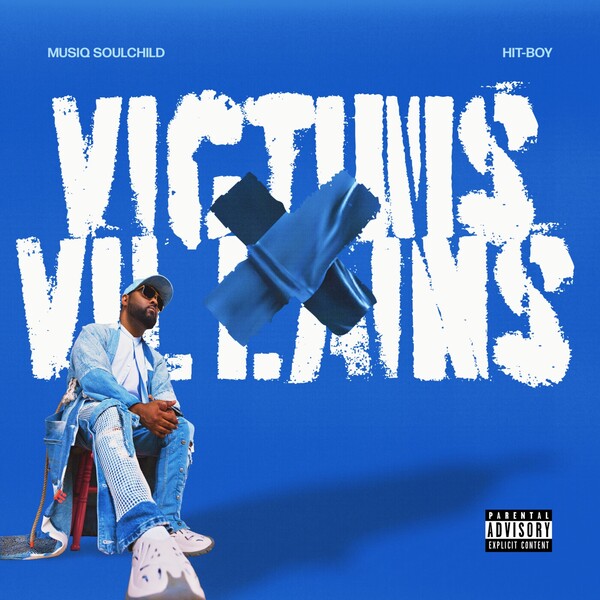
Review: Musiq Soulchild & Hit-Boy: ‘Victims and Villains’
Following a six-year hiatus from releasing his own music, Musiq Soulchild returned to the scene in early March 2023. Victims and Villains is a collab album with producer Hit-Boy. This new album comes nearly 23 years after the release of his debut studio album Aijuswanaseing (I just wanna sing), but he still continues his E.E. Cummings-esque aversion to conventional capitalization and syntax.
Musiq Soulchild is a veteran of the music world and a foundational figure for modern R&B artists. Songs like “Love” and “Halfcrazy” are timeless classics, with the latter even being heavily sampled on Lucky Daye‘s 2022 breakout hit “Over”.
Hit-Boy is known primarily for working with rappers and is no stranger to working on collab projects. Burden of Proof with Benny the Butcher along with all three iterations of Nas‘ King’s Disease series are some of his most notable recent work.
The album opens with a question: will i touch the sky. Backed by a groovy bassline and enhanced by smooth vocal layering, Musiq’s talent and artistry is evident on this track. This is the most personal song on an album where almost every song is about love or a relationship. He laments in the chorus, “Feels like I’m drownin’, tryna keep my head up / Don’t lеt this broken smile tell you a liе / Lost in the crowd with myself to find.” This feeling of anguish is a relatable phenomenon, and it provides context for his mindset on the rest of the album.
Track two, i remember you my ex and track three, imreallytrynafuckwichu, serve as foils. The former is a vulnerable male breakup anthem in which his decision to stop the relationship outweighs his fond memories of the past. On the other hand, the latter is a more macho song where he lets a girl know that he’s down for whatever. It also has the album’s only listed feature, The Husel, who in reality is Musiq Soulchild’s rap alter ego.
The crux of the album is the title track, victims and villains. On my first listen, the simple drum beat and the expressive piano clued me in that he was about to really speak from the soul. He feels fooled and betrayed by a woman who has falsely claimed vitcimhood but in truth is actually a villain. He asks her, “Just how far will you go / Your mask is comin’ down / Thought no one would ever know.” The song’s strength lies heavily in its simplicity and repetition. It feels cyclical in the same way that an argument normally does when it comes to relationships.
On the seventh track, white rice déjà vu, he employs several similes and metaphors in his descriptions of a woman like, “You would think it’s white rice by the way we spoon”, “Love like a shot of Henny, I would chase it”, and “She wanna ride like an ’84 Caprice / You’ll be my passenger all between the sheets”. This track made it evident to me that Musiq Soulchild has definitely been influenced by popular R&B singers of the last few years. These lines feel more like rap bars rather than the lines of a love song, a stylistic choice that’s characteristic of contemporary acts like Brent Faiyaz and Bryson Tiller.
The final track, we were just binging, ends the album and a relationship, comparing them to a TV show that you would binge. What was once the source of joy and fun has now become tired and bored. It’s a somber but poetic end.
Yeah, we put on quite a good show
Now it’s time’s up, next episode
No need to re-up our subscription
The season has come to an ending
Oh, and I know in good time
You’ll find someone just right
Ain’t no victims or no villains
We wasn’t in love, we were just binging
Musiq Soulchild & Hit-Boy, “we were just binging”
With recent features on projects from Kehlani, Freddie Gibbs, Robert Glasper, and EARTHGANG, this project is likely the proper introduction to Musiq Soulchild for many new-generation fans. It details either different perspectives for a single relationship over time or a collection of multiple love stories accumulated by one man with different women. It doesn’t have the same sort of magic to me that his first few projects do, but sticking too closely to his traditional style would only beget music that’s tired and forgettable. As a whole though, this is a cohesive project and a worthy return for a music legend.