
Category: Interviews
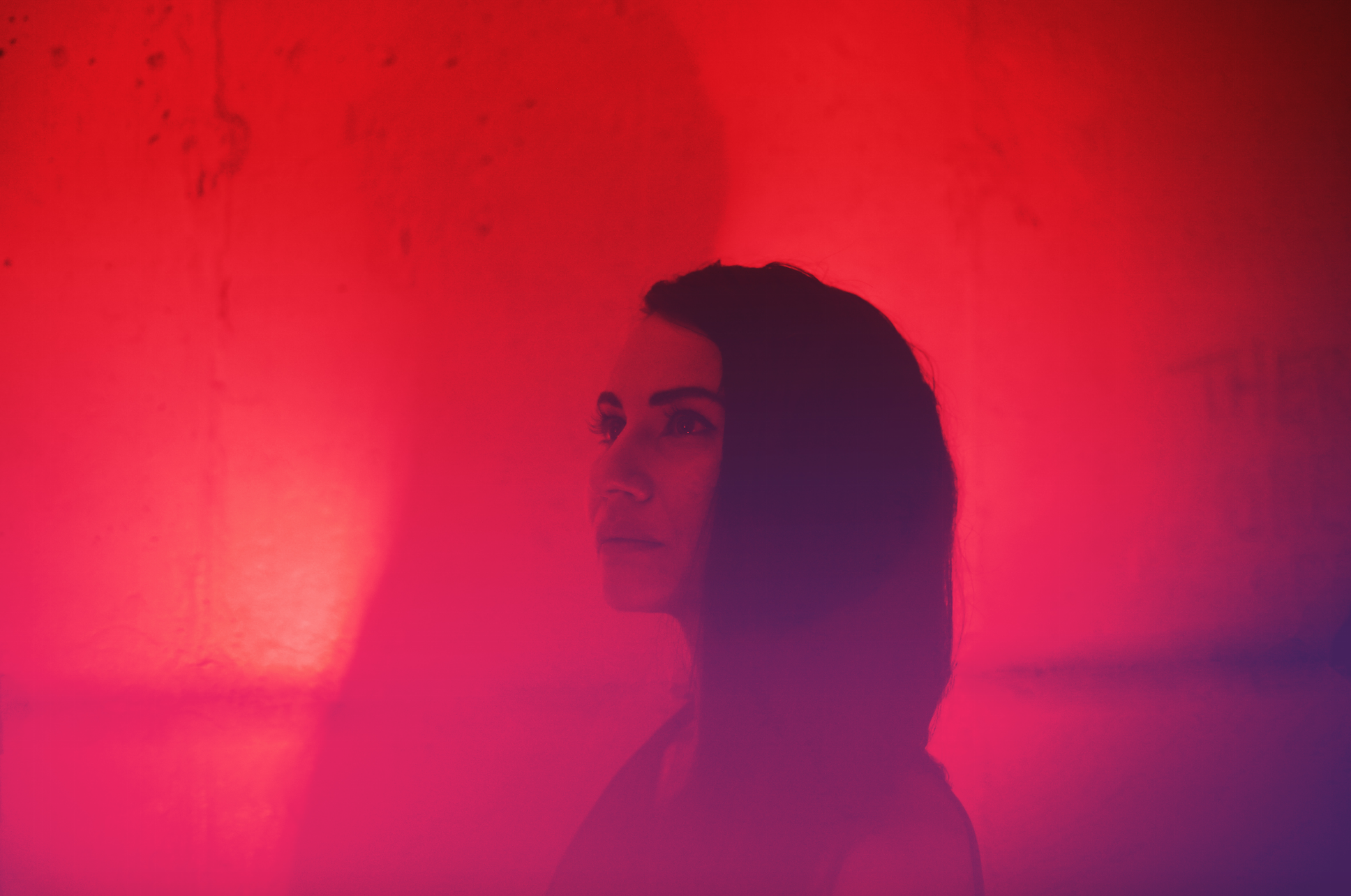
Shaky Knees 2018: Frankie Rose x Vinyl Mag
It’s widely believed that keeping something wild in captivity will only cause it to wither. Frankie Rose might be the exception that rule.
A veteran songwriter who forged her rightful place in indie rock history with bands like Dum Dum Girls, Crystal Stilts and Vivian Girls, she now enjoys the artistic freedom that comes along with making music under her name alone. But despite having created no less than three full length albums on her own, Rose’s triumph over her own isolation is what’s fueling her most recent work.
After surviving personal difficulties that caused her to take a hiatus from music altogether, she was able to crawl her way back through the slow and deliberate reconstruction of her creativity. She set about creating something new from the closet of her cramped L.A. apartment, an endeavor she refers to as an “act of faith.” With careful reflection and a little help from the late paranormal radio host Art Bell, she was able to turn feelings of claustrophobia and insomnia into the inspiration for her latest record. Aptly named Cage Tropical, the album chronicles confinement in California to her journey home, both literally and artistically.
Rose is proudly back in her element these days, feeling inspired from touring and writing new music from her true home in Brooklyn. We caught up with her at Shaky Knees Music Festival to talk about homecomings, new beginning and breaking out of the cage.
Vinyl Mag: I know you’ve only just arrived to Shaky Knees, but is there anyone you’re excited to see?
Frankie Rose: I would love to have been here on Friday. Friday would have been the night for me because of Franz Ferdinand. I got to tour with them, and they’re my favorite people in the world. If I could have one job, it would be opening for Franz Ferdinand for the rest of my life.
VM: There are some constant themes in Cage Tropical about feeling trapped, running away and coming home. Was that your original concept for the album from the start?
FR: I started the album in LA, and I was feeling very trapped and claustrophobic there. When you start an album you can’t really see the end of the line; it’s just an act of faith. That’s how it started in my apartment in LA. I turned my closet into a vocal booth and was just acting on faith. I didn’t want to be in LA at all; I just wanted to be back in New York. I ended up finishing the album in New York, so it was kind of this journey back to my home. I feel like I had to go through a lot to realize what a home Brooklyn is for me.
VM:I think your story really resonates with most people. Sometimes you have to put dreams on pause because life happens. What advice would you give someone trying to step back into the music world after a hiatus?
FR: My mother says, “everyone gets a tumble in the dryer.” It can happen to anyone, I don’t care how rich you are or how poor you are. Life is hard and bad things happen sometimes. I really did have to step away from music for a while and I didn’t know if I was going to return it or not. Slowly, I tried to feed my creative side with other things like going to art museums or nature hikes. Just anything to sort of stimulate that part of yourself that encourages you want to make art. And I think as long as that’s your main motivation, it doesn’t matter what you’re doing. For me it’s music, and that’s what I’ve come to learn through that experience. I just want to make music regardless of what the outcome will be.
VM: How has the song writing process changed for you over the years from being in groups to going solo?
FR: I like it better, but I still collaborate. I can do it all myself, but I do love having someone to bounce ideas off of. It’s totally different from being in a band. When you’re in a band, you’re married and constantly making compromises. So the fact that I don’t have to do that is quite nice. It can also be bittersweet, because at the end of the day you are solely responsible for what you put out. It’s my name on that product. Actually, I think that’s my only regret, that I didn’t come up with some awesome pseudonym.
VM: We heard that science fiction was a big influence on this record?
FR: When I was making Cage Tropical, I became a bit of an insomniac, so I started listening to a lot of Art Bell at night to go to sleep. It just sort of subconsciously started to influence the album.
VM: What are your plans after tour?
FR: I’m writing a new album. Every record is like a time capsule for me. I just want to write a record where every song could be a single. I’m striving for perfection right now, and I feel inspired, which is great! Often times after tour that’s not the case, but it really is right now.

Big Thief’s Buck Meek Talks Solo Debut
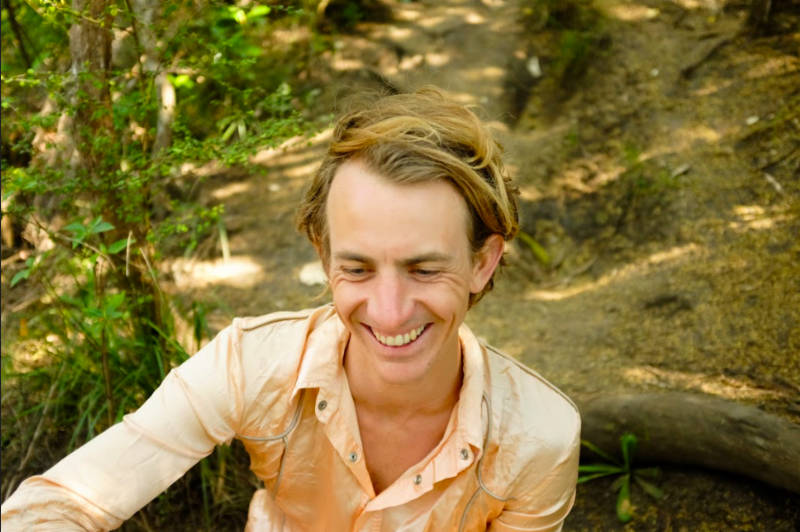
Having spent the last four years as the lead guitarist of indie rock quartet Big Thief, co-founder Buck Meek’s solo aspirations were put on hold while he devoted most of his time to hitting the ground hard, building the band’s momentum. Now that Big Thief has taken off, Meek stands ready to bestow his own finely-crafted song cache upon the world.
A front porch troubadour, the Texas-born songwriter weaves a tapestry of simple and intimate folk tales on his self-titled debut. The record feels like a winding country road and introduces listeners to the myriad of charmingly real characters they might meet wandering down it, from honorable mechanics to runaways to gamblers. Many of these characters are admittedly fairytale versions inspired by the people in Meek’s life. “I’m most inspired by my friends, I’d say,” he explains. “As a creative person, it gives me more seed for exaggeration in my own mind and for developing archetypes and characters that can go far beyond the reality of their personality.”
While the people around him help personify Meek’s thematic ideals, there is a common thread in what he finds most exciting about the stage of players. “One of the most inspiring things for me in humanity is the heroism in the smallest of details in people’s character,” says Meek. “Like in the persistence and the subtle elegance that I find in everyone really, and just trying to find that gives me hope.”
Buck Meek is out now on Keeled Scales. I sat down with Meek at Willie Nelson’s Luck Reunion this year to talk about the record. Check out our conversation below.
Vinyl Mag: [The first single “Cannonball!” premiered on NPR.] Can you tell me a little bit about the concept and what that’s about?
Buck Meek: It’s a feeling of when what we perceive as linear time of our life seems to fold over itself. And for me, like in this song…like the moment of experiencing the bittersweetness of the feeling of relationship as a living thing, but as a memory—feeling the relationship and the power of it, the weight of it in memory—while also experiencing the pain of whatever loss. Like how that can just become this web of feeling. That’s what I was trying to get at with the song.
VM: So this is about a relationship. I feel like when I look back at past relationships, it’s like I’m watching a movie. It almost feels like it happened to someone else, in a very emotionally disconnected way. But this song is also partly mourning. Can you talk a little bit more about the actual emotions that you’re expressing?
BM: Yeah, I guess it’s that dichotomy of celebrating the eternal quality of that relationship while also mourning its loss. Facing the loss of it almost intensifies the power of it at the same time, which is probably why loss is so hard for us. Suddenly we’re faced with how meaningful something was to us when we don’t have it anymore, I suppose. I wrote it almost as a medicine and a mourning process, celebrating and letting go…it’s probably healthy to callous and move forward, and I guess for me, writing songs like this helps me celebrate what was while also externalizing it to the point where I can let go.
VM: Do you reopen it every time you hear it or play it, or does the writing of it give you complete catharsis?
BM: I do re-experience it, but because it’s in a form outside of myself—even if I’m singing it—something about it being in song form helps me not fall prey to the emotions as much.
VM: What was the timeline of writing these songs between Big Thief and touring; when did that line up?
BM: This collection has been falling together over the last four years. “Cannonball!” I probably wrote three or four years ago. My writing process is generally pretty slow and arduous. I’ll often write the first verse of a song as a response to something that happens to me, or a connection that I would make, or a character that I would observe in passing. I’ll often come up with the initial idea there, and I feel like maybe the first verse and chorus will come to me in 30 seconds, and then it’ll take me six months to finish the song, almost as if I’m reflecting upon that initial experience.
VM: Once you get the first nugget, how does the process unfold? Are you waiting for the rest to come to you, or do you set time to sit down and work it out?
BM: I think that initial burst comes at me randomly. That first source comes unplanned. Like, it’ll come to me sometimes while I’m playing a show with Big Thief, or while I’m on a bicycle or in mid-conversation with someone, and I’ll just scramble to write it down and play it as soon as I can. But the finalizing process of really hammering out the song is more deliberate and often very private. Like when I find a moment of peace, which is rare on tour. I’ll often wait until I get home to finish a handful of ideas that have come to me on tour.
Although on this record, there are maybe three or four songs that came as part of this song-a-week project that I did with a really inspiring group of artists in New York. With Adrianne from Big Thief and Mat Davidson from Twain and Mikey Buishas from Really Big Pinecone…and a couple of other people. I’ll leave it somewhat anonymous. We had a song-a-week project for two months, and it was really hard to have that. We each had to write one song individually per week, and it was really difficult to be limited like that, but also I feel like it really pushed me to rely more on my instincts and less on my intellect. Because often I would wait until the last minute, like Sunday night.
VM: Like songwriting bootcamp. Do you feel like that’s still affecting the way that you write now?
BM: It’s taught me a lot about relying on my instincts, which I feel has been really helpful for me, because I often will get in these cycles in my head where I start taking it too seriously or overthinking it, and that forced me to just rely on…basically not judge myself and to rely on my initial impulses in the creative process, and at least not judge myself in the process. A lot of these songs came from that project initially, and then later on I would go back and edit them maybe after some time had passed and I had some space to reflect on them. But it’s been really helpful for me to dig into that impulse from a more confident place.
VM: Why do you think now is the time to be bringing these songs forward?
BM: I spent the last four years devoting almost all of my time on the road to Big Thief, because we started touring maybe three and a half year ago…playing 250 shows a year or something, and that really didn’t leave much space for my solo project…I’ve been aching to bring these songs to people for the last four years, really. It’s been more of a decision to devote myself to Big Thief, because it needed that intention to come to the place where it is now. I’m really excited to finally have the opportunity to have a more balanced schedule with that.
VM: You said you’ve been aching to get them out. So you’ve been sitting on them for awhile. Because you’ve had them for so long, were they constantly changing from start to now, or do you know when you’re done?
BM: Some of them have changed completely. One thing that’s kept it fresh was that I’ve had some of these songs for four years, but the band that I’ve put together for this record was in flux until like the last year really it really came together. I’m so happy with these players, and we really made this record in the last year together pretty quickly, really. We recorded it really fast, so that breathed a lot of new life into these songs.
VM: Where do you go from here?
BM: Hopefully going to Europe with my band probably in the fall, realistically. Trying to play as much as possible. I really want to hit the road with this band and get to that point of instinctual mesh with them.
Buck Meek is out now on Keeled Scales. Grab a copy of the record here, and be sure to catch Meek on his upcoming tour (dates below).
Buck Meek Tour:
May 30 | Kerrville, TX at Kerrville Folk Festival
June 07 | Allston, MA at Great Scott
June 08 | Brooklyn, NY at Rough Trade
June 09 | Washington, DC at Songbyrd
June 10 | Durham, NC at The Pinhook
June 12 | Nashville, TN at The High Watt
June 13 | Bloomington, IN at The Bishop
June 14 | Chicago, IL at Schuba’s
June 15 | Millvale, PA at The Funhouse
June 16 | Philadelphia, PA at Johnny Brenda’s
June 7-16 with Sam Evian
June 7 & 8 also with Katie Von Schleicher

Savannah Stopover 2018 Spotlight: Wild Child
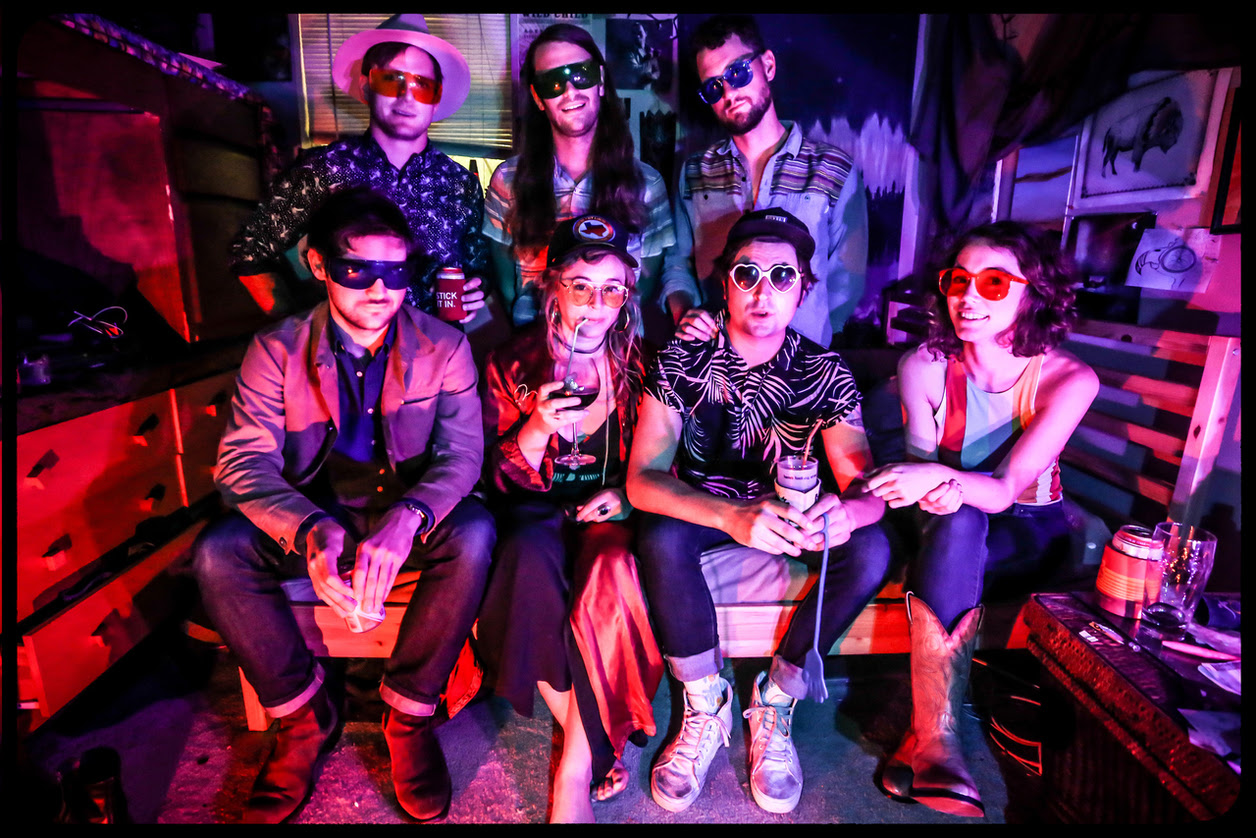
Indie pop band Wild Child has grown a lot since Alexander Beggins and Kelsey Wilson initially formed the group seven years ago. What started as a duo with a ukulele and violin has now turned into a seven-piece mini orchestra. In the wake of their fourth studio album, Expectations, I sat down for a Q&A interview with Beggins and Wilson at Savannah Stopover Music Festival to talk growth, inspiration, and the songwriting process.
VM: How did you two go about meeting everyone else and recruiting the other members of your band?
KW: I mean, we’ve gone through a few different lineups actually in the past couple years, especially with drummers and bass players. It’s kind of always been just whatever friends we have around us that want to play with us. This lineup we have now actually feels like Wild Child. It’s the dream team.
VM: Yeah, I feel like Wild Child has definitely grown a lot.
KW: It has. We’ve added guitar, a trombone, and we used to only have horns for the bigger Texas shows, but now we have a brass section. We didn’t even have a bass player for the first two years. We’ve just been slowly getting bigger and bigger.
VM: So let’s talk about your new album, Expectations. I know you’ve said your previous album, Fools, was kind of your breakup album, so where would you say Expectations falls on that spectrum? Is there a way to define it?
AB: Well, it’s kind of the closest thing to opening up a page in our journals and what’s going on at the time. With this one, there’s a little bit of duality in the title. The expectations of being our fourth record and wanting it to do well, and the kind of precedence we set for ourselves, and expectations of the relationships we’ve been in and out of the past couple of years.
KW: This one is—as much as we did write a lot just in and out of relationships—this one felt a lot more like just us, you know? Just us singing about who we are, really, and what we’ve learned so far. This is kind of like, we even wrote songs all together as a band in the studio for the first time. We haven’t done that before on any record.
VM: I know you’ve said in the past that the two of you write the skeleton of the song and then let the band add to it. So did you kind of change the songwriting process for this album and use a different method?
KW: Yeah, on this one Alexander came forward with more full songs, and then I came forward with full songs, and then some of the songs we wrote together as a band. It was a lot more collaborative.
AB: It’s kind of like the nature, the beast of this record was just write when we can. Because we were touring a lot at the time it was kind of like we were writing songs during soundchecks and writing songs in the van. It wasn’t like, “okay, today’s going to be a writing day!” There were a couple of writing retreats that we did, but for the most part we kind of would just write whenever it was convenient. And that kind of created a different kind of atmosphere.
KW: And normally we wrote when we needed to. Like, something would be happening, and we’d be like okay, let’s get together, drink some wine, and let’s write a song about it.
AB: And we kind of took our time with this record. We were like whenever it’s done, it’s done.
VM: Did you guys have a definite idea of how you wanted this album to sound, or did you just kind of let it happen how it happened?
KW: We usually just let it happen. With this one, we were working with so many different producers, and we love and respect all of them so much that we kind of left a lot of room for them to steer us. We finished the writing of the songs, but we thought when it comes to the speed, the arrangement and the vibe, we just wanted to see what the producers each had to say…they each kind of picked the songs they wanted to do, so they had ideas. So we just kind of let it ride. Initially, we were just going to release like a song a month for a year and just not do a record, ‘cause records are kind of dying, and it’s really heartbreaking. It’s all about Spotify singles now.
VM: Yeah, and you guys did release a lot of singles leading up to this album.
AB: We kind of “hybrid-ed” the idea in anticipation of this record.
VM: I feel like that’s true what you said about records dying. It’s not like many people go to record stores and buy the physical album when it’s released anymore.
AB: Yeah, it’s like you release an album when it comes out, and everyone’s stoked for like, two weeks. Then it’s over, you know? It’s done and out there in the world. So, we released singles in pairs for like three months before the record dropped. Which I thought was cool, because it kind of created some hype around it.
KW: Yeah, and we did music videos for like half the record.
VM: Do you guys have a favorite music video from Expectations?
KW: The “Think It Over” one we just did was so much fun. Literally it was just absolutely only our friends and family dressed up. We built a club in a giant empty warehouse in one day. It was just a garage, basically.
AB: Yeah, in that one we just got to have fun. Sometimes you make a video for you. We had this idea and we were like, let’s just ride with this as far as we can. The director is our homie and he knew the vibe that we wanted to try and communicate.
VM: [How has] your sound has evolved since your, slower original songs?
AB: I think that we…when we started we were just naive babies trying to make music, and I think we’ve gotten better.
KW: Yeah, we didn’t really know what we were doing. It’s always been good for us though, because we’re not limited to the rules of music. We didn’t know shit about anything, so we were just like, “I guess that sounds good I don’t know!” So we’ve just gotten better over the years about knowing what sounds good.
Wild Child is on tour now in support of Expectations, with shows across the US and in Europe. They played at Savannah Stopover at the historic Trinity United Methodist Church.

Artist to Watch: Molly Burch
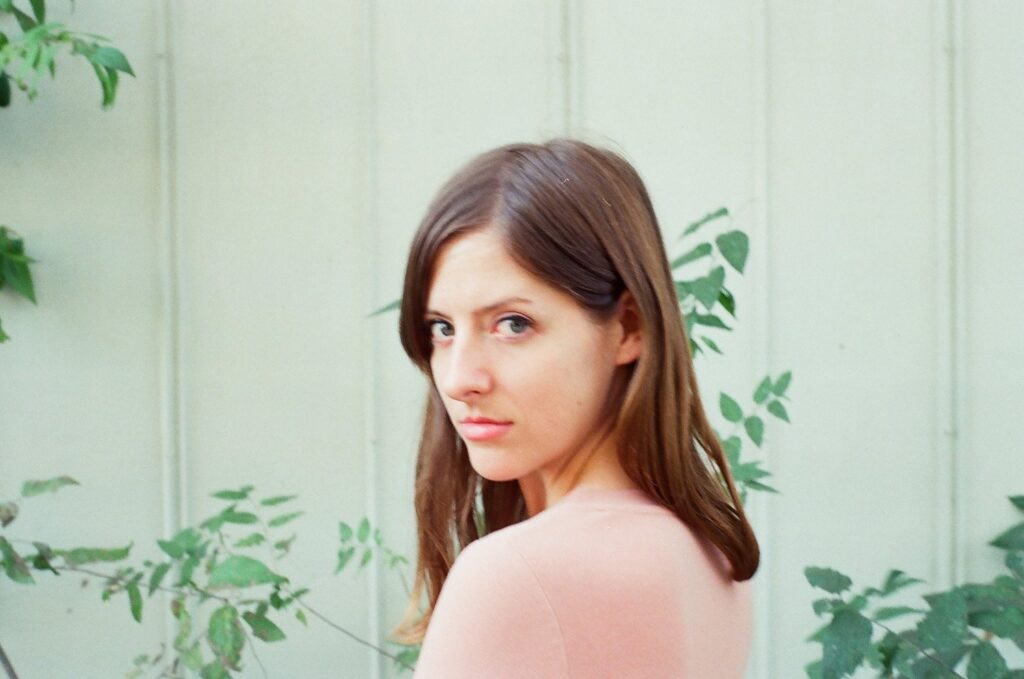
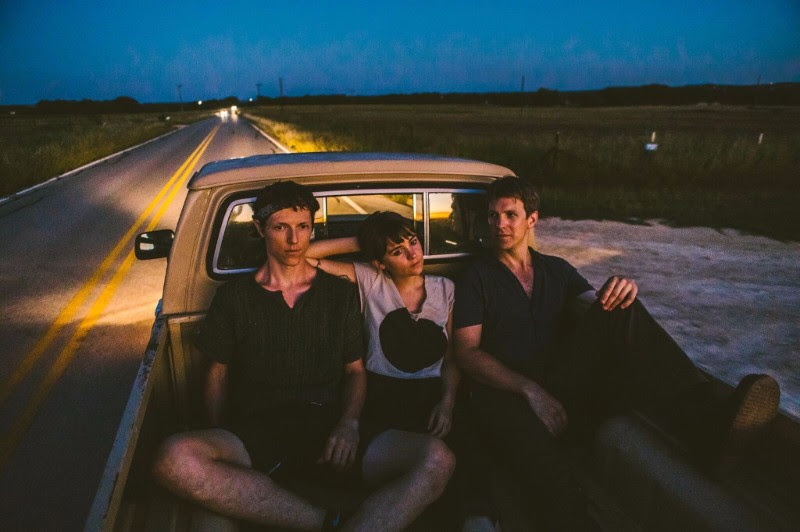
Like a well-maintained and beautifully hand carved wooden sculpture, Molly Burch’s music has a sort of softly natural, matte glow to it. Influenced by the music of her childhood spent growing up in LA, her early country influenced songwriting and equally paisley patterned arrangements have caught the ear of record labels, including Captured Tracks (who released her debut album Please Be Mine) and many publications, ourselves included.
Her voice, which some would compare to Angel Olsen, has a well-trained crushed velvety texture that sets it apart from many other vocalists in her field. Having gone to school for jazz singing, her emotive vocalizations lend itself to the cinematic or melodramatic nature of her band’s music. That being said, there’s a gentle sentiment of something that isn’t quite like full on naivety there, but more like a gentle innocence behind her croons.
Currently on the road supporting Alex Cameron on the tour for his new album, I got on the phone with Molly to have a quiet conversation to get to know her better both as a songwriter and as a person.
VM: After reading your bio, I saw that you did your growing up in LA, but then went to school in Asheville and then moved to Austin, correct?
MB: Yeah. I graduated High School in LA, was born and raised there, and then I spend one year in New York at Sarah Lawrence College and then decided to transfer to UNC Asheville, because my mom had moved to North Carolina, so that made the most sense at the time. I graduated there then spent a year out of college in Asheville feeling pretty lost, so I just moved to Austin on a whim.
VM: I can definitely relate to that. Would you ever move back to Asheville or NYC?
MB: Uh, I don’t know. No. I wouldn’t want to live in New York. I’ve actually just recently moved to an even smaller place in Austin. We live right outside of Austin. So I’m sure as I get older and also with playing music and touring I’ve been more attracted to like smaller cities, smaller towns. I guess I don’t know. We recently just went to Asheville on tour, and it was really lovely. I really do miss a lot of it, but I don’t know; I don’t think I would want to move back anytime soon.
VM: Austin is really cool. There are a lot of really cool weird places to go. Do you have any specific places you like to go to when you just want to chill out or have an escape within the city limits?
MB: Sure. Right now we live a little outside of Austin, so I feel like that, plus being on tour for more of this year makes me feel a little disconnected from Austin but let me try to think of where I’d go; I’m very much a homebody. A really nice bar to go get a drink is this place called Kinda Tropical. And there ‘s a little coffee shop on the east side called Bliss Coffee that one of my good friends runs, and the thing is a little Air Stream with a really nice outdoor patio. It’s really gorgeous.
So after taking a few listens to Please Be Mine, I immediately thought Nashville. There’s a very old school country vibe to it. Were there any artists from Nashville that you were listening to while you were writing those songs, or that you grew up listening to?
MB: Not really. These songs are like a collection of the first songs I’ve ever written, because that sort of just came later for me. I wasn’t comfortable writing before these songs. That style is just what comes natural to me. I went to school for jazz, and I would listen to older country music, but I don’t feel up to date on current country or Nashville music. Classic sounds for sure. And I wasn’t really listening to anything at the time, since I wrote the songs over a period of a couple of years.
VM: So it’s much more holistic. So, when you write songs, do you prefer to write alone, or do you have a favorite houseplant that you sit next to, or do you have a pet? Or do you like to write with your friends?
MB: I do have a cat, and I do have a lot of houseplants, but I feel like it’s different every time when I’ve been in different homes over the past couple of years. I definitely need to be fully alone. I don’t like to write anything if there are people at the house, or if my boyfriend is there. What I usually do is, I’ll write the song and get it fully done, and I’ll show it to Dailey—who’s my boyfriend and lead guitarist—and we try it together, and we figure out at that point if we like it or if I need to work on it more. Then we bring it to a band.
VM: So you’re signed to Captured Tracks records. What’s your experience being signed to a label like for your first record? Is it really laissez faire, or have they been very involved in the album process for you?
MB: They’ve been sort of involved, but in that sense they’re really supportive. They really support and believe in the artists they have. Going into signing with them and not knowing anything about labels, I sent them a cold demo submission. I have definitely learned a lot pretty quickly signing with them and not being used to it. It’s been a lot of new things signing with them and releasing my first album. They’re wonderful, and I feel extremely lucky. They’re really open, supportive, and they make me feel like I have tons of freedom. They’re just really cool people in general.
VM: So, have you been listening to any other artists right now? Has anyone excited you or just drawn your attention?
MB: I’ve been listening to a lot of Alex Cameron every day.
VM: Since you’ve been on tour with them?
MB: And my friend and ex-band mate Katie Schaffer and her boyfriend Shane just released a new album. Their band is called Olden Yoke. Also some friends of mine just released an album. They’re called Loma, and I’m excited for that. And my friend Jeff Williamson also has an album coming out.
VM: Well, thanks so much for talking with us! Do you have any other miscellaneous shout-outs that you before we wrap up here?
MB: I have one more friend, I just remembered [laughs]. This girl who lives in New York named Nadia but who records under the name Nadine just released her first album.
Check out Molly’s album Please Be Mine here and on all streaming platforms and follow her on Facebook.
Artist to Watch: Loma
I had the distinct pleasure of interviewing Emily Cross, a member of the relatively new band Loma. Loma consists of Emily Cross, Jonathan Meiburg and Dan Duszynski. Loma’s origins and shaping have come in a whirlwind of events over the past few years. The band is a recent joint venture to explore new musical territory, seeing as Meiburg is originally from the band Shearwater and Cross and Duszynski are originally from the band Cross Record. They met through Ben Goldberg of Badabing! records, who sent Meiburg Cross Record’s 2015 album Wabi-Sabi, which led to the two bands traveling together across America and Europe throughout Shearwater’s 2016 tour for Jet Plane and Oxbow. The band reconvened in a house outside Austin for two weeks at a time over the course of a few months to piece together their debut album. Then the band’s next milestone came in the form of a record deal with Sub Pop Records.
As for Loma’s sound, they don’t really fit into any particular musical genre. This could be due to the varied backgrounds and career paths of the band’s members, but this rejection of single-genre conformity could arguably be one of the band’s greatest assets. Their music is experimental, with this album in particular being influenced by the sounds of nature. Loma is searching, it’s evocative, and it takes the listener to another place entirely. To unravel the enigmatic mystery that is Loma, I sought to get to know Emily and to ask her about the band’s upcoming debut album, Loma.
What are your personal musical influences? What inspires you besides music?
Personally, I don’t listen to much music. I like older music like from the ’60s and ’70s. I’m a big fan of colorful women singers like Gloria Estefan. I like newer experimental stuff. As far as the band goes, we’re kind of all over the map. We’re into ambient stuff. Field recordings, nature, and natural sounds are muses for the band. Mortality and death inspire me because I work in the field of death and dying. I’ve been interested in it since I was a little kid. The fleeting nature of life itself brings poignancy to the ordinary things of life. On this album, there’s a longing to it [the fleeting nature of life itself.] There’s a reflection of what life is or what it could be. Any time we have themes around time passage or looking back on life it has to do with mortality and the human experience.
How did your deal with Sub Pop Records come about?
Jonathan, one of our band members, was already signed with them through his band Shearwater, and so we got the hookup through him.
What’s the inspiration behind the album’s cover art?
That’s my friend Lisa Cline’s work. I own the original piece and it was also hanging in the studio while we were recording so we thought it would look good on the cover. I like the piece because the two figures are beautiful and mysterious. All of her work has a serious, meaningful, spiritual quality to it that I like.
I see that the song “Joy” was the first song you all wrote and recorded together. How did it come together?
I can’t really remember. We worked in kind of a frenzy. It was hard and challenging for me to sing because it was different than how I was used to singing. It was more dramatic, showy, and theatrical.
Let’s talk about the house that your band describes as its muse for the album. What was so special about it and how did it influence the ideation process behind the album?
The house is on 18 acres. It’s a nice, free, open place to be. Natural sounds made their way into the record without much effort. We didn’t take precautions to prevent them from making their way in as you would with a normal recording. We sometimes even highlighted those occurrences and went out of our way to bring them to the forefront at times. Nature is the inspiration for, I would argue, most art because it’s the original inspiration source. It’s just so beautiful, abundant, amazing, and it’s a go-to pleasure source. Focusing on that was an escape from some interpersonal problems and tribulations that we were all going through at the time.
Your band talks about how you all captured sounds inside and outside the house on the album, from “the cicadas and frogs of ‘Relay Runner’ to the whooshes of wind and leaves on ‘White Glass.’” How did you capture the sounds of cicadas, frogs, and other nature sounds in the recording process?
We sometimes tried to specifically record certain sounds and sometimes we would just go sit outside and record and see what happens.
Going off of that, why did you choose to put nature sounds on the album and how do you think that adding nature sounds into the album influenced its tone?
It puts people into the space more directly by not just talking about nature but inserting sounds. It’s easy to be transported to a more natural, outdoor space. It sets a tone, especially when you have more loaded sounds like thunderstorms or the wind.
When you were recording, were you trying to take people specifically to the house where you recorded, a specific destination, or were you trying to bring the listener inside their own mind to a favorite place of theirs to visit?
We were trying to bring them into our space where we recorded but we didn’t consciously try to make them feel like they were here. It wasn’t a labored decision.
While recording the album, I read about how your vocals were accidentally recorded at the wrong speed but this was a happy accident and the voice ended up staying for the rest of the album. Were there any other happy accidents like this while recording this album or in any songwriting brainstorming sessions that you guys have had?
There were a couple times when we would record a random piano or guitar part and we would track vocals over it and it would seem perfect. The biggest happy accident was when we recorded my voice at the wrong speed on this record though.
What’s your guys’ process for jamming and brainstorming song lyrics? Do you have any un-traditional methods?
We don’t really do anything out of the ordinary. I think that as long as there’s chemistry in the space then brainstorming is easy.We all work really well together. We don’t have any tricks or anything like that for brainstorming. It all happens organically, like we’ll work out a guitar part, or sometimes we’ll let the tapes roll and just see what happens when we start playing.
What’s a lyric or song on the album that you particularly resonate with and why?
I wrote the first song on the record called “Who is Speaking.” I wouldn’t say it’s my favorite song on the record by any means, but I wrote it myself. I worked on it in Germany while I was doing an artist residency there. I had nothing to do one day and I had my guitar and recording stuff with me so I thought I should work on some music. I wrote the entire song myself but we all added other stuff to the song later.
What’s in store for the future for you guys? Do you guys have any plans for where you want to tour next or any goals for the future?
We’re just rolling with it. We don’t know what’s gonna happen in the future and we don’t even know how the tour is gonna go but we hope people like it. We have a full tour for April, May, June, and maybe August that’s in the US and Europe.
Where’s somewhere that you haven’t toured yet but would like to?
I would go to Australia or Japan. They’re both so far away. I want to go to Japan because I’ve never been to Asia and it seems fun and different. Australia is so beautiful and the people seem nice.
Let’s wrap this up with a fun question: If you could get the chance to perform with any musician who would it be and why?
Rihanna. I love her even though she wears fur. Fur is fucked up but she’s cool and I love her music.
Check out the band’s debut album Loma on all streaming platforms, or buy the album here.

Savannah Stopover 2018 Spotlight: Cicada Rhythm

Approaching Savannah Stopover Music Festival, I sat down with local Athens, Georgia band, Cicada Rhythm. The couple’s unique sound captures the essence of modern folk music, and they bring a chemistry with them that is evident both on and off stage. I met Andrea DeMarcus and Dave Kirslis at Normaltown Hall in Athens while they were working on an upcoming music video to talk Georgia roots, being in a band with someone you love, and beekeeping. Check out the interview below.
VM: You are both from Georgia, born and raised. How has the South, and Georgia specifically, influenced your sound?
Dave: I really started getting into music when I was living in North Georgia, and at that time it was a lot of traditional music- just banjo picking. And I always found it interesting, but I never was drawn to playing like that. Later I moved to Atlanta and that’s where I really started kind of getting myself into the music scene there. There was an Atlanta blues scene at Northside Tavern and some guys named Nate Nelson, and I guess The Wood Brothers were in Atlanta. Those guys, we would just pretty much try to go see them whenever we could. That’s what got me into music. Then we came to Athens and kind of fell in love with everybody here.
Andrea: And everybody’s a musician here.
Dave: Yeah!
Andrea: It’s great.
Dave: It’s really cool; Athens is, you know. I always say here it’s more of a mission than a competition. Everyone’s just here to help each other out and push each other forward, it’s just – it’s an inspiring place, definitely.
Andrea: I would say I kind of got into music through my dad. He’s a very avid music lover and we listened to The Beatles growing up and stuff. But, we had a great orchestra, the ASO in Atlanta, so when I started playing bass, I started taking [lessons] from the principle bassist in the ASO, and it was a great orchestra and he was great. It’s just a really like, Atlanta has a really strong group of players and it might not be as conducive and connected as Athens is for like smaller groups and more creative, younger people and stuff, but Atlanta does have a lot of great players. And so that’s kind of how I was introduced to the music scene. And then when I moved here…I really realized that music could be anything that you want it to be, and that helped me to write music, and create, and hookup with this guy. So yeah, I think in Georgia, it’s always been full of music. We’re really lucky to be from here, definitely.
VM: So what’s the songwriting process like for y’all? Do you both contribute to the process?
Andrea: Yeah, well we usually start out with an idea and maybe we’ve completed the song…there’s probably been maybe two or three songs that we’ve truly collaborated 50/50, but the rest of them, you know, it’s kind of your thing. And maybe I’ll need help with the chorus, or an outro, or a bridge or something, and he’ll help me with that and vice versa. But, we’re pretty much sole songwriters.
Dave: We help each other finish them sometimes.
VM: So is that kind of the same way y’all decide who’s going to sing which song?
Andrea: Yeah basically whoever writes whatever song sings it.
Dave: For the most part yeah.
Andrea: I’ve kind of always wanted to write a song for him to sing.
Dave: Likewise!
Andrea: But it hasn’t happened yet so we’ll see. Maybe one of the oldies of your songs I’ll take over that you don’t want to play anymore.
Dave: Sure!
VM: Cicada Rhythm has a very unique sound, kind of a modern take on folk music, and it’s very distinct. Are there any certain artists that have influenced your music directly?
Andrea: Definitely. Like Dave was saying before, The Wood Brothers are a super big influence. I really love the string work in Nickel Creek and The Beatles. String work in rock music is one of my favorite things and obviously I’m a string player so, but to put that on top of the song already, is, I don’t know, I just love that so much…I’d also have to say Gillian Welch, like she’s the ultimate songwriter for me…the way that she makes you feel is how I would want to make somebody feel.
Dave: Yeah you know for me…so much different stuff…so I just try to be a sponge, you know? And just soak it all in. But my dad was really into jazz…my mom was an Irish immigrant- she was really into Johnny Cash and Ray Charles and Willie Nelson so she was kind of giving me a foundation of really American music. But, really everything, but most particularly the people I mentioned are just the local artists in Atlanta.
VM: So how did y’all initially form and come up with the name Cicada Rhythm?
Andrea: Well, I moved to Athens in 2010, and I kind of was trying to get away from music. Dave and I were friends, but he lived in Atlanta at the time and he called me and said, “Why aren’t you in a band? Athens is full of bands; you need to be in a band. You know you can’t just not play music.” And I tried playing in a couple bands and they just did not fit right. And Dave was like, “Well why don’t you just play with me?” So we started learning each other’s songs and we really felt like it was working well, so we booked a show and we weren’t prepared, but they liked it. I guess before the show we were like, crap we need to have a name before the show! So we kept texting each other words or suggestions. It took us about a week to come up with it. I came up with Cicada Village and he was like “Oh I like that! What about Rhythm Wild?” and I was like, oh that’s pretty cool. So we kind of just compromised and mashed them together. We pretty much were on a deadline, but we wanted to pick something that sounded like southern.
VM: So I know when you both met, Andrea you were at Julliard, and Dave, you were hopping trains?
Dave: I was hopping trains for a while. I was really into it. I was reading about the Great Depression and it was my senior year of high school and my friend and I were broke.
Andrea: Wait I thought you were in college?
Dave: Well I started thinking about it in high school, then I graduated and was a poor college student and couldn’t really go anywhere for vacation. So we thought that would be a nice way to check out America. We would ride around the South. A lot of times we would ride down to Athens, coincidentally, and then ride back to Atlanta. And I hopped off one day when I was riding back from Athens to Atlanta, and I called my friend who she was with at the time, and they came and picked us up. And, it wasn’t love at first sight-
Andrea: He was very dirty!
Dave: Yeah, you get extremely dirty in boxcars cause they’re just, you know…but, that’s how we first met! We stayed friends for a long time, and then eventually it became more.
VM: So Andrea, you were at Julliard at the time?
Andrea: When we met, yeah. I think it must have been my junior year, or my sophomore year maybe. I was always calling their house because my boyfriend at the time wouldn’t answer his phone, and Dave would always pick up. Yeah it was a landline, and Dave would pick up, and we would chat. I would always be like “Where’s David?” and he’d be like, “I don’t know, but we can talk!”
Dave: [laughs] Yeah, then I stole her! A couple of years later, but yeah.
VM: Yeah it sounds like you had these motives for awhile?
Dave: I always admired Andrea…
Andrea: I wasn’t his type!
Dave: I didn’t consider it. And then I guess we were both single and playing music together and for a while I was trying to keep it professional.
Andrea: Yeah e wanted to keep it professional.
Dave: Yeah, but that lasted like two weeks. But here we are! We’re getting married in October!
VM: How long have y’all been engaged?
Dave: We got engaged in May.
VM: So how does that work being in a relationship and then also being in a band together? Is it hard to separate the two?
Dave: We actually separate it pretty well. Like, people will email us and expect us to talk to each other about it, but we don’t, and that’s actually sometimes an issue. If people don’t text both of us we won’t even talk about it. Cause we do so much Cicada on the road and behind the scenes here, so when we’re with each other we just try to be with each other. But, it’s been easy. But there have been battles too,
Andrea: Yeah, I mean it’s definitely…at this point it’s easy, it’s like second nature, but there was a time when we were writing songs and we just weren’t in agreement of how the song should go, or if we should play this song, and we’d have fights about ‘I like this song I think it’s good we should play it!’ and ‘I don’t think it’s good we shouldn’t play it!’ And it would hurt our feelings, cause songs are a part of you, you know, like they’re little parts of you, and if somebody you love rejects them, it hurts. But we’ve, I mean we’ve gotten past that now. If it works, it works. If it doesn’t, we move on.
Dave: Our tastes have kind of molded together in a way, with most things.
Andrea: Yeah.
VM: When you both aren’t playing music, what do you do in your spare time?
Dave: I mean we love nature and we love our dogs. I do a lot of working on the house. We have a little farmhouse just outside of Athens, and I’m always working on it, or trying to improve the yard, things like that.
Andrea: We also try to spend time with our families. We’ve got family in Atlanta, so it makes it easy to go over there.
Dave: I’m hoping to get into beekeeping this year! We’ll see. I’ve got a bunch of beehives…
Andrea: [laughs] He keeps saying that for like three years.
Dave: I know, but each year I get closer and closer!
Andrea: That would be really cool. It would be nice to have the honey! I don’t know about all the bees. Apparently they have facial recognition.
Dave: Yeah, they can recognize your face! I’ve been reading a lot about them and they’re just absolutely incredible.
VM: So, how are y’all gearing up for Savannah Stopover and SXSW? Are y’all getting excited!
Andrea: Yeah!
Dave: We’ve mainly just been working really hard on our two upcoming music videos, so I haven’t really had a chance to think about it. But I am excited cause we really like Savannah Stopover it’s really great.
Andrea: Yeah I love Savannah Stopover- it’s a great town. Everything’s really walkable, the food is really good…they also treat artists very well.
Dave: Austin’s gonna be really awesome too [for SXSW]. We love just going out towards the West- it’s a different world out there. I’m excited for both Savannah Stopover and South by Southwest.
Cicada Rhythm is played Savannah Stopover Friday, March 9th as part of the New West Records 20th Anniversary Showcase. The two have a busy few months ahead of them between touring, shooting music videos, and prepping for the release of their forthcoming album, Everywhere I Go, out April 27 on New West Records.

Track-By-Track: Wanderwild Talks Debut ‘In Due Time’
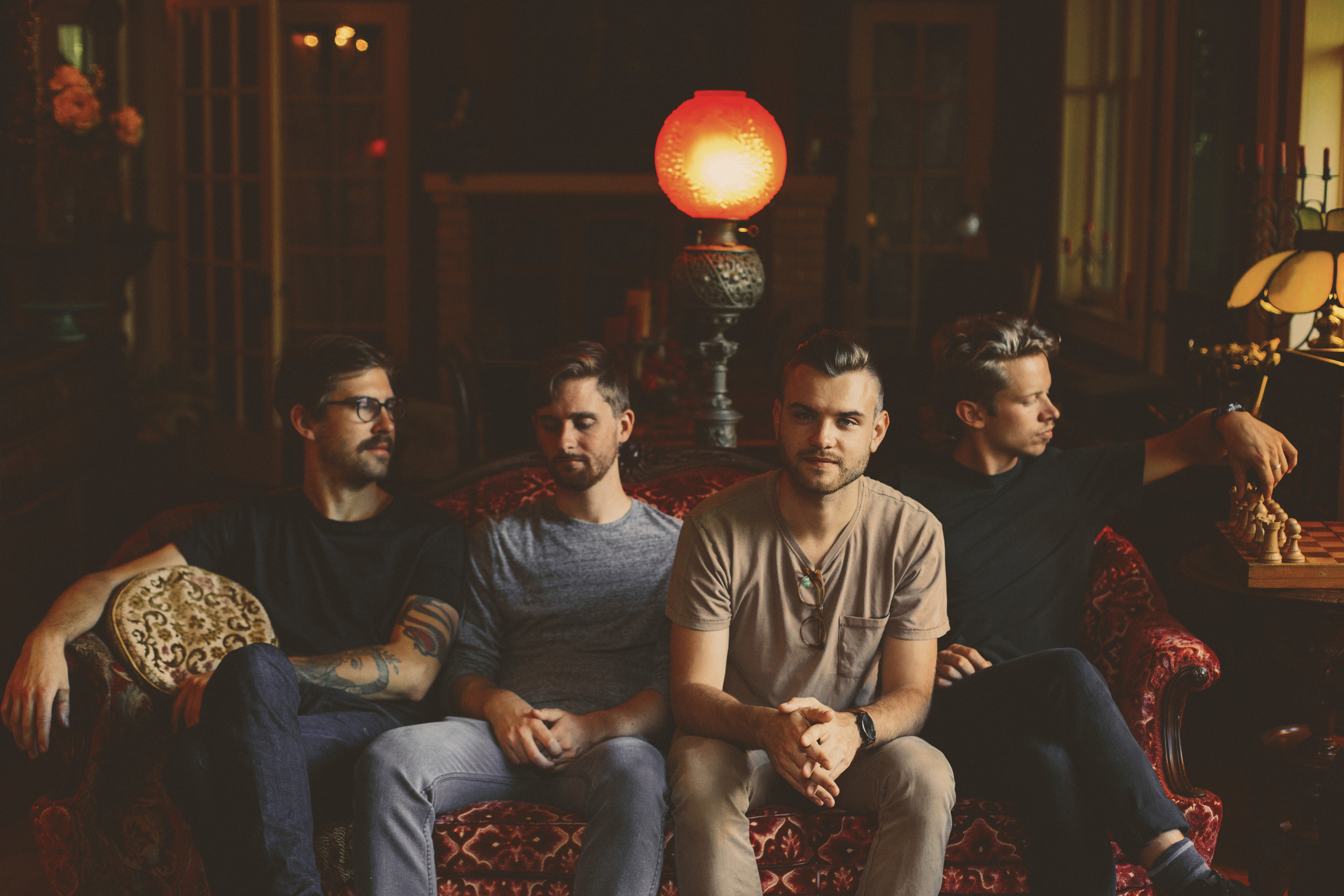
Athens, GA-based Wanderwild have released their debut full-length, In Due Time, out now. Wanderwild, originally the brainchild of singer, songwriter, multi-instrumentalist, and producer Matt Martin, has since its inception evolved from a solo project into a full-fledged band with Martin at the helm.
“The album title, In Due Time, refers to the theme of patience — relationally, creatively,” said Martin of the album. “That was challenging me while making the album. I’m constantly having to remind myself to find a balance between hard work and faith in the process.”
We asked Martin to take us through each track on the album and give us further insight into his inspiration and writing process.
Check out his track-by-track rundown below, and be sure to queue up the album stream below.
“Control”
“Control” has always had an X factor for us. It’s in an asymmetrical time signature (7/4), uses jazz inspired chord voicings, and was originally intended to be played with a drum machine. We had a lot of fun with textures and layers in the production process—field recordings of rain, reverbed synth sounds, etc. It wasn’t always going to start the album, but became irreplaceable once we entertained the idea. It’s a song about being frustrated with shallow romance and the “illusions of control.”
“In Due Time”
The spark for “In Due Time” came during an afternoon jam session with Wes [Gregory], our drummer. We somehow started riffing off of “Everybody Wants To Rule The World,” and ended up with an iPhone voice memo that sketched out what would become the verse and chorus sections. I like to work under a little bit of pressure, so I actually booked studio time before the song was even finished. We hammered out the arrangement as a band the day before we recorded it. It’s a satisfyingly dynamic song for us, and the build in the bridge is one of our favorite moments on the album. Strangely enough, I named the song after the album title (which had already been decided), instead of the other way around.
“Coalesce”
“Coalesce” happened in a day. One morning I woke up with a drum beat and synth loop in my head, and spent the next 14 hours pursuing it. It’s mostly sample based, and represents a totally different workflow (computer based) than I usually employ. The process was exciting and liberating. The melodies and instrumental track all happened in that same day, but I didn’t record the vocal until a year later. Thankfully the song stood the test of time, because almost nothing was changed. It showcases my most honest attempt at a shameless pop chorus.
“Plans”
“Plans” is one of the most honest songs I’ve ever written. It was born out of sadness and heartache, in part because I was tragically unsurprised. I’m thankful I wrote it in such an emotional state, because I’m not sure hindsight would have allowed me to write it with such transparency. We kept the band arrangement incredibly simple to help highlight the fragility and vulnerability that the song contains. It translates live better than any of us expected, and is really fun (albeit depressing) for me to sing.
“Seasons”
You know when you have a roof over your head and food on your plate, but still have a sadness that you can’t justify or pinpoint or explain? That’s what “Seasons” is about. I’m trying to talk myself into seeing the value in the darker moments, despite how challenging they can be, because they truly are essential. I was particularly inspired by The National’s rhythm section on this one. That’s nothing new, but this song really highlights that influence from both a production and arrangement standpoint.
“Taxi Cab”
“Taxi Cab” is similar to “Plans” in its vulnerability and subject matter, but channels frustration more than sadness. I’m not a very angry person, but this song flirts with that emotion heavily. It’s dynamic in a similar way to “Control”, and starts side B of the record with the same intention. The ending is unhinged and chaotic, which is reflective of the lyrical content, and a whole lot of fun for us to play live.
“Dreams”
“Dreams” is a song about me trying to convince myself to keep pursuing music. It was written in a time of self-doubt and uncertainty, in the early days of Wanderwild’s existence. I wasn’t on the verge of quitting music necessarily, but I was struggling to find meaning and purpose behind songwriting and creativity. I was tired of placing stock in other people’s validation, and needed to find new joy and conviction in my work. Currents by Tame Impala had just come out when I wrote “Dreams,” so that record definitely influenced my production approach. Specifically the filter in the intro and third verse, and the punchy, real-but-sampled-feeling drum sounds.
“Numbers & Exchanges”
Admittedly, I sometimes feel like acoustic tracks are filler, but “Numbers & Exchanges” really wanted to be on this album. It’s a song about human value, and battling the feeling of being reduced to commerce and commodity. The piano outro was a last minute addition that I stumbled upon while we were sequencing the album. It’s a sketch that I recorded on my dad’s piano in Cleveland a few years ago that I’d totally forgotten about it. Amazingly, it paired perfectly with the song, and offered a new contemplative space within the album.
“Day 31”
“Day 31” was the last song to be written for the album, so it’s a fitting way for the album to end. It’s called “Day 31” because I wrote it on the 31st day of 2017. I wanted to write a song that avoided flowery language and metaphor and spoke directly to where I was at in life. I had just graduated from college, and was trying to figure out which moments were and weren’t sacred in my life. Possibly all of them, possibly none of them — I wasn’t sure, and certainly knew I never could be, but found solace in the people and spaces around me. The seemingly mundane moments in life can sometimes be the most meaningful. I wanted the album to end with an exclamation mark, and the outro of “Day 31” allows it to do just that.
Artist to Watch: Madeline Kenney
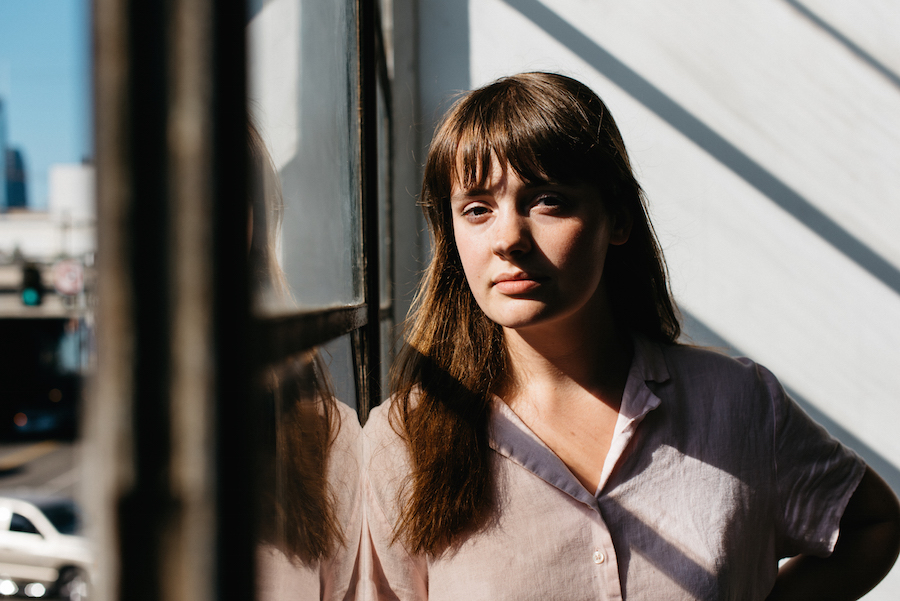
Oakland-based singer-songwriter/guitarist Madeline Kenney is a master of several trades. The accomplished musician is impossible to confine to one modifier. In addition to her budding music career, she is also a baker and a visual artist, holds a degree in neuroscience, and is currently furthering her education in sound engineering. To top it off, Kenney has just dropped her debut full-length album, Night Night At the First Landing.
I hopped on the phone with Kenney to discuss her debut, the joy of learning, and sexism in the music industry. We also dove pretty deep into a discussion of a shared love for obscure British comedy shows, most of which I’ve spared you from, dear reader. Check out our interview below, and be sure to grab a listen to . Night Night while you’re at it.
VM: You were born in Seattle…I’m wondering how that shaped you? [This is paraphrased, because this question was asked in a very rambling, roundabout way that would not be interesting or efficient to read]
MK: I’m from east of Seattle. I always locate it with—if you’ve seen Twin Peaks, then you know the falls in Twin Peaks—my house is a 10-15 minute drive from the falls. So very woodsy, beautiful, quiet, dark and rainy area…Seattle is famous for having amazing but depressing music come out of it, because it’s really sad inside, and it’s grey all year round…when it’s grey outside it’s easier for me to write, because I grew up in the grey. And living in Oakland—it’s not that often—but when it is kinda cooler and darker and greyer I’m like, “Ooo yay!” I feel cozy, and I feel good. and I want to be inside and writing music. And yeah, when I go back to visit home there’s, an odd bittersweetness to all of it, because it’s this place you grew up in and loved so much, but it’s so different, and it’s really conflicting feeling. I’m sure that has also seeped into my songs, but somehow it’s hard for me to look back and be like, “yeah, this inspired this lyric.” To me, it feels like a little bit stream-of-consciousness-y, and then I go back and I’m like, “oh, maybe that is about where I grew up.”
VM: So Oakland—you moved there for baking, right?
MK: Yeah, I moved to the Bay Area to work at a specific bakery in San Francisco.
VM: How did you go from thinking you were going to be in neuroscience to then baking to then music?
MK: I was baking since I was 16. It was my first job, and I just kind of moved around to different bakeries. All through college I worked at bakeries, and I was really obsessed with it, and I thought I was going to open a bakery, but I continued to study neuroscience, not because I thought I was going to be a neuroscientist. It was just very interesting to me. It was the most interesting thing I’d ever learned, so I just kept wanting to learn more about it. I graduated and continued to bake, and as far as when music came in, I’ve played music since I was in kindergarten. It’s always been a part of my life. It just started to be when I started to get better shows—and more shows, at least—that it was really incompatible with a baking shift. To stay up really late and then get up a couple hours later and bake was not ideal. Although on paper the timeline looks very, “oh I did this, then I decided to do this,” it all kind of flowed together. I’ve always been interested in multiple things.
VM: I do think that’s kind of cool though, because–I mean obviously in this industry, but even in life–everybody sort of projects a brand onto you, you know? So you’re a musician or a writer or whatever, and it’s cool that you’re able to pursue multiple interests and keep them active at the same time…I completely assumed that, because you studied neuroscience, that you had these goals to be a neuroscientist. But of course, sometimes people just want to learn for the sake of learning.
MK: Yeah, I mean, I’m really glad I found that. I think it’s definitely shaped the way that I look at the world and humans and everything, but I don’t know. I feel like people don’t really tell you when you’re younger like in high school that you can study something just for the joy of learning and then work in a trade. That’s kind of seen as a lesser-than thing to do or whatever, and I was very anti that idea…at the same time, I kind of wish that someone would’ve told me that it was okay to study art in school. My parents definitely support me now, but I feel like nobody told me I could do that, and now my whole band–my live band–have degrees in jazz, and part of me is really jealous. I wish I got to study jazz! I didn’t know or take the time to know.
VM: I don’t think there’s ever a cap to learning everything you want to learn. What about neuroscience though? What attracted you to it? And you’ve said it’s formed the way you see people?
MK: I remember my neuroscience teacher on the first day saying, “you are your brain, and your brain is you.” You can be—although you are a complex, beautiful wonderful human being—you can also be reduced to these very physical things, these cells…to me that was mind-blowing and comforting at the same time. Some people were like, “oh, I’m more than the sum of my parts. My essence, my being comes from somewhere else.” But I was like, HELL YEAH. You mean my whole personality could be explained by the way my brain is uniquely wired? I’m not crazy.” I would like to think that it made me a little more understanding and sympathetic towards people…Obviously I’m not the most patient—I’m not a saint—but to me it really resonated. The fact that other people had a problem with that made me more excited. Like this was the “bad kids” science.
VM: That’s pretty awesome. Because you do so much stuff, you bake you paint you knit and obviously music, so I’m just wondering when you want to completely turn off and do nothing, what do you do? Or maybe you don’t ever have those times?
MK: You know, I’ve been trying to do that more although I will say that when I’m watching a movie or watching TV it’s usually…I just got a frame loom, so I’ve been weaving, it’s repetitive and it makes me feel like I’m accomplishing something but while I’m relaxing–I just have problems I guess. But when I do want to chill out I watch a lot of British comedy. A lot. It’s my favorite form of television. British comedy or British crime-drama. Those are my two favorite go-to’s…I just got this old tape recorder, and it’s a tape player and recorder and vinyl player–except the record player doesn’t work. I’ve figured out a way to hook my computer up to it so I can make mixtapes straight to tape, and so I’ve been doing sound collage mixtapes, and that, to me, is relaxing.
VM: That’s super awesome.
MK: What were you going to ask about? I would love to talk to you about British TV.
VM: Oh no, I was just wondering what comedies you like!
MK: I’d say my favorite–well maybe I can’t say my favorite–but I’ll give you a list. I love That Mitchell and Webb Look, they’re the guys that did Peep Show, which is great sketch comedy. I love this show called Snuff Box which has the American guy from The Mighty Boosh and another guy that’s in a bunch of weird British comedy stuff. The show Snuff Box is probably the strangest.
VM: Wait, that has Matt Berry in it, right?
MK: Yes! You know it? I love it! But it’s so dark and weird, and you have no idea what’s going on, and I love it so much. I also love a bit of Fry and Laurie, the late ’80s show with Hugh Laurie and Stephen Fry. Stephen Fry is like my idol. Somebody recently in an interview asked if I could have anybody remix one of my songs, and I said Stephen Fry. Wouldn’t it be great? I also–okay, this is one of my nerdy guilty pleasures right now—a show called Father Brown. It’s a British crime-drama, but it’s about a priest who solves murders. It’s great. And so silly. It’s serious, but it’s also a pretty silly murder, so it’s silly.
VM: I tend to go Poirot for crime drama…do you watch The IT Crowd?
MK: I love that show! I was just watching it the other day! I love Matt Berry.
[This went on for too long to transcribe. Thank you, Madeline, for all of the great recommendations that I’ve since blown through.]
VM: Yeah, I could just go on all day…to talk about your album, how did the Chaz Bear [Toro y Moi] collaboration happen?
MK: It happened really randomly. Anthony Ferraro is the keys player in Toro’s live band. And his project is called Astronauts, Etc. My boyfriend plays guitar in Astronauts, so that’s how I met Anthony. And then, when I started playing with a backing band, I asked Anthony to play keys for me and sing backup stuff. And he did that for a little while…while we were still playing live performances together, Chaz came to one of our shows, because he is Anthony’s friend. I didn’t really know Chaz’s music before I met him, because I’m square, but he came up to me after a show and said he really liked it and wanted to record an EP…later I figured out that he had a big following. I think we work really well together, because that relationship was so organic and random. I mean I love the guy, and I was not like a super fan before I met him, which helps me to say no to ideas, which I think is important in a producer-artist relationship. You have to take their advice, and I want to be able to use his expertise to form my sound, but I also want it to sound like me. You have to set boundaries.
VM: So you recorded and arranged—how do you step back when you’re that deeply involved? How do you see the forest for the trees?
MK: I found myself asking advice from a lot of friends, like the drummer, Aaron [Gold], who played on the record when I was starting to mix the tracks. I brought them over to listen so he could do all the drum sounds and tell me what he thought. Same with the bassist…I’m not the kind of person who can do everything from start to finish on my own. I mean, I can’t play drums for shit. I like to have that balance. I know I can do most everything in my music room, but there are some things that I just can’t do alone. I think it’s really important to know when to reach out to people. Some of my favorite musicians are also really good at collaborating and choosing the right people to work with that augment and amplify their art.
VM: Tell me about your production/engineering education
MK: I taught myself a lot of it while I was making this record and learning to use Ableton, and it’s almost kind of…I can mark off the things that I bought that made my art better. When I got a loop pedal, I could write better. When I got Ableton, I could record better. When I got my monitors, I could mix better. It takes a lot of time to have enough money to buy those expensive things. After the record was recorded, I started interning at Women’s Audio Mission, which is the only women built and run studio in the world…so I’ve been learning to do engineering in a studio on a console and everything…that has really helped me understand things.
VM: You told NPR that the song “Always” was sort of a temper tantrum about frustrations with music and certain people in art. Can you expand? What specifically are you seeing that is frustrating?
MK: I think that there are a lot of different frustrations. A lot of it was coming from experiencing so much sexism…why am I dealing with this again? Every single show, a dude telling me how to use my own gear, a dude telling me I’m too weak to carry my own amp, a dude telling me how to sing into my microphone…I’ve gotten this far. I don’t need your help. So that’s part of it. I feel like so much of the “Industry” is dependent on approval from people that haven’t necessarily earned my respect. Like what has such-and-such big name indie publication done to make me respect them? But I just hope and pray that they like what I make. That shouldn’t matter. I should be able to make what I make. If people like it, great, but if they don’t, it’s not going to stop me from making my art…I think it’s just crazy to me…it really affects me…or if you get billed with somebody just because they’re another girl with bangs that plays guitar…I have a lot of things that grind my gears, but it’s not going to stop me from playing music. I still love getting up on stage and playing music in front of people. It’s my favorite thing in the world.
VM: What’s next after the album drop?
MK: Keep doing stuff. I have a lot of songs ready. I just almost finished an EP and have a bunch of demos for a full length. I just want to tour and play as many shows as I can, and if making more records helps me play more shows, that’s what I’ll do. Hopefully people want to continue to help me do that. I love playing in front of people, so any opportunity that I have to do that brings me a lot of joy so I’m just seeking that out right now.
Madeline Kenney on Tour:
OCT 10 TUE — Rickshaw Stop — San Francisco, CA
MAY 16 WED — The Haunt — Brighton, United Kingdom
MAY 18 FRI — Tivoli — Dublin, Ireland
MAY 20 SUN — Empire — Belfast, United Kingdom
MAY 21 MON — The Plug — Sheffield, United Kingdom
MAY 22 TUE — The Caves — Edinburgh, United Kingdom
MAY 23 WED — Hare & Hounds — Birmingham, United Kingdom
MAY 25 FRI — Koko — London, United Kingdom
Julia Jacklin Tour Diary + Interview: Pickathon 2017
[tps_header]
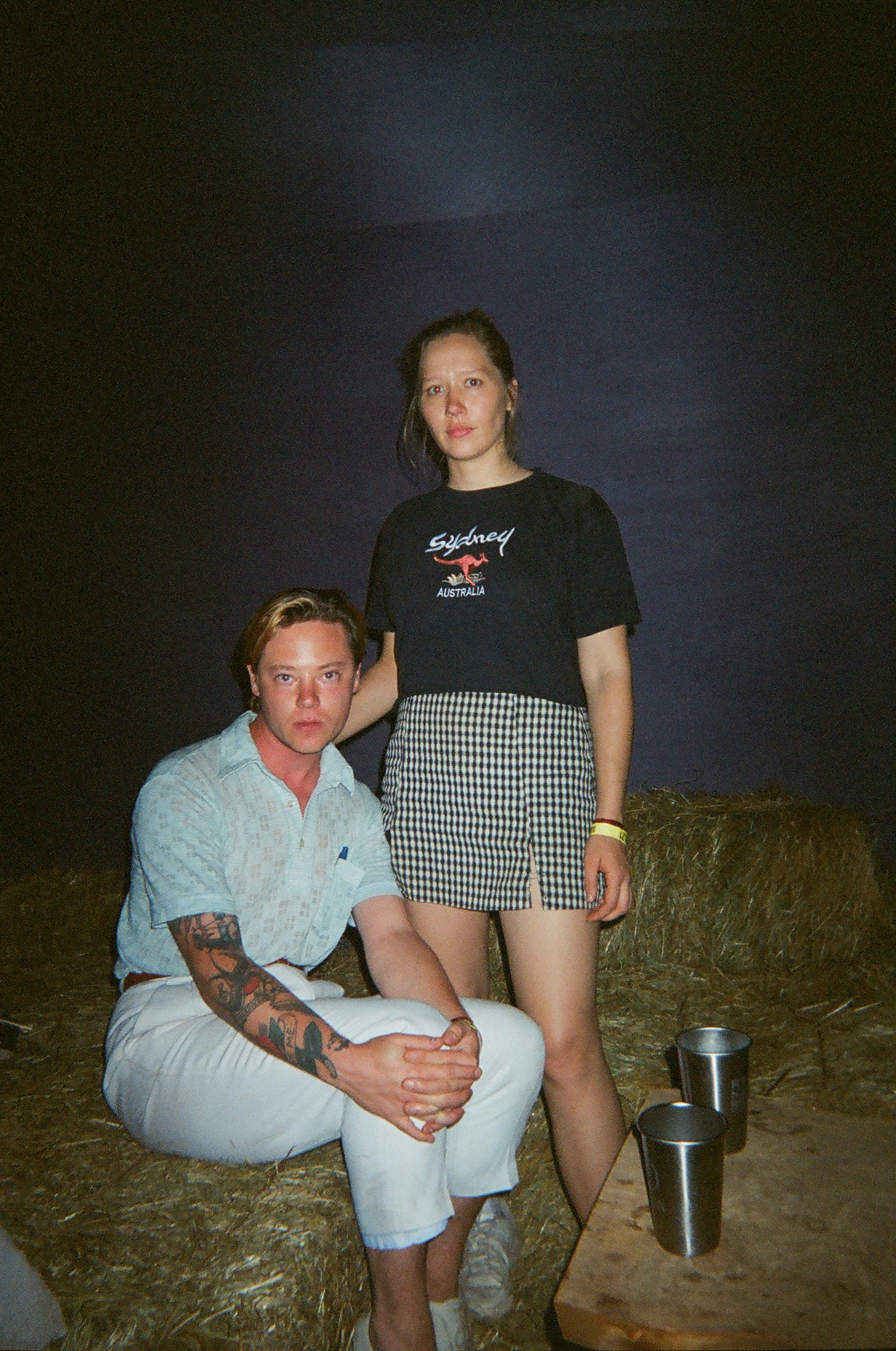
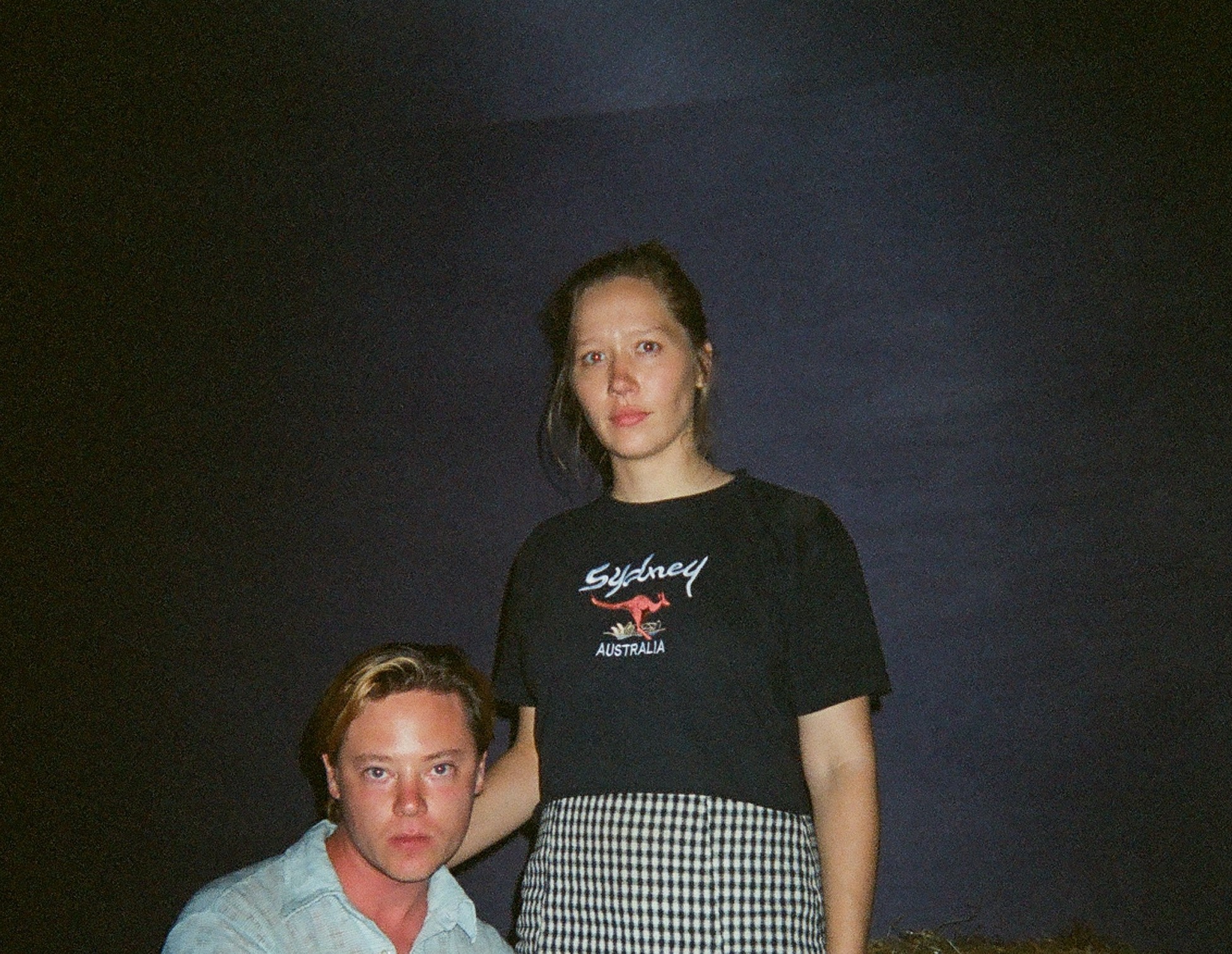
I tracked down some shade at Pickathon with Australian singer-songwriter Julia Jacklin and dove into a discussion about quarter life crises, trying to stay in the present, exploitation, and also less stressful things like her amazing music and the bliss that comes with turning off your cell phone.
Check out our interview with Julia below, and be sure to grab a listen to her brand new 7″ out now on Polyvinyl.
VM: First of all, so “Don’t Let the Kids Win” you said was about being 24 and sort of a quarter-life crisis sort of thing—not feeling happy about where you were. I super relate to that…I had a panic attack about being 24, and I was like, “I thought I’d be so much further along than I am now!” Twenty-four seems really old in that time.
JJ: Oh, totally. I feel like it’s that time between leaving school and being 18, and you’re like, “oh, I’m 18, give me like four years, and I’ll fucking be made.” Then you hit 22, and you’re like, “wait, what? I am not here yet.” So I think 24 is the time when everyone is like “no no no no, what’s happening?”
VM: I’m always either looking behind or looking into the future…I’m never really in the moment, you know? How do you keep in the present?
JJ: I think it’s become a lot easier since I’ve made a record and released it, because that kind of felt like finally…I felt like making albums was the first time I felt really proud of myself and had actually done these things, like working really hard at this shitty job to pay to make this record, you know? Kind of lined it up all myself, and I had this piece of work, and then ever since, it’s done well. I feel a lot more relaxed in a way.
I definitely went through a stage where I was like, “fuuuck…what if I never write anything else again?” Now after this record, especially, I don’t know…just kind of seeing as well the more I’m in the music industry and realizing how hard it is to actually get to where I am…a lot of my friends are still slogging it away at home in Sydney, which is a really tough music scene. We just don’t have any venues and artist support. It’s hard to get out of Australia, because it’s so expensive, so I think that having a lot of my friends who are still working really hard grounds me and makes me think, “don’t ever take this for granted for one second.” I definitely worked hard to get here, but I’m also extremely lucky, you know? And when people are like, “no, don’t say you’re lucky, you worked hard” I’m like, “yeah, but I had an advantage over other people for various reasons.” So yeah, I just feel very lucky.
VM: You said you thought this was originally going to be a heartbreak record…
JJ: I just came out of a pretty big relationship with an American man. It’s tough when you live in America and Australia as well. So yeah, I kind of thought as I was writing the songs like, okay, this is going to be a classic, “every song is dealing with this one romance whatever,” but once I had written my body of work I was like, no, I think a lot of it is just me reflecting on this time in my life, which I was glad about. I didn’t want to have—I mean heartbreak records are great—but I didn’t want to have my first record to be all, “he left me. Why?”
VM: “Eastwick”—you said you were inspired by Dancing With the Stars?
JJ: To be honest, I don’t want to say the episode, because I don’t want to insult anyone. But it’s more that the idea of…you know, when those reality TV shows use people’s pain and suffering and past lives and pretend that it’s because we’re letting these people express themselves creatively through pain and grief. It’s fucking bullshit. You’re exploiting 100 percent. Everyone knows…that’s not the most obvious point…I mean, it’s a pretty obvious point but…
There was this one episode where someone was just really…I felt like exploiting the death of this person’s father, and I just remember thinking, “ugh.” It just made me reflect on a lot of things as well as being in the music industry with how much you want to say in interviews and how much you want to give out there, because everyone really wants a juicy story. You can’t just be a good musician. You need to make good music, because you’ve overcome something. There has to be an angle. That can sometimes feel a little like scary, because you think, “what if I don’t have an angle,” you know? What if I’m just doing my thing? Is that going to be enough?
VM: You directed the music video, can you tell me about that concept a little bit?
JJ: I just have this really great friend Sam Brumby who I make my music videos with who’s super patient with me. Basically all I had in my head was I just imagined me drinking a blue cocktail in the suburbs. That’s all I had. I got my mom to make me this outfit, this blue outfit which we got the material from a kid’s material shop. All the stuff I’ve done I’ve wanted to stay in the Blue Mountains where I’m from, so that’s kind of in. I filmed it in my sister’s garage and her house in the Blue Mountains. I guess it’s a pretty classic, just trying to show what it can feel like growing up in the suburbs as someone who wanted to have a creative life. I felt a bit stifled there, so that’s what I was trying to show.
VM: Are you in Barcelona now?
JJ: Kind of. But we haven’t been there for months.
VM: What inspired that move?
JJ: I had this really naive idea that I would go and stay in Barcelona and learn Spanish, because I learned quite a bit when I was younger…but learning a language is really tough. It’s a lot harder than you initially think…I’m using books and stuff, but so much of it is about confidence, and it’s so much about getting out there and being willing to humiliate myself in front of these people. I think that’s something I need to get better at. I think that being on tour, it’s hard to have enough mental energy to learn something like that…but still, it’s a beautiful city and I love it.
VM: Who are you excited to see this weekend?
JJ: I have already seen Andy Shauf who I am always excited to see. I’ve seen him play more times than anyone ever except like my best friend back home, because we toured with him, but I think he’s a musical genius. So I’m going to see him again tonight. I haven’t really looked…I really want to see Steve Gunn, playing right now, so hopefully we can catch a couple of his songs. Tank and the Bangas…I want to see them today.
VM: What’s next for you? Besides everything we’ve already talked about.
JJ: Then the day after I get off and finish the last show, I’m flying to this tiny island in Croatia where I’m going to just spend like two weeks with my phone turned off, by myself, by the ocean. I think I’m in the moment—I’m really enjoying this—but I’m looking forward to two months off where I’m gonna go to Croatia and then travel up through Bosnia, and then we do like another little tour [dates here], and then I’m home in November.
Click through to see Julia’s disposable camera tour diary below!
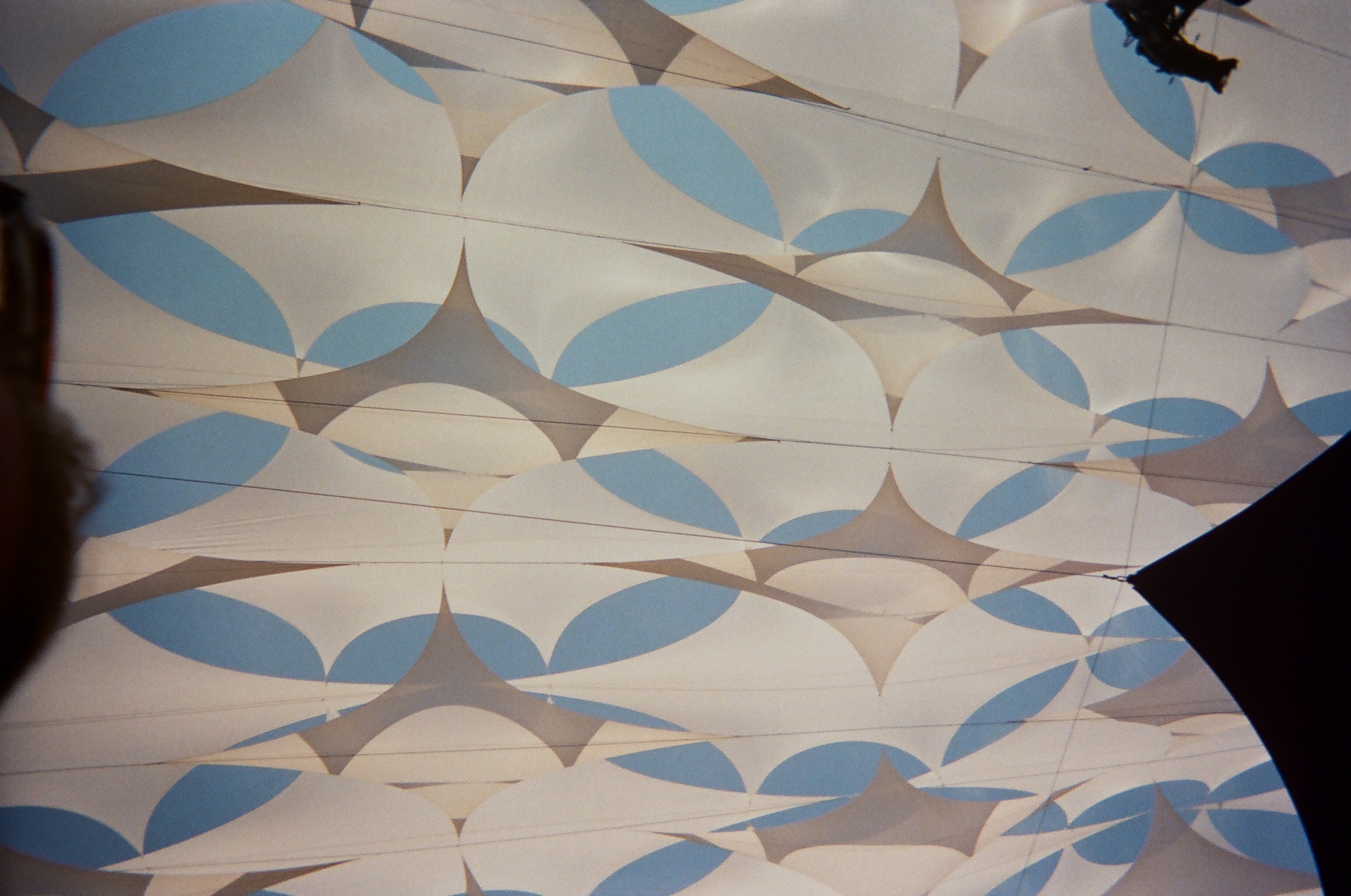
[/tps_header]The shade cloth situation over the main stage area has to be the kindest thing I’ve ever seen a summer festival do for their audience.
SUSTO Tour Diary + Interview: Pickathon 2017
[tps_header]
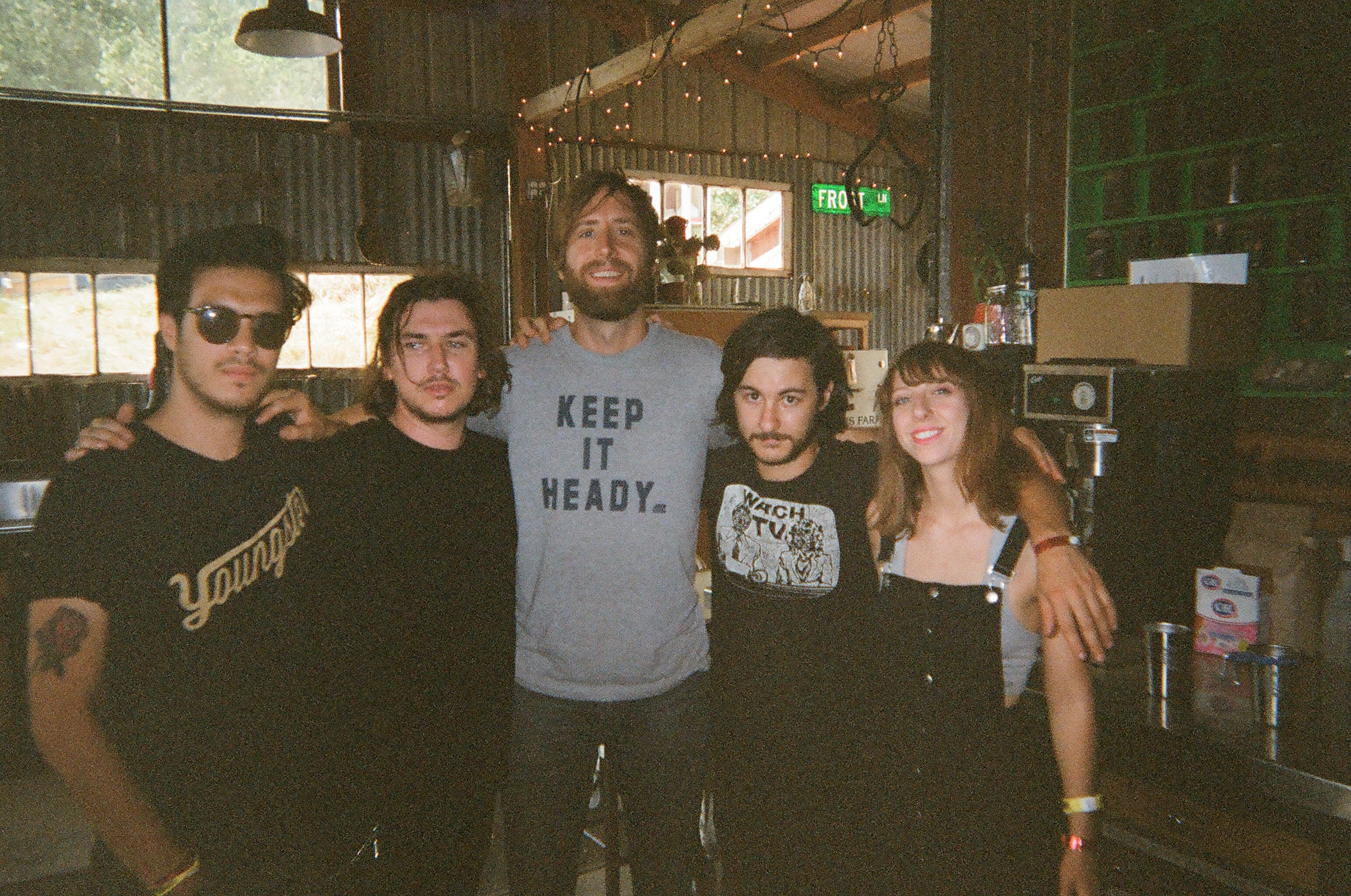
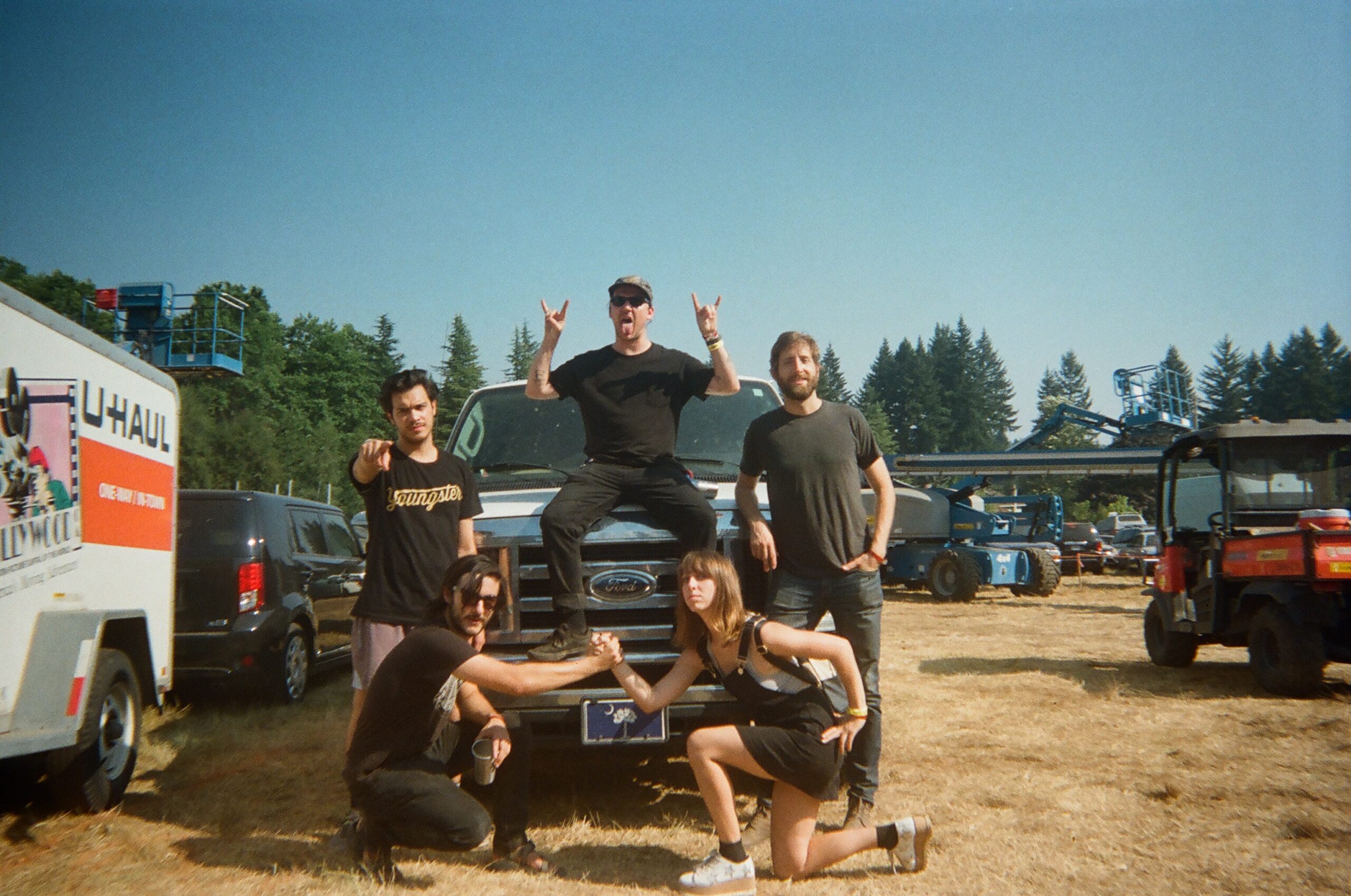
We recently spent some time on a hay bale at Pickathon with Justin Osborne, founding member of Charleston, SC five-piece SUSTO. We chatted about things like coming to grips with how hard life is, realizing life can still be okay once your illusions about it have been shattered, giving up, un-giving up, whether or not there is a higher power, and of course the masterpiece that was the Pickathon lineup this year. Enjoy, and keep it heady, friends.
Vinyl Mag: So first of all—SUSTO translates to “panic attack”?
SUSTO: Well, it can be translated in a lot of different ways, but it’s like a folk-illness where you go through something traumatic. It can be a panic attack. It can last just like an hour, or it can be something you go through like a long state of depression, something like that. It’s kind of when you aren’t really yourself; you’re beside yourself and you’re overwhelmed…you feel like your soul is left, or anxious, or whatever.
VM: That meaning and the album & I’m Fine Today…it’s so relatable. That [one day at a time] living.
S: Well our first record was self-titled, because really the band name came from what I was calling the project, like the songs…I felt like the word “susto” really fit the first set of songs, and that kind of dealing with shit in your life feels very much present in all of our music, but it’s like, “okay, if the first record is called SUSTO, then the second record could maybe have a little more hope in the title and even in the songs.
VM: Even like you said, talking about things coming in waves, like “I’m fine today” holds a lot of meaning.
S: Well, I think it’s kind of the whole take-away from the record. Life is both, you know? It’s good and bad, and as you get older you have to learn that, and you learn to be prepared for that. To be prepared for highs and lows in life and just ride it out.
VM: It seems like in the record, it’s coming from a place of being at peace with that more.
S: Yeah, not being so thrown off by being blind-sided by life. I mean, the first record I was like, “oh shit, life isn’t what I thought it was going to be,” and the second record is kinda like, “okay, but it still isn’t that bad.”
VM: You—for a minute—thought you might be done with music before you started this?
S: Yeah, I tried to quit.
VM: How do you keep from getting burned out now?
S: You know, when I went to Cuba whenever I quit music, and I got to be around a completely different music environment—I’ve been working in the American music industry and spinning my wheels; I’ve even been touring since I was like 18…I was 25 or 26 whenever I decided I wasn’t getting anywhere, and so by then I inadvertently ended up getting around this music scene that wasn’t about getting big or anything like that—which don’t get me wrong, I still want to grow our band as much as we can—but I just fell in love with the music again and songwriting.
I learned how to do more open and less censored than what I was writing, too. I think I’ve kind of been reset ever since then. And because of that getting back into it, it’s been a lot easier this time through, because I’ve had the experience of last time, so I knew a lot of what not to do, and I’ve started to embrace too that this is what I do. I think for a while, when you’re in a band and you’re trying to tour but you haven’t really made it, you go home and everyone’s like, “still doing the music thing?” and you’re like “yeah…” and they’re like, “well, we haven’t seen you on late night or anything yet,” and it’s hard to reconcile with yourself. You always ride the fence. It’s hard to commit. At least, it was hard for me to commit. But I’ve committed fully this time, and it’s been really rewarding to just put myself into it, and I enjoy it a lot more now, and also we’ve had some reasonable success, so it’s been cool.
VM: So, in terms of what I’ve read and how you talk about your writing process, it seems like it kind of comes to you a lot…
S: I feel like it’s something I channel more than anything…it’s not like it just randomly hits me or something, but I can set the vibe to where it’s conducive for me. I like to write alone, and I like to do it in the morning time when I have the house to myself. I’ll get stoned, walk around the little parlor, guitar on my stomach, and just sing to myself. There’s no inhibitions when there’s nobody around, so I just kind of free-flow and, you know, a lot of it is garbage. But I do it a lot, whenever I get the chance. So some of it isn’t garbage, and there’s something either almost completely there, and sometimes it’s a piece of a thing that’s there, but even when there’s a piece of a thing, you’ll go into the studio with what I’ve got, and I like to just freestyle the lyrics and just sing it as I’m going.
I just don’t like thinking too much and forcing it. I used to try to do that whenever I was a kid, and I’ve just kind of turned away from that. I would sit in class and write lyrics. But I just like to let it come out of my body. I’ve been writing songs enough that if I just listen to myself, I’ll say what I wanna say.
VM: Do you have other creative outlets besides music writing?
S: Instagram. I have like four Instagram accounts. Really. They’re really stupid though. We have like all the SUSTO band stuff, then I have a personal one that’s just funny—I like to take pictures whenever…you know when you’re at a diner or a hotel, and they always have a picture of Marilyn Monroe and Elvis in it? I’ve got this running thing where I’ll get a picture with the picture of them and be like, “I can’t believe I ate at the same Applebee’s as Elvis and Madonna!” or whatever. I have another one where I just take stoner photos on the road, of like awkward stuff. I don’t put it out there, I just do it for myself, because I’m really bored in the van and take a bunch of photos. So no, I guess I don’t really have any other creative outlets [laughs].
You just premiered the video for “Jah Werx,” and first of all I wanted to talk about the concept for the video, but I also want to know what your take on the universe is because you’ve said you don’t believe in hell but also “Jah Werx” [is a reference to some sort of higher power].
S: Starting with the video, we worked with a director out of Nashville, called Matt DeLisi. He kind of had a vision for the video, of kind of like juxtaposing a child with a graveyard, because the song is kind of about dealing with death in a cyclical nature of things. It talks about lifetimes on Earth or in a carbon place which is Earth, and then you know, how it’s always back in the ground. So we wanted to juxtapose those two things, and also we kind of wanted to capture the environment—not the city environment, or the beach, but the kind of natural swamp environment around Charleston.
As far as how I see the universe? Personally, I try not to think about it too much anymore. I thought about it a lot for a long time, and I think this record and the last two records are gonna help me get a lot of that out of my system. I feel one way about it one day and then a different way about it another…I don’t really believe in God, or in like “Jah” is God. For me, “Jah Werx” means “it’s all good,” you know? I mean, I am a big stoner, and I smoke a lot of herb, and I’m kind of in to Rasta culture, a really big fan of Bob Marley—he’s probably one of my favorite artists…we have the song “Jah Werx” where it’s a triumphant mantra, you know? Like “Jah Werx! I’m fine today.” I don’t know how to explain it; there’s no concrete. We get caught up trying to have firm ideas about the universe and about life, and I think it’s kind of more important to understand that everything is fluid. When things are good, say “Jah Werx.” But when things are bad, say “Jah Werx,” too.
VM: So you opened for The Lumineers, and now you’re doing the headlining thing. How do these experiences compare? What did you learn?
S: Absolutely different. They’re both really fun. Getting to open for The Lumineers was really cool because we were playing in arenas and getting to do that—as someone who’s been trying to play music as much as I can since I was 15, it was an incredible experience. I just like getting to jam and soundcheck and then getting into the arena; there’s no sound like an arena sound. But at the same time, you’re playing first out of three, because Kaleo was on that tour, too, and Kaleo is pretty fucking big—and they’re awesome, too. We were surprised: it was usually pretty full—it wasn’t packed—but also the same time it was people who had mostly never heard of us before, so we were winning people over, and we have a shorter set. Picking which kind of set you think is going to work for their audience, at the same time not compromising who you are…but we also learned to be more showman. Our rooms are big; we have to make bigger gestures and really try to entertain. Watching bigger bands, you learn, “oh, this is how you entertain.
VM: So who are you most excited to see this weekend? You’re not here very long.
S: I have to leave like, right now. But I’ll tell you who I’m really bummed I’m not gonna see: Julia Jacklin. I want to see Julia Jacklin so fucking bad, and I haven’t yet. I want to see Aldous Harding…and Andy Shauf. I’ve been trying to see all of them for probably over a year now.
Check out SUSTO’s disposable camera tour diary below.
Also be sure to catch the band on their current co-headling US tour with Esmé Patterson. Seriously go.
[/tps_header]Keep It Heady