
Category: Film & TV Reviews
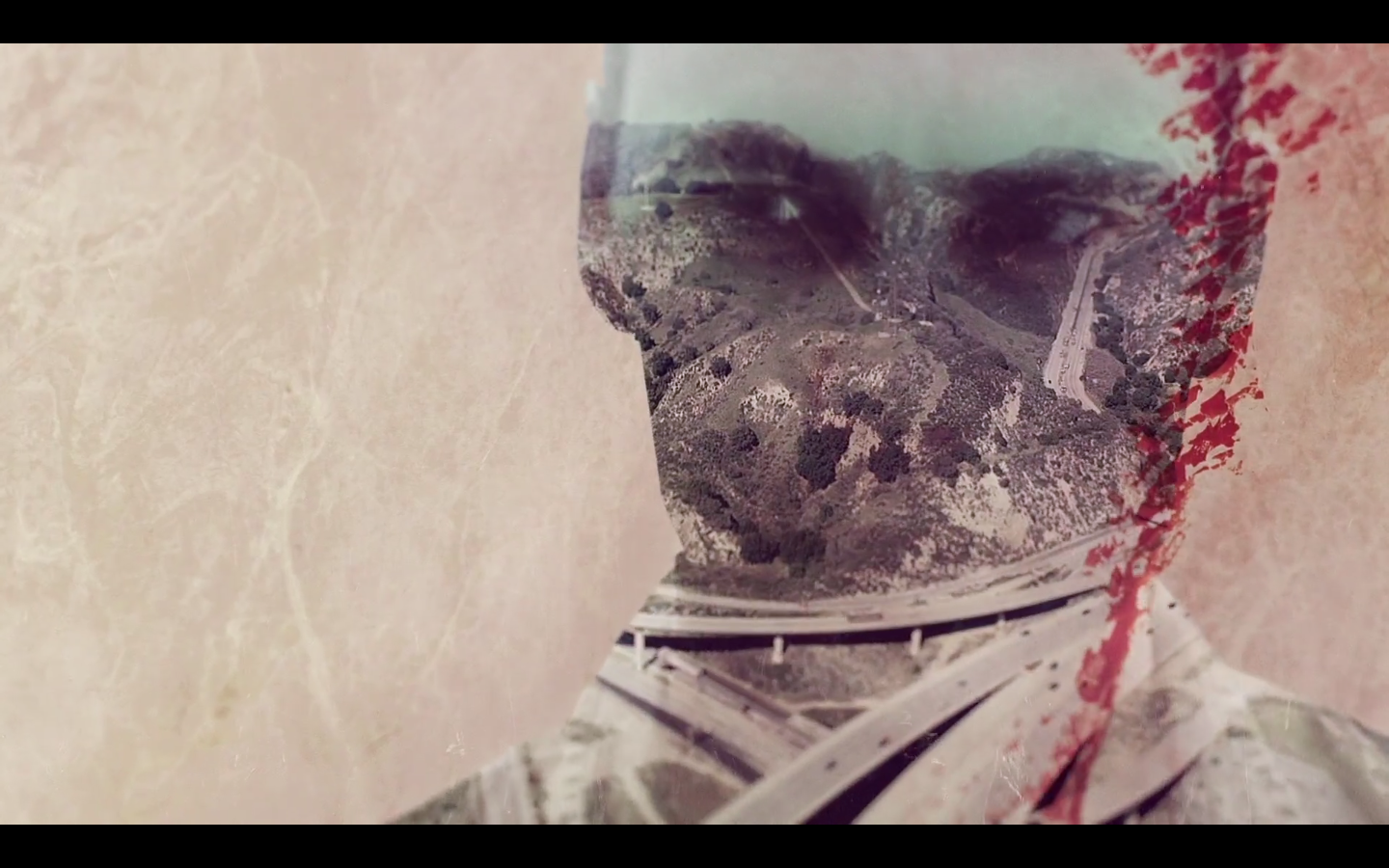
‘True Detective’ Season 2 Review [SPOILERS, DUH]
Well folks, that sure was a bumpy ride; I didn’t know if we’d make it. Season 2 of True Detective brought forth from the blogosphere ire, contrarian praise, and mass confusion alike, in just eight too-short episodes. While there’s an awful lot to parse through – and like the few survivors of the festering wound of corruption that is Vinci, we may never get done parsing – we will surely try.
The season began on a fairly unremarkable note. There was a body, a crow guy, and a few irredeemable rapscallion cops bound together by fate, but nothing quite measuring up to the antler-festooned cult victims of S1. And how could we not compare the two? S1 with its mysticism, college sophomore road trip philosophy, and brilliant character acting, was so out of left field and such an instant hit that expectations for its follow up were sky-high. So when not two but four A-list names signed on (Rachel McAdams, Vince Vaughn, Taylor Kitsch, and Colin Farrell), We the Fans began to wonder – could creator Pizzolatto & co. handle that much star power? Especially with the contentious departure of S1 director Cary Fukunaga, whose dramatic pans, fly-overs, and tracking shots made that season an instant classic? Well, the answer is complicated.
Many of the shiny narrative tricks Pizzolatto pulled this time around (assisted by a revolving door of directors) – faking us out with Ray’s death in E2, time jumping after that massive shootout, the ever-higher heights that the crew’s photography drones climbed in order to achieve those stunning aerial shots, jumping the shark and starting all over in the fifth episode – were mediocre to great in the moment, but ultimately felt empty. The season’s first half dragged on and served more as a distraction for the action that would juice things up in E5. And with each episode having a different director, the visual storytelling that made S1 so compelling was fractured and rushed. With so many plots to attend to, there’s only so much BEV rumination you can burn through before it’s a waste of precious minutes that could be spent conveying necessary information.
Not to say that there weren’t similarities between the two seasons. Daddy issues abound: after Rust and Marty took hacks at portraying failed fatherhood, masculinity was once again put on trial. Paul was the most classically masculine character on the show – as a cop and former soldier, he rode a motorcycle at breakneck speeds to poetically escape his past. But he’s filled with petrified self-loathing at the idea that he’s gay, instead lashing out at friends and strangers who remind him of this fact; little blue pills are his only means of hiding in plain sight. Frank only wants children insomuch that they’re a visual reckoning of his fertility; adoption is off the table. Alternately, Velcoro’s own attempts at conception were thwarted by a brutal rapist, and his son – a son who may not be biologically his but is the only thing he has to live for in the cut-to – is a daily reminder that he failed to be a man and protect his wife. Even Ani struggles with masculinity in that she cannot bear to resemble its opposite. Every S2 cop, criminal, and playboy mayoral-elect fantasizes about overthrowing their personal patriarchy, a power struggle magnified up the chain of command in bigger themes. Man vs. Father is no different from Men vs. Nature in True Detective‘s eyes.
Like the swamps of podunk Louisiana, the industrial stench of LA’s runoff set the perfect hair-raising scene for that particular bubbling under brand of fear that comes with being onto something that goes all the way to the top. In S1, our dynamic duo drove through fading memories of towns and past oil fields to seek the truth. Here in Vinci, greed has raped the land of its resources so much so that the only animals we saw were wooden sculptures adorning houses built upon compromised land, or carrion birds cleaning up after human wreckage. Speaking of which, as with Dora Lange’s mother in S1, industry’s victimage doesn’t stop with Mother Nature. During working hours, Vinci is filled to the brim with new age slaves, dozens of thousands of impoverished citizens (documented and un) whose only recourse for survival is to work in dangerous chemical factories for what is probably, at most, minimum wage. Pizzolatto can’t seem to stress this enough: power structures hurt everyone except the folks at the tippy top of the pyramid.
Which is what makes the show’s continual and needless insistence on sexualizing every female character so head-scratching. Mind you, women in entertainment don’t have to all be badasses like Ani (or Buffy or Katniss); being multi-dimensional and flawed like their male counterparts will do just fine, thanks. But it’s not too much to ask that they’re not in the show purely as sexual plot-movers. And Ani sure had a complex relationship with sex, a perfectly reasonable struggle after we learn of her horrifying early childhood abuse. Frank treats wife Jordan, who really seems to struggle with the concepts of bras and low-cut clothing, like utter crap, but only until she’s useful to him again. Paul uses the perfectly lovely Emily as a beard, gaslighting her and calling her crazy for sniffing out that something isn’t quite right. No one in the TD universe has a great life, but women bear the overwhelming brunt of abuse. So if Nic is trying to comment on how the world uses women until there’s nothing left, he was too deep undercover as to be distinguishable from those at whom he pointed his finger.
But all of that analysis is useless if you can’t even keep the players straight (and you would be in good company). Crime dramas usually throw a lot at their viewers, but there were too many cooks here (obligatory), feeding us unresolved plot lines and half-baked ideas instead of anything substantial. So much of the dialogue was stilted or poorly delivered, even by this should-be stellar cast. The writers room seems to have devoted too much time creating complex character backstories, forsaking the basics of back-and-forth dialogue. Lines like, “It’s like… blue balls in my heart,” “These contracts… signatures all over them,” or “Is that a fucking e-cigarette?” have become instant classics, and not in a good way. But is that any worse than a hurry up and wait narrative interspersed with cynical, lazy exposition dumping? Either way, these actors, despite their respective calibers, seemed to have genuine delivery issues. It was as if they needed a lagging half second to process the words coming out of their mouths. In all fairness, crime noir is meant to be intensely dramatic and overacted, but True Detective has tacitly positioned itself as ~above all that~ from the beginning; it’s a thinking fan’s pulp that occasionally slums it for the sake of genre, but as this season showed, there was no cake to be had or eaten.
All in all, it was an entertaining watch. Those who waded through the lost interest and Cohlestalgia were rewarded with a few episodes’ worth of engaging shoot outs and not completely obvious plot twists. But in its attempts to out-do itself, the show bit off more than it could chew. What ever happened to Ani’s gambling addiction, or her freaking family? Who burned Velcoro and Bezzerides’ squad car? Where was the public concern over the Black Mountain shootout? Who the hell would murder and steal just to buy their way into a shithole town? We’ll never find out, because the people charged with telling us just plum forgot. It’ll be interesting to compare viewership numbers between each season, and even more interesting to see what becomes of #TrueDetectiveSeason3. If the math holds, eight of the Ocean’s Eleven crew will take on the seedy underworld of brothel LARPing in Texas.
RANDOM THOUGHTS:
- When we were collectively, somewhat infuriatingly “JK-ed” in E5, at least we got thrown a little divine truth of the universe with Ani following a pack of birds to the next clue.
- What would a cop procedural be without ripped headlines? Paul’s tabloid exploitation sets up the moral, metaphorical side of L.A.’s sludgy runoff. Somehow that wasn’t as on-the-nose as, say, that photoshopped still of Chessani and President Bush. The movie set our heroes visited was an obvious take on the Mad Max franchise, and more broadly, our culture’s current apocalyptical obsessions. We can sense the end is nigh, and our planet is slowly burning to a dusty crisp, so we might as well get our ya-ya’s out about it, right?
- It’s always nice to see James Frain as a squirrelly political manservant.
- We’ve heard of ‘anal retentive’, but what about ‘dental retentive’? S2 was obsessed with teeth. Teeth being pulled out, teeth being knocked out, teeth just falling out. The field of dream analysis (if you’ll allow me to call it a field) widely holds that loose teeth is a metaphor for feeling burdened by the need to say something, but oppressed by a force that won’t let you. This diagnosis could certainly be applied to every character True Detective has ever seen – the ‘flawed cop’ trope is incomplete without burdensome secrets.
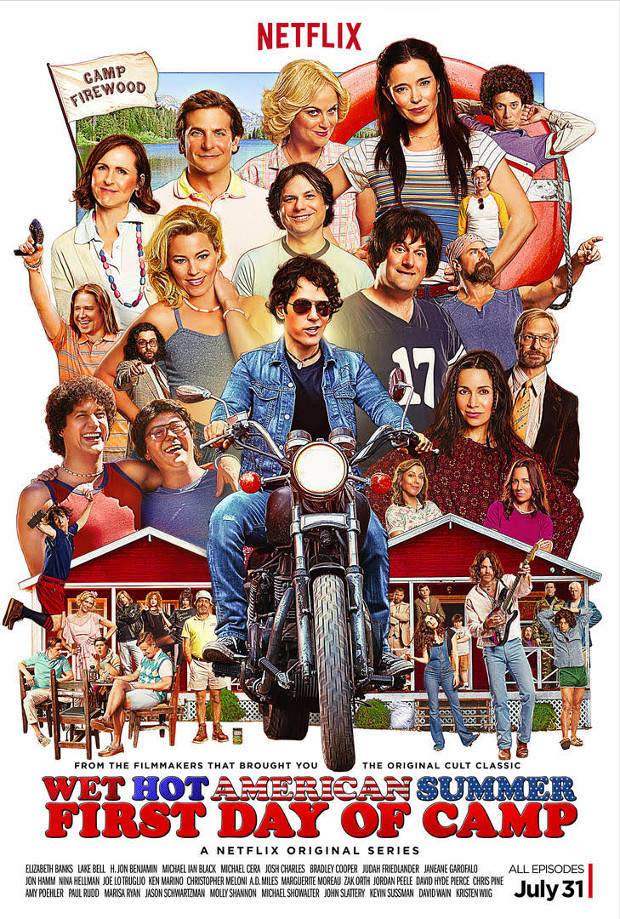
Wet Hot American Summer: First Day of Camp
Set in 1981, Wet Hot American Summer (2001) is the story of Camp Firewood and the raunchy counselors who strive to make their last day of camp one they’ll never forget. Directed by David Wain, WHAS is comprised of a hilarious cast starring Paul Rudd as Andy, the bad boy who has a way with the ladies, specifically Katie, played by Marguerite Moreau, Amy Poehler and Bradley Cooper dominate the camp thespians, and Michael Showalter acts as “Coop,” the stories main character who is just trying to fit in and find a girlfriend, also specifically Katie. Michael Ian Black, Molly Shannon, Christopher Meloni and Elizabeth Banks also contribute to the deadpan humor and witty jokes.
Fourteen years later, David Wain and Michael Showalter have created an 8 episode series of Camp Firewood, only this time set in 1981 on the first day of camp. ATTENTION: only watch the series, if you have watched the movie first. The humor stays the same, but a lot of it depends on the audience’s knowledge of the movie. The series is funny in its telling of origins: how “Coop” came to wear a cut off shirt and a puka shell necklace, how Katie and Andy became an item and how H. Jon Benjamin became “The Can.” New faces enroll in the camp: Jason Schwartzman, “Weird Al,” Jordan Peele, John Hamm, Kristen Wiig, and Chris Pine among others. And you can’t beat the awesome music!
The series doesn’t miss a beat, and the fact that the actors are fourteen years older playing fifteen and sixteen year old’s makes it that much more hilarious. Furthermore, the series is quick, 8 episodes on Netflix no longer than thirty minutes and literally no brainpower required, just watch and laugh.
5/5
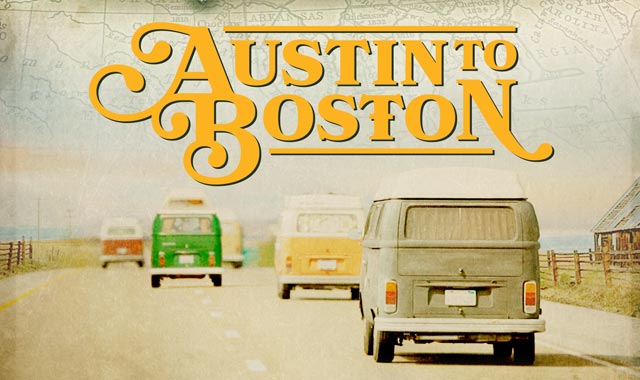
Austin to Boston
The thrill of a concert comes with the experience to hear and (more importantly) feel your favorite music live and to see your favorite artist in the flesh. Still, there’s the barrier that separates an audience member and the artist from individual, face-to-face interaction. Although we can relate to an artist on a personal level through song, we’ll never get to have a conversation with them, or at least it’s rare.Now on Netflix, Austin to Boston (2014) closes that gap with honest interviews and a look at what goes on off-stage. And, although we can’t ask the cast of Austin to Boston any questions, James Marcus Haney brings us closer to them in his second music documentary, his first being No Cameras Allowed, which followed Edward Sharpe & the Magnetic Zeros and Mumford & Son.
Gill Landry of Old Crow Medicine Show narrates the documentary in his fluid, Louisiana tone. 5 Volkswagen camper vans carry the cast, among which are producers Ben Lovett and Ty Johnson, as well as director James Marcus Haney, along with 4 bands: Ben Howard, The Staves, Nathaniel Rateliff and Bear’s Den. Leaving from Austin, Texas, the gang travels in a zigzag across America, playing at venues along the way. Their final destination: Boston. Landry introduces each band. Ben Howard, a singer songwriter from the UK, not as well known in the States but still his songs are familiar and his performances energetic; The Staves, a trio of sisters also from the UK, whose voices are hypnotic in their simple harmony; Nathaniel Rateliff, his music an open door to his heart; finally, Bear’s Den, a group of fun-loving guys playing great music.
Each band is different, but talented in their own ways. Although 3 thousand miles takes a toll on even the best of friends, the bands find common ground and friendship in their art, and eventually grow to be a family, all for the sake of memories and music.
Austin to Boston is now streaming on Netflix.
‘Bloodline’ Season 1: Review [SPOILERS]
Netflix has tried its creative hand yet again with the first season of Bloodline, a star-packed drama about the true cost of family. The site’s answer to True Detective follows the Rayburns, a Florida Keys family who essentially own their small town. Patriarch Robert (Sam Shepard) and wife Sally (Sissy Spacek) have had an idyllic beachfront inn for over 50 years, which is shared and supported by their children. John (Kyle Chandler, good to see your face again) is the town’s good ole boy deputy; Megan (Linda Cardellini) is a local Jane-of-all-trades lawyer; Kevin (Norbert Leo Butz) is a beach bum boat repairman; and Danny… Danny, played by Ben Mendelsohn, is the eldest and an expat, and his arrival always spells trouble for the tight-knit clan.
When the town wants to honor Robert with a pier dedication, friends and family gather at the inn for the celebration, but Danny’s shadowy presence stirs up painful memories of the past. Episode 1 makes it quite clear that this is a family full of secrets, and the show has no problem taking its sweet time in revealing them.
Bloodline employs TV tactics that fans of Lost, True Detective, and House of Cards will be very familiar with. Most episodes are interspersed with voiceovers courtesy of John, who speaks in vague tones about his family’s wrongdoings. Each episode relies heavily on flashbacks from different characters’ perspectives, painting their guilt and regrets one shade at a time. The flashbacks’ MO is to be doled out piecemeal over the course of an episode, which loosely centers around the character whose memories we’re privy to. Each complete memory, revealed in an episode’s final minutes, is another piece to solving the Rayburn puzzle.
These tricks put the audience in the uncomfortable position of being at the mercy of characters who know more than we do, and this is a show that lords that fact over us. In an age where binge-watching is the norm – Netflix is no fool and has designed its shows to cater accordingly – narrative structures change, which explains the tantalizingly slow pace here. There is something to be said for making viewers wait even while they’re packing 13 episodes into a weekend.
However, the presumed (but not shared) context determined by voiceovers and flashbacks raises a couple of problems. One, the show is pretty much destined to have a too-cool-for-school vibe, a la the “divine truth of the universe” dorm musings on True Detective. Two, details are bound to get glossed over or hurriedly tossed at us. It’s not made clear until the final episodes that Danny’s love interest, Chelsea (HELL YES Chloë Sevigny), is a nurse, and the show does a poor job of establishing that Megan’s longtime boyfriend, Marco (Enrique Murciano), is also John’s partner. He needs one, because John is a truly terrible detective, putting little effort into his requisite dead girls case and somehow needing to ask another detective about the statute of limitations on giving false testimony. Shows should never spoonfeed, but dragging things out for the sake of continuous viewership is sadistic.
As you could probably guess from the cast, the acting is phenomenal. So much so that it sometimes painfully underlines the scripts’ weaknesses. Bloodline is a drama, so a lot gets sacrificed for the dramatic. During a pivotal scene where Sally tells John about Robert’s childhood, the dialogue feels stilted and overcooked; throughout, the writers seem trigger-happy about dropping f-bombs, even when it doesn’t add to character development or scene intensity. Most of John’s voiceovers are too ambiguous, obvious, or overdramatic to warrant necessity. And if I hear phrases like, “It’s what dad would want,” or “Wow, it’s so beautiful here” one more time in S2… well, I have no backup threat, but CHANGE THE RECORD. With a cast of this calibre, it would behoove the writers to mix it up a bit – starting with giving Spacek a wider role than sitting in a rocking chair staring wistfully into the ocean’s middle distance.
All that being said, it’s inherently compelling to watch. Danny is a loathsome scumbag, and despite everything that’s been done to him, he’s impossible to root for, and hate-watching is addictive. His slimy arrogance and sweaty wifebeaters are freakin’ repulsive (strangely, there are many parallels between him and the now-super-infamous Robert Durst – both are murderers and drug users, both have vendettas against their wealthy families, and both are visibly deranged). And the photography and cinematography are flawless, making the show aesthetically appealing enough to make up for its shortcomings.
It remains to be seen whether Netflix renews Bloodline for a second season. They would be crazy not to given how the finale ended, and despite the currently uncertain fate of Lilyhammer, none of their original programs have been axed. Given Bloodline‘s instant popularity, there’s no reason they’d change their formula, either. As Vox pointed out, the very craft of storytelling has been sacrificed for binge-friendly cliffhangers, which is good for business – the sooner you finish the season, the sooner you can re-watch it.
As I said earlier, this seems to be Netflix’s attempt at True Detective‘s massive success. Both shows contain deeply wounded characters who drink to forget the death-y pains of the past; both frequently get high on their own philosophy; both are set in the initially idyllic, unnervingly loamy swamps of the south; and both use those settings as omniscient extra characters that juxtapose natural beauty with humanity’s monstrosities. But even if imitation is the most sincere form of flattery, it means always being a step behind.
3/5

REVIEW: ‘Project Almanac’
Since the early 2000s, filmmakers everywhere have become overly obsessed with documentary-style filming, where the movie seems to be more of a home video rather than a full-blown Hollywood film. This is called retroscripting, a technique in which has been used professionally in movies like Blair Witch Project and Paranormal Activity.
After many years and many movies, such filming initially charmed audiences but now has become a nuance to the general public and has potentially turned off future customers from spending their money at the box office. One filmmaker, Steven Spielberg, was at one time the antithesis of such sort of filming. Known for his overuse of CGI and special effects, Spielberg has always kept true to his action-packed overzealous style in order to wow his fans.
However, a few years back, Spielberg shocked crowds when he decided to take on this retroscripting style in his film, Super 8. The film was okay in general but still had that action-packed feel customers yearn for when King Spielberg’s name is plastered on a film.
Stranger things came this weekend when Spielberg took another turn in his style completely. He produced the film Project Almanac, a movie which was released this past Friday.
The story encompasses a group of highschoolers who come across blueprints created by the main character’s father for a time machine and build it together. Along the way, the main character, David Raskin, finds himself falling for the very beautiful and popular Jessie Pierce and thus uses this time machine to win her heart.
Obviously, things go awry, and David Raskin must go back in time in order to fix everything – basically, the same “you don’t get a second chance” moral any time machine movie involves (Ed. note: did we learn nothing from The Butterfly Effect?!) .
There weren’t any massive explosions, alien encounters, and it was filmed using retroscipting…which has left Spielberg fans wondering what the hell happened? Although this famous filmmaker only produced Project Almanac, the Spielberg standards are slowly diminishing.
The movie itself was sub par. The acting was not spectacular, and there were quite a few plot holes. My favorite was when their test of the time machine resulted in disaster – scientific tools fusing together, and miniature cars were slammed through the wall – but regardless of such mishap, Jessie decides it is time to use human subjects next. Not the brightest idea in my book.
In the end, I think maybe the whole time travel scheme has just been over done, similar to the use of the retroscripting technique. Time for a new idea.
2/5

A Review of Inside Llewyn Davis with as few spoilers as possible…basically none.

If it’s true that no man is an island, then the Coen brothers have at the very least created a small, compact archipelago in their latest character, Llewyn Davis. The most recent Coen brothers venture, Inside Llewyn Davis, finds them tackling the pre-Bob Dylan, Greenwich Village folk scene circa 1961. Thanks in large to breathtaking performances by Oscar Isaac, Carey Mulligan, Justin Timberlake, and an apricot-colored cat, Inside Llewyn Davis is a highly enjoyable movie that is deeply melancholy and riddled with humor.
Loosely based on Greenwich Village folk legend Dave Van Ronk’s memoir, The Mayor of MacDougal Street, the film finds Llewyn Davis at an unfortunate time in history. A time where Folk music had neither the respect nor the allure that it gained shortly after Bob Dylan arrived. John Goodman’s character, jazz musician Roland Turner, expresses the popular sentiment about Folk music when he asks Llewyn what he plays. “Folk songs,” Llewyn replies. “Folk songs? I thought you said you were a musician,” taunts Goodman’s character.
The lonely stage is set in the first scene for Llewyn Davis as he sits solo, singing a sad ballad called “Hang Me, Oh Hang Me” (a Dave Van Ronk song). Not only does Oscar Isaac set the tone for the film by performing the song in its entirety, but he is actually playing and singing live, making the moment and the movie that much cooler. This traveler’s tune and the song that follows, “Fare Thee Well (Dink’s Song),” foreshadow the circuitous journey that the Coen brothers create with Llewyn Davis.
As Llewyn, the hapless hero (if you can call him that), stumbles through a week in his unfortunately sad and hilarious life, it is hard to ignore the strikingly atmospheric world that the Coen brothers bring to life. For those of us who have only lived in the 60’s through pictures, music, and album covers, this movie breathes life into the images, sounds, and emotions that once lived only in our minds.
In order to bring both a musical movement in history and a very internalized character to life, the Coen brothers needed an actor who possessed dramatic flare, dry humor, and real musical talent. Their search for a leading man saw auditions from Bright Eyes front man Conor Oberst and Scott Avett of The Avett Brothers before they finally landed the perfect man for the job, Oscar Isaac. Isaac’s ability to express Llewyn’s internal distress, loneliness, hopes, and fears with few words and usually nothing more than a somber look is award-worthy. Isaac embodies pure melancholia for the entirety of the film, while still managing to make Llewyn a character that audiences can empathize with. It’s impossible not to root for Llewyn, despite his obvious flaws, which are constantly spit at him by Carey Mulligan’s character, Jean. Each element in the movie, from the soundtrack to the cinematography, works together to create an immensely melancholy world that is both funny and smart. Watching Llewyn Davis try to navigate his way through a bitterly cold New York during the 60’s without even a winter coat is an unforgettable movie experience.
This film, for me, seemed to capture everything that I love about the Coen brothers. There were moments that reminded me of O, Brother Where Art Thou, A Serious Man, and countless other films made by the duo. I rank Inside Llewyn Davis in my top 3 Coen brother films (and that basically means it’s also in my top ten movies overall). As Llewyn utters the film’s final phrase, “Au revoir,” and brings the story full circle, I wasn’t ready for the movie to end. I think that’s how most great movies are, though. They allow you to continue living in the story even as you walk out of an overcast day in 1961 and into a sunny parking lot in 2014.
For any fan of Folk music and/or the Coen brothers’ genius, the film is not worth just one watch, but many. If you haven’t seen it yet, go. You won’t regret it. I’ve seen it twice now and recently bought the soundtrack, which is a must-have for any Folk fan. The film perfectly captures a musical moment in history through remarkable characterization and an intriguing narrative. Honestly, it’s just a really cool movie. While there’s still much to be said regarding Inside Llewyn Davis, the film speaks for itself. If you don’t believe me, then make your way to a theater, turn your cell phone off, and listen to Llewyn.
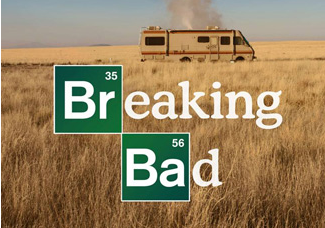
A Proper Goodbye: Breaking Bad series finale ‘Felina’
It’s over. Finished. No more Heisenberg. No more Jesse. No more science…bitch.
Before we start, just be warned that I’m going to be using the words “genius” and “perfect” a lot in this article.
Breaking Bad has earned its place at the very top of the list of my (and millions of others’) favorite shows of all time. So I was more than a little sorry to see it go (what am I going to do on Sunday nights now? Watch Low Winter Sun? Doubtful). However, I am so grateful to Vince Gilligan for playing it smart, not dragging it out for three seasons too long just to keep getting paid, and achieving something that so few of my favorite shows have pulled off (*cough* LOST *cough*) – a perfect ending. Really, the only word that I can think of is genius. Gilligan is an absolutely brilliant writer; he tied up every loose end so neatly…it was truly poetic.
Before we go on, let me just go ahead and warn you – SPOILER ALERT – although, if you haven’t already watched “Felina” or at least heard about it, I’m not sure if you know what the Internet is, so you’re probably not reading this article.
Here are the main parts of the finale that I want to talk about. I’m going to assume that you have seen all of the seasons and not overly explain the back story.
1. Walt having Gretchen and Elliott Schwartz act as benefactors for Walter, Jr./Flynn/whatever he’s calling himself these days was absolutely perfect. In the very first season of Breaking Bad – episode 5 “Gray Matter” – Walt refuses the Schwartzes’ proposition to pay for his cancer treatment. Walt is completely offended by their offer, continuously bitter about their success from Gray Matter and too prideful to accept their charity. I mean, he would rather cook meth than receive anything from these people.
Throughout the seasons, this is a continuing theme. Walt’s never-ending resentment of the Schwartzes’ fortune becomes his pace car, and he continues to measure his own success by how close he is to building an empire that competes financially with theirs.
In addition to his inability to accept charity is his arrogant need to get credit for earning this money for his family, which makes money laundering pretty tough. He refuses Saul Goodman’s advice to just filter his money through Walt, Jr.’s donation website, SaveWalterWhite.com, unable to accept the credit for their income going to an “anonymous donor.”
In the end, however, the story comes full circle. Walt goes to Gretchen (who is wearing a fabulous jacket) and Elliott’s house and forces them to take what is left of his money (a mere nine million dollars…chump change) and donate it in the form of a trust to Walter, Jr. on his 18th birthday, knowing that any other way he tried to get it to his family would result in it being confiscated by the government.
So, basically, after all of the five seasons worth of corruption and destruction and death that Walt was willing to cause in order to keep his ego and pride in tact, Gretchen and Elliott still get credit for saving the White family out of charity. Which means that this was pretty much all for nothing. Well played, Gilligan…well played.
2. I was super pumped to get to see Badger and Skinny Pete one last time. I love those dudes. And I totally called the whole laser pointer thing…just saying.
3. Walt’s goodbye to Skyler made me tear up. When Walt came back to say “a proper goodbye” to Skyler and finally admit to her that all that he did was not, in fact, for his family as he had claimed for so long but was, in fact, for him…dude, that was so raw. Skyler finally hears the truth from him, and we see a glimpse of the old Walter White.
4. The way Walt died was brilliant. He had to die…he just had to. For a few seasons now, I have rooted for Jesse to be the one to kill Walt in the end. But when it finally came down to it, I’m glad he didn’t kill Walt in some final face-off where Walt was still fighting. This end was much more real and heartbreaking. It was perfect and fitting that Walt’s final act took him out. He got himself in that room as Heisenberg, and he took himself out along with all of the other scumbags in there. Everyone in that room deserved to die except for Jesse, and he got them all…including himself (except for Todd. Todd was a truly despicable character, and Jesse deserved the satisfaction of taking him out). Jesse is free, and he drives off…into the sunset? To go find and raise Brock? We don’t know, but we do know that he’s going to be okay.
5. Walt shooting Jack mid-sentence when he is trying to offer Walt his money back was, again, brilliant. Heisenberg is dead, and along with him, his greed. It’s not about that money anymore. Jack is just too stupid to realize it.
6. Lydia had to drink that ricin. I hated Lydia. From her shakiness to her ruthlessness to her stupid camomile and stevia habit. I hated her. That woman needed to go. I’m so happy that she’s the one who got the ricin and that it was in her tea -that was just elegant. Maybe that will teach you to use regular sugar like a normal person, Lydia. Oh wait, you can’t – you’re dead.
The finale of Breaking Bad was badass, yes. But it was also heartbreaking. The entire series is honestly heartbreaking. Witnessing the continuous corruption and destruction of a man who was at one point decent and then seeing him get what is coming to him takes a toll. It is less satisfying to see Walt reduced to nothing – having lost his family and everything he ever cared about – than expected, as you have been rooting for his comeuppance for so long. You are reminded that he is a flesh and blood human being, not just some raving monster that you love to hate. Bryan Cranston’s genius and pure talent really come through here, making the viewer surprisingly sympathetic to Walt, even with all that we know about him. But still, you know that Walt has to die.
All in all, “Felina” was a perfect ending to a brilliant show. Now excuse me while I go rewatch all of the seasons on Netflix.
Yeah Dexter, We Remember the Monsters — Do You?
When we invest 96 Sundays into a series that should have ended four stale seasons ago, we don’t want a fairytale ending — we want shit to go down.
Dexter could have left with dignity. It could have spun full circle with poetic justice, blindsiding viewers by what we claimed to want but suddenly regret. The credits could have read like an obituary in the aftermath, paired with Dexter’s devastating “Blood Theme” with that aching violin. The series finale could have been a successful close — it could have been the finale of season four instead of eight.
It’s a tough blow to watch sloppy storytelling replace Dexter’s eerie suspense while melodramatic mediocrity replaces his once-witty narrative. Since season five, he’s regressed from a “neat monster” who happens to have a son, to a boring father who happens to kill people— in ways implausible to any other television show. Sure as a blood spatter analysis he can sneak clues from the Miami police department, but getting away with murder in an airport or being allowed first entry at crime scenes is something else. After seeing his mother dismembered in a shipping container as a child, Dexter (Michael C. Hall) has an intrinsic need to kill. But has anyone asked series writer James Manos if Dexter grew a need to be Amelia Bedelia? Dexter forums estimate that Dexter has killed at least a hundred people under his moral code to be certain each victim is a murderer too — buying into this and seeing his rushed ‘the world is my kill room’ behavior, we’ve been a little confused. Then again, of course he’s always unscathed — each character is oblivious to the point of stupidity in a show that’s become a parody of itself.
Season eight’s over-the-top plotline sees Dexter working with a British psychiatrist on the hunt for a new killer in Miami nicknamed “the Brain Surgeon,” who sends her jars filled with pieces of brains floating in formaldehyde. Apparently every third person in Miami is a serial killer… I wonder if it’s my aunt, my grandma, or my grandpa that I should fear.
Like most of Dexter, there’s little surprise when the finale, “Remember the Monsters?,” finds Dexter in a face-off with the season’s killer. Similar to all seven of the other season finales of Dexter with the exact same scenario, the overarching question for a good chunk of the episode is “will Dexter get the killer?” The sentiment feels like an episode of Scooby Doo watched as background noise— is seven times not enough to make a trend? While there is another major plot line driving the finale, the sentiment is the same filtered into a different genre. While Dexter is heading towards his face-off, he’s also trying to reach a happy ending with his girlfriend, who returned halfway through the season from his past love life. To remind us that Dexter is a dad and to make us feel warm and fuzzy (wait, isn’t this a show about a serial killer?) Dexter’s son —either the most convincing doll ever created or the most terrible child actor of all time— tells him that he also loves Dexter’s girlfriend, in the most sitcom-esque way possible. The fairytale ending is near, but with cringe-worthy cliché hints of “a storm coming,” the biggest question in the finale is the same question we’d have in a romcom — “will Dexter end up with the girlfriend and the happy family?”
A massive amount of what happens in the finale of Dexter seems obvious and expected, but there is one major plot point that would have seemed monumental in a previous season of Dexter. If it hadn’t been rotting of plot holes, cheesy reactions, and Dexter’s constant hidden ability to freeze time while he does stupid things that he’d definitely get caught for otherwise, we would have been surprised. But when anything goes and no questions are asked, it’s too hard to care — then again, maybe I missed something as I was rolling my eyes.
We didn’t want a happy ending — and Dexter didn’t give it to us. The finale didn’t mend or break our hearts, and it definitely didn’t swing full circle as a series — perhaps the writers gave up and left that job to Breaking Bad. Instead, the Dexter finale didn’t do anything. It gave us a let-down on all fronts, as we watched eight whole seasons just to get the last Dexter quote to define the series: “I would change everything if I could.” I would too, Dexter — starting with my time spent watching the past four seasons. Dexter is off the air, and as it turns out, my black screen is equally as satisfying.
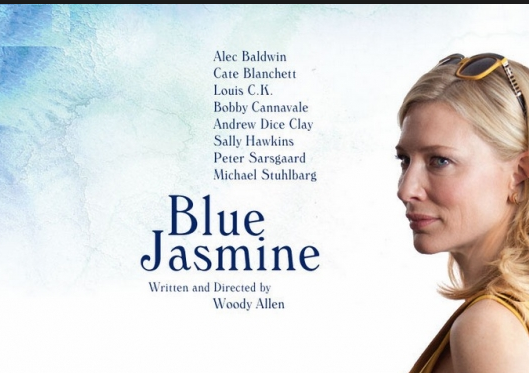
REVIEW: Blue Jasmine – Intoxicated by the Anti-Heroine

Watching an elegantly primped, expensively dressed Cate Blanchett in Woody Allen’s newest film, Blue Jasmine feels less like a night of Cristal and tiny hors d’oeuvres and more like a bender of room temperature vodka and plastic orange Xanax bottles. Before you’re completely intoxicated, it’s a bitter mouthful to swallow.
Jasmine (Blanchett) is introduced to the film flying first class into the first circle of hell in the aftermath of her ex-husband, Hal (Alec Baldwin)’s financial fraud. Her schedule and wallet are both empty, tucked neatly in a gold Birkin bag, and held with a shaky manicured grip — rock bottom could not be less convenient for the former Park Avenue socialite. Broke and single with little hope of a job prospect, Jasmine is forced below her lowest standards and into the cramped San Francisco home of her adopted sister, Ginger (Sally Hawkins). Before the government confiscated Jasmine’s money, Ginger was visiting her — staying in a nearby hotel, sight-seeing with Jasmine’s driver, embarrassingly shrieking over a gifted handbag like a kid whose just won a big fluffy teddy bear. But Jasmine never imagined she’d be in Ginger’s bargain-bought shoes — living with the single mother of two in a city only inspired by Europe. Her company is quietly unwelcomed, however, as Ginger’s possessive boyfriend and herself have yet to forget that Hal’s fraud left Ginger bagging groceries while Jasmine may or may not have looked the other way. Hour after hour, it’s time for Jasmine to pop yet another pill in hopes of escaping rather than spiraling further into the Matrix of a low-class, average lifestyle. Minute after minute, we wish we could too, as Jasmine dives deeper into the aching pit in our stomachs.
Given Woody Allen’s extensive filmography of pretentiously quirky rich women whose flaws are outweighed by their charm (i.e., the infamous Annie Hall), Jasmine —at the very outer shell of surface level— seems like an expected character for him. She’s a stunningly beautiful, well-cultured and well-traveled New Yorker who’s as talkative as Woody himself. Though much like Jasmine’s mask of high-end couture outfits, this is not her reality. After five minutes this is obvious — if anything, Jasmine may be a mockery of the typical Woody woman. She has her quirks, but they are despicable. She had wealth, but it was lost. With the perfectly satirical rich-bitch “Well, in Paris…” voice, Jasmine rambles on with pretentious superiority— but we know she’s a college dropout reliant on handsome men holding handsome money.
It’s easy to root for main characters, even when what they want is disagreeable otherwise. You want the 42-year-old Isaac Davis (Woody Allen) to peruse his 17-year-old love interest in Manhattan, and you want Jack (Jesse Eisenberg) to cheat on his long-time girlfriend with her best friend in To Rome With Love. In Blue Jasmine, you don’t want Jasmine to keep her job as a secretary, or charm a rich man eager to marry. In Blue Jasmine, the only time to empathize with Jasmine is when contemplating her mental state or unseen previous life decisions. Jasmine embodies awfulness simply by behavior, at which Blanchett masters with enough exquisite detail and skill to actually make us hate an attractive woman.
Jasmine’s actions, while shameful, are not entirely grotesque. Engulfed in the capitalistic cliché of the American dream, Jasmine merely wanted the life that Hollywood glorifies. Though Jasmine is not just a woman with wayward ideals whose lost everything — we would probably empathize with that character. Instead, it’s Jasmine’s attitude and essence that cause us to hope for an even worse downfall. It’s her voice; the way she carries herself; the way she shouts that all life as less worthy simply with a glance. We don’t hate Jasmine because she is a “bad character” — we hate Jasmine because Blanchett is a great actress.
The experience of Blue Jasmine is one of high stress, disgust, and simultaneous awe — leaving you feeling violated and insecure after the screen transitions to black and the lights turn on as if everything were fine. You will feel conflicted by your desires, but mindful of them in ways Woody Allen’s other films don’t allow. Blue Jasmine is the most self-aware, satirical film Woody Allen has made to date — a big uncomfortably deadpan joke about the American dream with Blanchett as the punch line. You may choke down most scenes, but what you’re left with is a dizzying aftertaste under the influence of both Woody Allen’s blackest comedy and most haunting drama.
Shut Up and Replay the Hits
How do you determine the size of a bang?
Do you judge it by its initial strike? By its immediate attention?
The size of a bang isn’t decided by the bang itself. It is decided by its echo.
LCD Soundsystem has created one of the biggest echoes in worthwhile, cult-followed contemporary music. As if mirroring the sequence of their individual songs, with each album, LCD Soundsystem’s impact built up and triggered a complete need in their fans. There’s the start; anticipation emphasized by foot tapping and bouncing; the hit of climax.. and POW POW instantaneous loss of control. As happens with every LCD song, listeners went full on I-don’t-care-what-you-think crazy by the explosion: this was happening.
But LCD Soundsystem did not lose control. They respectably chose to give it away while they were ahead— to the kids with impeccable taste trading in guitars for turntables. LCD Soundsystem’s climax was their end, marked by “the best funeral ever.”
Madison Square Garden.
Lasting three and a half hours, the show I wish I had the pleasure of attending most is being released with LCD Soundsystem’s biggest echo— their obituary documentary, “Shut Up and Play the Hits.”
It’s a chance for us all to relive their death and, respectively, their big bang. The documentary itself will cause you to fall in love with James Murphy and the small moments that represent the love buried in LCD Soundsystem. The film primarily focuses on James, but watching his connections with the band, I could see exactly why each member was so important. It isn’t all about James (even though directly, it is).
The sound in the movie is crisp and clean; it consumes you, thanks to James who mixed and edited it for the film. It was confusing- sitting quiet in a theater surrounded by a crowd, the sound, and the visuals of LCD Soundsystem. I almost felt rude- and definitely inhibited- by not singing and dancing. James almost made me believe I was there. Almost. I was there…but really, I wasn’t.
It’s a great gravestone. But their overall obituary is still being written, and the crying boy is probably still crying (on the inside, at least). The fans haven’t shut up, and the hits are still being played through nostalgic speakers.
It’s all flickers after fire. After their final concert came the one-night-only showing of “Shut Up and Play the Hits,” came the countless articles, came the gifs and fan-made posters, came the iTunes release earlier this week (thank God), will come the DVD release and bonus material October 9th. Like a musician storming off and throwing down the mic, the echo is far from silent— even though it’s been two years since the final show.
The scenes in “Shut Up and Play the Hits” weave in and out of their absolute party at Madison Square Garden, James Murphy’s interview with the equally pretentious yet brilliant Chuck Klosterman (hey, it makes for great footage), and moments of James’ new life— taking out his French bulldog whilst in a dress shirt and pajama pants… making coffee…shaving his face…looking bewildered by the sudden insanity of being normal.
But James Murphy will never truly be normal.
What makes an artist great isn’t simply their product. And once a product is completed, their work is not finished. Instead it lingers on with its effects, and that is the only true way to analyze its importance.
And even though LCD Soundsystem’s musical career has ceased, the embers still flicker.
The effects of LCD Soundsystem go past their music, or their documentary, or their story— though these things are all imperative to their worth. Their relevance will never die because their sound was modernly reminiscent, their lyrics were timelessly significant with wit and wisdom, and their works never trailed off into destruction. They were good throughout their existence, and then they stopped. So they will always be good. The world of pop culture and music is always being trumped by newer ideas from younger generations. James recognized this, but refused to let his ideas or work become dated.
Instead, he chose to sit back with his French bulldog and live on in glorified remembrance.
LCD Soundsystem fans are saved for the moment— “Shut Up And Play The Hits” is still sounding its echo, and we’re still lingering in awe of the bang’s aftermath. But someone great is gone, and the world somehow keeps spinning with lovely weather, coffee that isn’t bitter, and new ideas.
It’s a strange ending, but the echo keeps on.
…And it keeps coming till the day it stops.