
Tag: words
Warning: Attempt to read property "post_id" on null in /dom375187/wp-content/plugins/enhanced-category-pages/classes/ecp/Enhanced_Category.php on line 143
Warning: Undefined array key 0 in /dom375187/wp-content/plugins/enhanced-category-pages/classes/ecp/Enhanced_Category.php on line 232

Words with Crushed Stars’ Todd Gautreau
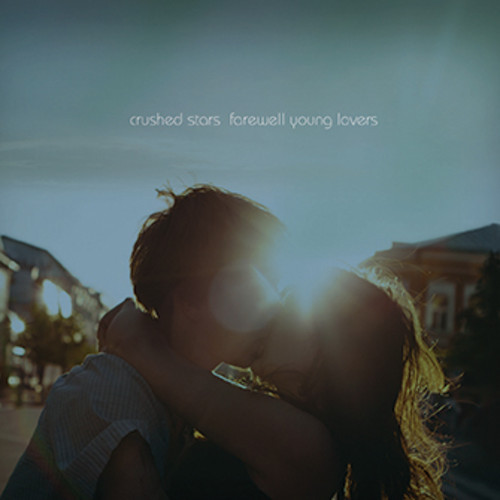
Todd Gautreau has been a force in the music industry for years, and his current project, Crushed Stars, proves exactly why. With his newest album, Farewell Young Lovers, we not only feel the dreamlike ambiance of the record, but also sense a true, wizened passion for music. We talked with Gautreau and got the scoop on the new album, his influences, and even his feelings about Spotify.
Vinyl Mag: Your new album, Farewell Young Lovers, just came out on the 21st. What kind of response has it gotten so far?
Todd Gautreau: The response has been very positive; it’s some of the best press we have received so far.
VM: Do you have any touring plans for Farewell Young Lovers?
TG: Nothing extensive. just some occasional dates. I’ve always believed Crushed Stars is best experienced on record.
VM: You’ve worked with Stuart Sikes, someone that works with some pretty big names (White Stripes, Modest Mouse, etc.). What has that experience been like? How did that connection come about?
TG: My drummer, Jeff Ryan, introduced us a few years ago. Usually I will record most of the parts in my home studio, and I will bring to Stuart to record the drums, mix and apply the finishing touches.
VM: You haven’t released a new album in a few years. What has made this album take so long?
TG: In between Crushed Stars records, I usually do a Sonogram record. The last one, How We Saw Tomorrow, came out last spring, then I started Farewell Young Lovers, which took about three months to record.
VM: Who are your greatest musical heroes?
TG: I admire the way Steve Kilbey has been so prolific, both with The Church and his various collaborative projects. Brian Eno has also been more influential than most people will ever realize.I admire artists who’s longevity can be attributed to their constant evolution and exploration, something you don’t see as much of in the music industry today. Most things now have a shorter shelf life. Instead of nurturing artists, labels just sign whatever’s hot at the moment then move onto to the next thing.
VM: We’ve seen that you’re very anti-Spotify. Can you tell us more about your opinion on that issue?
TG: I realize many people will disagree with me, but in my opinion streaming is very damaging to indie artists, because it is replacing record sales and providing a fraction of the royalty rate in its place. Last year, CD sales continued to fall across the industry, but for the first time digital sales also dropped significantly, largely attributed to the rise in streaming services, primarily Spotify.
I understand a $10 a month subscription for unlimited on demand music is, for many people, an offer that is too good to refuse. I have heard the rationalizations used – ‘Oh, I use Spotify to discover new music, then if i like it i buy it.’
But last year’s drop in sales suggests this is the exception rather than the rule. A streaming service removes any incentive to actually purchase music, since you have unfettered access to it any time you want, why buy it? And let’s be honest, in this digital age it is easy enough to discover new music without using a streaming service.
Another excuse is, ‘Well I may not buy the record, but if the band comes to town I may go see them and I may buy a t-shirt.’
Most indie bands tour one to three months per year. The last two indie shows I went to were artists with a significantly larger following than myself, and there were maybe 30 people in the audience. When you factor in the costs of touring, playing to small crowds even if they all buy t-shirts is not going to replace the lost revenue from the decline in record sales due to streaming. There are several articles online, most notably by David Lowery and Damon Krakowski of Galaxy 500, which delve deeper into the math.
Others blame the labels for the unfair royalty allocation to the artist. There is some truth to this, but as a label owner I can attest to the fact that even when you factor in the label portion, streaming revenue is minuscule for indie music.
This concerns me not only as an artist not a music fan. With lower revenues, ultimately labels will sign fewer acts and retain only the ones that are most profitable. This is already happening and it will result in less variety and fewer choices for listeners.
I don’t agree with a pay-per-use model for music. You don’t buy a book and pay the author only on the days you read it. You don’t buy a jacket and pay the designer only on the days you wear it. So you shouldn’t expect to pay a fraction of a penny each time you listen to a song. Artists won’t be able to survive. Your favorite band may be able to struggle through releasing 2 or 3 records in their 20s, but at some point they will have to earn a living and do something else.
I understand there is little we can do to stem the tide of streaming’s popularity. It’s too easy for someone to pull up a song on Youtube, Pandora or Spotify, why pay a dollar for a download? We can only try to change people’s attitudes towards the value they place on the music they listen to.
As an artist, all I can do is keep my music off of Spotify to retain a modicum of self-respect. I would rather give my music away for free than have a company like Spotify profit from my loss.
VM: Where do you see yourself musically in 5 years?
TG: There are a couple of things I want to do musically that fall outside of the Crushed Stars or Sonogram umbrellas, so new projects will be hatching soon. Hopefully, I can continue to juggle them all.

Words with Andrew Cedermark
Andrew Cedermark has just released his sophomore album, Home Life, a follow-up to 2010’s major success Moon Deluxe. In celebration of his recent release (the album came out July 11), as well as his current tour, we decided to ask Andrew a couple of questions. Check out our conversation below!
Vinyl Mag: Why did you leave Titus Andronicus — when did you decide to do a solo project?
Andrew Cedermark: I left Titus more than four years ago for the same reason people leave a lot of touring bands: I wanted to try my luck living a life in one place, and not always in a car. We toured a lot, and it didn’t agree with me. It wasn’t my music. I was tired of my body smelling like yogurt and wanted to experiment with things like gardening and laundry. On this, my first tour supporting my own music, however, I find myself having a really good time
VM: Tell me about your new album, Home Life — there are some very personal, honest lyrics- what is your writing process? How long did it take you to write the LP?
AC: I suppose my process is to not simply go with the first, second or third idea that comes, but to compile all ideas that I perceive to be good into songs in whatever way seems most compelling. That obviously happens with varying degrees of success. Writing the lyrics, I spent a lot of time at the library trying to come up with things that I hoped would not be meaningless or pointless.
VM: What was the inspiration behind “Canis Minor” and “Canis Major”?
AC: Directly, these songs are named after a pair of constellations, and I suppose that’s a kind of inspiration. When writing lyrics, all you have to do is write down what you think or feel, make it more vague, then make it more grand, research when people have said something similar to what you are trying to say, incorporate that, and hope that that process offers each listener her own way into the life of that song. Given that, anyone’s guess is as good as mine.
VM: You got a solid review in Pitchfork for Moon Deluxe — they compared you to Jeff Mangum of Neutral Milk Hotel – high praise! How do you feel about that comparison?
AC: The truth is that when I see a good review I tend to think about the better reviews some of my friends have received. As for Jeff Mangum, it is a far-too-generous comparison, probably one that the writer came up with when struggling against a deadline. That is the reality: you can say anything on the Internet. Overblown sentiments flourish where content is king. If I really had anything in common with Jeff Mangum, I’d likely be a beloved and famous rock-and-roller, but as things go we made $50 last night in Baltimore. To answer your question directly, of course it feels great to be compared to one of the indie rock’s genuine marquee talents. But is the indie-rock pantheon holding a place for me? No! As for reviews, all are welcome.
VM: I’m noticing a lot of bands releasing songs on cassette tapes now — what inspired you to release your split on cassette?
AC: Over the course of several years during which I was recording an enormous amount of music, it just happened that not having released any of it began to make me sad. So I wanted to handmake a product that reflected the care I believed I had put into the music. By this time in history it was coming to be widely agreed upon that CDs were just MP3s plus waste, and I couldn’t afford to press my own record, so … tapes. And I made a box to go with them and sold them over the Internet with color-printed booklets of photographs I had taken, with lyrics handwritten all around. That was really my first release, “Two EPs.” I realize now that this isn’t the tape release you asked about though. A label in Charlottesville run by some friends asked about the possibility of releasing a split tape with a band featuring some friends in the almighty Charlottesville revue Drunk Tigers, and I said yes. The same logic was at work here as above.
VM: What is next for you?
AC: Cleveland!