Tag: spotify
Warning: Attempt to read property "post_id" on null in /dom375187/wp-content/plugins/enhanced-category-pages/classes/ecp/Enhanced_Category.php on line 143
Warning: Undefined array key 0 in /dom375187/wp-content/plugins/enhanced-category-pages/classes/ecp/Enhanced_Category.php on line 232
Spotify’s Latest Feature: A DJ Powered by Artificial Intelligence
The phrase “artificial intelligence,” also known as AI, has become ubiquitous in 2023, but exactly what it does or what it means for industries can be elusive for most. According to a quick google search, Artificial intelligence is “a field of science concerned with building computers and machines that can reason, learn, and act in such a way that would normally require human intelligence or that involves data whose scale exceeds what humans can analyze.” In simpler terms, AI is a computer or machine that can act with human capabilities.
It has become widely used in the past few years in various industries ranging from finance to transportation. Recently we’ve also witnessed the rise in popularity of programs like ChatGPT, which is an AI-generated chat box. Users can give it a prompt to which it will create a unique response. For example the prompt “write a four paragraph essay explaining how WW2 happened” will produce a detailed and completely original response. In the artistic sphere, people now have the ability to create completely ‘original’ pieces with the help of AI. Although some people agree with this type of use, others argue that it takes away from real artists and many people do not support it. So, how does this impact the music business?
Right now, AI is a consequential talking point in the music business world—from AI-generated lyrics to voice-mimicking capabilities, it has created quite the buzz. Spotify is joining the hype with its brand new personalization tech powered by AI. This new “AI DJ in your pocket” is a guide that knows you and your tastes, and can curate brand new playlists based on that information. Moreover, Spotify will deliver AI commentary with “stunningly realistic voices.” They claim that this AI will empower its music experts to better do their jobs and better help users.
At this point, it’s too early to tell what exactly the future holds, but AI appears to be here to stay. Spotify’s AI DJ was released on February 23 and is currently a Beta Software for premium users in the U.S. and Canada. So, of course, I tested it out for you.
On my first listen, the AI introduced itself and explained to me the process—and I must say it sounded very human-like! Then, it curated a playlist from my past and current listening history, and songs it believed I would like. And if you don’t like what’s playing, you can just press the small blue button in the bottom right and it’ll change the vibe.
The DJ also explains everything as it’s happening. Depending on the function it might say something like “here are some rap songs based on your recent listening history” or “these are some R&B songs our editors think you might like”. It will even introduce the artist and say the name of the song. If you like what’s playing it will keep that genre in rotation for a few songs. If you skip multiple songs back-to-back it’ll come back and let you know it’s changing the vibe. While the feature is cool it obviously doesn’t emulate a DJ, it’s more so just a playlist with artificial intelligence.
This new feature is definitely innovative on Spotify’s part, maybe after a few additional features it’ll be even more impressive. As the rollout continues and expands to more people, it will be interesting to see what kind of feedback they get and how others will feel about it. For now, I can’t say I will be using it every day. So what are your feelings about Spotify’s AI DJ?

Words with Crushed Stars’ Todd Gautreau
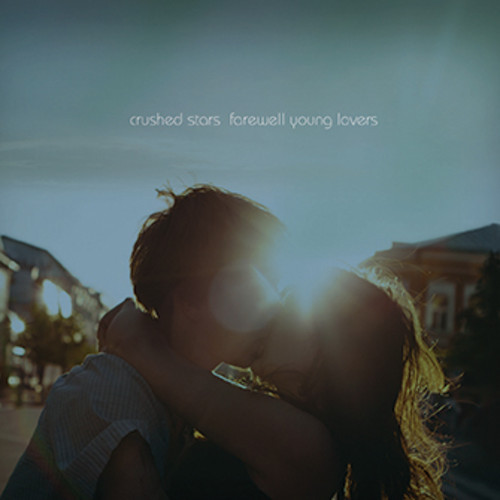
Todd Gautreau has been a force in the music industry for years, and his current project, Crushed Stars, proves exactly why. With his newest album, Farewell Young Lovers, we not only feel the dreamlike ambiance of the record, but also sense a true, wizened passion for music. We talked with Gautreau and got the scoop on the new album, his influences, and even his feelings about Spotify.
Vinyl Mag: Your new album, Farewell Young Lovers, just came out on the 21st. What kind of response has it gotten so far?
Todd Gautreau: The response has been very positive; it’s some of the best press we have received so far.
VM: Do you have any touring plans for Farewell Young Lovers?
TG: Nothing extensive. just some occasional dates. I’ve always believed Crushed Stars is best experienced on record.
VM: You’ve worked with Stuart Sikes, someone that works with some pretty big names (White Stripes, Modest Mouse, etc.). What has that experience been like? How did that connection come about?
TG: My drummer, Jeff Ryan, introduced us a few years ago. Usually I will record most of the parts in my home studio, and I will bring to Stuart to record the drums, mix and apply the finishing touches.
VM: You haven’t released a new album in a few years. What has made this album take so long?
TG: In between Crushed Stars records, I usually do a Sonogram record. The last one, How We Saw Tomorrow, came out last spring, then I started Farewell Young Lovers, which took about three months to record.
VM: Who are your greatest musical heroes?
TG: I admire the way Steve Kilbey has been so prolific, both with The Church and his various collaborative projects. Brian Eno has also been more influential than most people will ever realize.I admire artists who’s longevity can be attributed to their constant evolution and exploration, something you don’t see as much of in the music industry today. Most things now have a shorter shelf life. Instead of nurturing artists, labels just sign whatever’s hot at the moment then move onto to the next thing.
VM: We’ve seen that you’re very anti-Spotify. Can you tell us more about your opinion on that issue?
TG: I realize many people will disagree with me, but in my opinion streaming is very damaging to indie artists, because it is replacing record sales and providing a fraction of the royalty rate in its place. Last year, CD sales continued to fall across the industry, but for the first time digital sales also dropped significantly, largely attributed to the rise in streaming services, primarily Spotify.
I understand a $10 a month subscription for unlimited on demand music is, for many people, an offer that is too good to refuse. I have heard the rationalizations used – ‘Oh, I use Spotify to discover new music, then if i like it i buy it.’
But last year’s drop in sales suggests this is the exception rather than the rule. A streaming service removes any incentive to actually purchase music, since you have unfettered access to it any time you want, why buy it? And let’s be honest, in this digital age it is easy enough to discover new music without using a streaming service.
Another excuse is, ‘Well I may not buy the record, but if the band comes to town I may go see them and I may buy a t-shirt.’
Most indie bands tour one to three months per year. The last two indie shows I went to were artists with a significantly larger following than myself, and there were maybe 30 people in the audience. When you factor in the costs of touring, playing to small crowds even if they all buy t-shirts is not going to replace the lost revenue from the decline in record sales due to streaming. There are several articles online, most notably by David Lowery and Damon Krakowski of Galaxy 500, which delve deeper into the math.
Others blame the labels for the unfair royalty allocation to the artist. There is some truth to this, but as a label owner I can attest to the fact that even when you factor in the label portion, streaming revenue is minuscule for indie music.
This concerns me not only as an artist not a music fan. With lower revenues, ultimately labels will sign fewer acts and retain only the ones that are most profitable. This is already happening and it will result in less variety and fewer choices for listeners.
I don’t agree with a pay-per-use model for music. You don’t buy a book and pay the author only on the days you read it. You don’t buy a jacket and pay the designer only on the days you wear it. So you shouldn’t expect to pay a fraction of a penny each time you listen to a song. Artists won’t be able to survive. Your favorite band may be able to struggle through releasing 2 or 3 records in their 20s, but at some point they will have to earn a living and do something else.
I understand there is little we can do to stem the tide of streaming’s popularity. It’s too easy for someone to pull up a song on Youtube, Pandora or Spotify, why pay a dollar for a download? We can only try to change people’s attitudes towards the value they place on the music they listen to.
As an artist, all I can do is keep my music off of Spotify to retain a modicum of self-respect. I would rather give my music away for free than have a company like Spotify profit from my loss.
VM: Where do you see yourself musically in 5 years?
TG: There are a couple of things I want to do musically that fall outside of the Crushed Stars or Sonogram umbrellas, so new projects will be hatching soon. Hopefully, I can continue to juggle them all.