
Tag: interview
Warning: Attempt to read property "post_id" on null in /dom375187/wp-content/plugins/enhanced-category-pages/classes/ecp/Enhanced_Category.php on line 143
Warning: Undefined array key 0 in /dom375187/wp-content/plugins/enhanced-category-pages/classes/ecp/Enhanced_Category.php on line 232
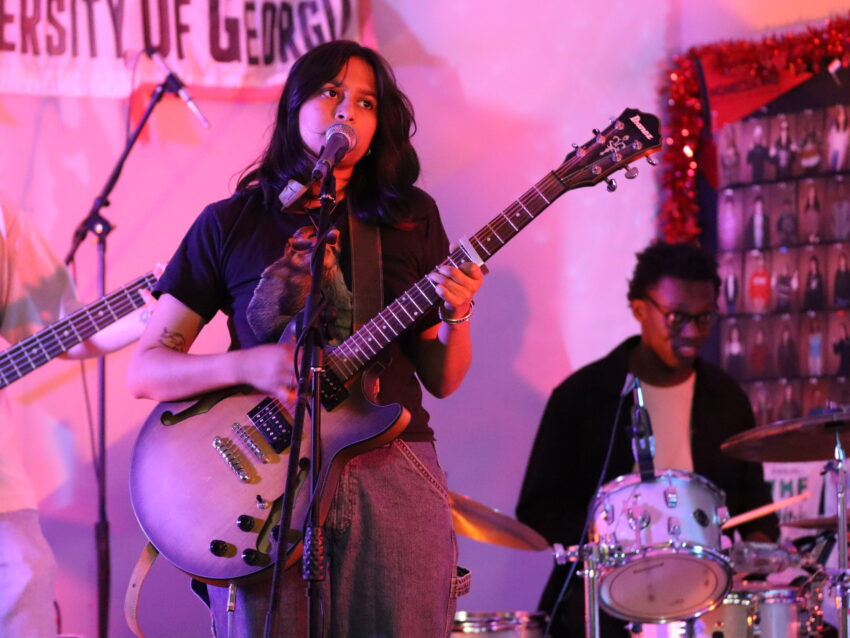
UGA MBUS Student Ritika Sharma Forges Her Own Pathway
At ten years old, Ritika Sharma learned how to play the guitar—but upside down. Her father, who was left-handed, refused to buy her the instrument because she often struggled with sustaining a hobby.
“After a week, I’d be like, ‘I’m bored.’ He didn’t believe that I would stick with it. So, I learned the guitar upside down,” Sharma said.
Now, Sharma carries a dedicated spirit, with her seventh song “Love You Have Left” being released in late March. Even though she started writing songs at ten years old, she has wanted to pursue a career in music since she was 14—not giving up on her musical journey.
Sharma describes her music as “textured.” She doesn’t like to label or confine it to a particular genre, having learned rock from her father, talking heavy metal with a former boss, and being classically trained all the while.
Instead, she often asks herself what mood she wants to create, letting the lyrics stand for themselves in the absence of production, and vice versa.
“If you took the lyrics away, the production would shine, it would tell a story. And, if we took the production away, the lyrics still tell a story—that’s a test I do with all my songs,” Sharma said.
As a student in the University of Georgia Music Business program, Sharma says she’s learned that she can forge her own pathway, with each musician’s route to success being different. She currently has a mix of singles and an EP released. Vinyl Magazine met with her to discuss some of the lore behind each.
For The Fish
I think [with] the oceanic-like ambiance, I wanted it to feel like two fish were singing to each other. I think I kind of accomplished that. It was my first fully produced song. So, it’s definitely a learning process. I don’t think it’s a perfect song, but it’s really cool to see my progress.
Arabella
I wrote this about a friend I had in high school who was going through a rough time. She would always be like, ‘Oh I’m trauma dumping.’ And, I’ll just be like ‘Girl, you’re my friend, I want to hear about everything that’s going on in your life.’ … I don’t talk to that person anymore. But it’s weird because people are in and out of your life, but songs can just stay with you. And I think about that person a lot. So, I think that song just means a lot to me because it was about a special person.
Water Fights
That one’s about a relationship that just changed and shifted, it wasn’t the same as when it first started. I think that was just about youth and friendships. I think we have a lot of these friendships early on that just changed. It’s folk-inspired, and I just really liked the guitar melody.
14
That song was about middle school. I think growing up, I was in a very racist county. I’d get angry, my natural expression initially was anger. … But, my dad had a very kind expression, he thinks they don’t mean it like that—we have a different outlook on what people mean and why they do things. … That song was about [how] we’ll never be on the same page about how we want to react to things, how we want to treat other people… you can love people and them not think the way you do.
The Bear
The Bear was the first song I technically posted on TikTok and got me thinking about putting songs out publicly. … I wrote that about [how] it’s like the grass is greener on the other side—you have this bear that’s outside of a cave and a man who’s in a cave, and one wants to leave and one wants to be in the cave. There [are] positives and negatives to both sides. … I think it’s some of my best lyrics.
Sweet Bitter
It was the first time I was genuinely amazed by [the] stuff I created. … Usually, I would write, and then what my rough draft was was also my final draft. But, this was the first time I was like, ‘How can we edit this? How can we make it better?’ … So it started folk, turned R&B at one point. We meshed them, so the third section has R&B melodies if you really listen to it. It’s like four completely different sections that kind of signify the healing process. I think it perfectly takes you through you going insane and feeling not healed to being healed by a person who may have affected you. And it’s that sweet bitter feeling—you love them, but it’s time to move on. And, you also hate them.
Love You Have Left
I did it for an MBUS class. I had to do it so quickly… I had like multiple people, my friends who were trusted sources, who said ‘This one had some sauce to it, put this out.’ It was more [of a] pop sound. I didn’t want to go back to folk, I was like ‘Let me keep it pop.’ The hardest part was the ending, and I think I achieved a good ending. And again, texture [and] ambiance was really big to me. I think it’s some of my best lyrics, the melody is really catchy.
Athens DJ Scene Is on the Climb Post COVID-19
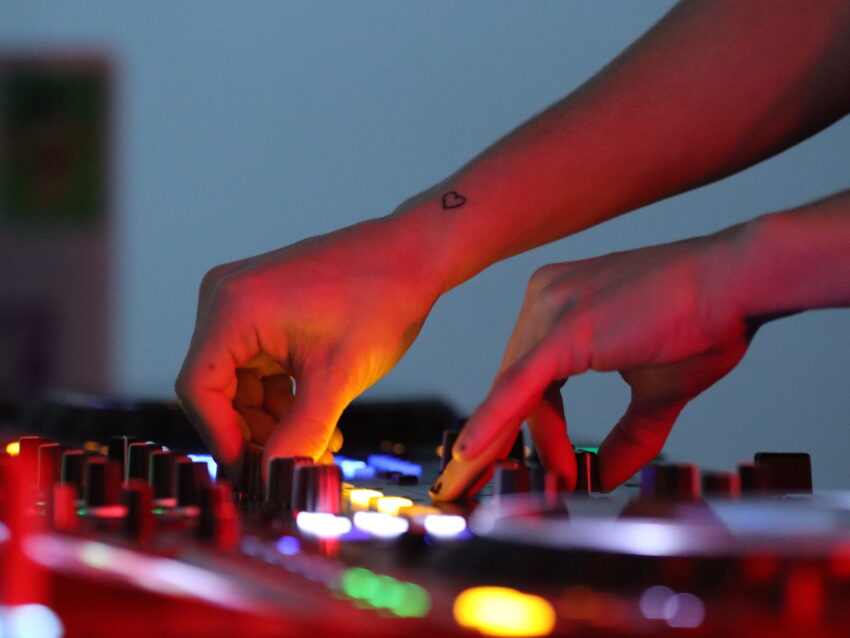
A flow state of pure connection and free movement—this is how Izzy Morrow, a DJ and promoter in Athens, describes the music environment that she hopes to curate. She says this state of being is when she feels the most connected to the universe and, when she’s on stage, to the crowd.
“Movement is such a healing thing—just dancing freely,” said Morrow. “[In our] normal everyday lives, we literally don’t get to do that… I feel like I just shed all my layers and it’s just pure human.”
Before the COVID-19 pandemic, Athens had a thriving DJ scene. According to Morrow, the Georgia Theatre in Athens, Georgia, used to book EDM shows frequently on the weekends. However, she says the number of shows and DJs in Athens has since slowed down in the post-pandemic era.
Still, many of Athens’ DJs—from underground to EDM to old school—predict that the scene is regaining footing, preparing for an anticipatory comeback.

Current trends
The live music industry, like many other aspects of our lives, changed after COVID-19. According to a study by the National Library of Medicine, the total monthly consumer spending on music has decreased by more than 45% compared to the pre-pandemic levels, impacting live music and physical sales the most.
While sales in pop music concerts have recently skyrocketed three years post-pandemic, the New York Times reports that amphitheaters operating below arena levels have seen climbing costs, and other industries, like Broadway audiences, are still down from pre-pandemic numbers.
On the other hand, the pandemic also offered rare free time for many people to try out new things—for musicians to perfect their craft. Another study by the National Library of Medicine reports that some musicians referred to the pandemic aftermath as a “creative period,” despite the disadvantages of lockdowns.
Athens also gained some quality music from the DJ scene during this time, according to Henry Landgraff, known as DJ Henny. He attributes this spike in creativity to the increased time people had to learn how to produce.
However, even beyond the pandemic’s influence, Morrow says most musicians in Athens, not just DJs, are “hungry” to create. It’s that freedom of expression that made Morrow fall in love with the Athens DJ scene in the first place. Even Landgraff, originally from Ohio, attended the University of Georgia because of the attractive music scene and music business program.
“Having like-minded people that are so musically intelligent, even if it’s not about music … it’s a microcosm [where] you can fail and there’s no downside,” said Landgraff.
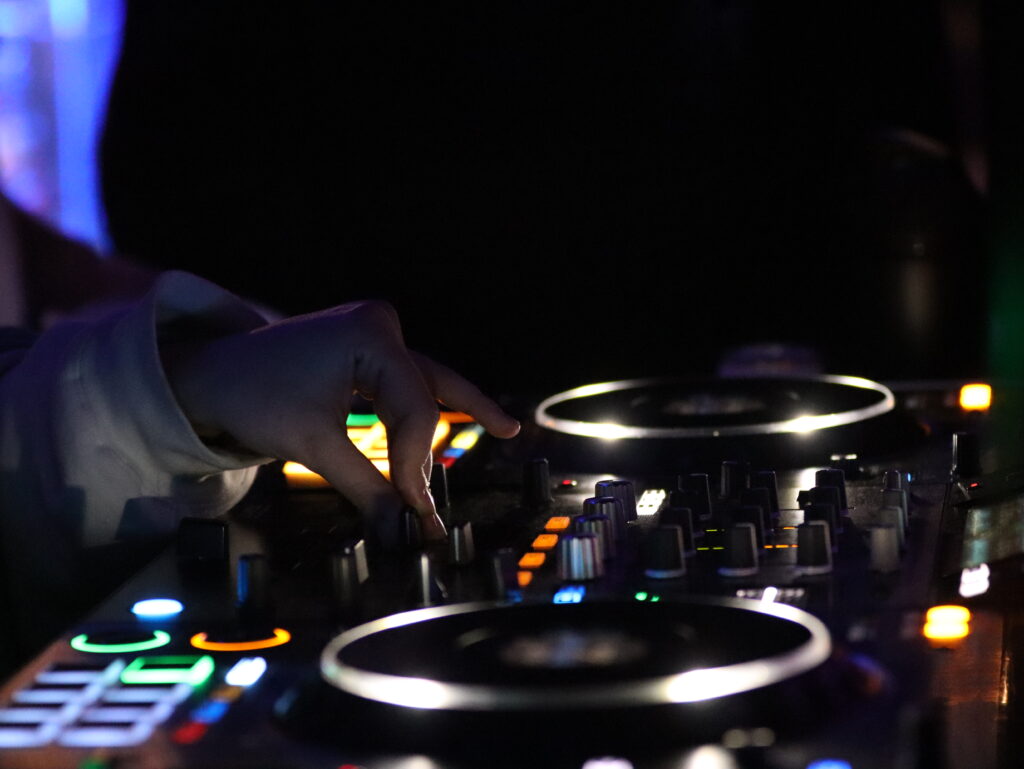
Mark Weathersby, or DJ Mahogany, started DJing back in 2005. So, he’s seen the evolution of Athens DJs over the last several years. In a Flagpole story from 2016, he said that the scene in Athens was varied, ranging from top 40 hits to obscure jams—he largely agrees today. He says there’s still a crowd that enjoys older music, but there is also a new, youthful movement.
“Here in Athens, I think it’s definitely more of that top 40 scene, I think it’s going towards that … youthful, vibrant, very energetic, fun, dance scene with EDM. And, that definitely is the movement where music is going towards,” said Weathersby.
Ben Bradberry, also known as DJ Reindeer Games, describes in Flagpole a “split scene,” which poses the question: Are people coming to shows because they enjoy the music, no matter who is spinning, or are DJs attracting crowds with the specific vibe they create?
Morrow, being more involved in underground EDM, says her experience has been going to a show because you like their sound. Landgraff, who also works in EDM but for a more fraternity crowd, thinks the answer is a little complicated. He doesn’t necessarily want to be confined to one sound, which makes it a fun challenge to experiment with all kinds.
“You need to set an entire vibe—there’s nothing to watch… it’s just me and my board,” said Landgraff. “My favorite part is being able to set an entire tone of how you want your set to be… I think that the balance of Athens music makes it so people know to not expect anything going in and kind of accept it for what it is.”
Current opportunities
In the post-pandemic music scene, Morrow attributes much success to the Nightshade Family, which she describes as being like a label and events promoter. She worked as one of their resident DJs and says they’ve been instrumental in throwing shows for the underground scene, which struggled after COVID-19.
Morrow also helps host Open Decks at Mai Kai Kava Bar, which she describes as “an open mic night for DJs.” Anybody who wants to play can bring their USB and plug it in, allowing beginners to give it a try and pros to experiment with something new.
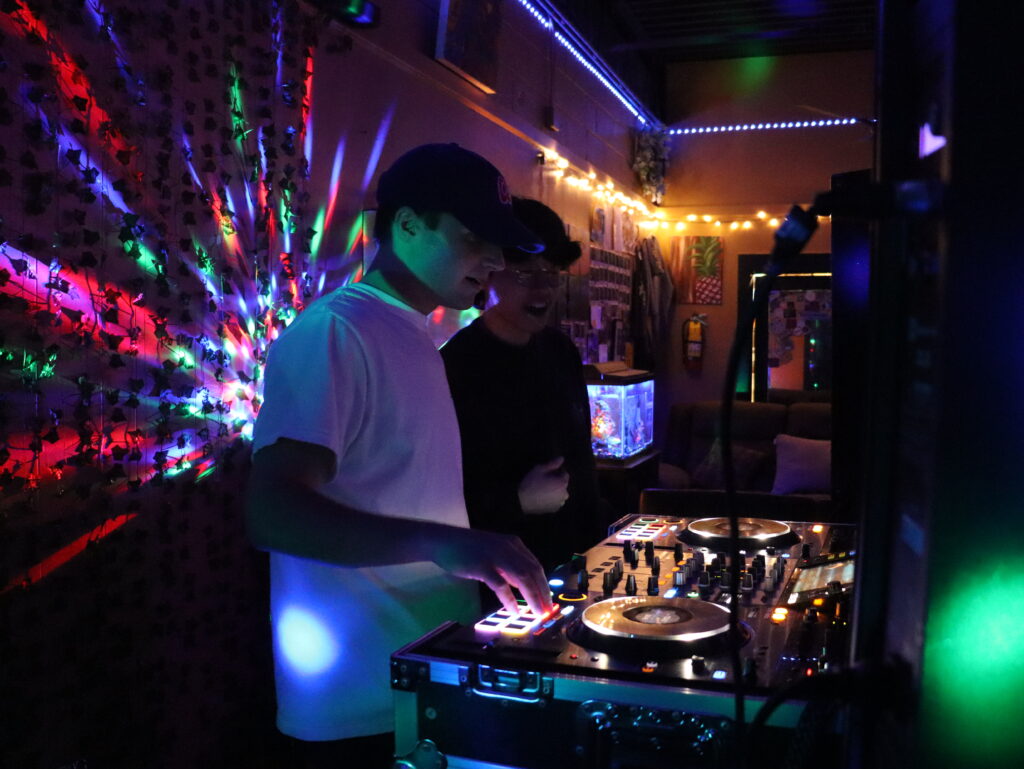
Scottie Stephens, known as Karezza, is one of the other hosts for Open Decks. Morrow says he helped her learn how to DJ and produce. Stephens started DJing and producing about five years ago, saying he also used the lockdown time to work on his music. But, he didn’t start playing shows until two or three years ago, many of which were with Nightshade.
Morrow is the one who invited Stephens to Open Decks, which they soon started hosting together. While it felt like a big step at the time, he says this opportunity helped him make connections. He reflected on how different his and Morrow’s lives would be if she had never asked him to come to Open Decks.
“Honestly, this place has changed my life for the better,” said Stephens. “I’ve met so many people in the community, and it’s given me a place to come to and keep growing my relationships with all these people.”
What’s next
Stephens agrees that the DJ scene is slowly being revived and is on a good path.
“It’s slowly being built back up, but it’s just harder to find,” said Morrow.
Now that anyone can watch a YouTube video, DJing is more accessible, according to Morrow. She emphasized the need for production skills because people can pick it up pretty quickly. Landgraff agrees, saying his biggest regret was not releasing original music fast enough.
Overwhelmingly, the DJs want beginners to approach their craft with an open mind. Landgraff said that even though a vibe cannot be predicted, the DJ must be prepared. Weathersby said he had to be like a sponge that absorbed it all.
“You need to have fails,” said Landgraff. “You have to have those kinds of low-stakes shows in order to make those high-stakes ones good.”
With summer quickly approaching, Morrow already has her eyes on the third annual “Earthday Everyday” event on May 11 at Southern Brewing Company, which is put on by Afterglo. Weathersby also thinks the warmer weather will draw back more shows to their previous hot spots.
“I bet you we’re gonna see DJs on the rooftop [of the Georgia Theatre], and I think they’re gonna be packed and ready,” said Weathersby. “By the end of this year, everybody’s gonna be back out on the dance floor dancing.”
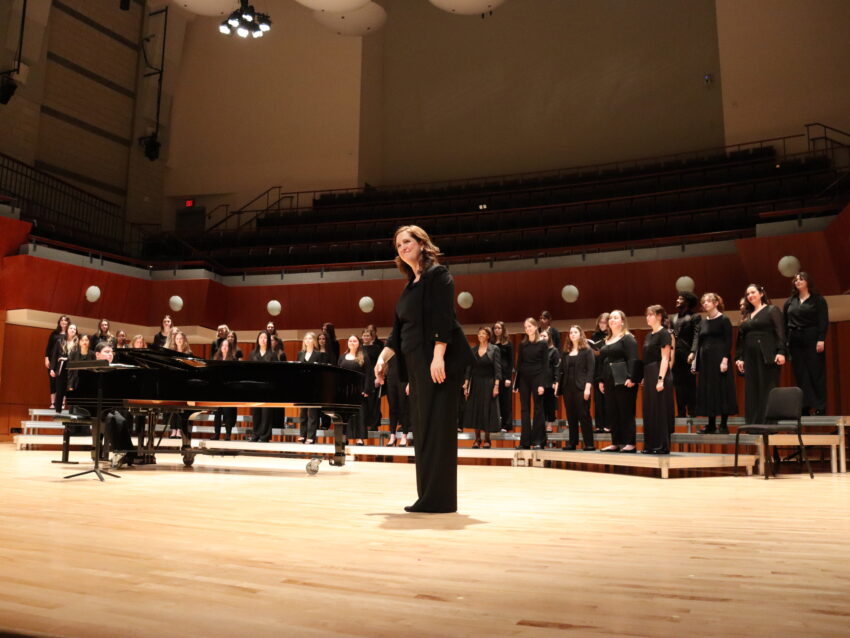
UGA Glee Clubs Embrace Unity With “Vive La Compagnie” Concert
The University of Georgia Glee Clubs echoed messages of unity at Hugh Hodgson Concert Hall on Tuesday night for their “Vive La Compagnie” concert, which translates to “Long Live the Company.”
“Singing together is one of the most human things you can do,” said Conductor Sarah Gallo. “We think it’s really special … it’s also just deep in our core.”
Both the men’s and women’s groups performed a variety of pieces. From a Bulgarian folk song to a song sung in Sámi, a language spoken by Indigenous people in the northern Scandinavian region, to a poetic ballad—the repertoire was diverse.
Perhaps the most exciting piece from the Women’s Glee Club program was “Ozdolu idu,” arranged by Philip Koutev and sung in Bulgarian style. Gallo said singing in Bulgarian style required a brighter sound, which was not a typical vocal placement for choral singing.
Not only did “Ozdolu idu” bring joy to the audience, but choir members were smiling and dancing along to it too. Katie Bethbrewer, a sophomore biological sciences major, is in her second semester at the Women’s Glee Club and said this was her favorite piece to perform. According to the program bulletin, this children’s song tells a story about colorful carts “bumping and jumping” down the road.
“The concert was just awesome. I love, love, love Dr. Gallow,” said Bethbrewer. “She always does such an amazing job picking such a wide variety of music. I’m so excited every semester to get to sing all the different kinds of songs.”
Cooper Hardy, a sophomore agricultural communication major, also noticed the variety of pieces and would love to see even more languages in the future. He, however, enjoyed the “quiet and lowkey” performance of Gwyneth Walker’s “Crossing the Bar” by the Women’s Glee Club the most. Alfred Tennyson wrote the poetry, which included lines like:
For tho’ from out our bourne of Time and Place
The flood may bear me far,
I hope to see my Pilot face to face
When I have crost the bar.
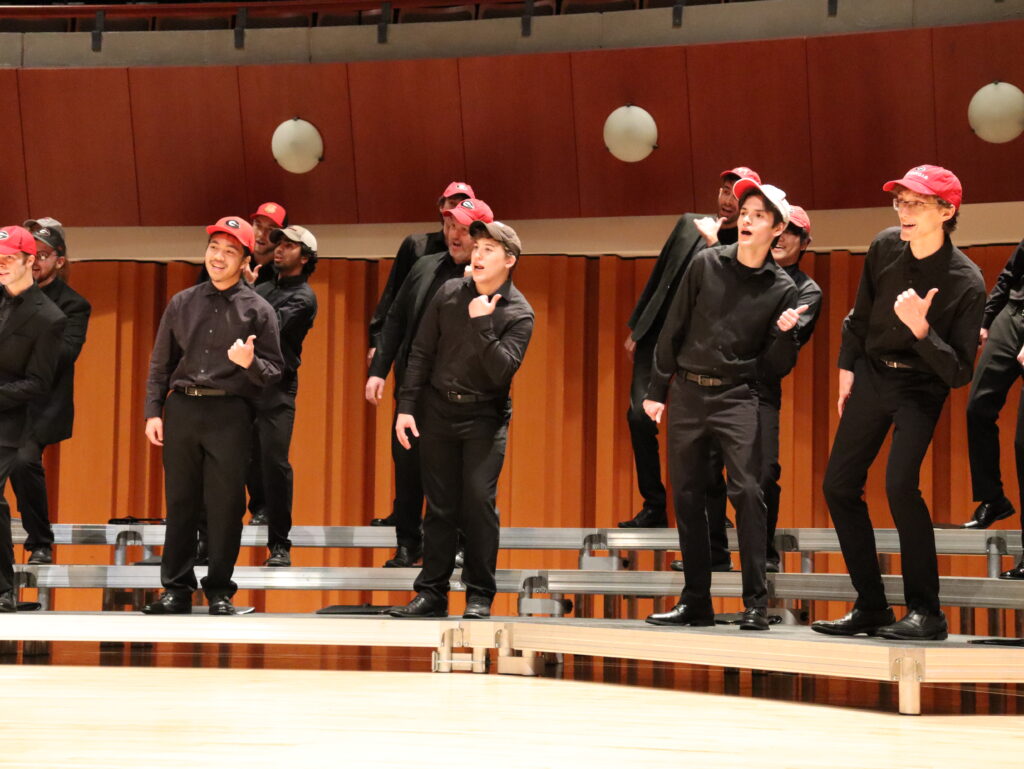
However, the namesake of the concert was the Men’s Glee Club “Vive La Compagnie” performance, arranged by Alice Parker and Robert Shaw. This piece matched a jaunty mood and faster pace like the Bulgarian piece. Braden Rymer, a baritone, had a solo.
Words in “Vive la compagnie” translated to “Should time or occasion compel us to part, vive la compagnie! These days shall forever enlighten the heart,” according to the program bulletin.
“I thought the whole idea of music bringing everyone together was a great way to highlight how the music school works,” said Hardy.
Tuesday’s concert was the last opportunity of the semester to see a Glee Clubs-only performance. Because of this, Gallo made an effort to recognize the graduating seniors in the choirs.
The Glee Clubs will combine with the other UGA choirs and UGA Symphony Orchestra to put on the “Dona Nobis Pacem” concert on April 26.
“Dona Nobis Pacem is an incredibly timely and really moving piece that is unfortunately really appropriate for our world today — it’s begging for peace,” said Gallo.
A few days before the concert, two UGA students—one current and one former: Wyatt Banks and Laken Riley, respectively—died on campus. Bethbrewer said many of the songs were about hope, finding a community and finding beauty in the state people find themselves in, which helped bring her peace among the tragedies.
“Getting to hear those words and get to sing those words and preach that to our community at this time is really empowering and helps, I think, bring hope to our campus,” said Bethbrewer.
The Men’s Glee Club ended on a positive note with their performance of the Georgia Medley. This included the tradition of calling the Dawgs and skit-like choreography to engage with the audience.
“It feels like you get to experience something that’s really intimate that these people have put so much time into—I feel like it is our duty to go out there and to show our support,” said Hardy.
Artists to Watch: Wakai
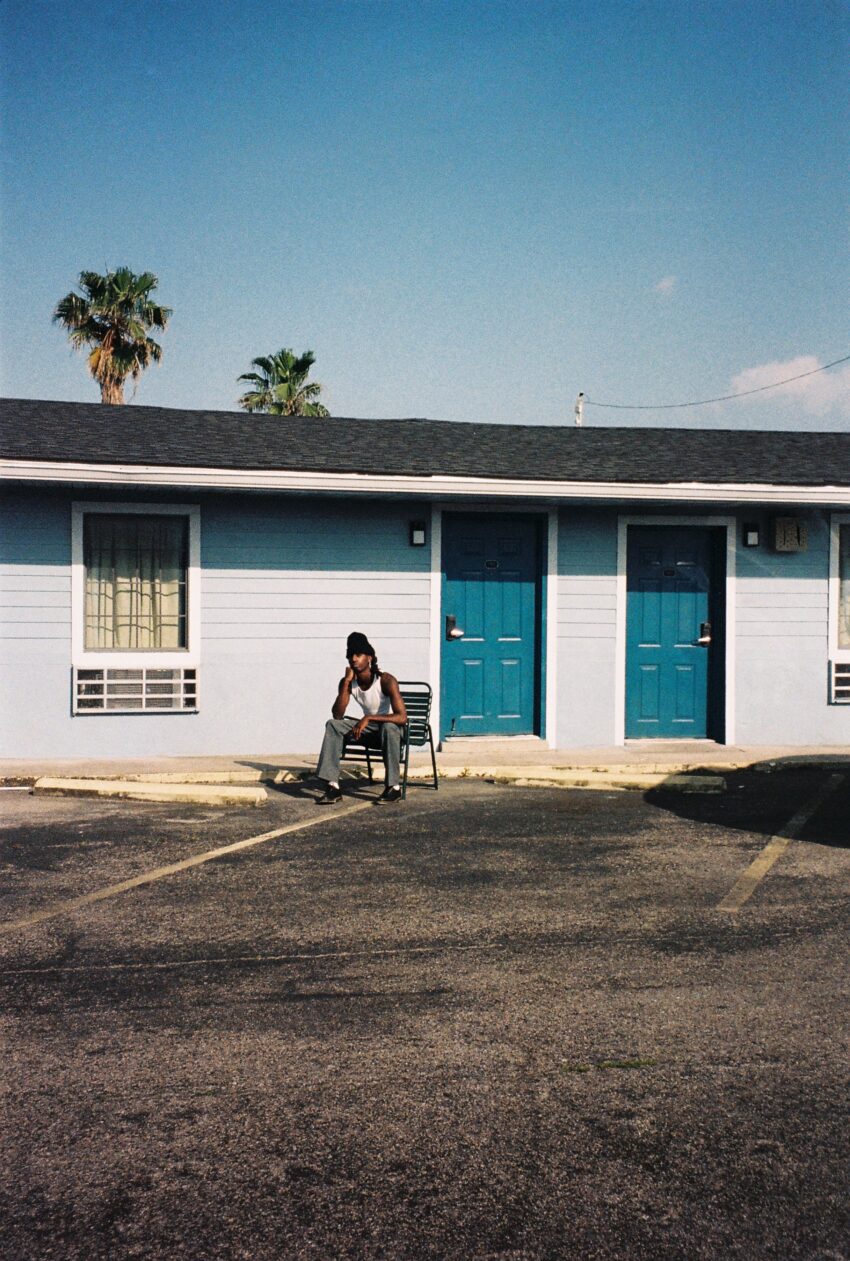
While scrolling on TikTok in the spring of 2022, I stumbled across the song “Silhouette” by Wakai (feat. MARCO PLUS), which I immediately saved. The witty lyricsism and dynamic flows over smooth, dreamy production inspired me to listen to his album, To a Dark Boy, in its entirety. Wakai’s music is vibrant yet subdued, and listening to him challenges me to look within. In pursuit of more insight on an artist I enjoy so much, Wakai and I had a conversation to discuss his journey and relationship with music.
VM: Can you tell us about yourself? How did you start playing and performing music? Why did you decide to pursue music?
W: I’m Wakai, a visual storyteller from Baton Rouge, Louisiana.
I received a drum set when I was three years old due to me always doing rhythmic things around the house to the point my parents had to supply me something to harness to my craft. My father introduced me to one of his close friends who happened to be a rapper around the time I was ten and he allowed me to do my first shows at a young age, as well as bringing me to the studio which I am forever grateful for. There’s probably footage of those shows somewhere.
I felt the need of pursuing music as a real calling from within. I noticed a lot of my classmates from highschool and even some I met while I was briefly in college found themselves at a crossroads at what their real purpose was. For me even if I had no notoriety or appeal I would make music for the essence of healing and the power it gives me when I channel the thoughts of my ancestors and the stories I’ve suppressed throughout my life, music allows me to cleanse.
Are there any artistic influences and/or contemporaries that you’d like to highlight? Any local acts from Baton Rouge/Louisiana?
Being from the south the first two people to really have a significant impact on me were my childhood years of hearing André 3000 from Outkast and me never forgetting the car ride freshman year when a friend played “Modest” by Isaiah Rashad. It forever changed my life. Of course I can recall where I was the first time I heard “Sherane [a.k.a. Master Splinter’s Daughter]” by Kendrick Lamar, but those two men specifically taught me how to embrace my cadence being from the south and adding the melodic element to it. Nothing is wrong making music that is conversational, and for them I am thankful. My creative hub in Baton Rouge blossomed the most from my collective Col-Der-Sac consisting of members: Ronday, Douno, JoshSimmons, V!lla, and OshaBlueye. Those guys formed a brotherhood within our friendship to lean on each other throughout our creative endeavors. No idea was too big and no thought was too small with those guys. All of them are extremely talented.
What does your creative process look like? Is writing songs something that grounds you?
I tend to love making music in solitude if i’m tracking vocals down at my house, but I really love having jam sessions with different musicians and finding a groove within that and creating a song from it. My new album is an extension of creations I always wanted to externalize but never knew how to get the sonic backdrop to fully encapsulate it. Music will forever ground you, especially when you have the opportunity of aligning with other souls who may be experiencing the same problems you run across but don’t know how to vocalize the fear or frustration of it.
You’ve said previously that you named your album “To A Dark Boy” because you are a light regardless of how others perceive you. Can you speak more to that?
When you look up Webster’s term for the word ‘Dark’ you see ‘a place or time with little or no light’. That definition struck me as a recurring theme in my life. Not only having a darker complexion but also the amount of rain that happens in my state leaves some seasons visually dark. The word is inescapable. But empowerment came from this to me, I learned the light within myself could carry me through any darkness around me. I personally find a layer of trauma and angst within Louisiana due to the covert and overt racism that bubbles in it. My great grandfathers would have to walk with their head down if someone of white complexion walked on the sidewalk. Hearing these stories sparked a pride in not only my blackness and the freedoms they weren’t able to have, but my eternal gratitude to be every dream they could not achieve, and every hope they once yearned for.
You were on the Texas leg of MAVI’s most recent tour, and his album “Let the Sun Talk” is thematically similar to yours. Do you find yourself being directly influenced by other artists when making music or do you see connections to others after you’re done making a song/project?
I find that my peers are more so friends to me creatively. And being that MAVI is from Charlotte I assume we grew up listening to the same artists our parents played. The connections are inseparable due to the collective consciousness people from the south tend to inherit from each other. I personally draw more inspiration from the artists my parents played when they were my age, than my peers. I do love the music that is coming out from my era though, especially now. I just feel my albums are more so visual storylines that began through my personal upbringing, and not the upbringing of my musical peers.
Do you have specific goals you’d like to reach before the end of the year, whether that be concerning song output, fanbase growth, performances, or something else?
All the above honestly, but at the center of my hopes I want to become a better man. Once I become that I can be the truest form of an artist I can be. I have some shows planned that I’m excited for, and also the planning of my first tour.
Can you tell us anything about upcoming EPs/albums/projects?
I have a new album coming up this summer. It’s my second album and one I’m the most amped about, it took 23 years to make this project and the music reflects that.
What’s your favorite thing about performing?
The look in peoples eyes when you say words that strike a nerve within them. There is no better feeling then being on the same frequency as someone and you become intertwined through the vocal projections.
What song(s) of yours would you recommend a new fan to start off with?
I would say the first 3 songs to hear from me are “Starter Jacket” , “Silhouette” and “Collect Calls”. I think they all show the depth of my style and also sonic components of my life and spiritual journey.
You’ve built an impressive list of collaborators already. Who are some artists, musicians, or producers that you’d like to work with in the near future?
I would love to create with Smino, Erykah Badu, Jordan Ward, and Jean Deaux. And as far as producers Knxwledge, Pharrell, Emil, and Timbaland.
What has been most successful in growing your fanbase? Performances? Social media? Collaborations?
Traveling by far. Nothing beats going across the country and having tangible connections with people that transcend a phone screen.
Check out Wakai‘s most recent single “Frustrated” on all streaming platforms.
Shaky Knees 2021: Glove x Vinyl Mag
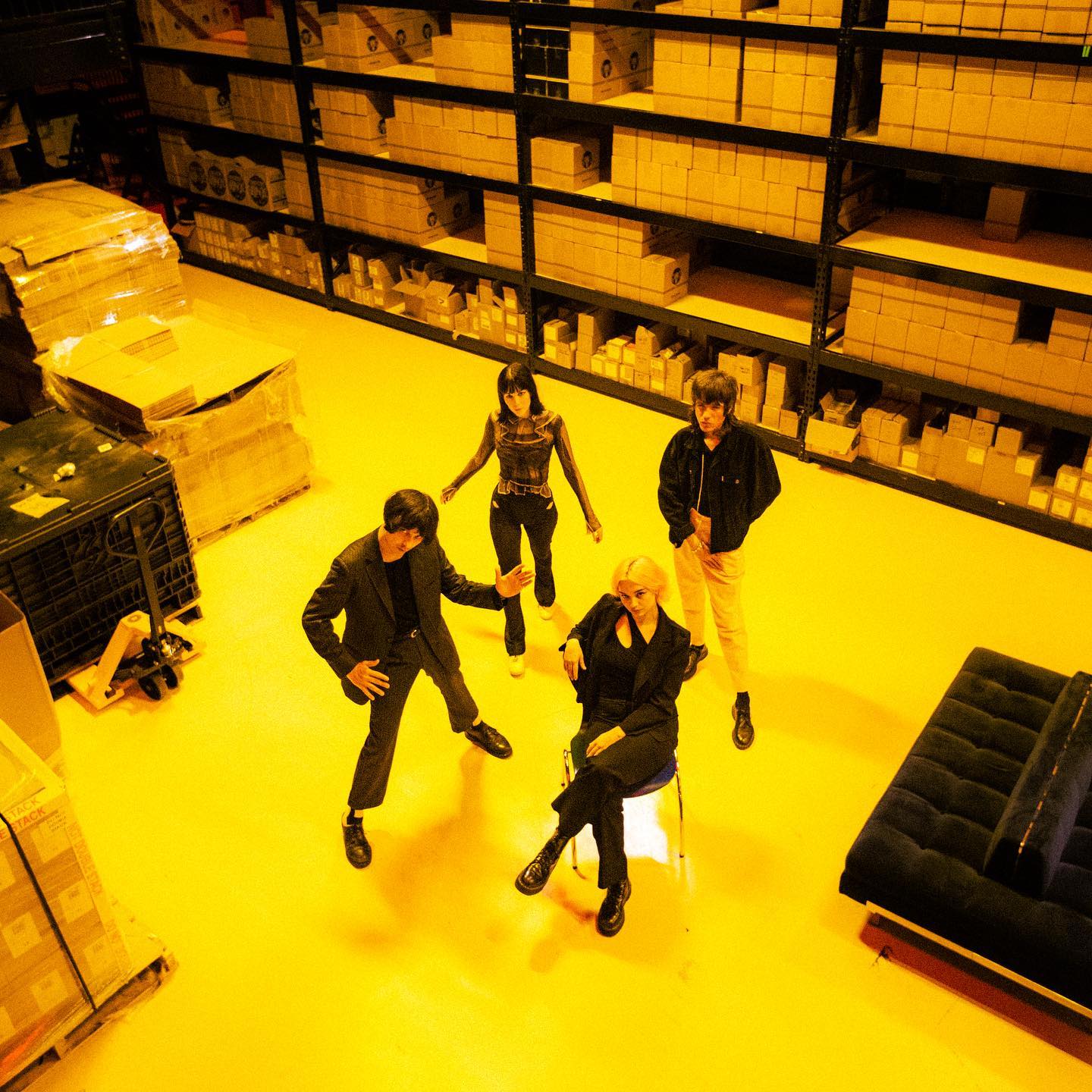
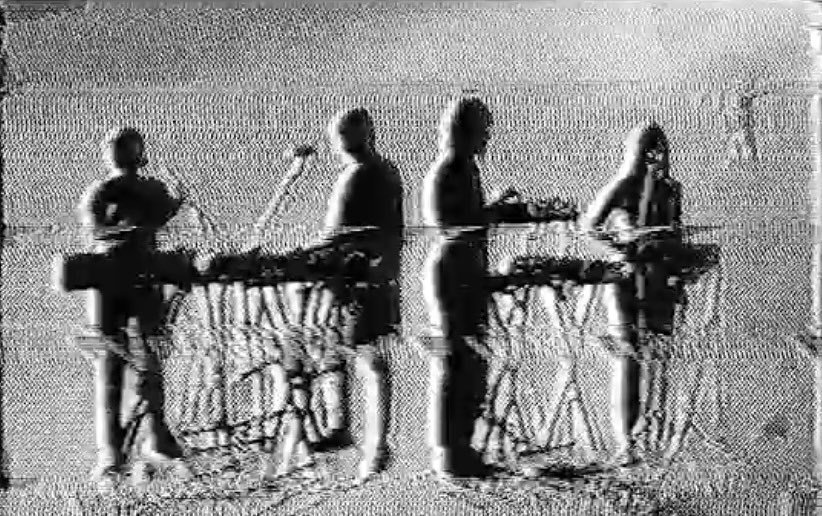
Tampa-based post punk band, Glove, opened up Shaky Knees weekend flaunting an eclectic range of style no one was quite ready for. Drawing artistic influence from a diverse realm of inspiration, the group represents a striking rendition of a fleeting musical era marked by iconic, inventive techniques. Their music and stylish persona naturally invite a feverishly danceable set, conjured by synth’d out melodies and cyclical, hooking drum movement. Glove dwell in a sphere of music where old is acquainted with new; where nostalgia embraces the present’s innovation. Above all this, they’re seriously one of the most exciting new bands I’ve experienced in a while.
The group is comprised of Brie Deux (drums and vocals), Rod Wendt (guitar/bass and vocals), Michelle Primiani (synth keyboard/vocals), and Justin Burns (bass/vocals). Although specific musical roles are noted, they’re definitely not set in stone—switching up what they play depending on the song, or perhaps on how they’re feeling that particular day.
A few hours after they shook the Shaky stage, I grabbed a moment with the wonderful Brie and Michelle to talk the band’s formation, initial and growing artistic inspirations, creative processes, tour life, and much more.
VM: You guys are a relatively new band with several tours already under your belt. What’s that been like?
Glove: When we first started the group, we pretty much immediately went on tour. That was always the plan—it was the initial formulation of the band since it was what we all wanted to do. Rod and Brie were at first in another band, and I (Michelle) went on tour with them to do photography. When that band dissolved, we all got together to form Glove, and were like “Ok, what do we want to do?” And the answer was simple: “we want to tour.” So that’s what we did. At that time, Brie was already booking bands, so touring came together rather quickly.
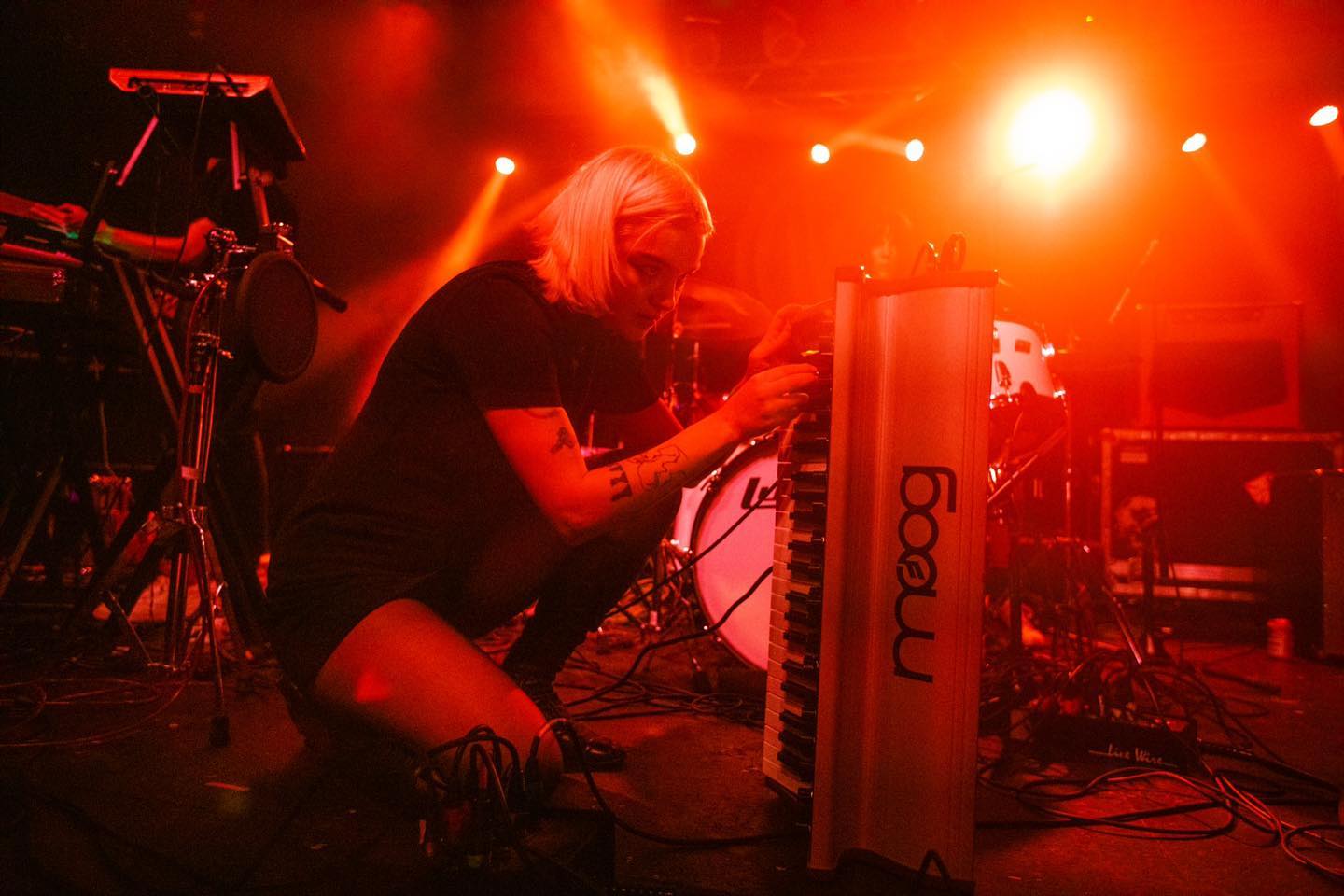
VM: So would you say you kind of had established roles at the start of the band’s formation?
Glove: Yeah, for sure. At the beginning, Brie was kind of in charge of management and booking, I was doing a lot of the media and photography, and Rod and Justin were writing most of the songs. Now, it’s a lot more fluid creatively, since we have a team to help us out.
VM: How has the songwriting process developed since Glove got together?
Glove: So far, Rod and Justin have written a lot of it. They create a kind of basis for them, leaving a lot of creative input for Brie and I. They’ll bring a framework to the rest of the group, and we collectively make it our own.
VM: So far, you’ve played with some pretty prominent bands like White Reaper, Broncho, L.A. Witch, Wavves, the Growlers and more! How has scoring such influential opening spots affected your music and touring experience?
Glove: It’s really been a dream, and so much fun. I think for every show we’ve opened, we’ve learned something very distinct, and taken a new inspiration from each. We’re still kinda new, and a lot of these bands have been touring for a lot longer, so they really took us under their wing. From Broncho, we learned a lot from their lights show, and figured out how we wanted to do our lights. The Nude Party, too. We just feel really grateful, and happy to finally be back at it.
VM: You were playing a lot of shows before the pandemic, and readily slid back into tour life after. Have you noticed any differences in your approach to touring/playing shows now as compared to before?
Glove: Pre-pandemic, we were definitely on a really big, and constant, tour roll. We were grabbing any opportunity we could, which was super awesome, since saying yes to everything definitely got us out there. The pandemic actually gave us a chance to buckle down, reflect on what we’d accomplished so far, and figure out where we wanted to go next. It really put things into perspective—that’s when we got management and finished the album. Coming back into it post-pandemic, everything feels a lot more substantial—we take nothing for granted now.

VM: Glove started out completely DIY. Was it important for you guys to maintain a semi-DIY approach even as the band began to grow and develop a team?
Glove: Having a pretty strong creative purpose as a band, it’s really important that we remain in control even as we grow and acquire help along the way. Having people around us that are as stoked about our vision as we are has definitely been a huge help.
VM: You’ve been given various descriptors since emerging as a band with a rather distinguished, targeted style and sound. Across the board, I’ve gathered “proto rock” “synth rock”, “post-punk”, “new wave rock”, even “rock n roll.” How do you best define your sound?
Glove: Hmm. For now, maybe new-wave dance-rock? But it’s ever-evolving. I generally don’t think we fit into any one genre, since we all bring different influences and artistic visions to the table. Rod comes from a rock n’ roll base, I (Michelle) come from a more electronic style, Brie and Justin pretty much listen to everything.
VM: I’ve definitely picked up on that wide-range of influences, as it feels impossible to box Glove’s sound into one, fixed space. From how the music sounds on its own, to the videos and imagery, the band exudes a feeling that’s equal parts reminiscent and modern.
Glove: That’s exactly how we want it to be! We’ve taken from our individual influences that tend to range pretty far back, while adding futuristic elements to it. Something that’s really important for us too, is making all of the sounds ourselves. Not having computers on stage is a big thing—we’re playing everything; we’re learning everything. That’s something that tends to be happening less and less in modern electronic music—which is super cool, too, but the idea is to remain true to the rock band structure while adding these modern, electronic flares. In that way, we’re constantly adding new elements to change it up, like Rod just added a new synth on his side of the stage.
VM: On that same note, do you ever tire of music critics trying to rigidly define, or box in, these experimental styles constantly emerging from underground scenes?
Glove: We haven’t run into any problems with it, per say, but it is something I do think about. Like with the three singles we’ve put out, Justin sings the first one, “Glass,” Rod sings the second, “Behavior,” and Brie sings this third one “Modern Toy”—and we kind of did that purposefully. A lot of bands have one ‘lead singer,’ one person routinely on each instrument, and that’s definitely a mold we’re trying to break out of—by not having one “main person” in any sense. We all just want to feel comfortable doing whatever we want on stage, so it helps to not be strictly defined. So yeah, we’re constantly throwing curveballs to the critics that try to box in our sound.
VM: I found that Glove’s vision initially formed from a shared love for bands like B-52s, Wire, New Order, Joy Division… How has the vision for your music evolved since Glove emerged as a primarily 80s post-punk inspired band?
Glove: We did initially want to be a band that sounded from that era. Over time, we learned to adopt our favorite elements, and purely find inspiration from those styles so that we can evolve it into our own version.
VM Where do you draw inspiration for your creative expression outside of music?
Glove: (Brie): I take a lot of inspiration from fashion—pretty much all things avant-garde fashion. I’ll watch a bunch of old fashion shows from the 90s, and that’s where I’ll draw visual inspiration. I don’t want to always take directly from music, so I tend to implement a lot of creative elements from fashion into the band’s image.
VM: Do you think there are any social, cultural, or thematic indicators to explain a rather concentrated resurgence of post-punk in recent music?
Glove: Post-punk is definitely making a big revival recently, with all the really heavy lyrical content and strong delivery of distinct social messages. I think post-punk stems from wanting to evolve that (punk) anger into something more direct and curated. No matter what, the art always reflects the political climate, and we’re definitely going through that right now.
How does Glove fit into this new movement of politically or socially charged post-punk?
Glove: I wouldn’t say we fit into it too much, since we’re not a political band at all, and we don’t make much of an explicit statement. We do have our strong beliefs and messages, but we like to communicate them through our music in other ways, and not so directly stated in the lyrics as you’ll find with other modern post-punk bands (comparative examples being IDLES, NOV3L, Black Midi).
How do songs like “Behavior,” and “Modern Toy” speak on nonconformism?
Glove: That’s the underlying, subconscious message with those songs. It wasn’t so much “we want to write a song about this,” it was rather the way that our experiences got expressed in the end. But yeah, there’s definitely themes of nonconformism, and being watched, but it wasn’t intended to be a social or moral message, it just kinda came out that way. So far, I think anyone who listen to our music can relate the songs to anything, which we really like.
Vinyl: Any inspirations from the modern rock and post-punk scene?
Glove: There’s so many, and from so many different genres. IDLES, Nation of Language, NOV3L, Gustaf, Crack Cloud, to name a few.
Vinyl: Glove quickly caught the attention of Brad Shultz in the midst of touring, who went on to produce your forthcoming album. How did all that come about?
Glove: We actually met Brad through a friend during tour with Broncho. He came to our shows, we linked, him and Rod became best friends immediately… He asked if he could produce the record at one of his studios in Nashville, and it was a complete no-brainer. It was a really beautiful experience, and also our first time being in a studio. Brad really became equal parts Dad and cheerleader through the record-making process.
Vinyl Mag: Tell me more about what it was like crafting your record with him in the studio!
Glove: He was such a hype man; Brad being a true cheerleader throughout the whole thing was everything we could’ve asked for and more. He’s such a good and encouraging energy, and allowed us to try things that we normally would never have tried, making our creative eye a little bigger than it would’ve been. We actually did a show with him recently and it was life-changing.
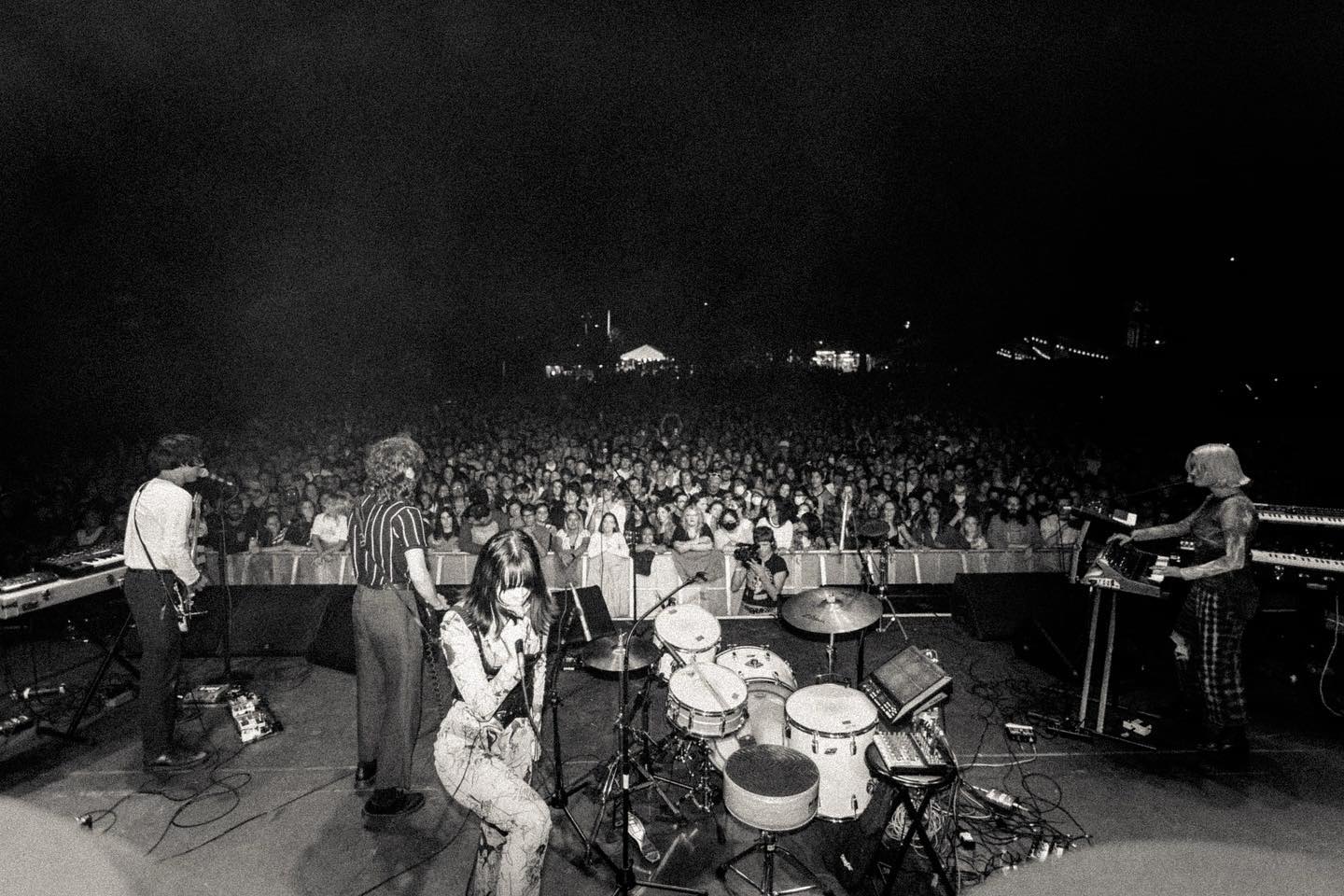
Vinyl Mag: How was that show with Cage The Elephant?
Glove: It was, for one, the biggest show we’ve ever played, 3,000+ people! Truly the most beautiful and transformative thing we’ve ever experienced. It was a huge sea of people that we felt we could really interact with—with all those people it’s easy to have the best time on stage. They have really amazing fans—we were so grateful and it still feels unreal. Cage The Elephant are the most inspiring, energetic, kind, and creative people. They don’t have to take these younger bands under their wing and help them out, but they deeply really care about the future of music, and it shows.
Vinyl: And how excited are you for this record to be out?
Glove: SO EXCITED!! We really can’t wait, it’s been two years coming! It’s also been really thrilling to play the few singles we already have released live, and watching the momentum for the music grow. Seeing the audience already singing along to the songs we do have out, has made us all the more anticipative and stoked.
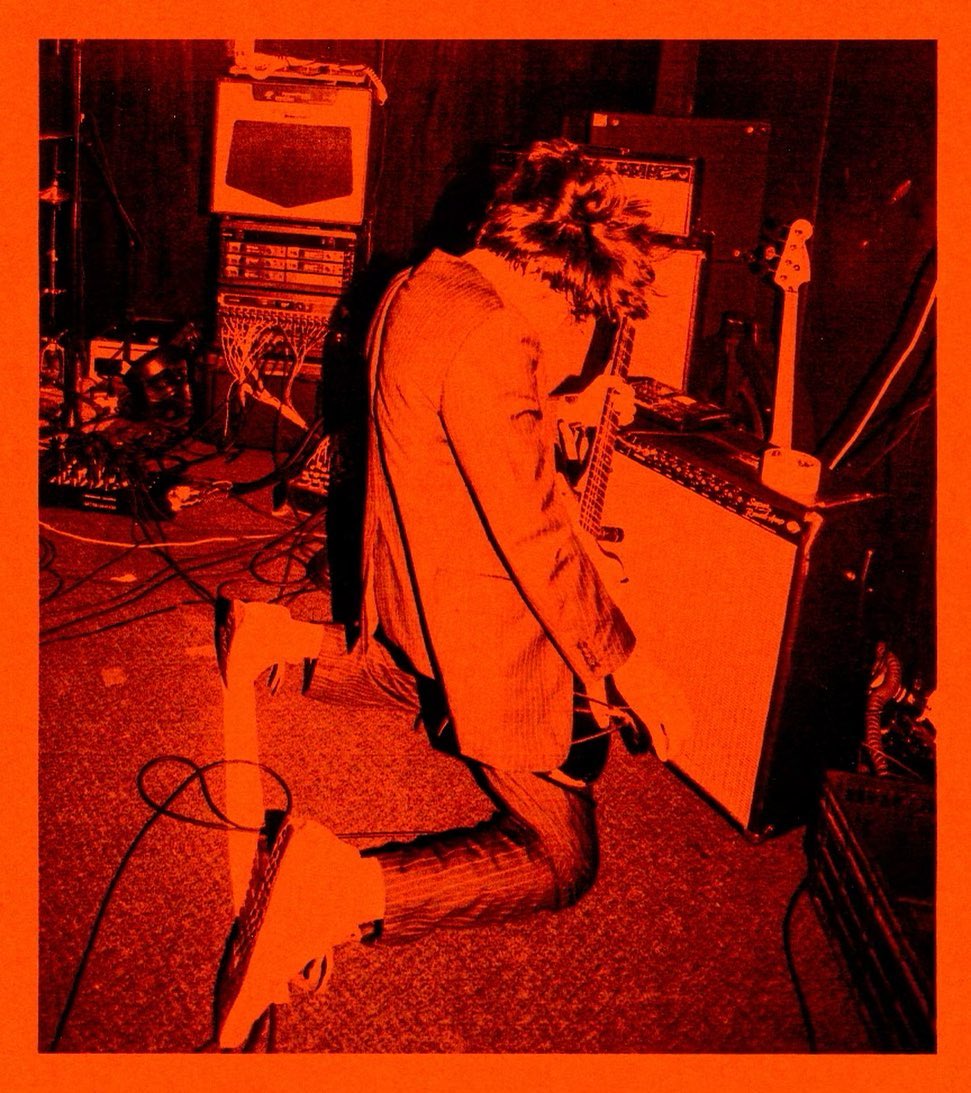
Glove have instantly proven themselves to be an innovative and probing young band. With musicality that captivates and transposes any audience, they’re the ideal solution to an ever-fleeting era of the past. Toying between post-punk, dance rock, and synth pop, their potential will only become more explosive as they rise to prominence in music scenes local and abroad.
Catch the rising stars in a city near you this Spring! Glove are hitting the road with Nation of Language in March. Check out their released music on all streaming platforms, + stay in the loop via their socials in anticipation of their debut record, Boom Nights, set to be released early 2022. Upcoming tour dates below.

Sun Seeker Tour Diary + Interview: Shaky Knees 2017
[tps_header]
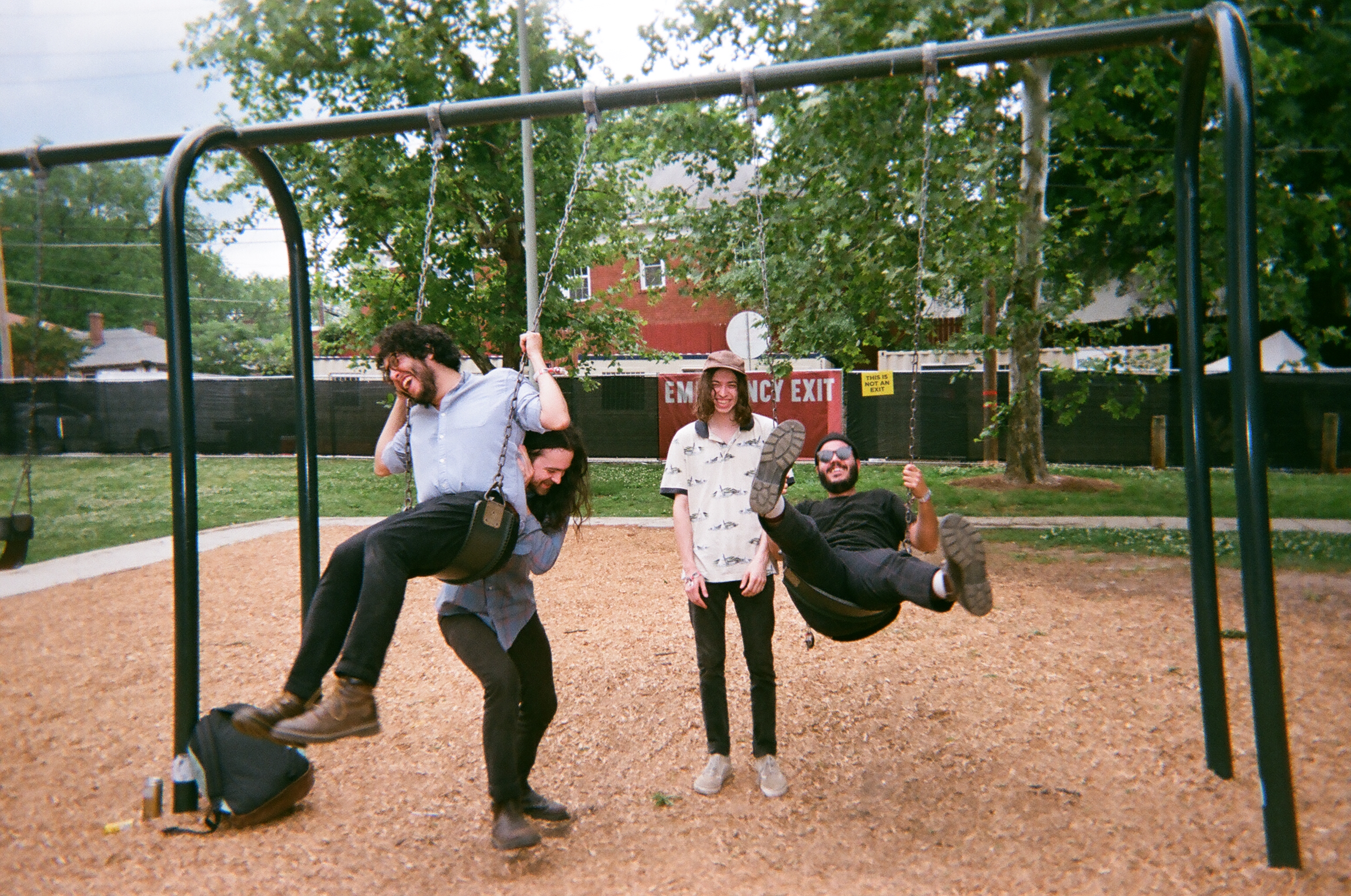
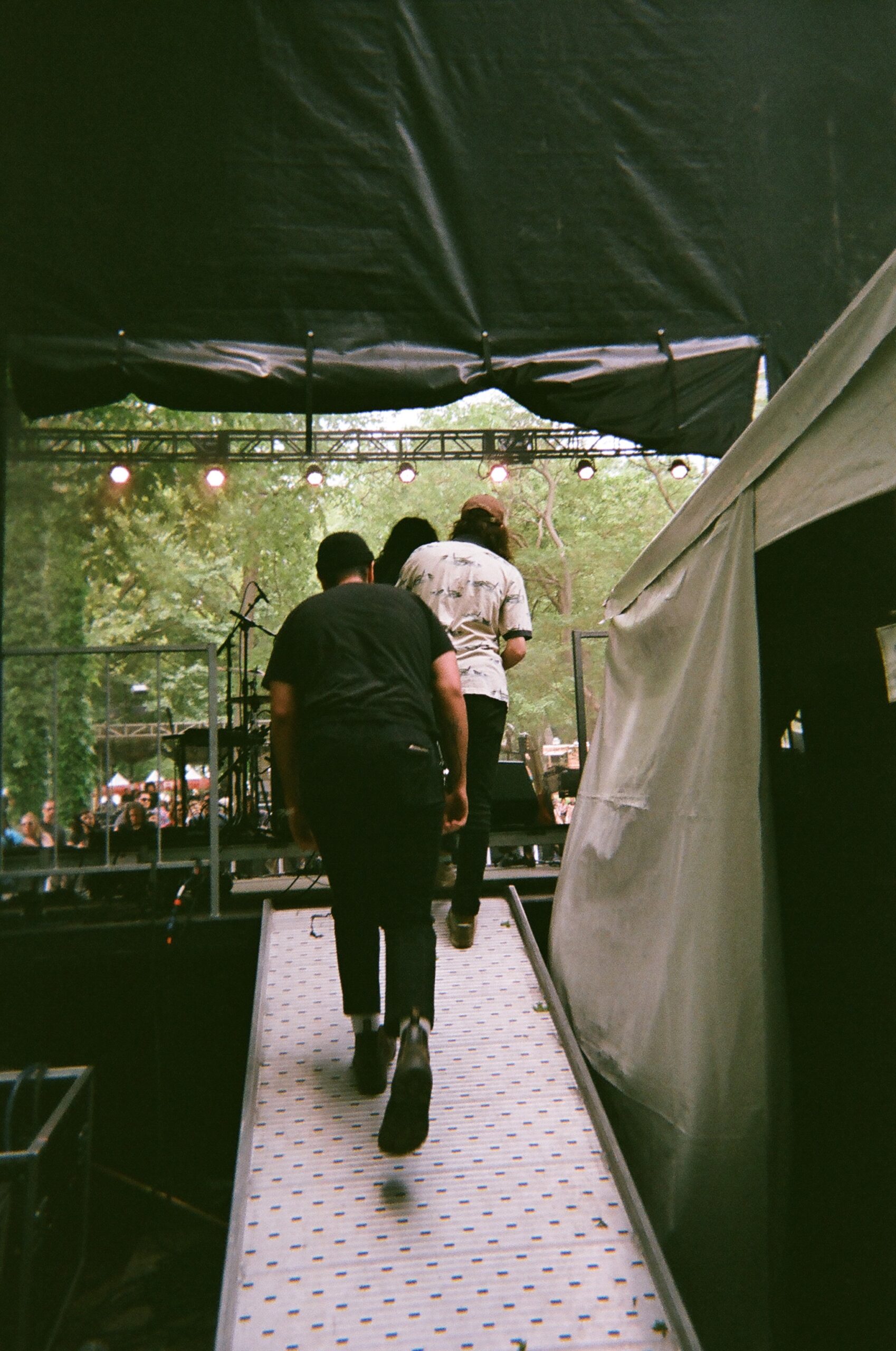
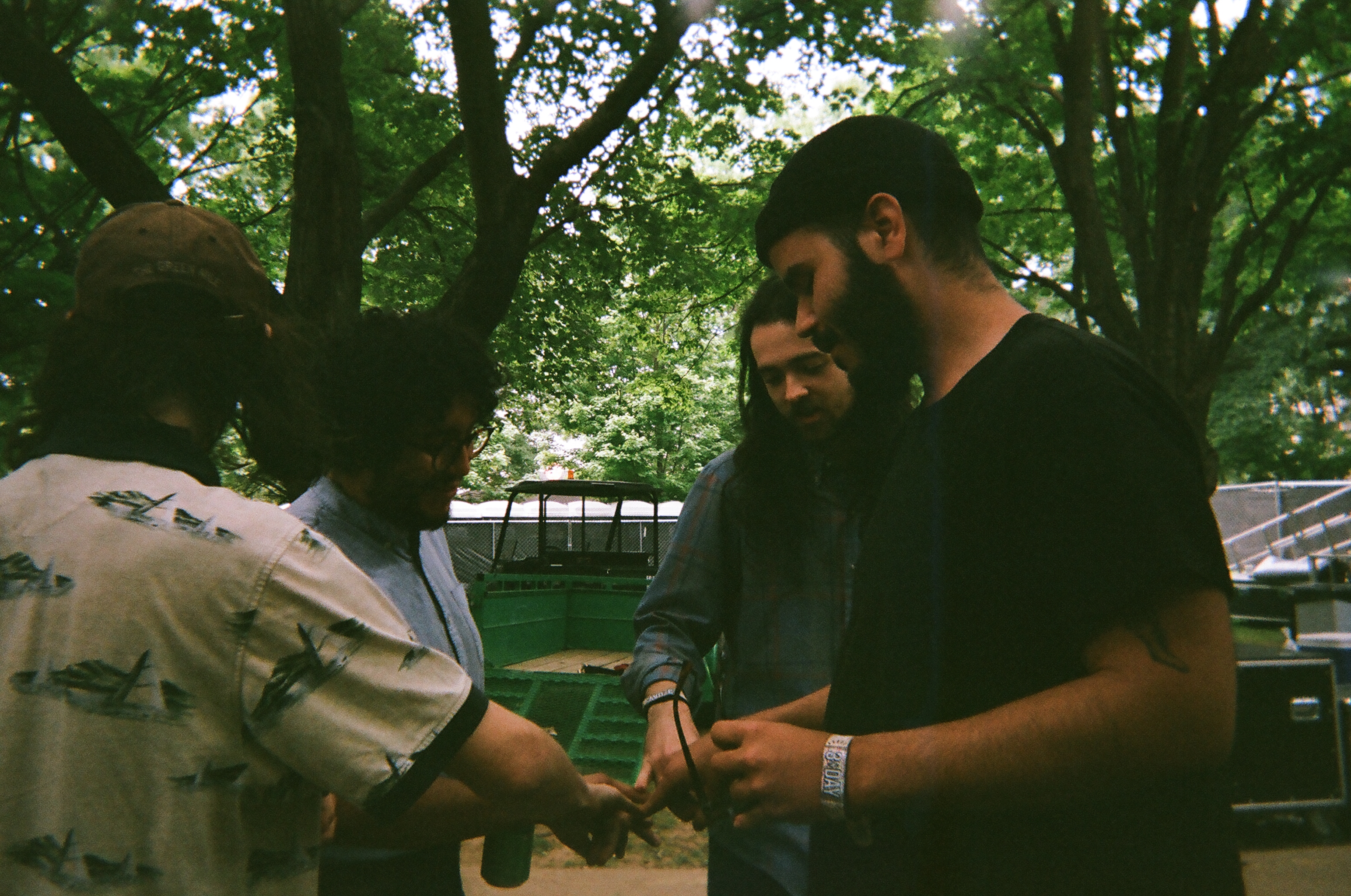
Full. Chill. Mode. Three words that could describe Sun Seeker’s afternoon Shaky Knees set, our hang with these guys, their time enjoying the fest, and (last but not least) their music. Alex Benick (Vocals/Guitar), Asher Horton (Bass), Ben Parks (Drums), and Rodrigo Avenda (Keyboard) took some time to have a chat with us about what they have coming up this summer. Read all the details below and check out Sun Seeker’s Tour Diary from when they took one of our disposable cameras for a wild behind the scenes ride.
Vinyl Mag: Hey guys, so this is your first time at Shaky Knees?
Sun Seeker: It is! We love it. And to me it’s the best festival lineup of the summer.
VM: We definitely can agree on that. You guys just played today and had an awesome afternoon set. Is there anyone in particular you’re looking forward to seeing?
SS: We really enjoyed Courtney Barnett, David Byrne, Fleet Foxes yesterday. We’re excited about Parquet Courts, War on Drugs, we like Alvvays a lot. There’s just so much to remember…Also Post Animal tonight late night.
VM: I know you are about to start working on a new album…
SS: We are recording it in our hometown. I don’t know all the details I can share at this moment, but we can say that yes we are starting to record this summer.
VM: Do you have any other summer plans?
SS: That is all we’re really wanting to do and focus on that. We have some scattered festivals but it’s really that. We’ve been demoing a lot, Alex has been composing songs, and we have all been getting together a lot to write parts and figuring stuff out. That’s a really good head space for us to be in so we’re just going to be focusing for awhile.
VM: Well, we are looking forward to hearing what comes next from you guys. When it comes to your sound as a band, I’ve read quite a few times your music being called “Cosmic Americanna.” I did recently also read that you never stated that your music be labeled as such. So, in three words or less how would you describe your music to someone who has never heard it before?
SS: Chill, pretty, music. I’ll use music as one of the words to avoid any sort of confusion. It is music. Or at least what we know to be. You can get really conceptual about it. It could be spoken word.
Self aware earnestness.
We came for the whole weekend to just play the day. We are in full chill mode. Just like our music: Full. Chill. Mode.
Click through to see Sun Seeker’s disposable camera tour diary below!
[/tps_header]
Daddy’s Dogs, our pre-game huddle.
Artist to Watch: The Orange Constant
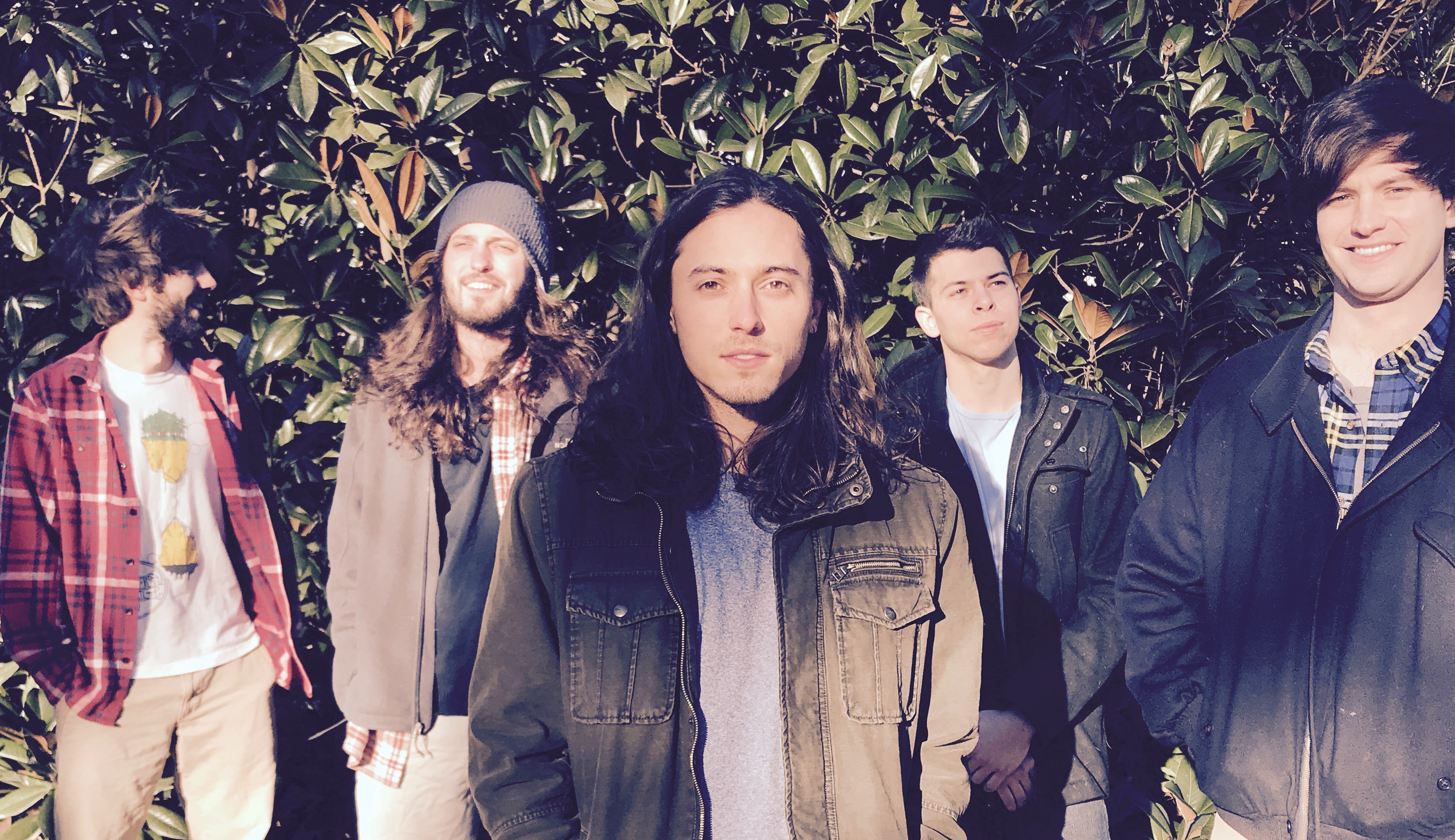
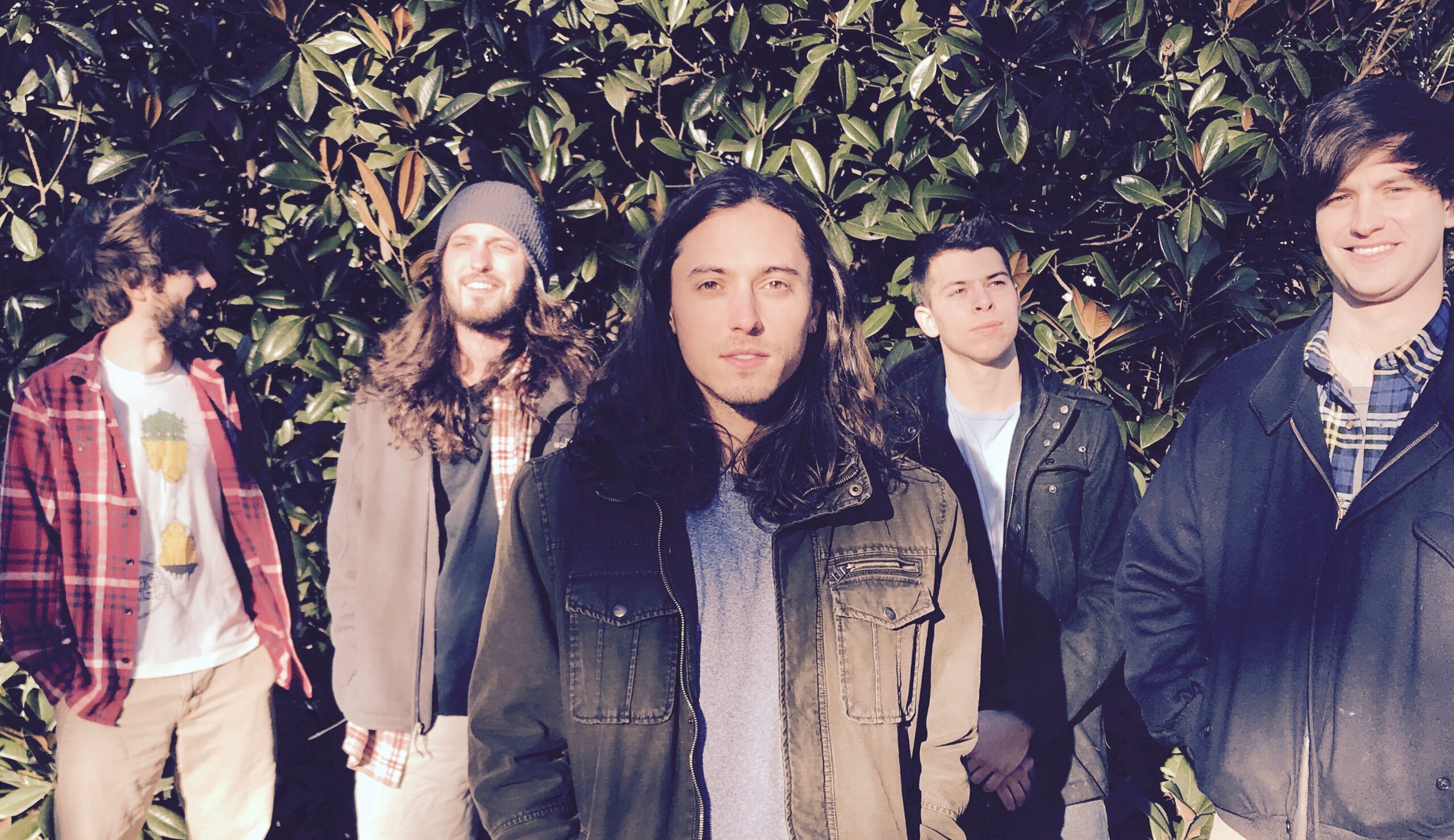
The Orange Constant has become somewhat of a hidden gem in Georgia since their start in Statesboro, GA in 2012. Now residing in Athens, GA, the Southern-rock-meets-jam-meets-funk quintet has worked hard to garner the attention of local fans. From headlining a packed show at the Georgia Theatre to playing at Atlanta’s Sweetwater 420 Fest, the Orange Constant is picking up speed and making a serious name for themselves. I had the chance to chat founding member and vocalist/guitarist, Andrew Brantley, and drummer Sam Groveman before their show at the 40 Watt Club in Athens to talk about their growth as a band and their approach to van life on the road.
VM: What initially caused you guys to move your band from Statesboro to Athens?
Andrew Brantley: Me and Nickalous [Benson]…he’s the other founder of the band…we just kind of wanted to leave Statesboro. We were kind of feeling like, you know, we had graduated. We were kind of done with that circuit and whatever. We wanted to be in Athens to be closer to Atlanta and closer to our families, and being in a bigger city. In a better music city. So, really three factors.
VM: Do you feel like The Orange Constant’s music is influenced by being in Georgia, and being in Statesboro and Athens?
AB: Georgia absolutely has influenced our styles. You know, my style is pretty influenced by like, Widespread Panic and Zac Brown. Nickalous…he grew up around the guys in Drivin’ n Cryin’. We definitely have a southern rock aspect to our music that’s just because, you know, we’re from the South.
Sam Groveman: It’s constantly changing too ‘cause we have five guys in the band now that all come from different musical tastes, and they bring new songs, and we’re always kind of adapting to their musical styles. Which also helps us as musicians, you know, to learn those new styles, and kind of developing that new sound with this new generation of musicians.
AB: Yeah, for sure. We’ve got that Southern influence, but we don’t adhere to it always.
VM: Do you guys feel like you’re going to be sticking around in Athens for awhile, or do you have any moves on the horizon?
AB: Well, I think for now we’re going to be an Athens band. You know, we like it here; we’ve had success here. We’ve grown in this city. We’ve thrown around the idea of going out west and trying to establish out there as well, but I think for the next, you know, three to five year plan we’re going to be here. And even so, I think we’ll always be a Georgia band. All of us are from Georgia so, you know, no matter how many times or places we might move, this or there, we’re a Georgia band.
VM: Your last album, Point of Reference, came out in 2017, so I know it’s been a little bit, but with five guys in your band, what’s the songwriting process like? Do you guys all collaborate?
AB: So that album was written predominantly by The Orange Constant, like the previous lineup. Which was a different drummer and a different bass player. But we did have our new bass player, Tyler [Walker], record on that album. And Chris [Freiberg], our keyboard player, he recorded on it too. But the material wasn’t necessarily written much by them. A lot of it was written by myself and Nickalous and Lee [Guentert] who was the other drummer, and Will who was the other drummer. Me and Nickalous are the predominant lyrical writers of what you can listen to on Spotify, but it’s still a mixed bag…everyone has their influence.
VM: Do you guys have any new albums coming up, or are you working on any new music? Has the songwriting process changed as the band lineup has changed?
AB: The songwriting process is still pretty similar in the sense that we don’t stick to any kind of formula, or formulated plan, it’s like, “we got a song, you wanna throw something in? You got an idea?” We really try to make it pretty democratic, like, everybody’s got some input. But yeah, we’re hoping to get in the studio October, November, December and release another album next year. But yeah, we have plenty of material.
SG: We’re trying to get with John Keane, who worked with Widespread Panic. We recorded our first album with him as the producer.
AB: Yeah, so hopefully we can get in the studio at the end of this year.
VM: And in the meantime, y’all have been touring a lot. Sam was telling me earlier that it’s been every weekend in a different place. You’ve been mostly in the southeast though, so do you have any plans to expand outward, or are you just kind of waiting to grow your fanbase here and then expand from there?
AB: We’re trying to expand the tour to the greater southeast, you know, trying to get more into Virginia, Kentucky, Texas, Louisiana, Mississippi, all those. Still, it’s a nice trek. It’s not necessarily South Carolina and Georgia.
SG: It’s nice actually honing in on the southeast, because a lot of bands that we know, they always go to Colorado, and if you only go back there once a year it’s really hard to build a fanbase. And you wear on your van, and you don’t make as much money to live off of, so really working on this market down here is really helping us.
AB: ‘Cause there’s so many big cities, you know? Like, you can sell 200 tickets in Atlanta and Athens, but if you just start going to these places that are really far away, you haven’t capitalized on Charleston, Columbia, Tallahassee and Birmingham. You know, that’s kind of what we’re focusing on now is to really make sure that our southeast market is as good as it can be. Because we’re just a few hours away from markets that don’t know who we are as well as Athens or Atlanta does.
VM: It makes sense. I feel like you guys have done a really solid job of developing a fanbase here. But when you’re touring and constantly in a van with five guys, does it get old? Are you guys sick of it, or are you planning on touring even more often now?
AB: I mean it’s gonna increase.
SG: That’s the goal.
VM: That’s a good thing, right?
AB: I mean, it’s work. It’s definitely hard. It takes a lot of work, but so does everything.
SG: Waking up next to Andrew and then going to sleep next to him for a couple of days in a row gets a little old, but you know, you realize when to let the man be by himself. You figure each other out after awhile.
AB: Yeah, you do. You kind of learn each other’s personalities. I mean, it’s just the way the game is played, I guess. It’s an adventure, you know. It’s fun if you can kind of take yourself out of it and be like, “man, this is a cool story,” no matter how crappy of a situation it might be. And luckily, we do have a nice, reliable van. It’s not like we’re in a little, tiny Volkswagen or something.
SB: A lot of times when you have a bad weekend, you just look back and laugh.
The future is bright for the guys of the Orange Constant. While working towards recording new music, they plan on amping up their already intense touring schedule, with a summer tour from June to July. They never repeat a set and always try to keep their shows interesting, feeding off of each others’ jams and improvising new sounds as they go. Athens fans can catch them at local grassroots festival, Sigh in July, on July 20.
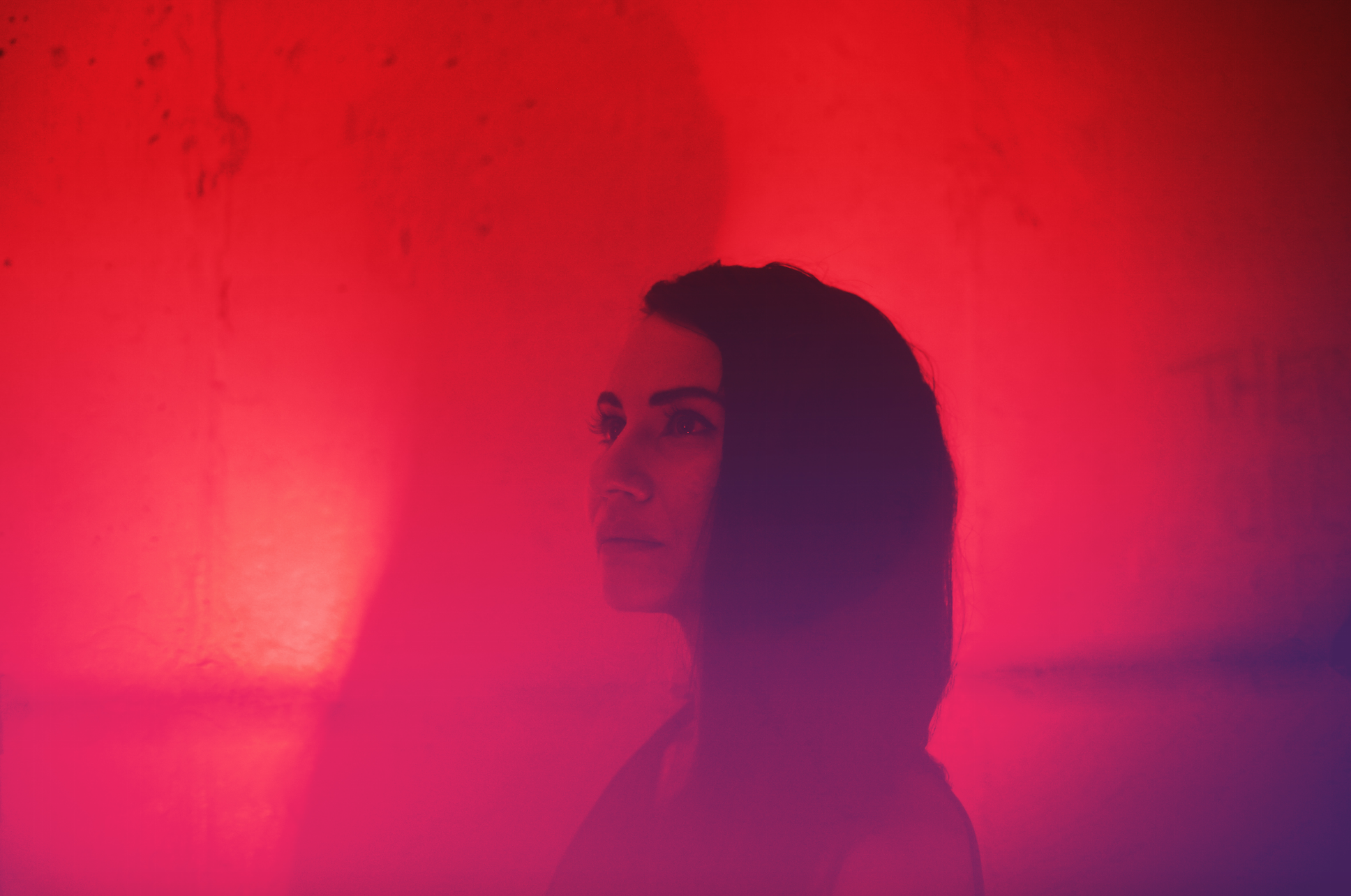
Shaky Knees 2018: Frankie Rose x Vinyl Mag
It’s widely believed that keeping something wild in captivity will only cause it to wither. Frankie Rose might be the exception that rule.
A veteran songwriter who forged her rightful place in indie rock history with bands like Dum Dum Girls, Crystal Stilts and Vivian Girls, she now enjoys the artistic freedom that comes along with making music under her name alone. But despite having created no less than three full length albums on her own, Rose’s triumph over her own isolation is what’s fueling her most recent work.
After surviving personal difficulties that caused her to take a hiatus from music altogether, she was able to crawl her way back through the slow and deliberate reconstruction of her creativity. She set about creating something new from the closet of her cramped L.A. apartment, an endeavor she refers to as an “act of faith.” With careful reflection and a little help from the late paranormal radio host Art Bell, she was able to turn feelings of claustrophobia and insomnia into the inspiration for her latest record. Aptly named Cage Tropical, the album chronicles confinement in California to her journey home, both literally and artistically.
Rose is proudly back in her element these days, feeling inspired from touring and writing new music from her true home in Brooklyn. We caught up with her at Shaky Knees Music Festival to talk about homecomings, new beginning and breaking out of the cage.
Vinyl Mag: I know you’ve only just arrived to Shaky Knees, but is there anyone you’re excited to see?
Frankie Rose: I would love to have been here on Friday. Friday would have been the night for me because of Franz Ferdinand. I got to tour with them, and they’re my favorite people in the world. If I could have one job, it would be opening for Franz Ferdinand for the rest of my life.
VM: There are some constant themes in Cage Tropical about feeling trapped, running away and coming home. Was that your original concept for the album from the start?
FR: I started the album in LA, and I was feeling very trapped and claustrophobic there. When you start an album you can’t really see the end of the line; it’s just an act of faith. That’s how it started in my apartment in LA. I turned my closet into a vocal booth and was just acting on faith. I didn’t want to be in LA at all; I just wanted to be back in New York. I ended up finishing the album in New York, so it was kind of this journey back to my home. I feel like I had to go through a lot to realize what a home Brooklyn is for me.
VM:I think your story really resonates with most people. Sometimes you have to put dreams on pause because life happens. What advice would you give someone trying to step back into the music world after a hiatus?
FR: My mother says, “everyone gets a tumble in the dryer.” It can happen to anyone, I don’t care how rich you are or how poor you are. Life is hard and bad things happen sometimes. I really did have to step away from music for a while and I didn’t know if I was going to return it or not. Slowly, I tried to feed my creative side with other things like going to art museums or nature hikes. Just anything to sort of stimulate that part of yourself that encourages you want to make art. And I think as long as that’s your main motivation, it doesn’t matter what you’re doing. For me it’s music, and that’s what I’ve come to learn through that experience. I just want to make music regardless of what the outcome will be.
VM: How has the song writing process changed for you over the years from being in groups to going solo?
FR: I like it better, but I still collaborate. I can do it all myself, but I do love having someone to bounce ideas off of. It’s totally different from being in a band. When you’re in a band, you’re married and constantly making compromises. So the fact that I don’t have to do that is quite nice. It can also be bittersweet, because at the end of the day you are solely responsible for what you put out. It’s my name on that product. Actually, I think that’s my only regret, that I didn’t come up with some awesome pseudonym.
VM: We heard that science fiction was a big influence on this record?
FR: When I was making Cage Tropical, I became a bit of an insomniac, so I started listening to a lot of Art Bell at night to go to sleep. It just sort of subconsciously started to influence the album.
VM: What are your plans after tour?
FR: I’m writing a new album. Every record is like a time capsule for me. I just want to write a record where every song could be a single. I’m striving for perfection right now, and I feel inspired, which is great! Often times after tour that’s not the case, but it really is right now.

Big Thief’s Buck Meek Talks Solo Debut
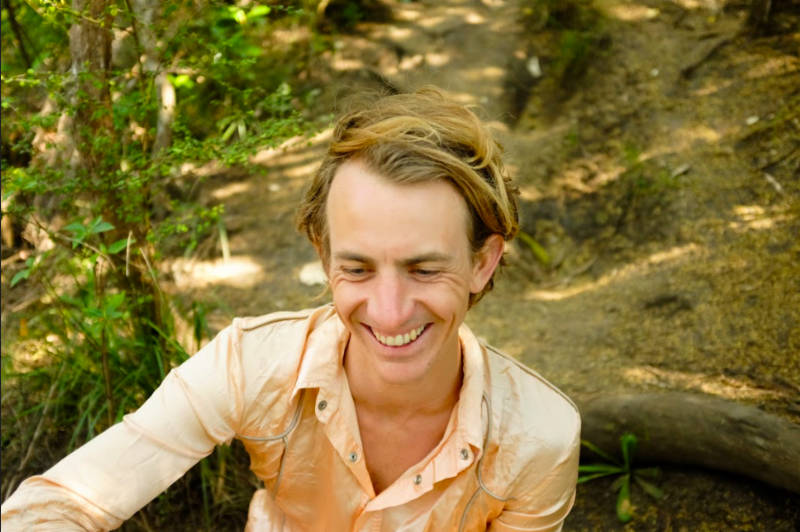
Having spent the last four years as the lead guitarist of indie rock quartet Big Thief, co-founder Buck Meek’s solo aspirations were put on hold while he devoted most of his time to hitting the ground hard, building the band’s momentum. Now that Big Thief has taken off, Meek stands ready to bestow his own finely-crafted song cache upon the world.
A front porch troubadour, the Texas-born songwriter weaves a tapestry of simple and intimate folk tales on his self-titled debut. The record feels like a winding country road and introduces listeners to the myriad of charmingly real characters they might meet wandering down it, from honorable mechanics to runaways to gamblers. Many of these characters are admittedly fairytale versions inspired by the people in Meek’s life. “I’m most inspired by my friends, I’d say,” he explains. “As a creative person, it gives me more seed for exaggeration in my own mind and for developing archetypes and characters that can go far beyond the reality of their personality.”
While the people around him help personify Meek’s thematic ideals, there is a common thread in what he finds most exciting about the stage of players. “One of the most inspiring things for me in humanity is the heroism in the smallest of details in people’s character,” says Meek. “Like in the persistence and the subtle elegance that I find in everyone really, and just trying to find that gives me hope.”
Buck Meek is out now on Keeled Scales. I sat down with Meek at Willie Nelson’s Luck Reunion this year to talk about the record. Check out our conversation below.
Vinyl Mag: [The first single “Cannonball!” premiered on NPR.] Can you tell me a little bit about the concept and what that’s about?
Buck Meek: It’s a feeling of when what we perceive as linear time of our life seems to fold over itself. And for me, like in this song…like the moment of experiencing the bittersweetness of the feeling of relationship as a living thing, but as a memory—feeling the relationship and the power of it, the weight of it in memory—while also experiencing the pain of whatever loss. Like how that can just become this web of feeling. That’s what I was trying to get at with the song.
VM: So this is about a relationship. I feel like when I look back at past relationships, it’s like I’m watching a movie. It almost feels like it happened to someone else, in a very emotionally disconnected way. But this song is also partly mourning. Can you talk a little bit more about the actual emotions that you’re expressing?
BM: Yeah, I guess it’s that dichotomy of celebrating the eternal quality of that relationship while also mourning its loss. Facing the loss of it almost intensifies the power of it at the same time, which is probably why loss is so hard for us. Suddenly we’re faced with how meaningful something was to us when we don’t have it anymore, I suppose. I wrote it almost as a medicine and a mourning process, celebrating and letting go…it’s probably healthy to callous and move forward, and I guess for me, writing songs like this helps me celebrate what was while also externalizing it to the point where I can let go.
VM: Do you reopen it every time you hear it or play it, or does the writing of it give you complete catharsis?
BM: I do re-experience it, but because it’s in a form outside of myself—even if I’m singing it—something about it being in song form helps me not fall prey to the emotions as much.
VM: What was the timeline of writing these songs between Big Thief and touring; when did that line up?
BM: This collection has been falling together over the last four years. “Cannonball!” I probably wrote three or four years ago. My writing process is generally pretty slow and arduous. I’ll often write the first verse of a song as a response to something that happens to me, or a connection that I would make, or a character that I would observe in passing. I’ll often come up with the initial idea there, and I feel like maybe the first verse and chorus will come to me in 30 seconds, and then it’ll take me six months to finish the song, almost as if I’m reflecting upon that initial experience.
VM: Once you get the first nugget, how does the process unfold? Are you waiting for the rest to come to you, or do you set time to sit down and work it out?
BM: I think that initial burst comes at me randomly. That first source comes unplanned. Like, it’ll come to me sometimes while I’m playing a show with Big Thief, or while I’m on a bicycle or in mid-conversation with someone, and I’ll just scramble to write it down and play it as soon as I can. But the finalizing process of really hammering out the song is more deliberate and often very private. Like when I find a moment of peace, which is rare on tour. I’ll often wait until I get home to finish a handful of ideas that have come to me on tour.
Although on this record, there are maybe three or four songs that came as part of this song-a-week project that I did with a really inspiring group of artists in New York. With Adrianne from Big Thief and Mat Davidson from Twain and Mikey Buishas from Really Big Pinecone…and a couple of other people. I’ll leave it somewhat anonymous. We had a song-a-week project for two months, and it was really hard to have that. We each had to write one song individually per week, and it was really difficult to be limited like that, but also I feel like it really pushed me to rely more on my instincts and less on my intellect. Because often I would wait until the last minute, like Sunday night.
VM: Like songwriting bootcamp. Do you feel like that’s still affecting the way that you write now?
BM: It’s taught me a lot about relying on my instincts, which I feel has been really helpful for me, because I often will get in these cycles in my head where I start taking it too seriously or overthinking it, and that forced me to just rely on…basically not judge myself and to rely on my initial impulses in the creative process, and at least not judge myself in the process. A lot of these songs came from that project initially, and then later on I would go back and edit them maybe after some time had passed and I had some space to reflect on them. But it’s been really helpful for me to dig into that impulse from a more confident place.
VM: Why do you think now is the time to be bringing these songs forward?
BM: I spent the last four years devoting almost all of my time on the road to Big Thief, because we started touring maybe three and a half year ago…playing 250 shows a year or something, and that really didn’t leave much space for my solo project…I’ve been aching to bring these songs to people for the last four years, really. It’s been more of a decision to devote myself to Big Thief, because it needed that intention to come to the place where it is now. I’m really excited to finally have the opportunity to have a more balanced schedule with that.
VM: You said you’ve been aching to get them out. So you’ve been sitting on them for awhile. Because you’ve had them for so long, were they constantly changing from start to now, or do you know when you’re done?
BM: Some of them have changed completely. One thing that’s kept it fresh was that I’ve had some of these songs for four years, but the band that I’ve put together for this record was in flux until like the last year really it really came together. I’m so happy with these players, and we really made this record in the last year together pretty quickly, really. We recorded it really fast, so that breathed a lot of new life into these songs.
VM: Where do you go from here?
BM: Hopefully going to Europe with my band probably in the fall, realistically. Trying to play as much as possible. I really want to hit the road with this band and get to that point of instinctual mesh with them.
Buck Meek is out now on Keeled Scales. Grab a copy of the record here, and be sure to catch Meek on his upcoming tour (dates below).
Buck Meek Tour:
May 30 | Kerrville, TX at Kerrville Folk Festival
June 07 | Allston, MA at Great Scott
June 08 | Brooklyn, NY at Rough Trade
June 09 | Washington, DC at Songbyrd
June 10 | Durham, NC at The Pinhook
June 12 | Nashville, TN at The High Watt
June 13 | Bloomington, IN at The Bishop
June 14 | Chicago, IL at Schuba’s
June 15 | Millvale, PA at The Funhouse
June 16 | Philadelphia, PA at Johnny Brenda’s
June 7-16 with Sam Evian
June 7 & 8 also with Katie Von Schleicher

Savannah Stopover 2018 Spotlight: Wild Child
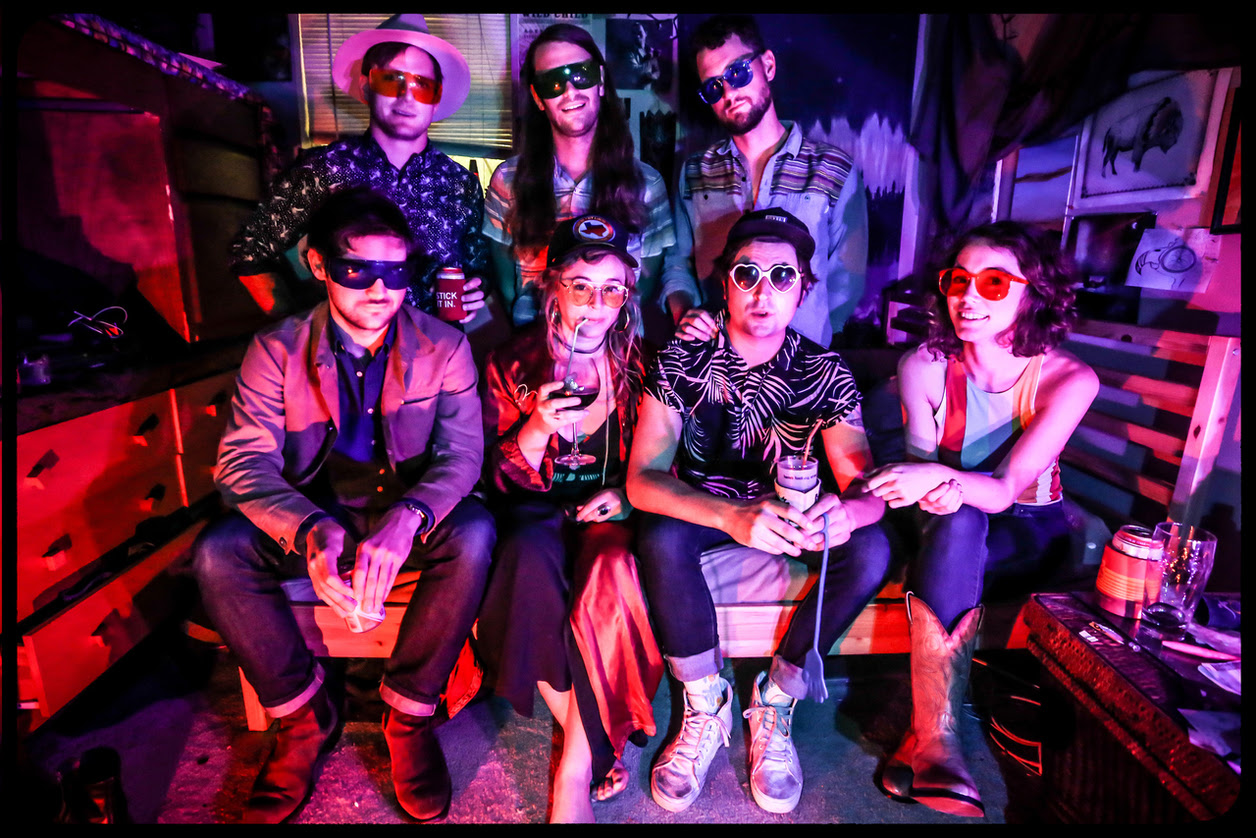
Indie pop band Wild Child has grown a lot since Alexander Beggins and Kelsey Wilson initially formed the group seven years ago. What started as a duo with a ukulele and violin has now turned into a seven-piece mini orchestra. In the wake of their fourth studio album, Expectations, I sat down for a Q&A interview with Beggins and Wilson at Savannah Stopover Music Festival to talk growth, inspiration, and the songwriting process.
VM: How did you two go about meeting everyone else and recruiting the other members of your band?
KW: I mean, we’ve gone through a few different lineups actually in the past couple years, especially with drummers and bass players. It’s kind of always been just whatever friends we have around us that want to play with us. This lineup we have now actually feels like Wild Child. It’s the dream team.
VM: Yeah, I feel like Wild Child has definitely grown a lot.
KW: It has. We’ve added guitar, a trombone, and we used to only have horns for the bigger Texas shows, but now we have a brass section. We didn’t even have a bass player for the first two years. We’ve just been slowly getting bigger and bigger.
VM: So let’s talk about your new album, Expectations. I know you’ve said your previous album, Fools, was kind of your breakup album, so where would you say Expectations falls on that spectrum? Is there a way to define it?
AB: Well, it’s kind of the closest thing to opening up a page in our journals and what’s going on at the time. With this one, there’s a little bit of duality in the title. The expectations of being our fourth record and wanting it to do well, and the kind of precedence we set for ourselves, and expectations of the relationships we’ve been in and out of the past couple of years.
KW: This one is—as much as we did write a lot just in and out of relationships—this one felt a lot more like just us, you know? Just us singing about who we are, really, and what we’ve learned so far. This is kind of like, we even wrote songs all together as a band in the studio for the first time. We haven’t done that before on any record.
VM: I know you’ve said in the past that the two of you write the skeleton of the song and then let the band add to it. So did you kind of change the songwriting process for this album and use a different method?
KW: Yeah, on this one Alexander came forward with more full songs, and then I came forward with full songs, and then some of the songs we wrote together as a band. It was a lot more collaborative.
AB: It’s kind of like the nature, the beast of this record was just write when we can. Because we were touring a lot at the time it was kind of like we were writing songs during soundchecks and writing songs in the van. It wasn’t like, “okay, today’s going to be a writing day!” There were a couple of writing retreats that we did, but for the most part we kind of would just write whenever it was convenient. And that kind of created a different kind of atmosphere.
KW: And normally we wrote when we needed to. Like, something would be happening, and we’d be like okay, let’s get together, drink some wine, and let’s write a song about it.
AB: And we kind of took our time with this record. We were like whenever it’s done, it’s done.
VM: Did you guys have a definite idea of how you wanted this album to sound, or did you just kind of let it happen how it happened?
KW: We usually just let it happen. With this one, we were working with so many different producers, and we love and respect all of them so much that we kind of left a lot of room for them to steer us. We finished the writing of the songs, but we thought when it comes to the speed, the arrangement and the vibe, we just wanted to see what the producers each had to say…they each kind of picked the songs they wanted to do, so they had ideas. So we just kind of let it ride. Initially, we were just going to release like a song a month for a year and just not do a record, ‘cause records are kind of dying, and it’s really heartbreaking. It’s all about Spotify singles now.
VM: Yeah, and you guys did release a lot of singles leading up to this album.
AB: We kind of “hybrid-ed” the idea in anticipation of this record.
VM: I feel like that’s true what you said about records dying. It’s not like many people go to record stores and buy the physical album when it’s released anymore.
AB: Yeah, it’s like you release an album when it comes out, and everyone’s stoked for like, two weeks. Then it’s over, you know? It’s done and out there in the world. So, we released singles in pairs for like three months before the record dropped. Which I thought was cool, because it kind of created some hype around it.
KW: Yeah, and we did music videos for like half the record.
VM: Do you guys have a favorite music video from Expectations?
KW: The “Think It Over” one we just did was so much fun. Literally it was just absolutely only our friends and family dressed up. We built a club in a giant empty warehouse in one day. It was just a garage, basically.
AB: Yeah, in that one we just got to have fun. Sometimes you make a video for you. We had this idea and we were like, let’s just ride with this as far as we can. The director is our homie and he knew the vibe that we wanted to try and communicate.
VM: [How has] your sound has evolved since your, slower original songs?
AB: I think that we…when we started we were just naive babies trying to make music, and I think we’ve gotten better.
KW: Yeah, we didn’t really know what we were doing. It’s always been good for us though, because we’re not limited to the rules of music. We didn’t know shit about anything, so we were just like, “I guess that sounds good I don’t know!” So we’ve just gotten better over the years about knowing what sounds good.
Wild Child is on tour now in support of Expectations, with shows across the US and in Europe. They played at Savannah Stopover at the historic Trinity United Methodist Church.