
Tag: exclusive
Warning: Attempt to read property "post_id" on null in /dom375187/wp-content/plugins/enhanced-category-pages/classes/ecp/Enhanced_Category.php on line 143
Warning: Undefined array key 0 in /dom375187/wp-content/plugins/enhanced-category-pages/classes/ecp/Enhanced_Category.php on line 232
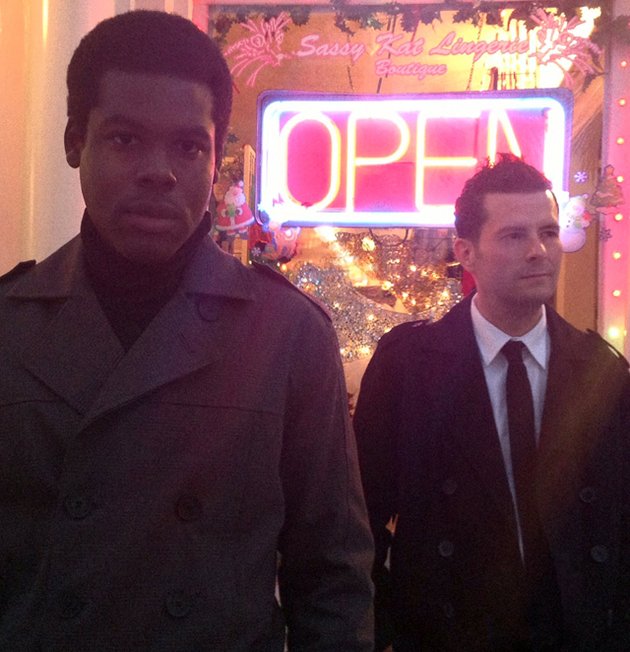
Exclusive Song Premiere: The Lovers Key – “Bright Eyes, Black Soul”
We’ve got another one for ya! To accompany our recent interview with The Lovers Key (made up of guitarist Christopher Moll and vocalist Maco Monthervil), we’ve also go an exclusive song premiere of their latest, “Bright Eyes, Black Soul.” Get an earload below.
EXCLUSIVE: The Lovers Key – “It’s Winter Again”
In honor of this holiday season, The Lovers Key have shared a festive winter-themed track with us! And we’re not selfish, so in the spirit of giving, we’re now sharing it with you! Enjoy.
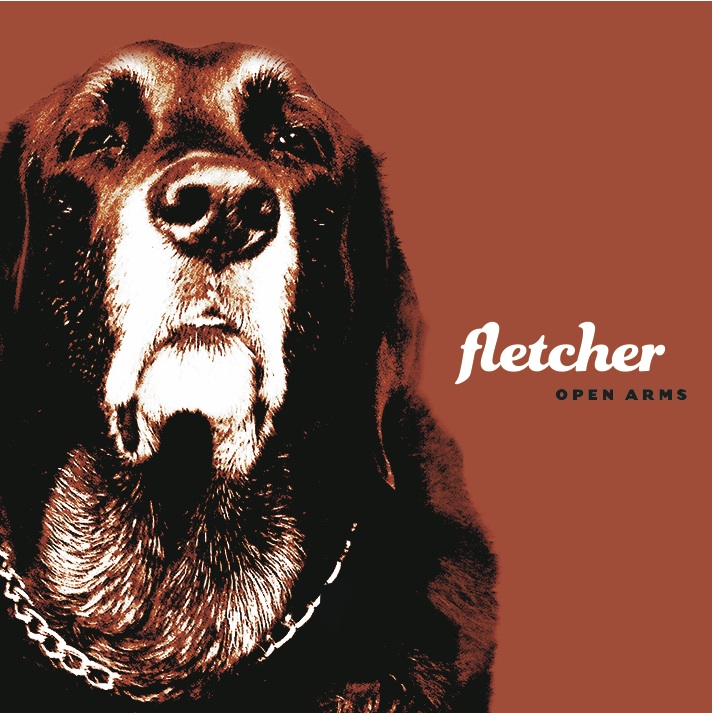
EXCLUSIVE: Fletcher premieres new album ‘Open Arms’
Check out the exclusive premiere of three-piece new age alt-rock band Fletcher‘s second EP, Open Arms, out tomorrow! And you’re welcome.

Backstage with The Used
So I just got to chill backstage at Tabernacle in Atlanta with Jeph Howard from The Used. Jealous?
Don’t fret. I filmed our little hang out session for you, so you get to listen to us talk about the evolution of The Used, the Take Action Tour, and what’s next for the band. Have at it.

Backstage with Diarrhea Planet
Diarrhea Planet came to the Caledonia Lounge in Athens. I got to hang out in the “backstage” van area with them. We’re bros now.
Watch us talk about their sound, their goals, the right way to be a rockstar, and magic…among other things. Enjoy.

Greg Saunier of Deerhoof interview
Despite what you could maybe call a bit of inclement weather – Hurricane Sandy tore through New York City just as the band’s tour was supposed to begin – Deerhoof have made it out onto the road to support Breakup Song, its latest release on Polyvinyl (the label). Vinyl (the mag) was fortunate enough to catch up with drummer Greg Saunier a week before the tour’s kickoff show in Dallas.
__________
Vinyl Mag: A lot of people experienced the new album for the first time through the Youtube video that was all one track. As a result, I can’t get it out of my mind that the album almost is one big, long track, composed of various movements.
Greg Saunier: While we were making [Breakup Song], I had deejayed some shows – before the band played and then after – and they would turn into dance parties. I had only ever thought in terms of “what’s going to make it sound like a great album?” But the idea of an album, as a format, is not even as popular a format nowadays. It’s much more likely that you’re hearing a sequence of unrelated singles, and the only thing that relates them is that they share the same roomful of people, and there’s room to dance. If you want it to be danceable, it would be pointless to put in even one song that’s not danceable. You’d have to start over again from scratch. This is something that really struck me, and I kind of learned it the hard way while I was deejaying [laughs]. It was a fun thing to realize, and we tried to sequence [the album] as if it were a continuous party, and that’s why there are no breaks between songs – you don’t want to let it flag even for a second.
Even though the songs all sound quite different from each other – that in itself isn’t meant to be arty; that’s just how it sounds the way the party gets deejayed. You’re switching from artist to artist, most of the time. In my case, you’d put on one song from Motley Crüe, you’d put on one by the Zombies, and they’re all danceable.
VM: So you’re trying to work within your own vernacular, but trying to find every disparate corner in the same little room.
GS: Yeah, exactly. Dance music doesn’t have to mean disco … When we decided we wanted to make a dance record, we ultimately ended up with no songs that were like that. We ended up cutting everything that was in a disco vein. Dance music is still very wide open – you can feel like it’s a limit on what you’re doing, but really it opens it up even more. If you’ve got one dance song on your record, then, boy, you’d better make it a disco song. But if every song on the record is dance, then you suddenly realize the range of what that can be. A lot of it was kind of a heavy metal approach to dance music, and that’s not normally thought of as dance music, but when you listen to early Motley Crue, or the Scorpions, or something like that – of course it’s dance music. One of my favorite songs is “Come on and Dance” by Motley Crue, actually, and people started moshing to it when I played it at those dance parties. It is danceable.
Then we got into trying to do stuff influenced by Cuban mambo music from the 50’s. It’s not the kind of dance music where you sort of space out; it’s not like a rave. It’s much more starting and stopping; it’s very tense-sounding. There will suddenly be a pause, and then some guy yells, and then it starts again. It doesn’t flow; it’s almost stiff-sounding. I just completely fell in love with that over the past year or two and was trying to think of how that is dance music, and how we could make music that has something like that quality.
And then, last summer, we played in this big supergroup with a bunch of musicians from the Congo like Konono N˚1. We did a tour in Europe last summer with them. That was basically dance music, too. The show would be up to two hours of basically dance music. There were all these things I learned to play on the drums from playing with them that were very different from anything I had ever done before. I started playing stuff that was a lot more repetitive, and kind of a lot simpler. Once my hands and feet started being in the habit of playing like that, it changed the way I played a bit, too. So I think the album turned out different, as a result.
VM: Those briefed ahead of time on the dance-heavy nature of the record were probably expecting something closer to the four-on-the-floor disco thing you mentioned earlier. Yet it’s obviously nowhere near that area.
GS: There’s a second in “Mario’s Flaming Whiskers III” that I think has a bit of that – a bit of house beat to it. That was Satomi’s [Matsuzaki, Deerhoof bassist and vocalist] song, and she wanted a house beat on that one. But other than that, it doesn’t sound like disco or house.
VM: Do you find it liberating or limiting – or maybe even both – to be known as a “weird band”?
GS: [Laughs] In our actual day to day existence – like when we’re on tour, for example – I think that’s something that comes into play when journalism enters the picture. When we have a new release, journalists often want to describe it that way. Or sometimes it happens with booking. When a tour is first being set up, it’s like, “Okay, we’re going to play in Athens. Where should we play? Who should we get as the opening band?” A lot times the promoter will be like, “Who’s the local weird band? We should get the local weird band.” [Laughs] But the thing is that, yeah, I see that, but in a way it doesn’t touch me, because by the time we show up in Athens, what I see is people dancing, I see people with big smiles on their faces, and where it fits in in some kind of music blog or music history book is the furthest thing from anybody’s mind in the middle of a loud rock show. I don’t think of my music in any category, and I feel extremely liberated. Sometimes I feel limited by my own creative limits or my own abilities to play the drums, but I just see that as a challenge all the time, and try to trick myself into finding something new that I didn’t know I could play or write.
VM: You guys have managed success in two different eras. When you were starting out in the nineties, it was more the era of records sales. Now we’re in an age where you’ve got to keep the touring machine going. How have you managed a smooth transition between the two?
GS: [Laughs] Sorry, the reason I laugh is because it was in the nineties – the quote-unquote era of record sales – that we sold no records. It was like, from 1994, when we started the band, to 2000, it wasn’t like no records sold, it was just that not enough sold to ever break even on anything. I’ve got to give Kill Rock Stars credit for putting out our albums. For the first seven years of the band, everything we put out lost money. I’ve got no nostalgia about the good old days [laughs]. That doesn’t exist for me. It exists in that I knew it was true for some of my friends, but it was never true for Deerhoof.
As much as we do like putting out LPs – and I like colored vinyl, and we put out cassettes of our last two albums, and for this last album we put out a book of flexi-discs – deep down, I have never cared that much about format. And it’s just me; I’m not even speaking on behalf of the whole band. On behalf of Deerhoof’s drummer alone, I have never cared about format … I’ve been happy that our music is available in this other format, the mp3. Or, like you were pointing out, not even the even the mp3, just a Youtube video, which you can’t even download. It’s just something you press play on, and then you can either watch it or not watch it, but you hear it playing in the background. As a person in a band that always does something special for Record Store Day, and who has always been on indie labels that are heroic, I think – Polyvinyl and Kill Rock Stars, I think of that way, heroic in that they even continue to exist in the face of a very difficult market – I’m not the best mouthpiece, honestly. If record labels cease to exist, and physical formats end tomorrow, we will still be a band. We would still make mp3s and still go on tour. I feel like a very successful band in that we are still playing and we still love playing. In fact, we love playing now more than we ever did. As far as living through two eras … I plan on living through a lot more than two. I plan for the era to come to put the previous two to shame.
Backstage interview with Anthony Green of Circa Survive
 Pre-Show Treat
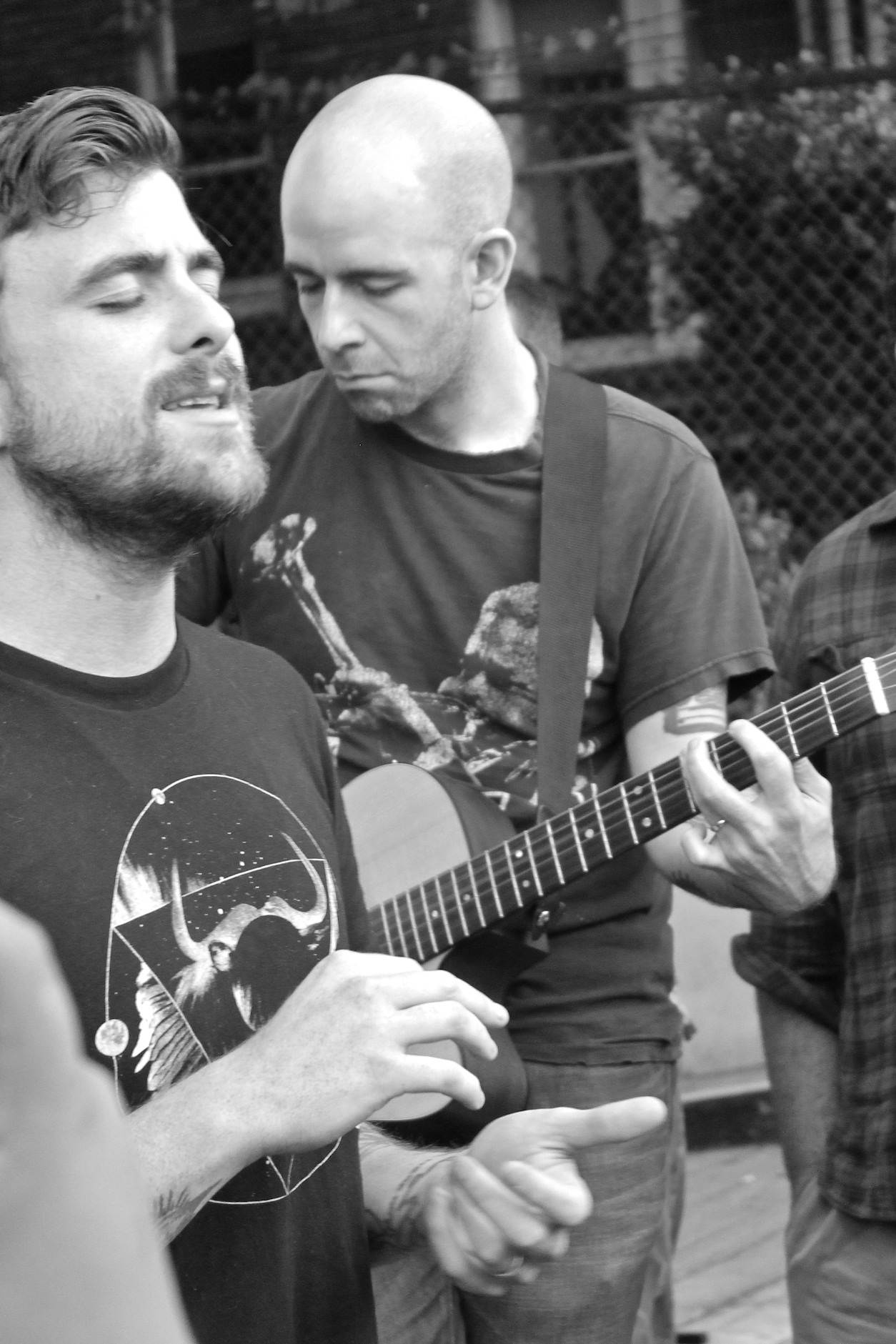
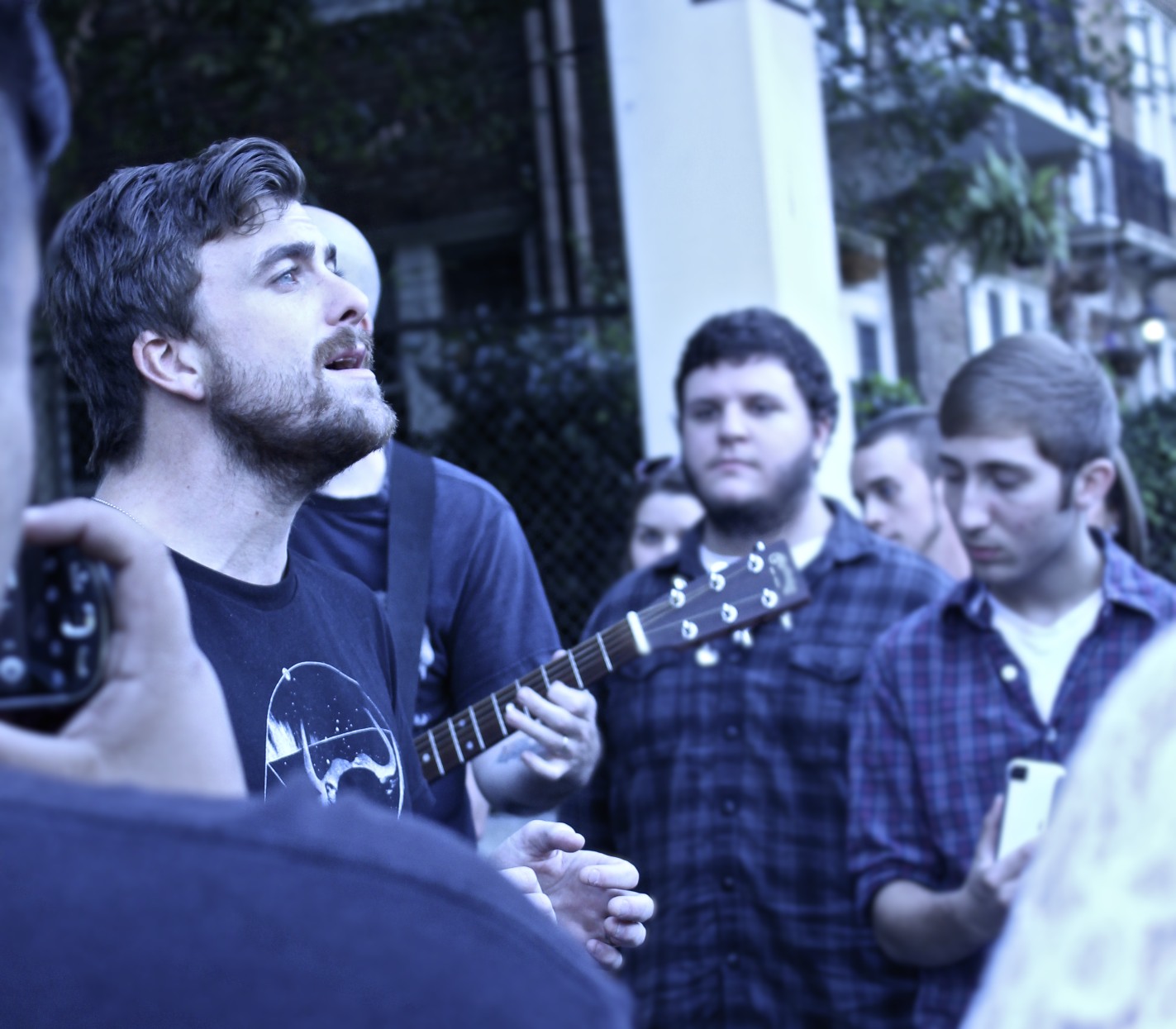
My friend, Marissa, and I were amongst the growing mass of fans that showed up early to hang outside of the Center Stage venue in downtown Atlanta to see the sold-out Circa Survive show (she and I were probably a little more giddy than the rest, because we were waiting for a one-on-one interview with Anthony Green himself). Everyone’s eagerness paid off- all of a sudden, on the front steps of the venue, there appeared all of the guys from Circa to play a mini acoustic set for a website called NervousEnergies.com. Some reward. They played “Sharp Practice” and “Suitcase” from their new album, Violent Waves, and everyone, including me, was taking videos and snapping pictures like mad. Shortly after this, their tour manager, Jeffery, called us in, and we waited to interview Anthony in a small room in the basement. More on that later.
The Show
The first to kick off the show was Balance and Composure, and they immediately got into it. The lead singer even got a little “over-animated” and knocked over a couple of the drummers’ symbols. If you haven’t listened to them before, you need to, and you need to see them live (side note: they remind me a lot of Brand New).
Next up was Touché Amoré, and they threw down a little harder than B&C. The lead singer was all over the place getting the crowd hyped up. For those who are unfamiliar with them, they sound a great deal like La Dispute (which might explain why they have a split record with them).
Bottom line: these bands are touring with Circa, so you know they have to be legit.
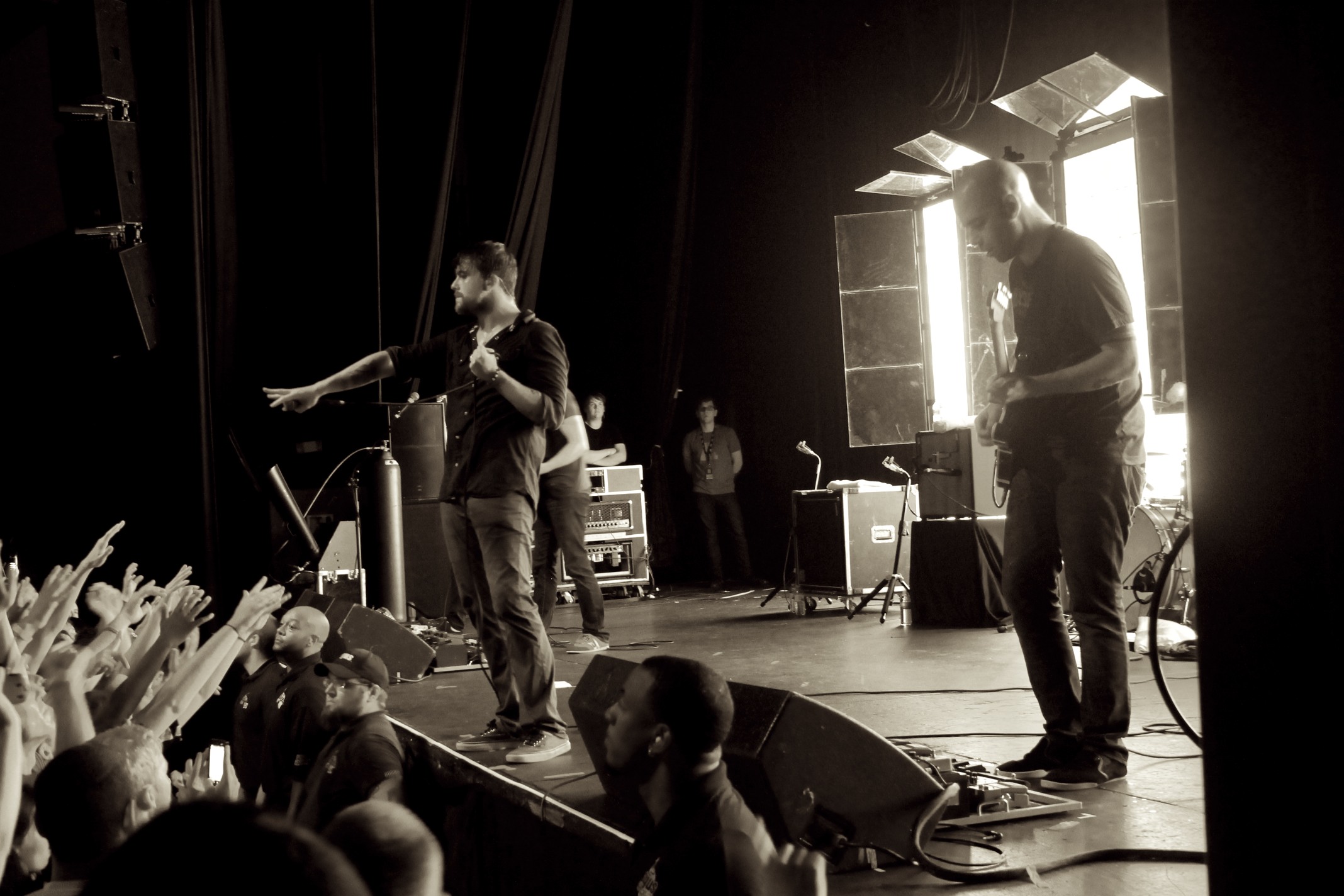
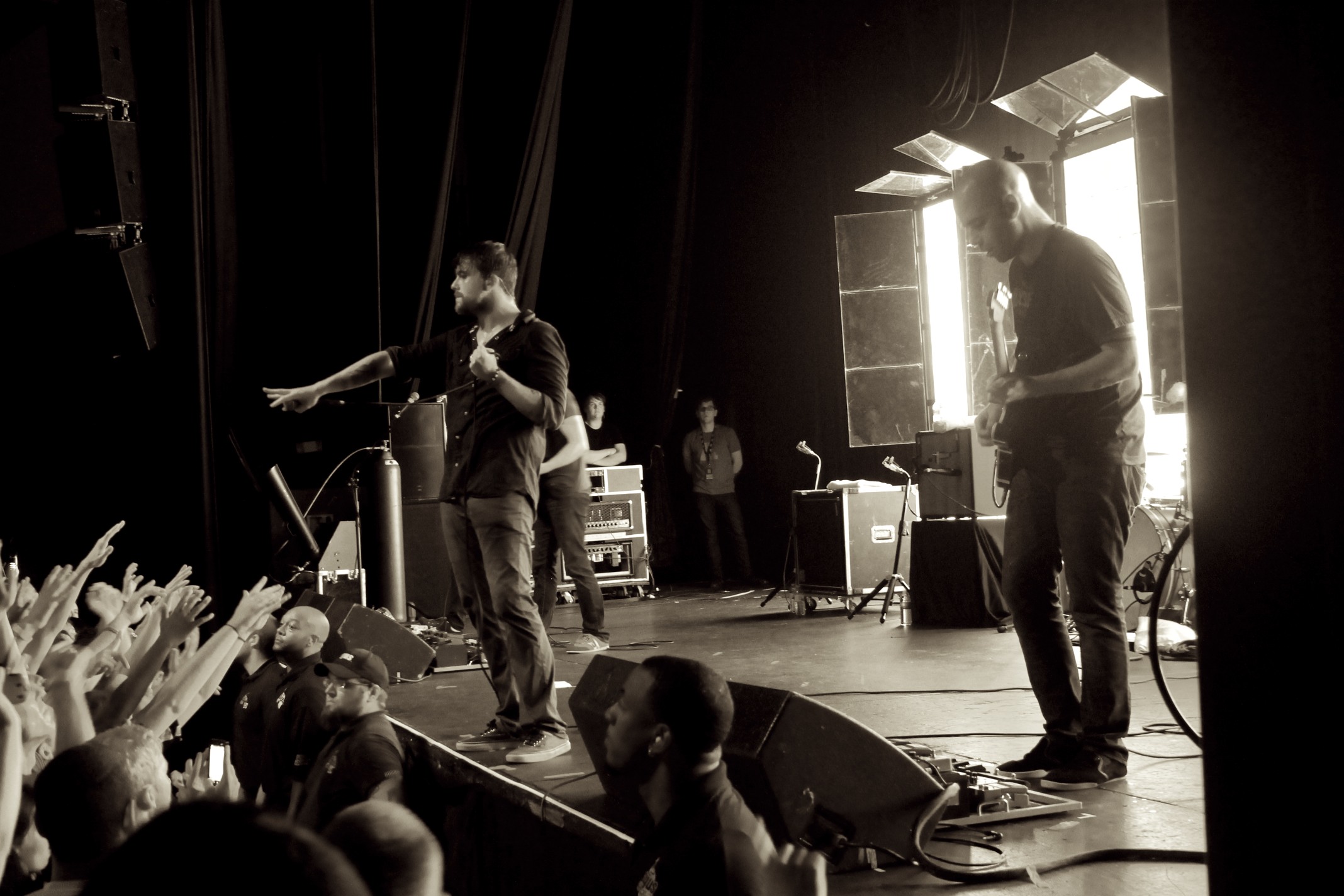 And finally, what everyone had been waiting for- Circa Survive. Anthony Green walked on stage. Everyone (including the men) started screaming like little schoolgirls. I was super lucky to have a photo pass, so I got to be right in the photo pit. The place was packed. Frantically crowd surfing, everyone hoping to get close enough for a handshake from Anthony, who was working the crowd as hard as he could (including some seductive gestures and comments that sent everyone into a frenzy).
Their set was beautifully lit with tall, rectangular boxes of light and mirrors backlighting the band. They played new material from Violent Waves, such as “Suitcase”, “Birth of the Economic Hit Man”, and “The Lottery”, as well as a few older favorites like “The Glorious Nosebleed”, “Strange Terrain”, “Stop the F*ckin’ Car””, and “The Great Golden Baby”. Right before Anthony got down, I raised my fist and got a fist bump from him (as if the interview wasn’t enough). They encored with “Get Out” and “Lazarus”, to the delight of the entire crowd.
The Interview
VM: Why did you choose to write the album [so quickly], then self produce it?
AG: It was written over a couple months, but it was definitely the fastest-written album that Circa’s ever done, and the self producing thing…whenever we write songs we just demo them ourselves, and it got to the point that the demos were sounding really, really good…so we just decided [to] try to find a studio in the area, and we have buddies of ours that work in this great studio…called Studio 4…all these legends have recorded there, and they let us get some really cheap time and we went in… they managed to do the record in like two and a half weeks. So it was like the best thing ever.
VM: I bet it was kind of hell trying to do that all [so quickly] though.
AG: I mean, it wasn’t that hard…We worked really long hours, just because of all of our attention spans. I felt like we had to do that. We enjoy it- it wasn’t like, hellish. Not doing this with a producer sort of gave us the freedom to try a bunch of different things, and we were on our own dime, so if we stayed real late, or if we needed to we didn’t feel reluctant to keep going.
VM: I’ve noticed that you guys are definitely trying to hone in on more of the raw sound, like how you would sound live versus studio-produced. Has there been any kind of fan reaction that you guys have noticed?
AG: Nobody’s really said anything about the quality of the record being bad. I’ve heard a lot of people just say that it sounds more like us than most of the other records. The other records were glossier. I feel a producer does a record, and they are almost more concerned about how it’s going to sound to their producer buddies than it’s going to sound to the artists’ fans. I think our fans are used to coming to the show, and they hear the vocals a little flat or a little sharp at times, because of whatever reason…that’s what makes it feel good, you know…that’s what makes it feel warm. It’s the same reason why people listen to vinyl, because it’s not a perfect sound.
VM: How do you feel about the sound on this album compared to your others?
AG: It’s hard to say, because I feel like every album is a different, newer chapter in your life, so you go back to the thing you were writing about when you were 22 or 23, and you were like…. ‘Yeah, I was 22 or 23. I love everything.’ There’s not one song that we’ve written that I can’t sing that I feel is not cool. Obviously this album feels closer because it’s dealing with stuff that’s going on right now. But then in a year’s time the songs will all take on a different meaning, and that’s just how it grows. It grows, and it changes.
VM: I know you alluded to it, but what was your motivation and inspiration for the album?
AG: So many things…my dad got real sick- that’s kinda what “The Lottery” is about… I kinda hate it when people are like ‘what inspires you?’, because there are so many things. It’s such a hard question to answer, because there are so many things that inspire me- like my relationships with the guys in the band, with my family, just with you guys, the people that come to the shows and stuff- that’s all what this record is really about.
VM: That’s awesome. I guess we will take it back a little bit- what kind of music did you grow up with?
AG: Bands like Touché [Amoré] and Balance [& Composure]- listening to music like that.
VM: Can you list a few?
AG: Aw man… Quicksand, Handsome, Burning Airlines, At the Drive In, Cave In… Cave In was a huge band… Braid, The Get Up Kids, Falling Forward, Code 7, This Day Forward. I loved Nirvana…loved Nirvana. The first album I actually got was a Metallica album. The second album I ever got was Nevermind. I was 15 when I got Nevermind; it was a music thrift shop, like a used CD was 15 bucks… so much money.
VM: So how did you become involved with music? Was it just through those bands/did you have any family members that were musically inclined?
AG: I was just hanging out in places as a kid. We would just go places to hang out, and I found this skate park near my house that bands would play out of every weekend, and we started going there…wherever there would be a show- a local show or local bands- I was there. And then [I] just tried starting a band. I met some people and put a band together and made, like, a grindcore band, where we just made noise. We wrote stuff- there were songs!
VM: What was it called?
AG: It was called Audience of One. Then that band started and sort of became like a grindcore, hardcore band until it had songs and singing and stuff. I don’t know how it shifted. It was never one thing. It was just like…we started out with this one drummer, and he was a crazy metal drummer. He couldn’t be in the band anymore, because he couldn’t go out like past 11. So we had this other guy come in that liked more of the music we liked- like indie rock and stuff, and we just started jamming. It was awesome.
VM: So from there, how did you transfer into Circa?
AG: I don’t know. I really don’t know. I just played music all the time with people I knew…Somebody in California had heard some of my stuff- the guys in Saosin had heard my stuff that I had done at home, and some buddies of mine that were out there were like, ‘Yo, you should come out and try out for our band.’ So I went out there and tried out, and then within the next four days recorded that EP that I did with them. Then, moved out there a couple months later to start touring. I was like, ‘this is great. These guys wanna start a band and go on tour, and there’s record labels, and there’s California and stardust.’ I just wanted to go out there and be a vagabond, and my parents were like, ‘the f*ck’s the matter with you? You can’t sing. You can’t do any of this. You don’t know what you’re doing.’ And I was like, ‘yeah, I know, but I’m gonna do it anyway…if you guys are really supportive, then I’m gonna go do this. You have to trust me.’… I was 20. And I moved out there, and ever since then I’ve been doing music.
VM: That’s awesome. [Marissa: That reminds me of us, just always going to local shows].
AG: Yeah, that’s the best. You just go…and… have you guys ever read The Celestine Prophecy?
VM: No, but we probably should.
AG: You ought to just follow your heart; follow your instincts that lead you down good paths of beautiful things and light and all the stuff you want. You’ll get it.
VM: It’s true. So what made you want to come outside and play a mini acoustic set for us? I know most bands don’t do that.
AG: Ryan [Russell] has a website where he has this thing called Nervous Energies…he films bands playing, and he asked where we wanted to do it, and we were like, ‘let’s just go outside and play for the kids.’ He was like, ‘no one’s ever done that on the site before,’ and I was like, ‘then we are definitely doing it now.’
VM: I think that is really awesome, because that breaks the barrier that some bands have with their fans. It’s kind of like ‘we are too good, too untouchable’. You guys playing outside made it personal.
AG: It’s weird. I think if there’s anything that we as a band have to people is that we are just working class dudes that are able to continue to play music for you…There’s not some difference between you and your favorite band… But they worked really hard and sacrificed whatever they had to get to where they are…you’re going to have to cut comforts or whatever. I know I slept on so many floors with so many weirdos and crashed in people’s houses and was such a pain in the ass to deal with…but it was worth it.
VM: So true. What do you enjoy besides music?
AG: My kids… I hear guys with kids say, ‘oh, once you get married and have children, life’s over…you won’t have a life anymore. It’s all about their life,’ and I couldn’t disagree with them more. I feel like I never really had a life until them. I just love them so much. I miss them so much…When I’m here I don’t have to worry…about anyone but myself, and I’m pretty low maintenance. I’m smelly; I might not be clean for a couple days. I don’t have to clean anyone’s diaper or anything like that…. And I would rather be cleaning people’s diapers.
VM: I imagine you’re kinda tugged both ways. Like when you are touring, you miss them, but when you are home, do you miss traveling and playing shows?
AG: I love playing. It’s my favorite thing in the world. It’s the only thing I’ve ever really loved like that before I had the children. It gives you this insane high that I still haven’t found anywhere else. It’s way harder than any drug I’ve ever done, and I’ve done a LOT of drugs. I love it, and I feel no pain when I’m doing it…It’s awesome…I still get that adrenaline rush from it. I still feel incredible about it. Right now, today, I’m having a little bit of a rough time being away. My perspective on it is a little bit skewed, because I feel things with an intensity with a manic type of feel…You just have to not be a f*cking weirdo about it, and I’ve just been being a weirdo about it today. When I hear people complain about being on tour or missing people or whatever, my normal reaction has just been, ‘f*ck you. You can get out of the way and let like the thousands of millions of other people that wanna do it and have that commitment- you can let them do it’. I’m sure there’s a bunch of people that would leave their kids alone for six weeks to go out and do this.
VM: Well we are really stoked to see you play!
AG: I can’t wait. I f*cking can’t wait. I can’t believe I have to wait until 10 o’clock…

Interview with MONKEY from The Adicts!
The Adicts have FINALLY released their new album, All the Young Droogs today. ATYD is their 10th studio album, and it has arrived just in time for the band’s 35th anniversary.
For any droog newbies out there, The Adicts are an extremely influential upbeat punk rock band who got their start in the 70s (which you should be able to deduce, since I’ve just told you this is their 35th anniversary). By some accident of fate, I got the chance to have some quick words with Adicts singer Keith “Monkey” Warren, Continue reading “Interview with MONKEY from The Adicts!”

Quickfire Questions with Lowtalker
Lowtalker is made up of Stu Ross (vocalist/guitarist), Matt Keil (vocalist/bassist), Casey Hjelmberg (guitarist), and Branden Morgan (drummer). The band is made up of former members of such bands as Misery Signals, Living with Lions, and Comeback Kid (but if you’re assuming you know what they sound like from their resume, think again my friends).
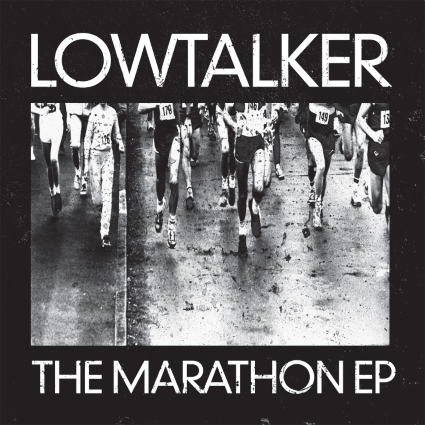
I got the chance to catch up with bandmember Stu Ross, who was kind enough to answer my questions. Enjoy, and be sure to check out their upcoming release, Marathon EP, out September 18.
Vinyl Mag: First off, how old is everyone?
Stu Ross: I am 30 years old; Casey and Matt are both 27 and Brian, well, I’m not exactly sure. Judging by his moustache I’d say somewhere in his mid 40’s.
VM: Can I get a brief history of the band? How did you come together after your previous projects?
SR: Lowtalker started in 2008 with Casey and I trading “pop punk” demos. We both love the sound of bands like Saves The Day, Face To Face, and Lifetime. The first few demos that were traded were much poppier than the current sound of the band.
Misery Signals and Comeback Kid were on tour together when I was first introduced to Matt. He and I instantly got along really well; he and Casey were already great friends. So we had the three of us on board. We asked Branden from Misery Signals to drum for us; he accepted the position. From there we recorded People Worry About Everything and did some scattered touring in 2010.
When I left Misery Signals in 2010, I joined Vancouver punk band Living With Lions. My time in LWL put Lowtalker on the back burner. In late 2011 I left LWL. It opened up a lot more time for us all to work on Lowtalker. Later in 2011, Casey left CBK, then in 2012, oddly enough, I took on Casey’s old position playing guitar in CBK.
When it came time to start writing new Lowtalker material, we were up in the air about who we wanted to drum in the band. Casey and Matt’s good friend Brian Moen- who had played drums in their old band, Regret, and is currently drums for indie rockers, Peter Wolf Crier- jumped on board for the Marathon EP. Brian played a huge part in the project, not only playing drums, but also engineering the EP.
VM: Your music as Lowtalker is a big break away from that of each of your previous bands. Was that intentional/how did you end up with this sound?
SR: We wanted Lowtalker to be an outlet for us to play a style of music we all grew up on and still love to this day. Punk/pop punk/post hardcore- whatever you want to call it. We all listen to a wide array of music. Our influences are pretty obvious- all the 90’s punk and alternative bands you’d expect.
VM: I read that you do a lot of the artwork for the band, as well as a lot of songwriting (along with Matt). What other creative outlets/contributions does each member have/make?
SR: I do my best to do all the art-related things for the band. We all share a pretty similar idea of how we want the band to be aesthetically represented, so it’s pretty easy to agree on most things. Brian Moen, our new drummer, did the layout for the new EP. Everyone has a pretty equal hand in writing the music for the band. Matt also writes a good majority of the lyrics. All around, we all contribute pretty equally.
VM: What is your favorite song off of the Marathon EP? Why?
SR: My favorite song on the EP would either be “Tension” or “Barstow”. I say “Tension” because, in the demo version, Matt was the main vocalist; when we recorded it for the EP, I ended up singing the lead for the song. I was super stoked to do it, because I love the song, and I like it even more because I get to sing it [laughs].
My other choice is “Barstow”. It’s a really cool song. It’s much darker than any other material on the EP. Matt wrote the music and the lyrics. I think it has a really cool vibe to it. Definitely stands out from the rest of the songs in a cool way.
VM: Is there an overall theme for this album? If so, what is it? What is the song Prescriptions about?
SR: There isn’t really a re-occurring theme on the EP. 100% of the lyrics stem from personal experience. So I guess that would be it. The song “Prescriptions” is written about a family member of mine who has dealt with prescription drug abuse for the better part of the last 20 years. It’s a struggle to watch someone you love miss out on regular day-to-day experiences because of drug abuse. I feel like they have given up and fallen into a routine that will continue ‘til the end of their life. It’s a bummer. However, I feel like it’s something a lot of people can relate to these days.
VM: If you were a salesman, how would you sell your EP to someone who hasn’t heard you?
SR: Hmm, I guess I could say, ‘if you like rocking tunes, you’ll like this EP’ [laughs]. That’s all I got.
VM: What can people expect from your live shows?
SR: Well, you can expect to hear the majority of the songs from our two EPs. You can expect me to talk too much and for Matt to do his best to stop me from talking too much. You can also expect Casey to rock hard and look good, and also Brian will play the drums- he’s the drummer.
VM: What is next for the band?
SR: Ideally we’d like to do more touring in 2013. We’d also like to record our first full-length record in 2013. A lot of our productivity depends on our other band’s schedule. So, fingers crossed we’ll reach those goals next year.

Josiah Wolf of WHY? exclusive interview
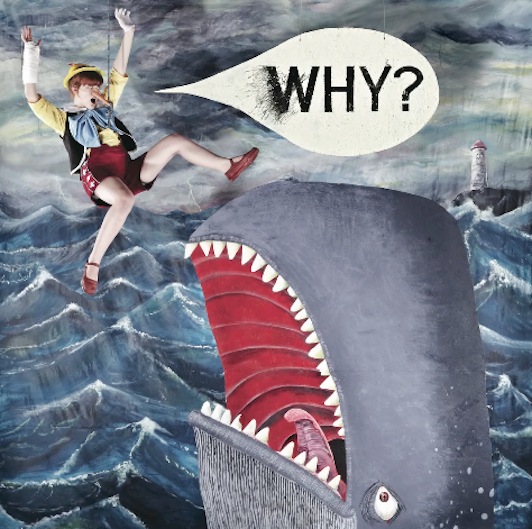 Just got off the phone with Josiah Wolf, drummer from alternative (not to mention damn awesome) hip hop band WHY?. For those of you who are living under a rock, WHY? just released their Sod in the Seed EP on August 14, and they are set to release a full-length entitled Mumps, Etc. on October 8/9th. In the meantime, while you’re sitting around crossing days off of your calendar for Mumps, be sure to a) check out this loverly interview with Josiah below and b) head out to see the gents on their tour. And…go!
##
Vinyl Mag: What has everyone been up to since Eskimo Snow?
Josiah Wolf: Liz [Hodson] and I have been working on music ourselves, so we did a bunch of touring. Yoni [Wolf] and I were working on putting together the new record and recording the new demos, and then recording this record. Basically just music- the business and the pleasure side.
VM: What is your favorite song on the Sod in the Seed EP?
JW: Personally, [“Sod in the Seed”] is not my favorite song. On the EP, I would say I like “The Plan” and “Twenty Seven.” But the EP songs are all kind of B-sides- they are whatever songs didn’t make it on the full-length.
VM: So would you say that Sod in the Seed is a pretty good taste of what to expect on Mumps, Etc.?
JW: I mean, yeah. We were originally going release the EP later, but then the album release date got pushed back, so we released Sod to have something to tour on. Mumps is the same style and everything, but – in my opinion – just better songs.
VM: How did you decide on “Jonathan’s Hope” as the single? Is it a good representation of Mumps, Etc.?
JW: I actually didn’t know that “Jonathan’s Hope” was going to be the single, but I’m glad it is. I originally thought that it was going to be “Strawberries.” Sean and Anthony made that decision. I was doing so much other stuff with the tour, etc. that it was a surprise to me. My personal favorite on Mumps is “Waterlines.”
VM: Are you planning on releasing more solo material?
JW: Yeah, eventually. This year, Liz and I have been working on some stuff. Liz has [also been working] by herself. It might be awhile, but as long as I get inspired I’ll keep doing it. I obviously identify more with my solo stuff because it is myself. As for which one I enjoy more? It varies.
VM: This is just something that I have always wondered- as an artist, are you able to listen to your own music recreationally, without critiquing it?
JW: When there is something new, I listen to it a lot. I can’t remove myself from it, no. Sometimes I go back and listen to an older [WHY?] record, because I’m not listening critically anymore. I don’t do that very often. But I always enjoy it. I listen to my record all the time.
VM: What is next for you and for WHY? What can we expect from this tour?
JW: A lot of touring the new record, through next year. We now have 6 people on stage, which is the most we have ever had. It’s a different sound than we had before…This is our best live set yet- people have responded really well.