
Tag: album
Warning: Attempt to read property "post_id" on null in /dom375187/wp-content/plugins/enhanced-category-pages/classes/ecp/Enhanced_Category.php on line 143
Warning: Undefined array key 0 in /dom375187/wp-content/plugins/enhanced-category-pages/classes/ecp/Enhanced_Category.php on line 232
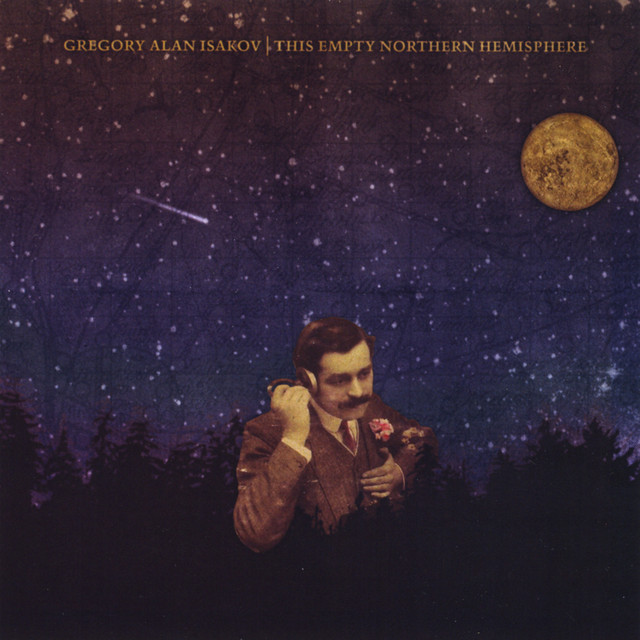
Review: Gregory Alan Isakov: ‘This Empty Northern Hemisphere’
I think everyone has that one album that really redefines what music means to them and transforms their view of the world and for me, This Empty Northern Hemisphere by Gregory Alan Isakov is that album. When I listen to it, it perplexes me how I could possibly have access to the same 26 letters of the alphabet as its writers who seemed to select the perfect words for each song resulting in one of the most beautiful, tranquil bodies of work I’ve ever heard.
Starting off the album is “Dandelion Wine,” a song that makes me understand why people say less is more. While the song does not feature a lot of lyrics, it doesn’t take away from the listening experience at all due to how impressive the musical arrangement is and when Isakov’s voice does appear to sing a line or two, it balances it out perfectly.
Due to his unique lyricism, Isakov is able to paint very vivid pictures of the stories that he is telling with his music. His ability to do this is clear on songs like “Virginia May” and “That Moon Song,” but it especially shines through with “Evelyn.” Featuring compelling lyrics such as “There’s an old folk song on the radio / Sounding thin and dark and haunted,” and “And she can’t stand the sight of this cul-de-sac / Like an old crow, king of the lamp-post,” the song tells the story of a woman working the overnight shift in a convenience store narrated to the tune of a banjo strumming in a way that makes it impossible not to root for her.
My first introduction to Isakov was through the song “Big Black Car” and despite the many ways my life and musical preferences have changed over time, it has always found its way back home into my rotation since that fateful day I heard it in my freshman dorm room four years ago. The song is soft, but powerful nonetheless. Featuring lyrics like “You were a miracle, I was just holdin’ your space,” and “The past, she is haunted, the future is laced,” there is a good reason the song has become such a fixture in my life and dominated my Spotify Wrapped.
The albums titular track “This Empty Northern Hemisphere” shows off Isakov’s impressive range as a musician, featuring a heavy guitar and powerful vocals that make the song stand out compared to its softer sounding counterparts on the album. While the recorded version of this song is undoubtedly beautiful, as someone who has seen Isakov in concert I wholeheartedly believe that this song should be experienced live as the full band is able to breathe extra life into the already striking number.
Every time I hear the familiar keys of the piano at the beginning of “Words,” I remember why this album holds such a special place in my heart. With lines like “And I wish I could leave my bones / And my skin / And float over the tired, tired sea / So, that I could see you again,” Isakov reminds listeners what makes him so exceptional as a lyricist with a song that leaves me torn as to whether I want to smile or cry when I listen to it.
Featuring folk singer Brandi Carlile, “If I Go, I’m Goin” shows just how heartbreakingly beautiful a song can be. With stunning harmonies accompanying gut wrenching lyrics like “And I will go if you ask me to / I will stay if you dare / And if I go, I’m goin crazy / Let my darlin’ take me there,” this song devastates me every time, but I will gladly continue to pay that price.
Every time I listen to this album it feels profound; I have heard each song hundreds of times, yet each one feels like a new experience. The songs on this album have been in the background of some of the most significant moments in my life and for that I am so grateful.
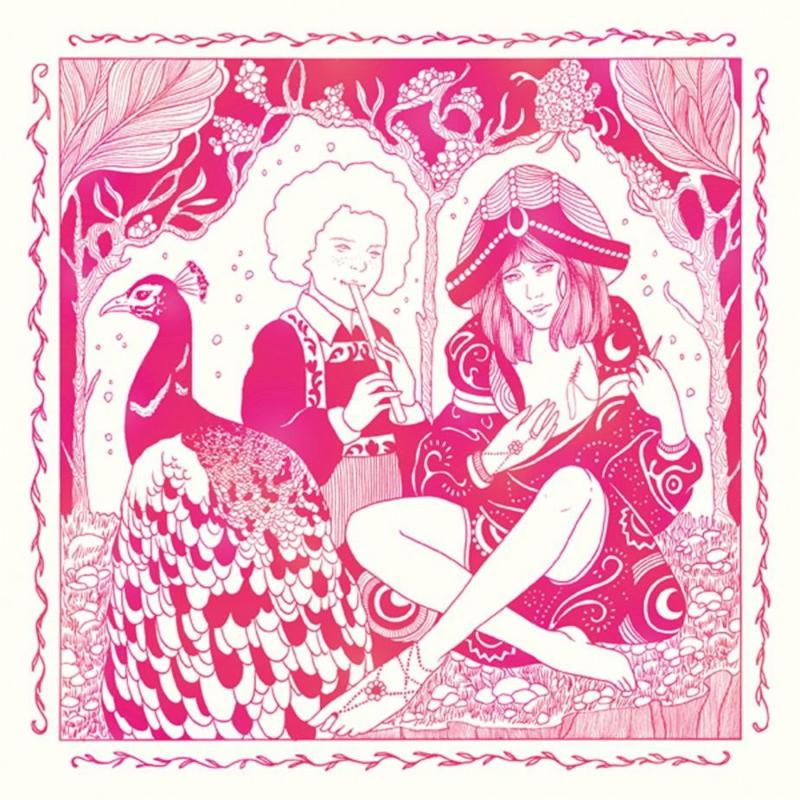
Melody’s Echo Chamber: ‘Bon Voyage’
The time between albums for Melody Prochet has been close to six years, and that span can be categorized by loss and rediscovery. In the initial recording of Melody’s Echo Chamber’s follow up to her acclaimed self-titled debut, Prochet abandoned the first attempt, describing it as a “dead baby”. Choosing to go it alone and end her work with Tame Impala’s Kevin Parker, Prochet dove head first into new, but familiar attempts at self-expression. She returned to her childhood conservatory to learn drums, and upon finishing, picked up several other instruments in attempt to connect with her innermost music psyche. Enlisting the aid of Sweden’s torchbearers of psyche rock, Frederik Swahn (The Amazing) and Reine Fiske (Dungen), Bon Voyage is a short and wild odyssey that explores the anima of Prochet, often with neglect to focus and time.
Bon Voyage‘s opener, “Cross My Heart”, is a quick plunge into psychedelic guitar work, backed by a marching beat, as if some sort of rowing cadence into the Bermuda Triangle. If you were excited at the prospect of a Melody’s Echo Chamber album backed by Dungen and The Amazing, this is the song you were hoping for. The song breaks down one third of the way in to an unexpected blend of scat singing, a hip hop beat, and flutes. The album takes its time in this odd juxtaposition; a theme for this record. While this does come together in a more traditional psych sound, it is abundantly clear that Prochet made this album to experiment with her influences and have fun.
If there is anything on Bon Voyage that resembles a comfort zone, it’s “Breathe In, Breathe Out”, a breathy, arousing track that lives in its looseness. However, even the familiar gives way to a tempo and key change, teeing up to a freefalling power chorus. Playful “oohs” and “ahs” keep the tone light, but the track ends abruptly after creating such a sprawling path.
Timing is an issue throughout much of this record. Prochet’s admiration of Stereolab and Broadcast are on display in the beginning “Desert Horse”, a post-punk track that envelops itself in the avant-garde. It’s an experiment with influences of Can and Neu!, splashing together dialogue breaks with vocoder looping, and while it all seems chaotic, it ends without exploring this influences in the room the track has created for itself. The track has space to move beyond admiration of other artists, and Prochet cuts a tempestuous ride short.
While some songs end before coming to fruition, there are others that take space and remain in it long past its delivery. “Quand Les Larmes D’un Ange Font Danser La Neige” is Prochet at her most lyrically vulnerable: “I found somewhere to hide / someone to held by / a safe place to cry.” The song itself is fairly simple: a blooming melody that restrains itself from some of the calamity of other tracks. While enjoyable, the track unnecessarily loops back around and revisits itself after a brief dialogue break, falling apart in small spirals reminiscent of The Amazing.
The album’s closer, “Shirim”, is also Bon Voyage’s oldest offering, released in 2014. It is Prochet at her most straight-forward, beginning with a heavy-handed drum beat and Radio Dept.-esque chiming of chords. Still playful, the track plays like the end of a long ride. While quite pronounced, “Shirim” is a hazy pop song that is a welcome respite from the disorientation from other parts of the record.
Bon Voyage is not necessarily for the same fans of the self-titled record, but it never tries to be. In telling stories from recording the album, Prochet recalls the friendships developed with Swahn and Fiske. It is music made from an affinity to new ways of expression and a devotion to personal discovery. Regarding “Desert Horse”, Prochet says, “It’s the most sculptural and mad I guess, with no real common format. It embodies my difficult life journey these last few years through my own personal desert of heartaches, thirst, mirages, moving sands, disillusionment and of becoming an adult woman in a mad world. It’s a little punk to me somehow.” This album may not have been made for anyone but her, and that is a statement to her journey of discovering artistry in the wake uncertainty. It may not always make sense. It may stop short where we want to hear more, and we may not follow it to everywhere chooses to go, but it is Prochet creating the path for herself. Finding focus on such a voyage will only bring back a stronger artist.
6.7 / 10.0
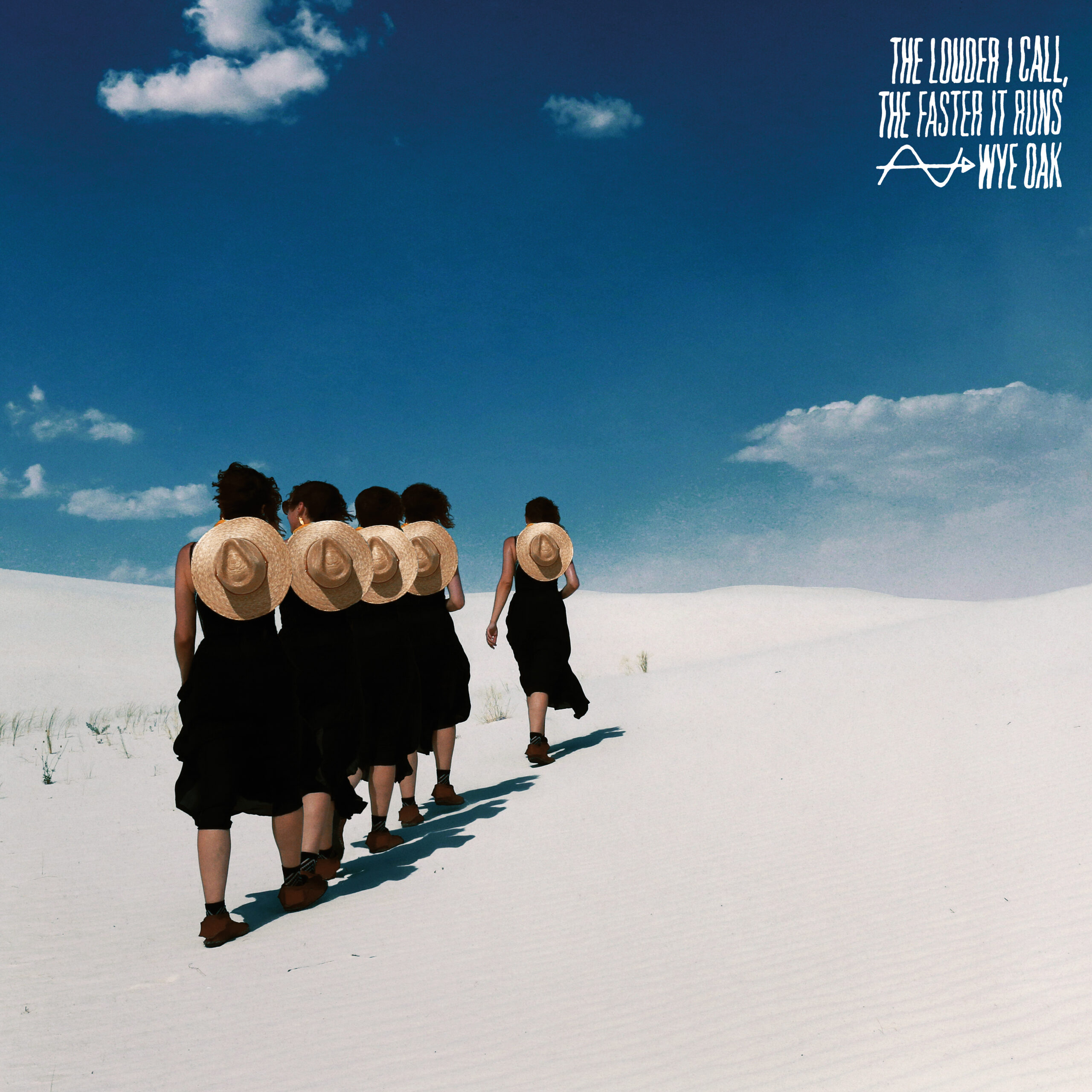
Wye Oak: ‘The Louder I Call, The Faster It Runs’
Wye Oak is a band of separation and reconnection. Bandmates Jenn Wasner and Andy Stack are divided by over 1,500 miles (Durham, NC to Marfa, TX, respectively), meeting back to write and record. Forgoing the recording methods of previous albums, the duo approached their latest release with a freer process, allowing them to delve further into the toolbox they’ve built in their decade-long career. The Louder I Call, The Faster It Runs is an exploration of personal reconciliation and the search for power in a life of compromised expectations.
If the sequences and synthesizers of 2014’s Shriek was Wye Oak’s greatest departure, The Louder I Call confidently takes up more space in that change of form. After the introduction of “(Tuning)”, we are met with “Instrument”, equal parts spiraling synth loops and bombastic chords. The end result is effervescent and finds fun between moments of dissonance. The title track is staccato-punched pop flirting with willful ignorance while simultaneously keeping eyes over the shoulder: “Like any other day / we will make the bed / thinking it is dead / It is finally dead.” It’s hard to imagine these songs coming from them were we able to hear them five years ago.
“Lifer” sonically resembles much of what listeners have come to know from the band, but Wasner makes full use of this comfort zone to make some of her largest lyrical declarations in the band’s decade-long career: “The end is kind, the mean is cruel / I have to love the life I make, / make up for all the space I take.” Reconciling success amongst peers can be difficult, and Wasner acknowledges privilege while openly figuring out how to use that for good. Long tonal strokes are the backdrop of these confessions, and the bridge is just as much an avowal to taking advantage of life’s luck as the lyrics. This vulnerability occupies an anxious space between audacity and modesty, fearful of hitting either edge.
There are few bands that exude the confidence that Wye Oak demonstrates with every new release. Their approach may constantly change, but no matter the strategy, it is impressive that they always get their best foot forward. “Symmetry”, the album’s most synth-drenched song top- to-bottom, is a delightfully tenacious spin of bubbly production work, but seems familiar to their past songs. “Say Hello” resembles a lot of the folk-influenced singing of Civilian, built on top of a U2 riff and vocal layering; it is the best example of Wye Oak’s past and current top forms intersecting.
Louder I Call is overall not a departure musically, but thematically, it is an expression of resolution that we have never heard from them. It is not their most cohesive album, nor is it intended to be. Every song together is a testament that sometimes it’s okay to let life happen to you as opposed to approaching every day with attack. Current times are tumultuous, and part of the process of change is acknowledgement, and Wasner’s lyrics make space for that. The album’s closing track, “I Know It’s Real”, croons and builds voice, but ends rather abruptly; to connect, there must be separation.
7.8/10

Decemberists: ‘I’ll Be Your Girl’
Veteran indie rockers The Decemberists, helmed by frontman Colin Meloy, officially released their eighth full-length album I’ll Be Your Girl on March 16th, and while it showcases Meloy’s enchanting vibrato and occasionally conjures a vaguely maritime aesthetic, it veers off-course of traditional Decemberists material in most ways. The band utilizes milky, spacey synths on several songs, and “Severed” in particular revolves around a pulsing synth line that sounds like it belongs on a late-night club DJ’s playlist.
I’ll Be Your Girl marks some stylistic changes for The Decemberists, but overall results in feeling a little lackluster compared to earlier releases–“Starwatcher” is particularly dull, failing to commit to either an ethereal minimalism or dense excitement, and Meloy seems to have adopted a penchant for repetition, singing “everything” so many times in a zealous bouncy melody on “Everything is Awful” that you might find that you hate the word when it’s all over. But this is a common thread on the album: upbeat, buoyant melodies with track titles of “Everything is Awful” and “We All Die Young.” Meloy shines in his dark songwriting, choosing his first words of the album “oh for once in my life / could just something go / could just something go right?” on opening track “Once in My Life.” His gloom hovers above sugary instrumentals throughout the album, straying from the epic journeys of folklore often employed as The Decemberists’s lyrical content (we never actually learn why everything is awful, but it seems like a summary of what Meloy is trying to express on I’ll Be Your Girl). On “Tripping Along” he sings “what I would do to lie with you, die in your arms” and on “Sucker’s Prayer” “I want to love somebody but I don’t know how / I want to throw my body in the river and drown.”
The Decemberists make sure to incorporate enough of their signature bizarre ear-catchers on I’ll Be Your Girl, like the high-pitched “na na na na na’s” on “Your Ghost” or the children’s voices on the chorus of “We All Die Young,” anchors to their off-kilter image as they experiment elsewhere on the album. The latter has a big-band, Western feel, with a featured saxophone, stomping and clapping, and a sonorous chorus. “Sucker’s Prayer” similarly contains prominent, saloon-ish piano lines and has a rockin’ guitar solo to boot, a dramatic shift from the ’80s-era synths that characterize the beginning of the album. The Decemberists slow it down on penultimate track “Rusalka, Rusalka / Wild Rushes,” an eight-minute apocalyptic epic reminiscent of their most popular material; oozing with drama, it swells gradually, solidifying itself as the most rewarding track of I’ll Be Your Girl, as it sticks out from its preceding short tracks which often leave you wanting more.
Overall, I’ll Be Your Girl is not an album that will make waves, but is a solid addition to an 18-year-old band’s discography. Colin Meloy still has his beloved chops and is rife with poetic ideas, and doesn’t seem to be slowing down anytime soon.

Soccer Mommy: ‘Clean’

Soccer Mommy (aka Sophie Allison) hasn’t abandoned her lo-fi bedroom pop aesthetic in her latest album Clean, just dialed up the production value a notch and added some layers. Her coming-of-age, sometimes naïve, sometimes adolescently self-deprecating, sometimes wise lyrics still sit unassailably at the forefront of her songs, filling whatever space they’re listened in with raw honesty. The satisfying guitar hook of “Your Dog” and prominent bassline of “Skin” propel Soccer Mommy into rock territory, but the most engrossing tracks are the ones in which Allison’s voice isn’t cloaked by a host of instruments. In “Scorpio Rising”, her voice soothes over acoustic guitar before retreating into the depths of a full backing band, and when it re-emerges to sing “kiss you in the park / we’ll meet up after dark,” it is oh-so-satisfying.
Allison’s voice is tender, but her songs possess the sardonic grit of a frustrated 20-year-old trying to navigate romance and self-discovery. She sings in second track “Cool,” “Mary has a heart of coal / she’ll break you down and eat you whole” before admitting “I wanna be that cool.” What’s confusing is that she does seem that cool, but keep listening and you’ll realize that her insecurity is a point of emphasis on the album. In “Last Girl,” she declares, “I want to be like your last girl,” good-naturedly lauding a boy’s ex-girlfriend with praises such as “she’s so sweet / and she’s so pretty / even more than me.” As if exalting this girl isn’t enough in itself, she goes on to sing, “I am just a dying flower / I don’t hold the summer in my eyes.”
The unfiltered nature of Clean’s lyrics is both a strength and a weakness, at some points evoking discomfort and pity a little too aggressively; throughout the album, Allison refuses to let you forget that she is only 20. Her bitter songwriting reveals a soft underbelly, one that has been abused and handled carelessly; although she seems to hide behind a façade of flippancy and anger, she allows us to see her sensitive side as well. Her voice vibrates in melancholic “Blossom (Wasting All My Time)” over swelling atmospheric instrumentals as she offers the most vulnerable lyrics of the album with “wasting all my time wondering if he really loved me” but twisting the sentiment halfway into an innocent but resolute declaration: “I’ll be spending all my time with someone who really wants me.” Digesting these lyrics in conjunction with the lyrics of Clean’s other tracks, you’ll find a unique and youthful perspective of the world from someone who truly has something interesting to say.
Lyrical depth isn’t the only lure of Clean, however, as Soccer Mommy delivers a cohesive and pleasing string of soft pop melodies and echoing guitar riffs. For the most part, she utilizes her instrumentation well, but still seems the most comfortable with an acoustic guitar in hand (I personally thought that her acoustic “Interlude” particularly stood out in its creativity), and continually falls back on down-tempo tracks with melodies built upon moderate interval jumps (“Still Clean,” “Flaw,” “Scorpio Rising,” “Wildflowers”). This makes it feel like the album is divided into two distinct sections with two varieties of tracks, but Allison pulls off her up-tempo tracks like “Cool” and “Your Dog” with skill, which indicates that Soccer Mommy is continuing to grow and improve, making Clean a solid listen.
8/10
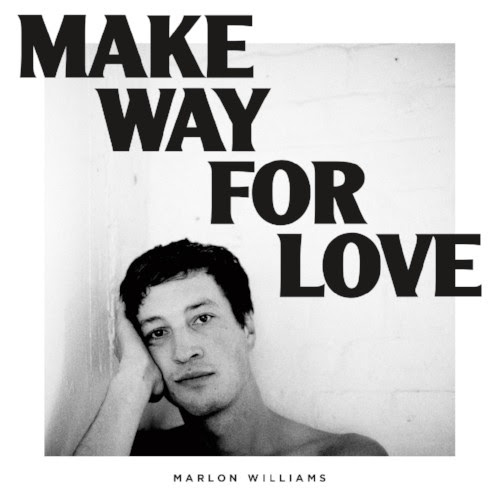
Marlon Williams: ‘Make Way for Love’
Marlon Williams is only 27 years old, but unfailingly keeps proving that his musical maturity is a force to be reckoned with.
With a crooning voice that upon first listen may be mistaken for Elvis’s, Marlon lulls into captivation anyone who’s listening in his second solo album, Make Way for Love, combining the styles of early country with early rock n’ roll to shape a sound that the singer will make you believe has been disgracefully missing from modern music. From the first guitar strums of the title track “Come to Me,” Marlon establishes a lush, vulnerable atmosphere that he adamantly sustains until the final note.
But the native New Zealander is not a one-trick pony; he sprinkles elements of surf rock in “Party Boy” in a way so nuanced that you might not even notice yourself grooving. And smooth synth notes make an appearance in “Love is a Terrible Thing,” a shred of evidence that Marlon is not merely recreating tender music of old but breathing new life into it. Make no mistake: Make Way for Love will transport you into a long-gone era of soothing love ballads strummed into the ether by a handsome heartthrob, but Marlon taps into universal themes of love and all that accompanies it (heartbreak, jealousy, lust, bitterness) in a conceptual and robust exploration that lays enough on the table for anyone to find resonance.
The album floats along from an ode to the innocent joy of love in “Come to Me” to the warm pleas to his lover in “Beautiful Dress” (“let me wear you like a beautiful dress/let me love you”), the undertones of dripping melancholy cluing you into the retrospective nature of the album and preparing you for the descent into heart-wrenching territory. Marlon writes lyrics with the visceral anguish of Nick Cave and sings them with the gentle restraint of Roy Orbison; he sings, “people tell me/‘boy you dodged a bullet’/but if only it had hit me/then I’d know the peace it brings” in “Love is a Terrible Thing” and begins the similarly mournful “I Didn’t Make A Plan” with, “I didn’t make a plan to break your heart/but it was the sweetest thing I’ve ever done” before later belting out apocalyptic “hey-yo”s.
His melodrama is far from tawdry or unrelatable, at once making you feel both profoundly sorry for and profoundly in awe of him, and it all culminates in the penultimate track, “Nobody Gets What They Want Anymore.” Hearing Marlon trill “I cannot explain/emotions I can barely afford to contain” in a duet with the subject of the entire album, former girlfriend Aldous Harding (a musical force of her own), suddenly makes everything clearer–and hurt a lot more. No song has better encapsulated Marlon’s talent for baring his soul in a maturely tactful way, serving as a microcosm of the entirety of Make Way for Love. He is even kind enough to alleviate some of the burden of the first 10 tracks with his farewell, “Make Way for Love,” an angelic soft pop track we realized we desperately needed only after listening to it.
Make Way for Love is a rare example of an artistic work crafted so masterfully while feeling so natural and genuine that it is effortless to listen to, swelling with atmospheric emotion and directing all thought to the contemplation of Marlon’s poetic and arresting lyrics. With only his second solo album, Marlon has utilized his timeless voice in the creation of a timeless piece of art, which makes us hopeful that the best is yet to come.
10/10

Ought: ‘Room Inside the World’
For a band that has excelled at portraying the several variations of panic, Ought have always kept great focus on being human in the center of an expansive map. The boldest step the band could make after 2015’s Sun Coming Down was perhaps toward the only place bigger than the planet: the subconscious. Room Inside the World is a dialing-down of the volume, but a true flexing of the band’s understanding of internal dynamics. This album is their biggest change in form and will go down as their most accomplished release yet.
Tim Darcy’s first croon into Room Inside the World, “Into the Sea,” is a Roy Orbison-like slide into the introspective: “I can’t be here in my way again.” Darcy’s lyrics have always pertained to a call-to-arms of taking on the mundane; even running errands was a declaration to the world. On this release, the hushed richness of his delivery is just as pronounced as any shout that we’ve heard on “More Than Any Other Day.” The entire band has grown in confidence, from the jangle-pop of “Disaffectation” to the shifts of “Take Everything.” Their foray into the love song, “Desire,” is a slowed-down, intimate track met with John Mellencamp-like storytelling of fleeting, but vivid romance. The track concludes with a choral response, and even in the falling apart that ensues in the closing minute, we’re met with an aftermath of assurance. Ought’s confidence in their songwriting ability makes these songs seem like their next path as opposed to a grand departure.
The crown jewel of the album, “Disgraced in America” is an exercise in that confidence. In the past, the band’s reliance on repetition has been where they flourish, but a change in style and rhythm show us that saying something out loud doesn’t make for self-reflection. The tightly-wound drums and light vocal work show a reflection that we haven’t heard from this band prior. “Disgraced” is three minutes shorter than a lot of their other punctuated tracks of the past, but it is their most nuanced track to date.
When looking deeply in ourselves, we may not always like what we find. “These 3 Things” is a dealing with material and physical guilt: how can we expect to be of service when we have instincts that will forever tie us to selfishness and gluttony? Can we really be against something that we subconsciously desire? These questions are anxiety-provoking, and Ought have learned to backdrop them with sound textures as opposed to just volume.
It’s easy to call this album more subdued and introspective than previous releases, but this album holds just as much chaos as anything Ought have released. It’s one thing to use nervous energy to proclaim your presence to an unforgiving world, but another to use that same energy in an act of meticulous self-care. What we are left with in the end is an acknowledgement and ablution of self-doubt. Room Inside the World doesn’t play like a how-to as much as a story of survival–a story that we all know and tell as we try to make ourselves better people.
8.1/10

Wild Child: ‘Expectations’
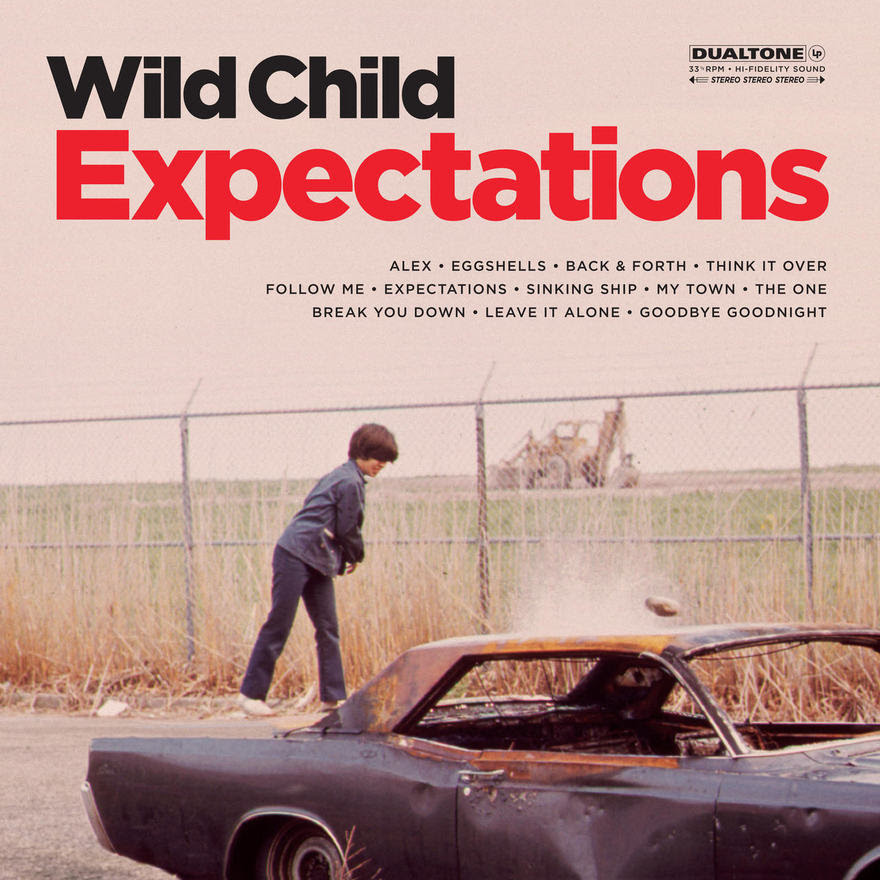
There are love songs, there are breakup songs and then there are the songs on indie-pop band Wild Child’s newest album, Expectations. They describe relationships in limbo, which is an all-to-relatable status nowadays. The members of Wild Child have successfully managed to mature sonically while still remaining true to their fundamentals. While the band has certainly grown in numbers over the years, the tracks on their newest album succeed in paying homage to their earlier, simpler days.
Expectations is by far the Austin-based band’s most passionate album. The lyrics are introspective and especially impactful alongside Kelsey Wilson’s powerful vocals.
While the first track, “Alex,” is my personal least favorite of the album, I have to respect the choice to kick off the somewhat serious album with a more lighthearted sound. Now don’t get me wrong; the track still has the same push-and-pull relationship drama storyline that much of Expectations deals with. Title track “Expectations” builds momentum until around 3:20, where you can really hear Wilson’s emotions pour out through the vocals. At one point, her voice actually reaches a scream, which would almost seem out of place for Wild Child, but context justifies the move, and the experiment is magnificently successful.
The title track, along with other up-tempo tracks including “Back & Forth” and “Think It Over,” demonstrate not only Wilson’s vocal chops and passion, but also the growth and development of the rest of the band. This many-layered album is a particularly good example of the wide range of talent Wild Child contains. Whether it’s a trumpet, violin, cello or ukulele, the band seems to always find a way to build upon their sound.
The slower tracks on Expectations are no exception. “Follow Me” is arguably the band’s most sensual song to date. And I can’t ignore the fact that the combination of “Sinking Ship,” “My Town” and “The One” legitimately made me cry. You know you’ve got a powerful album when one fourth of it brings out actual tears.
There were times in Wild Child’s 2015 album, Fools where I felt they were getting dangerously close to losing their signature, stripped down and simple sound. Where Fools lost that, Expectations has found it again with ease. “The One,” released as a single and as a music video, reminds me that it’s the harmonies of Kelsey Wilson and Alex Beggins that first made me fall for this band. While the rich texture found in their more upbeat tracks relays more passion at times, there’s nothing like Beggins’ ukulele.
Overall, Expectations pulls at your heartstrings. I hate to fan girl even more, but here’s to hoping we won’t see the last of Wild Child anytime soon.
7.5/10
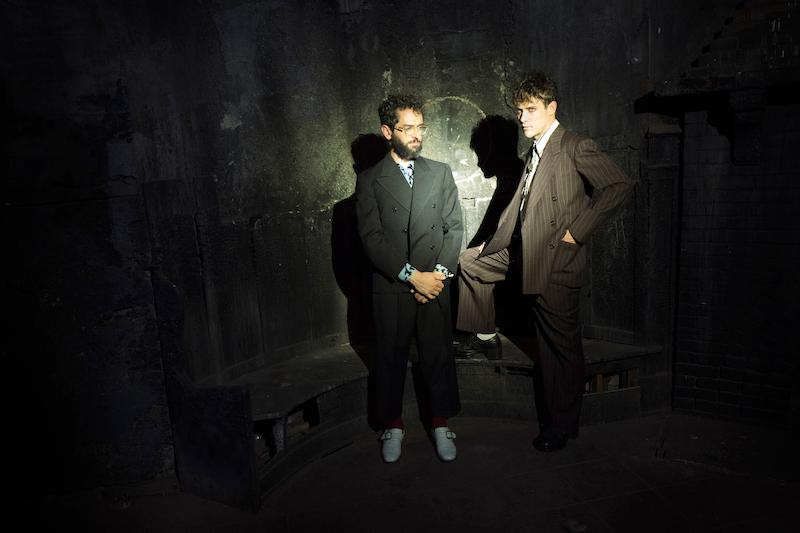
MGMT: ‘Little Dark Age’
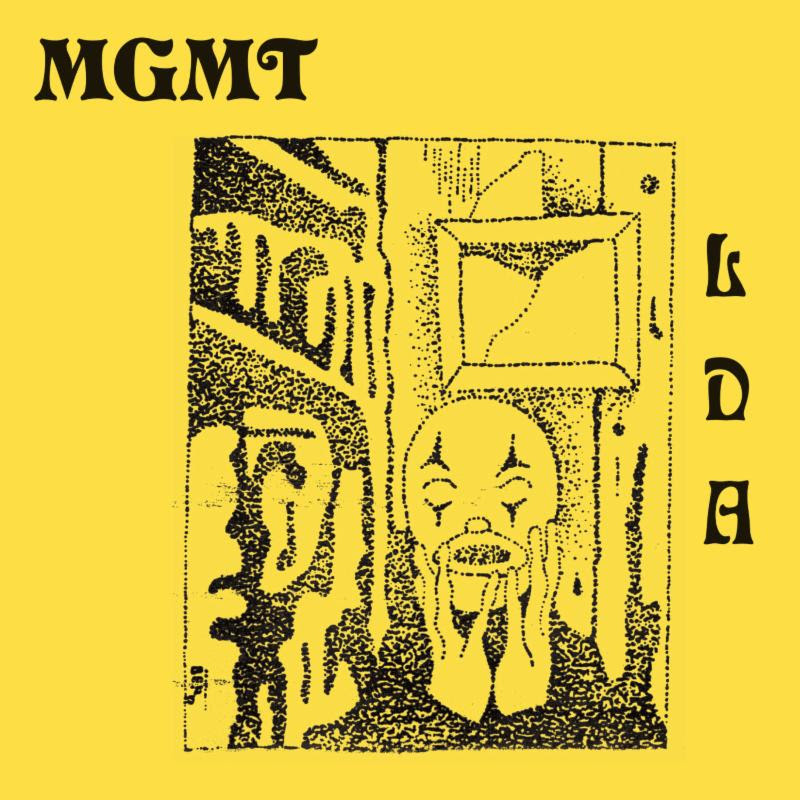
No matter what you think of MGMT, you’ve got to give them props for refusing to become stale. The band has evolved from their original bohemian rocker aesthetic, refusing to be defined solely by Oracular Spectacular, the hit album that boosted them into the spotlight over a decade ago. That being said, their newest album, Little Dark Age, tells me that they’re still not quite sure who they want to be.
Their first two singles, “Little Dark Age” and “When You Die,” which were both accompanied by music videos, made many think that they had begun to find an image. The “Little Dark Age” video shows a transition to a new, goth-pop territory; while “When You Die” makes it clear that they’re still not done using trippy, out of this world visuals.
In many ways, Little Dark Age does succeed in balancing the fine line between experimentation and clutter, in ways that their 2013 self-titled album failed to achieve.
The return of catchy hooks and seemingly effortless lyrics found in their first two singles, along with many others on the album, give the impression that the band is finally willing to lean into the commercial success of Oracular Spectacular and the upbeat rhythms, synths, and special effects that come along with it, without abandoning their obvious desire to develop more maturity in their sound.
In many tracks, including “One Thing Left to Try,” “Me and Michael” and the title track, “Little Dark Age,” MGMT demonstrates an evolution of sorts as they embrace the darker sounds of ‘80s synth pop, which works for them. After the “Little Dark Age” video was released, many comparisons were drawn between MGMT and The Cure, with a confident Andrew VanWyngarden boasting long, dark hair and eye makeup as he sang the gothic lyrics of the track.
However, “She Works Out Too Much,” and “TSLAMP” find the band back to grasping at straws when it comes to their sound. “She Works Out Too Much” is an overexertion of energy (no pun intended), sounding more like parody than originality. MGMT has succeeded in the past, and even on this album, in making powerful, societal remarks throughout their songs, but “TSLAMP” is too on-the-nose and obvious to be impactful. “TSLAMP”–standing for “Time Spent Looking At My Phone”–speaks of the trivial obsession with the cell phone, honing in on a message that’s far from revolutionary, bringing nothing new to the conversation but a cringeworthy attempt at a call-out.
Overall, Little Dark Age shows some serious growth for MGMT but still falls short at points. Slower tracks like “When You’re Smaller” and “Hand It Over” are reminiscent of Congratulations, (in a very welcome way), while “James,” which was recorded while the entire band and the producer were tripping, exemplifies MGMT’s tendency to try too hard to be unique and far out.
This album is difficult to decipher, albeit an important next step in MGMT’s journey to self-identification. The band is still teetering somewhere in between not caring what people think and caring too much, but their ability to converge organic sounds, steady beats and melodies is ever undeniable.
7/10
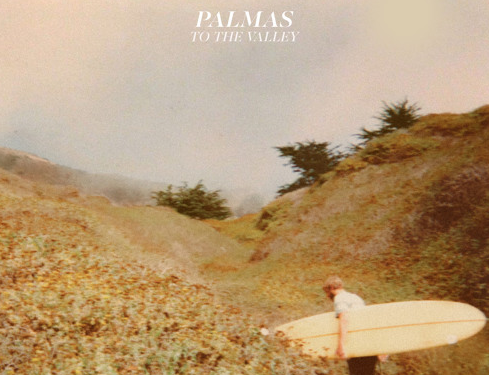
PALMAS: ‘To The Valley’
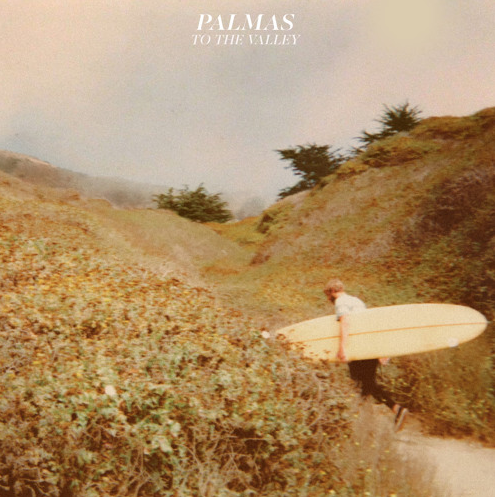
If there is a point where future meets past, and east meets west, it’s the new PALMAS album, To The Valley. Coming to headphones near you Friday, November 13, the Philly band has gathered all the metallic sounds of East Coast rock, shipped them across the country to the sandy beaches of California, and time traveled a few decades back to produce a blended sound of old school surf rock.
The album kicks off with a 30-second intro titled “Buzzcut.” The song leads with the a quick drumstick tempo-set and dives straight into the classic guitar slide all surf rock fans know and love. It’s a perfect glimpse into the album but and an even better view into what it feels like to sit in the middle of a PALMAS jam session.
From “Buzzcut,” the album moves seamlessly into the hit single “I Want To Know (Your Love),” a song that was released earlier this year and only left fans wanting more. It’s got a quick start that jumps right into the first verse then glides into a slow and melodic chorus of “I want to know, I want to know your love.” The song switches back and forth from bursts of high pitched, choppy verses to smooth choruses, and it doesn’t take more than a few seconds before there’s nothing left to do but surrender and sway back and forth.
PALMAS sticks with the slow and solid melodies for most of the album, including “Take My Hand,” where they’ve mixed things up with more chops here and there. There’s some added classic beach bash guitar, but the song has a more somber tone than the rest of its precursors. Then, just when we’ve gotten all too comfortable with the easy motion of the ocean, PALMAS surprises us with an upbeat tune that will take anyone right back to the time of dance halls, big hair and poodle skirts, in “Sweet Water.” It’s lighthearted, fun, and impossible to sit still to.
The last two tracks bring us down from the jive of a 1950’s dance hall and back to the laid back rhythm of the California coast line. “Better Guy,” full of “oos” and “ahs,” pines for romantic drives along the shore and dives into the “deep blue sea,” while “San Francisco Bay” “oos” again, this time to with the hopes of bringing a long lost love back home, to the San Francisco Bay.
The album finishes with a personal sign off from the band, which we can only image is exactly what it would feel like to be front and center at a live performance. There’s no doubt PALMAS has mastered what it means to be a 21st century nostalgic surf rock band. In To The Valley, they have found a way to not only rejuvenate the timeless sound that inspired so many before them, but they make it all their own along the way. To The Valley marks a new era for PALMAS and classic rock lovers everywhere, and we’re sure it’s one you won’t want to miss.