
Category: Interviews
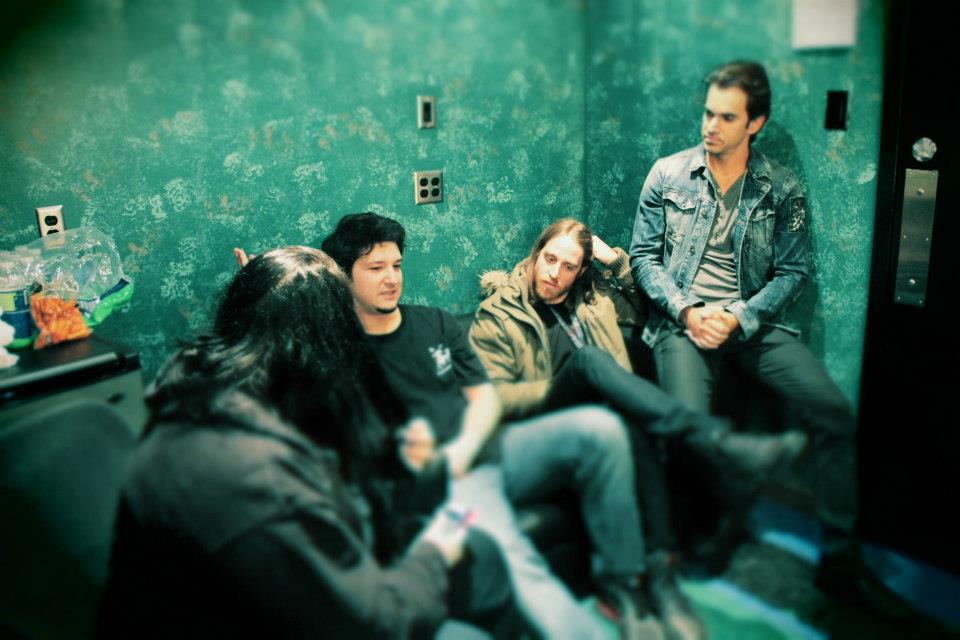
Q&A with Brazilian rock group MindFlow (currently opening on the Take Action Tour)
 I’m sure some of you music lovers have heard of – or even attended a show for – the Take Action Tour. I just got off the phone with guitarist Rodrigo Hildago from Brazilian rock group, MindFlow (quite a chill dude with a fabulous accent), who was kind enough to chat with me on the band’s day off in Jacksonville, Florida.
For those that haven’t heard of Mindflow, here’s a little history to fill in the gaps:
They are from São Paulo, Brazil, and they got together as a group in 2003. Hildago told me in his interview that he simply started playing guitar because his friends needed some helping hands for their band. After that fizzled out, he starting writing with their current drummer, Rafael Pensado, and everything took off from there.
After the band sent material to renowned producer Ben Grosse (Disturbed, Marilyn Manson, Slipknot, Megadeth, etc), he personally attended one of their shows and agreed to work with them on MindFlow’s third album called Destructive Device. From there, Nightmare Records got a hold of them, and the band combined their preferred songs with their released online tracks and birthed With Bare Hands.
So now you know. Be sure to check out MindFlow on the Take Action Tour with The Used, We Came As Romans, and Crown the Empire. But not before you check out my interview…
VM: First off, how’d you get the name MindFlow for your band?
RH: It was from the name of one of our songs called “When Minds Flow”. It means there’s no real structure, that it’s just free.
VM: What got you interested in music? Was it family, friends, or self-discovery?
RH: I am actually the only one in the family that does music. My friends in high school needed someone to help them out, and so I picked up the guitar and started learning. From that, I met Raphael our drummer.
VM: What bands influence you?
RH: I love Bon Jovi. It’s my favorite band, and I think Jon Bon Jovi is a great singer.
VM: So what influences your writing? What do you write about?
RH: We use everyday things to make music. We wrote 12 songs in 12 months, and they are all based on certain moments, like the corruption in Brazilian politics and natural disasters. People can relate to these things.
VM: How’d you guys team up with The Used on this tour?
RH: We were interested in this project and in this awesome cause. We wanted to help out, and we believe in each other and the cause. We really wanted to be a part of it. The guys from The Used are so great, and they are super nice. This is our first big tour, and we feel really lucky and honored to be picked to be a part of this. It’s such a great cause.
VM: How has the fan reaction been since you’ve been touring with them and bands like We Came As Romans?
RH: Mindflow is different from those bands, and bands like WCAR are more popular, but I think we are well liked even though we don’t sound like them. People have been having fun and we’ve gotten good feedback.
VM: Have any crazy stories or hilarious moments from the tour so far?
RH: No, (laughs), we are pretty boring band. We’ve just been chilling out in Jacksonville on our day off. We mostly play video games (laughs).
VM: What’s your favorite recently?
RH: We’ve been playing a lot of the new Resident Evil. It’s pretty fun.
VM: That’s awesome. What are your plans after the tour?
RH: We are going back home to Brazil to work on a new album, and then we’d like to come back for a summer tour.
VM: Maybe I can catch you guys next go around. Would you like to say anything to VinylMag readers or have anything you’d like fans to know?
RH: Thank you. Definitely thank you. We hope you enjoy it and are having fun. This has been an awesome opportunity, and thank you for supporting it and the tour and the cause.

Backstage with Diarrhea Planet
Diarrhea Planet came to the Caledonia Lounge in Athens. I got to hang out in the “backstage” van area with them. We’re bros now.
Watch us talk about their sound, their goals, the right way to be a rockstar, and magic…among other things. Enjoy.

Phone Chat with Cursive’s Matt Maginn
Here’s the deal. Cursive is wonderful. But you should already know that. I’ve been wanting to interview them since the launch of Vinyl, and finally…the stars have aligned, the fates have smiled upon me, and I got the chance to chat on the phone with bassist Matt Maginn (thank you, Samantha Gilder). And now you get the chance to listen in as we talk about their tour, their new bar, and what they’re up to now. Enjoy.
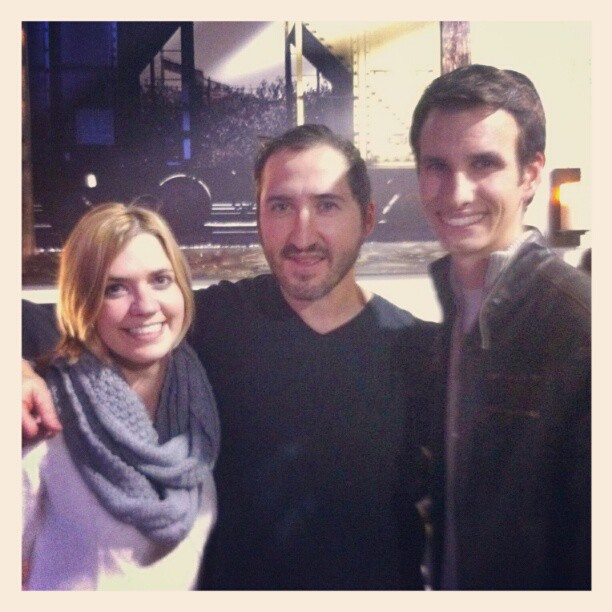
Words with Pinback’s Rob Crow
 Everyone should know Pinback. They’re kind of a big deal. Based in San Diego, California, the band is essentially made up of Zach Smith and Rob Crow. They recently released their fifth full-length studio album, Information Retrieved and are currently on a US tour.
I got the chance to grab a few minutes of phone time with Rob to talk about their current tour, the album, Disney’s takeover of Lucasfilm, and what’s up next for the band.
So enjoy. And be sure to check out of their upcoming shows. They’ll be in Atlanta at Terminal West tomorrow – and so will I – so you should definitely not miss it.
What are your thoughts on Disney buying Lucasfilm? What do you think that means for the new movies?
I’m highly excited about it. There will be a lot more possibilities now. Lucas has been trying to ruin his own thing. There are a lot of amazing directors and writers out there right now. Looking at what they did through Pixar…things like The Incredibles don’t treat children like idiots. The [Star Wars] prequels do treat children like idiots. What’s great about the original Star Wars is that there is a hero.
I’m mostly hoping for someone to look up to in the films. In the last three films, the closest thing to that is the bad guy. I think it’s detrimental to bring up children with that.
You once said that Pinback is the most accessible thing that you do- can you elaborate on that? What other projects are you involved with at the moment?
I gravitate more towards extreme things that most people don’t care about, which is unfortunate. I don’t gravitate towards it because it’s not popular. It just seems to be what I’m interested in for no particular reason.
Tell me about the Helios Creed tribute album. How did that come about? Was it more about the project for you or the charity?
Somebody asked me if I wanted to do it; only recently did I hear that it was for charity. Charity is great – I just didn’t know about it.
I read that you now do a lot of recording at SDRL studios? Is it your studio? What does it stand for?
At the time it was me, Zach, and two other people partnering in it. We have studios at home also. Zach doesn’t work [at SDRL] anymore.
You all have children now- do they inspire or change the way you write? How does having a family change the way you prioritize the band? Do they ever tour with you?
It’s a lot harder to really put the time in to complete a linear thought; they used to tour with us. It’s a lot more difficult now that I have three kids – one’s a baby, one’s in school. It would be a little crazier. It was pretty great when I could [take them on tour]. They have been all around the US already.
I really like concept of an artist as a person. People go to see a band, and they’re all spotlighted. So people may think we’re above them or something, which we’re not.
We’re definitely not cooler than them. It’s a privilege not a right what we do. We should all be on our knees thanking people for letting us play for them.
You released “Proceed to Memory” to Rolling Stone and then “His Phase” to Pitchfork before releasing the full album. Are those your favorites or were they just the first done?
I don’t know. I don’t know much about marketing. Jeremy runs Temporary Residence [record label]. I thoroughly trust whatever he does. He’s a good, honest guy. If he thinks the way to go about something is the way to go about something, I trust him completely.
What is “Denslow, You Idiot!” about? What inspired the lyrics?
There is a lot of stuff on the album that I decided not to talk about for about a year…there is a bunch of hidden stuff in some of the videos and the songs.
The reason for this is because it is more fun to have people use their imaginations and come up with what they think these things are about.
It’s like the old days of radio when people used imagination instead of just turning on the TV and having it in their face.
[It’s] any excuse to use your imagination. It’s also an excuse for people to come up to me at the end of show. It’s a way to promote conversations and communication. If they have ideas about what things are, they can come talk to me about it. Some people are too nervous to talk to us, and this can give them things to talk about.Is it strategic to release albums so far apart, or is that just how it goes with your schedule and writing process?
It’s just how it went it. It just took so long. We did not want it to take so long. We’d be happy if we could put out an album a year. We would, but we just can’t.
What is your favorite part of touring?
Making new friends and seeing old friends and getting to go to cool areas around the country. Getting regional food and drinks.
What is next for Pinback?
We do a lot of touring. We are talking about whether we want to do a new record or not. If we do, we try to do it in a way that wouldn’t take five years.
_____________
Tour Dates
11/14 – Durham, NC @ Motorco
11/15 – Atlanta, GA @ Terminal West
11/16 – Nashville, TN @ Exit/In
11/17 – Chicago, IL @ Metro
11/18 – Madison, WI @ High Noon Saloon
11/20 – Ann Arbor, MI @ Blind Pig
11/21 – Toronto, ON @ Lee’s Palace
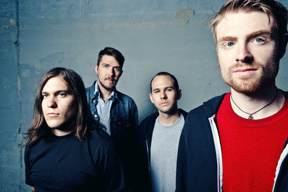
Luther’s Phil Warner talks about touring, The Fest, and their debut album Let’s Get You Somewhere Else
If you haven’t heard of Luther, be glad you have me around to keep your playlists up to date. Luther is made up of Phil Warner (vocals/guitar), Nick Harris (vocals/guitar), Greg Karlowitsch (bass), and Andy Clarke (drums).
The band formed in 2011, and already they’ve made some serious strides, touring with bands like Bouncing Souls and The Menzingers. They have just released their debut full-length called Let’s Get You Somewhere Else and, for your own good, you should absolutely check it out. While you’re at it, enjoy this interview with Phil Warner.
___________
___________
Vinyl Mag: As a relatively new band, you’ve already accomplished quite a lot. Give me a brief history of the band so far.
Phil Warner: We formed the band in the fall of 2010. I became friends with Nick [Harris] before that time, and we were hanging out jamming one day and decided to write some songs together. We had a drummer friend that we played with for a long time, and we had a different bass player when we started who ended up leaving shorty after. Greg [Karlowitsch] was in a band called The Great Explainer, and he was friends with whole Asbury Park crew. Once we played around Jersey, Philly, New York…people knew we were a band. Greg was super stoked on us and brought that whole crew to us. We toured with The Menzingers. That was the pivotal point where we knew.
VM: You just played The Fest. How was that?
PW: The Fest, in my personal account, was great. I feel like, in terms of our set, it was incredible – a ton of fun and a great turnout. I think that all of the bands from Philly once again crushed The Fest.
We are currently in the van right now headed to Denver…we really lucked out, because we are going away from this awful hurricane that is destroying the east coast.
VM: You have kept super busy since your start – what do you do when you aren’t working on the band?
PW: As of lately, we don’t have time to do anything else. After the Smoking Popes tour, we will hit it again in the spring.
We left in the summer for 60 days with Bouncing Souls and The Menzingers, which was incredible. Then we were home for two weeks, and then we did two weeks with our great dear friends called Timeshares, and then we did Canada for two weeks with Bouncing Souls’ Dave Hause, and then The Fest and the Smoking Popes tour.
It’s really crazy. Even when we were home for two weeks between the summer tour…I was on serious stimulus withdrawal. I mean, I am looking forward to going home, hanging out, seeing my family, etc. And meanwhile saving money to get back on the road.
VM: You just came out with Let’s Get You Somewhere Else. How has the response to that been?
PW: The response has been great! We’ve been getting a lot of awesome, awesome reviews. When we were in Canada, Pete from Bouncing Souls would come to us and show us another awesome review again and again. All of our friends are excited about it, and it’s hard to impress close friends…it’s nice to have that support and [support from] other bands that you’re touring with. Everyone is just really stoked…[it] feels really good, and we as band are proud of it. It feels like we nailed writing an album, like we have good songs and a cohesive album.
VM: What was the inspiration/writing process for the album?
PW: We were writing for this record since winter. We had a pretty intense tour last fall – we went out and did kind of a US tour with Tom May from The Menzingers. He played an acoustic act with us. We got into a really bad van accident, and it was a catalyst for getting our asses in gear, as well as a source of material for songs. It helped us with what to write about.
Nick and I will usually be the first ones to meet up…either one of us will have something bring to each other, flesh out, take to Andy and Greg, and sit down as full band. Everyone has great amount of input, whether it is structural or in building melodies. It feels really good to write a song in your head and bring to a band and see it become something greater than yourself.
VM: What is next for you after this tour?
PW: I have been writing some stuff, and Nick has, too. I am most excited to be home and write, maybe do a few 7”s, and maybe do some splits with some cool bands. We want to do stuff like that before we write another full length. I’m most looking forward to being home and being able to write again to see what kind of doors are opened.
Personally, I would love to do splits with The Sidekicks…one of my favorite bands…or Cheap Girls would be awesome.

Greg Saunier of Deerhoof interview
Despite what you could maybe call a bit of inclement weather – Hurricane Sandy tore through New York City just as the band’s tour was supposed to begin – Deerhoof have made it out onto the road to support Breakup Song, its latest release on Polyvinyl (the label). Vinyl (the mag) was fortunate enough to catch up with drummer Greg Saunier a week before the tour’s kickoff show in Dallas.
__________
Vinyl Mag: A lot of people experienced the new album for the first time through the Youtube video that was all one track. As a result, I can’t get it out of my mind that the album almost is one big, long track, composed of various movements.
Greg Saunier: While we were making [Breakup Song], I had deejayed some shows – before the band played and then after – and they would turn into dance parties. I had only ever thought in terms of “what’s going to make it sound like a great album?” But the idea of an album, as a format, is not even as popular a format nowadays. It’s much more likely that you’re hearing a sequence of unrelated singles, and the only thing that relates them is that they share the same roomful of people, and there’s room to dance. If you want it to be danceable, it would be pointless to put in even one song that’s not danceable. You’d have to start over again from scratch. This is something that really struck me, and I kind of learned it the hard way while I was deejaying [laughs]. It was a fun thing to realize, and we tried to sequence [the album] as if it were a continuous party, and that’s why there are no breaks between songs – you don’t want to let it flag even for a second.
Even though the songs all sound quite different from each other – that in itself isn’t meant to be arty; that’s just how it sounds the way the party gets deejayed. You’re switching from artist to artist, most of the time. In my case, you’d put on one song from Motley Crüe, you’d put on one by the Zombies, and they’re all danceable.
VM: So you’re trying to work within your own vernacular, but trying to find every disparate corner in the same little room.
GS: Yeah, exactly. Dance music doesn’t have to mean disco … When we decided we wanted to make a dance record, we ultimately ended up with no songs that were like that. We ended up cutting everything that was in a disco vein. Dance music is still very wide open – you can feel like it’s a limit on what you’re doing, but really it opens it up even more. If you’ve got one dance song on your record, then, boy, you’d better make it a disco song. But if every song on the record is dance, then you suddenly realize the range of what that can be. A lot of it was kind of a heavy metal approach to dance music, and that’s not normally thought of as dance music, but when you listen to early Motley Crue, or the Scorpions, or something like that – of course it’s dance music. One of my favorite songs is “Come on and Dance” by Motley Crue, actually, and people started moshing to it when I played it at those dance parties. It is danceable.
Then we got into trying to do stuff influenced by Cuban mambo music from the 50’s. It’s not the kind of dance music where you sort of space out; it’s not like a rave. It’s much more starting and stopping; it’s very tense-sounding. There will suddenly be a pause, and then some guy yells, and then it starts again. It doesn’t flow; it’s almost stiff-sounding. I just completely fell in love with that over the past year or two and was trying to think of how that is dance music, and how we could make music that has something like that quality.
And then, last summer, we played in this big supergroup with a bunch of musicians from the Congo like Konono N˚1. We did a tour in Europe last summer with them. That was basically dance music, too. The show would be up to two hours of basically dance music. There were all these things I learned to play on the drums from playing with them that were very different from anything I had ever done before. I started playing stuff that was a lot more repetitive, and kind of a lot simpler. Once my hands and feet started being in the habit of playing like that, it changed the way I played a bit, too. So I think the album turned out different, as a result.
VM: Those briefed ahead of time on the dance-heavy nature of the record were probably expecting something closer to the four-on-the-floor disco thing you mentioned earlier. Yet it’s obviously nowhere near that area.
GS: There’s a second in “Mario’s Flaming Whiskers III” that I think has a bit of that – a bit of house beat to it. That was Satomi’s [Matsuzaki, Deerhoof bassist and vocalist] song, and she wanted a house beat on that one. But other than that, it doesn’t sound like disco or house.
VM: Do you find it liberating or limiting – or maybe even both – to be known as a “weird band”?
GS: [Laughs] In our actual day to day existence – like when we’re on tour, for example – I think that’s something that comes into play when journalism enters the picture. When we have a new release, journalists often want to describe it that way. Or sometimes it happens with booking. When a tour is first being set up, it’s like, “Okay, we’re going to play in Athens. Where should we play? Who should we get as the opening band?” A lot times the promoter will be like, “Who’s the local weird band? We should get the local weird band.” [Laughs] But the thing is that, yeah, I see that, but in a way it doesn’t touch me, because by the time we show up in Athens, what I see is people dancing, I see people with big smiles on their faces, and where it fits in in some kind of music blog or music history book is the furthest thing from anybody’s mind in the middle of a loud rock show. I don’t think of my music in any category, and I feel extremely liberated. Sometimes I feel limited by my own creative limits or my own abilities to play the drums, but I just see that as a challenge all the time, and try to trick myself into finding something new that I didn’t know I could play or write.
VM: You guys have managed success in two different eras. When you were starting out in the nineties, it was more the era of records sales. Now we’re in an age where you’ve got to keep the touring machine going. How have you managed a smooth transition between the two?
GS: [Laughs] Sorry, the reason I laugh is because it was in the nineties – the quote-unquote era of record sales – that we sold no records. It was like, from 1994, when we started the band, to 2000, it wasn’t like no records sold, it was just that not enough sold to ever break even on anything. I’ve got to give Kill Rock Stars credit for putting out our albums. For the first seven years of the band, everything we put out lost money. I’ve got no nostalgia about the good old days [laughs]. That doesn’t exist for me. It exists in that I knew it was true for some of my friends, but it was never true for Deerhoof.
As much as we do like putting out LPs – and I like colored vinyl, and we put out cassettes of our last two albums, and for this last album we put out a book of flexi-discs – deep down, I have never cared that much about format. And it’s just me; I’m not even speaking on behalf of the whole band. On behalf of Deerhoof’s drummer alone, I have never cared about format … I’ve been happy that our music is available in this other format, the mp3. Or, like you were pointing out, not even the even the mp3, just a Youtube video, which you can’t even download. It’s just something you press play on, and then you can either watch it or not watch it, but you hear it playing in the background. As a person in a band that always does something special for Record Store Day, and who has always been on indie labels that are heroic, I think – Polyvinyl and Kill Rock Stars, I think of that way, heroic in that they even continue to exist in the face of a very difficult market – I’m not the best mouthpiece, honestly. If record labels cease to exist, and physical formats end tomorrow, we will still be a band. We would still make mp3s and still go on tour. I feel like a very successful band in that we are still playing and we still love playing. In fact, we love playing now more than we ever did. As far as living through two eras … I plan on living through a lot more than two. I plan for the era to come to put the previous two to shame.

Backstage at the 40 Watt with Nate Brenner of Naytronix
Got to hang out backstage with Nate Brenner (you may know him as the bassist for tUnE-yArDs) to talk about his solo project, Naytronix and his first tour on his own. The band is opening for WHY? on this US tour and plans to continue touring. Definitely should not be missed.
While you’re buying your tickets online, go ahead and check out the interview below!
Tour Dates
11/05 – St Louis, MO – The Luminary Center for the Arts
11/29 – Utrecht, Holland – Le Guess Who? festival
12/3 – Birthdays – London, UK

Matt Valentine of MV & EE interview at Farm 255
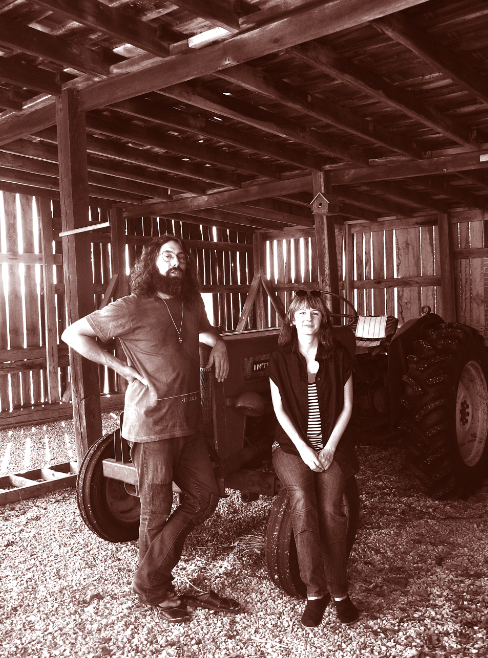
One of these days, the owners of Max and Farm 255 will meet for drinks and hash out a truce to end the noise war that plays out every Friday and Saturday night in downtown Athens. As of Fri., Oct. 26, that day had still not yet come. Nevertheless, psychedelic ambassadors MV & EE battled the wall of dance music from Max next door and delivered a particularly intense set of far out folk, at one point going so far as to cease fighting and actually capitalize upon the sonic interference from next door.
Despite the looping caterwaul the band had created on stage, there came a moment midway through the set when a strong dose of four-on-the-floor bass drifted over from the Max patio and settled over Farm’s own outdoor area, easily equaling in volume, if not quite drowning, MV & EE’s wailing improvisation. But instead of halting the show or even shooting their neighbors a dirty look, the duo simply locked into the newly introduced tempo and continued to jam, deftly reorienting the song to accommodate the ineluctable. Looks of confusion gave way to a ripple of knowing smiles as, one by one, the crowd caught on to the musical hipshot it had just witnessed.
The openness of MV & EE’s performance style makes this kind of spontaneity an ever-present possibility. All night, clean, fingerpicked guitars and hushed vocal harmonies established breathing room, humming along gently before crashes of distorted chords and screaming lap steel tore jagged holes in the meticulously woven fabric. While Matt Valentine jerked his instruments all over the place, physically wringing every last overtone from his slew of guitars and banjos, Erika Elder remained almost eerily stoic. Both performers exhibited great degrees of control, handling the musical violence like vengeful, feedback-hungry deities stomping out the cities named in their respective honors. Yet the term “indulgence” was absent from the post-show discussion; instead, the abrupt turns and extended crescendos scanned as pure, veneer-stripped exploration. Valentine often spent long periods crouched in front of his amp, head bent to receive his own punishment in the pursuit of perfect screaming sustain or the right brand of squall from his juiced-up, phaser drenched machines. Meanwhile, Elder lent voice to the madness, squeezing tender melodies out of her armory of lap steels and various oddities, the highlight of which had to be the “Mandobird,” a miniature Gibson Thunderbird strung like a mandolin.
It was an appropriately radical device for a radical night. Between the late start time, the two-party decibel pissing contest and sudden cold snap outside, nothing went exactly as expected – all of which only gave a couple of seasoned performers an excuse to jettison expectation altogether.
____________
Below, check out VINYL’s exclusive interview with Valentine:
Vinyl Mag: You guys have a reputation for being especially prolific, coming out with new records several times a year and touring hard behind them. How does recording compare to playing live?
Matt Valentine: They’re all the same in theory, but the records take, in some cases, a really long time to make, whereas the live experience is so nice because it’s immediate and, as you play, you’re reacting to so many things in the environment, things that aren’t necessarily great for a record, but are very appropriate for that moment in time. Sometimes things that sound really cool live have a space, but they don’t necessarily need to find their way onto something that is going to be a little more of an expensive release for someone to buy and listen to.
That’s where we came up with Heroine Celestial Agriculture, which is a subsidiary of our long-running cottage label called Child of Microtones. We’ve been doing that since 1999. For the Heroine thing, we basically harvest these live shows – they’re unadulterated but nicely cleaned up – I comb over them with mastering, and we spend a lot of love making sure they sound good and have a nice vibe to them. They’re basically like the lowest forms of art [laughs], and the LPs are like the highest form of art. And knowing that we have something going with that, as well as having these great labels that want to do albums that we’re interested in, the lines aren’t as blurred as they could be, but the ultimate thing is just trying to get cool-sounding stuff down and out to other people to hear.
VM: Does most of that creativity spring from working things out on tour, or exploring more plentiful and expansive options in a studio environment?
MV: It mainly stems from having a good work ethic. We’re into playing music as much as possible and dig being around music and creative people as much as possible. That inspires us. The studio environs are cool for a different kind of color; it’s expansive but not as ephemeral, and that aspect of it is terrifying. We try to find a balance. I get into this thing called “spectrasound” which has the sound dancing all around the stereo field- the aim is that people should want to keep coming back to take a spin.
VM: Your sound has changed fairly significantly over the years, encompassing everything from classic folk arrangements to some pretty spaced-out adventures in improvisation. Is there a conscious arc to your development, or does each batch of songs reflect the specific things going on in your lives at the time?
MV: I think the “space” and the jams were always in there, as were the songs/compositions. We’ve also always mixed amplification with the folk forms. I reckon the conscious arc is, “Don’t look back, set the controls to future wave.” Sure, the songs are snapshots of the sounds of the environment…it all gets in there. I dig topical songs, but I don’t think we’d ever get a six-figure deal on topic.
VM: A lot of notable songwriters — especially those incorporating roots elements into their music — seem like they’re pushing toward their own perfect vision of the cleanly composed, A-B-A-B ideal. You guys frequently seem more focused on faithful, moment-by-moment transmissions of vivid impressions, pulling the listener onto the banks of a river or into the passenger seat on a long drive. Can you talk a little bit about your approach to capturing experience in your chosen medium?
MV: Yeah, A-B-A-B can be a drag; we try to bring some chaos theory and extended love-ins into that form. It’s a groovy formula, but we love to break traditions.
VM: Did you engineer Space Homestead yourself, or were you working with a producer?
MV: I guess I was the chief engineer, but there are other engineers on it. We worked with Jarvis Taveniere, who’s got the Rearhouse studio, the original Woods studio. We also worked a little bit at Buttermilk Falls, which is Jeremy Earl’s home studio, and I engineered sessions with that, but he helped me, since were just doing the D.I.Y. thing in his studio. Erika and I engineered some stuff at our house, and Justin Pizzoferrato engineered some of the cuts at his studio in Greenfield, Mass.
It helps to have someone else twiddling the knobs, so you can just use one side of your brain [laughs], not burning synapses worrying about levels so much as playing notes. But usually we like to do them ourselves. Woodsist pressed the album on their label and did the distribution.
VM: What did each participant bring to the sound of the album?
MV: We definitely get along with everyone who plays on the records on more than just a musical level. Otherwise, I don’t think we could work with them. They’re like extended family, and we have a kind of deep bond where sometimes you don’t need to speak much or even really give much direction. They’re people who are just really groovy players, so they bring a spirited and inspired vibe when they play. I think that’s most important.
VM: What do you think you’d be doing if you weren’t going at it full-time with the band?
MV: Oh, man. At this point, I don’t think I know anything else [laughs]. I think I’m kind of grandfather claused in and out…stuck. We used to sell records – we worked in record stores together for a long time, probably a good 15 years. I started working in record stores as a teenager. Record stores still exist, but on a different level than when I cut my teeth in them.
I do a lot of mastering for bands. I do our own label. Erika does a lot of graphic art. She does pretty much all the layout for all the records. She works for a few pretty wild organizations freelancing up in Vermont. There’s this thing called Strolling of the Heifers, which is a big annual parade for farmers and local businesses.
You know, I’d probably be doing something in agriculture. It’s like I’m already doing sonic agriculture; I’d probably dig my hands a little deeper into the dirt, grow some vinyl on vines [laughs].

Minus the Bear interview: Tales from the Tour Bus
Unless you’ve been living under a rock for the past 10 years (and even then I’m not sure it’s a valid excuse), your personal playlists should, by now, delightfully be acquainted with Minus the Bear. If for whatever (unfathomable) reasons you’re not familiar with the five- piece, Seattle based indie-rock band that is Minus the Bear, fret not and consider this your formal introduction. Minus The Bear formed in 2001 and have since released five albums and four EPs. What that says is that their longevity is immeasurable, and their creative juices are constantly flowing. Earlier this month they kicked off the “second leg” of their headlining tour (showcasing their new album, Infinity Overhead). I had the pleasure of sitting down with front-man Jake Snider and pick his brain for a few; feast your eyes on my revelations (and then continue reading for an over-cap of the show):
____________
VM: Can you explain to me the meaning behind the lyrics for “Steel and Blood” vs. the story line of the music video?
JS: The video is kind of the director’s interpretation of the vibe of the song. I always thought that the lyrics were about relationships that have been going on for a while- you end up fighting a lot. So I felt like the lyrics were basically about the contentious part of the relationship and how that can lead to sexual tension and all of these other overall problems in a relationship. The video I think just works well with the song, but that was mostly Dan’s concept [the director] who came up with the whole punk kids, the father, the murder, etc.
VM: In a lot of cases, song titles are taken directly from lyrics or concepts in the individual song, but not so much with MTB’s previous albums- who comes up with names of individual songs?
JS: Anybody, really. It’s always been fairly random. These days we try to get them a little more exact. But yeah, people would say something crazy and it’d be like, “huh, that’s a funny song title…”
VM: For MTB, what does the songwriting process entail?
JS: Usually Dave and Aaron [guitar player and drummer] come up with the basis of a song, and we all work around it, rearrange it, and add/subtract stuff. Then, usually the lyrical content comes once the song is completely flushed out.
VM: Was there any major reason behind leaving Suicide Squeeze Records and ultimately joining Dangerbird Records?
JS: No. I mean, the contract with Suicide Squeeze was up. So we did Omni on our own- recorded it and finished it without a label and kind of shopped it around, and Dangerbird seemed like the right place for it at the time.
VM: Speaking of Omni– that album has a predominantly softer sound of its own [in comparison]. Was that just where the band was at musically and personally at that time?
JS: Yeah, basically. We had a different producer at the time and that kind of fed into the tone of the record, as well. He was focusing more on synthesizers and getting more sounds via artificial means rather than making a guitar-rock record. But most of the recording was live- the basic tracking and whatnot, which did carry over to the new record. We wanted to make sure it sounded live. So it was some of the same techniques, but we just didn’t want to have the synths be such a predominant role because it does soften things up a bit.
VM: Were there any previous affiliations with Cursive before this tour? How did this collaboration come about?
JS: I think it was 2003 that Cursive took us out one of our first opening tours, so the connection has been there since then. We’ve played with The Good Life (Tim Kasher’s other band), so we know those guys pretty well.
VM: How was working with Matt Bayles (former band mate) as the producer for Infinity Overhead? Was it a feeling of “home”?
JS: Yeah, that was the whole idea. We wanted to just lower the inherent waste of time that can happen when you have a new producer and you have to get to know each other. There’s a lot of accessing of the sounds, but Matt just knows us so well from the past. We felt like that was the direction to take and he’s just been so easy work with and very in tune with what we’ve got going on.
VM: Are there any plans of another remixed album?
JS: We’re not quite sure what we’re going to do with that; we have some remixes in the works on some of the songs, but we’re not sure what we’re going to do with that. We’ll probably end up doing another acoustic record beforehand.
VM: After this tour wraps, what are the immediate plans for the band?
JS: I think we’re going to put out a new video for the song “Listing” off of the new record. But the next thing we do, I think, will probably be that acoustic thing we talked about.
_________________
Following up the set of Cursive, Minus the Bear struck pertinent chords with the audience by kicking off their set with “Steel and Blood” from their new album. The flashing of the strobe lighting, crowd members each dancing to their own beat, and the heaviest of energies became the building that was simply the Florida Theatre of Gainesville just hours before. “Lies and Eyes” and “The Game Needed Me” were next on the set list, each musically heightening the already palpable vivacity in the room. The set went on to incorporate four more songs off of Infinity Overhead, leaving the rest of the set room to bust out plenty of the favorites of MTB appreciators all around, such as “Throwin’ Shapes”, “Knights”, and “Pachuca Sunrise”. From my experience, it’s safe to say that Minus the Bear does something extraordinarily beautiful to a crowd in a way that I have never seen before.
MTB will be touring through early November- experience the energy for yourself in the nearest available city, and purchase your copy of Infinity Overhead online today.
INTERVIEW: Crashing practice with Tumbleweed Stampede
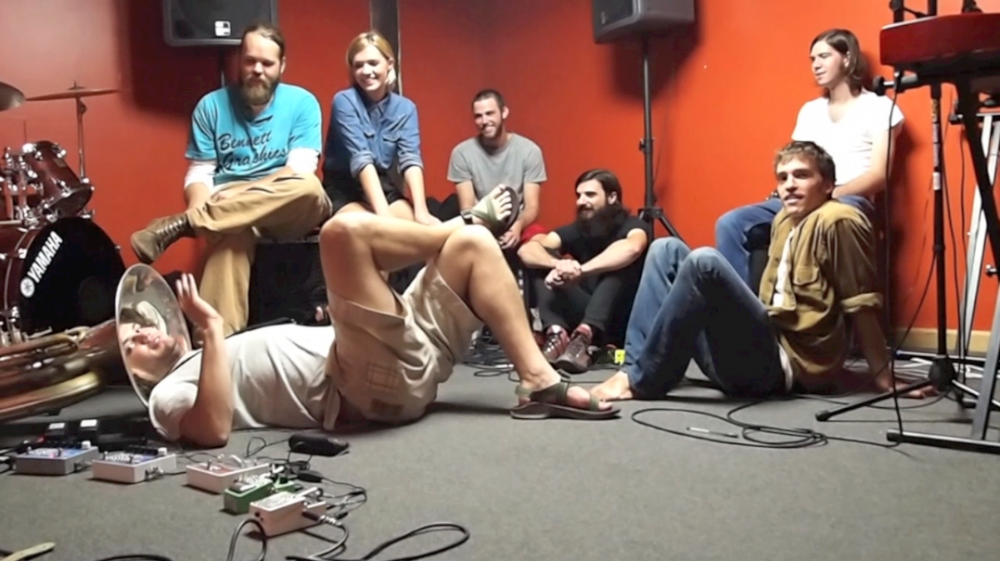
Hanging out in the practice room with Athens-based Tumbleweed Stampede. If you don’t know these guys, you should really learn how to use the internet and look them up. In the meantime, enjoy the interview- these gents are lovely.
Also be sure to check out their show tonight at the 40 Watt if you’re in/next to/around Athens. Gonna be a good one.