Vinyl Mag
Menu
  • About Us
  • News
  • Reviews
    • Music Reviews
    • Show Reviews
  • Interviews
    • All Interviews
    • Vinyl Video
  • Features
  • Vinyl Recommends
    • Playlists
    • Year-in-review
  • MBUS
Menu

Trey Moss

Trey is a senior English literature major at the University of Georgia and is planning on entering an MA program next Fall. He enjoys turgid literature, bar food, cheap beer, and black coffee.

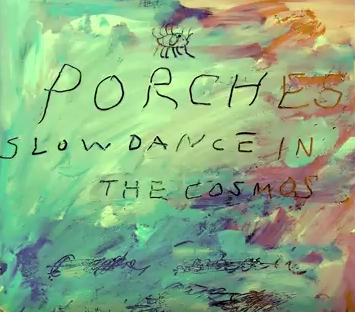
Review: Looking Back at Porches: ‘Slow Dance in the Cosmos’

Posted on October 20, 2015October 19, 2015 by Trey Moss

Sometimes I hear an album I genuinely enjoy, yet for some reason, it slips my mind until months later when I rediscover it with renewed enthusiasm. Porches’ Slow Dance in the Cosmos is one of these albums. I first heard of Porches back in February. I didn’t find the album particularly appealing at first. Aaron Maine, the front man for Porches, fence-sits when it comes to genre; some songs entertain a more indie rock feel while others are rooted in chiptune inspired eighties throwbacks.

Nonetheless, the genre ambiguity wasn’t what turned me off from Porches; it was Maine’s voice. I found it annoying and wavering, as though Maine was riddled with insecurities and self-doubt regarding his abilities as a musician and his qualities as a human being, but not in the eclectic, artfully disheveled manner of indie superstars like Conor Oberst or Stephen Morrissey. After a few listens on late-night Megabuses to Atlanta to see my ex-girlfriend, I set the album aside. I didn’t think it was worth listening to any further, and it didn’t seem to be growing on me. I meant to write up a review back in March, but the album was already two years old at that point so I didn’t think there was much of a point. I was very mistaken.

Six months later, I started listening to Slow Dance again after discovering that Aaron Maine’s girlfriend is none other than the fabulously adorable Frankie Cosmos, whose album 2014 album Zentropy found its way into the hearts of indie lovers and Kevin Kline aficionados everywhere. Cosmos, aka Greta Kline, is also the female lead vocals in Porches as well as the bass player. Likewise, Maine plays drums in Frankie Cosmos’ backing band under the alias of Ronnie Mystery, an homage to his persona Ronald Paris in Porches. My thoughts on Slow Dance underwent a complete shift. I found myself unable to stop listening to it. Maine’s voice, once thought to be grating, became oddly warm and honest.

Perhaps the circumstances under which I first heard Slow Dance left a bitter taste in my mouth, but now, months later, I find comfort in the forthright attitude Maine expresses in his songs. He’s honest, much more than the aforementioned Oberst and Morrissey. His songs aren’t full of false expressions of love or individuality or intellect. He sings how he feels and it’s incredibly refreshing, especially with Cosmos backing him up. You can hear the intimacy in the music they’ve created together.

Specifically, I cannot pick a favorite track. If I were ever to label an album as “complete,” I’d be hard-pressed to find a better candidate than Slow Dance in the Cosmos. From the opening track of “Headsgiving,” an odd sexual ode that deals with mental health, isolation, and love to the final track “The Cosmos,” the album never misses its mark. Stylistically, the songs are as various as they come. “Headsgiving” is clearly more of a progressive indie track, but its follow-up, “Jesus Universe,” is full of synthy cascades and gritty metaphors. But other tracks, like “Xanny Bar” and “After Glow” are significantly different than other tracks; the former being a slow, unplugged acoustic song about a sad sap drunk that runs across a girl in a bar that’s just as much of a sad sap as he is and Maine’s lyrics provide the dialogue between the two characters, Ronnie and Edith. “After Glow” captures the simultaneous beauty and sadness of isolation and loneliness, perhaps most emphasized through its juxtaposition against the cityscape setting described in the opening line. However, “Fog Dog” is perhaps the most complete track, with competing lines and harmonies between Maine and Cosmos. It’s almost balladic with its instrumental and vocal building, with Maine utterly dominating his place as the front man and solidifying his confidence as an artist, yet still holding on to some reservations as any artist in his mid-twenties would do.

As a whole, Slow Dance in the Cosmos is in a class of its own. It’s complete, but unlike any other albums I’ve heard that I regard as such. I love every facet of it. I honestly cannot get enough of it. Every time I listen to it, I find something new. Maine’s presence is prodigious and intimidating. Porches, in my opinion, falls in with the candid honesty of bands like Modest Mouse, Bright Eyes, The Smiths, and others without compromising its own identity. Porches does not emulate its sound, but creates it.

5/5

Top 5 Abstract Hip-Hop Artists

Posted on February 18, 2015March 13, 2015 by Trey Moss

vinyl-abstract#2NEW

Hip-hop is a many-headed beast. It’s incredibly hard to say what hip-hop is anymore, because the artists that rep the genre are as different from one another as they are plentiful.

From the early days of hip-hop with the Sugarhill Gang and Grandmaster Flash and the Furious Five to the bodacious Atlanta trap hip-hop artists of Waka Flocka Flame and OG Maco, it’s arduously difficult to tell where hip-hop begins and ends as a genre. Its malleability is impressive and perhaps what makes hip-hop as unique and multi-faceted as it is.

Regardless of artist or subgenre, the quintessential essence of hip-hop is pervasive, even to the point of the most abstract and near-lunatic artists that dwell in the pulsating underground scenes of Los Angeles, Chicago, and New York. These are the artists that have remained as close to the original formations of hip-hop and the culture that surrounded the early days of the underground. Their music has advanced with the technology available and the constantly morphing culture in which they are present, but their creations are a testament to the versatility of hip-hop without forgetting its roots. They deserve recognition for their refusal to betray the hip-hop scene.

5. Sage Francis

In the religion of underground hip-hop, Sage Francis is the abbot of the monastery. His build and demeanor reflect the part well. Sage’s lyricism borders on spoken word, deviating from the typical rhyme scheme while not sacrificing his flow and veracity. While Sage Francis is certainly not the most appealing artist, with topics ranging from socio-economic issues to identity disorders, his ability as an artist sets him apart from others flooding the underground.

4. Milo

Milo is the young gun of hip-hop. At 23 years old, Milo began to collaborate with the esoteric unit Hellfyre Club, comprised of veterans such as Nocando, Open Mike Eagle, and Busdriver (see below). After releases such as Milo Takes Baths, The Cavalcade, and Things That Happen At Day/Things That Happen At Night, Milo debuted his first full-length album entitled A Toothpaste Suburb, in which he details the struggles with his own identity as a young black man with an obsession with archetypal nerd culture and a love for philosophy. A Toothpaste Suburb features artists outside of Hellfyre Club alumni such as Kool A.D. from Das Racist.

3. Busdriver

I can’t even begin to explain how odd Busdriver is. I don’t know if it can truly be defined as hip-hop, but if we’re going to label this enigmatic artist as such, then he is undoubtedly skirting along the edges of the genre like a sideshow attraction that is truly set out to become the main event. When I first heard Busdriver on his 2005 release Fear of a Black Tangent, I wasn’t sure what I was listening to. I wasn’t sure if I liked it, and I’m still not entirely sure that I do.

Regardless of Busdriver’s abstruse style, it would be an insult to the underground hip-hop scene to not include him somewhere in this list. He isn’t for everyone, but he is most certainly for hip-hop.

2. Yoni Wolf of Why?

Yoni Wolf is a personal favorite of mine. Some of my fondest memories of are listening to his early tracks from Oaklandazulasylum. Why? came to my town two years ago and put on one of the best shows that I’ve ever had the privilege to see. Yoni’s lyrics have a majorly poetic quality to them. His strange appearance and background make him fall far outside of the boundaries of typical hip-hop, and his musical style borders on (if not resides within) indie rock.

Nonetheless, Yoni is a rapper, tried and true. His style is unique, accompanied by nasal inflections and strange post-adolescent reminiscing, but what Yoni says is what’s most important. His lyrics reach out to the individual and grab them by the heart strings. He’s more than a rapper; he’s an author, and in his authorship he tugs at what makes a person a person and exposes himself as a raw, real human that a listener can relate to, not an enigma shrouded behind a false persona.

1. Aesop Rock

Aes is a god among mortals. I don’t know if anyone has ever referred to Aes as the James Joyce of Hip-Hop, but I’m coining that now. His lyrics are immensely abstract and poetic. Nothing can be grasped on the first go-round, and even after years of heavy listening and adoration of his work, I still have no idea what the hell he’s talking about in most of his songs. Some are clearer than others, such as Ruby from his most recent solo release Skelethon, but most, like Anti-Social from his debut album Music for Earthworms, are abstract to the point of confusion.

Aesop Rock doesn’t reside within the world of abstract hip-hop; he transcends it into near indecipherability (it’s a word now). His work is arcane, and while many critics claim his words are meaningless and purposefully complex for its own sake, it’s evident given the time to listen that Aes is a rapper who chooses his words carefully, and in turn, each album presents itself as a newly intricate and complex magnum opus. Aes, like Joyce, is a timeless artist.

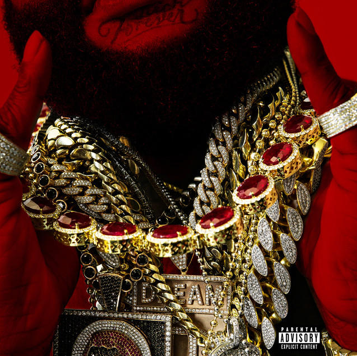
Rick Ross: ‘Hood Billionaire’

Posted on November 24, 2014January 8, 2015 by Trey Moss

Hood Billionaire is Rick Ross’ seventh studio album set for a November 24th release date in light of the marginal success of his March release, Mastermind.

Ross doesn’t deviate from a set formula. I’ve never been a major fan of his work, but I’ve given him a considerable amount of attention not because of my enjoyment of his music, but because Ross is certainly an enigma. The content of his lyrics ranges from cocaine to crack-cocaine. Ross seemingly can’t get enough of the white. But despite his lack of originality and prowess in his music, Ross stands out among the other rappers to whom he is often compared. For the Teflon Don, there is no façade to uphold.

Unlike rappers such as Lil’ Wayne, Gucci Mane, and Waka Flocka Flame, Ross’ background as a correctional officer at a prison in Miami renders him incapable of presenting himself as “hood” in a genuine sense. His music comes off as serious and cutthroat, but Ross acknowledges his less-than-gangster past and o his peers often criticize his view from the other side of the bars as a discredit to his status in the rap community.

But Ross is exactly who he wants to be. The tattooed, overweight (although he recently adopted a healthier diet to lose that weight) presence on stage dispels any hint of a life anything other than what he claims in his music. He sincerely looks like a drug kingpin from Miami and nothing less. If you came across Ross’ at a show and had never heard of his past as a correctional officer, you wouldn’t think twice when he says “fishscale made me major profit margins/I’m a prophet stuffing my pockets, you n****s starving.” Rick Ross is a combination of his image and his lyrics. They are bound together inextricably and he knows that. If Ross looked like anything other than what he looks like now, his music would fly considerably under the radar.

Hood Billionaire is just like every other Rick Ross album. It’s a mixtape recorded on a major label. All the qualities are there: the horns, the echoing mantra of “Maybach Music” that permeates Ross’ very musical essence, the various skits and sound samples referencing drug trade, both real and fictitious. Ross is nothing more than an image and his music serves its purpose by reinforcing that image. The song titles speak for themselves, such as “Coke Like The 80s,” “Neighborhood Drug Dealer,” and “Phone Trap.” They are repetitive and unoriginal concepts that Ross rehashes every six months or so to stay on top. But that isn’t the point of his music. Ross isn’t a rapper or a musician. He’s an image that’s upheld by a genre and he releases track after track in order to stay on top.

His music hasn’t changed since 2006 and his lyrical content has remained consistently juvenile and heavily reliant on the n-word (see “Coke Like The 80s) and drug-dealing, but no one expects Ross to be a wise, versatile rapper laying intricate rhymes over esoteric beats. Everyone that knows Rick Ross as he is expects him to stay the same. His success lies in his refusal to change or expand beyond his image. Tastes change, but Ross stays the same and that provides him with a verisimilitude, a realness that gains him followers by the thousands. To be real is to be respected and as far as Ross is concerned, he is the realist.

2/5

The Latest

  • COACHELLA RECAP: the comeback of Coachella?
    by Trey Moss
  • UGA MBUS Student Ritika Sharma Forges Her Own Pathway
    by Trey Moss
  • Staff Picks to Satisfy Your Inner Choir and Band Nerd
    by Trey Moss
  • Staff Picks for Your Perfect Granola Playlist
    by Trey Moss
  • ‘It’s Only Life After All’: The Legacy of the Queer Folk Women Duo, Indigo Girls
    by Trey Moss
  • Contact
  • Work With Us
© 2026 Vinyl Mag | Powered by Minimalist Blog WordPress Theme