Tag: uga music school
Review: Jazz Ensembles Performance in Ramsey Concert Hall
Jazz music not only has the ability to transport us back in time through various musical eras but also to old memories in our lives. On Wednesday, April 3, I traveled to the streets of Paris, France, and also to past loves in my own life because of music performed by the Jazz Ensembles in Ramsey Concert Hall.
There were two ensembles: Jazz Ensemble I and Jazz Ensemble II. According to the Hugh Hodgson School of Music website, Jazz Ensemble I consists of more advanced students and comprises saxophones, trombones, trumpets, drums, piano, guitar, and bass. Jazz Ensemble II, however, is an introductory ensemble that allows students to refine their improvisation skills.
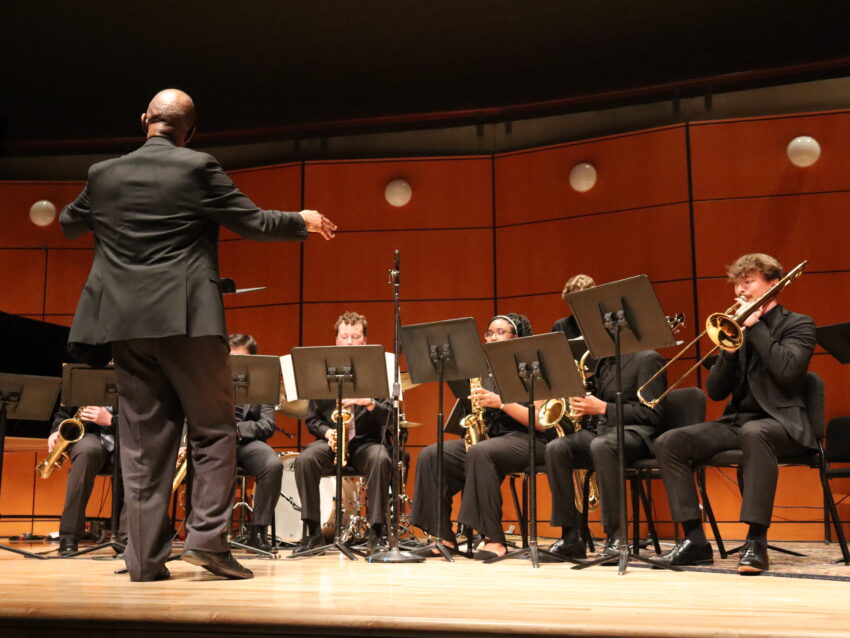
Jazz Ensemble II performed first. Immediately, I could pick up on the group’s cool and collected vibe. The director and Assistant Professor of Jazz Piano and African-American Studies at Hugh Hodgson, James Weidman, thanked audience members for being there on the “lovely spring day” and said the ensemble was having a good semester exploring all kinds of sounds.
They opened with a fun piece “Day by Day,” followed by a smoother, slower, relaxing piece called “I can’t get started,” which is by Vernon Duke but was arranged by a friend of Weidman’s.
However, my favorite piece they performed was their third, “Parisian Thoroughfare,” arranged by Mark Taylor. It starts with exciting rhythmic clacking and buzzing runs to signify the bustling, crowded, and chaotic feel of these Parisian streets. As I looked around, many people were tapping their legs to the beat.
At first, the noises startled me, though. I quickly adjusted and really enjoyed the excitement of this performance. I imagined myself riding on a bike through these narrow roads, barely dodging the various shops and people nearby. There was a guitar solo that felt a bit out of place initially, but then I began to follow the progression of notes.
Ensemble II closed out their program with a funky piece by Gerry Mulligan and a smooth one with nice progressions called “Blue Skies” by Irving Berlin.
Not only was Ensemble I physically larger, but they also played a couple more songs. The band was directed by David D’Angelo, a Senior Lecturer of Jazz at HHSOM. They opened with “The Blues Machine” by Sammy Nestico and continued with “Jitterbug Waltz,” arranged by Eric Richards.
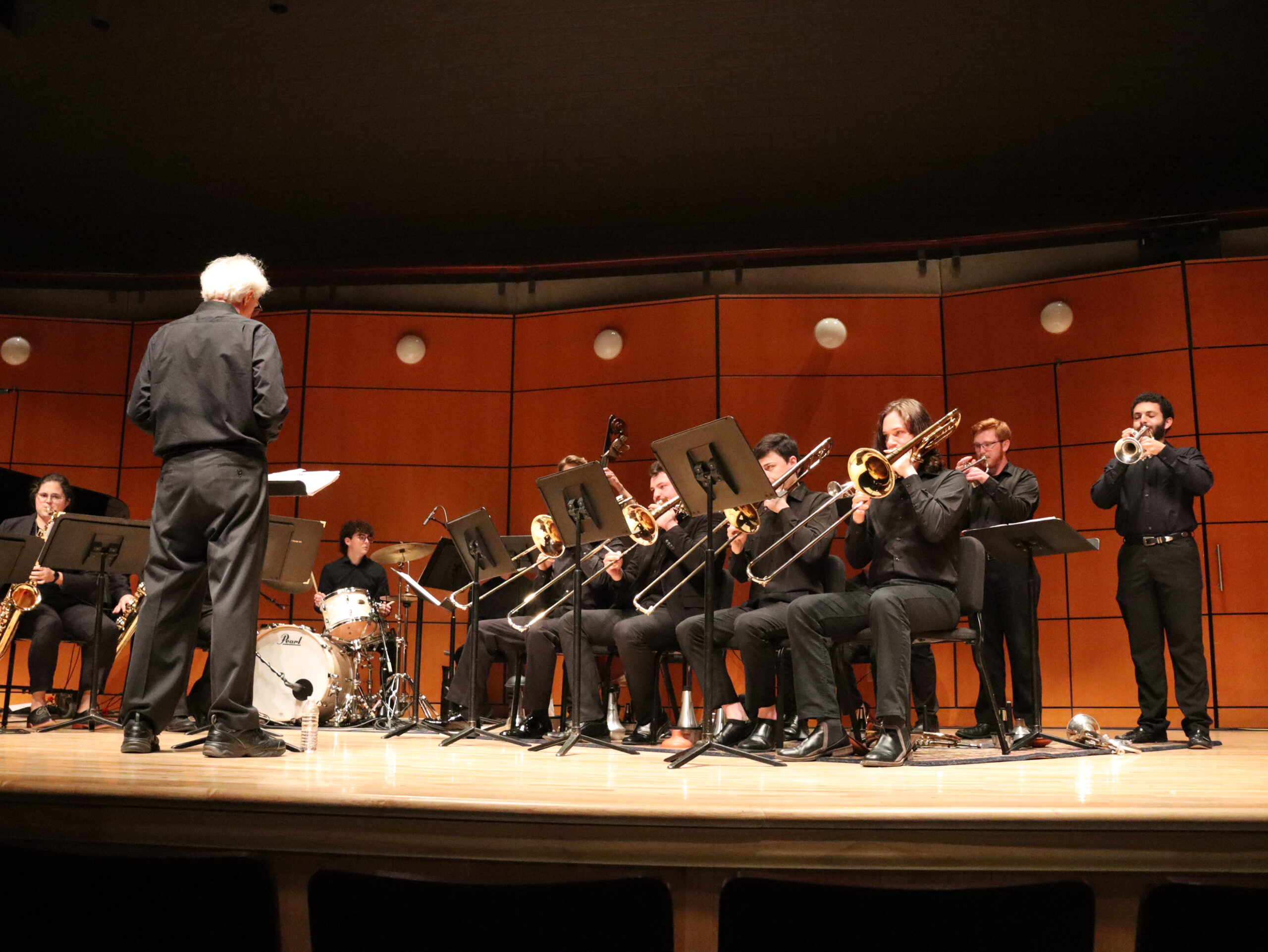
I noticed several small interactions between the band members in this ensemble, which made me smile in the audience. I could tell they were all close with one another and valued the others’ artistic craft. Many would cheer each other on during soloist moments.
Similar to Ensemble II, the third piece performed by Ensemble I, called “When I Fall in Love” by Victor Young, was one that lodged me back in time. It was a beautiful ballad that left me deep in thought and reflection, which I always value when music moves me like that.
I especially loved the descension of chords at the end because it felt like stages of falling in love. It didn’t resolve right away and teased a more minor sound, which made me think of conflict and left me wondering if maybe this romance wouldn’t work out. But then, it settled into a nice chord that had a bit of dissonance — leaving a little room open for the future.
They also closed with a love song, Alan Baylock’s arrangement of “What Is This Thing Called Love?” It featured a drum solo that I really enjoyed following. Ensemble I also played “Moten Swing,” a crunchy and anticipatory piece called “Evidence” by Thelonious Monk and arranged by John Clayton, and Callum Au’s arrangement of “Let Battle Clements.”
However, my favorite performance by Ensemble I was “Sister Sadie.” The main melody was catchy and memorable. It reminded me of a sweet but sassy southern woman that everyone in town swooned over.
The soloist who performed this melody on alto saxophone did an amazing job—they really got into the music, sliding into certain notes and then whispering the theme before belting it more loudly like a back-and-forth interaction. In the end, the saxophonist and trombonist actually did go back and forth in their improvisations, and I enjoyed watching this enthusiastic and emotional performance.
This was my first time attending a Hugh Hodgson Jazz Ensembles concert—but it certainly won’t be my last. I’ve watched the school of music put on a jazz concert before, but I really enjoyed both ensemble’s ability to lodge me in place or memory on Wednesday night.
Several others seemed to agree because this was one of the most packed nights in Ramsey Concert Hall that I’ve experienced. I look forward to Jazz Ensemble’s future shows and what new feelings may arise then.
UGA Glee Clubs Embrace Unity With “Vive La Compagnie” Concert
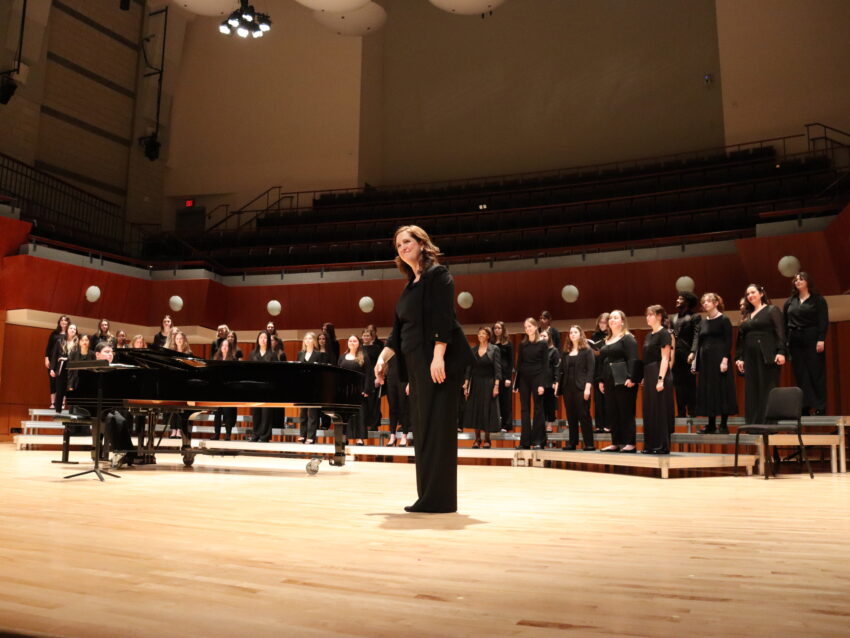
The University of Georgia Glee Clubs echoed messages of unity at Hugh Hodgson Concert Hall on Tuesday night for their “Vive La Compagnie” concert, which translates to “Long Live the Company.”
“Singing together is one of the most human things you can do,” said Conductor Sarah Gallo. “We think it’s really special … it’s also just deep in our core.”
Both the men’s and women’s groups performed a variety of pieces. From a Bulgarian folk song to a song sung in Sámi, a language spoken by Indigenous people in the northern Scandinavian region, to a poetic ballad—the repertoire was diverse.
Perhaps the most exciting piece from the Women’s Glee Club program was “Ozdolu idu,” arranged by Philip Koutev and sung in Bulgarian style. Gallo said singing in Bulgarian style required a brighter sound, which was not a typical vocal placement for choral singing.
Not only did “Ozdolu idu” bring joy to the audience, but choir members were smiling and dancing along to it too. Katie Bethbrewer, a sophomore biological sciences major, is in her second semester at the Women’s Glee Club and said this was her favorite piece to perform. According to the program bulletin, this children’s song tells a story about colorful carts “bumping and jumping” down the road.
“The concert was just awesome. I love, love, love Dr. Gallow,” said Bethbrewer. “She always does such an amazing job picking such a wide variety of music. I’m so excited every semester to get to sing all the different kinds of songs.”
Cooper Hardy, a sophomore agricultural communication major, also noticed the variety of pieces and would love to see even more languages in the future. He, however, enjoyed the “quiet and lowkey” performance of Gwyneth Walker’s “Crossing the Bar” by the Women’s Glee Club the most. Alfred Tennyson wrote the poetry, which included lines like:
For tho’ from out our bourne of Time and Place
The flood may bear me far,
I hope to see my Pilot face to face
When I have crost the bar.
However, the namesake of the concert was the Men’s Glee Club “Vive La Compagnie” performance, arranged by Alice Parker and Robert Shaw. This piece matched a jaunty mood and faster pace like the Bulgarian piece. Braden Rymer, a baritone, had a solo.
Words in “Vive la compagnie” translated to “Should time or occasion compel us to part, vive la compagnie! These days shall forever enlighten the heart,” according to the program bulletin.
“I thought the whole idea of music bringing everyone together was a great way to highlight how the music school works,” said Hardy.
Tuesday’s concert was the last opportunity of the semester to see a Glee Clubs-only performance. Because of this, Gallo made an effort to recognize the graduating seniors in the choirs.
The Glee Clubs will combine with the other UGA choirs and UGA Symphony Orchestra to put on the “Dona Nobis Pacem” concert on April 26.
“Dona Nobis Pacem is an incredibly timely and really moving piece that is unfortunately really appropriate for our world today — it’s begging for peace,” said Gallo.
A few days before the concert, two UGA students—one current and one former: Wyatt Banks and Laken Riley, respectively—died on campus. Bethbrewer said many of the songs were about hope, finding a community and finding beauty in the state people find themselves in, which helped bring her peace among the tragedies.
“Getting to hear those words and get to sing those words and preach that to our community at this time is really empowering and helps, I think, bring hope to our campus,” said Bethbrewer.
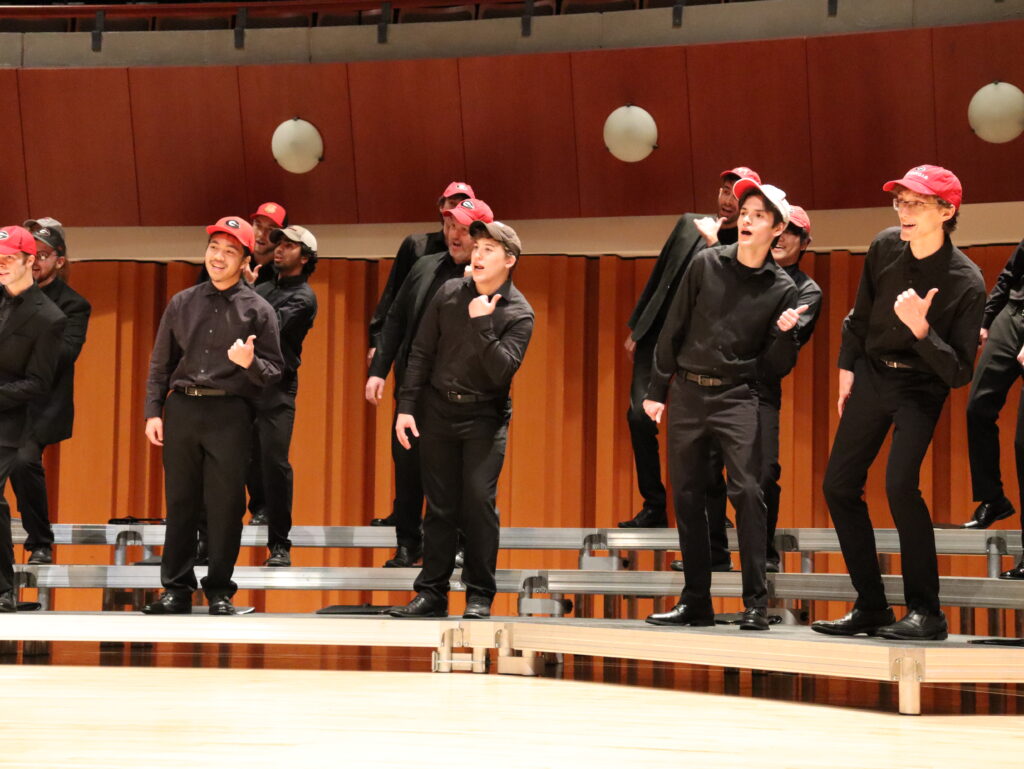
The Men’s Glee Club ended on a positive note with their performance of the Georgia Medley. This included the tradition of calling the Dawgs and skit-like choreography to engage with the audience.
“It feels like you get to experience something that’s really intimate that these people have put so much time into—I feel like it is our duty to go out there and to show our support,” said Hardy.