
Tag: new album
Warning: Attempt to read property "post_id" on null in /dom375187/wp-content/plugins/enhanced-category-pages/classes/ecp/Enhanced_Category.php on line 143
Warning: Undefined array key 0 in /dom375187/wp-content/plugins/enhanced-category-pages/classes/ecp/Enhanced_Category.php on line 232

Camp Cope: ‘How to Socialise and Make Friends’

Let me get one thing out of the way: Camp Cope are not fucking around. The moment singer/guitarist Georgia “Maq” McDonald lets loose the first lyrics of the How to Socialise and Make Friends, all bets are off that this is going to be an easy listen. Don’t get me wrong, the instrumentation on the album bears more than a passing resemblance to the relatively placid Galaxie 500, but Maq has a lot of shit to say and damnit, we owe it to ourselves to listen.
Dismantling the patriarchy is a full time job and Camp Cope need overtime pay for the amount of emotional labor put into this album. Laying her (and many other women’s, for that matter) frustrations bare about the overabundance of machismo in the music industry in the aptly titled song, “The Opener”, Maq lets out full-throated screams about the misogyny that is all too common in the music industry:
It’s another man telling us we can’t fill up the room
It’s another man telling us to book a smaller venue
‘Nah, hey, cmon girls we’re only thinking about you’
Well, see how far we’ve come not listening to you“Yeah, just get a female opener, that’ll fill the quota.”
And that’s just in the first song.
On an aesthetic level “The Opener” is a perfect crystallization of Camp Cope’s sound on How to Socialize. In a very punk move, the arrangement never strays from the bare bones guitar-bass-drums set-up because it never needs to. Maq’s voice and lyrics are the stars of the show here and I wouldn’t have it any other way.
Her voice never falters even at the albums most tender moments, like the devastating, haunting acoustic closer “I’ve Got You”. The autobiographical tale of a relative’s or friend’s slow descent into death and her attempts to figure out hers and their place amid the cruel realities of the world is only made even more heartbreaking by her acknowledgement how much they’re a part of each other.
The sheer breadth and depth of the emotion conveyed on this record is astounding, reaching an intensity that I haven’t really felt since Blonde dropped. Yes, this might be devolving into gushing but if the rush of emotion I felt after I listened to this for the first time is any indication I’ll be listening to this album A LOT. I hope you will as well.
9.5/10
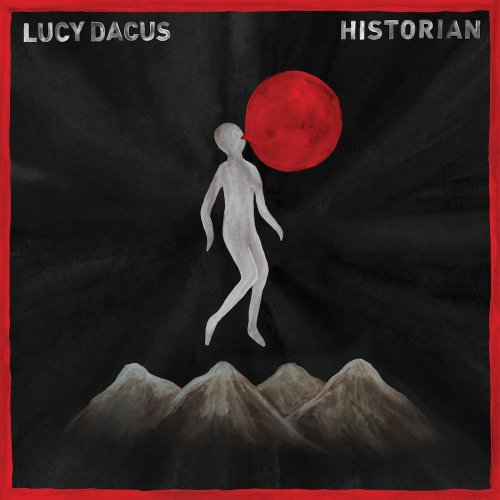
Lucy Dacus: ‘Historian’
After her 2016 debut, No Burden, Lucy Dacus was hailed as one of rock’s most promising new players. With her sophomore release, Historian on March 2, Dacus fulfills that promise—and then some.
Dacus’ delicate—but not in any way frail—vocals lead the way through the album, which almost feels like a rambling stroll through a narrative carefully sculpted with tattoo-worthy one-liners. The album screams maturity, carrying a sense of depth and knowledge that many decades-older veteran musicians at times struggle to grasp. In Historian, Dacus asks the big questions and allows herself vulnerable realizations while simultaneously staking her ground and declaring her space in rock music anyway.
The album opens with “Night Shift,” a track that’s equally heartbreaking and beautiful. Opening slowly, the track grows, seeming as if it’s never going to end but in a way that’s entirely positive. Though not one of the biggest stand-outs on the album, its a nice opener to the lineup.
The first real kicker in the album is the third track, “The Shell.” Upon opening, the song almost feels like being drunk at a party, a great party, but nevertheless still trapped in one’s own head. With lines like “I am busy doing nothing and you’re rudely interrupting/ It’s a myth but now I see it clearly / You don’t have to be sad to make something worth hearing,” the lines feel like a stream-of-consciousness, but somehow still entirely relatable.
The real shining moment of the track is towards its end—a trend that will come up again as the album progresses. The last third of the track almost evolves outside of this stream-of-consciousness to something wholly other, with the instrumental taking front in a way that builds similarly to that of great psychedelic ballads, entirely unexpected but definitely nice.
Next, to look at “Yours and Mine,” another standout in the lineup. She amps up the vocals on this track, bringing in some heavier, but still simple, harmonies to round out the lead—proving that Dacus doesn’t need to do crazy things with her vocals for her vocals to be crazy good. The best moment on this track, however, is the guitar solo rounding out the end. It’s fuzzy, it doesn’t feel overdone, and it seems to perfectly compliment the rest of the song in a nice juxtaposition.
“Body to Flame,” the sixth track, is practically cinematic in its greatness. It’s fairly calm, ambling, before Dacus belts, “Laughing aloud at the spinning stars” and the track explodes. It’s fuzzy, it’s a sensory-overload, it’s fazing in-and-out and it’s exactly what the album needs. With lines like “I see you holding your breath with your arms outstretched/ Waiting for someone to come rip open your chest,” the track almost feels like a Joan Didion essay, giving you all of the details you didn’t know you wanted—but somehow Dacus did.
Finally, the funkiest track on the album, “Timefighter.” This particular song feels self-assured, as if written by someone confident enough to walk away from a love and be able survive the fallout. It’s groovy and definitely a track you can lay back into and get comfortable with, just swaying to the beat as she spells out the story. This track, again, shines in guitar solos, but this time they’re particularly gritty, rough, and harsh on the edges. Further, the almost staccato stop-and-go towards the middle of the song shows her own self-restraint as an artist, her own maturity to know when to pull back. It fits, so well, in the overall narrative—proving her own badness in the best way possible.
On her sophomore album, Lucy Dacus confidently strode into the world of rock—showing that though it’s just her second album, she already has the chops to be a mainstay in the industry.
9/10

Eureka California: Versus
Eureka California is a hidden gem of Athens, Georgia. While the music scene in The Classic City presents a plethora of dreamy sounds and echo effects, the indie rock duo exudes a sound that samples from the 90’s rock style and references classic authors and musicians alike. With lyrical spin-offs of Simon & Garfunkel and Martha & The Vandellas, Eureka offers a refreshing sound. The duo consists of guitarist, Jake Ward and drummer, Marie A. Uhler. While they’ve been playing together for five years and may be a relatively new band in the Athens music scene, there is no doubt that this pair is comfortable in their own skin.
Eureka drops their new album, Versus (HHBTM Records), on March 25th, but they’ve been kind enough to give Vinyl Mag an early preview. Versus was recorded at Suburban Home Studios with MJ of Hookworms. The album opens with “Eureka California’s Night In.” The music video features Ward and Uhler walking to Athens’ own Little Italy for a slice a pizza and ends with a night on the couch watching what can only be an endless vortex of cat videos. Stylistically, Eureka is energetic with a hint of cynicism. Ward’s powerful vocals and stark guitar melodies are amplified by Uhler’s merciless drumbeats.
Lyrically, Versus embodies the isolation that comes with the uniformity and calamity of living in a cityscape. Eureka cleverly combines lively melodies with lyrics about passing up a night on the town for a quiet night in the house. Ward sings about the pageant that is Athens nightlife, although this can be applied to any city with a string of bars dedicated to millennial past-times, “I’m much too slow for a social animal.” In a city where 2 a.m. beckons the “final call”, you ask yourself, “Where did my time and money go?” Consequentially, you believe your night would’ve been better spent indoors, as Ward explains, “When I turn on the TV it makes me feel like someone’s home.” How often do we feel a strong sense of closeness to the voices coming through our televisions? There’s a strange comfort that comes with the mindless drone of advertisements in a city where nightlife conversations consist of platitudes about college majors and an uncertain future; it certainly can make you feel like “the only living boy in Athens, Georgia. However, it would be unjustified to deem Eureka as “recluse,” in fact, it seems that they also know how to have a good time, as Ward explains a typical night on the town, “Wearing clothes that I found at the bar, and I’m sobering up in the back of your car…Summer’s here and the time is right for getting black out drunk in the street.”
While the city harbors a sense of romance and unity from an outsider’s perspective, Eureka California seems to transport their listeners through the shenanigans that come with warm weather to the underlying loneliness that comes with being in a large crowd. Eureka can hang, but they also know the importance of solitude and self-awareness. Versus is dance inducing, fun and cohesive, but Eureka’s identity comes out in the lyrics. A smart listener should appreciate the modern rock group’s energy and be able to peel back the layers of their upbeat sound to find Eureka’s ability to reference reality in a subtle stream of lyrics.
4/5
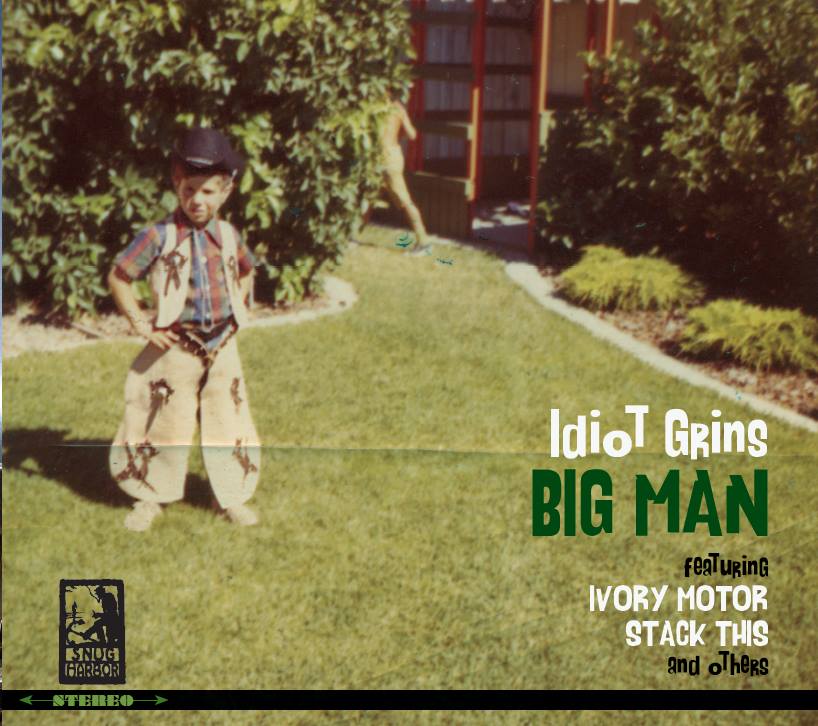
Artist to Watch: Idiot Grins
Recent trends in music have revolved around synth pop and overproduced albums, so it is rare to find a big band sound in the mix. Idiot Grins, a five man soul rock band from Oakland, California, has managed the impossible. By getting musical help from Johnnie Bamont, the saxophone player from Huey Lewis and the News, and Mic Gillette, the trumpet player from Tower of Power, Idiot Grins lends a homage to the greats of years ago. Big Man transcends the line between old and new by making a soulful big band swing that sounds like it belongs in the ‘60s, but was made in 2015. The best part, it makes you want to sing along too.
The 11 track album hits all the right notes with each song being reminiscent of the last, without sounding exactly the same. “How To Get To (Baltimore)” is classic and upbeat, with a chorus that sounds almost exactly like the chorus from “Science Fiction Double Feature” in Rocky Horror Picture Show. That isn’t a bad thing, either. The call-and-response element of the music makes the listener want to croon along.
Another standout from the album is the second track “Poppy Piss”. A swing tune that is simple (Keep It Simple, Stupid) is a good indication for the style of Idiot Grins. The song is two and a half minutes of almost the same beat, which seems repetitive, until you get to the wild vocal ups and downs of lead singer John Hansen. The variation is necessary in a track of the same melody, but Idiot Grins has the whole change game under control.
A complaint would be that the majority of the album is ballad-style, with slower melodies dominating the flow and energy of the initial three tracks. That’s not to say that those songs aren’t good in their own right, seeing as “One Reason” and “Paso Robles” are excellent representations of versatile styles. “Paso Robles” utilizes a country croon while “One Reason” is the stereotypical “down-up” beat from the ‘60s with clean sounding horns that really make the track special. Instead of a slow-down near the end of the album (with an exception for the tangy “Ovaltang”), a much needed pick-me-up would have been a better way to seal the deal on Big Man.
Despite minor issue with maintaining a cohesive flow of energy and rest within the album, Idiot Grins puts a modern spin on classic instruments minus the grainy quality.
Big Man was released on April 6, 2015 and is available for purchase or download at the Idiot Grins website.
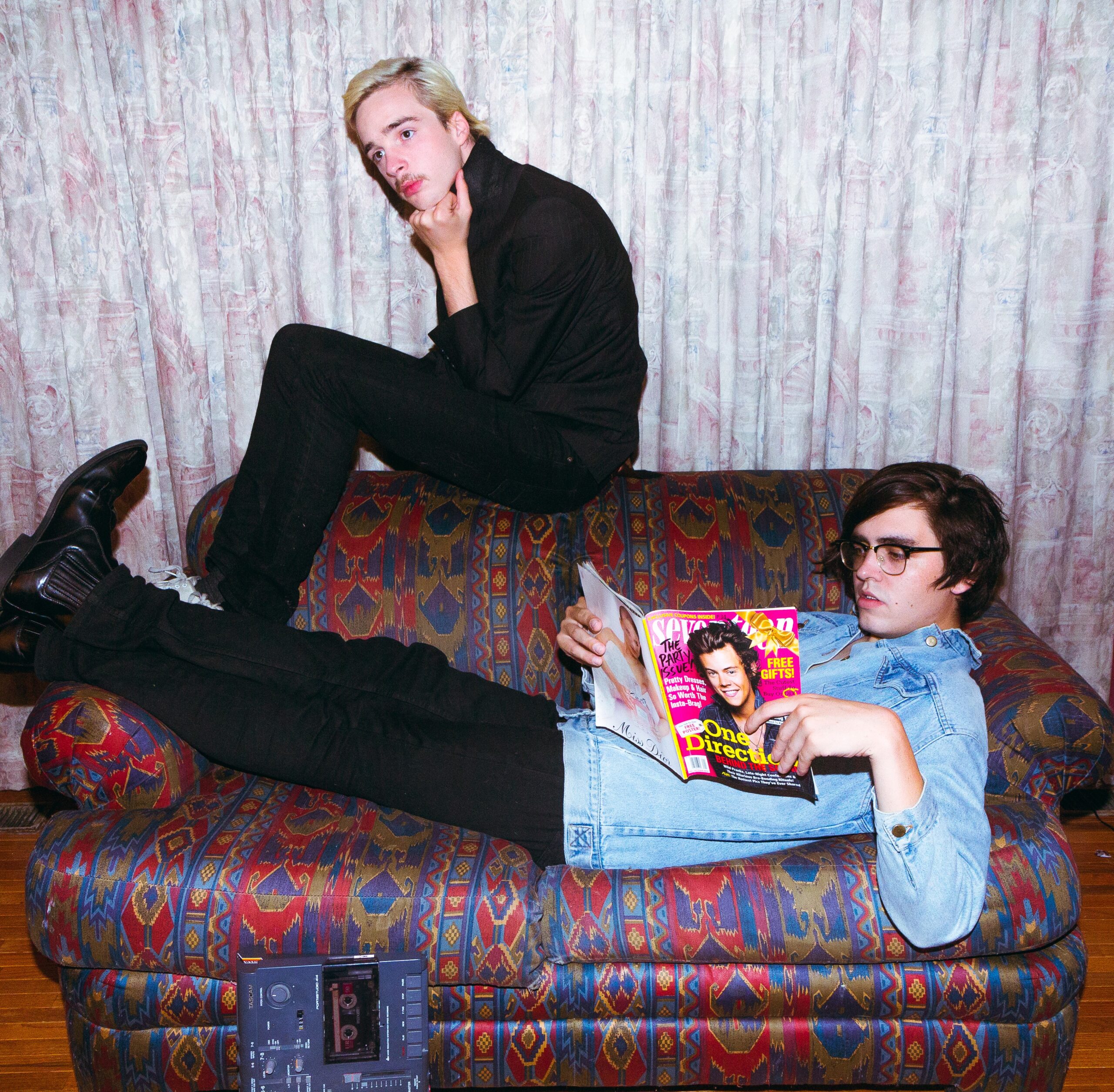
Superbody x Vinyl Mag
Robert McCurry and Caleb Dills of Superbody recently released their first album, Hades Land. With a deep and dreamy synth pop style, the boys from Chattanooga have made multiple appearances in Athens, Georgia. McCurry and Dills briefly talk about their fateful history and possible upcoming albums with an air of modest humor.
VM: Superbody is a relatively new project for you two and also pretty successful. What are the challenges, if any, of beginning this new duo?
Robert: Hearing the words “success” and “Superbody” in the same sentence makes my head hurt. I would rather not expand upon the details of the achievements or disappointments of this project at this time.
VM: You guys have a lot of help with your music videos from various friends. What is the creative process like when working with other people to get your vision across? “Wings 4 Two” and “Call Me That” really coincide with your experimental style.
Caleb: Yes, the multimedia undertakings of Superbody have so far been aided by extraordinary acquaintances who happen to share our same vision. If I could afford a video camera you would not be asking me this question.
VM: How did you two get together to form Superbody? And how did you come into your own style?
C: We’ve said it once, and we’ll say it again. We started making music at Ricky’s Crab House on 5th and Broad. Robert had a tune. I had a beat. The end.
VM: Although you two are from Chattanooga, you play a lot in Athens. Is there a difference between the audience’s responses in the two cities? Is there any particular reason you like to play in Athens, as opposed to Chattanooga?
R: I love my children here in Athens, Georgia. I’ve developed a paternal relationship with the youth of Athens in the past few months. They give. I take.
VM: I noticed at your show in Athens that you were selling tapes of Hades Land? Why that medium? Do you also sell CD’s?
C: One crisp autumn morning, the type that you could take a bite out of if you really wanted, the cassette tapes for Hades Land appeared on our doorstep. I will gladly sell anything with our faces on it for pure profit, especially if that product is a gift. If you have any gifts for us that bear our likeness please do not hesitate to reach us by electronic mail at superbodymusic@gmail.com
VM: You recently released your first full-length album, Hades Land, any talk of upcoming releases and new material?
C: If the stars align and we don’t get drafted into the war, you can expect some new media sometime in the future.
VM: Based on your experience with your first album, is there anything you’d like to improve or change for your next album?
R: First off, we’d like to get this stray pack of dogs out of our studio! If you listen to Hades Land very closely you’ll hear ‘em! Those damned things are a headache and a half!
Foxing: ‘Dealer’

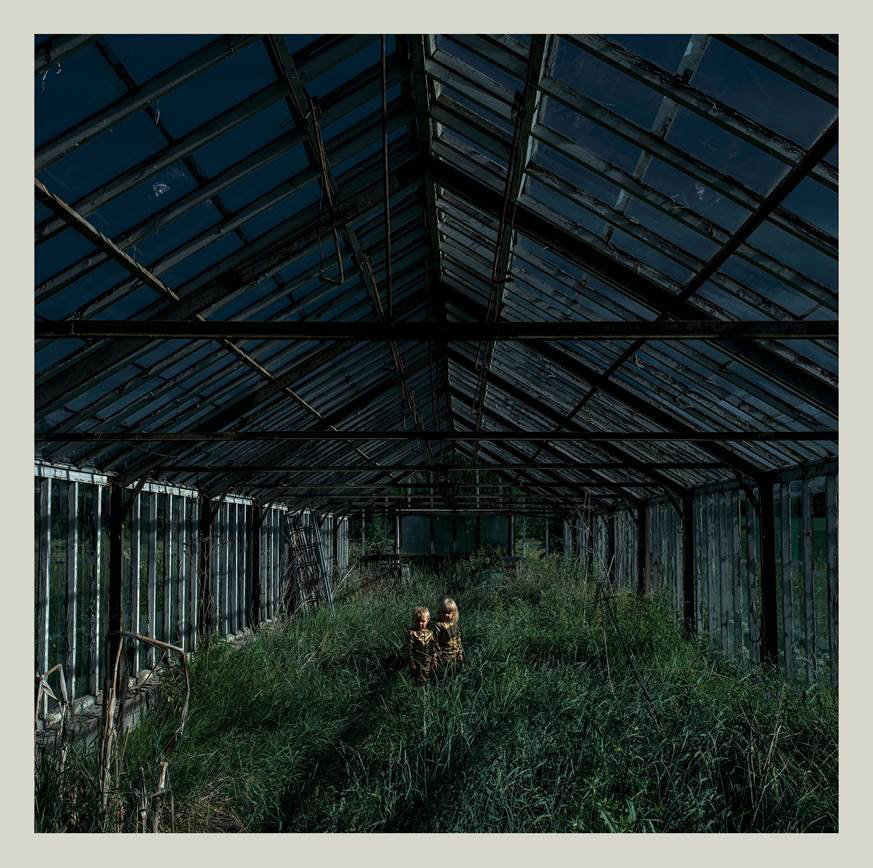
Calling the St. Louis band Foxing an indie band doesn’t even begin to do them justice. Starting from humble beginnings in 2010, Foxing released their first album The Albatross in 2013 and was immediately put on artist radar. The Albatross was a success, with notable favorites from the album being “The Medic” and “Rory”. Their sound can be described as many different things, but I like to group them in with what I call “New Wave Emo”, which combines elements of math rock, emo and post-rock with additional instruments that aren’t the typical guitar and drums. Foxing fits right in with the likes of The World Is A Beautiful Place, Algernon Cadwallader and The Hotelier, all of which have claimed stakes in the Emo Revival of the 2000s.
Dealer, the second studio album by Foxing, is bound to follow the same standard set by The Albatross, meaning more punches of emotion and more lyric confessionals. Dealer also brings forth a heavier, darker sound than prior recordings. The album carries a weight that guarantees the listener will remember it afterwards.
“The Magdalene” was released ahead of the album, and it was met with praise. Foxing tackles the intricacies and difficulties of balancing religion and human impulses. Conor Murphy elevates his falsetto to higher heights and keeps it bouncing up and down with the bopping guitar riffs. For such a pretty voice, it’s ironic that the lyrical content is so dark. Met about halfway through the track with soft choruses in the background, guitars and drums take over allowing a harsher, more in-your-face tone for the remainder of the track.
“The Magdalene” can be used to summarize Dealer in the best of ways: it starts off with smooth and concrete vocals with instruments slowly inkling into the mix, but never diluting what Murphy has to express. Although the album starts off sounding similar to The Albatross, it changes about halfway into something completely new. With more ballads and less filler songs, Foxing is blending into an all-consuming sound that hits home runs more than it strikes out. The changing sound allows Foxing to explore a new territory with Dealer that it hasn’t done before: a surreal, existential side. While still retaining the heart-breaking depths shown in The Albatross, Dealer manages to have moments of tenderness, self-revelations and gut-wrenching pain.
Dealer was released on Oct. 30, 2015 and is available for $8 download on Bandcamp.
Vanessa Carlton: ‘Liberman’
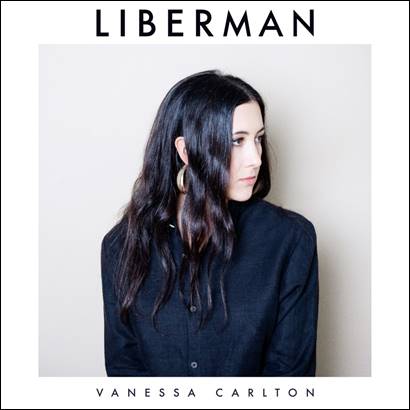
After the reigning success of “A Thousand Miles” from her debut Be Not Nobody in 2003, Vanessa Carlton released the not-so-popular Harmonium (2004) and Heroes & Thieves (2007). Despite the commercial failures of the two albums, Carlton moved on to release Rabbits on the Run through label Razor & Tie in 2011. Critics viewed the album as “introspective,” with generally favorable reviews on rating websites like Metacritic. Roughly four years later, Carlton has discovered a different sound and a different side of herself. After marrying fellow musician John McCauley (Deer Tick) and having a baby girl, Carlton’s life has changed drastically, and that change translates directly to her music. The singer’s upcoming fifth studio album Liberman explores the sensation of taking time off to do things you actually want to do, and the reflection of self that comes with having a change of pace.
Compared to the immediately recognizable commercial pop of “A Thousand Miles,” Liberman has reached into a smooth synth-pop dreamland. “Take It Easy” starts the album with an unexpected direction. Carlton sounds like Ellie Goulding but with drowned out vocals more commonly found in low-fi tracks. The combination left a calming atmosphere for Carlton to achieve another pop success.
The album is saturated with Carlton’s signature piano hooks, and for “Willow” they open the track up without drawing too much attention from Carlton’s vocal range. “Willow” and “Blue Pool” (track 5) give off the impression of a medieval renaissance pub during the middle of a shanty.
The track is immediately followed by the hauntingly beautiful “House of Seven Swords,” where the lyric “together and we’re still on our own” sets the definition for the album. Liberman has Carlton reconnecting to her roots, discussing major life changes and how they’ve impacted her views. “House of Seven Swords” looks at that angle through a sweet and slightly melancholy glass. “Operator” expands on the themes in “House of Seven Swords” more blatantly. As Carlton says, “pack up your things, I don’t care what you bring, leave your house for a home.” Family is now a huge part of Carlton’s life, and her move from New York City to Nashville had to leave behind emotional impact that is reflected in her music.
“Matter of Time” opens with an acoustic guitar, which is very refreshing after an album of mainly synthetic drift. The track also shows variety in layered harmonies, something that Carlton does magnificently. The stripped down sound accompanied by multiple Carltons singing “when is it time to let go?” is a sincere and heartfelt expression towards the world.
Tracks 6 and 8, “Nothing Where Something Used to Be” and “Unlock the Lock” respectively, show more of the mindset that Carlton has acquired, but with less of the variation that is expected from someone of her musical talent. The tracks are catchy enough, but not near the same caliber as other tracks on the album. While not necessarily a let down, they offer a slightly disjointed feel to the rest of the listing.
The real star of the album is the simple and refined “Ascension.” The first minute of the song is filled with alternating piano chords and synthetic distortion that works suprisingly well together. Carlton sings very little on this track, letting the overall sound speak for itself. A good move. Her very obvious piano skills are highlighted while incorporating stylistic elements of shoegaze around 1:46 to add twists to the straightforward song.
Overall, Carlton has experienced a big move. The lyrical reflections of her path in Liberman are honest, playful, and jarring. By stripping down to the core of emotion, Carlton has tapped into her lyrical strengths while experimenting with sound, resulting in a beautiful calming album.
Check out Liberman, out today, and be sure to catch Vanessa on her upcoming US tour (dates below)!
Tour Dates
Oct 30 Louisville, KY @ Zanzabar
Oct 31 Indianapolis, IN @ The Hi-Fi
Nov 01 Iowa City, IA @ The Englert Theatre
Nov 02 Green Bay, WI @ Meyer Theatre
Nov 04 Minneapolis, MN @ Cedar Cultural Center
Nov 05 Omaha, NE @ The Waiting Room
Nov 06 Lawrence, KS @ The Bottleneck
Nov 07 St Louis, MO @ Duck Room at Blueberry Hill
Nov 09 Columbus, OH @ A&R Music Bar
Nov 10 Chicago, IL @ City Winery
Nov 11 Evanston, IL @ SPACE
Nov 13 Ann Arbor, MI @ The Blind Pig
Nov 14 Pittsburgh, PA @ Club Cafe
Nov 15 Cleveland, OH @ Music Box Supper Club
Nov 17 London, Ontario @ London Music Hall
Nov 18 Toronto, Ontario @ Mod Club
Nov 20 Montreal, Quebec @ Lion d’Or
Nov 21 Ottawa, Ontario @ Mavericks
Nov 23 Hamilton, Ontario @ Molson Canadian Studio at Hamilton Place
Nov 30 New York, NY @ City Winery
Dec 01 New York, NY @ City Winery
Dec 03 Troy, NY @ Troy Savings Bank Music Hall
Dec 04 Northampton, MA @ Iron Horse Music Hall
Dec 05 Portland, ME @ Asylum
Dec 07 Allston, MA @ Brighton Music Hall
Dec 08 Fairfield, CT @ StageOne
Dec 09 Philadelphia, PA @ World Cafe Live
Dec 11 Washington, DC @ The Howard Theatre
Dec 12 Charlottesville, VA @ The Southern
Dec 14 Durham, NC @ The Carolina Theatre
Dec 15 Atlanta, GA @ Terminal West
Dec 16 Birmingham, AL @ WorkPlay
Dec 17 Nashville, TN @ 3rd & Lindsley
Dec 19 Asheville, NC @ New Mountain Theatre

Superbody: “Wings 4 Two” Music Video
After their recent release of Hades Land, Chattanooga-based Robert McCurry and Caleb Dills have debuted their newest music video for “Wings 4 Two.” With an 80’s pop sound and deep vocals from McCurry, the video implicates a “home video” style. French subtitles guide the video as McCurry and Dills play in front of a sparse audience. The glowing light and stark contrast gives the video a David Lynchian feel. Among the audience is a mutated man, like something out of Eraserhead. The man follows Dills home, who eventually emerges from the nightmarish scene only to exhibit more disorientation.
The video coincides with Superbody’s heavy sound. With sonorous guitar rhythms combined with Dill’s dreamy synthesizer effects and McCurry’s baritone vocals, the video embodies the ethereal style of the track. The video is directed by the boys of Superbody and Christopher Artell.
The Casket Girls: ‘The Piano Album’

On October 17, Savannah natives The Casket Girls are releasing their third album, called The Piano Album through Graveface Records. The three piece group features sister vocalists Elsa and Phaedra Greene as well as Black Moth Super Rainbow’s Ryan Graveface. Although the two previous albums were infused with experimental electronic sounds similar to those used by MGMT, The Piano Album takes a more low-fi approach. With Graveface creating and playing the piano melodies and the Greenes stealing the stage with hauntingly beautiful vocal harmonies, The Piano Album is both unusual and familiar at the same time.
The album starts with the appropriately-titled track “Beginning”, one of three entirely instrumental tracks that mark up the album at the beginning, middle and end. Advertised as the only instrument used on the entire album, the piano sets up The Casket Girls with a simplistic premonition for the rest of the tracks.
“True Believers” follows suite with a gloomy, low-fi piano mixed with the hauntingly visceral double vocals of sisters Elsa and Phaedra. Currently with 471 listens on Soundcloud, “True Believers” is either the most popular (so far) of the album or has gained the most exposure. Either way, the track starts off sounding very similar to the beginning of “Flashlight”, that one song from Pitch Perfect 2 that ended the film on a happy note. Thankfully, it progresses and sinks into dreamy territory with the repeated lyrics “we’re the true believers” melting into the piano melody seamlessly.
Tracks three and four, “24 Hours” and “Nightlife”, showcase the light nature of The Casket Girls. With climbing arpeggios of harmonies that float away with the drowned out piano, the music is reminiscent of bedroom-pop group Fog Lake with lyrical comparisons to contemporary artist Lana Del Ray. The lyrics seem fun due to simple phrases and lots of rhyming, but are actually acute criticisms on human nature. With the Greenes slowly chanting “perspective is subjective, judge and jury” in “Nightlife”, it’s hard to see how something so catchy could possibly be that dark.
The Piano Album does have a lot of darker moments. “Sixteen Forever” is a soft and gentle goth ballad that warns of maturing relationships and the new challenges they reveal. Choruses of “You cannot please me, I cannot please you too” followed by “Only the dead stay sixteen forever” takes the light-hearted melody of the piano and turns it into something far more real. Similarly, “Beyond a Shadow” touches once more on fallen romance and how “love never turns out the way you thought it would”. The true and honest lyrics compare the loss of love to a loss of light in someone’s life, equating in a shadows. Maybe that’s diving too deep into a lyrical analysis, but repeating “the source is gone” in a song titled “Beyond a Shadow” about romance could be used as evidence.
On a different note, “I Talked to God” and “Mermaid Cottage” offer surprisingly uplifting melodies and lyrics to an otherwise spookily direct album. For a group that has the word “gothic” attached to it at all times, it makes the listener redefine their definition of gothic. Bright and poppy female vocals juxtapose beautifully with words like “ouija board” that generally have sinister connotations, leaving a very interesting sound that The Casket Girls have fleshed out entirely as their own.
Overall, The Piano Album is a smooth listen. The melodies created by Graveface are all very different but flow within the same vein as the rest of the album, making a musical harmony that compliments the airy voices of the Greene sisters to a tee. The soft piano and soft vocals make it sound like two elegant women in floor-length velvet gowns with pearls and long ivory gloves are seductively serenading the listener, with overwhelming success. Although the drowned out tone of the album may take getting used to for first-time listeners, The Piano Album will keep you coming back for more.
City and Colour: ‘If I Should Go Before You’

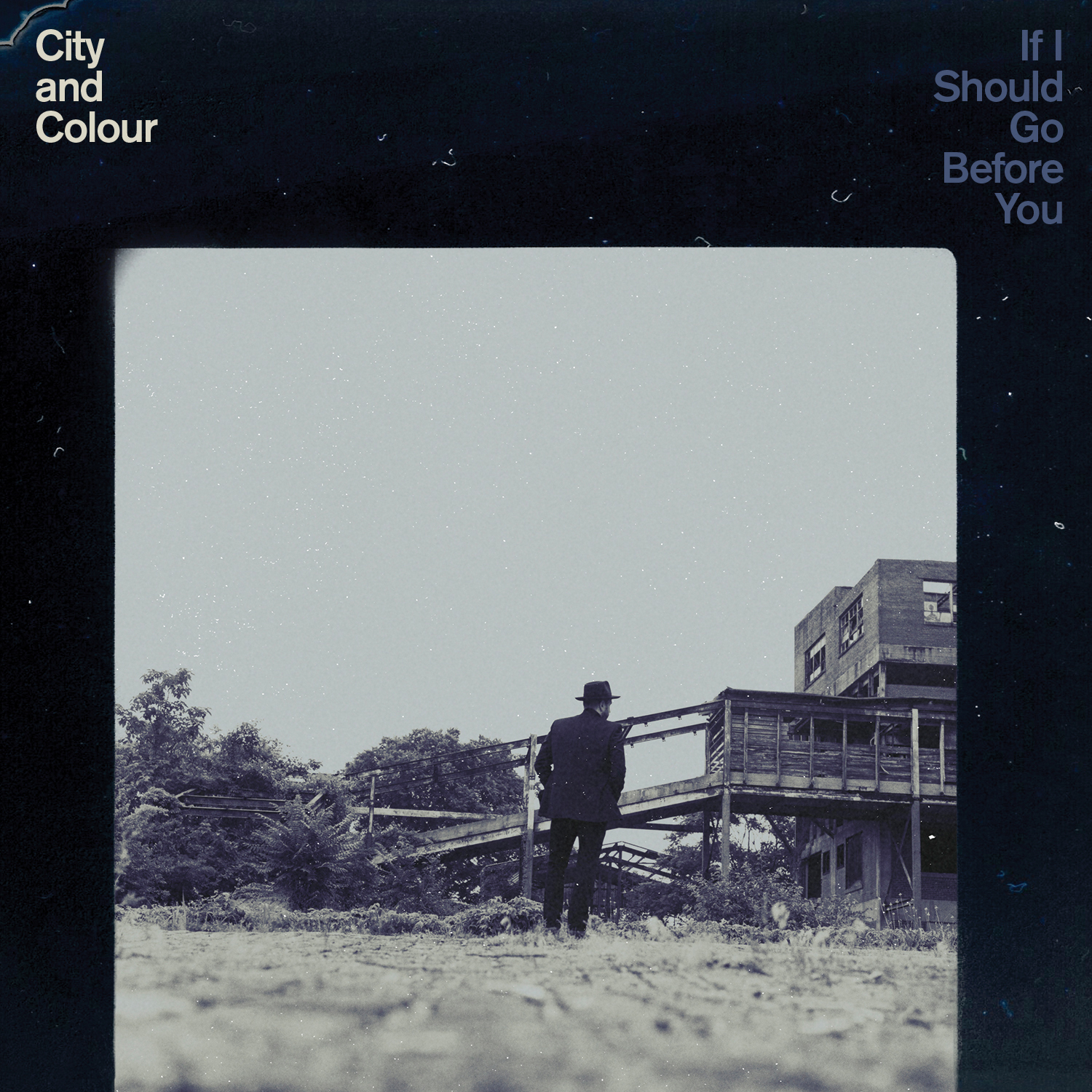
If I Should Go Before You is the fifth studio album by City and Colour, and it’s definitely a ride. The main themes of the album revolve around self-rediscovery, unrequited love and being lost within oneself. It’s very easy to see that Dallas Green has lost himself, both lyrically and musically. If I Should Go Before You brings a lot of different elements together in a way that is confusing and accumulates into a heaping pile of questions. From the use of heavily synthesized western jangle-pop for the majority of the album to the constant repetition of lyrics, there’s a lot going on.
The album starts off with “Woman”, which was released as a single in July. The characteristic high and light voice of Dallas Green is very audible, but the real stars of the song are the backing layered guitar pieces. The whole drowning and weaving into a dreamy rock sound can work for some artists, but when you have a voice as smooth as Green’s the overall sound comes out as very disjointed. Having that for a complete 9 minutes and as the opening song brings no real excitement, especially since the lyrics are few and far inbetween once you get rid of the ones that are repeated.
“Northern Blues”, or ‘that drum beat and synthpop combo familiar from 80s cop drama car chase scenes’, really sets the bar high for imitation sounds. It seems like the heavily produced albums are a popular trend right now, but for City and Colour the connection just seems forced. Lyrically, Dallas Green is still pushing through. From repeating “I can hear the devil whisper, pay no heed to what he said”, it’s obvious that Green is fighting some inner demons on this album.
Complete with little synthesized keyboard riffs and a bizarre rock-band guitar progression in the middle of the song, “Mizzy C” is easily one of the most confusing songs on the album. About depression and routine of self, the track goes over touchy subject matter, but the accompanying melodies do the lyrics no justice.
Then, out of nowhere, comes “If I Should Go Before You”. The track that shares the same name as the entire album should be an accumulation of everything the album represents, and this track is quite the opposite. There is a lot of drawing from other pieces on this song, especially for the lyrical content. The song reminds too much of the poems “Do Not Go Gentle Into That Good Night” by Dylan Thomas and “If I Should Go” by Joyce Grenfell. The lyric “dying in the light of day” is too close to “rage against the dying light”, and “if I should go before you” is almost identical to Thomas’s “if I should go before the rest of you”. Another complaint would be the slow electric blues sound, because it doesn’t seem to work well with a minor key-then major key in the chorus. It could just be personal preference, but the surrounding music doesn’t connect with the sadness and overall meaning of the song. It seems very uncharacteristic of Green’s work, and that is off-putting.
Tracks five and six, “Killing Time” and “Wasted Love” respectively, continue moving at the same pace as the first leg of the album. Green sings “lately I’ve been thinking about just who I’m supposed to be” in “Killing Time”, and that is evident in the progression of If I Should Go Before You. For right now, Green continues to draw inspiration too close to that of others. “Wasted Love” sounds eerily similar to “Tainted Love” by Soft Cell, and starting off the song with the phrase “careless love” doesn’t help make a distinction between the two.
The hidden gems of If I Should Go Before You are the last three tracks. “Map of the World” has the right idea, bringing together the mix of western flair and indie pop until it meets right down the middle. The track offers more acoustic instruments that compliment Dallas Green’s voice better than the heavy electric ones do, and it showcases his smooth folksy Morrissey-esque voice a bit more.
“Friends” follows the suit set by “Map of the World” and shows what could have gone right with the album if he had followed that same pattern. The combination of a little steel guitar with overarching acoustic guitars makes a much better impact than all of the synthetic sounds. This continues and ultimately finishes in the final track “Blood”. Why couldn’t the whole album be like these songs? Maybe as a comment on the self-discovery found in so many of the songs prior, “Blood” sounds like Green’s true voice and not what he was trying to be earlier in the album. The addition of the female vocals harmonizing with Green’s for the last set of lyrics “I think we finally found a home in this place” and “I know there’s beauty buried beneath” complete a full circle of resolve within the confusion.
Overall, City and Colour brings an interesting commentary on their typical folksy sound mixed with the current popular trends in music. They show that it doesn’t work for everybody, and that is okay. If I Should Go Before You has redeeming parts, and will leave newcomers content but possibly push away more traditional listeners because of the difference in technique and style. It’s not a bad album by any means, but it’s also not the best.