
Tag: athens georgia
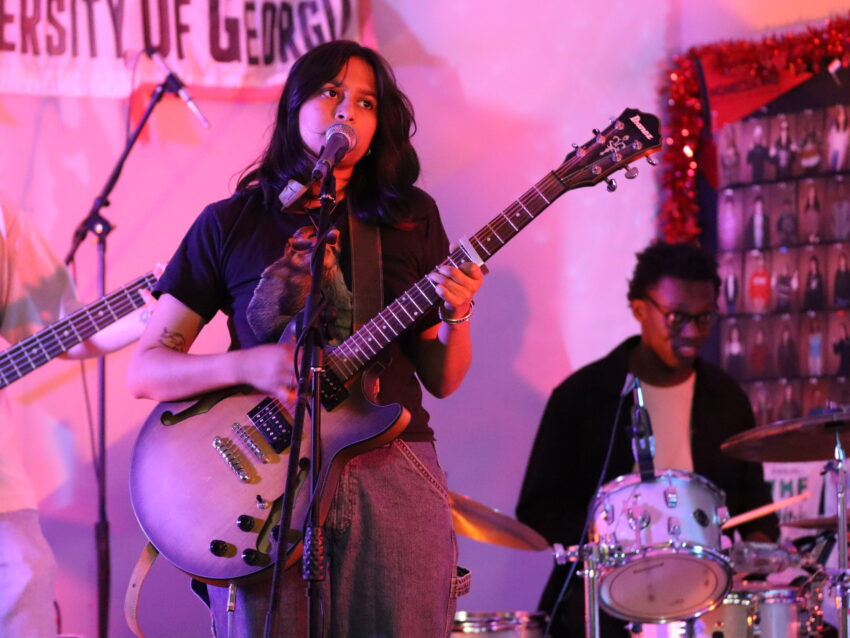
UGA MBUS Student Ritika Sharma Forges Her Own Pathway
At ten years old, Ritika Sharma learned how to play the guitar—but upside down. Her father, who was left-handed, refused to buy her the instrument because she often struggled with sustaining a hobby.
“After a week, I’d be like, ‘I’m bored.’ He didn’t believe that I would stick with it. So, I learned the guitar upside down,” Sharma said.
Now, Sharma carries a dedicated spirit, with her seventh song “Love You Have Left” being released in late March. Even though she started writing songs at ten years old, she has wanted to pursue a career in music since she was 14—not giving up on her musical journey.
Sharma describes her music as “textured.” She doesn’t like to label or confine it to a particular genre, having learned rock from her father, talking heavy metal with a former boss, and being classically trained all the while.
Instead, she often asks herself what mood she wants to create, letting the lyrics stand for themselves in the absence of production, and vice versa.
“If you took the lyrics away, the production would shine, it would tell a story. And, if we took the production away, the lyrics still tell a story—that’s a test I do with all my songs,” Sharma said.
As a student in the University of Georgia Music Business program, Sharma says she’s learned that she can forge her own pathway, with each musician’s route to success being different. She currently has a mix of singles and an EP released. Vinyl Magazine met with her to discuss some of the lore behind each.
For The Fish
I think [with] the oceanic-like ambiance, I wanted it to feel like two fish were singing to each other. I think I kind of accomplished that. It was my first fully produced song. So, it’s definitely a learning process. I don’t think it’s a perfect song, but it’s really cool to see my progress.
Arabella
I wrote this about a friend I had in high school who was going through a rough time. She would always be like, ‘Oh I’m trauma dumping.’ And, I’ll just be like ‘Girl, you’re my friend, I want to hear about everything that’s going on in your life.’ … I don’t talk to that person anymore. But it’s weird because people are in and out of your life, but songs can just stay with you. And I think about that person a lot. So, I think that song just means a lot to me because it was about a special person.
Water Fights
That one’s about a relationship that just changed and shifted, it wasn’t the same as when it first started. I think that was just about youth and friendships. I think we have a lot of these friendships early on that just changed. It’s folk-inspired, and I just really liked the guitar melody.
14
That song was about middle school. I think growing up, I was in a very racist county. I’d get angry, my natural expression initially was anger. … But, my dad had a very kind expression, he thinks they don’t mean it like that—we have a different outlook on what people mean and why they do things. … That song was about [how] we’ll never be on the same page about how we want to react to things, how we want to treat other people… you can love people and them not think the way you do.
The Bear
The Bear was the first song I technically posted on TikTok and got me thinking about putting songs out publicly. … I wrote that about [how] it’s like the grass is greener on the other side—you have this bear that’s outside of a cave and a man who’s in a cave, and one wants to leave and one wants to be in the cave. There [are] positives and negatives to both sides. … I think it’s some of my best lyrics.
Sweet Bitter
It was the first time I was genuinely amazed by [the] stuff I created. … Usually, I would write, and then what my rough draft was was also my final draft. But, this was the first time I was like, ‘How can we edit this? How can we make it better?’ … So it started folk, turned R&B at one point. We meshed them, so the third section has R&B melodies if you really listen to it. It’s like four completely different sections that kind of signify the healing process. I think it perfectly takes you through you going insane and feeling not healed to being healed by a person who may have affected you. And it’s that sweet bitter feeling—you love them, but it’s time to move on. And, you also hate them.
Love You Have Left
I did it for an MBUS class. I had to do it so quickly… I had like multiple people, my friends who were trusted sources, who said ‘This one had some sauce to it, put this out.’ It was more [of a] pop sound. I didn’t want to go back to folk, I was like ‘Let me keep it pop.’ The hardest part was the ending, and I think I achieved a good ending. And again, texture [and] ambiance was really big to me. I think it’s some of my best lyrics, the melody is really catchy.
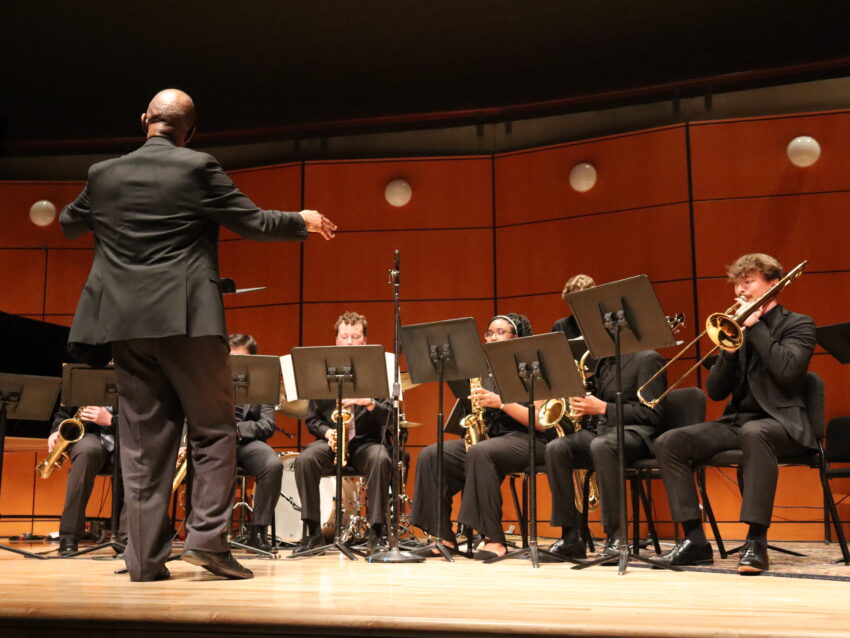
Review: Jazz Ensembles Performance in Ramsey Concert Hall
Jazz music not only has the ability to transport us back in time through various musical eras but also to old memories in our lives. On Wednesday, April 3, I traveled to the streets of Paris, France, and also to past loves in my own life because of music performed by the Jazz Ensembles in Ramsey Concert Hall.
There were two ensembles: Jazz Ensemble I and Jazz Ensemble II. According to the Hugh Hodgson School of Music website, Jazz Ensemble I consists of more advanced students and comprises saxophones, trombones, trumpets, drums, piano, guitar, and bass. Jazz Ensemble II, however, is an introductory ensemble that allows students to refine their improvisation skills.
Jazz Ensemble II performed first. Immediately, I could pick up on the group’s cool and collected vibe. The director and Assistant Professor of Jazz Piano and African-American Studies at Hugh Hodgson, James Weidman, thanked audience members for being there on the “lovely spring day” and said the ensemble was having a good semester exploring all kinds of sounds.
They opened with a fun piece “Day by Day,” followed by a smoother, slower, relaxing piece called “I can’t get started,” which is by Vernon Duke but was arranged by a friend of Weidman’s.
However, my favorite piece they performed was their third, “Parisian Thoroughfare,” arranged by Mark Taylor. It starts with exciting rhythmic clacking and buzzing runs to signify the bustling, crowded, and chaotic feel of these Parisian streets. As I looked around, many people were tapping their legs to the beat.
At first, the noises startled me, though. I quickly adjusted and really enjoyed the excitement of this performance. I imagined myself riding on a bike through these narrow roads, barely dodging the various shops and people nearby. There was a guitar solo that felt a bit out of place initially, but then I began to follow the progression of notes.
Ensemble II closed out their program with a funky piece by Gerry Mulligan and a smooth one with nice progressions called “Blue Skies” by Irving Berlin.
Not only was Ensemble I physically larger, but they also played a couple more songs. The band was directed by David D’Angelo, a Senior Lecturer of Jazz at HHSOM. They opened with “The Blues Machine” by Sammy Nestico and continued with “Jitterbug Waltz,” arranged by Eric Richards.
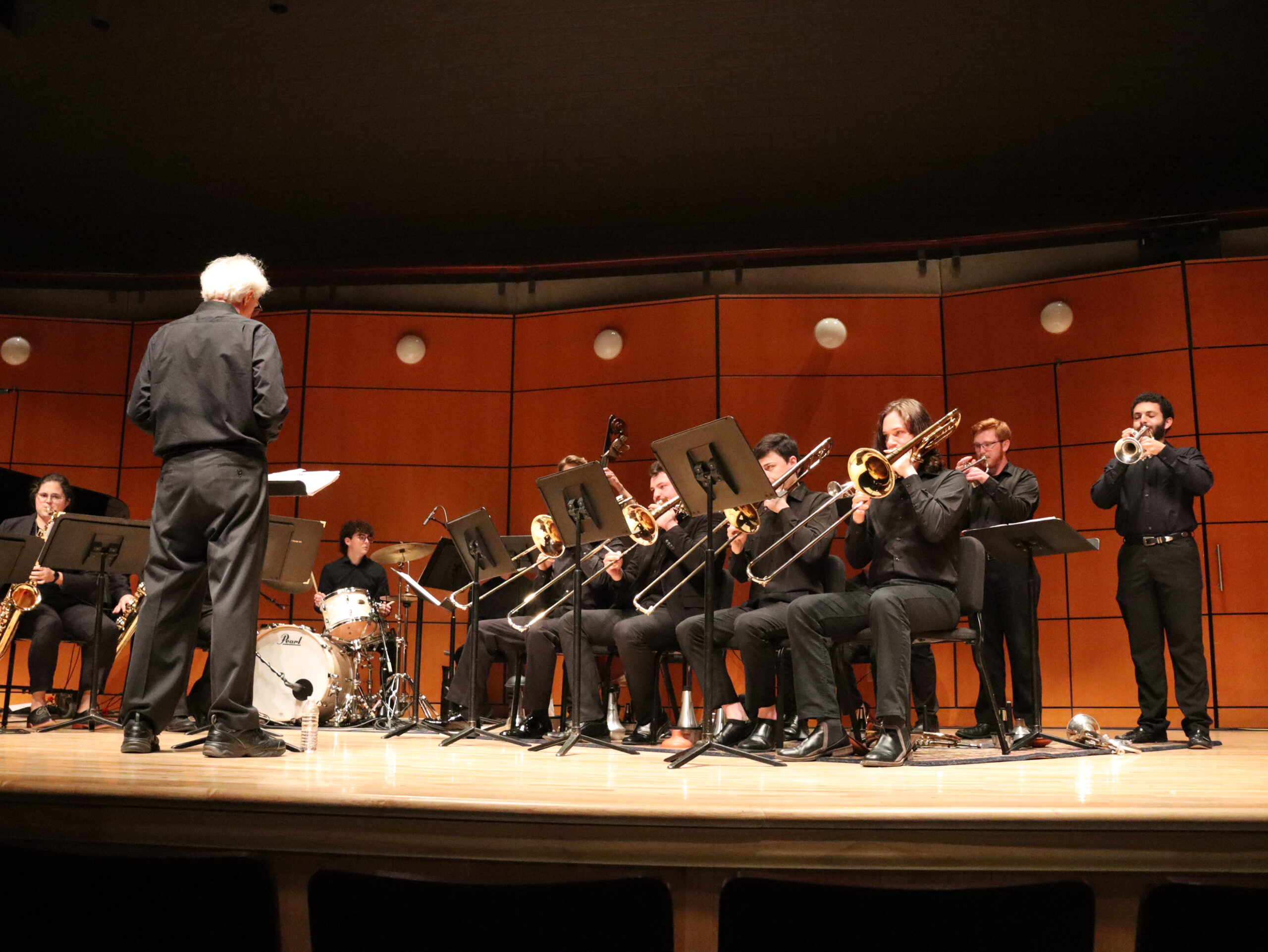
I noticed several small interactions between the band members in this ensemble, which made me smile in the audience. I could tell they were all close with one another and valued the others’ artistic craft. Many would cheer each other on during soloist moments.
Similar to Ensemble II, the third piece performed by Ensemble I, called “When I Fall in Love” by Victor Young, was one that lodged me back in time. It was a beautiful ballad that left me deep in thought and reflection, which I always value when music moves me like that.
I especially loved the descension of chords at the end because it felt like stages of falling in love. It didn’t resolve right away and teased a more minor sound, which made me think of conflict and left me wondering if maybe this romance wouldn’t work out. But then, it settled into a nice chord that had a bit of dissonance — leaving a little room open for the future.
They also closed with a love song, Alan Baylock’s arrangement of “What Is This Thing Called Love?” It featured a drum solo that I really enjoyed following. Ensemble I also played “Moten Swing,” a crunchy and anticipatory piece called “Evidence” by Thelonious Monk and arranged by John Clayton, and Callum Au’s arrangement of “Let Battle Clements.”
However, my favorite performance by Ensemble I was “Sister Sadie.” The main melody was catchy and memorable. It reminded me of a sweet but sassy southern woman that everyone in town swooned over.
The soloist who performed this melody on alto saxophone did an amazing job—they really got into the music, sliding into certain notes and then whispering the theme before belting it more loudly like a back-and-forth interaction. In the end, the saxophonist and trombonist actually did go back and forth in their improvisations, and I enjoyed watching this enthusiastic and emotional performance.
This was my first time attending a Hugh Hodgson Jazz Ensembles concert—but it certainly won’t be my last. I’ve watched the school of music put on a jazz concert before, but I really enjoyed both ensemble’s ability to lodge me in place or memory on Wednesday night.
Several others seemed to agree because this was one of the most packed nights in Ramsey Concert Hall that I’ve experienced. I look forward to Jazz Ensemble’s future shows and what new feelings may arise then.
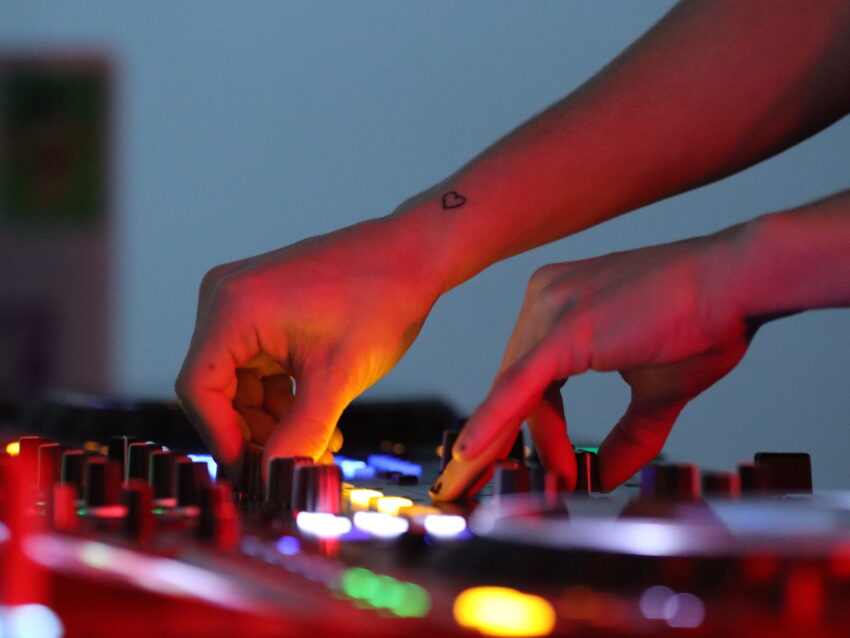
Athens DJ Scene Is on the Climb Post COVID-19
A flow state of pure connection and free movement—this is how Izzy Morrow, a DJ and promoter in Athens, describes the music environment that she hopes to curate. She says this state of being is when she feels the most connected to the universe and, when she’s on stage, to the crowd.
“Movement is such a healing thing—just dancing freely,” said Morrow. “[In our] normal everyday lives, we literally don’t get to do that… I feel like I just shed all my layers and it’s just pure human.”
Before the COVID-19 pandemic, Athens had a thriving DJ scene. According to Morrow, the Georgia Theatre in Athens, Georgia, used to book EDM shows frequently on the weekends. However, she says the number of shows and DJs in Athens has since slowed down in the post-pandemic era.
Still, many of Athens’ DJs—from underground to EDM to old school—predict that the scene is regaining footing, preparing for an anticipatory comeback.

Current trends
The live music industry, like many other aspects of our lives, changed after COVID-19. According to a study by the National Library of Medicine, the total monthly consumer spending on music has decreased by more than 45% compared to the pre-pandemic levels, impacting live music and physical sales the most.
While sales in pop music concerts have recently skyrocketed three years post-pandemic, the New York Times reports that amphitheaters operating below arena levels have seen climbing costs, and other industries, like Broadway audiences, are still down from pre-pandemic numbers.
On the other hand, the pandemic also offered rare free time for many people to try out new things—for musicians to perfect their craft. Another study by the National Library of Medicine reports that some musicians referred to the pandemic aftermath as a “creative period,” despite the disadvantages of lockdowns.
Athens also gained some quality music from the DJ scene during this time, according to Henry Landgraff, known as DJ Henny. He attributes this spike in creativity to the increased time people had to learn how to produce.
However, even beyond the pandemic’s influence, Morrow says most musicians in Athens, not just DJs, are “hungry” to create. It’s that freedom of expression that made Morrow fall in love with the Athens DJ scene in the first place. Even Landgraff, originally from Ohio, attended the University of Georgia because of the attractive music scene and music business program.
“Having like-minded people that are so musically intelligent, even if it’s not about music … it’s a microcosm [where] you can fail and there’s no downside,” said Landgraff.

Mark Weathersby, or DJ Mahogany, started DJing back in 2005. So, he’s seen the evolution of Athens DJs over the last several years. In a Flagpole story from 2016, he said that the scene in Athens was varied, ranging from top 40 hits to obscure jams—he largely agrees today. He says there’s still a crowd that enjoys older music, but there is also a new, youthful movement.
“Here in Athens, I think it’s definitely more of that top 40 scene, I think it’s going towards that … youthful, vibrant, very energetic, fun, dance scene with EDM. And, that definitely is the movement where music is going towards,” said Weathersby.
Ben Bradberry, also known as DJ Reindeer Games, describes in Flagpole a “split scene,” which poses the question: Are people coming to shows because they enjoy the music, no matter who is spinning, or are DJs attracting crowds with the specific vibe they create?
Morrow, being more involved in underground EDM, says her experience has been going to a show because you like their sound. Landgraff, who also works in EDM but for a more fraternity crowd, thinks the answer is a little complicated. He doesn’t necessarily want to be confined to one sound, which makes it a fun challenge to experiment with all kinds.
“You need to set an entire vibe—there’s nothing to watch… it’s just me and my board,” said Landgraff. “My favorite part is being able to set an entire tone of how you want your set to be… I think that the balance of Athens music makes it so people know to not expect anything going in and kind of accept it for what it is.”
Current opportunities
In the post-pandemic music scene, Morrow attributes much success to the Nightshade Family, which she describes as being like a label and events promoter. She worked as one of their resident DJs and says they’ve been instrumental in throwing shows for the underground scene, which struggled after COVID-19.
Morrow also helps host Open Decks at Mai Kai Kava Bar, which she describes as “an open mic night for DJs.” Anybody who wants to play can bring their USB and plug it in, allowing beginners to give it a try and pros to experiment with something new.
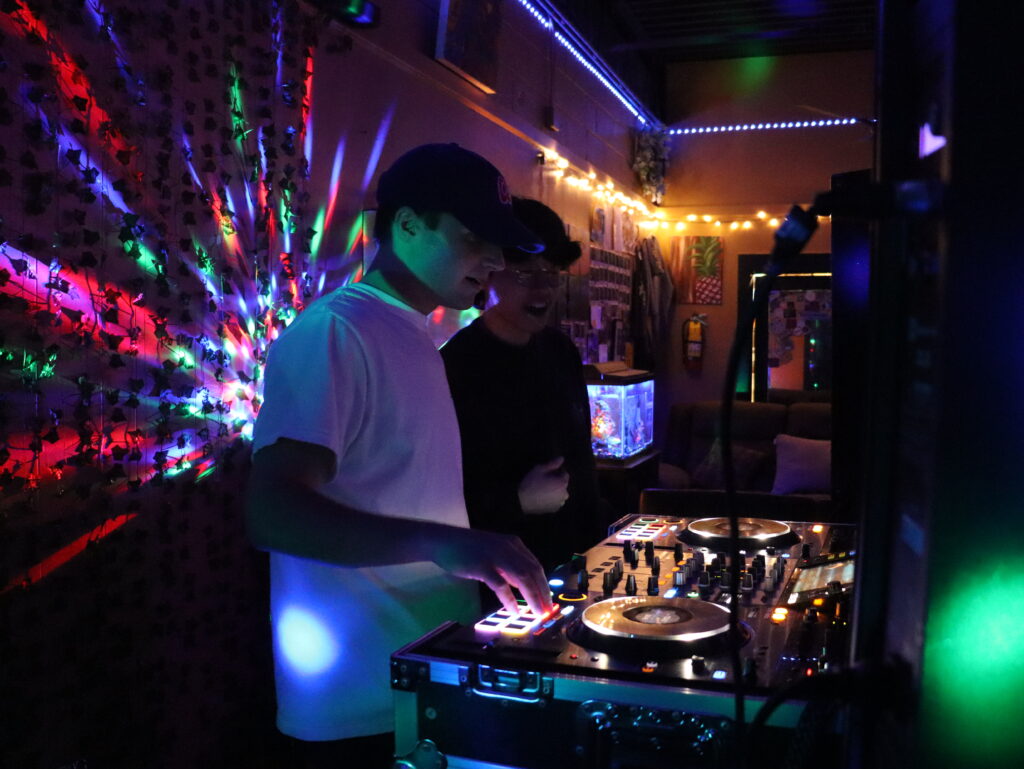
Scottie Stephens, known as Karezza, is one of the other hosts for Open Decks. Morrow says he helped her learn how to DJ and produce. Stephens started DJing and producing about five years ago, saying he also used the lockdown time to work on his music. But, he didn’t start playing shows until two or three years ago, many of which were with Nightshade.
Morrow is the one who invited Stephens to Open Decks, which they soon started hosting together. While it felt like a big step at the time, he says this opportunity helped him make connections. He reflected on how different his and Morrow’s lives would be if she had never asked him to come to Open Decks.
“Honestly, this place has changed my life for the better,” said Stephens. “I’ve met so many people in the community, and it’s given me a place to come to and keep growing my relationships with all these people.”
What’s next
Stephens agrees that the DJ scene is slowly being revived and is on a good path.
“It’s slowly being built back up, but it’s just harder to find,” said Morrow.
Now that anyone can watch a YouTube video, DJing is more accessible, according to Morrow. She emphasized the need for production skills because people can pick it up pretty quickly. Landgraff agrees, saying his biggest regret was not releasing original music fast enough.
Overwhelmingly, the DJs want beginners to approach their craft with an open mind. Landgraff said that even though a vibe cannot be predicted, the DJ must be prepared. Weathersby said he had to be like a sponge that absorbed it all.
“You need to have fails,” said Landgraff. “You have to have those kinds of low-stakes shows in order to make those high-stakes ones good.”
With summer quickly approaching, Morrow already has her eyes on the third annual “Earthday Everyday” event on May 11 at Southern Brewing Company, which is put on by Afterglo. Weathersby also thinks the warmer weather will draw back more shows to their previous hot spots.
“I bet you we’re gonna see DJs on the rooftop [of the Georgia Theatre], and I think they’re gonna be packed and ready,” said Weathersby. “By the end of this year, everybody’s gonna be back out on the dance floor dancing.”