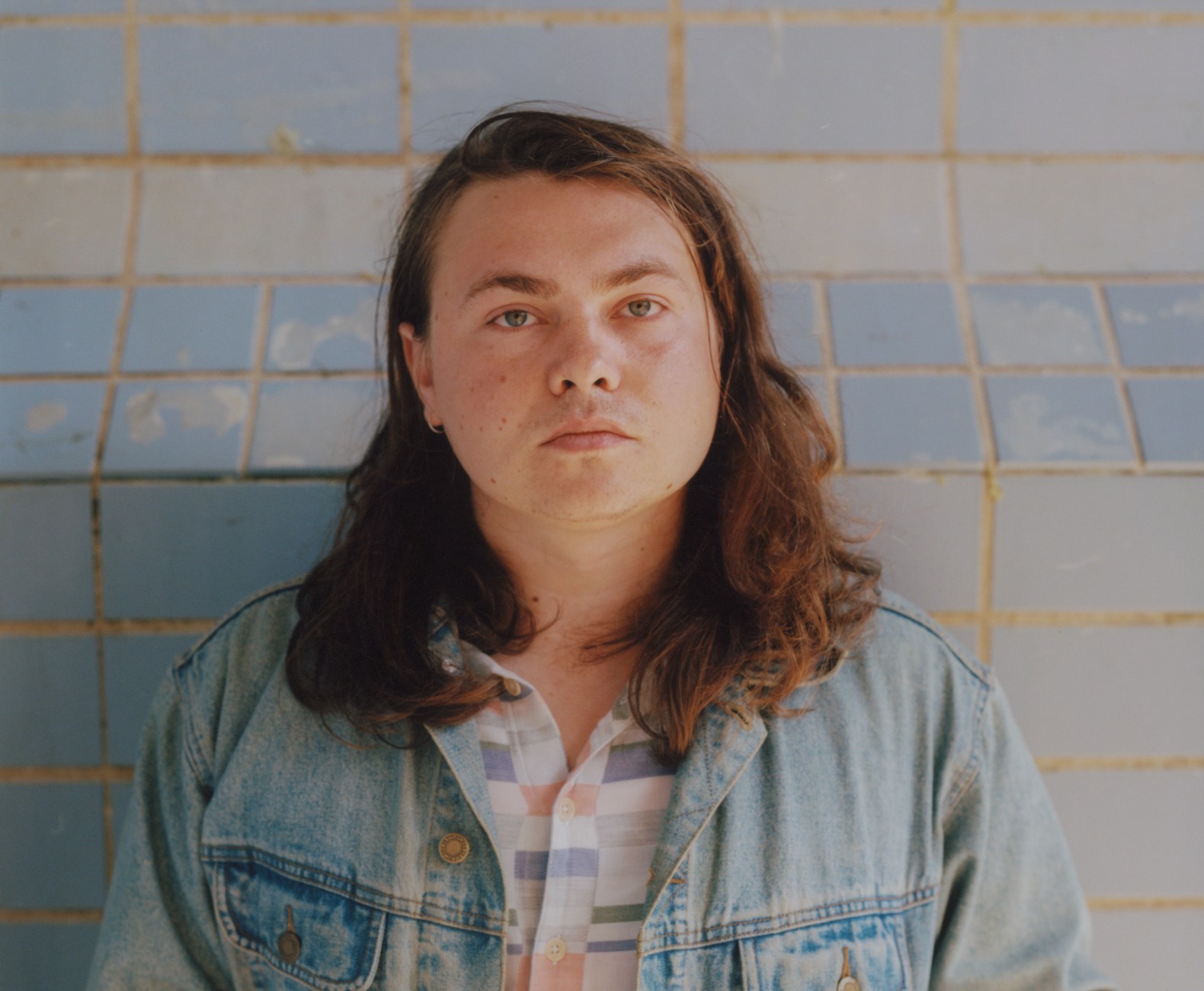
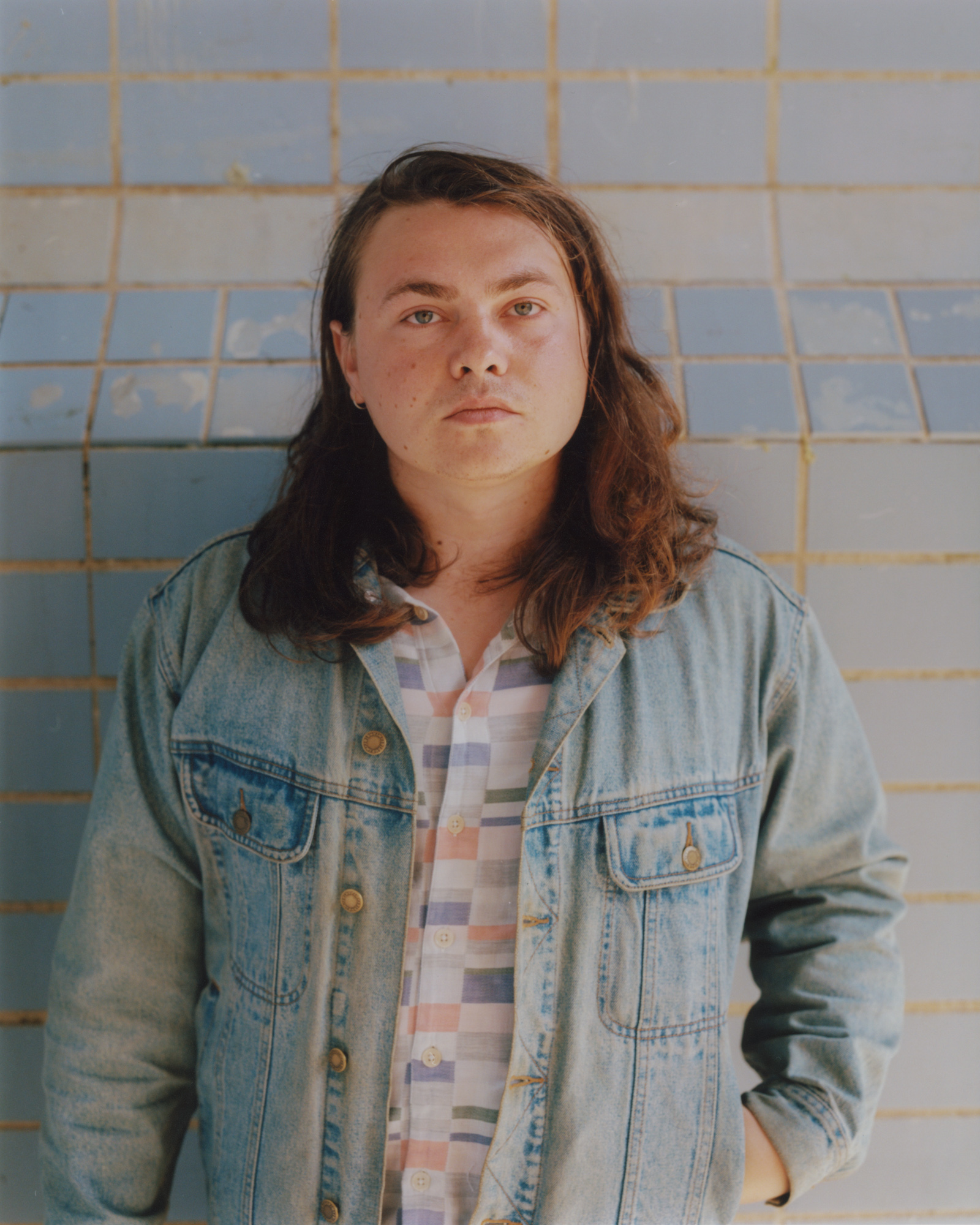
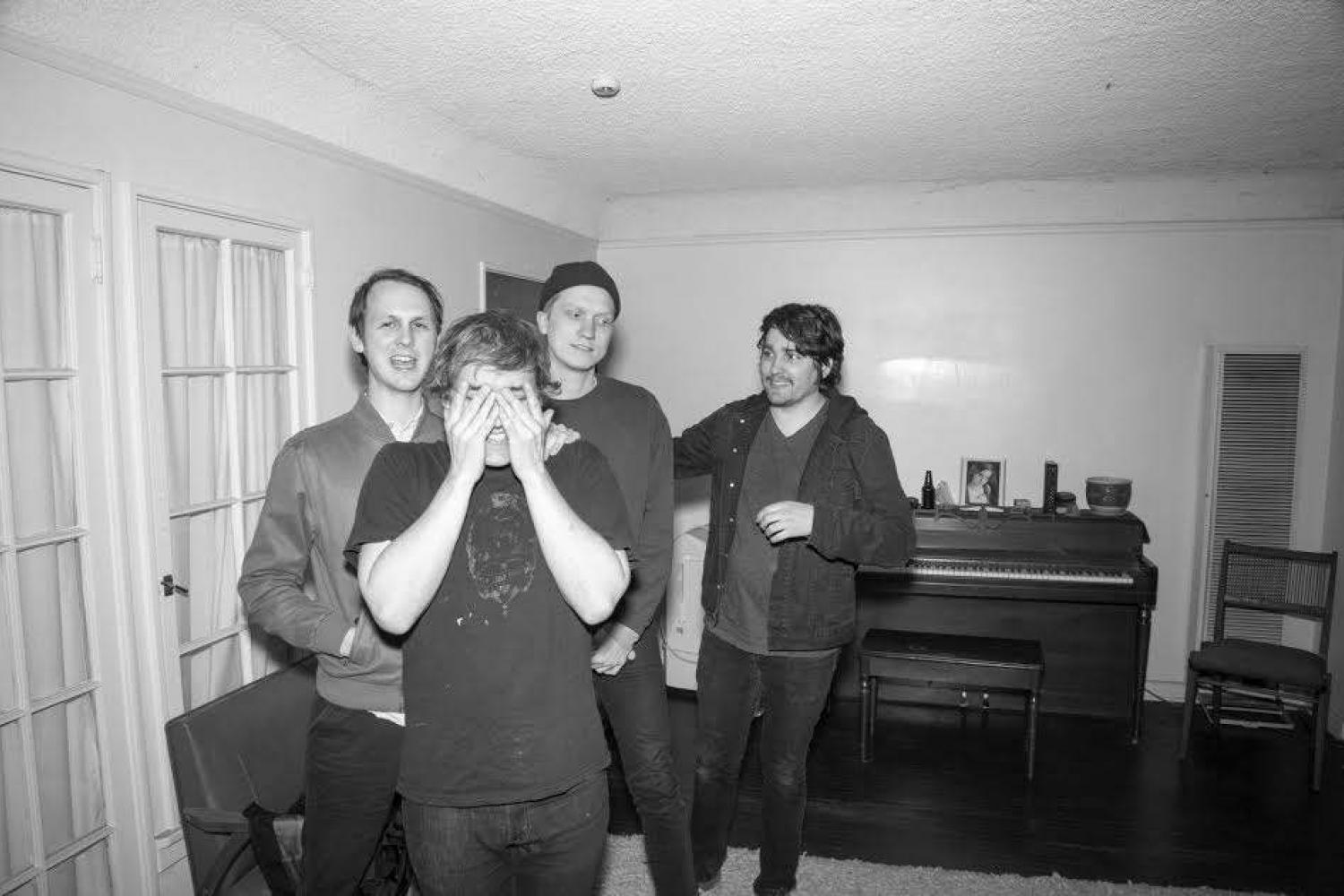
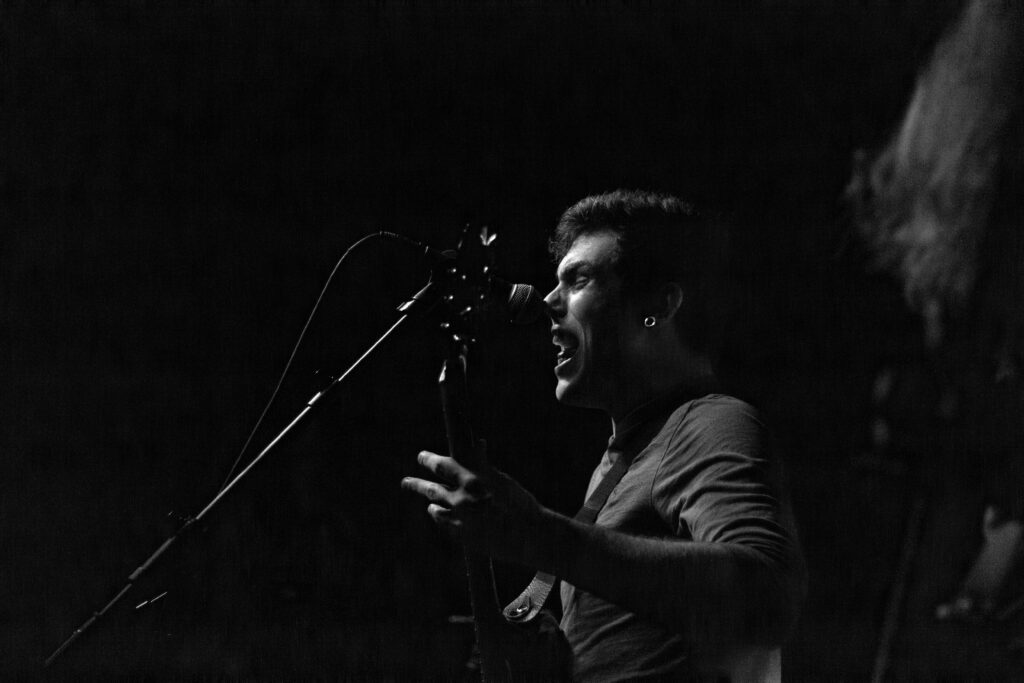
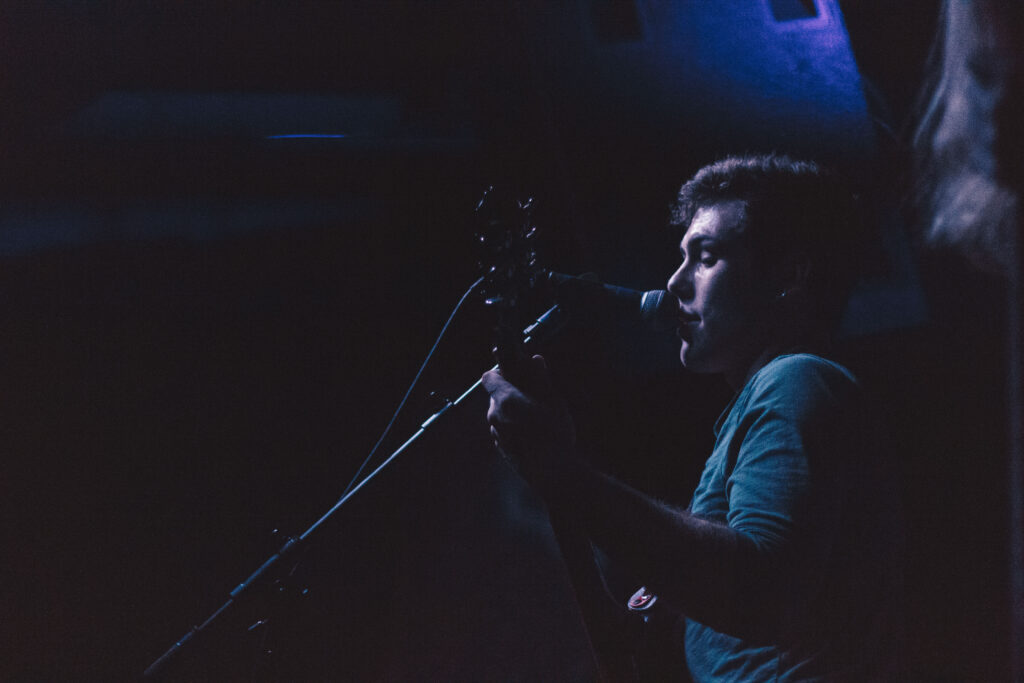
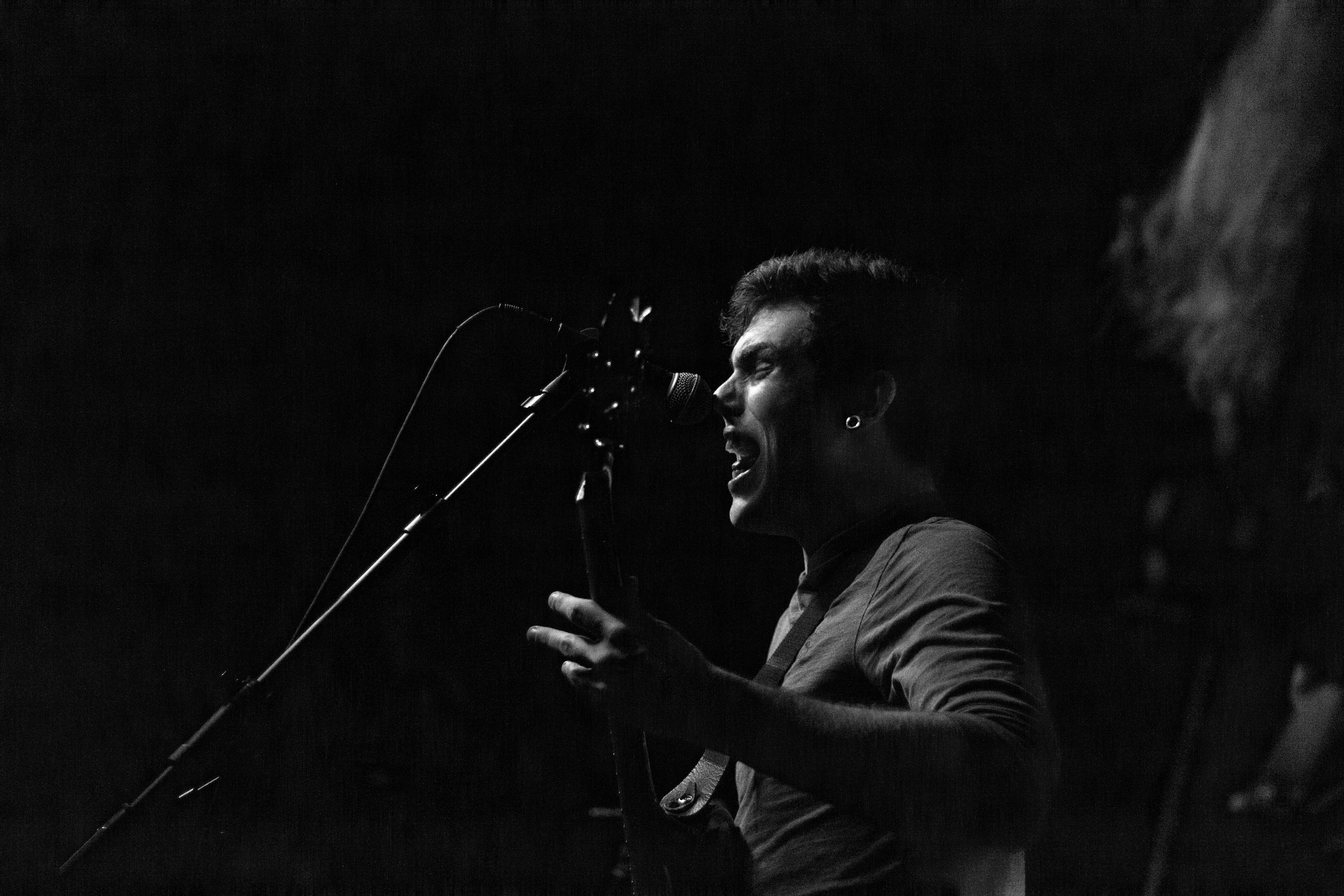
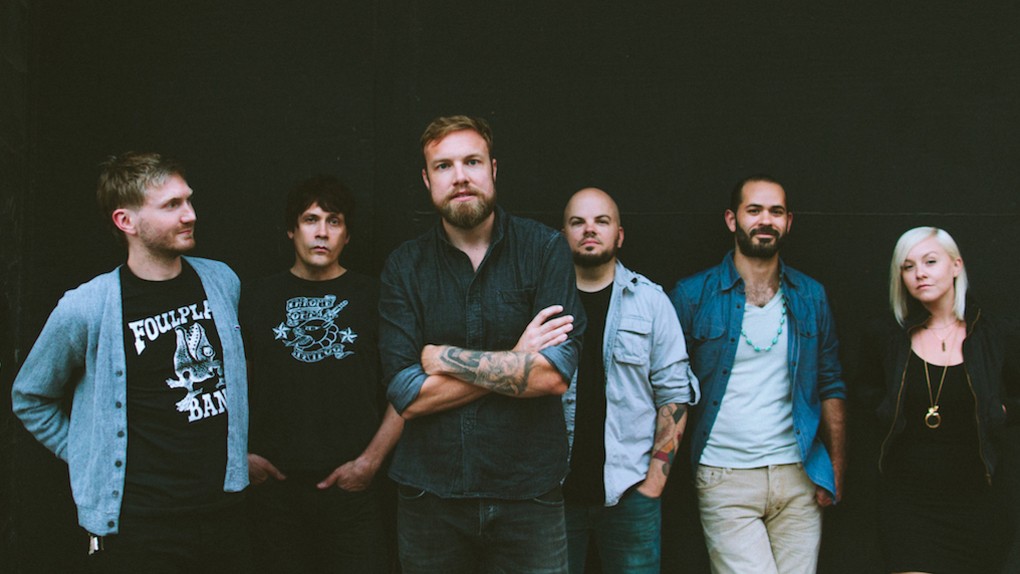
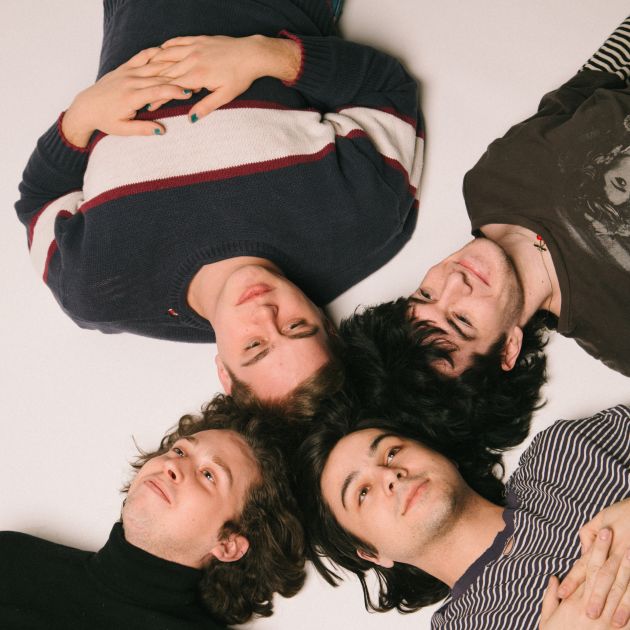
Bombay Bicycle Club’s impact on modern indie rock is undeniable. The four boys from England were part of the modern day British invasion that saw the rise of bands like Arctic Monkeys and Kaiser Chiefs. After four gold certified records, the band decided to take a hiatus in 2016. While he deserved a break, bassist Ed Nash isn’t taking a vacation; he chose instead to embark on an endeavor all his own.
Thus Toothless was born, Nash’s solo project that proves bassists deserve way more cred for their musical prowess. His album, The Pace Of the Passing, debuted in January. The record, both fresh and familiar, incorporates elements of the artist’s own distinct sound along with allusions to Greek mythology. We caught up with Nash to talk about his new album and what song he would cover in Radio 1’s Live Lounge.
Vinyl Mag: The Pace Of the Passing is a phenomenal debut. How did it feel to finally get your solo work out in the open?
Ed Nash: It’s fantastic, actually. I’ve been planning on doing it for five or six years, but I never had the time with Bombay Bicycle Club. It’s quite scary as well. I didn’t realize how nervous I would be putting something I created alone out into the world. But mostly, it’s a relief.
VM: Do you feel like you approach the creative process differently for Toothless than you did for Bombay Bicycle Club?
EN: I guess they’re quite a similar process, but the roles I played are very different. For Bombay Bicycle Club, the songs were very much Jack’s songs. He’d write the song, and we’d give him pointers. With Toothless, all the songs start with me and are written by me.
VM: Do you think that being in a successful band prepared you to take on this solo project, or is it like starting all over again?
EN: It prepared me in terms of like writing music and how the business works. You learn tricks. I don’t think anything can prepare you for taking a step forward and taking on the lead role. Certainly I learned how the business works—like what’s a good deal, what’s not a good deal. The only thing I wasn’t fully prepared for was becoming a frontman …
When I say frontman, I mean the main focus of the group. In Bombay, there was very little attention or pressure on me, whereas with this project everything lives or dies by me, and I am the person that needs to interact with people and get across what the band is about. For example, talking in between songs is always the job of the frontman. I found this very hard at first, and I don’t think it’s something you can really prepare for; you learn by doing it. I can happily say I feel much better with all the frontman duties.
VM: [Who are your artistic inspirations?]
EN: I love Sufjan Stevens and Nick Cave. What I took from them was to tell stories, and to use your own experiences to talk through the music. With Toothless, that’s what I wanted to do with the songs. I wanted to tell stories through Greek mythology and things like that.
VM: Can you give us any details about a potential US tour?
EN: Actually, I literally just got my American visa. Hopefully in the next couple of months I’ll get to come back. I love coming to the states.
VM: [Bassists are often underestimated. Why do you think that is?]
EN: I don’t know. Bassists do really have a bad reputation. That’s kind of why I started Toothless. I needed to prove it to myself that I could play music and write music outside of playing bass. Everyone has an opinion. The name Toothless came out of he idea that nobody really expects anything out of a bass player. It’s quite unfair. Hopefully I can change that.
VM: Any music you’ve been listening to lately that you’d like to recommend to our readers?
EN: I’ve been listening to sir Was. It’s kind of like hip-hop and kind of like indie. That sounds like a weird description, but it’s very good.
VM: Do you have any artists in your library that might make you lose your indie street cred?
EN: One of my favorite records ever is Ozzy Osbourne’s debut Blizzard of Oz. It’s incredibly lame. When I was like 12 learning to play guitar, all I would do was listen to that album and learn how to play the guitar solos. That one would probably make me lose my indie cred.
VM: Bombay Bicycle Club played Radio 1’s Live Lounge a couple times. If you played the Live Lounge as Toothless tomorrow, what would be your potential cover song?
EN: I think about cover songs all the time. I really would like to cover “I Really Like You” by Carly Rae Jepsen. I’d like to make it a guitar song. That’d be fun.
If you loved Half the Animal‘s single “Babylon,” get ready to fall in love with a whole new layer of it, thanks to the acoustic version. Chase Johnson, Nick Gross, Evan Smith and Dan Graham are the voices behind this not yet one-year-old project.
We spent a few minutes with frontman Chase, and he filled us in on the (literally) colorful way he sees the new songs as well as the two meanings behind the band name. Check out the SHAPES EP, the acoustic video, and the interview below.
Vinyl Mag: So tell me a little bit about how this project came about.
Chase Johnson: Nick and I met in Catechism class when we were 14, and we’re 28 now, so a long time ago! We’d get kicked out on purpose to talk about music, and finally we just thought, “hey, wanna do a band thing?” I was like, “I sing,” and he was like “I drum.” I already had like a little group set up at elementary school. So, we started from there and had a band called Open Air Stereo for a really long time, did some great things with that. And then we took a break from Open Air Stereo, and it led to Half the Animal. We started writing all these songs, and we felt a whole new birth, a whole new sound for us, and it felt really good; it felt different. We felt new. We’re a lot less rock now, there’s a lot more pop-driven kind of stuff going on. So, we wanted that to pull through, and with Open Air Stereo there was a whole lot of rock stigma going on so we felt that a change was good.
VM: What’s the biggest strength that each member brings to the table?
CJ: We all have our strengths. Nick is the business mindset and an amazing drummer, obviously. Evan is the most amazing sound-tech guy that there is. He actually owns a production company for live shows. And he holds down the low-end obviously … everyone holds down their instruments. Dan is an incredible guitarist, and between me, Dan and Nick we all write a lot of music ourselves, for the band, for other people. Dan is an amazing writer–he’s always got his laptop and making beats, making everything—and we all collaborate on finishing the song. And then for me, I’m the crazy, outgoing lead singer, I guess! I keep getting pegged as that, but I guess that’s kind of what I signed up for. I always love talking to people and getting to know people. I love engaging with fans, and I love hearing their stories. And then I also do fashion/editorial photography, and I’ve done some photography for the band, too, and then I’m also a writer as well.
VM: How do you combine those strengths and backgrounds into a cohesive sound?
CJ: You know, I don’t know how we do it. We just do it, and it works. Even though Dan’s fairly new to the band and the project has only been around since July, there’s this cohesiveness because we’ve all done other stuff outside of it. We brought all of our experience to the table, and I think that’s a collective thing we have together.
VM: What’s the history behind the band name?
CJ: I have my own perception, and then Nick has his own. For me … I love researching human behavior, and I feel like everything in life—especially if you live a creative life—everything I’ve done well at has been a little bit off the cuff and making quick decisions and going with your gut, going with your animal instinct. We all have it–not in like a crazy person negative way, but in the positive way. Using that animal that you have in you to do great things in life is really important. So that’s what it is to me. For Nick, he has this buddy who does a bunch of broker stuff in New York–he’s a big business guy. Nick was on the phone with him one day, and he said, “Man, if I’m half the animal you are, I’m going to live a very great life.” So, those are the two ways that we rationalize it, I guess!
VM: I know you guys just released the SHAPES EP at the end of last month! If you had to describe it in one tweet, what would you say?
CJ: Each song on the SHAPES EP has its own shape and its own color. “Babylon” is blue, “Saturday Night” is bright red, “If You Want My Love” is green.
VM: What makes “Babylon” blue?
CJ: “Babylon” can be conceived to me as a love song or a struggle song or an empowerment song. I want it to be open to interpretation for everyone–if you’ve had a struggle with drugs, alcohol, love, just life in general. As we all know, Babylon was the most amazing, advanced, beautiful place, and it fell one day. It took a long time to build it, and then it fell. For me, there were some things going on in my life–half of it’s for the woman I was with for a long time and the other half is for some choices that I made that weren’t the best in life. It’s that whole thing of thinking that’s the most amazing thing in the whole world, oh my god it feels so good, and then it falls. And I don’t think there’s any gray area with blue, which I know is confusing because I’m talking about colors. But blue like the ocean–the ocean’s the best thing in the world. Blue can be a really good feeling, or blue can be like having the blues. It’s a bit of both. I’ve listened to the song before and was like, “Oh, that’s kind of heavy.” And then I listened to it again and think, “it’s uplifting!” It’s very moody.
VM: What made you choose that song for an acoustic performance video?
CJ: Other than it being the single, I think we would’ve chosen that song regardless, because it translates. We kind of do it a little differently acoustic to change it up a little bit to give it a new little bit of life. Bringing a new light to a song (especially a single) that everyone’s going to be hearing so much … it’s really cool to get a different viewpoint for it.
VM: Which version do you like better?
CJ: Personally, I like playing it all out live. I love it; it’s so much fun. I love acoustic music, but with my ADD I want to jump around all the time. But I’m kind of digging the acoustic; it’s fun! It was almost like a challenge for me mentally to do which is cool. I always accept a challenge.
VM: Would you say it’s your favorite song to perform live?
CJ: I do love to perform “Babylon.” I love playing “If You Want My Love” live; it’s so different. It’s a little bit more jazzy and kind of vibey, which I love. But live, I have a couple favorites. “Saturday Night” I like to play live and then a couple new ones that aren’t out yet that we play. We have one called “Shapes” that’s really fun that people are digging a lot, and then a song called “People in the Room.” But yea, I could say “Babylon” is a favorite.
VM: Which song was your favorite to write and record?
CJ: “Babylon,” absolutely. I got to get out some stuff.
VM: What do you hope audience members walk away with when they leave your show?
CJ: I hope they feel like they just saw a great music show. I hope they feel emotions from the songs … we just want people to feel good after they see us, and excited and definitely wanting more. We pride ourselves on our live show–we love to perform so we want them to feel good, great, amazing!
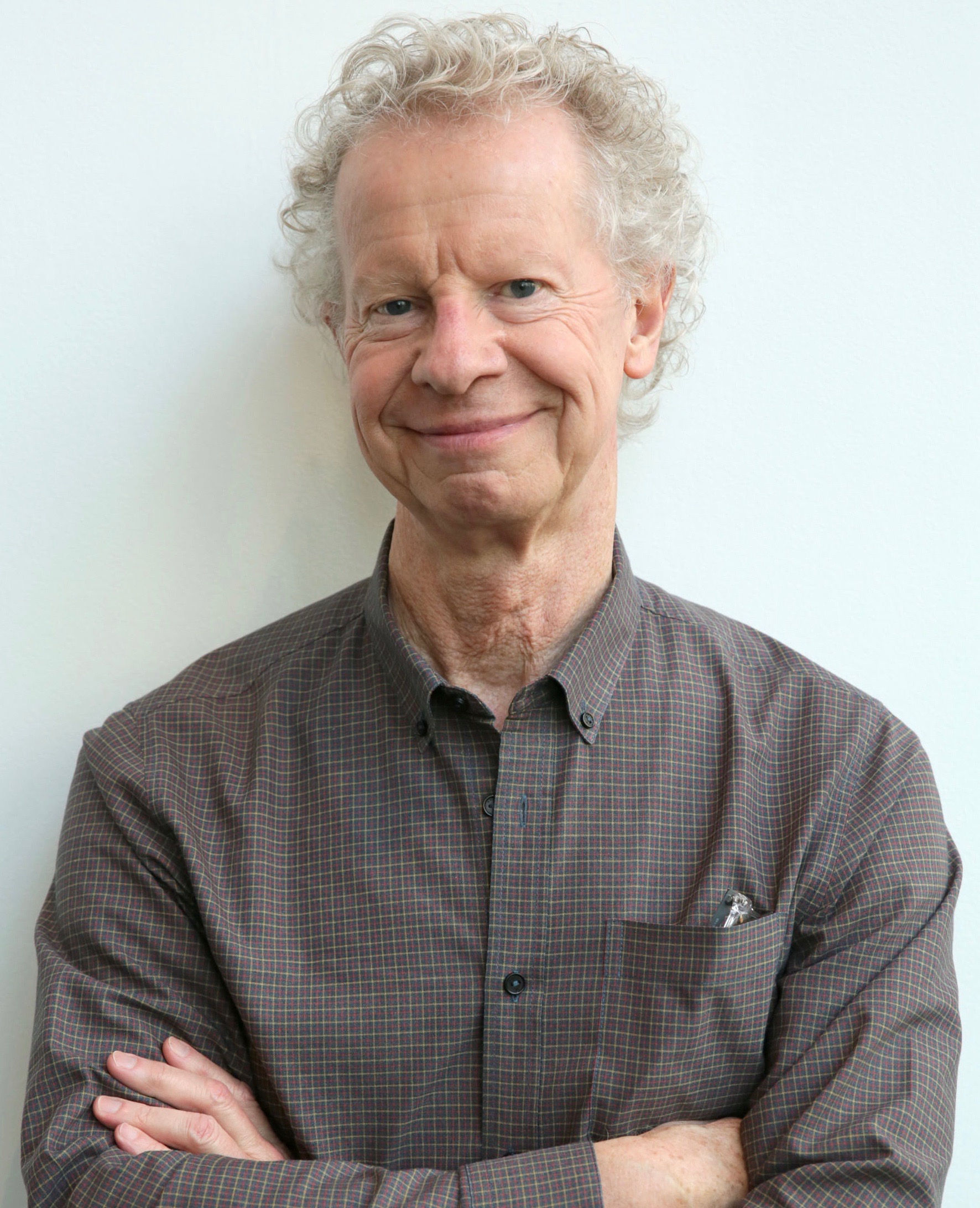
Meet Terry Lickona. You may not recognize his face, but you know his influence. Lickona prefers to be the man behind the scenes making sure all the pieces come together, and though he claims he’s not musically talented, his role in the industry is highly instrumental. He wears the title of executive producer of Austin City Limits and also co-produces the GRAMMYs each year.
After a fateful move to Austin, Lickona started the journey he now gets to call his career. We chatted with him about that path and how he’s added yet another job title to his resume—artist manager to 22-year-old James Junius (Junius was on the South by Southwest lineup this year, so check him out if you didn’t catch him down there).
Apparently, we’re also the first to put him on the spot about choosing barbecue or tacos down at SX, so that’s our claim to fame now. Read the full interview below.
Vinyl Mag: So how did you end up as the executive producer for Austin City Limits?
Terry Lickona: Well, to make a long story short, I used to be a radio DJ back in New York where I’m originally from. And when I was in my twenties after college, I decided I wanted to pull up my roots and go live some place else and see what it’d be like. I’d heard about Austin and the music scene here–even back then–so I thought I’d check it out and maybe stay a couple of years. And 43 years later, I’m still here.
It turned out to be a good deal for me. My first radio job in Austin was with the NPR station KUT, and they happened to be in the same building as the PBS station where they were producing this new music show called Austin City Limits. I’d never set foot in a TV studio and never thought twice about working in television, but I’d always loved music even though I don’t really have any music talent. But I’ve always hung out with musicians–I’m one of those types. So, I got my foot in the door of this new TV show, and within two years I became the producer, and here I am. The show has become the longest running music show on television anywhere in the world as far as we can figure out. It’s become a great showcase for all kinds of music … I think that’s why it’s been so successful is that it’s kind of an “anything goes” format.
VM: How do you feel like your experience as a radio DJ helped prepare you for the producer role?
TL: I think it did in the sense that, for eight hours a day, all I did was play music and listen to music and discover new music … it definitely opened up the whole world of music to me more than just your typical listener. I would say it definitely did expand my horizons when it came to my musical taste. Anything that’s good is kind of my main criteria–good, original, authentic music that stands out.
VM: Do you have a favorite artist that you’ve put on the show?
TL: Well, that’s a hard question to answer after all these years! I think probably my favorite artist in the last couple of years is Kendrick Lamar. That might surprise some people, because people wouldn’t normally think of someone like Kendrick doing our show, but we pretty much are open to anything. He’s such an electrifying, live performer, and I think we really captured all of that really well on our show, and he seemed to think so, too. He raved about it afterwards. It was one of the only TV shows that he’d done when that record, To Pimp A Butterfly, first came out. But we do a little bit of everything, so my favorite show changes sometimes year to year.
VM: What’s the process like of finding and choosing artists for the show?
TL: Well, part of my job is to book the talent, and that’s the part I enjoy the most. It’s kind of like when I was still a DJ in radio—I try to absorb as much music as I can. I try to keep up with what’s happening and what’s new. We do 13 new episodes a year, and since our format is so eclectic, I try to break it out so that there’s a little bit of each in the mix to come up with those 13 shows. And I also try to mix it up between what’s new and what’s classic. We’ll have legacy artists—we just did a show this week with The Pretenders with Chrissie Hynde–and we’ll do shows like that at the same time that we’re doing Kendrick Lamar or somebody who’s brand new.
One thing I’ve learned over the years is that timing is everything. I don’t want to book an artist too soon before they’ve kind of hit their stride, and I don’t want to be the last one either. When an artist has a new record out or when they’re on tour and they’re getting a lot of attention, that’s usually the best time for them to do it.
VM: How do you make sure you capture the full experience of an artist with the TV format?
TL: We try to create the most natural environment we can for the artist or band just to get up on stage and do their show without feeling like the TV is getting in the way. We shoot the shows in Austin, of course, in our own venue with a live audience, and Austin music fans are the best. They’re very enthusiastic, and they don’t hold anything back and they don’t act inhibited just because of the cameras. So, we try to stay out of the way! The stage is surrounded on three sides by the audience, and we keep the stage low to the floor, so there’s a real connection between the performer and the audience. The artist could reach out and touch the people on the floor in front of the stage. That makes a huge difference in terms of the whole entertainment and chemistry of the show, and then we capture it!
VM: How is your role as a producer for the GRAMMYs different from your role at ACL?
TL: Well, on the GRAMMYs I’m the co-producer so I’m not the top dog, and I don’t personally book the talent like I do for ACL. For ACL, when we do a taping, it’s one band. For the GRAMMYs, there’s like 25 and it’s live TV, and there’s all this pressure about the awards … it’s definitely a different vibe.
VM: Has working behind the scenes completely changed how you watch award shows?
TL: Oh, yeah! I would say so once you see what goes on behind the scenes, what it costs and how complicated it is to put one of these performances together that you see on TV. When I was watching the Academy Awards with the rest of the world, I saw that huge faux pas … I could not imagine how that could’ve possibly happened. We’re behind stage during the GRAMMYs, and we sit next to the people with the envelopes, and it’s just hard to imagine how somebody could make a mistake like that, because we’re so buttoned up about it. So, I had to laugh but also shake my head wondering how did they do that!
But being behind the scenes, whether it’s the GRAMMYs or anything else, definitely gives me an appreciation for the artists. I get to work with an artist when they come in to tape Austin City Limits. We spend the whole day together, so we get to know each other really well, and then at the end of the night after the taping, I do an interview in the dressing room with each artist. So, I get to realize what they’re dealing with, and these artists don’t live normal lives, obviously. They get up on a stage night after night, and they pour out their heart and soul, and then they have to do it again the next day and deal with all of the logistics that go along with being an artist. The insecurities, the paranoia, and the anxieties … I have a respect for them, knowing what they go through.
VM: Does seeing all of that make you glad you’re on the production side and not a performing artist yourself?
TL: Oh yeah, I like being behind the scenes! When I was a radio DJ—that was fun doing my own show on the air. I did some on-camera TV for a while, too, nothing special, but I can’t imagine getting up on a stage and doing that night after night. So, I am glad to be just the guy behind the scenes who makes it all happen along with a big team of people–it’s not just me, of course.
VM: What made you want to add artist management to your resume?
TL: So, this is not something I was planning to do ever in my life. If you’d asked me six months ago, I would’ve laughed and said your crazy. But I met this young artist named James Junius on Facebook! He just reached out to me and said he was from Utah and that he grew up watching Austin City Limits, and one of his favorite artists was James Taylor and he heard that we were going to do a taping with James Taylor. He asked if he could find a way to fly down to Austin if I could get him in to see the show. Well, of course, that part’s easy, so I said, “Yeah, come on down,” and he came to the taping with James. He spent the day at the rehearsal and even introduced himself. The next thing I knew, he and James Taylor were sitting over there in the corner talking for an hour and a half, and they just hit it off instantly. He brought his guitar with him and sang some of his songs, and there was something about him and his songs but also just his personality that impressed me more than most of the artists I deal with and especially somebody just starting out at that age.
It was kind of a wild hair or an impulse for me to want to reach out to help him. I found myself taking on more and more responsibility, because I have those connections that I could use to help him and at least open the door. I helped him submit to South By Southwest for a showcase, and they accepted his application.
VM: How is being a manager different from your other jobs?
TL: It’s really interesting … as long as I’ve been involved with music and producing a TV show, I’ve worked with a zillion artists and managers and publicists and record label people, but I’ve never been involved inside of the process as somebody who’s representing the artist and pitching the artist to the other people.
VM: What drew you to this particular artist?
TL: He’s just a really good person. He’s got a lot of heart and soul for somebody his age. He’s very bright, very tuned-in to the music business and what it takes to try to get anywhere. So, I’m also at the point in my life where I am in a position to help somebody. That’s not to say that I want to open up my own artist management company and sign up a dozen artists right away. But if I can help somebody who I believe in who I think has talent, then why shouldn’t I? I feel like it’s almost an obligation to take the lessons that I’ve learned in life, the people that I’ve met and maybe put that to good use and help somebody else along the way.
VM: Kudos to James for putting himself out there with you and James Taylor!
TL: He’s good that way! He’s down at the convention center at South By right now, and he’s going to every panel he can get into, and he printed up a bunch of flyers to hand out to people about his showcases this week. He’ll go up to anybody and introduce himself, but in a good way–not to be pushy. He also has that kind of personality that it’s hard not to like him. And then on top of that, when you find out that he’s actually got talent, that makes it even better.
VM: What skills from your job as a producer have carried over into managing an artist?
TL: I would say I’ve got pretty good people skills when it comes to dealing with all kinds of people no matter where they’re from or what age they are. People have always told me throughout the years that I seem very calm. I never seem to get rattled or uptight when there’s a lot of stress, and that’s just the way I am I guess. I think that has helped me with James and this new role. Instead of trying to shove him down somebody’s throat, I think I’ve got a pretty good sales pitch when it comes to why I think people should listen to his music and why I like it and why I think it’s worthy. So, when you’ve dealt with so many different people over the years and all kinds of different situations … most situations that I find myself in I’ve kind of been in before or I’ve seen how other people deal with them. So, I think there is a connection between one set of skills and the other.
VM: If you had to describe James’ music to a new listener in one tweet, what would you say?
TL: I would say, singer-songwriter at heart but with a very contemporary outlook about the world he lives in today and someone who loves to experiment with different musical sounds as he tells a story with his songs.
VM: Besides him, of course, are there any other particular artists you’re looking forward to seeing at SXSW?
TL: You know, I’ve got a list of people that I’ve put together … people have given me names of people I need to go check out. I’d say 90 percent of the artists that I see this week I’ve never heard of or at least never seen or heard their music. But if someone who I trust recommends them, then I figure it’s worth me taking the time. Maybe the one exception to that is Ryan Adams is playing a showcase this Friday night, and I’m definitely going to go out and see him. He’s always been a favorite!
VM: And because it’s SXSW, we have to ask: barbecue or tacos?
TL: Tacos, for sure! I like really good barbecue … I’m not really the biggest meat eater in the world so I kind of limit my meat intake, but if somebody points me to some really good ribs or brisket, I will definitely go for it without any hesitation. Some people who come to Austin during SXSW eat barbecue every day, but you can’t beat a good taco! A breakfast taco, a lunch taco, you can have a plate of tacos for dinner. And you can have anything you want in your taco! You can have your eggs and bacon breakfast taco, your chicken taco, your salmon taco–yes, they do have it. So, I’m a bigger fan of tacos, because I think you can do more with them. Tacos win my vote.
Los Angeles indie rockers Goon are a breath of fresh air, generating buzz around South by Southwest with their enticingly individualistic lo-fi jams. Singer-songwriter Kenny Becker leads the quartet, writing songs in his room and fleshing them out with the rest of the band.
Kenny’s affinity for making music stems from an unlikely place; he suffers from a medical condition that periodically deadens his sense of smell and hearing. Instead of letting it bog him down, he decides to make music during the periods in which he can hear clearly. The result is a pleasingly subdued sound that can only be described as summertime music.
They’re first EP Dusk of Punk establishes a seasoned sound that most bands don’t develop until after they pop out a couple of records, which is impressive to say the least. Goon is in the process of creating their debut album, and we caught up with Kenny to get the details.
Vinyl Mag: How many times have you played SXSW?
Kenny Becker: This is our first time playing SX.
VM: Do you have any pre-festival rituals?
KB: Not like officially, but we took a bunch of rest stops just any time we saw them. Also we found this tunnel, and we just yelled at each other. It was very cathartic.
VM: Dusk of Punk dabbles in a variety of musical styles. Is that sort of what we can expect from your first full-length album?
KB: That is a great question. I hope to continue that sort of range. At the same time, I’m not trying to make that, like, something that has to happen at all costs. It was just kind of something that happened from writing songs and just being down with whatever we make. We’re trying to maintain that spirit of music first. We’re trying to not be pigeonholed into a genre.
VM: Are there any specific artists whose sounds you try to emulate or who inspire you in other ways when you’re creating your music?
KB: For me, personally, I’m inspired a lot by Pavement’s sort of sparkly guitar work. Boards of Canada is maybe my favorite band of all time. Their crazy sounds and synth tones are something I kind of aim for a little bit. I guess I would say Pixies, too.
VM: The album artwork for Dusk of Punk really encapsulates the general feel of the EP. Who created the artwork? Was it one of you guys?
KB: I actually painted that. Actually, before I was trying to pursue music full time, I thought I would be a painter full time, but I kind of ended up being both. I had this phase of painting monster dudes and after doing that, that particular image happened. I ended up really liking it. It kind of looked like the Kid A bear for Radiohead. Kind of simple imagery but still iconic. I just loved that it’s a potentially menacing looking figure for music that isn’t particularly menacing.
VM: What’s your creative process like for writing a song?
KB: Usually I just kind of write a song in my bedroom and record it, and we’ll sort of learn it as a band. And sometimes we’ll end up fleshing it out more as a band, but I usually have a pretty good idea of where I want to take it.
VM: Are there any artists outside of your genre that you’d like to collaborate with?
KB: I’ve thought about this in the past, and I’ve often thought of Bibio. He’s really similar to Boards of Canada, but he’s really capable. His production style is just insane. Every time I listen to a Bibio song, I’m just like amazed.
VM: If you could bring one artist back from the dead to play a show with, who would it be and why?
KB: This is probably the most obvious answer, but it would be Kurt [Cobain]. Jake and I were actually just talking about this last night. He died at this crazy moment where they were still a huge band and they potentially could have continued their upward trajectory. I was hearing recently about how Michael Stipe [R.E.M.] was talking to him about making a new record and making it more acoustic sounding. But on top of that, it’s fucking Nirvana. Playing a show with them would be insane.
VM: What albums have you been listening to recently that you’d like to recommend?
KB: There’s a band called Porches–their album Slow Dance in the Cosmos. It came out in 2013, and honestly it’s just kind of perfect. It’s really good emotional rock ‘n’ roll. I also relistened to In Rainbows and kind of had my mind reblown.
VM: Who are you most looking forward to seeing at SX?
KB: If I had to pick one, it would have to be our friends, minihorse. We played with them in San Francisco. It’s like muscly shoegaze. They’re so in control of their fuzz tones. Also Charly Bliss. They’re kind of like pop grunge in a way.
VM: What’s your favorite part of the festival experience?
KB: It’s just really exciting that so many people are here just for music. It’s easy to get bummed out as a musician, because you feel like nobody really cares about music anymore, which I don’t think is ever really true. Still, it’s cool that they like shut down a city for a day for music.
VM: What would be your dream festival lineup?
KB: Definitely Boards of Canada, because they never play live, and they’re kind of like a bucket list band. It would be kind of a weird lineup. It’d be Pixies, Pavement and our friends, Draag. The term muscly shoegaze also applies to them I guess. They have really cool synth stuff going on.
VM: Do you prefer barbecue or tacos?
KB: I’d have to go tacos. I grew up in San Diego, so I just grew up eating tacos.
Tuesday, March 7, a stellar lineup consisting of Survival Kit, Chapel, Too Close To Touch, and Waterparks hit the stage for a sold-out show at The Masquerade, Purgatory. The show was alive, the tunes were danceable, emotions ran high, and crowd surfers were prominent throughout the night.
As a fairly new fan of Too Close To Touch, I knew from first time I heard their song “Crooked Smile”—off of their most recent album Haven’t Been Myself—that I had found one of my new favorite artists. So naturally, when they announced a co-headlining tour with Waterparks back in December of 2016, I immediately committed to attending. On top of the headliners, knowing Athens, Georgia natives Chapel were also part of the package sealed the deal. Because what’s better than supporting a band from my hometown? (Chapel’s catchy single “Caught Up” captured my ears the first day it dropped, as did their most recent song “Fools Gold.”)
Another band that has majorly captured my attention as of late is Survival Kit, an alternative rock band hailing from Atlanta, Georgia who jumped on as an opener for this show. The quartet consists of Travis Blake on lead vocals/guitar, Andrew Lynn on guitar/vocals, Billy “Two Times” Kilgore on bass, and Allen Beck on drums. Although the band is fairly new, having formed in summer of 2015, they are no strangers to playing music. They’ve previously played in bands together over the years, which eventually led to some of them going on tour and others opting for college.
In the fall of 2016, the band released their first EP titled Hard Work and Dedication (tracked, mixed, mastered by Aaron Pace of AP Audio in Alpharetta, Georgia). Prior to their show, I had the opportunity to talk with the guys about musical influences, artists they recommend, and what’s next. Check out our Q&A below.
1. What inspires you?
Travis Blake: All aspects of life.
Andrew Lynn: Negative situations usually spark my ideas, and I use my writing to find a light at the end of the tunnel.
Billy Kilgore: I get influence from all types of music and styles.
Allen Beck: Random things I hear and see inspire me, and the music just pops in my head at times.
2. Who are your biggest musical influences?
AL:Circa Survive and HRVRD.
AB: The Story So Far and Four Year Strong.
BK: The Used and Nirvana.
TB: Say Anything and Panic! At The Disco.
3. Any goals you’d like to reach in 2017 for the band?
AL:Quit our day jobs and tour the country. We’re getting closer to being able to do that every day.
4. If you were to tour with any artist, who would it be?
AB: The Story So Far.
TB: Say Anything.
BK: The Used.
AL:Panic! At The Disco.
5. How has your music evolved since you first began playing together?
AL:When we began writing it was very pop punk, but as we have progressed we are coming out with a well-rounded rock sound that we are very excited about.
6. What’s next?
AL:We are currently in the studio and plan to release a new single in the upcoming months called “Stranger Things.” We believe that we have found our sound, and now our goal is to write a record that will set us up for a healthy music career.
7. Was there any particular artist, show, or moment that made you realize that music was something you wanted to pursue?
AB: Performing on the road with Come Down Denver.
TB: It’s the only thing I’m good at and can enjoy on a regular basis.
BK: When I got my first guitar after waiting for like a year.
AL: One time my dad told me that performing music wasn’t a realistic career path.
8. Best concert you’ve ever attended?
TB: The Used and Taking Back Sunday.
AL: Hangout Festival.
AB: The Story So Far and Four Year Strong.
BK: Allen’s favorite, ’cause I’m a copycat.
9.Are there any artists/songs you are currently listening to that you recommend others check out?
The Drums‘origins can be traced back to Bible camp, which is not exactly what you’d expect from a Brooklyn-based experimental pop group. The two founding members of the band—Jacob Graham and frontman Jonny Pierce—met one summer in their early teens and became instant friends.
After the concept for The Drums was developed, the duo tacked on two more members—guitarist Adam Kessler and drummer Connor Hanwick—and in 2009 cranked out their first EP Summertime!, which received a massive amount of praise by the alt-pop press. Soon after, they released their self-titled debut, which was followed by Kessler’s departure from The Drums. After another two albums and a lineup change with Hanwick’s departure, the band released Encyclopedia, their final record as a two-piece, in 2014.
The Drums reemerged on the scene this month with their dreamy single “Blood Under My Belt.” Though Pierce is currently the only official member of the band, Graham is vital to The Drums’ established sound. While it’s Jonny’s faux English singing voice that stands out, it’s the reverb-drenched guitar and synths that link their albums. The Drums are an entity that closely resemble ’80s British rock bands, brooding in an air of melancholia while still oozing an effortless cool. We interviewed Jonny to discuss his new record and how he creates his music.
Vinyl Mag: How many times have you played SXSW?
Jonny Pierce: I’m bad with numbers, dates, timelines, etc., but it feels like I’ve played this festival a thousand times.
VM: Do you have any pre-festival rituals?
JP: I’m not one for rituals or anything ceremonial, really. All that stuff triggers me and brings me back to dark days when we would say grace before each meal. Although lately, I do find myself plugging one side of my nose before walking on stage. It forces me to breathe at a slower pace, which in turn slows my heart rate and calms me. I then take two very generous shots of tequila and bring myself back into a manic state. I still have some growing up to do.
VM: Do you feel like playing a festival has a different vibe than playing at a venue?
JP: Yeah, I mean for the sake of just being transparent, I have to say that it’s rare for me to enjoy a festival show. Music just sounds better indoors. You’ll also find that when your inside, rarely does it rain! No big wind gusts to fuck with my hair either! Cool haircuts are underrated and must be protected!
VM: “Blood Under My Belt” is very uptempo and bright. Is that the vibe on the rest of Abysmal Thoughts?
JP: The new album is in some way a return to form. I’m sticking with the surf tones that often find their way into my records, and this time, I’m blending that sound with all of my influences. Everything from ’90s drum ‘n’ bass to Talking Heads.
VM: Will you be playing anything else from Abysmal Thoughts at the festival?
JP: We’ll see! I gotta feel it out!
VM: Music videos are an integral part of The Drums. Will you be releasing one for “Blood Under My Belt?”
JP: We are in the finishing touches chapter of the “Blood” video. Think motocross and beauty. I think I get the final edit today, actually.
VM: If you had to leave the production of a Drums album to another producer, who would it be?
JP: I’m too hands on to even think about letting anyone else touch my records. I’d rather not make music than have someone else take over. What’s the point, right?
VM: Are there any recent pop records you thought were next level?
JP: I have been really loving Snail Mail‘s new EP. There is something so special about her voice. I hope she never changes. So super pure.
VM: What albums have you been listening to recently?
JP: Oh! Just the Snail Mail EP. I tend to dive into one album at a time and play it to absolute death.
VM: Who are you most looking forward to seeing at SX?
JP: Snail Mail and only Snail Mail! If there’s some good house or techno going on, I might check that out.
Minnesota indie rockers Communist Daughter are on fire. But it wasn’t always smooth sailing for lead singer Jonny Solomon, who had to conquer a few demons before he saw success. Dealing with addiction and mental health problems before the band’s formation, he had several stints in treatment facilities and assumed the worst for his music career.
When Solomon reached rock bottom, he wrote a series of songs that he intended to be a farewell note to those he loved. He invited his friends—who would later become his bandmates—to help him flesh it out. The result was Communist Daughter’s acclaimed debut album Soundtrack to the End, which was released in 2010. However, the singer wasn’t done fighting his own personal fight, and checked himself into rehab soon after the release.
It seems to be true in Solomon’s case that some of the best art comes from the worst situations. He’s now fully recovered, with his positive outlook on life echoing in his music. Communist Daughter’s latest record, The Cracks That Built the Wall, received serious praise from critics. The album is a glistening light with bright guitars and an optimistic message. It’s a reflection of the artist’s upward motion, refusing to let his past weigh him down. We got in touch with him to talk about his SXSW experiences and what advice he has for younger bands as a festival veteran.
Vinyl Mag: How many times have you played SXSW?
Johnny Solomon: Officially this is our second time, but we went down there once for fun. It’s hard to be in Minnesota at the end of winter without dreaming of heading south.
VM: Do you have any favorite memories from the festival?
JS: We don’t go down there with weird industry dreams in our head. To me, it’s a chance to be in warm weather, plus it’s hard to see other bands play when you are always on the road. It’s great to just walk around and stumble into music. But my favorite memories don’t have much to do with music. We stay outside of the city, a little ranch way out there. My favorite memories are from there, soaking up a different lifestyle.
VM: Do you guys have any pre-festival rituals?
JS: We’re all pretty different about it. SXSW is its own beast, because you can let the logistical nightmares get to you, or you can just realize it’s all crazy and to take it as it comes. That’s why the ranch outside town comes in handy. This is the second time we are going to end our trip with a little acoustic show way out there for the folks that let us stay with them. So that’s a post-festival ritual.
VM: What albums have you been listening to recently?
JS:The Dig’s Blood Shot Tokyo. We just finished up three weeks with them. Probably my favorite band. I never got tired of seeing them night after night, and their album is now spinning around our tour van nonstop. I’m also listening to Hop Along’s Painted Shut. I’m late to the party on them, but I can’t stop listening to it. Such a great band and album. I need to creep on them and meet them. And then Paul Simon‘s Graceland always gets back in my headphones when I head south.
VM: The video for “Keep Moving” is beautifully done. What was the inspiration behind that?
JS: The director (Nate Matson) and I went back and forth a bit with that video. The song is very personal, and he connected with it right away. But it was hard to make a video that complimented that without making it so overtly literal. I was worried, but Nate lined things up right to make it right. It hits all the same themes without being in your face.
VM: Who were some of your musical inspirations for The Cracks That Built the Wall?
JS:The Beach Boys and Jason Isbell and a million other bands. It’s hard to pin down influences since the album was recorded over the course of three years.
VM: What inspired you to name the band after a Neutral Milk Hotel song?
JS: Honestly, I didn’t know it would be a thing, but Neutral Milk Hotel wasn’t around anymore when I started the band. They were one of those mystery bands that put out a masterpiece and then vanished. But it was so personal and intense of a record. I wanted to do that, so when I was writing songs by myself, I just thought I would take that as our name. I hate thinking of band names. They are all stupid until you are big enough for people to attach your music to it. I don’t think twice about my favorite band’s names.
VM: Were there any other songs you considered naming the band after?
JS: “Two-Headed Boy”? It’s hard to remember things from back then. I wasn’t in a really stable mental place.
VM: What advice would you give to an artist playing SX for the first time?
JS: Don’t go there for your own shows. Sure, play some, and be good at it. But don’t go there with some sort of idea that you are going to do anything important. Just enjoy the fact that every indie band you want to see that year is all in one place with tacos and beer, for the drinkers. Also, get all the free stuff you can. Sunglasses for days.
VM: Who are you most looking forward to seeing at SX?
JS: Not sure, I’m still in tour mode. I try not to think more than 48 hours ahead. I’m sure I will have an idea on Tuesday when we get there.
VM: What’s your dream festival lineup?
JS: It changes every day. I make a Spotify playlist, and then those are the only bands I care about for a week. Then I make another one and it’s totally new. But I have some all time favorites. If I were to put one together one off the top of my head [it would be] Paul Simon, Jason Isbell, Jessica Lea Mayfield, Angel Olsen, Hop Along, Death From Above 1979, and The Dig. And us of course. I want to be in my favorite festival.
VM: What shows are you guys playing?
JS: CLIF Bar Bash, SESAC Showcase, Central Presbyterian Church and Best Lil’ Big Fest.
VM: What’s your favorite part of the festival experience?
JS: The energy. It’s food, sunshine, super excited people and shiny free things everywhere. Then I go out of town and eat barbecue and finally get some sleep. It’s the end of three months of touring for us.
VM: We have to ask every artist playing SX: do you prefer barbecue or tacos?
JS: That’s not fair. Everyday food: tacos. Special meal: barbecue. I love barbecue, but I couldn’t eat it every day, because it would kill me. But pretty much every taco everywhere is good. I will eat a taco anywhere, any time.
Communist Daughter at SXSW:
3/14 – 3pm The Blackheart – 86 Rainey St – ” CLIF Bar Bash – The Current and NoiseTrade”
3/15 – 11pm Lamberts Downtown Barbecue – 401 W. 2nd St – SESAC Showcase
3/16 – 11:40pm Central Presbyterian Church – 200 E. 8th St.
3/18 – 5pm Tiniest Bar in Texas – 817 W. 5th St. – “Best Lil’ Big Fest”
A DJ, a producer and a classically trained vocalist walk into a studio. The names behind those titles? Samantha Ronson, Pete Nappi and Ethan Thompson. On paper, their three backgrounds may not sound like the most intuitive match, but take a listen to their music and you’ll be convinced otherwise. Ocean Park Standoff is the alt-pop trio heading from LA to Austin to impress and engage fans at all four of their SXSW shows.
On March 3 of this year, the band released their debut self-titled EP on Hollywood Records. To say that the EP was well-received would be an understatement, considering the fact that the band has since been added to Spotify’s New Music Friday playlist, named Elvis Duran’s Artist of the Month and performed the song “Good News” on the TODAY show.
I had the privilege of chatting with not just one or two but all three of the band members. It’s pretty fitting since their writing process never fails to include each of their unique voices giving their songs that extra something special. Each one of the EP’s tracks are well-written, both musically and lyrically, but still sing-along-able. I, for one, have had “Good News” stuck in my head for the past 24 hours, and I am not complaining.
Check out what the three artists had to say about their summer tour and band name, and take a guess at who prefers tacos over barbecue. And of course, don’t forget to check them out at SXSW with us this week!
Vinyl Mag: How did you three start playing together?
Ethan Thompson: We started playing together because Samantha and Pete had a session they got into together through their publishers and managers, and they hit it off right away. After they did a couple of sessions together, Pete brought me in because Pete and I had been working together as well. We wrote two songs together, and after the first two songs we were having such a good time that, I think Samantha was the first one to suggest that, “let’s make a project and put a bunch of songs together that we like and songs just for us.” And that’s kind of how the band started forming, really within the first 48 hours of knowing each other.
VM: How do you combine your different backgrounds into one sound?
Samantha Ronson: We’re all kind of in the room while we’re writing and playing, so I guess we all just kind of throw all of our ideas mainly at Pete, and then he makes them sound good.
VM: What’s your favorite way to experiment and create a new song together?
Ethan: I feel like one of my favorite things is that there’s always one of us that’s excited about the start of a song. Usually it’s not all of us at once–there’s someone that comes in with a base idea whether it’s Pete with a track, Samantha with a lyric or a melody or a chord, and me with a lyric or melody or chord. So it’s always someone’s excitement that kind of stirs it up, or it’s something that we’re going through in life that stirs up the songwriting.
VM: Do you tend to start more with a melody or lyrics first, or does it just depend?
Samantha: It totally, totally depends from song to song.
Pete Nappi: It’s always different.
Ethan: Yeah, it makes it entertaining for us, because we never really know what’s going on. We just do it ’til it feels good. If it feels good at the end of the day, then we’ll continue working on that song.
Pete: We basically just press a bunch of buttons all day and see what happens.
VM: What was your favorite part about making your EP?
Samantha: It’s all pretty fun! And that’s kind of why we’re doing it. I don’t think we’d be doing it if it wasn’t.
Ethan: I feel like one of our favorite parts is definitely that we’ve all done our own solo projects–Pete’s done his production, Samantha’s done her DJing–coming together and doing this as a group is the funnest part of the whole thing. Because waking up for radio things at seven in the morning or doing a show and packing out at like 1 a.m. is so much fun, because it’s the three of us there plus a couple others. But it’s the three of us together celebrating the victories and dealing with the losses the whole time, and that’s the best part–it’s the three of us together.
VM: On the flip side, what was the most challenging part of making the EP?
Samantha: I think it’s taking that risk of putting aside all the other things that we’re doing on our own and just having faith and diving into this and putting everything into this and hoping for the best.
Pete: To add to that, I think especially for me with all the production while we’re making it, it’s important to know when to just stop, because I could just keep going and adding things. I think a big part of it is to know when to stop or when to take away things to make it simpler. You get so into these songs, and you’ve been working on them for so long that eventually you just don’t know anymore. So, that’s kind of been the hard part for me, but it’s always worked out. Luckily, I have Ethan and Samantha to tell me when to chill the hell out.
VM: Do you have favorite songs on the EP?
Ethan: I think it’s always rotating, and every show it switches up—it just kind of depends on the night. But I think one of my favorites right now is “We Do” because it’s the song that I think kind of brought us together as a live band first, so that’s one of my favorites.
Samantha: My favorite is “Lost Boys”–it’s the first one we wrote together, so it’s always kind of been special to me in that way.
Pete: Whenever I listen to the EP, I’ll listen to “Lost Boys,” the first song, and I’ll be like, “yeah, this is sick.” And then I listen to “We Do” and I’m like, “wait, is this my favorite?” And I just do that with the whole EP!
VM: What makes your songs stand out from other artists in your genre?
Ethan: I’d say one of the things that makes it stand out is that we all come from three different backgrounds, and one of us isn’t overriding the others when we’re creating. We’re always doing our best to get the three of us into each song, which I think is what makes it unique because it’s not just one head leading it–it’s three heads leading it at all times. It’s one of our biggest challenges, and we get into our little battles, but at the end it’s just so much better when the three of us are all involved in it.
VM: So, what’s the story behind your band name?
Ethan: Pete and I were on our way to a session—we would always traverse like an hour to get to Samantha’s pretty much every week. This was when we were just deciding that we were going to make a project, and we’d just decided we wanted to be a band. But we were on our way over to Samantha’s, and we were going to be an hour late because all the streets were blocked off, and we couldn’t get to her house. After there were helicopters flying over her backyard, Samantha got online and figured out that there was a standoff going on at Ocean Park and Tenth.
Samantha: Yeah, there was a standoff with cops and a guy with a shotgun. And I was like, “That’s our band name–Ocean Park Standoff!” Of course, that’s where my brain goes when I hear about a standoff.
Ethan: It was cool the way the name came together, because I feel like it’s kind of how the project came together. We’re all very paranoid as artists–I wouldn’t say uptight but very paranoid people. And when we’re together, we’re taking things seriously and working hard, but I feel like we relax a little bit and everything seems to kind of fall to us with hard work. But, the way that the name came, how it naturally just came up is exactly how everything came together. It’s just kind of naturally evolved without us simply trying to force it to be something.
Samantha: I think it’s more that we overthink things than are paranoid.
Ethan: Speak for yourself—I’m paranoid!
Samantha: (Laughs) I just overthink things way too much.
Ethan: We’re able to relax each other a little bit, and we’re just having a great time.
VM: I heard you’re touring with Third Eye Blind this summer. What part of that experience are you most excited about?
Ethan: Just to hang out, honestly! We just went on a tour together in a van, and there was really no problem at all. We all got along. By the end of it, we got off the road and the next show we had in LA, we were all like, “we missed you,” and it’d been under 24 hours. So I’m just excited to hang out all summer—it’s going to be fun!
Samantha: Same!
VM: Do you have a favorite venue you’ve played?
Ethan: The Peppermint Club was pretty sick when we played in LA, and I think one of our other favorites was the show in New York at the Mercury Lounge.
Samantha: My favorite venue was the place in Troy, New York.
Ethan: Oh yeah, The Hangar in New York! That was a cool spot.
Pete: We’re going to play the Jones Beach Amphitheater this summer, and I’ve literally been talking about playing there since the day we started the band.
Ethan: Yeah, and then we got on the summer tour—which is incredible—and on the lineup it said Jones Beach. And it’s the night of Pete’s birthday!
VM: What shows are you playing for South by?
Samantha: We’re playing at Universal Party, Pandora, 7th Annual West of the Best, and the Grammy Museum Homegrown LA showcase.
VM: Are there any artists you’re looking forward to seeing perform?
Ethan: Friends! I’m stoked to see Hayley Kiyoko’s set—she’s a friend of Pete and ours, and also LOLO who we just got off tour with. It’ll be fun to hang out with them again in a different spot.
Pete: One of mine is this DJ/producer who’s super young–his name is Sam Gellaitry. He’s awesome.
Samantha: I just want to eat a lot of barbecue!
VM: Well, that’s perfect because we always ask if you prefer barbecue or tacos! I’m going to guess your answer would be barbecue, Samantha!
Samantha: (Laughs) Yes, it is! I just like all food.
VM: What about you two—barbecue or tacos?
Pete: Barbecue.
Ethan: I’d have to say probably tacos, because anything I can eat with my hands, I’m so down.
Pete: You can eat barbecue with your hands.
Ethan: Yeah, if I can eat barbecue with my hands as long as no one’s watching, then it’s my favorite. But I just like eating food with my hands—it’s pretty much my go-to. A burrito is my all-time meal no matter what.
Pete: It’s your primal instincts.
Ethan: Exactly, I’ve got to remind myself of my roots.
As South by Southwest gets into full swing, we’re in for another jam-packed week of music and day drinking. With the massive amount of bands playing the festival, dwindling your roster of favorites down to even a couple dozen is a daunting task. Enter Indiana-based indie pop darlings HOOPS, ready to make the top of your must-see list of bands.
Bringing a refreshing take on indie pop, their self-titled EP was received warmly by critics and fans alike. Listening to their music, you might notice that the vocals on any track differ from one song to the next. This is because the band doesn’t have just one lead singer; it has three. Depending on who wrote the song, either band member Drew Auscherman, Kevin Krauter or Keagan Beresford will sing lead while simultaneously playing their respective instruments..
“Rules,” the debut single from the band’s first full-length album Routines–set to release on May 5th–is delightfully lo-fi beach music, perfect for road trips and sinking deep into summer nostalgia. Before the band takes SXSW, we got in touch with singer and bassist Krauter, who told us about what’s on his playlist, their new album Routines and the band’s affinity for free stuff.
Vinyl Mag: How many times have you played South by Southwest?
Kevin Krauter: This will be our first time playing at SXSW.
VM: Do you have any pre-festival rituals?
KK: We haven’t played many festivals, but probably just taking advantage of as much free shit as we can.
VM: Do you feel like playing a festival has a different vibe than playing at a venue?
KK: The vibe is definitely different. Not as intimate as a venue show, which can be a bummer, but on the other hand it can be really fun sometimes playing to the festival crowd.
VM: Can we expect to hear you play some new stuff from Routines?
KK: Our set has a few songs off of the new album. They’re very fun.
VM: Is “Rules” a good indicator of the overall sound on the rest of the album?
KK: Not exactly. It’s produced a similar way, and it kind of represents how we’ve sounded up until now. But the rest of the album is pretty different.
VM: Routines was recorded in a studio and then tweaked in your parent’s basement. Do you guys feel like that’s where you make your most authentic work?
KK: Yeah, definitely. Working in the studio was a cool experience, and we learned a lot from it. But we’ve always made our music on our own, so I think when we went home and worked on it, we were able to focus pretty closely on the sound we wanted.
VM: Who were some of your musical inspirations while you were making that record?
VM: It’s not common for an indie pop band to rotate lead vocalists. Was that a conscious decision you guys made, or was that just something that happened naturally?
KK: Well, we all write songs, so it’s just always sort of made sense for us to let whoever wrote the song sing it as well. Also, we’ve always been slightly overambitious about singing harmonies, so we ask for three mics on stage anyway.
VM: If you guys were to collab with somebody, who do you hope it would be?
KK: I saw a video once of Connan Mockasin’s band playing with Charlotte Gainsbourg for some French TV program. I think it would be fun to do something like that.
VM: What albums have you been listening to recently?
KK:Savage Mode by 21 Savage. Magnificent Fist by Sean Nicholas Savage. 1999 by Prince. Mister Yellowman by Yellowman. TuesdayNight Music Club by Sheryl Crow. And Front Row Seat to Earth by Weyes Blood.
VM: Who are you most looking forward to seeing at SX?
KK: Omni, IAN SWEET, Lala Lala, Jay Som, Lil Yachty, Furnsss and Stef Chura.
VM: What shows are you playing?
KK: A lot.
VM: What’s your favorite part of the festival experience?
His music has been called “eye-watering brilliance” by BBC Radio 1 with “a depth not often seen in young musicians” according to The Equal Ground. But behind the high (and well-deserved) praise is a street performer from England just trying to get used to the Los Angeles heat. Leo James Conroy is taking the SXSW stage this year with his signature trumpet in hand and a soulful voice guaranteed to garner fans within the first few notes.
After what he calls a “series of fortunate events,” Conroy ended up in Los Angeles performing and making music. He draws from his biggest influence, Jeff Buckley, whom he’s been compared to stylistically. Somewhere between the classical music training, the teenage emo lyric writing and a love for jazz, his soulful sound emerged.
In 2015, Conroy made his debut with a self-titled EP under Black Treacle Records. Now, his sophomore album entitled Sinners By the Book EP is on arrival. The first song off of it, “Forbidden Fruit,” is already available and full of the falsetto and blues he does so well. Between this song and his video submission for NPR’s Tiny Desk competition, the new record will be one worthy of perpetual repeat.
As I chatted with the singer-songwriter, I heard more than his British accent—I heard passion. After watching his grandfather play the trombone, Conroy decided as a child to follow in his musical footsteps. Years later, he’s getting ready to make his SXSW return and make his granddad proud. See what the artist had to say below.
Vinyl Mag: So, first of all, what shows are you playing at SXSW?
Leo James Conroy: At the moment, I only have one. There’s another one that’s still in the works, but I’m playing at Stephen F’s Bar on Saturday, the 18th. I think I’m on about 9:00 p.m.
VM: Is this your first time at SXSW?
LJC: This is my second time; last year was my first time. I played solo last year, and then I’m heading out with a band this year.
VM: Do you prefer playing solo or with a band?
LJC: It’s different every time, you know. Each song has its own sort of mood and its own sort of energy, so it really depends. It’s going to be good to head out with the guys, because last time I was completely alone. So it’ll be nice to have some friendly faces out there!
VM: What do you do to prepare for getting on stage?
LJC: Honestly, I don’t really think about it. It’s kind of weird—I don’t ever get nervous when it comes to performing, but once I’ve finished performing, the nerves hit me after I’ve played. It’s really weird. I don’t have a warm-up ritual but my warm-down ritual is just heading straight to the bars as soon as I’ve finished, and that sort of balances everything out.
VM: You have an EP coming out soon. Are you going to play some of those songs at SXSW?
LJC: Absolutely! We’re really excited about it, actually. For the new EP, I’ve been experimenting with the setup, so I recently got a loop station so that I could loop my trumpet and loop horn lines, and it’s really cool to experiment with all these new sounds. So, the last couple weeks we’ve just been practicing like crazy, and we’re just going to blast all of the tunes from the new EP. I mean, it could even be an album because things are going really well in the studio. We’re ahead of schedule, so we may fill the time with some more tunes, but we’re undecided just yet.
VM: Speaking of the loop pedal, I loved your submission for NPR’s Tiny Desk competition. What inspired the arrangement of that song?
LJC: Well, I was sat at the computer because for my writing process, I never really have a pen and paper. I just sort of sit and freestyle and then hit the record button, and then if something sounds good, I’ll keep it. So, I just laid down the guitar and vocals and thought, “hey, this could use some trumpet” and then I put some trumpet in and actually it just sort of came out nowhere. I showed a couple of friends and thought, this is something a bit different–let’s roll with it! Since then, I’ve written quite a few songs now with that kind of looped trumpet setup, which is really fun.
VM: Do you feel like the loop station has changed your writing process?
LJC: That’s a great question. I honestly don’t know, but I wouldn’t say it’s changed my writing process, because I firmly believe that whenever you write a song you should never have to rely on technology for it to be a viable piece. I like songs to be as raw as they can, but every now and then if something just needs a bit more energy, it’s always cool to pull the trumpet out since I can’t play the trumpet and the guitar physically at the same time. So, I wouldn’t say it’s changed it, but it’s definitely given me a new sort of weapon in my arsenal, and it comes to live shows.
VM: When you’re writing a song, do you usually start with the music like you did with “White Noise?”
LJC: I actually wrote the lyrics months before I put the music to it. It was actually going to be a slow, piano ballad. The song itself is a little bit about insomnia and when you get horrible thoughts when you can’t sleep, and then it turned into self-loathing, which it’s really sort of angry and weird. I thought, this isn’t good for me–I need to get these thoughts out of my head and put them on paper. Then I sort of stored it away and didn’t think of anything, and then I started playing around on the guitar and thought, “I wrote those lyrics all that time ago, maybe I can use them,” and then it just came together by accident really.
VM: Does the style of that song reflect what will be on the new EP?
LJC: Yeah, it is! Growing up playing music, I learned to play trumpet first and then as I started singing when I got older, I sort of swayed away from it, and I’ve missed it. These last few months I’ve really been trying to get back into playing some more. I’ve definitely included a lot more jazz, soulful, bluesy, and I just think the trumpet compliments that kind of well. So, it’s that very similar feel.
VM: You’ve been compared to Jeff Buckley and Amy Winehouse. Are those some of your musical role models?
LJC: Jeff Buckley, absolutely. His album Grace literally changed my life. Growing up, I always aspired to be a classical musician, and then when I was a young teenager, I heard Grace, and I would listen to it multiple times a week for probably five or six years. I listened to it so, so much, and his music completely changed the game for me musically. He’s my biggest influence for sure. Growing up I’ve always loved jazz, and I’ve always loved that old style. Amy Winehouse was just, well, she was Amy Winehouse—you don’t need to say any more about that!
VM: The trumpet seems to be your signature mark. What drew you to that instrument at the age of 10?
LJC: Well, my granddad is my best friend, my mentor, my role model, everything that I want to be as a person. He was a trombonist and was great, but it was more the classical side of music. Just whenever he spoke about music, there would be this sort of glimmer in his eye, and I was always drawn to that. He started teaching me how to play the trumpet as a kid, and I learned in a very sort of old-fashioned way. It was all about music theory and going to play in orchestras and brass bands and marching bands and doing everything prim and proper, always wearing a suit and always making sure my shoes are spick and span. But that’s what drew me to music, and then as I got older, I just drifted more to, you know, music was a little bit more freeform and less structured in terms of rules and order. So, that’s what really drew me to it–my granddad, he’s a special guy.
VM: How old were you when you started writing your own music?
LJC: I wrote some terrible, terrible emo songs when I was 15. I would hide them all around the house, because I didn’t want anyone finding them because I was always so embarrassed. But I’ve been writing seriously probably since I was 18 or 19, so six or seven years if my math is correct.
VM: How did you end up in Los Angeles pursuing music?
LJC: In the craziest way! So, as you’ve probably gathered from my accent, I was living in York in England, and I was in a bit of a bad place. I didn’t really have anywhere to stay, and I was just street performing just to get enough money to get by. And then I got heard by somebody who spoke to me and offered to fly me out to the U.S. to come and play some shows, and I didn’t really have anything to lose at that point so I said, “yeah, okay, I’ll come to the other side of the world by myself to a stranger’s house.” I ended up in Los Angeles, and I met a lady, and we started dating. I’d come over here for a while, and then she’d come back to England with me, and then we got married in July of last year! So it all happened because one day I was street performing in England, and now I’m living in Los Angeles, and it blows my mind every day. It was just a series of fortunate events.
VM: For SXSW, is there someone you’re looking forward to seeing just as a music fan yourself?
LJC: Johnny Flynn, he’s one of my favorite artists! He’s a British folk singer turned actor. Actually, he’s been in a couple of movies since his albums came out. He’s great; he sang with Mumford & Sons—he’s in that sort of sound and that circle. He’s a multi-instrumentalist as well, and he plays with a loop station, so there’s a bit of influence there. My guitar picking part in some of my songs is very influenced by him. He plays violin, trumpet, he sings, he plays guitar… he plays pretty much everything.
VM: If you had to tell a new listener in one tweet what they’ll hear at your set, what would you say?
LJC: I would say, big vocals, awkward chitchat in between, punchy horns with blues, soul and jazz influences. The thing that people are usually shocked at with my shows is that between songs, I’m pretty quiet and a little bit sheepish, and I don’t mean to be. But then I have a really loud voice, and it sort of throws people off a little bit.
VM: The last question that we always ask is: do you prefer barbecue or tacos at SXSW?
LJC: Barbecue every day of the week! I just like all things barbecue. Tacos aren’t really a thing in England, so that’s partially why. I believe I was 23 when I had my first taco, so I don’t have as much experience in that ballgame so perhaps my answer is slightly biased.