Vinyl Mag
Menu
  • About Us
  • News
  • Reviews
    • Music Reviews
    • Show Reviews
  • Interviews
    • All Interviews
    • Vinyl Video
  • Features
  • Vinyl Recommends
    • Playlists
    • Year-in-review
  • MBUS
Menu

Colby Pines

Hailing from 'The Good Life City' of Albany, Georgia, Colby Pines is the middle child of five boys. While his family is primarily comprised of men, the Pines family did have a female dog once... unfortunately she died... God bless his poor mother. When Mr. Pines was in third grade the doctors discovered that he had an extra bone in his knee. The bone did not possess any magical powers or help Colby run faster/jump higher, so the doctors surgically removed the bone and refused to let Colby keep it as a souvenir. Colby recently graduated from the University of Georgia with a Bachelor's degree in English and a Master's degree in having cool friends and wearing great sweaters. Colby studied abroad at Oxford University's Trinity College where he was able to visit three of the four coasts, but was not able to bring back a baby with a British accent. Colby enjoys going to the movies, scotch, traveling, playing folk music with his band, BirdHead, eating good and bad food, writing, dabbling, playing Fantasy Football with his Pigskinz and Sundee Beerz League, reading a great book, and all sorts of music. While Colby has a bit of a bipolar taste in music, some of his favorite bands include: Band of Horses, Death Cab for Cutie, 2pac, Washed Out, Johnny Cash, Childish Gambino, Local Natives, The Beatles, Danny Brown, and Beach House. Colby is currently single and quite possibly ready to mingle. Colby has broken five bones, saved two children from drowning, been to Canada twice, and almost fallen into The Grand Canyon once. While he tends to miss things like Breaking Bad, eighth grade, Hey Arnold!, and Surge soda, Colby's excited for the future where he hopes to continue writing and doing the things that he loves.

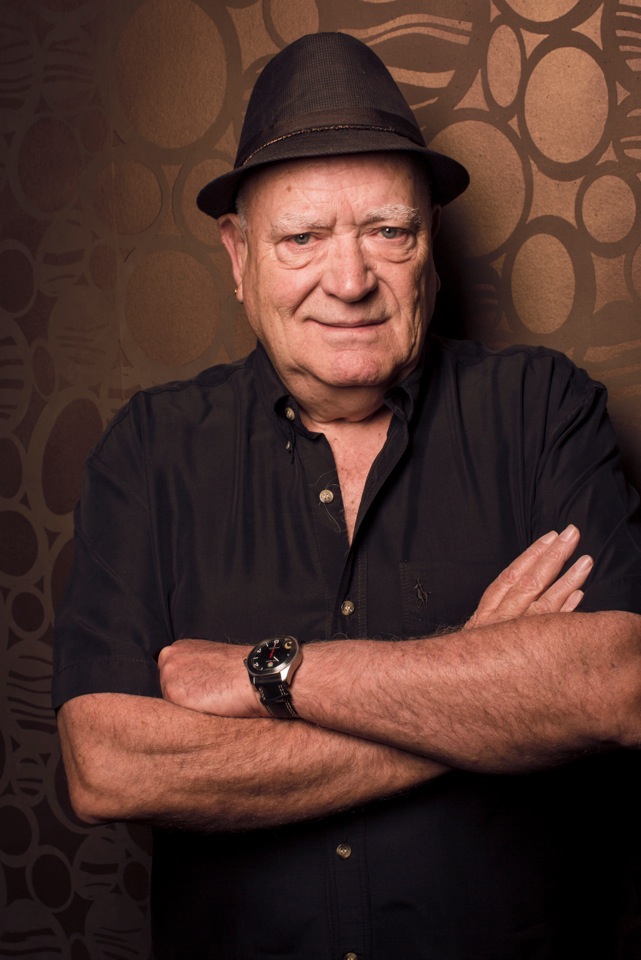
Michael Chugg, Executive Chairman of Chugg Entertainment x Vinyl Mag

Posted on March 7, 2014March 7, 2014 by Colby Pines

Michael Chugg has been called many things. Some of his most flattering titles portray him as a pioneer in the Australian music industry. He is admired, loathed, feared, and respected. One thing Chugg cannot be called is boring.

As Executive Chairman for Chugg Entertainment, he has toured such acts as Elton John, Keith Urban, Jason Mraz, John Mayer, St. Lucia, and countless others. Chugg’s musical career began back in the 1960’s. At age 15, he organized a dance in Tasmania. 300 people showed up, and he made a profit.

Today, Chugg is one of the most powerful men in the music industry, and a lot more than 300 people are dancing to the tunes he enlists for the stage. We recently got the incredible opportunity to talk with him about his upcoming showcase at SXSW 2014 and his illustrious career in the music industry.

VM: What can we expect from Chugg Music’s Official SX Showcase? 

Michael Chugg: Some great music from Oz, Canada and Vegas, and lots of partying to celebrate my 50 years in Rock and Roll and the launch of our US label.

VM: Other than your showcase, what are you most excited for at SXSW 2014?

>MC: Seeing the thousands of people who I have gotten to know over the years and finding some hot new bands to take down under.

VM: You’ve coordinated a lot of festivals. What’s that like? 

MC: We are lucky that we have involvement in some great festivals: Laneway, West Coast Blues n Roots and CMC Rocks the Hunter; it’s an intense experience covering all the bases and making sure both the fans and the bands have a great time with no stress.

VM: If you could do a festival right now with any artists living or dead, what three artists top your headliner list?

MC: Jimi Henrix, Janise Joplin and Nirvana.

VM: What’s your most memorable live performance experience?  

MC: Too may to name one – Coldplay’s last stadium tour, ACDC last Australian tour, Robbie Williams in Sydney 2006, Bob Dylan Byron Bay Bluesfest.

VM: Can you tell me a little bit about your label expansion into the United States?  

MC: We started Chugg Music two years ago and have had great success with Sheppard, The Griswolds, both of whom have just finished recording their first albums and will be around the Northern Hemisphere this summer; with Lime Cordiale, we decided to release the record ourselves, as we have built a great team of people who love working with us in the States, and the record is getting great reaction; they are wonderful live and should cause a stir at SXSW.

VM: You seem to have worked with every aspect of the music industry, from representation to promotion. What job was hardest? What was most fulfilling? 

MC: Growing up doing something that is not a job far outweighs some of the downers you receive; my message is learn about every facet and then do what you love to do.

VM: Do you have a current touring act that most excites you?  

MC: Lots.  John Mayer is coming down to OZ soon, Robbie Williams is coming in September, Keith Urban this year…looking forward to some of the young acts we are bringing…Kodaline, the Temples, St Lucia.

VM: What genre of music tends to draw in the most crowds in Australia?

MC: All genres do well on varying levels in a market of 22,000,000.

VM: What’s the biggest difference in the music industry in Australia compared to the United States?

MCL It’s at the bottom of the earth, but the internet has really put us in real time; Australia is a great place to hone your trade.

VM: What excites you and keeps you motivated on a daily basis?

MC: Being alive and being part of an industry that continues to amaze.

VM: You’re a veteran in the music industry. What are your opinions on Spotify and some of the new ways music is now being consumed? 

MC: I think any way you can get music to the people so the bands get known and get paid is a grand thing.

VM: Where do you see the industry in ten years? 

MC: God knows, everything is moving so fast I don’t even know where it will be next year, but wherever it goes, we will be there.

Printz Board x Vinyl Mag

Posted on March 4, 2014March 21, 2014 by Colby Pines

At 35, Printz Board has already had an illustrious career in the music industry. He has collaborated with artists like Justin Timberlake, Dr. Dre, Katy Perry, and even the late King of Pop, Michael Jackson. Printz, whose given name is Priese Prince Lamont Board, even won a couple of Grammys for his work with The Black Eyed Peas. Now one of the most sought after producer/songwriters in the industry, what’s left for Printz Board to do? Well, start a solo career, of course. He recently dropped a catchy single called “#1,” and he plans to release his first solo album in the near future. Printz made some time to sit down and answer some questions about this upcoming album, SXSW 2014, and whether or not he’s used his Grammy award as a cereal bowl.

VM: How does it feel to be embarking on a solo project after years of collaborating with several different artists and groups?

Printz Board: I LOVE doing my solo project! It’s not like I’m actually ‘solo,’ but its just my name on the marquee. I still work with all my friends that I have been, and a few new ones. …still family business.

VM: What can people expect from your upcoming album ‘Pre-Games?’

PB: My upcoming EP is called Pre-Games. It’s a sneak peek through the window of my house. It’s really just about my life, and being ‘real.’ I think that’s the most important thing in life – feel free to be free, and real.

VM: Do you feel like the album has a certain theme; if so, what is that theme?

PB: The theme of the album is ‘Boardgames,’ life games, a life party. Pre-Games is obviously the lead up to that. It’s about letting go and being yourself, right?

VM: What’s your writing process like?

PB: When I write, I don’t over-think it. I write what the beat, chords and energy around me says. When Will.I.Am and I wrote “Where Is The Love”, it took us 15 mins, and we had the concept. You just have to let the surrounding energy guide you.

VM: You have an incredible knack for writing catchy, meaningful hooks. What’s the most important thing to remember when writing a hook or a melody?

PB: Hooks and melodies are like math – it just makes sense. You always want to make something that people can relate to, as well. If you speak about real things, then people will reciprocate.

VM: You won a Grammy for your work with The Black Eyed Peas. Can you describe what winning that award meant to you?

PB: Winning awards is great! However, I just keep moving forward. There will always be accolades to be had, but I’m about the music.

VM: Exactly how heavy is a Grammy Award, and have you ever though about turning it on its side and eating cereal from the gramophone?

PB: Hahaha…well, the actual Grammys aren’t too heavy, and none of them are at my house. Some that I’ve won have been ‘shared’ Grammys between myself, Keith, Harris and Will. When you don’t produce more than 50 percent of an album, no one gets the physical Grammy.. stupid, right?

VM: How did your time with The Black Eyed Peas influence or shape you as an artist?

PB: The Peas are my family. I love all of them. I’ve grown up making, and being a part of that sound and movement. It’s completely shaped me into the person I am today.

VM: Who are some of your Hip-Hop and R&B influences?

PB: I have so many influences, and they span way beyond hip hop and R&B – De La Soul to Queen to Steely Dan to Mendellson to Gym Class Heroes to Prince to Lenny Kravitz to Alice In Chains to Chick Corea… haha.

VM: If you could perform with any artist today, who would it be?

PB: I’d love to do a show with my friends that I’ve grown up with that are doing it big now – Bruno Mars, Katy Perry, John Legend, Frank Ocean… and so on.

VM: You’ve collaborated with some of the greatest Pop and R&B artists of all time; do you ever get intimidated by some of the people you meet and work with?

PB: I never get intimidated. I just feel lucky.

VM: If you could only listen to one album for the rest of eternity, what would it be?

PB: One album for the rest of eternity would be Michaell Jackson – Off the Wall.

VM: You’re performing at SXSW this year. Other than getting the chance to perform, what are you most looking forward to about SXSW? Is there any performer or event that is at the top of your list?

PB: I’m really excited about the whole event! I’m excited to meet Rachel Ray; I’m excited to perform with JoJo and Travis Garland; I’m also excited to rock with Mary Lambert, and B.O.B.

VM: Your first single from the upcoming album is about finding the one. Do you feel like you’re ready to find your #1?

PB: Well, the first single is about holding onto the ‘1,’ and being dedicated. I’ve had the ‘1’ in my scopes for a long time; however, I’m really focused on bringing my music to world, so that may have to take a back seat for now.. Although, I am auditioning for the lead role in my play.. 😉


This guy is so cool.

New Electric Ride: “Balloon Age”

Posted on February 11, 2014February 4, 2014 by Colby Pines

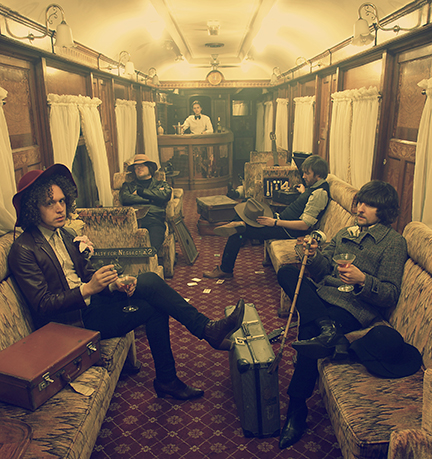
New Electric Ride, the Psychedelic indie rock band signed to Beyond Beyond is Beyond Records, is set to release its debut LP, Balloon Age on February 25th. The album contains psychedelic songs laced with tinny vocals, quirky keyboard, and a flanged up sound reminiscent of The Beatles, but before you go comparing them to John, Paul, George, and Ringo, a few words:

Balloon Age, an apparent ode to The Beatles (specifically Yellow Submarine) manages to pay homage to the Fab Four, while still showcasing New Electric Ride’s unique style. More pop-driven songs like “Bye Bye (Baton Rouge)” showcase the band’s ability to write a catchy hook without sacrificing their sound. Riff-driven tracks like “Lovers” highlight the group’s commitment to creating dynamic rock songs. But still, I found myself constantly comparing the album to the countless hours I’ve spent listening to The Beatles discography. While this comparison can be high praise, it can also be crippling. Whenever any band steps into the arena with The Beatles they tend to magnify their weaknesses and minimize their strengths. Luckily for New Electric Ride, the George-Harrison-style guitar can sound great if a song has enough catchy creativity to back it up – and in the case of Balloon Age, the creativity is palpable with each track.

Generally speaking, everyone’s favorite cook is his or her mom. My mom makes the best chicken piccata that I’ve ever tasted (mad props to Debra). At this point in the review, you’re probably asking, “Colby, why are you talking to me about delicious Italian cuisine and your mom?” What I’m getting at is this: While my mom’s chicken piccata will always be the best in my mind, I still like the dish when someone else cooks it, because that’s my taste. Maybe the sauce is too thick, maybe they forgot the capers… I’m still going to eat it, and nine times out of ten, I’m going to like it. Maybe the tinny vocals and the flanged up sound works better on some songs more than others, but I still like that Lennon sound. The question becomes, is the album a unique, successful expression of a new voice?  And in this case, I believe that it is.

At some point or another, every rock band enters into the arena with The Beatles in some way whether they like it or not. I mean, The Beatles are basically the successful older brother that casts a never-ending shadow for the rest of us to live in. Maybe that’s the issue. Is it really fair to judge a band based on the scale created by legends? Even if that band draws creatively from the style of a legendary group like The Beatles? New Electric Ride seems to pose this sort of question in “A Submarine Song.” The band asks “isn’t it mean how no one can dream about writing a submarine song anymore?” Have people like me killed the dream by constantly judging one piece of music, art, or literature in relation to another?

What’s the point in creating music if you can’t dream of being the best? Can’t you at least aspire to write something as iconic and great as “Yellow Submarine?” Just because it’s been done before, can we not draw from and build upon the successful sounds laid down by our musical forefathers? If that’s the case, then I might as well just lay down the pen (or shut my laptop down), because I’m sure that I’ve consciously and subconsciously used phrases and styles from past writers who were far superior and more successful than me.

Look, I know as well as the next listener that it’s damn near impossible to listen to an album with tinny, flanged up vocals with harmony and not think of The Beatles, but before we judge a band based on that criteria, maybe we should consider other things – like how much we genuinely enjoyed listening to the album, regardless of whether or not it was as good as Magical Mystery Tour. There will never be another group like The Beatles or another album like Sgt. Pepper’s Lonely Hearts Club Band, but it’s refreshing to see a band take those sounds and make them their own in an attempt to create something new and great. New Electric Ride does just that with Balloon Age.

I’m done rambling now. Go listen to the album and eat some chicken piccata.

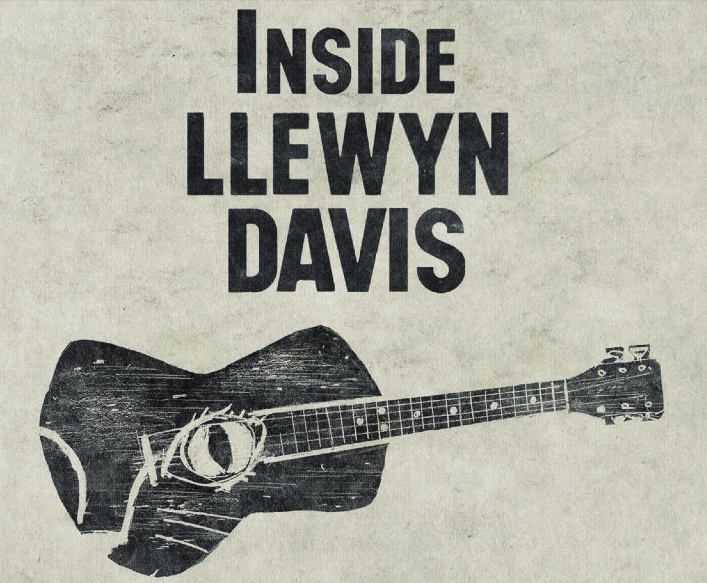
A Review of Inside Llewyn Davis with as few spoilers as possible…basically none.

Posted on February 3, 2014January 31, 2014 by Colby Pines


If it’s true that no man is an island, then the Coen brothers have at the very least created a small, compact archipelago in their latest character, Llewyn Davis. The most recent Coen brothers venture, Inside Llewyn Davis, finds them tackling the pre-Bob Dylan, Greenwich Village folk scene circa 1961. Thanks in large to breathtaking performances by Oscar Isaac, Carey Mulligan, Justin Timberlake, and an apricot-colored cat, Inside Llewyn Davis is a highly enjoyable movie that is deeply melancholy and riddled with humor.

Loosely based on Greenwich Village folk legend Dave Van Ronk’s memoir, The Mayor of MacDougal Street, the film finds Llewyn Davis at an unfortunate time in history. A time where Folk music had neither the respect nor the allure that it gained shortly after Bob Dylan arrived. John Goodman’s character, jazz musician Roland Turner, expresses the popular sentiment about Folk music when he asks Llewyn what he plays. “Folk songs,” Llewyn replies. “Folk songs? I thought you said you were a musician,” taunts Goodman’s character.

The lonely stage is set in the first scene for Llewyn Davis as he sits solo, singing a sad ballad called “Hang Me, Oh Hang Me” (a Dave Van Ronk song). Not only does Oscar Isaac set the tone for the film by performing the song in its entirety, but he is actually playing and singing live, making the moment and the movie that much cooler. This traveler’s tune and the song that follows, “Fare Thee Well (Dink’s Song),” foreshadow the circuitous journey that the Coen brothers create with Llewyn Davis.

As Llewyn, the hapless hero (if you can call him that), stumbles through a week in his unfortunately sad and hilarious life, it is hard to ignore the strikingly atmospheric world that the Coen brothers bring to life. For those of us who have only lived in the 60’s through pictures, music, and album covers, this movie breathes life into the images, sounds, and emotions that once lived only in our minds.

In order to bring both a musical movement in history and a very internalized character to life, the Coen brothers needed an actor who possessed dramatic flare, dry humor, and real musical talent. Their search for a leading man saw auditions from Bright Eyes front man Conor Oberst and Scott Avett of The Avett Brothers before they finally landed the perfect man for the job, Oscar Isaac. Isaac’s ability to express Llewyn’s internal distress, loneliness, hopes, and fears with few words and usually nothing more than a somber look is award-worthy. Isaac embodies pure melancholia for the entirety of the film, while still managing to make Llewyn a character that audiences can empathize with. It’s impossible not to root for Llewyn, despite his obvious flaws, which are constantly spit at him by Carey Mulligan’s character, Jean. Each element in the movie, from the soundtrack to the cinematography, works together to create an immensely melancholy world that is both funny and smart. Watching Llewyn Davis try to navigate his way through a bitterly cold New York during the 60’s without even a winter coat is an unforgettable movie experience.

This film, for me, seemed to capture everything that I love about the Coen brothers. There were moments that reminded me of O, Brother Where Art Thou, A Serious Man, and countless other films made by the duo. I rank Inside Llewyn Davis in my top 3 Coen brother films (and that basically means it’s also in my top ten movies overall). As Llewyn utters the film’s final phrase, “Au revoir,” and brings the story full circle, I wasn’t ready for the movie to end. I think that’s how most great movies are, though. They allow you to continue living in the story even as you walk out of an overcast day in 1961 and into a sunny parking lot in 2014.

For any fan of Folk music and/or the Coen brothers’ genius, the film is not worth just one watch, but many. If you haven’t seen it yet, go. You won’t regret it. I’ve seen it twice now and recently bought the soundtrack, which is a must-have for any Folk fan. The film perfectly captures a musical moment in history through remarkable characterization and an intriguing narrative. Honestly, it’s just a really cool movie. While there’s still much to be said regarding Inside Llewyn Davis, the film speaks for itself. If you don’t believe me, then make your way to a theater, turn your cell phone off, and listen to Llewyn.

Words with Static Jacks

Posted on January 31, 2014January 30, 2014 by Colby Pines

We recently got the opportunity to chat with indie rock band Static Jacks about their new album, In Blue (not to mention, we got an exclusive premiere of b-side “Teenage Shakes”). While the New Jersey rockers have been holding it down since 2009 when their EP, Laces, first dropped, their sophomore album marks the first record they’ve released since 2011. In Blue is also the band’s first full-length album to be produced by Andrew Maury, most known for his work with Ra Ra Riot, Tegan and Sara, and RAC. With all of this and more in mind, we discussed the new album, New Jersey, and much more (I couldn’t think of a third phrase that started with the word ‘new’).

What do you feel like the biggest difference is between this album and your previous album, If You’re Young?

I feel like the setting and the approach to both records were vastly different.  For one, when we made If You’re Young, we were high after freshly signing to a record label, and we went for the whole rock and roll thing – spend a number of weeks in an enormous and beautiful New York City studio with a Grammy Award winning producer, Chris Shaw.  I wouldn’t take that time back for anything, but it’s become definitely clear that we were out of our comfort zone there.  So for In Blue, we brought back our main man, Andrew Maury who we had worked with previously on EPs to produce, mix and engineer at Retro Media Studios in Red Bank, New Jersey.

Can you talk a little bit about your relationship with Producer Andrew Maury?

Andrew Maury is our guide.  I really trust him and have always believed that his vision of what Static Jacks should be, matches, if not exceeds our own.  Sometimes I think back on everything we’ve done so far and feel like, “Man! If we just listened to Andrew a litttttle bit more.”

How do you feel like he’s affected not only this album but you as a band and your music overall?

We definitely all respect and look to him for answers.  He saw something in us from the start and wanted to be a part of it and help us out when we were really nobody.  He knows what we’re trying to showcase and what we’re not really in favor of.  Plus, he’s just damn good at what he does.

What was your favorite part of the recording process?

My favorite part of recording is figuring out the added instrumentation that make a song or an album round out. You know, sound a little bit fuller.  Sometimes when focusing in the studio on guitar, which is my main instrument, I get too caught up about playing these parts really perfectly, you know, like really shredding.  But when you’re messing around with something you barely know, something you just picked up, like an omnichord for example, which we used on this album, there’s really no way around it.  So you’re figuring it out as you go.  You can’t worry about playing it perfectly, because you’re not.  That’s a really enjoyable feeling.

Least Favorite?

My least favorite part is the set up.  It’s like you’re heading into the studio and you’re so amped up, so ready to go, and then immediately, it’s like, “OK! Let’s get these mice in place. Let’s get these boards warmed up.  We’ll be ready to go in no time!” Three days later…

Do you have a favorite song on the album?

My favorite song is probably We’re Alright. I say that because I was furthered removed for the crafting of that song.  So when I hear it, it always sounds fresh to me, because I’m not thinking about the hours and days I’ve spent in my room trying to figure out how the hell to finish it haha.  Also, it sounds like a Guided By Voices recording to me, which I love.

Did you film during your recording sessions with the idea that you wanted to make the “In Blue” short film about this album and the recording process?

Totally.  I’ve always been interested in filming everything we’ve ever done, stockpiling all of this footage, then making cool videos out of it all.  We’ve done a number of tours, and I’ve always made these like 5 minute montage videos that we put up on youtube from each tour, with some sappy old jazz song playing, which is really just like a TV show moment for us.  I want images we can all look back on at 80-years-old, no matter where we are and say, “Wow, we’ve really done some things.”  So yeah, when we were getting ready to make the album, I was really interested in exploring something a little bit more developed than narrative-less montages about how great friends we all are and how much fun we always have together.  Haha, I wanted to tell the story.  Also, I wanted to make the other guys cry.

You talked a lot in the short film about how tough some of your writing sessions got. What was the writing process like for this album?

It was strained at the beginning for sure.  But just because we weren’t sure right away where we were going to go next.  We wrote a lot, both together and individually.  Like we address in the film, Nick was definitely the most stressed about it, because he felt like his voice wasn’t being heard as much as the rest of us.  I wasn’t as worried about that though.  I knew we were going to make another album, and we were going to figure out what it was going to be about.

So many great musicians and bands have come from New Jersey. From Springsteen to Sinatra to Whitney Houston and Bon Jovi just to name a few. Do you feel like New Jersey inspired this record at all?

Definitely.  I remember when Whitney Houston died we were overseas in Germany at the time.  A few days later we were in London, listening to the radio and we hear “Whitney Houston, to be buried in Westfield, New Jersey next weekend.”  Westfield, is our hometown.  I don’t know why I’m explaining this.  But yeah, you could say In Blue could have easily been called For Whitney.

Who are some of your musical influences, New Jersey or no New Jersey heritage?

NJ-wise, the Misfits for sure.  Springsteen is definitely there, whether you go for it or not.  But then like outside of the Garden State, Smashing Pumpkins, Arctic Monkeys, The Shivvers. Maybe like first album Goo Goo Dolls, when they were trying to be the Replacements haha.  In Blue was all about the Goo Goo Goth.

Do you guys have any plans to get back on the road and tour soon?

Nothing at the moment.  We’re trying to figure out what to do next.  In Blue only came out a few months ago, but it already seems like we have to figure out what to follow it with next.  We will see! Only time will tell!

The Written Years: ‘The Written Years’

Posted on January 27, 2014January 27, 2014 by Colby Pines

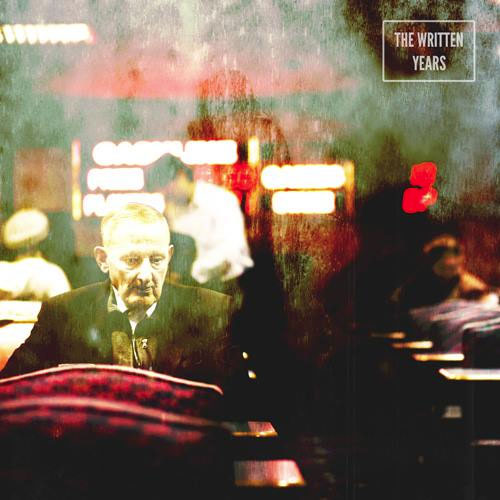
I recently got a sneak peak (or listen, rather) at The Written Years’ self-titled debut album set to be released on January 28th. With a sound that lands somewhere between Snow Patrol and The National with a hint of Bright Eyes, The Written Years is an album with an infectious sound. The self-titled project tackles themes like nostalgia, loss, and belonging with melodic guitar hooks, honest lyrics, and melancholy vocal vibes.

When I listen to a new album, I generally like to listen to it all the way through in the order that the artist intended. While it’s certainly refreshing to hear an album like this that flows together as a whole, there’s no denying that we live in the age of the single. A time where the album is not often consumed as one dish but received in any number of combinations and doses. While this shuffle psychology tends to isolate one song from the album as a whole, it can also provide the listener with new perspective by connecting tracks that would otherwise be separated by several songs. After listening to the album both in order as well as in a sort of shuffle, I’m convinced that the album’s themes shine through no matter what. This album seems to enter into conversation with this idea as it not only glides from one song to the next, but also contains muddled conversations in “It’s Not Your Fault” and disjointed sounds similar to a scanning radio transmission in “You’re Too Kind.”

It’s incredibly easy to empathize with the words that The Written Years lace their songs with. Thanks in large part to the conflicted lyrics and the inspiring instrumentals, the album managed to make me feel both connected as well as alone (I know,right? Pretty melancholy. Also, pretty awesome). When I was listening to the album I felt both happy and sad. Pure melancholia. It was as if I was seeing an extremely beautiful place for the first and last time, and a part of me knew that this was the only time I’d ever get to see the beauty before me. In this way, The Written Years as an album manages to inhabit the very “cold in between” that lead vocalist Wade Ouellet sings about in “The Station.” That place that feels isolated and alone but is still sometimes called home.

Thanks to Kane Enders’ tight, upbeat drums and Kodie Krogh’s melodic guitar riffs, the album possesses a hopeful sound that juxtaposes the often lost and melancholy moments within the lyrics. The band’s ability to incorporate slower, more-acoustic anthems with soulful Indie Rock songs makes each track unique and endearing. While I feel like I could write for years (insert cheap pun joke) about this album, I’ll conclude with this: The Written Years is a cinematic album that made me bob my head, sing along, stare at my ceiling, smile, and even tear up a bit at times.

Remember, the album drops January 28th! Be sure to buy your copy. You won’t regret it!

Standout Songs: “It’s Not Your Fault,” “You’re Too Kind,” “The Station”

Talking Tunes with RAWards Brooklyn 2013 Winner Amplicity

Posted on December 27, 2013December 29, 2013 by Colby Pines

I recently got the chance to speak with Electronic Musician/Producer Amplicity. Known for his downtempo, melody-driven tracks, Amplicity was named Musician of the Year at the 2013 RAWards in Brooklyn, New York (yeah, he’s pretty legit). While the Pennsylvania native stays busy tracking tunes, producing with his friends at Highline Sounds and working as a web developer, Amplicity made time to talk with me about his music, family, RAWards, and the pains of overpriced drinks.

Vinyl Magazine: So, how’s it going?

Amplicity: Going pretty good. I’m in Brigantine, New Jersey kind of near Atlantic City doing some producing right now.

VM: Very cool. I’m going to start with a question that seems stereotypical, but I’m really curious about this. How’d you decide on the name Amplicity?

Amplicity: So, I produced for a while under Highline Sounds. My friends and I did hip-hop beats. Then I went to Penn State and after I graduated I started working on some solo projects that focused a lot on, like, downtempo-type beats. And I thought of it as amplified simplicity, because the stuff that I was doing was pretty simple. Simple, melodic concepts, but I like really loud stuff too and I have both of those things in my music, so that’s when I thought of amplified simplicity or… Amplicity.

VM: So, did you study music while you were at Penn State?

Amplicity: Nah, I studied Information Technology. I’m also a Web Developer.

VM: Do you feel like your studies at Penn State have influenced how you go about making your music at all?

Amplicity: Yeah, for sure. A lot of times I prefer to program and sequence stuff in rather than do it live. I mean I’ve had a vast musical background. I’ve played guitar, piano, drums, saxophone, clarinet, but I still like computers. I’ve been around computers for practically my entire life, so I really like programming things in and the whole act of sequencing, rather than playing stuff live to be honest.

VM: So when you go in to produce a song or create a remix is there one thing that you feel is most important?

Amplicity: Totally. Melody. The first thing I always think about when either doing an original or doing a remix or choosing something to sample is definitely the melody. There are a few different keys that I like more than others. I usually try to play around with more positive, feel-good keys, but the melody is by far the most important thing for me when starting a track.

VM: Yeah, even in a remix it seems like most people are still looking for a melody.

Amplicity: Exactly, and the original song is important too, but the first thing that I think about is definitely the melody.

VM: Who would you say are some of your influences? Musical and non-musical.

Amplicity: There’s a few. As far as musical goes Mr. Carmack is definitely one. He’s really innovative with the way he does drums, and his tracks in general are just really unique. I really like him a lot. Cashmere Cat is another one. He’s a big influence in the way that he puts tracks together. He’s another artist with a unique style of production as far as the way he uses vocal samples, melody, and drums. And then also my entire family is a huge influence. My family is very musical as well, so it’s always been a very common practice within my family.

VM: Did you grow up playing the clarinet and all of those other instruments because your family was so musically oriented?

Amplicity: Yeah, my father plays drums, my uncle plays guitar, my aunt sings, my grandpa played guitar, so music has always been a very common part of our family.

VM: That’s almost a full band. Are you guys going to get the family band back together over the holidays?

Amplicity: Yeah, that’s actually pretty funny, because they have a Christmas CD that they did a long time ago full of all our family stuff. Honestly, my dad is a big influence on me, because he’s into smooth jazz, and while I’m not a huge smooth jazz fan per say, I still have a lot of jazz influences in my tracks in the way that the rhythm and the melody are done. I always try to look for a lot of special aspects in music that help create that deep groove that jazz, swing, and all of those types of genres are known for.

VM: So were the family Christmas tunes any sort of influence on the “Merry Christmas” track that you recently dropped?

Amplicity: Well, not exactly. To be honest, I’ve always wanted to put out a Christmas track, and I actually sampled a track from the family CD a while ago, but I just couldn’t find a direction on it. But I’ve always wanted to do a Christmas track, because Christmas is a nice time of the year that I really enjoy. My music is very emotional and lovey and I feel like that’s pretty fitting with this time of year, so that’s why I did that track.

VM: I was wondering if you might talk with me about the RAWards?

Amplicity: Of course.

VM: How were they?

Amplicity: It was great. I got to play at Output Club in Brooklyn, which is one of my favorite places to play. It’s a pleasure playing there. The sound is always incredible. It’s built for electronic music. It’s got the Brooklyn crowd. So, I like that venue from the way it looks to the way it sounds, to the people that are there listening. It’s all so great… except for the drink prices.

VM: New York drink prices are unreal right?!

Amplicity: Yeah, they’re insane. I was in L.A. before this, and they’re pretty expensive there too, but New York takes the cake.

VM: You just need to come south for the reasonable drink prices.

Amplicity: I know, right? I really do.

VM: So, what was the application process like for the RAWards?

Amplcity: My friend actually copied me on an email and hooked me up with the person who was the director at the time for Brooklyn. I put my music online and they liked it, so I did the first showcase. After that they told me there was something for RAWards coming out where you had to have people vote, and I don’t really like bothering people with voting and all of that, because I’d rather just put out music. So I didn’t really promote for it at all, but I guess people liked my music elsewhere and voted, and that’s how I got into the showcase. After the showcase I cleaned up my profiles and put up my newest tracks. I did a Drake remix recently, so I put that up there along with my Ciara remix, and after that I got chosen to do the showcase, and then later I was chosen as Musician of the Year.

VM: That’s awesome!

Amplicity: Yeah, I guess a lot of random people really liked my music.

VM: That’s got to be a pretty good and validating feeling right?

Amplicity: Definitely validating. I’ve been making music for a while, and I’ve seen a lot of other people come up. It’s definitely one of the main things I focus on, but it’s just so tough to make money off of, so I just make music to make music and I don’t expect much out of it, so it’s really nice when people actually appreciate the tunes that I make.

VM: What do you feel like winning RAWards Brooklyn has meant to you?

Amplicity: It’s not as much what I’ve gotten out of it as it is just that validation that we were talking about. It’s nice to know people do like and listen to my music. It’s kind of like a milestone and a waypoint. I mean, I’m not really there yet, but I feel like I’m definitely on the right path since people like what I’m doing and voted. Which just gives me even more reason to continue making music. So, it has meant a lot to me honestly.

VM: What’s next?

Amplicity: Keep going. I have some stuff coming out soon with a vocalist that I’m really pumped about. I have another release with this label called Glitch Squad in Philadelphia, so I’m just really excited to keep releasing new stuff and continue finding new concepts. I was recently in the studio with some people that I really look up to and are really talented, and it’s motivational to see people who are just so good produce and make music. That inspires me a lot, because that’s all I’m trying to do is just make unique, new sounds, rhythms and melodies. There are a lot of new producers out there. Soundcloud is proof that there are millions, but to really stand out I think you have to create something new, different, and interesting. That’s what matters most to me as a musician and not just as a DJ or producer.

*Be on the lookout for more sweet sounds from Amplicity!

A Roadside Chat with The Grahams

Posted on December 10, 2013December 11, 2013 by Colby Pines

Pulled over on the side of a dirt road somewhere south of the Georgia gnat line, I got the chance to speak with Alyssa and Doug Graham of NYC-based Americana band The Grahams (yes, they are a couple. Yes, we find that to be pretty awesome). While this situation may scream of poor planning, I ask you to reserve your judgment for a moment and consider just how fittingly Folk the atmosphere was for my interview with The Grahams, who just so happened to be driving through a snowstorm in Missouri. With nothing but the dirt road and the South Georgia woods in sight, I spoke with The Grahams about music, the road, their album Riverman’s Daughter, and Huck Finn. So, how’s that for poor planning?

Vinyl Mag: So, how has the tour been?

Alyssa: The tour has been fantastic. Even though the record didn’t come out until September we’ve pretty much been touring since March. South By Southwest was the first gig on the tour, and we’ve been pretty much living in this ’71 Chevy since then. We’ve only had a few days off here and there, and this is like the last leg at the end of the year until late January or February, but it’s really been great.

VM: Is it a little bittersweet that it’s coming to an end, or are you both ready for a little holiday break?

Alyssa: Yeah, I mean we’re ready for a little holiday break, but then we’re gonna get right back on the road and bring the music to more people. We love it. That’s not to say we don’t love our days off, but we live to play music, and touring is part of what makes it so much fun.

VM: You mentioned playing South By Southwest. How was that?

Alyssa: It was great! We’ve played in Austin many times, but this was the first year that we did SXSW. It was so much fun! We met a lot of great people and heard a lot of great music. Some of our favorite musicians and singer/songwriters live in that town. There’s always great music and it’s a great party town, so it was really fun.

VM: Other than SXSW, was there a particular stop on the tour or a single show that sticks out as one of your most memorable?

Alyssa: Well, I mean we’ve had a lot of great stops on the tour, but one of our favorite places is McCabe’s Guitar Shop in Los Angeles. That’s a really great place – well to buy instruments if you’re in the market, but it’s also pretty fun to perform there. They have a great stage and audience. But it’s funny that you ask this question, because we just played one of my favorite gigs in a very long time at a place called the Ignition Music Garage in Goshen, Indiana.

VM: Goshen, Indiana?

Alyssa: It was surprisingly the coolest little town. The greatest venue I’ve been to in a long time. Just the nicest people. It was a huge surprise. We just came from there a few days ago, but it was such a blast.

VM: Has the crowd been pretty great like that for most stops?

Alyssa: Yeah, the crowd everywhere has been pretty great. We toured a bunch before the record came out and – whoa, sorry. We are driving through a snowstorm and this giant truck just passed us.

VM: A snowstorm?

Alyssa: Yeah, normally I would put you on speakerphone so Doug could answer some questions too, but he’s driving very carefully – whoa. Sorry, more big trucks. But we toured a bunch before the record came out so little by little we’ve been bringing in bigger crowds. I feel like we’re up there telling our stories and people are really listening. It’s great to play music, but to really get people on the boat with us and listen to the stories that we experienced driving down the Mississippi is just such a joy for us.

VM: I feel like so many of your songs tell such great stories – do you guys tend to go into the writing process with a story in mind?

Alyssa: I think that particularly for this record we really harnessed the inspiration we got from characters and people that we met along the Mississippi. So, I think a lot of these songs we did, in fact, go into writing them with a character in mind. That’s not to say that we don’t develop the characters or change them as we get further into writing the song. One of the things that Doug always says that’s very true is that we like to create legends based on the people we’ve met and the stories we’ve heard. Like the song “Marnie Hawkins” on the record is based on a childhood experience that Doug and I had growing up in the same town. We took this character that neither of us had ever met and tried to develop her into this frightening legend of the creepy old lady. There’s also another song that actually didn’t make the record called “Tender Annabelle” that’s written about the Great North Woods, and we play that in our live shows. That’s also us just going on an inspiration of a character we met on the road and turning it into a modern day legend of sorts.

VM: Do you get to play a lot of songs live that didn’t make the record?

Alyssa: Doug and I have this philosophy where we like to go into the studio with about double the amount of songs that we know will actually make the record. So, we usually don’t even go into the studio until we have about twenty songs, and then we record as many as we have time for. For Riverman’s Daughter we wound up recording sixteen songs, and then ended up putting twelve songs plus a bonus track on the actual record. All the songs that we’ve written we play live, but at the end of the day we sit back and look at everything we’ve recorded and what goes together as a body of work and what will help the story be best told from beginning to end. We come from the vinyl generation where we like people to actually be able to sit down and go on a journey. I know that’s not necessarily how it works these days, but we like it to all seem like one continuous story in a way. That’s pretty much the process, and the songs that get cut, well, we play them and maybe they’ll make the next record.

VM: I read somewhere that you guys kind of packed everything up and lit out on a trip down the Mississippi River. Do you feel like the desire for a linear journey in the record was influenced by your travels down The Great River Road?

Alyssa: That’s a good question. That was definitely a linear journey. I’m not sure that I view the record as a strict linear story. I mean, there are characters that are actually attached to each other, so it’s a little circuitous in a way. For instance, “Marnie Hawkins” and “Heaven Forbid” are stories that grew out of one another.

VM: Can you tell me a little about your travels on The Great River Road?

Alyssa: Doug and I were basically sitting in our apartment in New York City and wrote the song “Riverman’s Daughter,” and decided this is the direction we want to go in. This is what feels like home to us. We wanted to do the kind of stuff that we were doing when we were kids together, singing harmonies and playing acoustic guitars to tell stories. We decided that, in order to do that better, we needed to get out on the river and live on the Mississippi as much as we could. We started in the Minneapolis area and followed The Great River Road, which is a very small road that follows the Mississippi directly. We just spent the better part of a year playing in small clubs and local dives and talking to the local people and playing with local musicians before we ended up in the Atchafalaya Swamp on a houseboat. Once we were there we sort of stockpiled our stories and lived there as we wrote the record. The journey was very linear, but the boat gave us a chance to revisit lots of places in our minds, which gave the record somewhat of a circular motion.

VM: So… how many times did you reread Adventures of Huckleberry Finn while you were travelling the road?

Alyssa: It’s so funny – not only did we read it, but we also bought the audio book and listened to it a few times during the drive. Of course, that was actually a catalyst. We were writing the song “Riverman’s Daughter,” and both of us were harkening back to our childhood of reading Huck Finn and Tom Sawyer. The original idea was to get on a boat on the northern Mississippi and ride it all the way down to Louisiana, but we did all of this research and they won’t actually let you do that without a Captain. So, what we did was just follow The Great River Road and tour down the river as we drove. Every day we would go out kayaking on the Mississippi or take a steamboat or do whatever we could to actually get out on the river though.

VM: That’s so awesome. Huck Finn is one of my favorites.

Alyssa: Yeah, it’s great. The whole culture on the Mississippi is pretty fascinating. We got to go to Hanibal, Missouri, which is where Mark Twain grew up and where all of the myths come to life. We saw a lot of the landmarks that Twain drew from in his writing. It was pretty fascinating… We also went to the birthplace of Popeye, but that wasn’t quite as factual.

VM: Still equally as incredible. You can’t beat Popeye.
Alyssa: Popeye is great. He wasn’t quite as big a part of our story though.

VM: Fair enough. Do you think that being together for so long makes writing songs and telling stories easier?

Alyssa: That’s a really good question. It’s hard for me to answer, because Doug and I have always written songs together. We haven’t really written with anyone else. I think that it’s never easy. It’s like a marriage – I mean, we are married, but it’s a different kind of marriage, writing and playing music together. We fight and negotiate all the time when we’re writing together. I’ll come to him sometimes like “this is the greatest song I’ve ever written!” and he’s like “eh, not so much.” Sometimes I do the same thing to him, and even though it pisses both of us off, it challenges us to write something better, and we’re really grateful that we have each other to write with. I feel like if I was writing with a stranger at a publishing company or something, I wouldn’t trust them enough to tell me where I need to go. Doug and I know each other so well that we can trust one another. We complete each other’s thoughts at times. I think being in love helps us get a blend that hopefully sounds organic.

VM: Other than Huck and Popeye, who are some of your biggest influences?

Alyssa: I think Doug and I would both agree that our greatest influences and one of our biggest bonds growing up was Neil Young. We both had every piece of vinyl that Neil Young ever made. We knew all of his songs and would harmonize to him growing up. Also, Bob Dylan and The Band. As we got older we went back and looked at music that really influenced the musicians that we listened to growing up. We went back in history to the real early Folk stuff like The Carter Family and Woody Guthrie and Bill Monroe and that sort of stuff. It all sort of stems from the same Folk movement that came to America from Scotland and England. We are just really fascinated with great storytellers. Someone who tells a great story is more important to us than the sonic aspect. People who wrote great Folk music really speak to us.

VM: I feel like all of the old Folk singers like The Carter Family were very influenced by Gospel music. There seems to be that same sort of Gospel influence in your music when it comes to songs like “Revival Time” and “If You’re In New York.” Do you feel like Gospel music has influenced you at all?

Alyssa: Yeah, I love that kind of stuff. We grew up listening to a lot of Aretha Franklin. There’s definitely an African American gospel and soul influence on the record that we really appreciate. We listen to a lot of Gospel and try to take in as much as we can. Certainly “Revival Time” is a song that took that direction.

VM: Only one more question… If you had to choose, would you be Huck or Tom?

Alyssa: Can I be Bessie?

VM: Of course!
Alyssa: Yes! Let me get Doug to answer this one too.
Doug: Easily Huck Finn. He’s wilder and crazier!

*So be sure to check out Riverman’s Daughter, and be sure to catch The Grahams on tour.

Tour Dates

December 11 – The High Watt – Nashville, TN

December 13 – Palmetto – Charleston, SC

December 14 – Kirk Avenue Music Hall, – Roanoke, VA – (with Underhill Rose)

 

Justin Townes Earle at The Melting Point

Posted on December 9, 2013December 10, 2013 by Colby Pines

There’s just something about Americana music that’s endearing. Maybe it’s the people who play it. Maybe it’s the music itself. Or quite possibly it’s a combination of the two that reminds us of the humble, determined spirit that comprises the culture of both America past and America present. This was certainly the case when Justin Townes Earle partnered with Whatever it Takes and took to The Melting Point stage to raise money for impoverished children and families in the Athens, Georgia area.

Whatever it Takes is an Athens-based organization whose goal is to ensure “that all children in Athens are healthy, safe, engaged in the community and on course to graduate from a post-secondary education.” As openers Eliot Bronson and Jonathan Byrd and the Pickup Cowboys graced the stage with their guitars it was no surprise that honest, passionate artists such as these were performing for such an admirable cause. Eliot Bronson’s smooth solo vocals had the crowd clapping for more as he gave way to the twangy tunes of Jonathan Byrd and the Pickup Cowboys. As Byrd and his band crooned their way through violin-led love ballads and harmony-laden lullabies, the floor filled with dancing fans who gave the band the first curtain call for an opener that I have ever seen.

By the time Jonathan Byrd and the Pickup Cowboys finished playing their well-deserved encore, the crowd was pining for the soulful sounds of Justin Townes Earle. Earle, a singer/songwriter who combines the best of blues with folk and Americana made his way to the stage amidst a rapturous applause. Justin stood alone with nothing more than an acoustic guitar when he greeted the amped Athens crowd. “Let’s see what I can forget the lyrics to tonight,” laughed Justin before opening with “They Killed John Henry,” a song that he informed us was written for his grandfather. Next up was “Memphis in the Rain,” a blues-heavy hit from Earle’s new album Nothing’s Gonna Change the Way You Feel About Me Now. Earle’s bluesy influences were apparent as he played a cover of Bo Carter’s “Your Biscuits are Big Enough for Me,” as well as Lightnin’ Hopkins’ “My Starter Won’t Start This Morning,” a song that was once performed by Townes Van Zandt, for whom Justin Townes Earle gets his middle name.

As Earle fingerpicked his way through his set, he displayed the same sort of honesty that makes Americana music endearing. He shared intimate stories from his past involving turbulent relationships that he’s been able to transform into songs. Each song was a story, and Earle graciously shared not only the songs with us, but also the stories behind the songs.

“If I drink or do narcotics I break out in handcuffs,” Earle said through a grin as he plucked his way through fan favorites like “One More Night in Brooklyn” and “Mama’s Eyes.” At one point, Earle even stopped playing mid-song to inform the audience that he had forgotten a line. “It doesn’t mess me up when I forget lyrics, because I’m human,” Earle confessed. “I don’t put myself on a pedestal, because I’m only human. That’s what happened to Pete Rose. We put him on a pedestal and he disappointed us. But if ya ask me I think they need to let ole Charlie Hustle in the Hall of Fame for being human,” said Earle. Honest moments like these not only made the evening more intimate, but they made it obvious why Earle is such a talented songwriter.

Earle only briefly left the stage before being beckoned back by the audience’s roaring applause. After plucking and slapping away at his strings, Earle concluded the night with “Christchurch Woman,” a hopeful love song that displays Earle’s ability to tap into heavy heartache and create songs that have both lyrical weight as well as graceful guitar melodies.

Justin Townes Earle exemplifies the endearing honesty of Americana music. His music is reminiscent of a simpler time while remaining hopeful for the future. His honest and vulnerable songs made it feel as though he were confiding in us his deepest hopes and fears. And as he shared his stories, he made us feel as though we were a part of those stories.


Sleigh Bells at Georgia Theatre

Posted on November 7, 2013November 7, 2013 by Colby Pines

What do you get when you mix heavy metal, hip-hop, punk, pop, and electronica? The incredible juxtaposition that composes Sleigh Bells, of course. Since releasing their debut album, Treats, in 2010, Sleigh Bells has continually captivated concertgoers with their crunchy guitar leads and sugary vocals. But those of us who were fortunate enough to be at The Georgia Theater on November 5 know that it’s the band’s contagious energy and passion that keep listeners begging for more.

As the lights began to dim, a drum-line-style beat blasted an apparent call to arms that was fit for the flag-like backdrop, striped red and white. Each member of the band slowly answered this call as they took their place on stage. There was no mistaking lead guitarist Derek Miller as he stormed onstage. Wearing a camouflage shirt with pants to match, Miller strapped on the tiger-print guitar that adorns the cover of the group’s most recent album, Bitter Rivals. With one quick stroke of his strings, Miller sent a piercing chord through the theater. The crowd’s anticipation was at a peak as we roared in unison with Miller’s guitar. Just as the crunchy chord began to fade, lead singer Alexis Krauss took her place center stage. Wearing a leopard-print fighter’s robe, she hopped around beneath the strobe lights, throwing punches at the air like the heavyweight champ. All at once, Miller thrashed at his guitar, and the show opened with “Minnie,” a drum-driven track from Bitter Rivals that could stand alone as a testament to the band’s uncanny ability to combine heavy guitar riffs with dreamy hooks.

Miller and Krauss’s chemistry was immediately evident as they danced and head banged their way through “Tiger Kit” and “Comeback Kid,” a fan-favorite that had the floor shaking as the audience jumped with the band. When the distorted guitar and melodious synthesizers faded, Krauss asked us all to sing and dance with her for their next song, the unmistakable “Crown on the Ground.” The crowd erupted as the punchy melody blasted through the theater before seamlessly fading into the title track of their new album, “Bitter Rivals.” The experimental pop group’s intensity combined with catchy tracks like this one made it impossible not to move with each song. When Krauss danced, so did the audience; jumping and bobbing around with the singer’s velvety vocals.

The energy never waned as the band mixed seven songs from their new album with older hits like “Riot Rhythm.” Miller’s hardcore background was evident as his screeching solos mingled gracefully with Krauss’s intoxicating melodies. Before announcing their last song, Krauss displayed the sincerity that defines Sleigh Bells when she expressed her love for Athens, The Georgia Theater, and the crowd that couldn’t help but dance with her.

As “Infinity Guitars” (a song that embodies its title) came to a close, there was no doubt that an encore was imminent. The entire audience showered the empty stage with praise until Derek Miller, Alexis Krauss and the rest of Sleigh Bells returned. The encore opened with “Young Legends,” a song that highlights the band’s ability to create a catchy, melody-driven track without sacrificing the meaningful lyrics and noise-heavy style that catapulted the band into the public eye back in 2009. Sleigh Bells concluded the night with “A/B Machines,” but not before pulling fifteen members of the audience onto the stage with them. While Krauss belted out the song’s lone lines, “Got my A machines on the table, got my B machines in the drawer,” she embraced the dancing audience members onstage, turning the night into exactly what it was: one giant dance party.

  • Previous
  • 1
  • 2

The Latest

  • COACHELLA RECAP: the comeback of Coachella?
    by Colby Pines
  • UGA MBUS Student Ritika Sharma Forges Her Own Pathway
    by Colby Pines
  • Staff Picks to Satisfy Your Inner Choir and Band Nerd
    by Colby Pines
  • Staff Picks for Your Perfect Granola Playlist
    by Colby Pines
  • ‘It’s Only Life After All’: The Legacy of the Queer Folk Women Duo, Indigo Girls
    by Colby Pines
  • Contact
  • Work With Us
© 2026 Vinyl Mag | Powered by Minimalist Blog WordPress Theme