Vinyl Mag
Menu
  • About Us
  • News
  • Reviews
    • Music Reviews
    • Show Reviews
  • Interviews
    • All Interviews
    • Vinyl Video
  • Features
  • Vinyl Recommends
    • Playlists
    • Year-in-review
  • MBUS
Menu

Alexis Tiedemann

The GRAMMYs Debunked

Posted on February 5, 2014February 5, 2014 by Alexis Tiedemann

It seems everyone in the United States of America and then some watched the GRAMMYs. Twitter was bursting at the seams with social commentary regarding Taylor Swift dancing like a wacky inflatable man and Ozzy Osbourne’s convoluted and baffling introduction to the remaining Beatles’ performance. But do people really understand how the GRAMMYs work? How do artists get nominated? Who decides the winner? What is the difference between the record of the year and song of the year? Well look no further, my friends, your questions will be answered here.

The GRAMMY awards are put on annually by The Recording Academy, an organization dedicated to recognizing outstanding achievements and powerful accomplishments in the music industry within the past year.  However in the past decade or so, the Academy has become very involved in advocating the arts and contributes to multiple outreach programs in the United States. Not to worry; they are not just a group of music snobs sitting around with cigars criticizing music.

Well then, who exactly is in The Recording Academy, you ask? Wonderful question. The Recording Academy is comprised of “creative and technical professionals….. and other recording industry professionals such as executive producers, writers, publishers, attorneys, record label staff, music merchants, music educators, and artist managers who are directly involved, on a professional basis, in the music business,” according to the Grammy 365 website.

HOWEVER not just any old person that considers himself an “industry professional” can vote. Now, now, we wouldn’t leave the outcome of the most prestigious American music awards in the hands of Bob next door with a YouTube account and a few T-Swift covers would we? No way. In order to be a VOTING member of The Recording Academy, you must apply. There are a series of qualifications you must meet under different categories, such as having a particular amount of recorded and released music or being endorsed by an existing voting member. Hey, if you were nominated for a GRAMMY though, that will certainly put you on the fast-track to becoming a voting member. Well, if it was within the past five years.

SO how does one get nominated to win a GRAMMY award? Well, a registered Recording Academy member or an artist’s record label submits their recording electronically. Then, the voting members do what they do best: vote!

Now, you ask, what is the difference between the song of the year and record of the year? How is “Get Lucky” by Daft Punk the record of the year, and Lorde’s  “Royals” is the song of the year? Aren’t those the same thing? Well, it is rather simple. According to the GRAMMY website, the song of the year recognizes just songwriters while the record of the year takes into account the artist’s performance as well as the studio work that went into the album, including any producers, mixers, and recording engineers. Makes more sense why a million people we didn’t recognize were up on stage with those two crazy robots. A lot of work goes into a recording, and The Recording Academy recognizes those contributions. I mean look at their name… it is kind of a given.

Last of all, that ever-enduring GRAMMY question that everyone is racking their brains for an answer to, the question that haunts us in our sleep and everywhere we go on the internet: why do they let Taylor Swift stand up and dance during the show? Ladies and gentlemen, I may never ever have that answer. I sincerely wish I did, however, you are going to have to take it up with The Recording Academy yourselves.
In Memoriam: Philip Seymour Hoffman

Posted on February 4, 2014February 4, 2014 by Alexis Tiedemann
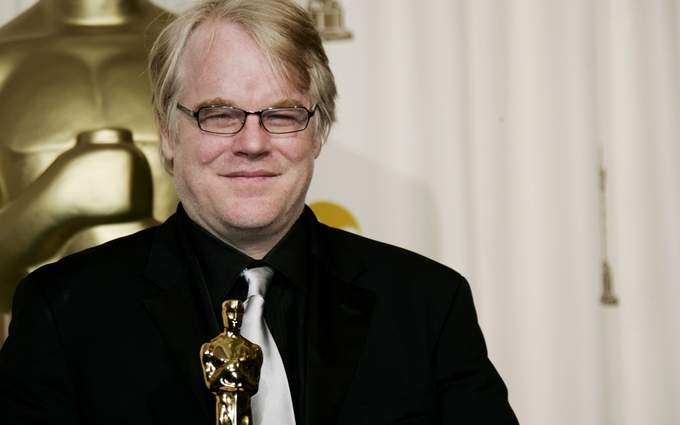
In a Sunday, March 5, 2006, file photo, actor Philip Seymour Hoffman poses with the Oscar he won for best actor for his work in “Capote” at the 78th Academy Awards, in Los Angeles. Philip Seymour Hoffman was found dead in his apartment on Sunday Feb. 2, 2014. He was 46 years old. (AP Photo/Kevork Djansezian, File).

“Not mine, sir” the Count replies, after being told that his work on the pirate radio ship is finished due to British laws. “I’m an American citizen, and I don’t give a hootenanny g*ddamn about your nitpicking limey laws. I intend to broadcast from this ship 24 hours a day until the day I die. And then for a couple days after that.”

Philip Seymour Hoffman, as the Count in Pirate Radio (released as The Boat That Rocked in the U.K.), electrified the screen, yelling into the microphone, refusing to stop broadcasting rock and roll to all of England even as everything from the British government to jagged rocks threatened to sink their vessel into the North Sea.

Pirate Radio was merely a movement in the symphony that was Hoffman’s acting career. Before the age of 40, he had won an Academy Award for his performance in Capote. From The Big Lebowski to Almost Famous to The Hunger Games, Hoffman never failed to invigorate the audience, completely morphing into each character he embodied, losing himself in the role. Consequently, the audience continuously lost themselves in him.

Born in Rochester, New York, in 1967, Hoffman’s love for acting found its roots as early as high school. He attended the Tisch School of the Arts at New York University to further nourish his passion, and after landing the role of Scotty J. in Boogie Nights, his career took flight. From that moment onward, he became a symbol of out-there movies, often playing quirky roles with vibrant characters and exuberant emotion.

Hoffman truly believed in the importance of his job and the solemnity with which he approached each character was the mark of a truly dedicated actor. As he told TIME’s Michael Krantz in a 1999 interview, “Actors are responsible to the people we play.” But Hoffman did not just “play” people; he completely transformed into them on both the stage and the silver screen.

As is often the price of fame and fortune, Hoffman struggled with a drug and alcohol addiction. Although he sought treatment multiple times, he relapsed in 2012 and was found dead in his Greenwich Village apartment on February 2, 2014, from an apparent drug overdose.

As an aspiring music writer myself, I will never forget the way Philip Seymour Hoffman portrayed Lester Bangs, legendary music critic, in Almost Famous. His brash, bold demeanor and cheeky, impertinent attitude lit up the screen as he gave advice to Will, a hopeful young music journalist. I guess in a way, I imagined him talking to me, advising me as he did Will, about rock stars and the lifestyle they lead. He called it the “industry of cool” and gave some of the best advice I have ever heard: “you have to make your reputation on being honest, and…unmerciful.” His words resonated with the journalist inside of me.

“Music, you know,” Hoffman says, playing Lester with vivid expression, “true music – not just rock n roll – it chooses you.” Gesturing wildly with every word as he speaks into a radio microphone, Hoffman continues, “It lives in your car, or alone listening to your headphones, you know, with the vast scenic bridges and angelic choirs in your brain. It’s a place apart from the vast, benign lap of America.”

The world lost a magnificent individual who possessed a remarkable ability to evoke from the people who watched his films every emotion from smirking laughter to woeful tears. In a world of fakes and temporary fads, his authenticity and timelessness will be greatly missed but not forgotten.

CYMBALS: ‘The Age of Fracture’

Posted on January 31, 2014January 30, 2014 by Alexis Tiedemann

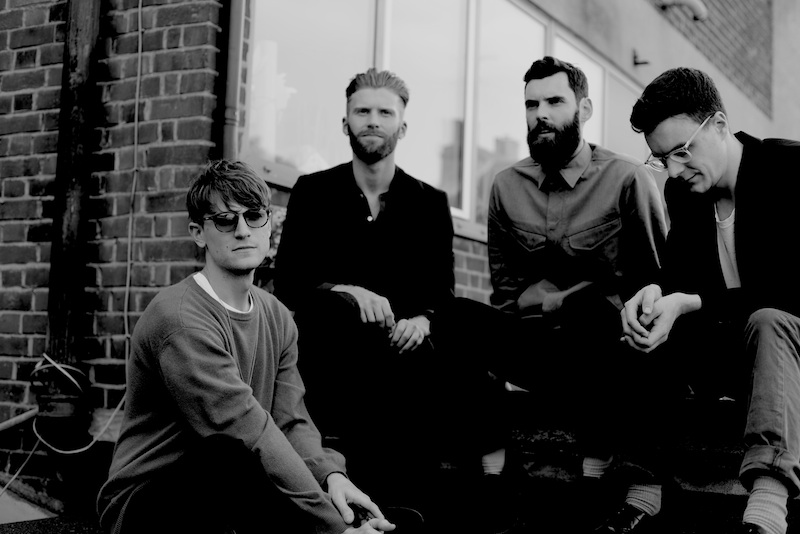
Inspired by a poem and truly very poetic indeed, CYMBALS’ debut album The Age of Fracture takes the listener on an introspective journey without compromising its ability to make us bob our heads and dance to the disco beats.

Lending its name from a work by Princeton scholar Daniel T. Rodgers and inspired heavily by British poet Joe Dunthorne, this album layers spacey instrumentals and hard-driving beats with thoughtful lyrics to create an intergalactic disco.

Hailing from the UK, CYMBALS recorded this album with producer Dreamtrak (Swim Deep, Chad Valley, Hot Chip) in his Hackney studio carefully putting each beat, melody, and word in place for a bright, polished, sophisticated sound dripping with deep thoughts and positive energy.

“We can hear the passing of time” sings Jack Cleverly, coolly, wafting over the pop beats, reflecting on the inner indecisiveness and over-complication of our generation on “The Natural World”. The Age of Fracture is abound with interesting comparisons, sweetly singing in the track, “You Are”, “I won’t forget you running down the stairs like it’s the end of another age.” Other tracks, like “Empty Space” feel like Andy Warhol paintings come to life to whisk you away to a party in Greenwich Village. Funky electronic melodies go hand in hand with the dance pop beats to create a lighthearted and fun musical experience.

The album matures as the listener progresses with more dreamy tracks such as “The 5%” and “The Age of Fracture.” CYMBALS continues to explore the idea of our generation not being able see the world in a simpler light, lamenting, “it’s more complicated than that.” When talking about the album, Cleverly writes “It hit me that I often feel paralysed by the feeling that everything is ‘too complicated’, and that many people I know feel that paralysis. I realised that this way of thinking can be traced through these songs.”

The album progresses to more hard-driving beats and funky guitar riffs with “Like An Animal.” Simpler, mellower grooves take over with the focus shifting to the musicality but never forgetting its purpose of exploring the human condition, remarking “you are life’s delicate child” but reminding us “nothing can be solid as a rock.”

“Erosion” and “This City” are pure fun tracks, and the album comes full circle with the track “The End.” Speaking in French over delicate beats, Cleverly adds depth and interest to the music. This track feels like an album hangover, but not in a coffee, sunglasses, and ibuprofen way. This track leaves us buzzing in the warm afterglow of the album, contemplating the ideas CYMBALS has presented us over the course of their work. “You’ve been dancing too much,” Cleverly croons, “you’ve got to turn on the lights”.

The album ends on a positive note, but not before leaving us with one last cool instrumental groove on “Call Me.” The slower, meandering jam is different than the rest of the album but leaves us basking in the ambiance of the album we have just listened to.

Overall, CYMBALS has made an album that makes a profound statement about our generation without neglecting the fun dance tunes drives the indie electro pop genre. You can enjoy this music in the morning with your coffee, at the beach, or on the moon.

You can catch The Age of Fracture when it comes out on Feb. 4 via Tough Love Records and when CYMBALS performs at South by Southwest in Austin, March 11th through the 16th.

CYMBALS TOUR DATES:
 
03/11 – 03/16 Austin, TX – SXSW

  • Previous
  • 1
  • 2
  • 3

The Latest

  • COACHELLA RECAP: the comeback of Coachella?
    by Alexis Tiedemann
  • UGA MBUS Student Ritika Sharma Forges Her Own Pathway
    by Alexis Tiedemann
  • Staff Picks to Satisfy Your Inner Choir and Band Nerd
    by Alexis Tiedemann
  • Staff Picks for Your Perfect Granola Playlist
    by Alexis Tiedemann
  • ‘It’s Only Life After All’: The Legacy of the Queer Folk Women Duo, Indigo Girls
    by Alexis Tiedemann
  • Contact
  • Work With Us
© 2026 Vinyl Mag | Powered by Minimalist Blog WordPress Theme